From Surf Wiki (app.surf) — the open knowledge base
Seton Hall University
Catholic university in South Orange, New Jersey, US

Catholic university in South Orange, New Jersey, US
| Field | Value |
|---|---|
| name | Seton Hall University |
| image | Seton Hall University Seal.svg |
| former_name | Seton Hall College (1856–1950) |
| image_upright | .6 |
| motto | Hazard Zet Forward (Norman French/English) |
| mottoeng | "Despite hazards, move forward" |
| type | Private research university |
| religious_affiliation | Catholic Church (Diocesan) |
| established | |
| founder | James Roosevelt Bayley |
| accreditation | MSCHE |
| endowment | $351.8 million (2024) |
| administrative_staff | 1,065 |
| president | Joseph R. Reilly |
| provost | Erik Liliquist (interim) |
| city | South Orange |
| state | New Jersey |
| country | United States |
| coordinates | |
| students | 9,529 (fall 2023) |
| undergrad | 6,109 (fall 2023) |
| postgrad | 3,420 (fall 2023) |
| campus | Large suburb |
| campus_size | 58 acre |
| colors | Pirate blue, gray, and white |
| sporting_affiliations | |
| sports_nickname | |
| mascot | Pirate |
| free_label | Newspaper |
| free | The Setonian |
| academic_affiliations | |
| website | shu.edu |
| logo | Seton Hall University Logotype.svg |
| free_label2 | Other campuses |
| free2 | Newark |
Seton Hall University (SHU) is a private Catholic research university in South Orange, New Jersey, United States. Founded in 1856 by then-Bishop James Roosevelt Bayley and named after his aunt, Saint Elizabeth Ann Seton, Seton Hall is the oldest diocesan university in the United States.
Seton Hall consists of 9 schools and colleges and has an undergraduate enrollment of about 5,800 students and a graduate enrollment of about 4,400. It is classified among "R2: Doctoral Universities – High research activity".
The university is known for its men's basketball team, which has appeared in 13 NCAA Division I men's basketball tournaments after making it to the final of the 1989 tournament and losing 79–80 in overtime to the Michigan Wolverines. The resulting increase in national television exposure has led to increasing numbers of applications from prospective students.
History
Early history
Like many Catholic universities in the United States, Seton Hall arose out of the Council of Baltimore, held in Maryland in 1844, with the goal of bringing Catholicism to higher education in order to help propagate the faith. The Diocese of Newark had been established by Pope Pius IX in 1853, just three years before the founding of the college, and it necessitated an institution for higher learning. Seton Hall College was formally founded on September 1, 1856, by Newark Bishop James Roosevelt Bayley, a first cousin of James Roosevelt I, father of president Franklin Roosevelt. Bishop Bayley named the institution after his aunt, Mother Elizabeth Ann Seton, who was later named the first American-born Catholic saint.
The main campus was originally in Madison, New Jersey. Reverend Bernard J. McQuaid served as the first college president (1856–1857, 1859–1868) and directed a staff of four diocesan clergy including Reverend Alfred Young, vice-president; Reverend Daniel Fisher (the second college president, 1857–1859) and five lay instructors. Initially, Seton Hall had only five students – Leo G. Thebaud, Louis and Alfred Boisaubin, Peter Meehan, and John Moore. By the end of the first year, the student body had grown more than tenfold to 60. The college moved to its current location in 1860.

By the 1860s, Seton Hall College was continuing its rapid growth and began to enroll more and more students each year. However, among other difficulties, several fires on campus slowed down the growth process. The first of several strange fires in the university's history occurred in 1867 which destroyed the college's first building. Two decades later on March 9, 1886, another fire destroyed the university's main building. In the 20th century, another campus fire burned down a classroom as well as several dormitory buildings in 1909.
During the 19th century, despite setbacks, financially tight times, and the American Civil War, the college continued to expand. Seton Hall opened a military science department (forerunner to the ROTC program) during the summer of 1893, but this program was ultimately disbanded during the Spanish–American War. Perhaps one of the most pivotal events in the history of Seton Hall came in 1897 when Seton Hall's preparatory (high school) and college (undergraduate) divisions were permanently separated.
James F. Kelley, then 33 years old, was appointed by Thomas J. Walsh of the Archdiocese of Newark to serve as president of Seton Hall College in July 1936, making him the nation's youngest college president. When he took office, Kelley led a liberal arts school that had an enrollment of 300. By 1937, Seton Hall established a University College. This marked the first matriculation of women at Seton Hall. Seton Hall became fully coeducational in 1968. In 1948, Seton Hall was given a license by the FCC for WSOU-FM. The construction of the Walsh Gymnasium began as part of a project initiated in 1939 that would cost $600,000 (equivalent to $ million in ).
Kelley stepped down from office at Seton Hall in March 1949 in the wake of an investigation into the school by the federal government that looked into potential improper sales of war surplus equipment that had been given for the school's use. He was succeeded by John L. McNulty. Enrollment at the school had grown to 6,000 by the time Kelley left office.
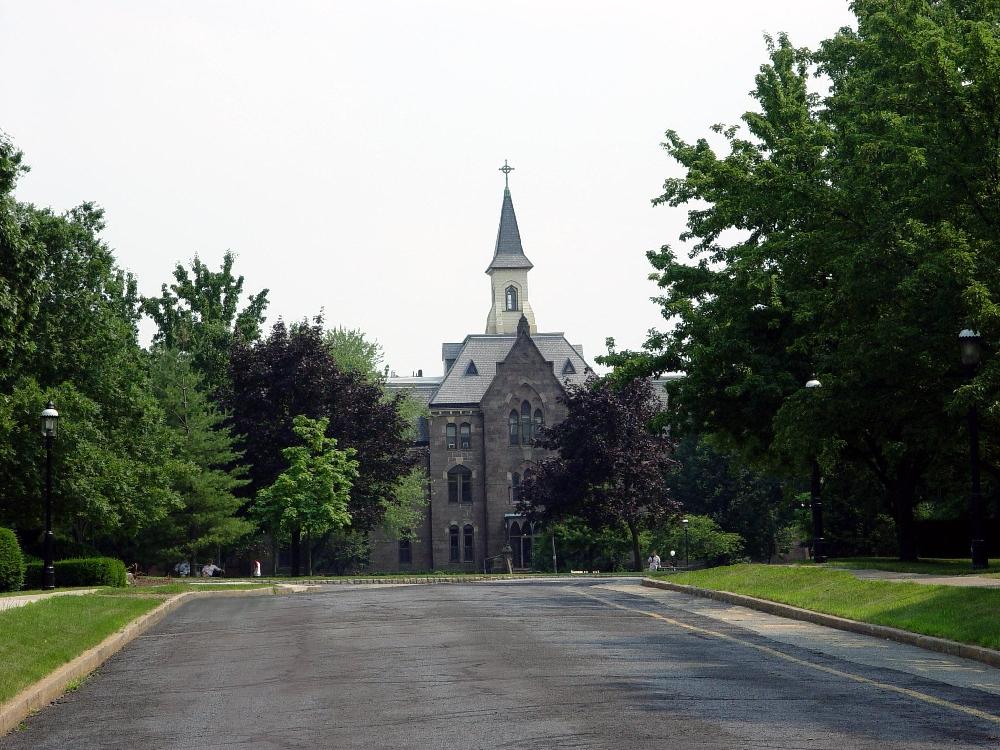
The college was organized into a university in 1950 following the unprecedented growth in enrollment. The College of Arts and Sciences and the schools of business, nursing, and education comprised the university; the School of Law opened its doors in 1951, with Miriam Rooney as the first woman dean of law in the United States.
College of Medicine and Dentistry
The **Seton Hall College of Medicine and Dentistry **was established in 1954 as the first medical school and dental school in New Jersey. It was located in Jersey City, adjacent to the Jersey City Medical Center, which was used for clinical education. Although the college, set up under the auspices of the Archdiocese of Newark, was a separate legal entity from the university, it had an interlocking board of trustees. The first class was enrolled in 1956 and graduated in 1960. The dental school also awarded its first degrees in 1960. From 1960 to 1964, 348 individuals received an M.D. degree. The college was sold to the state of New Jersey in 1965 for $4 million after the archdiocese could not support mounting school debt and renamed the New Jersey College of Medicine and Dentistry (which became the New Jersey Medical School, part of the University of Medicine and Dentistry of New Jersey). That entity became part of the Rutgers University system in 2013 and now exists as the Rutgers New Jersey Medical School. Seton Hall established a new School of Medicine in partnership with Hackensack University Health Network in 2015; however, in 2020, the medical school formally separated from Seton Hall becoming the independent Hackensack Meridian School of Medicine.
Modernization period
Beginning in the late 1960s and continuing in the next two decades, the university saw the construction and modernization of a large number of facilities and the construction including the library, science building, residence halls, and the university center. Many new programs and majors were inaugurated, as were important social outreach efforts. New ties were established with the private and industrial sectors, and a growing partnership developed with federal and state governments in creating programs for the economically and educationally disadvantaged.
The 1970s and 1980s continued to be a time of growth and renewal. New business and nursing classroom buildings and an art center were opened. In 1984, the Immaculate Conception Seminary returned to Seton Hall, its original home until 1926, when it moved to Darlington (a section of Mahwah centered on a grand mansion and estate). The Recreation Center was dedicated in 1987. With the construction of four new residence halls between 1986 and 1988 and the purchase of an off-campus apartment building in 1990, the university made significant changes to account for a larger number of student residents. Seton Hall is recognized as a residential campus, providing living space for about 2100 students.{{cite web |archive-url = https://web.archive.org/web/20071223073747/http://studentaffairs.shu.edu/housing/residencehalls.html |archive-date = December 23, 2007}} [[File:Walshlib1.jpg|thumb|left|The Walsh Library in fall]]
The physical development of the campus continued in the 1990s. The $20 million Walsh Library opened in 1994, and its first-class study and research resources marked the beginning of a technological transformation of Seton Hall (current university library holdings are over 500,000 volumes). The university dedicated its newest academic center in 1997, originally named Kozlowski Hall for Dennis Kozlowski, former CEO of Tyco International. It was renamed Jubilee Hall following Kozlowski's criminal conviction in 2005. Its recreation center was originally named after Robert Brennan, but he was found guilty of securities fraud in 1994. It has since been renamed for athletic director Richie Regan.
Boland Hall fire
Main article: Boland Hall fire
On January 19, 2000, an arson fire killed three and injured 54 students in Boland Hall, a freshman residence hall on the campus in South Orange. The incident, one of the deadliest in recent US history, occurred at 4:30 am, when most students were asleep. After a three-and-a-half-year investigation, a 60-count indictment charged two freshmen students, Sean Ryan and Joseph LePore, with starting the fire and felony murder for the deaths that resulted. LePore and Ryan pleaded guilty to third-degree arson and were sentenced to five years in a youth correctional facility with eligibility for parole 16 months after the start of their prison terms. Consequently, the student body dedicated an area in front of Boland Hall to those that suffered from the fire called "The Remember Seal" and stronger university fire safety precautions were instituted.
Sesquicentennial
On the 150th anniversary (1856–2006) of the university's founding, Seton Hall initiated the Ever Forward capital campaign to raise a total of $150 million. The campaign was the most prestigious building campaign in the university's long history. The funds were directed to many areas throughout the university, however a majority went toward building and reconstructing campus facilities and historic sites.
In fall 2007, the university opened the new $35 million Science and Technology Center, completing one of the major campaign priorities ahead of schedule. On December 17, 2007, the university announced that the campaign's fund raising goals had been met and exceeded more than two weeks ahead of the campaign's scheduled closing date.
2010–present

The university has completed a host of campus renovations and new construction while attracting more students. An initial round of improvements totaling nearly $100 million concluded in 2014 with the opening of a new fitness center, academic building, parking garage, and an expansion of the Aquinas Hall dormitory. A second round of construction is planned for 2016 and beyond, which will add the Visitors Hall.
Seton Hall announced the formation of two additional academic units in 2015 – the School of Medicine and the College of Communication and the Arts. The medical school was established in partnership with Hackensack Meridian Health, welcoming its first class in 2018. In 2020, the School of Medicine became the first independent medical school operating under Hackensack Meridian Health. The College of Communication and the Arts was a department in the College of Arts and Sciences before being elevated in the summer of 2015.
The university announced in December 2022 that employees in the law school had embezzled nearly $1 million. The school's dean resigned a month before this announcement. The following year, university president Joseph Nyre resigned in the wake of ongoing conflicts with the university's board of regents about the governance of the law school.
Governance
The university, legally incorporated as "Seton Hall University, an educational corporation of New Jersey", is governed by a 16-member board of trustees. Eleven members of the board serve on it as a virtue of their positions within the university or Archdiocese of Newark. The Archbishop of Newark, who serves as the president of the board, retains the power to appoint the remaining five members of the body. Appointed members of the board serve three-year terms, until their respective successor is appointed. The board of trustees exclusively maintains the property rights of the university and provides selection of title, scope, and location of the schools and colleges of the university.
The governance of the university includes a board of regents, which is charged with the management of the university. The board has a membership of between 25 and 39 members. Six of the members are ex-officio; the board of trustees maintains the right to elect up to thirty more. Regents maintain the exclusive hiring authority over the president of the university. Previous by-laws of the university stipulated that the president must be a Catholic priest.
Campus
Main campus

Buildings
The original centerpieces of the campus were made up of three buildings built in the 19th century. Presidents, Stafford and Marshall Halls were built when the college moved from Madison to South Orange. Some of the more notable buildings on campus are:
- Presidents Hall – One of the oldest buildings on campus and a flagship of the university, Presidents Hall was completed in 1867. Located at the epicenter of the main campus, Presidents Hall is a neo-Gothic structure dressed in brownstone. It originally served as a seminary but now houses the university's administration including the Office of the University President. The halls are lined with portraits of past University presidents and include a large stained glass depicting Saint Elizabeth Ann Seton, which was commissioned in 1866 by President Bayley.
- Chapel of the Immaculate Conception – The handsome Gothic Revival brownstone building was designed by architect Jeremiah O'Rourke, who later designed the Cathedral of Newark. The chapel was built in 1863 and dedicated in 1870. Major renovations were completed in 1972 and most recently in 2008. The 2008 renovation was a primary component of Seton Hall's comprehensive Ever Forward fundraising campaign. In 2013, the chapel landed at No. 24 on Buzzfeed's survey of "31 Insanely Beautiful Colleges You Can Get Married At" and was ranked at No. 28 the following year on Collegeranker's list of "The 50 Most Beautiful College Campus Wedding Venues.
- Muscarelle Hall (formerly Stafford Hall) – In 2021, Stafford Hall was renamed to Muscarelle Hall after Sharon and Joseph L. Muscarelle Jr. The new academic building rose on the site of the former Stafford Hall in 2014. The outdated structure had been a campus fixture since the 19th century. Bearing the name of its predecessor, the new Stafford Hall features 12 classrooms of multiple sizes, nine of which can accommodate 35 students each, while the remaining rooms include two large classrooms that can hold 70 and 50 students apiece and one smaller room for 25 students.
- McQuaid Hall – Built around 1900, it was named for Bishop Bernard J. McQuaid, Seton Hall's first president from 1856 to 1857 and 1859 to 1867. McQuaid Hall was both a boarding house for students and a convent for nuns before serving its present purpose as the home of the School of Diplomacy and International Relations as well as the Seton Hall University School of Health and Medical Sciences.

- Jubilee Hall houses the W. Paul Stillman School of Business in addition to the largest auditorium at the university. There are several computer labs, state-of-the-art classrooms and a Stock Exchange research room. The building was originally named Kozlowski Hall after Dennis Kozlowski, Seton Hall Alumni and former CEO of Tyco International. Following Kozlowski's conviction for securities fraud the building was renamed at his request to Jubilee Hall in honor of the Papal Jubilee. Built in 1997, it is one of the newer additions to the main campus.
- Walsh Gymnasium is a multi-purpose arena for University Sports. The arena opened in 1939 and can seat 2,600 people. It was home to the Seton Hall University Pirates men's basketball team before they moved to Continental Airlines Arena and then the Prudential Center. Currently, the arena hosts the women's basketball and volleyball teams, and is part of the Richie Regan Recreation and Athletic Center. The building, like the school's main library, is named for Thomas J. Walsh, Fifth Bishop of Newark and former president of the board of trustees.

- The Science and Technology Center (formerly McNulty Hall) – The building was originally named for Msgr. John L. McNulty, president of the university from 1949 to 1959, McNulty Hall was built as the university's technology and research center in 1954. One of the most famous features of the building is the Atom Wall, a relief artwork originally located on outer façade. Following renovations completed in the summer of 2007, the Atom Wall, depicting the gift of scientific knowledge from God to man, can be seen in the glass atrium of the building. McNulty also houses a large amphitheater and observatory for the chemistry, physics and biology departments.
- Fahy Hall – Built in 1968, the building houses the classrooms and faculty offices of the College of Arts and Sciences. The building was named after Monsignor Thomas George Fahy who served as president of the university from 1970 to 1976. Fahy Hall includes several student resources and facilities, including two television studios, two amphitheaters and laboratories for computing, language learning, and statistics.
- Arts and Sciences Hall and The Nursing Building – Originally built to house the Stillman School of Business in 1973, with the creation of Jubilee Hall in 1997, the building is now home to the College of Arts and Sciences in the West wing and the Caroline D. Schwartz College of Nursing in the East Wing. The College of Nursing has advanced teaching facilities including hospital beds, demonstration rooms and multi-purpose practice areas.
- Bethany Hall – The most recent addition to the campus, Bethany Hall, also known as the Welcome Center, opened in February 2018. It has event space that can hold 500–700 people and holds admissions offices.
Sustainability
Seton Hall's extensive recycling program is one of the highlights in the college's sustainability programming. Recycling is sometimes mandatory on campus as per New Jersey state laws. Additionally, Seton Hall celebrated Earth Day 2010, marking the event with demonstrations about composting and rainwater collection, a group hike, and an outdoor screening of the environmental documentary "HOME".
On the College Sustainability Report Card 2011, Seton Hall earned a grade of "B−". Lack of endowment transparency and green building initiatives hurt the grade, while the recycling programs were a plus.
Newark Campus
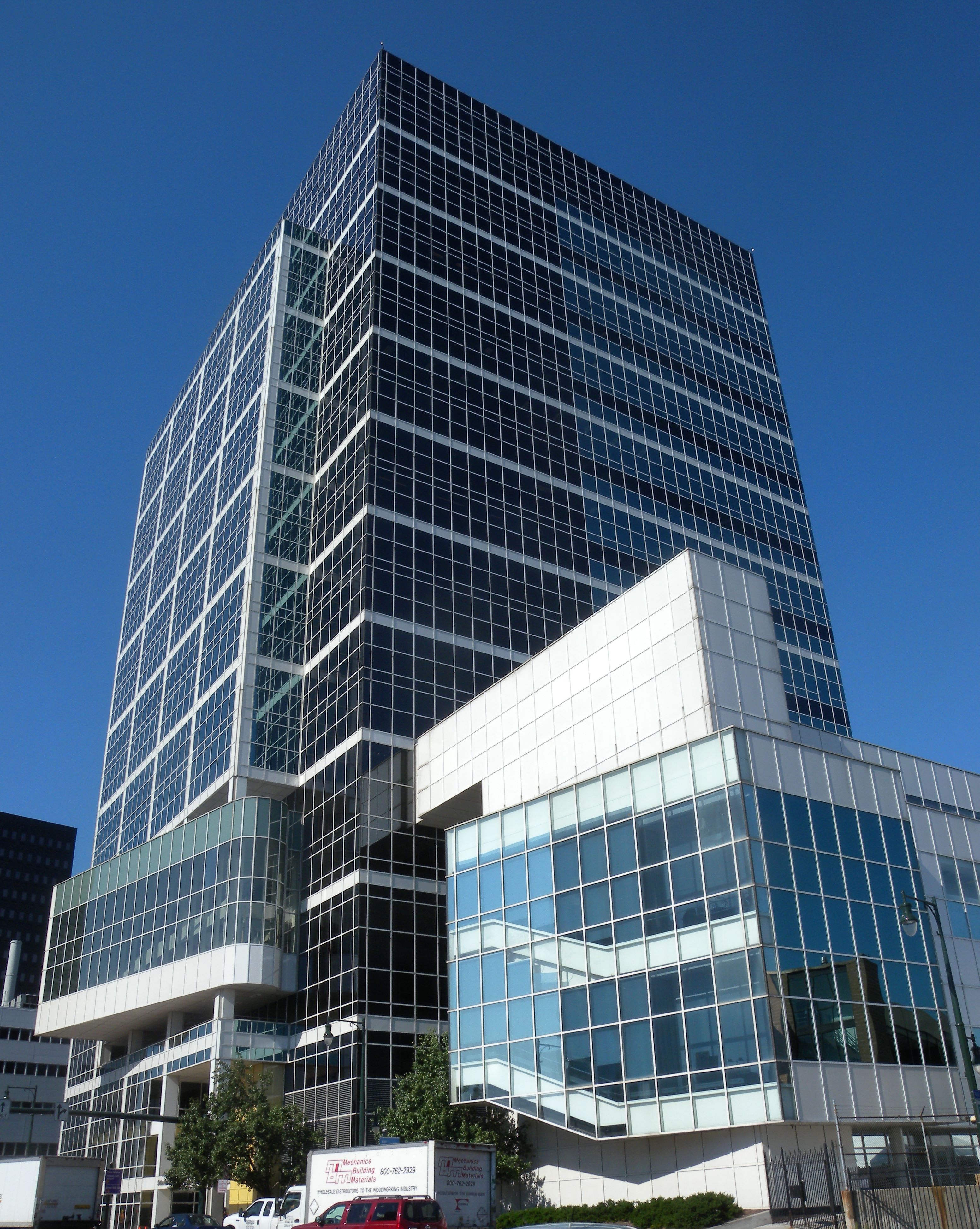
A satellite of the main campus, the Newark Campus is home to the university's School of Law. Located at One Newark Center, the Law School and several academic centers of the university are housed in a modern 22-story skyscraper building. It is at the corner of Raymond Boulevard and McCarter Highway in the business and high-tech heart of downtown Newark, New Jersey and was completed in 1991. The Newark Campus building provides 210000 sqft and an additional 65000 sqft of library to the university.
The Seton Hall University School of Law was founded in 1951. It is accredited by the American Bar Association (ABA) since 1951 and is also a member of the Association of American Law Schools (AALS). Seton Hall is one of two law schools in the state of New Jersey. Seton Hall Law was founded by a woman, Miriam T. Rooney, who served as dean from 1951 to 1961. She was not only Seton Hall's first female dean, but was the first woman dean at an ABA-accredited law school in the United States. Dean Kathleen M. Boozang, who assumed the role in July 2015, is the third woman dean of Seton Hall Law.
Interprofessional Health Sciences Campus (IHS) campus
The IHS campus located in Nutley, New Jersey is dedicated to students seeking a career in health professions. The campus is home to the School of Health and Medical Sciences and the College of Nursing.
Academics
Seton Hall University confers undergraduate and graduate degrees in as many as 70 academic fields. The school's academic programs are divided into nine academic units:
- College of Arts and Sciences (1856)
- Immaculate Conception Seminary School of Theology (1860)
- College of Nursing (1937)
- W. Paul Stillman School of Business (1950)
- School of Law (1951)
- School of Health and Medical Sciences (1987)
- Division of Continuing Education and Professional Studies (2005)
- School of Diplomacy and International Relations (1997)
- College of Human Development, Culture, and Media (2022) - Merging the College of Communication and the Arts (2015) and the College of Education and Human Services (1920)
Rankings
Seton Hall University was ranked by U.S. News & World Report in 2025 as tied for 165th in the "National Universities" category. Seton Hall University School of Law was ranked tied at 70th best in the U.S. in 2022. The Stillman School of Business was ranked 65th of 114 undergraduate business schools in the nation by Bloomberg Businessweek in 2016.
Student life
| Race and ethnicity | Total | Economic diversity | |||
|---|---|---|---|---|---|
| White | {{bartable | 51 | % | 2 | background:gray}} |
| Hispanic | {{bartable | 18 | % | 2 | background:green}} |
| Asian | {{bartable | 11 | % | 2 | background:purple}} |
| Black | {{bartable | 8 | % | 2 | background:mediumblue}} |
| Other | {{bartable | 8 | % | 2 | background:brown}} |
| Foreign national | {{bartable | 3 | % | 2 | background:orange}} |
| Low-income | {{bartable | 26 | % | 2 | background:red}} |
| Affluent | {{bartable | 74 | % | 2 | background:black}} |
Greek life
Twenty-four recognized fraternity and sorority chapters are chartered at Seton Hall. About 15 percent of the student body are members of a Greek-letter organization.
A cappella groups
- The Gentlemen of the Hall (all male)
- Seton Notes (co-ed)
Student media
The school's principal newspaper is The Setonian. The paper has school news, an entertainment section called "Pirate Life", sports, editorials, and an opinion section. The staff consists of undergraduates and publishes weekly on Thursday. The Stillman Exchange is the Stillman Business school's newspaper. Its stories cover ethical issues, business, and athletic stories. The * Journal of Diplomacy and International Relations * is a bi-annually published journal composed of writings by international leaders in government, the private sector, academia, and nongovernmental organizations. Undergraduate students studying Diplomacy and International Relations publish The Diplomatic Envoy, an international news and analysis paper that releases both weekly online and monthly print editions. The Liberty Bell, is the only political and independent newspaper on campus. Founded in 2007, it is published monthly and features news and op-ed articles about university, local, national, and international news with a focus on personal freedom. The Liberty Bell won the Collegiate Network's 2008–2009 award for Best New Paper, an award given to student newspapers no older than three years.
The Galleon Yearbook ceased publishing in the early 2000s. The original name of the Seton Hall University yearbook was title The White and Blue from 1924 to 1942, with the exception of 1940. No yearbooks were published from 1934 to 1938 or from 1943 to 1946. Publication resumed in 1947 under the title The Galleon but ceased in 2006.
WSOU is a college radio station broadcasting at 89.5 MHz FM. WSOU currently broadcasts in HD-RADIO. In 2007, the Princeton Review rated WSOU as the eighth-best college radio station in the nation.
Traditions
University seal
The university seal combines attributes from the Bayley coat of arms and the Seton family crest. The Seton crest dates back as early as 1216 and symbolizes Scottish nobility. Renowned crest-maker, William F. J. Ryan designed the current form of the Seton Hall crest, which is notable for its three crescents and three torteau. The motto on the seal Hazard Zet Forward (Hazard Zit Forward on some versions) is a combination of Norman French and archaic English meaning at whatever risk, yet go forward. Part custom and part superstition, students avoid stepping on an engraving of the seal in the middle of the university green. It is said that students who step on the seal will not graduate on time.
Alma mater
The Seton Hall University Alma Mater was adopted as the official song of Seton Hall University. Charles A. Byrne of the class of 1937 wrote the original lyrics in 1936 and the university adopted the alma mater during the 1937 school year when the dean first read it to the student body. Some students participate in the tradition of saying "blue and white" more loudly than the rest of the alma mater.
Athletics
Main article: Seton Hall Pirates

The school's sports teams are called the Pirates. They participate in the NCAA's Division I and in the Big East Conference. The college established its first basketball squad in 1903.
Seton Hall athletics is best known for its men's basketball program, which won the 1953 National Invitation Tournament (NIT); were the 1989 NCAA tournament national runners-up following a defeat to Michigan in the final, 79–80 in overtime; and are New Jersey's most successful representative during March Madness by number of wins. Seton Hall also fields varsity teams in baseball, women's basketball, men's and women's cross country running, men's and women's golf, men's and women's soccer, softball, men's and women's swimming & diving, women's tennis, and women's volleyball.
Seton Hall also has club programs participating in ice hockey, rugby union, lacrosse, and men's volleyball and soccer. All Seton Hall sports have their home field on the South Orange campus except for the men's basketball team which currently plays at the Prudential Center in Newark after previously calling the Meadowlands home, and the club ice hockey team which plays at Richard J. Codey Arena in West Orange.
Seton Hall fielded its first varsity football program from 1882 until cancellation in 1932. The university later fielded a club football team from 1965 through 1972. In 1972, the football team won a national club championship. The next year, 1973, it was reinstated as a varsity program competing at the Division III level as the university aligned its other varsity teams with the original Big East Conference in 1979. Football was ultimately canceled after the 1981 season. During this final period of varsity football sponsorship, the team was coached by Ed Manigan.
Notable faculty and alumni
Main article: List of Seton Hall University people
Notes
References
References
- (February 12, 2025). "U.S. and Canadian 2024 NCSE Participating Institutions Listed by Fiscal Year 2024 Endowment Market Value, Change in Market Value from FY23 to FY24, and FY24 Endowment Market Values Per Full-time Equivalent Student". National Association of College and University Business Officers (NACUBO).
- [https://www.shu.edu/president/ Office of the President], Seton Hall University, Accessed October 12, 2025. "On April 2, 2024, Monsignor Joseph R. Reilly, S.T.L., Ph.D., was announced as the 22nd president of Seton Hall, effective July 1."
- [https://www.shu.edu/news/erik-lillquist-to-transition-to-interim-provost.html "Erik Lillquist, J.D., to Transition to Interim Provost"], Seton Hall University, February 12, 2025. Accessed October 12, 2025. "Monsignor Joseph R. Reilly, president of Seton Hall University, today announced Erik Lillquist, J.D., will begin serving the university as interim provost, effective July 1. Lillquist will assume the position at the beginning of the 2025-26 academic year, following the departure of Provost and Senior Executive Vice President Katia Passerini, Ph.D., who has been selected to lead Gonzaga University as its next president."
- "Seton Hall At-a-Glance". Seton Hall University.
- "Manual".
- "The Setonian". The Setonian.
- "Carnegie Classifications Institution Lookup". Center for Postsecondary Education.
- (2007). "Seton Hall University History". Social Science Research Network.
- Carino, Jerry. [https://www.app.com/story/sports/college/2019/11/04/seton-hall-basketball-sport-built-campus/4148715002/ "Seton Hall basketball: The sport that shaped a university – then and now"] {{Webarchive. link. (2024-06-11 , ''[[Asbury Park Press]]'', November 4, 2019. Accessed May 19, 2023. "Felt isn't the only person who came to find out about the school through men's hoops. In the 1980s, hardwood success translated into a changed campus and soaring applications for a small local school. That's happening again.")
- (2007). "Higher Education Seeks to Instill Knowledge and Faith". Archdiocese of Newark.
- Delozier, Alan. "History of Seton Hall". Walsh Library Archives.
- [https://www.nytimes.com/1936/07/10/archives/rev-jf-kelley-heads-seton-hall-priest-34-years-old-will-be-the.html "Rev. J.F. Kelley Heads Seton Hall; Priest, 34 Years Old, Will Be the Youngest President of a College in Nation. Named By Bishop Walsh; Philosophy Department Chairman at Jersey Institution Has Studied in Many Schools."] {{Webarchive. link. (2022-04-29 , ''[[The New York Times]]'', July 10, 1936. Accessed April 28, 2022. "The Rev. James Francis Kelley, head of the Department of Philosophy of Seton Hall College, South Orange, was appointed president of the college today by Bishop Thomas J. Walsh of the Roman Catholic Diocese of Newark.")
- [https://www.nytimes.com/1939/06/27/archives/seton-hall-college-to-get-a-gymnasium-ground-for-600000-edifice-to.html "Seton Hall College To Get A Gymnasium; Ground for $600,000 Edifice to Be Broken Thursday"] {{Webarchive. link. (2022-04-29 , ''[[The New York Times]]'', June 27, 1939. Accessed April 28, 2022. "Ground for a $600,000 gymnasium, to include an auditorium, a theatre and two swimming pools, will be broken Thursday at Seton Hall College here, it was announced today by the Rev. Dr. James F. Kelley, president of the college.")
- [https://www.nytimes.com/1949/03/04/archives/seton-hall-gets-a-new-president-college-under-inquiry-in-war-goods.html "Seton Hall Gets A New President; College Under Inquiry in War Goods Sales – Father McNulty Succeeds Msgr. Kelley"] {{Webarchive. link. (2022-04-29 , ''[[The New York Times]]'', March 4, 1949. Accessed April 28, 2022. "Msgr. Kelley had been president of Seton Hall since 1936, when at the age of 33 he became one of the youngest college presidents in the nation. Under his leadership the school, which is operated by the Archdiocese of Newark, grew from an enrollment of 423 students to its present total of more than 6,000")
- (2007). "Record Group RG/A Seton Hall College of Medicine and Dentistry 1946–1965". SHU.
- (2007). "bout UMDNJ: History and Timeline". UMDNJ.
- (July 16, 2020). "Hackensack Meridian School of Medicine Reaches Major Milestone and Operates as Independent School".
- Kaplan, David A.. (2015-03-01). "Tyco’s ‘Piggy,’ Out of Prison and Living Small". The New York Times.
- "Brennan, Robert, American businessman and criminal".
- (2000). "Three Die in Dorm Fire at Seton Hall". CNN News.
- (2007). "Former students reach plea deal in killer dorm fire". CNN News.
- (2007). "Ever Forward Campaign Description". Division of University Advancement.
- link. (December 24, 2007)
- Austin, Charles. (September 6, 2001). "Newark bishop's legacy is mixed". Bergen Record.
- [http://www.nj.com/news/index.ssf/2010/04/seton_hall_to_hold_first_gay_c.html New Jersey.com: "Newark archbishop questions plan for Seton Hall University gay marriage class"] {{Webarchive. link. (2017-09-16 May 1, 2010)
- [http://www.cardinalnewmansociety.org/News/tabid/54/ctl/Details/mid/452/ItemID/822/Default.aspx Cardinal Newman Society: "Archbishop of Newark Criticizes Same-Sex 'Marriage' Course at Seton Hall"] {{webarchive. link. (September 28, 2011 April 30, 2010)
- Santiago, Joseph. "Visitors Hall".
- Fagan, Matt. "NJ's newest medical school welcomes 91 students who speak 23 languages".
- Sloan, Karen. (December 22, 2022). "Seton Hall is latest U.S. law school to face embezzlement scandal". [[Reuters]].
- Carino, Jerry. (July 24, 2023). "Seton Hall president Joseph Nyre resigns in surprise move". [[Asbury Park Press]].
- (2006). "University By-Laws". Office of Board Affairs.
- The [[Eugene V. Kelly Carriage House]], on the campus itself, is also NRHP-listed.{{NRISref|version=2009a}}
- "The South Orange Village History". South Orange Village Website.
- "University Day Historical Walking Tour of Seton Hall University Facts". South Orange Historical and Preservation Society.
- (2008). "Immaculate Conception Chapel at Seton Hall University". Seton Hall website.
- "The Chapel of the Immaculate Conception at Seton Hall University". Granda Liturgical Arts, Inc. website.
- (2013). "31 Insanely Beautiful Colleges You Can Get Married At". Buzzfeed.com.
- (2014). "The 50 Most Beautiful College Campus Wedding Venues". Collegeranker.com.
- (2007). "New Jersey: South Orange: Convict's Name Off Building". New York Times.
- (2018-01-25). "Seton Hall's Welcome Center close to completion – The Setonian". The Setonian.
- (2018-06-21). "Bethany Hall Dedicated in Honor of Former University President Monsignor Robert Sheeran – Seton Hall University". Seton Hall University.
- (2011-03-13). "Recycling – Seton Hall University, New Jersey". Shu.edu.
- "Sustainability @ Seton Hall University | A TLTC Blog". Gogreen.shu.edu.
- (2010-03-31). "Seton Hall University – Green Report Card 2011". Greenreportcard.org.
- (2006). "One Newark Center". Emporis Worldwide Listing.
- (2015). "Year of the Female Dean". prelaw Magazine.
- (2015). "Seton Hall Law Names Kathleen Boozang as New Dean". NJ.com.
- (2015-08-14). "Continuing Education and Professional Studies – Seton Hall University, New Jersey". 3.shu.edu.
- (2015-08-14). "College of Communication and the Arts". Shu.edu.
- "2021 Best Law Schools".
- "Best Undergraduate Business Schools 2016".
- "College Scorecard: Seton Hall University". [[United States Department of Education]].
- (2015-03-29). "Fraternity and sorority numbers climbing amid concerns about bad publicity". NJ.com.
- (2017-07-13). "Fraternities".
- (2017-07-13). "Sororities".
- "The Gentlemen of the Hall".
- (2017-10-04). "Student Organizations A–Z".
- "The Diplomatic Envoy – Words Beyond Borders".
- (2007). "Best College radio Rankings". The Princeton Review.
- Wister, Msgr. Robert. "Saints, Monsters, Bishops and Seton Hall". mimeo.
- "Alma Mater lyrics". 2007 Commencement Exercises Pamphlet.
- (2007). "150 year history of Seton Hall".
- (2007). "The Seton Hall Pirate's Myspace".
- "NCAA Division 1 Varsity Sports". Seton Hall University.
- "Member Schools". BIG EAST Conference Athletics.
- "New book spotlights history of SHU b-ball". The Setonian.
- "Club Sports". Seton Hall Athletics.
- "Seton Hall University Men's Basketball Joins Roster At Newark's Prudential Center". [[New Jersey Devils]].
- "SHU Hockey – Seton Hall University Ice Hockey".
- (2 March 1982). "Football Dropped". The Times-News.
This article was imported from Wikipedia and is available under the Creative Commons Attribution-ShareAlike 4.0 License. Content has been adapted to SurfDoc format. Original contributors can be found on the article history page.
Ask Mako anything about Seton Hall University — get instant answers, deeper analysis, and related topics.
Research with MakoFree with your Surf account
Create a free account to save articles, ask Mako questions, and organize your research.
Sign up freeThis content may have been generated or modified by AI. CloudSurf Software LLC is not responsible for the accuracy, completeness, or reliability of AI-generated content. Always verify important information from primary sources.
Report