From Surf Wiki (app.surf) — the open knowledge base
Seth Bullock
Canadian-American frontiersman (1849–1919)
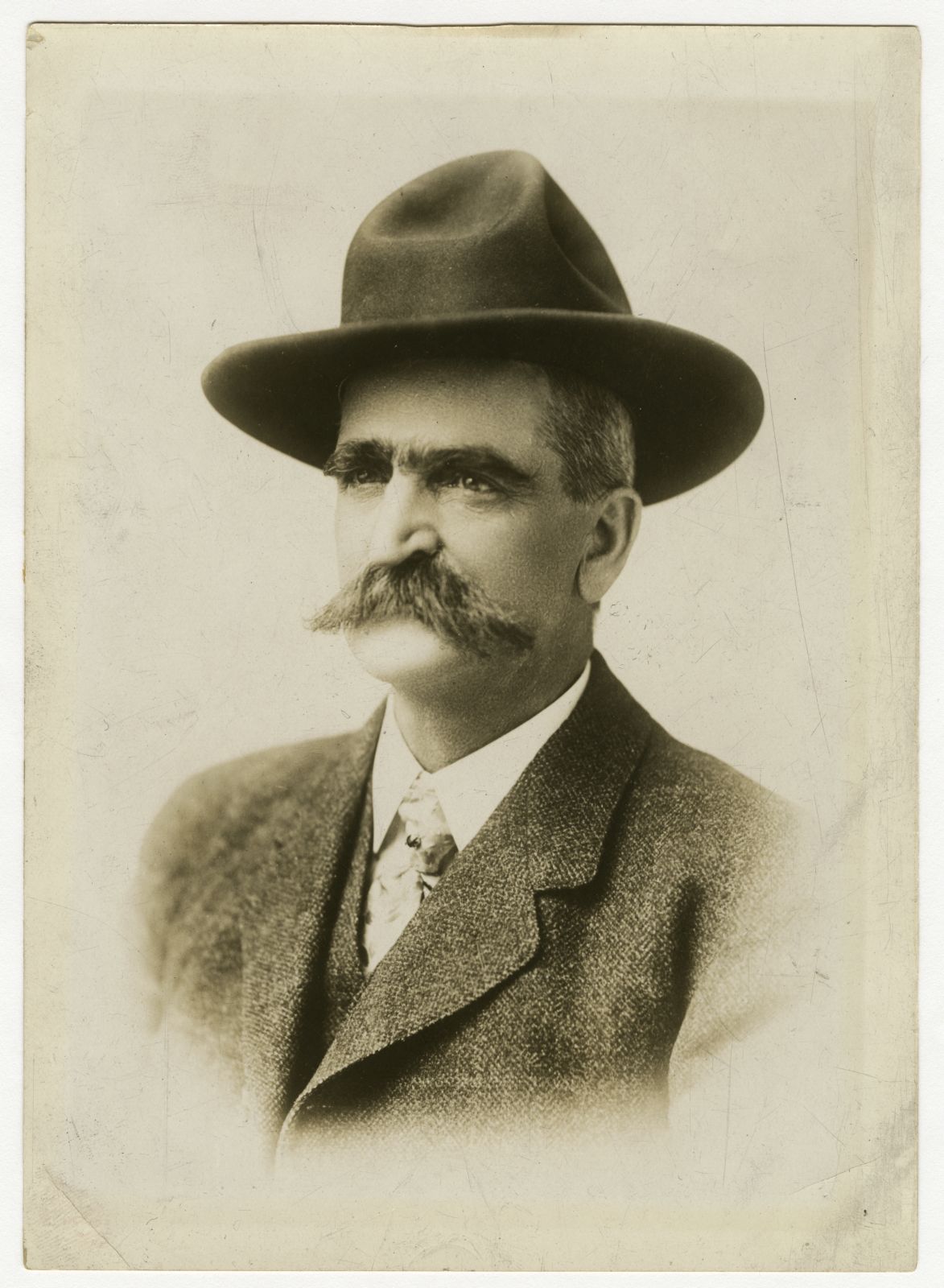
Canadian-American frontiersman (1849–1919)
| Field | Value |
|---|---|
| name | Seth Bullock |
| image | Seth Bullock.gif |
| office1 | United States Marshal for South Dakota |
| term_start1 | January 13, 1906 |
| term_end1 | February 8, 1914 |
| predecessor1 | Edward G. Kennedy |
| successor1 | Thomas W. Taubman |
| office2 | Sheriff of Lawrence County, Dakota Territory |
| term_start2 | March 6, 1877 |
| term_end2 | December 6, 1877 |
| predecessor2 | None (position created) |
| successor2 | John J. Manning |
| office3 | Sheriff of Lewis and Clark County, Montana Territory |
| term_start3 | December 1, 1873 |
| term_end3 | November 30, 1875 |
| predecessor3 | Patrick Powers |
| successor3 | Joseph C. Walker |
| birth_date | |
| birth_place | Amherstburg, Province of Canada |
| death_date | |
| death_place | Deadwood, South Dakota, U.S. |
| resting_place | Mount Moriah Cemetery |
| occupation | Businessman |
| Rancher | |
| Law enforcement officer | |
| party | Republican |
| spouse | |
| children | 3 |
Rancher Law enforcement officer Seth Bullock (July 23, 1849 – September 23, 1919) was a Canadian-American frontiersman, business proprietor, politician, sheriff, and U.S. Marshal. He was a prominent citizen in Deadwood, South Dakota, where he lived from 1876 until his death, operating a hardware store and later a large hotel, the Bullock Hotel.
Early life
Many of the details of Bullock's early life are lost. He was born in Amherstburg, Canada West (now Ontario) on the Canadian side of the Detroit River.
His father, retired British Army Sergeant Major and hero George Bullock, was known to be active in the politics of Sandwich, Canada West (amalgamated in 1935 into the City of Windsor). Bullock's mother was a Scotswoman born Agnes Findley.
By 1860, George Bullock was forced to resign his position as County Treasurer due to missing funds. To avoid prosecution in Canada, he fled to Detroit, Michigan, leaving his eight children alone in Sandwich. Bullock's mother had died during this time, so the children were left to take care of themselves. The property owned by Bullock's father in Sandwich was either seized by his creditors or sold at public auction in 1863, as he had defaulted on his mortgage and other debts.
Bullock's childhood was not a happy one. His father was a strict disciplinarian, known to beat young Seth for minor infractions. Bullock ran away first at age 13, then again at age 16 to Montana to live temporarily with his older sister, Jessie Bullock. By age 18, he had permanently left home.
Helena
In 1867, Bullock became a resident of Helena, Montana Territory, where he unsuccessfully ran for the Territorial Legislature. He was subsequently elected as a Republican to the Territorial Senate, served in 1871 and 1872, and helped create Yellowstone National Park. In 1873, he was elected sheriff of Lewis and Clark County.
In 1876, he decided that an untapped market for hardware existed in the gold rush town of Deadwood, in the Dakota Territory, so he moved there with friend and partner Sol Star to open a hardware store. In August 1876 they purchased a lot and set up shop as "Office of Star and Bullock, Auctioneers and Commission Merchants," first in a tent and then in a building.
Deadwood, South Dakota
Deadwood was a lawless, rowdy camp. According to several historians, including John Ames in "The Real Deadwood" and Kenneth C. Kellar in "Seth Bullock: Frontier Marshal Deadwood", days after Bullock and Star's arrival, Wild Bill Hickok was murdered by Jack McCall. The Deadwood newspaper indicates Hickok was killed on August 2, 1876. According to a letter Bullock sent a friend, he arrived in Deadwood on August 3, 1876. If Bullock's letter is accurate, he never met Hickok.
According to contemporary news accounts, McCall shot Hickok in the back of the head while he sat playing poker; McCall was found not guilty by an impromptu camp court, after which he promptly left town. McCall was later re-tried, found guilty, and executed. The demand for law enforcement grew following Hickok's murder. In February 1877 Lawrence County, which included Deadwood, was officially created by the Territorial Legislature. Territorial Governor John L. Pennington appointed Bullock to be its interim sheriff until the first elections could be held in November.
Bullock's tenure lasted approximately nine months. Bullock took the job seriously, deputizing several residents and tackling the job of civilizing the camp. Despite (or perhaps because of) a reputation for fearlessness and an uncompromising nature, Bullock managed the task without killing anyone. In fact, one of Bullock's first duties was to confront Dodge City Deputy Marshal Wyatt Earp, who was possibly interested in the sheriff's job. Bullock told Earp that his services were not needed. A week later, Earp left Deadwood to return to Dodge City.
Bullock also famously had several "run-ins" with Al Swearengen, proprietor of the notorious Gem Theater, Deadwood's most notable brothel. Swearengen had a knack for making money from vice and shrewdly invested some of his profits in cultivating alliances with the camp's wealthy and powerful.
Having attained some stability in Deadwood, Bullock brought his wife Martha Eccles Bullock and daughter, Margaret, to town from her parents' home in Michigan, where they had been living during this period. They subsequently had another daughter, Florence, and a son, Stanley.
In November 1877, the first county elections were held, and Bullock for sheriff on the Peoples Party (Republican) ticket, while John J. Manning was the Democratic candidate. Manning won, and in 1878, Bullock ran again, this time as a Republican. Manning won reelection, and he was elected a third time in 1879.
Bullock and Star purchased a ranch where Redwater Creek met the Belle Fourche River and dubbed it the S&B Ranch Company. Bullock is also credited with introducing alfalfa farming to Dakota in 1881. Later, he became a deputy U.S. Marshal, partnered with Star and Harris Franklin in the Deadwood Flouring Mill, and invested in mining, the local growth industry. Bullock and Star eventually expanded their business interests to the towns of Spearfish, Sturgis, and Custer.
Bullock, then a deputy sheriff from Medora, North Dakota, met Theodore Roosevelt in 1884 while bringing a horse thief known as Crazy Steve into custody on the range, near what would become the town of Belle Fourche. The two became lifelong friends, Roosevelt later saying of Bullock, "Seth Bullock is a true Westerner, the finest type of frontiersman."
Belle Fourche and the Bullock Hotel
Bullock and Star contributed further to the economic development of the region by convincing the Fremont, Elkhorn, and Missouri Valley Railroad to build a track by offering them 40 acres (16 ha) of free right-of-way across their land when a speculator purchased the right of way to Minnesela and demanded a high price from the railroad. The railroad built a station three miles (5 km) northwest of Minnesela in 1890, and Bullock and Star were instrumental in founding the town of Belle Fourche, offering free lots to anyone moving from Minnesela. Belle Fourche became the largest railhead for livestock in the United States and the county seat was changed from Minnesela to Belle Fourche.
Bullock and Star's hardware store in Deadwood burned down in 1894. Rather than rebuild, they built Deadwood's first hotel on the site—a three-story, 63-room luxury hotel. The Bullock Hotel continues to operate to this day, now incorporating a casino.
Later life and death
Bullock's friendship with Roosevelt led to his becoming captain and commander of Troop A in the Cavalry regiment organized by Melvin Grigsby. The war ended before Bullock's troop left its training camp in Louisiana, and he returned to South Dakota. When Roosevelt became vice president under President William McKinley, he arranged the appointment of Bullock as the first forest supervisor of the Black Hills Reserve. After Roosevelt was elected president, Bullock organized 50 people (including Tom Mix) to ride in the inaugural parade in 1905. Roosevelt appointed Bullock U. S. Marshal for South Dakota in 1905 and President William Howard Taft reappointed him in 1909. Roosevelt later selected Bullock as one of 18 officers (others included Frederick Russell Burnham, James R. Garfield, and John M. Parker) to raise a volunteer infantry division, Roosevelt's World War I volunteers, for service in France in 1917.
Congress gave Roosevelt the authority to raise up to four divisions similar to the Rough Riders; however, as commander-in-chief, President Woodrow Wilson refused to use the volunteers and the unit was disbanded. After Roosevelt's death in January 1919, Bullock created a monument to him with the aid of the Black Hill Pioneers, dedicated on July 4, 1919, on Sheep Mountain, which was renamed Mount Roosevelt.
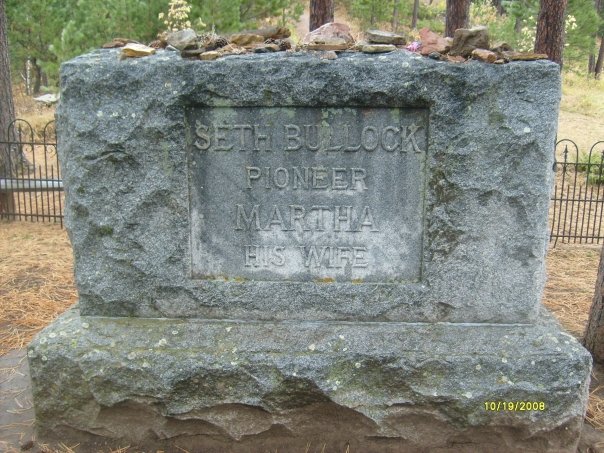
Bullock died of colon cancer shortly thereafter, on September 23, 1919, at his home at 28 Van Buren Street in Deadwood. He is buried in Mount Moriah Cemetery in Deadwood, along with Wild Bill Hickok and Calamity Jane, with his grave facing Mount Roosevelt. Bullock's grave is more than 750 feet away from the main cemetery grounds.
In popular culture
Bullock was portrayed by Timothy Olyphant in HBO's critically acclaimed TV series Deadwood (2004–2006). Olyphant reprised the role for the HBO sequel Deadwood: The Movie (2019).
References
References
- Wolff, David A.. (2009). "Seth Bullock: Black Hills Lawman". South Dakota State Historical Society Press.
- "A Case of Mistaken Identity".
- (2012). "Haunted Deadwood: A True Wild West Ghost Town". Arcadia Publishing Incorporated.
- "U.S. Marshals Service, History, United States Marshal Seth Bullock".
- McClintock, John S.. (2000). "Pioneer Days in the Black Hills: Accurate History and Facts Related by One of the Early Day Pioneers". University of Oklahoma Press.
- (2012). "The Last Western: Deadwood and the End of American Empire". Bloomsbury Publishing.
- link. (2014-12-11 . Theodore Roosevelt Digital Library. Dickinson State University.)
- (August 5, 1876). "Assassination of Wild Bill". [[Black Hills Pioneer]].
- (August 18, 2010). "Seth Bullock Goes to Deadwood". YesterYear Once More.
- Morgan, Amber. (January 25, 2025). "Seth Bullock, The Wild West Sheriff Who Brought Civilization To Deadwood". All That's Interesting.
- (September 6, 1876). "Jack M'Call: On His Way to Yankton for Trial". [[Sioux City Journal.
- (March 1, 1877). "The Gallows: Jack McCall the Murderer of Wild Bill Executed". Press and Dakotaian.
- (25 August 2011). "Legendary Lawman Seth Bullock".
- (2009). "Seth Bullock:Lawman". SDSHS Press.
- Ames, John Edward. (2004). "The Real Deadwood: True Life Histories of Wild Bill Hickok, Calamity Jane, Outlaw Towns, and Other Characters of the Lawless West". Chamberlain Bros..
- (November 11, 1878). "Bismarck Tribune (Bismarck, Dakota Territory)".
- Dary, David. (2007). "True Tales of the Prairies and Plains". University Press of Kansas.
- Hagedorn, Hermann. (1921). "Roosevelt in the Bad Lands". Houghton Mifflin.
- Stephens, John Richard. (2016). "Wildest Lives of the Wild West: America through the Words of Wild Bill Hickok, Billy the Kid, and Other Famous Westerners". Rowman & Littlefield.
- (2002). "Deadshot in Deadwood: Pettigrew Visits the Black Hills". Siouxland Heritage Museums.
- Bleyer, Bill. (2016). "Sagamore Hill: Theodore Roosevelt's Summer White House". Arcadia Publishing.
- Roosevelt, Theodore. (1917). "The Foes of Our Own Household". George H. Doran company.
- (October 2023). "Hiking the Black Hills Country: A Guide to More Than 50 Hikes in South Dakota and Wyoming". Globe Pequot Press.
- Wolff, David A.. (2009). "Seth Bullock: Black Hills Lawman". South Dakota State Historical Society Press.
- Project, South Dakota Federal Writers. (2006). "The WPA Guide to South Dakota". Minnesota Historical Society.
- Straub, Patrick. (November 10, 2009). "It Happened in South Dakota: Remarkable Events That Shaped History". Rowman & Littlefield.
- Brode, Douglas. (2010). "Shooting Stars of the Small Screen: Encyclopedia of TV Western Actors, 1946–Present". University of Texas Press.
- Sepinwall, Alan. (May 22, 2019). "Bullock's Last Stand: Timothy Olyphant on 'Deadwood: The Movie' and David Milch".
This article was imported from Wikipedia and is available under the Creative Commons Attribution-ShareAlike 4.0 License. Content has been adapted to SurfDoc format. Original contributors can be found on the article history page.
Ask Mako anything about Seth Bullock — get instant answers, deeper analysis, and related topics.
Research with MakoFree with your Surf account
Create a free account to save articles, ask Mako questions, and organize your research.
Sign up freeThis content may have been generated or modified by AI. CloudSurf Software LLC is not responsible for the accuracy, completeness, or reliability of AI-generated content. Always verify important information from primary sources.
Report