From Surf Wiki (app.surf) — the open knowledge base
Serape
Blanket-like shawl or cloak worn in Mexico, especially by men
.jpg)
Blanket-like shawl or cloak worn in Mexico, especially by men
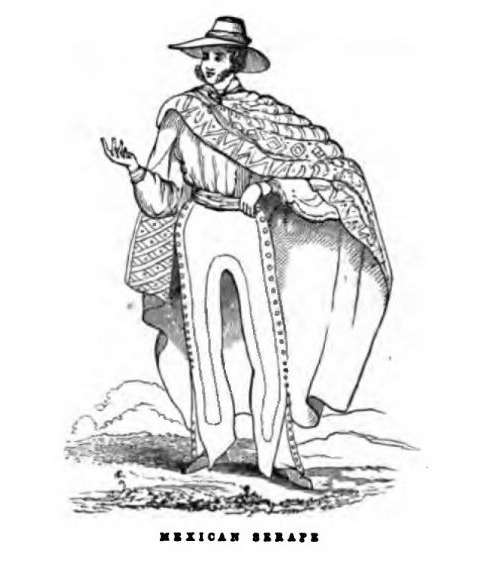
The serape, sarape or jorongo is a long blanket-like shawl or cloak, often brightly colored and fringed at the ends, worn in Mexico, especially by men. The accepted spelling of the word in Mexico and Spanish-speaking countries is sarape (or, less commonly, zarape). The term serape is for the rectangular woven blanket (no openings), though in more recent years it can also be used to refer to a very soft rectangular blanket with an opening in the middle for one's head, similar to a poncho, called gabán, or jorongo in Mexico. Modern variations of some serapes are made with matching hoods for head covering. The length varies, but front and back normally reach knee length on an average person.
Available in various colors and design patterns, the typical colors of serapes from the highland regions are two-tone combinations of black, grey, brown, or tan depending on the natural color of the sheep flocks grown in the area, with large design patterns utilizing traditional indigenous motifs. The ends are usually fringed.
History
The serape is thought to have its forebears in garments worn in the region near Chiautempan and Contla, Tlaxcala. Around 1591, a diaspora from Tlaxcala accompanied Spanish conquistadores North to pacify La Gran Chichimeca. They eventually settled near Saltillo in the barrio of San Esteban de la Nueva Tlaxcala, where they began agricultural development, including the raising of sheep and goats. There are records of two master weavers being sent from Tlaxcala to Saltillo in 1650.
One of the first documented instances of the word zarape, can be found in the diaries of fray Juan Augustin de Morfi, from his visit in 1777 to a property owned by descendants of conquistador, Francisco de Urdiñola.
During the Colonial period, it was taken to northern New Spain where it was adapted to the climate and the motifs changed. Designs and motifs changed during the reign of Maximilian I, where French and European patterns containing flowers, animals, and classic architecture were combined with traditional patterns. This specific style of sarapes were called Maximilians In the mid 1850s, sarapes began being made with machine-woven yarn and synthetic dyes.
The city of Teocaltiche, Jalisco is strongly linked to the development of the serape, although it was widespread throughout the area then known as Nueva Vizcaya.
Guatemalan serape
The serape is not a typical garment for the Maya highland people, who wear different clothing in cold regions. The Guatemalan serape is an imitation of the Mexican serape with a Maya twist, and their production is intended for sales to foreigners or city dwellers who feel attracted to the garment. These serapes are sold through a broker, with the Mayan families, who depend mostly upon agricultural work, manufacturing small quantities for extra income. The brokers display the serapes at an incremental price at local markets or the sides of highland roads in improvised huts. The brokers are typically Maya. The appeal of the serape may be that they are made by Maya women on their traditional home looms, giving the serape a handmade look.
Modern Day
.jpg)
The serape has seen a resurgence in popularity in the 2000s. Boutiques have added them to their inventory as companies produce new modern designs but with traditional methods.
Weavers in Saltillo have defended the tradition of sarape production and have criticized foreign designers for appropriating traditional designs.
In 2019, Venezuelan-American Carolina Herrera was criticized for using the traditional designs as part of her firm's Resort Collection. The Mexican minister of culture wrote a public letter asking the design house to clarify how the firm received permission to commercialize patterns associated with specific communities.. In 2025, the Ministry of Culture reiterated their position that firms that profit from traditional clothing must compensate the artisans that preserved the techniques and designs of sarapes. The Mexican Institute of Industrial Property (IMPI), which registers intellectual property, has an entry for Sarape fino de Saltillo (Fine Saltillo sarape), which would protect the artisans, according to the Coahuilan cultural activist, Jesus Gerardo Segura Medina.
References
Bibliography
References
- Real Academia Española [http://dle.rae.es/?id=XHqMthS]
- "zarape {{!}} Definición de zarape en español de Oxford Dictionaries".
- "Serape".
- "Los orígenes del Sarape de Saltillo".
- "Diario y derrotero, 1777-1781".
- "Latin America’s Wrap for All Seasons".
- (2012-06-26). "San Marcos blankets are objects of affection among Latinos".
- (13 June 2019). "Artesanos defienden el sarape mexicano ante la imitación de Carolina Herrera". LA Times.
- "For The First Time, A Country's Government Is Calling Out A Fashion House For Appropriation". BuzzFeed.
- (7 August 2025). "Sí está protegido el sarape de Saltillo contra la apropiación ilegal: Secretaría de Cultura".
- "Promoción cultural se encuentra estancada en Coahuila, asegura activista". Vanguardia.
This article was imported from Wikipedia and is available under the Creative Commons Attribution-ShareAlike 4.0 License. Content has been adapted to SurfDoc format. Original contributors can be found on the article history page.
Ask Mako anything about Serape — get instant answers, deeper analysis, and related topics.
Research with MakoFree with your Surf account
Create a free account to save articles, ask Mako questions, and organize your research.
Sign up freeThis content may have been generated or modified by AI. CloudSurf Software LLC is not responsible for the accuracy, completeness, or reliability of AI-generated content. Always verify important information from primary sources.
Report