From Surf Wiki (app.surf) — the open knowledge base
Sensory room
Sensory stimulation area for therapy

Sensory stimulation area for therapy
A sensory room is a special room designed to develop a person's sense, usually through special lighting, music, and objects. It can be used as a therapy for children with limited communication skills.
Sensory room is an umbrella term used to categorize a broad variety of therapeutic spaces specifically designed and utilized to promote self-organization and positive change. There are multiple types of sensory rooms and purposes for use that have been created and implemented in different practice areas to date. When used appropriately, sensory rooms:
- Help to create a safe space
- Facilitate the therapeutic alliance
- Provide opportunities for engagement in prevention and crisis de-escalation strategies, as well as a host of other therapeutic exchanges (to teach skills, offer a variety of therapeutic activities, etc.)
- Promote self-care/self-nurturance, resilience and recovery
History
Equipment
Sensory rooms are often stocked full of many different types of equipment. This equipment is used to assist students in focusing on the present moment and to better process sensory information. Stocked equipment may be provided for balance and movement (trampolines, balance bars, swings), calming pressure (blankets, stuffed animals), or fidgeting behavior (fidget spinners, puzzles).
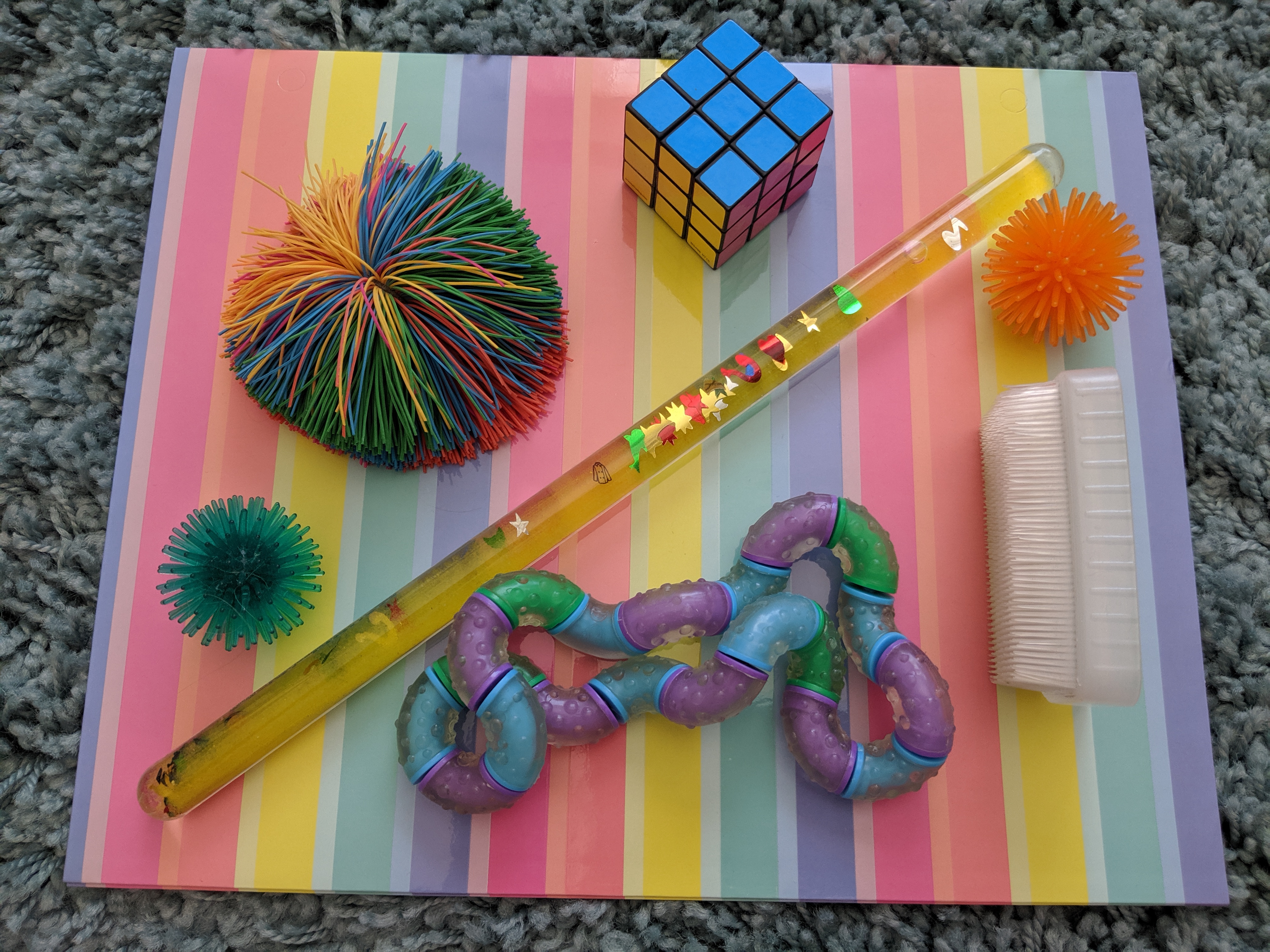
Multi-sensory equipment is a vital and effective part in the treatment of sensory disorders with children and adults alike. Some examples include: projectors and effect wheels, bubble tubes, music equipment, fibre optics, vibrating devices, aroma diffusers and sound equipment. Many schools have "Sensory Kits" which are personalized items of sensory stimulating equipment that are meaningful to the owner. These kits are held in Sensory Rooms as bins, boxes, bags, etc. to be used for preventative purposes and for any crises that may occur. These kits are also used to help children create self organization skills that can increase cognitive processes and future life skills.
.jpg)
Sensory equipment can help develop key life skills including vocalization, gross motor skills, color recognition and tracking. Examples include sensory rooms, sensory pools, sensory bathrooms, and sensory gardens.
They are also sometimes called multi-sensory rooms, white rooms, or quiet rooms.
Benefits
The benefits of sensory rooms are multifaceted and have been shown to help individuals of all ages with varying levels of cognitive and physical abilities. There are many benefits of sensory rooms. One benefit of sensory rooms is that they are an effective way for individuals to manage their stress levels.
Other benefits include: improving focus, encouraging communication and socialization, improving balance and motor planning, encouraging sensory exploration, promoting sensory integration, and enabling calmness and helping to improve self-regulation.
Sensory rooms are beneficial in public and private settings. They are often used in pediatric clinics and schools, hospitals and nursing homes, and individual family homes.
They can also help to manage negative thoughts and emotions. Sensory rooms can be beneficial for those that have a history of aggression, because they can be useful in de-escalating aggressive behavior. Adults that have an intellectual disability can use multi-sensory environments to allow emotional exploration and the chance to seek different kinds of stimulation, which can possibly be therapeutic. Relaxation is an important aspect of sensory rooms, and the different variables of multi-sensory rooms can possibly help reduce different kinds of problem behavior in patients. Hospice care patients can benefit from using sensory environments because they can enhance their end-of-life experience. These environments introduce a variety of new and familiar routines that include the eight different senses.
Dementia
One way sensory rooms are being utilized is with patients with dementia. Sensory information is helpful in improving the quality of life for people who have dementia and potentially other memory problems. A recent study testing various forms of multi-sensory therapies found that there were positive effects for those with issues with agitation. They were able to help reduce agitation but there was no deeper healing from having dementia patients spend time in a sensory room. Not all studies were in support of using sensory rooms for those with dementia. Another study found that the use of sensory rooms was not able to bridge the gap between academic information and implementation of new information. This impacted the view of nursing home staff and they became reluctant to let the residents use them.
References
References
- "Multi-Sensory Room".
- (2016). "An Exploration of the Use of a Sensory Room in a Forensic Mental Health Setting: Staff and Patient Perspectives". Occupational Therapy International.
- "Discipline of Speech Pathology".
- "Sensory Rooms in Mental Health".
- "History of Multi-Sensory".
- (2017-03-17). "Multi-sensory environments and their use by people with autism".
- "History {{!}} Snoezelen Multi-Sensory Environments".
- "Multi Sensory Environments: A Short History".
- (2017-03-17). "Multi-sensory environments and their use by people with autism".
- "Discipline of Speech Pathology".
- Champagne, Tina. "The Effects of the Sensory Room".
- (2013-12-04). "Use of a Sensory Room on an Intensive Care Unit". Journal of Psychosocial Nursing and Mental Health Services.
- (2012-09-26). "Pilot study of a sensory room in an acute inpatient psychiatric unit". Australasian Psychiatry.
- (27 October 2021). "The Many Benefits of Sensory Rooms | St Jude's".
- (26 June 2019). "The Benefits of Sensory Rooms for Children with Autism and Social/Emotional Challenges".
- (2018-02-08). "The benefits of sensory modulation on levels of distress for consumers in a mental health emergency setting". Australasian Psychiatry.
- (2017-01-31). "An evaluation of the use and efficacy of a sensory room within an adolescent psychiatric inpatient unit". Australian Occupational Therapy Journal.
- (January 2010). "Multi-sensory rooms: Comparing effects of the Snoezelen and the Stimulus Preference environment on the behavior of adults with profound mental retardation". Research in Developmental Disabilities.
- (2016-01-25). "Exploring Sensory Experiences and Personalization in an Inpatient Residential Hospice Setting - Oksana K. Niedzielski, Gary Rodin, Debbie Emmerson, Job Rutgers, Katherine M. Sellen, 2016". American Journal of Hospice and Palliative Medicine.
- (2014). "Benefits of sensory garden and horticultural activities in dementia care: a modified scoping review". Journal of Clinical Nursing.
- (2004). "Non-pharmacological interventions in dementia". Advances in Psychiatric Treatment.
- (2017). "Sensory enrichment for people living with dementia: Increasing the benefits of multisensory environments in dementia care through design". Design for Health.
This article was imported from Wikipedia and is available under the Creative Commons Attribution-ShareAlike 4.0 License. Content has been adapted to SurfDoc format. Original contributors can be found on the article history page.
Ask Mako anything about Sensory room — get instant answers, deeper analysis, and related topics.
Research with MakoFree with your Surf account
Create a free account to save articles, ask Mako questions, and organize your research.
Sign up freeThis content may have been generated or modified by AI. CloudSurf Software LLC is not responsible for the accuracy, completeness, or reliability of AI-generated content. Always verify important information from primary sources.
Report