From Surf Wiki (app.surf) — the open knowledge base
Semiconductor industry
Design and fabrication of semiconductors
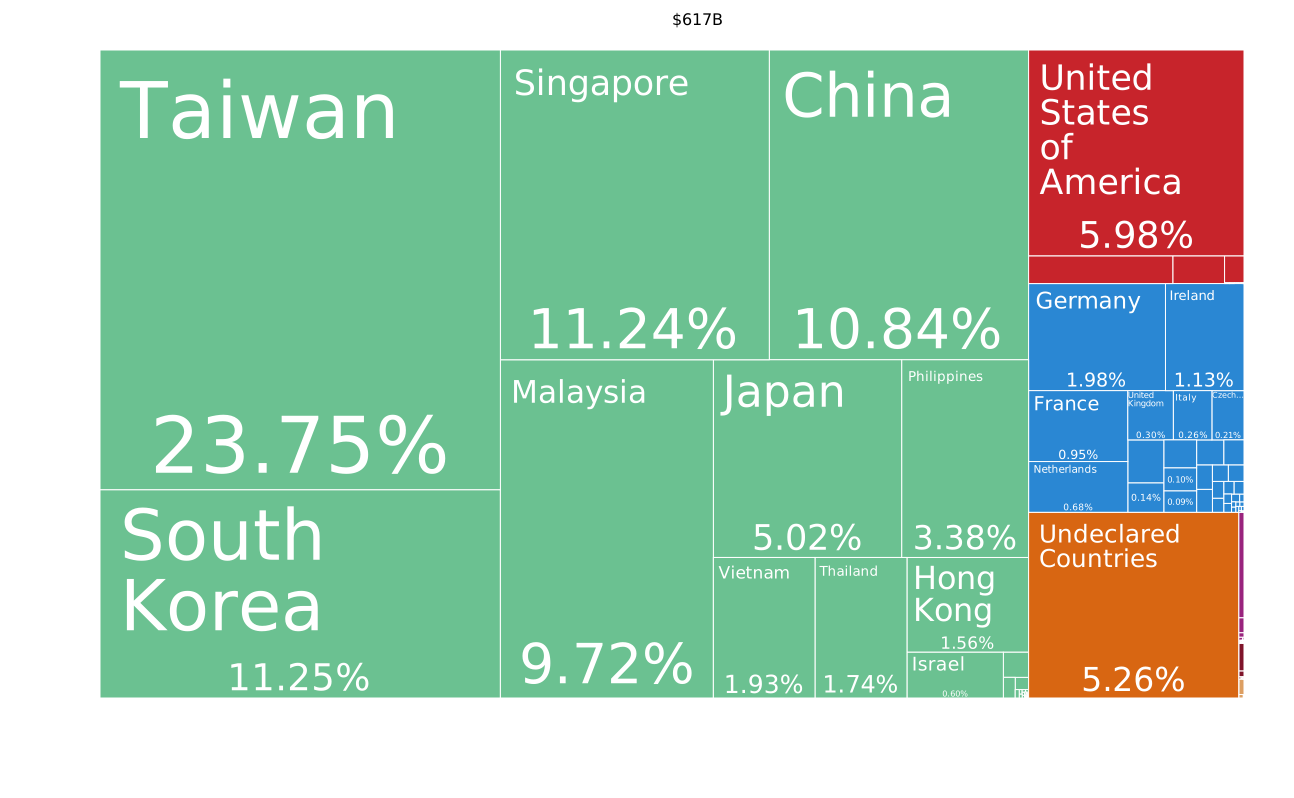
Design and fabrication of semiconductors
The semiconductor industry is the aggregate of companies engaged in the design and fabrication of semiconductors and semiconductor devices, such as transistors and integrated circuits. Its roots can be traced to the invention of the transistor by Shockley, Brattain, and Bardeen at Bell Labs in 1948. Bell Labs licensed the technology for $25,000, and soon many companies, including Motorola (1952), Shockley Semiconductor (1955), Sylvania, Centralab, Fairchild Semiconductor and Texas Instruments were making transistors. In 1958 Jack Kilby of Texas Instruments and Robert Noyce of Fairchild independently invented the Integrated Circuit, a method of producing multiple transistors on a single "chip" of Semiconductor material. This kicked off a number of rapid advances in fabrication technology leading to the exponential growth in semiconductor device production, known as Moore's law that has persisted over the past six or so decades. The industry's annual semiconductor sales revenue has since grown to over , as of 2018.
In 2010, the semiconductor industry had the highest intensity of Research & Development in the EU and ranked second after Biotechnology in the EU, United States and Japan combined.
The semiconductor industry is in turn the driving force behind the wider electronics industry, with annual power electronics sales of £135billion () as of 2011, annual consumer electronics sales expected to reach by 2020, tech industry sales expected to reach in 2019, and e-commerce with over in 2017. In 2019, 32.4% of the semiconductor market segment was for networks and communications devices.
In 2021, the sales of semiconductors reached a record $555.9 billion, up 26.2%, with sales in China reaching $192.5 billion, according to the Semiconductor Industry Association. A record 1.15 trillion semiconductor units were shipped in the calendar year. The semiconductor industry is projected to reach $726.73 billion by 2027.
Industry structure
The global semiconductor industry is dominated by companies from the United States, Taiwan, South Korea, Japan and the Netherlands, with Israel and Germany having significant presence in the field.

Unique features of the industry include continuous growth but in a cyclical pattern with high volatility. While the current 20-year annual average growth of the semiconductor industry is on the order of 13%, this has been accompanied by equally above-average market volatility, which can lead to significant if not dramatic cyclical swings. This has required the need for high degrees of flexibility and innovation in order to constantly adjust to the rapid pace of change in the market as many products embedding semiconductor devices often have a very short life cycle.
At the same time, the rate of constant price-performance improvement in the semiconductor industry is staggering. As a consequence, changes in the semiconductor market not only occur extremely rapidly but also anticipate changes in industries evolving at a slower pace. The semiconductor industry is widely recognized as a key driver and technology enabler for the whole electronics value chain.
Prior to the 1980s, the semiconductor industry was vertically integrated. Semiconductor companies both designed and manufactured chips in their own facilities. In many cases, this included inventing new processes, refining and purifying source chemicals and silicon wafers, and even manufacturing equipment, like furnaces, lithography tools and etchers. These companies also carried out the assembly and testing of their chips. Over time, many of these functions were outsourced, such that today semiconductor manufacturers rely on a complex supply chain to provide wafers, high purity source chemicals, and processing equipment. Further, starting with LSI in 1969, the industry has seen the emergence of Fabless Semiconductor Companies that focus solely on chip design and rely on other companies to manufacture their designs. Initially, these other companies were integrated device manufacturers (IDMs), companies that also designed and manufactured their own products, and thus were often competitors of the Fabless companies. But, by the mid-1980's TSMC and UMC emerged as foundries, specializing solely in the manufacture of other companies' designs.
Today, much of the industry is based on the foundry model, which consists of semiconductor fabrication plants (foundries) and integrated circuit design operations, each belonging to separate companies or subsidiaries. Some companies, known as integrated device manufacturers, both design and manufacture semiconductors. The foundry model has resulted in consolidation among foundries. As of 2021, only three firms are able to manufacture the most advanced semiconductors: TSMC of Taiwan, Samsung of South Korea, and Intel of the United States. Part of this is due to the high capital costs of building foundries. TSMC's latest factory, capable of fabricating 3 nm process semiconductors and completed in 2020, cost $19.5 billion.
Intel is considering outsourcing some production to TSMC. It currently can only produce 10 nm semiconductors, while TSMC and Samsung can both produce 5 nm. GlobalFoundries, an American-headquartered firm, uses a 12 nm process for its most advanced chips due to the rapidly increasing development costs of smaller process nodes.
Semiconductor sales
Sales revenue
| Year | Revenue (nominal) | Revenue (inflation) | Ref. | 2022 | 2021 | 2020 | 2019 | 2018 | 2017 | 2016 | 2015 | 2014 | 2013 | 2012 | 2011 | 2010 | 2009 | 2008 | 2007 | 2006 | 2005 | 2004 | 2000 | 1995 | 1992 | 1990 | 1987 | |||||||
|---|---|---|---|---|---|---|---|---|---|---|---|---|---|---|---|---|---|---|---|---|---|---|---|---|---|---|---|---|---|---|---|---|---|---|
| $601,694,000,000 | ||||||||||||||||||||||||||||||||||
| $594,952,000,000 | ||||||||||||||||||||||||||||||||||
| $466,237,000,000 | ||||||||||||||||||||||||||||||||||
| $422,237,000,000 | ||||||||||||||||||||||||||||||||||
| $481,090,000,000 | title=Semiconductors – the Next Wave | url=https://www2.deloitte.com/content/dam/Deloitte/cn/Documents/technology-media-telecommunications/deloitte-cn-tmt-semiconductors-the-next-wave-en-190422.pdf | publisher=Deloitte | date=April 2019 | access-date=11 October 2019 | archive-url=https://web.archive.org/web/20211020223147/https://www2.deloitte.com/content/dam/Deloitte/cn/Documents/technology-media-telecommunications/deloitte-cn-tmt-semiconductors-the-next-wave-en-190422.pdf | archive-date=20 October 2021 | url-status=dead}} | ||||||||||||||||||||||||||
| $420,390,000,000 | ||||||||||||||||||||||||||||||||||
| $345,850,000,000 | ||||||||||||||||||||||||||||||||||
| $335,170,000,000 | ||||||||||||||||||||||||||||||||||
| $335,840,000,000 | ||||||||||||||||||||||||||||||||||
| $305,580,000,000 | ||||||||||||||||||||||||||||||||||
| $291,560,000,000 | ||||||||||||||||||||||||||||||||||
| $299,520,000,000 | ||||||||||||||||||||||||||||||||||
| $298,320,000,000 | ||||||||||||||||||||||||||||||||||
| $226,310,000,000 | ||||||||||||||||||||||||||||||||||
| $280,000,000,000 | ||||||||||||||||||||||||||||||||||
| $255,600,000,000 | ||||||||||||||||||||||||||||||||||
| $247,700,000,000 | ||||||||||||||||||||||||||||||||||
| $227,000,000,000 | ||||||||||||||||||||||||||||||||||
| $213,000,000,000 | ||||||||||||||||||||||||||||||||||
| $204,000,000,000 | ||||||||||||||||||||||||||||||||||
| $144,000,000,000 | ||||||||||||||||||||||||||||||||||
| $60,000,000,000 | ||||||||||||||||||||||||||||||||||
| $51,000,000,000 | ||||||||||||||||||||||||||||||||||
| $33,000,000,000 |
|
| Industry sector | Revenue | Market share | Ref. | Total | $420.39 billion | 100% |
|---|---|---|---|---|---|---|
| Memory | $124 billion | % | ||||
| Logic | $102.2 billion | % | ||||
| Microprocessor | $63.9 billion | % | ||||
| Power semiconductors | $36.8 billion | % |
| Semiconductor type | Revenue | Market share | Ref. | Total | 100% |
|---|---|---|---|---|---|
| Integrated circuit chip | $250 billion | % | |||
| Compound semiconductors | $20 billion | % | |||
| Power transistors | $10 billion | % |
|}
Market share
| Industry sector | Market share | |
|---|---|---|
| isbn=9780080464886 | page=488}} | |
| Computer and peripheral equipment | 32.3% | |
| Consumer electronics | 21.2% | |
| Telecommunications equipment | 16.5% | |
| Industrial electronics | 14.3% | |
| Defense and space industry | 11.5% | |
| Transportation technology | 4.2% |
Largest companies
| Rank | 2021 | 2020 | last1=Manners | first1=David | title=Top Ten (+5) Semiconductor Companies 2018 | url=https://www.electronicsweekly.com/blogs/mannerisms/ten-best/top-ten-5-semiconductor-companies-2018-2018-11/ | access-date=15 June 2019 | work=Electronics Weekly | date=14 November 2018}} | 2017 | 2011 | title=Tracking the Top 10 Semiconductor Sales Leaders Over 26 Years | url=http://www.icinsights.com/news/bulletins/Tracking-The-Top-10-Semiconductor-Sales-Leaders-Over-26-Years/ | archive-url=https://web.archive.org/web/20120108095003/http://www.icinsights.com/news/bulletins/Tracking-The-Top-10-Semiconductor-Sales-Leaders-Over-26-Years | url-status=usurped | archive-date=January 8, 2012 | work=Semiconductor Market Research | publisher=IC Insights | date=December 12, 2011}} | 2000 | 1995 | 1992 | 1990 | title=1980s Trends in the Semiconductor Industry | url=http://www.shmj.or.jp/english/trends/trd80s.html | website=Semiconductor History Museum of Japan | access-date=10 July 2019}} | 1985 | 1975 |
|---|---|---|---|---|---|---|---|---|---|---|---|---|---|---|---|---|---|---|---|---|---|---|---|---|---|---|---|---|---|
| 1 | Samsung | Intel | Samsung | Samsung | Intel | Intel | Intel | Intel | NEC | NEC | NEC | NEC | TI | ||||||||||||||||
| 2 | Intel | Samsung | Intel | Intel | Samsung | Samsung | Toshiba | NEC | Toshiba | Toshiba | Toshiba | TI | Motorola | ||||||||||||||||
| 3 | SK Hynix | TSMC | SK Hynix | TSMC | TSMC | TI | NEC | Toshiba | Intel | Hitachi | Hitachi | Motorola | Philips | ||||||||||||||||
| 4 | Micron | SK Hynix | TSMC | SK Hynix | TI | Toshiba | Samsung | Hitachi | Motorola | Intel | Hitachi | ||||||||||||||||||
| 5 | Qualcomm | Micron | Micron | Micron | Toshiba | ST | TI | Motorola | Hitachi | Motorola | Toshiba | ||||||||||||||||||
| 6 | Nvidia | Qualcomm | Broadcom | Broadcom | Renesas | Renesas | Motorola | Samsung | TI | Fujitsu | Fujitsu | ||||||||||||||||||
| 7 | Broadcom | Broadcom | Qualcomm | Qualcomm | Qualcomm | Hynix | ST | TI | Mitsubishi | Philips | |||||||||||||||||||
| 8 | TI | Nvidia | Toshiba | TI | ST | Freescale | Hitachi | IBM | Mitsubishi | TI | Intel | ||||||||||||||||||
| 9 | Mediatek | TI | TI | Toshiba | Hynix | NXP | Infineon | Mitsubishi | Philips | National | |||||||||||||||||||
| 10 | AMD | Infineon | Nvidia | Nvidia | Micron | NEC | Philips | Hyundai | Panasonic | Panasonic |
| Name | Country | title=BEYOND BORDERS: THE GLOBAL SEMICONDUCTOR VALUE CHAIN | url=https://www.semiconductors.org/wp-content/uploads/2018/06/SIA-Beyond-Borders-Report-FINAL-June-7.pdf | publisher=Semiconductor Industry Association | date=May 2016 | access-date=10 July 2019}} | Hardware products |
|---|---|---|---|---|---|---|---|
| Samsung Electronics | South Korea | IDM | NAND flash memory, DRAM, CMOS sensor, RF transceivers, OLED display, SSD | ||||
| Intel | United States | IDM | x86-64 microprocessor, GPU, SSD, DRAM | ||||
| TSMC | Taiwan | Pure-play | |||||
| SK Hynix | South Korea | IDM | flash memory, DRAM, SSD, CMOS sensor | ||||
| Micron | United States | IDM | DRAM, NAND flash, SSD, NOR flash, Managed NAND, multichip packages | ||||
| Qualcomm | United States | Fabless | RF module, digital signal processor, Snapdragon system on chip | ||||
| Broadcom | United States | Fabless | Broadband/Wi-Fi/Bluetooth modems, Custom DSP & ARM CPUs | ||||
| Kioxia | Japan | IDM | NAND flash memory, SSD | ||||
| Texas Instruments (TI) | United States | IDM | Microcontroller, SoC, DSP, Amplifiers, data converters | ||||
| Analog Devices | United States | IDM | Amplifiers, data converters, audio & video products, RF & microwave, sensors, MEMS | ||||
| Qorvo | United States | IDM | RF module, filters, Amplifiers, PMIC | ||||
| Microchip | United States | IDM | Microcontrollers and analog semiconductors | ||||
| NXP | Netherlands | IDM | PMIC Media processor, MIFARE, LPC | ||||
| MediaTek | Taiwan | Fabless | SoC, chipset, CPU, GPU, DSP | ||||
| Infineon | Germany | IDM | Microcontrollers and power semiconductor devices | ||||
| Bosch | Germany | IDM | |||||
| STMicroelectronics | France/Italy | IDM | ASIC, Microcontrollers | ||||
| Sony | Japan | IDM | Active-pixel sensor, NAND flash memory | ||||
| ARM | United Kingdom | Fabless | Instruction set architecture | ||||
| AMD | United States | Fabless | x86-64 CPU, GPU, motherboard chipset, SDRAM | ||||
| Nvidia | United States | Fabless | GPU | ||||
| ON Semiconductor | United States | IDM | |||||
| UMC | Taiwan | Pure-play | |||||
| Apple | United States | Fabless | Apple silicon | ||||
| IBM | United States | Fabless | IBM Power microprocessors, z/Architecture | ||||
| Mitsubishi Electric | Japan | IDM | Power semiconductor devices | ||||
| Tower Semiconductor | Israel | IDM | |||||
| Xilinx | United States | Fabless | programmable logic device | ||||
| SMIC | China | Pure-play | |||||
| Wolfspeed | United States | IDM | SiC | ||||
| Nordic Semiconductor | Norway | Fabless | Bluetooth, Wifi, Low Power Cellular | ||||
| ScaleFlux | United States | Fabless | NVMe SSD, SoC |
Notes:
- Pure-play foundries They specialize in foundry services. They may or may not offer design services to third parties, as well as mask (photomask) making, semiconductor packaging and testing services, which can also be outsourced to other companies. An example is TSMC, which offers design, testing and packaging services, TCE photomasks, which offers only mask making services, and ChipMOS, which offers only packaging and testing services.
- IDMs (integrated device manufacturers) They may or may not offer foundry services.
- Fabless suppliers They do not offer foundry services. They may or may not offer design services to third parties.
Device shipments
| Year | Optoelectronics | Sensor / Actuator | date=April 2, 2018 | title=13 Sextillion & Counting: The Long & Winding Road to the Most Frequently Manufactured Human Artifact in History | url=https://www.computerhistory.org/atchm/13-sextillion-counting-the-long-winding-road-to-the-most-frequently-manufactured-human-artifact-in-history/ | access-date=28 July 2019 | website=Computer History Museum}} | 19602001 | 2002 | 2003 | 2004 | 2005 | title=Semiconductor Unit Shipments To Exceed One Trillion Devices in 2016 | url=http://www.icinsights.com/news/bulletins/semiconductor-unit-shipments-to-exceed-one-trillion-devices-in-2016/ | archive-url=https://web.archive.org/web/20140303022031/http://www.icinsights.com/news/bulletins/Semiconductor-Unit-Shipments-To-Exceed-One-Trillion-Devices-In-2016 | url-status=usurped | archive-date=March 3, 2014 | access-date=15 October 2019 | work=IC Insights | date=February 18, 2014}} | 2007 | 2008 | 2009 | 2010 | 2011 | 2012 | 2013 | 20142015 | last1=Manners | first1=David | title=Semi units to hit a trillion next year | url=https://www.electronicsweekly.com/news/business/semi-units-hit-trillion-next-year-2017-03/ | access-date=15 October 2019 | work=Electronics Weekly | date=10 March 2017}} | 20172018 | 19602018 | 1,112,340+ | 87,699+ | 13,000,000,000,000,000 |
|---|---|---|---|---|---|---|---|---|---|---|---|---|---|---|---|---|---|---|---|---|---|---|---|---|---|---|---|---|---|---|---|---|---|---|---|---|---|---|---|---|
| 2,900,000,000,000,000 | ||||||||||||||||||||||||||||||||||||||||
| 23,164 | 1,654 | |||||||||||||||||||||||||||||||||||||||
| 28,955 | 2,482 | |||||||||||||||||||||||||||||||||||||||
| 38,056 | 3,310 | |||||||||||||||||||||||||||||||||||||||
| 44,675 | 4,137 | |||||||||||||||||||||||||||||||||||||||
| 55,429 | 4,137 | |||||||||||||||||||||||||||||||||||||||
| 67,839 | 4,136 | |||||||||||||||||||||||||||||||||||||||
| 76,939 | 4,964 | |||||||||||||||||||||||||||||||||||||||
| 91,003 | 4,964 | |||||||||||||||||||||||||||||||||||||||
| 97,622 | 6,619 | |||||||||||||||||||||||||||||||||||||||
| 110,031 | 8,273 | |||||||||||||||||||||||||||||||||||||||
| 129,886 | 11,583 | |||||||||||||||||||||||||||||||||||||||
| 131,541 | 14,064 | |||||||||||||||||||||||||||||||||||||||
| ,000,000,000,000 |
Integrated circuits
| Year | MOS memory | MPU / MCU | Analog | Logic | ASIC | ASSP | Total | 19601991 | title=The MOS Memory Market | url=http://smithsonianchips.si.edu/ice/cd/MEMORY97/SEC01.PDF#page=7 | website=Integrated Circuit Engineering Corporation | publisher=Smithsonian Institution | year=1997 | pages=1–7 | access-date=16 October 2019}} | 1993 | 1994 | 1995 | 1996 | 1997 | 19981999 | last1=McGrath | first1=Dylan | title=Semiconductor Shipments to Top 1 Trillion Units in 2018 | url=https://www.eetimes.com/document.asp?doc_id=1329127 | access-date=15 October 2019 | work=EE Times | date=8 March 2016}} | 2001 | 2002 | 2003 | 2004 | 2005 | 2006 | 2007 | 2008 | 2009 | 2010 | 2011 | 2012 | 2013 | 2014 | 2015 | 2016 | 2017 | 2018 | 19602018 | 356,879+ | 274,298+ | 635,804+ | 249,852+ | 25,645+ | 541,054+ | 4,043,926+ |
|---|---|---|---|---|---|---|---|---|---|---|---|---|---|---|---|---|---|---|---|---|---|---|---|---|---|---|---|---|---|---|---|---|---|---|---|---|---|---|---|---|---|---|---|---|---|---|---|---|---|---|---|---|---|---|
| 15,000 | 350,000 | |||||||||||||||||||||||||||||||||||||||||||||||||||||
| 3,706 | ||||||||||||||||||||||||||||||||||||||||||||||||||||||
| 4,060 | ||||||||||||||||||||||||||||||||||||||||||||||||||||||
| 4,938 | ||||||||||||||||||||||||||||||||||||||||||||||||||||||
| 6,092 | ||||||||||||||||||||||||||||||||||||||||||||||||||||||
| 6,206 | ||||||||||||||||||||||||||||||||||||||||||||||||||||||
| 7,155 | title=Semiconductor Unit Shipments To Exceed One Trillion Devices in 2017 | url=http://www.icinsights.com/news/bulletins/Semiconductor-Unit-Shipments-To-Exceed-One-Trillion-Devices-In-2017/ | archive-url=https://web.archive.org/web/20150221154438/http://www.icinsights.com/news/bulletins/Semiconductor-Unit-Shipments-To-Exceed-One-Trillion-Devices-In-2017 | url-status=usurped | archive-date=February 21, 2015 | website=IC Insights | date=February 17, 2015 | access-date=15 October 2019}} | ||||||||||||||||||||||||||||||||||||||||||||||
| 89,100 | ||||||||||||||||||||||||||||||||||||||||||||||||||||||
| 9,100 | 6,619 | 24,819 | 11,582 | 2,482 | 23,992 | 78,594 | ||||||||||||||||||||||||||||||||||||||||||||||||
| 10,755 | 6,618 | 30,611 | 14,064 | 1,655 | 25,646 | 89,349 | ||||||||||||||||||||||||||||||||||||||||||||||||
| 13,237 | 9,100 | 33,092 | 14,064 | 1,654 | 33,092 | 104,239 | ||||||||||||||||||||||||||||||||||||||||||||||||
| 15,719 | 8,273 | 37,229 | 14,891 | 2,481 | 38,056 | 116,649 | ||||||||||||||||||||||||||||||||||||||||||||||||
| 18,201 | 10,755 | 43,020 | 18,200 | 2,482 | 45,501 | 141,600 | ||||||||||||||||||||||||||||||||||||||||||||||||
| 23,992 | 12,409 | 48,811 | 18,201 | 3,309 | 45,502 | 156,000 | ||||||||||||||||||||||||||||||||||||||||||||||||
| 25,646 | 12,410 | 49,639 | 18,200 | 1,655 | 47,156 | 154,706 | ||||||||||||||||||||||||||||||||||||||||||||||||
| 28,128 | 11,582 | 43,020 | 14,892 | 2,482 | 43,847 | 143,951 | ||||||||||||||||||||||||||||||||||||||||||||||||
| 33,919 | 16,546 | 57,084 | 19,028 | 1,654 | 57,911 | 189,800 | ||||||||||||||||||||||||||||||||||||||||||||||||
| 33,919 | 17,374 | 56,256 | 19,028 | 1,655 | 58,738 | 186,970 | ||||||||||||||||||||||||||||||||||||||||||||||||
| 34,747 | 17,373 | 57,084 | 17,373 | 1,655 | 57,083 | 185,315 | ||||||||||||||||||||||||||||||||||||||||||||||||
| 33,919 | 16,546 | 67,839 | 18,201 | 2,481 | 64,530 | 203,516 | ||||||||||||||||||||||||||||||||||||||||||||||||
| 18,600 | ||||||||||||||||||||||||||||||||||||||||||||||||||||||
| title=Microcontroller sales set to soar, says IC Insights | url=https://www.electronicspecifier.com/around-the-industry/microcontroller-sales-set-to-soar-says-ic-insights | access-date=29 October 2019 | work=Electronic Specifier | date=13 September 2018}} | 235,600 | |||||||||||||||||||||||||||||||||||||||||||||||||
| 21,174 | ||||||||||||||||||||||||||||||||||||||||||||||||||||||
| 25,797 |
Discrete devices
| Year | Discrete transistors | Diode | Total | Power | Small-signal | Total | last1=Butrica | first1=Andrew J. | chapter=Chapter 3: NASA's Role in the Manufacture of Integrated Circuits | editor-last1=Dick | editor-first1=Steven J. | title=Historical Studies in the Societal Impact of Spaceflight | date=2015 | publisher=NASA | isbn=978-1-62683-027-1 | pages=149–250 | url=https://www.nasa.gov/sites/default/files/atoms/files/historical-studies-societal-impact-spaceflight-ebook_tagged.pdf}} | 1957 | 19581962 | 1963 | 19641965 | title=Electronic receiving tubes and transistors production and maintenance workers at RCA Corporation plant | date=1971 | publisher=United States Tariff Commission | page=A-15 | url=https://books.google.com/books?id=rMd3Bnxfdy0C&pg=SL1-PA15}} | 1967 | 1968 | 1969 | 1970 | 1971 | 19722001 | 2002 | 2003 | 2004 | 2005 | 2006 | 2007 | 2008 | 2009 | 2010 | 2011 | 2012 | 2013 | 2014 | 2015 | 2016 | 2017 | 2018 | 19542018 | 416,200+ | 429,000+ | 851,451+ | 593,000+ | 5,041,398+ |
|---|---|---|---|---|---|---|---|---|---|---|---|---|---|---|---|---|---|---|---|---|---|---|---|---|---|---|---|---|---|---|---|---|---|---|---|---|---|---|---|---|---|---|---|---|---|---|---|---|---|---|---|---|---|---|---|
| 28 | 28+ | ||||||||||||||||||||||||||||||||||||||||||||||||||||||
| 30 | 30+ | ||||||||||||||||||||||||||||||||||||||||||||||||||||||
| 303 | 303+ | ||||||||||||||||||||||||||||||||||||||||||||||||||||||
| + | |||||||||||||||||||||||||||||||||||||||||||||||||||||||
| + | |||||||||||||||||||||||||||||||||||||||||||||||||||||||
| + | |||||||||||||||||||||||||||||||||||||||||||||||||||||||
| 1,249 | 1,249+ | ||||||||||||||||||||||||||||||||||||||||||||||||||||||
| + | |||||||||||||||||||||||||||||||||||||||||||||||||||||||
| 881 | 881+ | ||||||||||||||||||||||||||||||||||||||||||||||||||||||
| 232,472 | |||||||||||||||||||||||||||||||||||||||||||||||||||||||
| 245,708 | |||||||||||||||||||||||||||||||||||||||||||||||||||||||
| 287,901 | |||||||||||||||||||||||||||||||||||||||||||||||||||||||
| 290,382 | |||||||||||||||||||||||||||||||||||||||||||||||||||||||
| 321,820 | |||||||||||||||||||||||||||||||||||||||||||||||||||||||
| 356,566 | |||||||||||||||||||||||||||||||||||||||||||||||||||||||
| 324,301 | |||||||||||||||||||||||||||||||||||||||||||||||||||||||
| 289,555 | |||||||||||||||||||||||||||||||||||||||||||||||||||||||
| + | 371,458 | ||||||||||||||||||||||||||||||||||||||||||||||||||||||
| 45,000 | 110,000 | 143,000 | |||||||||||||||||||||||||||||||||||||||||||||||||||||
| 345,812 | |||||||||||||||||||||||||||||||||||||||||||||||||||||||
| 44,000 | 103,000 | 146,000 | 358,000 | ||||||||||||||||||||||||||||||||||||||||||||||||||||
| 48,000 | 109,000 | 154,000 | 380,000 | ||||||||||||||||||||||||||||||||||||||||||||||||||||
| 52,000 | 107,000 | 150,000 | 372,000 | ||||||||||||||||||||||||||||||||||||||||||||||||||||
| 53,300+ | |||||||||||||||||||||||||||||||||||||||||||||||||||||||
| 58,100+ | 58,100+ | ||||||||||||||||||||||||||||||||||||||||||||||||||||||
| 62,800 | 62,800+ | 62,800+ |
Sales
Manufacturers headquartered in the following places are the sales leaders in the pure-play foundry, IDM (integrated device manufacturing), fabless manufacturing and OSAT (outsourced semiconductor assembly and testing) sectors of the industry.
| Rank | Foundry | IDM | Fabless | OSAT |
|---|---|---|---|---|
| 1 | Taiwan | United States | United States | Taiwan |
| 2 | United States | South Korea | Taiwan | United States |
| 3 | China | Japan | China | China |
| 4 | South Korea | European Union | European Union | Singapore |
| 5 | Israel | Taiwan | Japan | Japan |
Manufacturers headquartered in the United States have fabrication plants across the world, including over 50% in the Americas, 39% in the Asia-Pacific region (including 9% in Japan), and 9% in Europe.
Notes
References
References
- (19 February 1952). "Oscillation Generator". U.S. Patent Office.
- (13 October 1953). "Bistable Circuits, Including Transistors". U.S. Patent Office.
- (October 2022). "Chip War". Simon & Schuster, Inc..
- "Motorola History Milestones". Motorola Solutions.
- "European semiconductor industry declared Europe's most R&D intensive industry sector".
- (5 February 2018). "Annual Semiconductor Sales Increase 21.6 Percent, Top $400 Billion for First Time". [[Semiconductor Industry Association]].
- (October 2011). "Power Electronics: A Strategy for Success". [[Department for Business, Innovation and Skills]].
- (3 January 2017). "Global Consumer Electronics Market to Reach US$ 2.9 Trillion by 2020 - Persistence Market Research". Persistence Market Research.
- (January 2019). "IT Industry Outlook 2019". [[CompTIA]].
- (29 March 2019). "Global e-Commerce sales surged to $29 trillion". [[United Nations Conference on Trade and Development]].
- Kamal, Kamal Y.. (2022). "The Silicon Age: Trends in Semiconductor Devices Industry". Journal of Engineering Science and Technology Review.
- Kharpal, Arjun. (2022-02-15). "Global semiconductor sales top half a trillion dollars for first time as chip production gets boost". [[CNBC]].
- Kamal, Kamal Y.. (2022). "The Silicon Age: Trends in Semiconductor Devices Industry". Journal of Engineering Science and Technology Review.
- "Semiconductor Manufacturing by Country 2024".
- "Decoding Semiconductor Market Risks".
- Staff, ReportLinker. “[http://www.reportlinker.com/p01360863-summary/Global-Semiconductor-Market-Outlook-to.html Global Semiconductor Market Outlook 2022] {{Webarchive. link. (2016-09-23 .” January 13, 2016. February 19, 2016.)
- (2021-01-23). "Chipmaking is being redesigned. Effects will be far-reaching". The Economist.
- "GlobalFoundries Stops All 7nm Development: Opts to Focus on Specialized Processes".
- "Gartner Says Worldwide Semiconductor Revenue Grew 1.1% in 2022".
- "Gartner Says Worldwide Semiconductor Revenue Grew 10.4% in 2020".
- (April 2019). "Semiconductors – the Next Wave". [[Deloitte]].
- (July 4, 2019). "Semiconductor sales revenue worldwide from 1987 to 2020 (in billion U.S. dollars)".
- (1 February 2008). "Global Chip Sales Hit $255.6 Billion in 2007". [[Semiconductor Industry Association]].
- (5 February 2018). "Annual Semiconductor Sales Increase 21.6 Percent, Top $400 Billion for First Time". [[Semiconductor Industry Association]].
- (2 October 2018). "Global Power Semiconductor Market 2017-2018 to 2023: Analysis by Material, Component, Industry and Region". Research and Markets.
- (2010). "Fundamentals of III-V Semiconductor MOSFETs". [[Springer Science & Business Media]].
- (May 14, 2019). "Power Transistors to Hit Another Sales Record After Growth Bubble Ends". IC Insights.
- (2022-01-28). "Samsung Takes Semiconductor Crown From Intel in 2021".
- (2020-11-23). "ic insights".
- (14 November 2018). "Top Ten (+5) Semiconductor Companies 2018". [[Electronics Weekly]].
- (April 5, 2012). "Top 25 2011 Semiconductor Sales Ranking".
- (December 12, 2011). "Tracking the Top 10 Semiconductor Sales Leaders Over 26 Years". IC Insights.
- (1997). "WORLDWIDE IC MANUFACTURERS". [[Smithsonian Institution]].
- "1980s Trends in the Semiconductor Industry".
- (May 2016). "BEYOND BORDERS: THE GLOBAL SEMICONDUCTOR VALUE CHAIN". [[Semiconductor Industry Association]].
- (2015). "Innovation in Power Electronics". [[Texas Instruments]].
- (April 2, 2018). "13 Sextillion & Counting: The Long & Winding Road to the Most Frequently Manufactured Human Artifact in History".
- (February 18, 2014). "Semiconductor Unit Shipments To Exceed One Trillion Devices in 2016". IC Insights.
- (10 March 2017). "Semi units to hit a trillion next year". [[Electronics Weekly]].
- (8 May 2018). "Research Report on China Integrated Circuit Industry, 2018-2022: In 2017, Sales Value of Local IC Companies Reached Approximately USD 80.15 Billion". [[GlobeNewswire]].
- (9 December 1996). "The Silicon Age? It's Just Dawning".
- (1997). "The MOS Memory Market". [[Smithsonian Institution]].
- (1998). "MOS Memory Market Trends". [[Smithsonian Institution]].
- (February 17, 2015). "Semiconductor Unit Shipments To Exceed One Trillion Devices in 2017".
- (8 March 2016). "Semiconductor Shipments to Top 1 Trillion Units in 2018". [[EE Times]].
- (4 February 2015). "Microcontroller Market Continues to Strengthen". EPS News.
- (13 September 2018). "Microcontroller sales set to soar, says IC Insights". Electronic Specifier.
- (June 5, 2019). "Global and China $578 Bn Integrated Circuit Industries Markets, 2014-2018 & 2019-2023". Research and Markets.
- "Global discrete semiconductor shipments by type 2011-2020".
- (2015). "Historical Studies in the Societal Impact of Spaceflight". [[NASA]].
- (1971). "Electronic receiving tubes and transistors production and maintenance workers at RCA Corporation plant". [[United States Tariff Commission]].
- (June 24, 2011). "Power transistor market set to grow 9% in 2011". [[EE Times]].
This article was imported from Wikipedia and is available under the Creative Commons Attribution-ShareAlike 4.0 License. Content has been adapted to SurfDoc format. Original contributors can be found on the article history page.
Ask Mako anything about Semiconductor industry — get instant answers, deeper analysis, and related topics.
Research with MakoFree with your Surf account
Create a free account to save articles, ask Mako questions, and organize your research.
Sign up freeThis content may have been generated or modified by AI. CloudSurf Software LLC is not responsible for the accuracy, completeness, or reliability of AI-generated content. Always verify important information from primary sources.
Report