From Surf Wiki (app.surf) — the open knowledge base
Seljuk dynasty
Oghuz Turkic dynasty

Oghuz Turkic dynasty
- Sultan of Rum
- Sultan of Kermân (or Kirmân)
- Emir of Damascus
- Emir of Aleppo 1104 – Baktāsh (Ertaş), dethroned by Toghtekin Great Seljuk: 1194 – Toghrul III was killed in battle with Tekish
Rum: 1308 – Mesud II died
The Seljuk dynasty, or Seljukids ( ; , Saljuqian,) alternatively spelled as Saljuqids or Seljuk Turks, was an Oghuz Turkic, Sunni Muslim dynasty that culturally became Persianate and contributed to Turco-Persian culture.
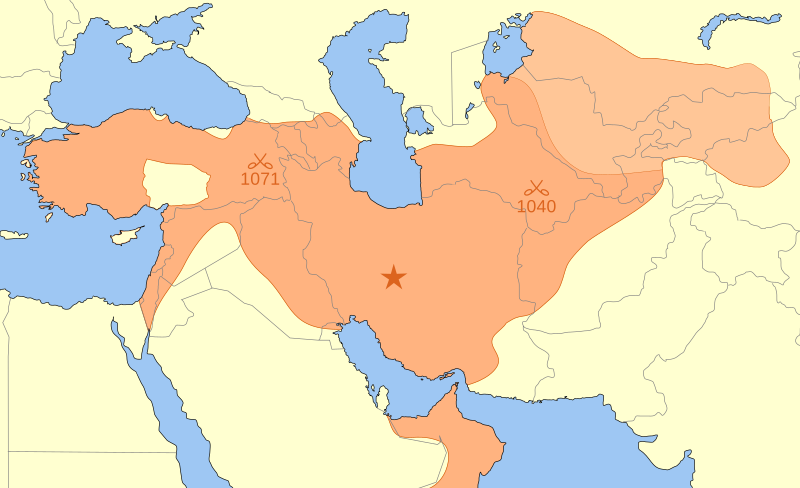
The founder of the Seljuk dynasty, Seljuk Beg, was a descendant of a royal Khazar chief Tuqaq who served as advisor to the King of the Khazars, in West Asia and Central Asia. The Seljuks established the Seljuk Empire (1037–1194), the Sultanate of Kermân (1041–1186) and the Sultanate of Rum (1074–1308), which stretched from Iran to Anatolia and were the prime targets of the First Crusade.
Early history
The Seljuks originated from the Kinik branch of the Oghuz Turks, who in the 8th century lived on the periphery of the Muslim world; north of the Caspian Sea and Aral Sea in their Oghuz Yabgu State in the Kazakh Steppe of Turkestan. During the 10th century, Oghuz had come into close contact with Muslim cities.
In the 11th century, the Seljuks migrated from their ancestral homelands into mainland Persia, in the province of Khurasan, where they encountered the Ghaznavids. The Seljuks defeated the Ghaznavids at the Battle of Nasa in 1035. Seljuk's grandsons, Tughril and Chaghri, received the insignias of governor, grants of land, and were given the title of dehqan. At the Battle of Dandanaqan, they defeated a Ghaznavid army, and after a successful siege of Isfahan by Tughril in 1050/51, established the Great Seljuk Empire. The Seljuks mixed with the local population and adopted the Persian culture and Persian language in the following decades.
Later period
After arriving in Persia, the Seljuks adopted the Persian culture and used the Persian language as the official language of the government, and played an important role in the development of the Turko-Persian tradition which features "Persian culture patronized by Turkic rulers". Today, they are remembered as great patrons of Persian culture, art, literature, and language.
Seljuk rulers
Rulers of the Seljuk Dynasty
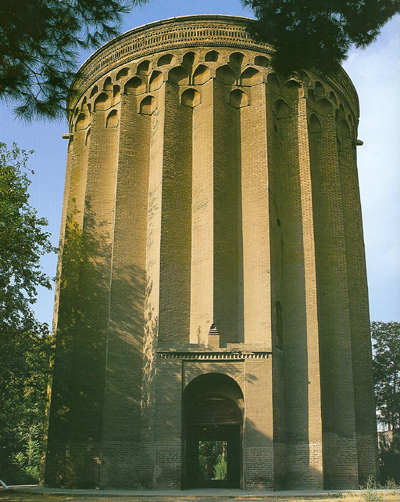

The "Great Seljuks" were heads of the family; in theory their authority extended over all the other Seljuk lines, although in practice this often was not the case. Turkic custom called for the senior member of the family to be the Great Seljuk, although usually the position was associated with the ruler of western Persia.
| Titular name(s) | Personal name | Reign |
|---|---|---|
| Bey | ||
| Tughril I | ||
| 1037–1063 | ||
| Suleiman | ||
| 1063 | ||
| Sultan | ||
| Alp Arslan (Arslan I) | ||
| 1063–1072 | ||
| Sultan | ||
| Jalāl al-Dawlah | ||
| Malik Shah I | ||
| 1072–1092 | ||
| Sultan | ||
| Nasir al-Duniya wa al-Din | ||
| Mahmud I | ||
| 1092–1094 | ||
| Sultan | ||
| Abul Muzaffar Rukn al-Duniya wa al-Din | ||
| Barkiyaruq | ||
| 1094–1105 | ||
| Sultan | ||
| Muizz al-Din | ||
| Malik Shah II | ||
| 1104–1105 | ||
| Sultan | ||
| Ghiyath al-Duniya wa al-Din | ||
| Muhammad I Tapar | ||
| 1105–1118 | ||
| Sultan | ||
| Muizz al-Din | ||
| *Ahmad Sanjar | ||
| 1118–1153 | ||
| Khwarazmian dynasty replaces the Seljuk dynasty. From 1157, the Oghuz took control of much of Khurasan, with the remainder in the hands of former Seljuk emirs. |
- Muhammad's son Mahmud II succeeded him in western Persia, but Ahmad Sanjar, who was the governor of Khurasan at the time being the senior member of the family, became the Great Seljuk Sultan.
Seljuk sultans of Hamadan
The rulers of western Persia, who maintained a very loose grip on the Abbasids of Baghdad. Several Turkic emirs gained a strong level of influence in the region, such as the Eldiguzids.
- Mahmud II 1118–1131
- 1131–1133 disputed between:
- Dawud 1131–1132
- Mas'ud (in Jibal and Iranian Azerbaijan) 1132
- Toghrul II, 1132–1133
- Mas'ud 1133–1152
- Malik Shah III 1152–1153
- Muhammad II 1153–1159
- Suleiman-Shah 1159–1161
- Arslan-Shah 1161–1177
- Toghrul III 1177–1194
In 1194, Toghrul III was killed in battle with the Khwarezm Shah, who annexed Hamadan.
Seljuk rulers of Kerman
Main article: Kerman Seljuk Sultanate
Kerman was a province in southern Persia. Between 1053 and 1154, the territory also included Umman.
- Qavurt 1041–1073 (great-grandson of Seljuq, brother of Alp Arslan)
- Kerman Shah 1073–1074
- Sultan Shah 1074–1075 or 1074–1085
- Hussain Omar 1075–1084 or 1074 (before Sultan Shah)
- Turan Shah I 1084–1096 or 1085–1097
- Iranshah ibn Turanshah 1096–1101 or 1097–1101
- Arslan Shah I 1101–1142
- Muhammad I 1142–1156
- Tuğrul Shah 1156–1169 or 1156–1170
- Bahram-Shah 1169–1174 or 1170–1175
- Arslan Shah II 1174–1176 or 1175–1176
- Turan Shah II 1176–1183
- Muhammad II Shah 1183–1187 or 1183–1186 Muhammad abandoned Kerman, which fell into the hands of the Oghuz chief Malik Dinar. Kerman was eventually annexed by the Khwarezmid Empire in 1196.
Seljuk rulers in Syria
- Abu Sa'id Taj ad-Dawla Tutush I 1085–1086
- Jalal ad-Dawlah Malik Shah I of Great Seljuk 1086–1087
- Qasim ad-Dawla Abu Said Aq Sunqur al-Hajib 1087–1094
- Abu Sa'id Taj ad-Dawla Tutush I (second time) 1094–1095
- Fakhr al-Mulk Ridwan 1095–1113
- Tadj ad-Dawla Alp Arslan al-Akhras 1113–1114
- Sultan Shah 1114–1123 To the Artuqids
Sultans/Emirs of Damascus:
- Aziz ibn Abaaq al-Khwarazmi 1076–1079
- Abu Sa'id Taj ad-Dawla Tutush I 1079–1095
- Abu Nasr Shams al-Muluk Duqaq 1095–1104
- Tutush II 1104
- Muhi ad-Din Baktāsh (Ertaş) 1104 Damascus seized by the Burid Toghtekin
Seljuk sultans of Rum (Anatolia)
Main article: Sultanate of Rûm

The Seljuk line, already having been deprived of any significant power, effectively ended in the early 14th century.
- Kutalmish 1060–1077
- Suleyman I (Suleiman) 1077–1086
- Dawud Kilij Arslan I 1092–1107
- Malik Shah 1107–1116
- Rukn ad-Din Mesud I 1116–1156
- Izz ad-Din Kilij Arslan II 1156–1192
- Ghiyath ad-Din Kaykhusraw I 1192–1196
- Suleyman II (Suleiman) 1196–1204
- Kilij Arslan III 1204–1205
- Ghiyath ad-Din Kaykhusraw I (second time) 1205–1211
- Izz ad-Din Kaykaus I 1211–1220
- Ala ad-Din Kayqubad I 1220–1237
- Ghiyath ad-Din Kaykhusraw II 1237–1246
- Izz ad-Din Kaykaus II 1246–1260
- Rukn ad-Din Kilij Arslan IV 1248–1265
- Ala ad-Din Kayqubad II 1249–1257
- Ghiyath ad-Din Kaykhusraw III 1265–1282
- Ghiyath ad-Din Mesud II 1282–1284
- Ala ad-Din Kayqubad III 1284
- Ghiyath ad-Din Mesud II (second time) 1284–1293
- Ala ad-Din Kayqubad III (second time) 1293–1294
- Ghiyath ad-Din Mesud II (third time) 1294–1301
- Ala ad-Din Kayqubad III (third time) 1301–1303
- Ghiyath ad-Din Mesud II (fourth time) 1303–1307
| The comparative genealogy of the Sultanate of Rûm with their contemporary neighbors in Central Asia |
|---|
Gallery
File:Chess Set MET DP170393.jpg|Shatranj chess set, glazed fritware, 12th-century Iran. New York Metropolitan Museum of Art. File:Eskişehir Archaeological Museum 1270.jpg|Seljuk sarcophagus at the Eskişehir Eti Archaeology Museum
Family tree
Notes
References
References
- (2002). "Warfare in World History". Routledge.
- (2014). "Byzantium and the Crusades". Bloomsbury Publishing.
- Rāvandī, Muḥammad. (1385). "Rāḥat al-ṣudūr va āyat al-surūr dar tārīkh-i āl-i saljūq". Intishārāt-i Asāṭīr.
- "The Saljuqids".
- (2009). "The Ghaznavid and Seljuk Turks: Poetry as a Source for Iranian History". Routledge.
- (2009). "The Cambridge History of Turkey: Byzantium to Turkey, 1071–1453: Volume 1". Cambridge University Press.
- Grousset, Rene, ''The Empire of the Steppes'', (Rutgers University Press, 1991), 161, 164; "renewed the Seljuk attempt to found a great Turko-Persian empire in eastern Iran…", "It is to be noted that the Seljuks, those Turkomans who became sultans of Persia, did not Turkify Persia-no doubt because they did not wish to do so. On the contrary, it was they who voluntarily became Persians and who, in the manner of the great old Sassanid kings, strove to protect the Iranian populations from the plundering of Ghuzz bands and save Iranian culture from the Turkoman menace."
- Nishapuri, Zahir al-Din Nishapuri (2001), "The History of the Seljuq Turks from the Jami’ al-Tawarikh: An Ilkhanid Adaptation of the [[Saljuq-nama]] of Zahir al-Din Nishapuri," Partial tr. K.A. Luther, ed. C.E. Bosworth, Richmond, UK. K.A. Luther, p. 9: "[T]he Turks were illiterate and uncultivated when they arrived in Khurasan and had to depend on Iranian scribes, poets, jurists and theologians to man the institution of the Empire")
- Peacock, A. C. S.. (2010). "Early Seljūq history : a new interpretation". Routledge.
- Özgüdenli, Osman Gazi. (2018). "Selçuklu Tarihi El Kitabı". Grafiker Yayınları.
- Golden, Peter. (2007). "The World of the Khazars: New Perspectives.". Brill.
- Concise Britannica Online [http://concise.britannica.com/ebc/article-9378199/Seljuq-dynasty Seljuq Dynasty] {{webarchive. link. (2007-01-14 article)
- The History of the Seljuq Turks: From the Jami Al-Tawarikh ([https://books.google.com/books?id=jmMpaJZemk0C&pg=PA3 LINK])
- Shaw, Stanford. ''History of the Ottoman Empire and Modern Turkey'' ([https://books.google.com/books?id=UVmsI0P9RDUC&pg=PA7 LINK])
- Golden, Peter B. (1992). An Introduction to the History of the Turkic People. Otto Harrassowitz, Wiesbaden. p. 209
- Wink, Andre, ''Al Hind: the Making of the Indo-Islamic World'' Brill Academic Publishers, 1996, {{ISBN. 978-90-04-09249-5 p. 9
- ''Islam: An Illustrated History'', p. 51
- When [[Seljuk (warlord)
- Bosworth, C.E. ''The Ghaznavids: 994–1040'', Edinburgh University Press, 1963, 242.
- Tony Jaques, ''Dictionary of Battles and Sieges: F–O'', (Greenwood Publishing Group, 2007), 476.
- M.A. Amir-Moezzi, "Shahrbanu", [[Encyclopaedia Iranica]], Online Edition, ({{usurped
- F. Daftary, "Sectarian and National Movements in Iran, Khorasan, and Trasoxania during Umayyad and Early Abbasid Times", in ''History of Civilizations of Central Asia'', Vol 4, pt. 1; edited by M.S. Asimov and [[Clifford Edmund Bosworth. C.E. Bosworth]]; [[UNESCO. UNESCO Publishing]], [[Institute of Ismaili Studies]]: "... Not only did the inhabitants of Khurasan not succumb to the language of the nomadic invaders, but they imposed their own tongue on them. The region could even assimilate the Turkic Ghaznavids and Seljuks (eleventh and twelfth centuries), the Timurids (fourteenth–fifteenth centuries), and the Qajars (nineteenth–twentieth centuries) ..."
- Bosworth, C.E.; Hillenbrand, R.; Rogers, J.M.; Blois, F.C. de; Bosworth, C.E.; Darley-Doran, R.E., "Saldjukids," ''Encyclopaedia of Islam''. Edited by: P. Bearman, Th. Bianquis, C.E. Bosworth, E. van Donzel and W.P. Heinrichs. Brill, 2009: "Culturally, the consisting of the Seljuq Empire marked a further step in the dethronement of Arabic from being the sole lingua franca of educated and polite society in the Middle East. Coming as they did through a Transoxania which was still substantially Iranian and into Persia proper, the Seljuqs with no high-level Turkish cultural or literary heritage of their own – took over that of Persia, so that the Persian language became the administration and culture in their land of Persia and Anatolia. The Persian culture of the Rum Seljuqs was particularly splendid, and it was only gradually that Turkish emerged there as a parallel language in the field of government and adab; the Persian imprint in [[Ottoman Empire. Ottoman]] civilization was to remain strong until the 19th century.
- Ehsan Yarshater, "Iran" in ''Encyclopedia Iranica'': "The ascent of the Saljuqids also put an end to a period which Minorsky has called "the Persian intermezzo" (see Minorsky, 1932, p. 21), when Iranian dynasties, consisting mainly of the Saffarids, the Samanids, the Ziyarids, the Buyids, the Kakuyids, and the Bavandids of Tabarestan and Gilan, ruled most of Iran. By all accounts, weary of the miseries and devastations of never-ending conflicts and wars, Persians seemed to have sighed with relief and to have welcomed the stability of the Saljuqid rule, all the more so since the Saljuqids mitigated the effect of their foreignness, quickly adopting the Persian culture and court customs and procedures and leaving the civil administration in the hand of Persian personnel, headed by such capable and learned viziers as ‘Amid-al-Molk Kondori and Nezam-al-Molk."
- [[Clifford Edmund Bosworth. C.E. Bosworth]], "Turkish expansion towards the west", in ''UNESCO History of Humanity'', Volume IV: From the Seventh to the Sixteenth Century, UNESCO Publishing / Routledge, 2000. p. 391: "While the Arabic language retained its primacy in such spheres as law, theology and science, the culture of the Seljuk court and secular literature within the sultanate became largely Persianized; this is seen in the early adoption of Persian epic names by the Seljuk rulers (Qubād, Kay Khusraw and so on) and in the use of Persian as a literary language (Turkish must have been essentially a vehicle for everyday speech at this time). The process of Persianization accelerated in the thirteenth century with the presence in Konya of two of the most distinguished refugees fleeing before the Mongols, Bahā' al-Dīn Walad and his son Mawlānā Jalāl al-Dīn Rūmī, whose ''Mathnawī'', composed in Konya, constitutes one of the crowning glories of classical Persian literature."
- Daniel Pipes: "The Event of Our Era: Former Soviet Muslim Republics Change the Middle East" in Michael Mandelbaum, "Central Asia and the World: Kazakhstan, Uzbekistan, Tajikistan, Kyrgyzstan, Turkemenistan and the World", Council on Foreign Relations, p. 79. Exact statement: "In Short, the Turko-Persian tradition featured Persian culture patronized by Turcophone rulers."
- O. Özgündenli, "Persian Manuscripts in Ottoman and Modern Turkish Libraries", ''[[Encyclopaedia Iranica]]'', Online Edition, ({{usurped
- ''[[Encyclopædia Britannica]]'', "Seljuq", Online Edition, ([http://www.britannica.com/eb/article-9066688 LINK] {{Webarchive. link. (2007-12-19 ): "... Because the Turkish Seljuqs had no Islamic tradition or strong literary heritage of their own, they adopted the cultural language of their Persian instructors in Islam. Literary Persian thus spread to the whole of Iran, and the Arabic language disappeared in that country except in works of religious scholarship ...")
- M. Ravandi, "The Seljuq court at Konya and the Persianisation of Anatolian Cities", in ''Mesogeios (Mediterranean Studies)'', vol. 25–26 (2005), pp. 157–169
- Black, Jeremy. (2005). "The Atlas of World History". Covent Garden Books.
- Râvendî, Muhammed b. Ali, ''Râhatü’s-sudûr,'' (Ateş Publications), vol. I, p. 85.
- Müstevfî, ''Târîḫ-i Güzîde,'' (Nevâî Publications), p. 426.
- Zahîrüddîn-i Nîsâbûrî, ''[[:tr:Selçuknâme. Selcûḳnâme]],'' (Muhammed Ramazânî Publications), [[Tahran]] 1332, p. 10.
- [[Rashid-al-Din Hamadani. Reşîdüddin Fazlullāh-ı Hemedânî]], ''[[Jāmiʿ al-Tawārīkh. Câmiʿu’t-tevârîḫ]],'' (Ahmed Ateş Publications), [[Ankara]] 1960, vol. II/5, p. 5.
- Osman Gazi Özgüdenli. (2016). "MÛSÂ YABGU". [[Diyanet.
- Beyhakī, ''Târîḫ,'' (Behmenyâr), p. 71.
- Osman Gazi Özgüdenli. "MÛSÂ YABGU".
- Faruk Sümer. (2002). "KUTALMIŞ". [[Diyanet.
- Sevim, Ali. (2010). "SÜLEYMAN ŞAH I". [[Diyanet.
- Sümer, Faruk. (2009). "ANADOLU SELÇUKLULARI". [[Diyanet.
- Özaydın, Abdülkerim. (2002). "KAVURD BEY". [[Diyanet.
- Sevim, Ali. "ÇAĞRI BEY".
- Sümer, Faruk. "SELÇUKLULAR".
- Sümer, Faruk. (2009). "Kirman Selçuks". [[Diyanet.
- Sümer, Faruk. (2009). "SELÇUKLULAR". [[Diyanet.
- Bezer, Gülay Öğün. "TERKEN HATUN, the mother of MAHMÛD I".
- Özaydın, Abdülkerim. "MELİKŞAH".
- Özaydın, Abdülkerim. "BERKYARUK".
- [[Enveri. Enverî]], ''Düstûrnâme-i Enverî,'' pp. 78-80, 1464.
- Özaydın, Abdülkerim. "MAHMÛD b. MUHAMMED TAPAR".
- Sümer, Faruk. "TUĞRUL I".
- Sümer, Faruk. "MES‘ÛD b. MUHAMMED TAPAR".
- Sümer, Faruk. "Ebû Tâlib TUĞRUL b. ARSLANŞAH b. TUĞRUL".
- Sümer, Faruk. "ARSLANŞAH b. TUĞRUL".
- Sümer, Faruk. "IRAK SELÇUKLULARI".
- (2016). "The Byzantine Turks, 1204-1461". BRILL.
This article was imported from Wikipedia and is available under the Creative Commons Attribution-ShareAlike 4.0 License. Content has been adapted to SurfDoc format. Original contributors can be found on the article history page.
Ask Mako anything about Seljuk dynasty — get instant answers, deeper analysis, and related topics.
Research with MakoFree with your Surf account
Create a free account to save articles, ask Mako questions, and organize your research.
Sign up freeThis content may have been generated or modified by AI. CloudSurf Software LLC is not responsible for the accuracy, completeness, or reliability of AI-generated content. Always verify important information from primary sources.
Report