From Surf Wiki (app.surf) — the open knowledge base
Self-referential humor
Humor that alludes to itself
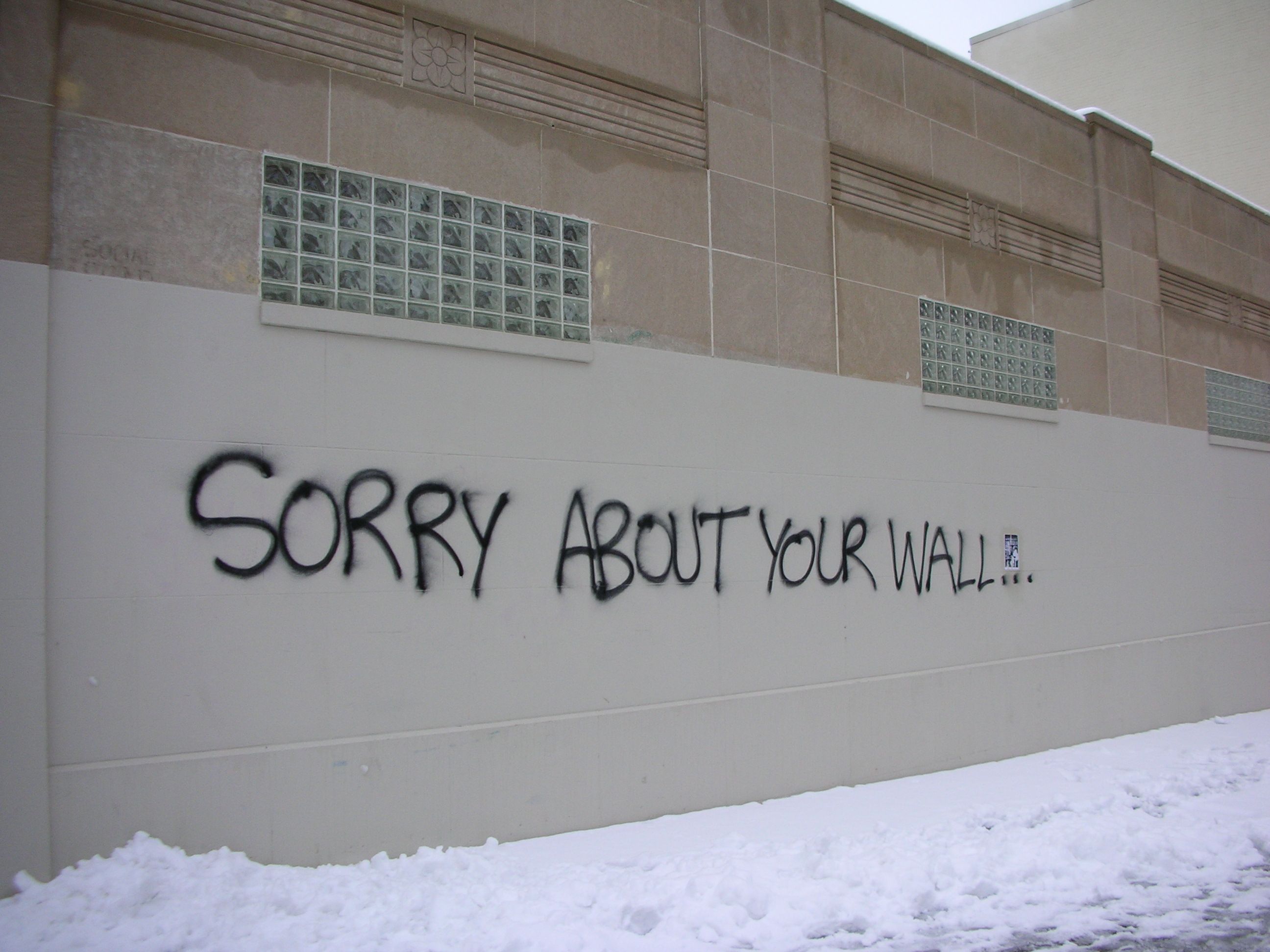
Humor that alludes to itself
| Field | Value |
|---|---|
| image | No Thumbtacks.jpg |
| caption | An example of self-referential humor on a shared noticeboard |
| nickname | Meta humor |
Self-referential humor, also known as self-reflexive humor, self-aware humor, or meta humor, is a type of comedic expression that—either directed toward some other subject, or openly directed toward itself—is self-referential in some way, intentionally alluding to the very person who is expressing the humor in a comedic fashion, or to some specific aspect of that same comedic expression. Here, meta is used to describe that the joke explicitly talks about other jokes, a usage similar to the words metadata (data about data), metatheatrics (a play within a play as in Hamlet) and metafiction. Self-referential humor expressed discreetly and surrealistically is a form of bathos. In general, self-referential humor often uses hypocrisy, oxymoron, or paradox to create a contradictory or otherwise absurd situation that is humorous to the audience.
History
Old Comedy of Classical Athens is held to be the first—in the extant sources—form of self-referential comedy. Aristophanes, whose plays form the only remaining fragments of Old Comedy, used fantastical plots, grotesque and inhuman masks and status reversals of characters to slander prominent politicians and court his audience's approval.
Douglas Hofstadter wrote several books on the subject of self-reference;{{Citation | access-date = August 12, 2021}}
Meta-jokes
Examples Meta-jokes are a popular form of humor. They contain several somewhat different, but related categories: joke templates, class-referential jokes, self-referential jokes and jokes about jokes.
Joke template
This form of meta-joke is a sarcastic jab at the endless refitting of joke forms (often by professional comedians) to different circumstances or characters without a significant innovation in the humor.
—Bill Bailey}}
How many members of a certain demographic group does it take to [lightbulb joke
perform a specified task?]]
A finite number: one to perform the task and the remainder to act in a manner stereotypical of the group in question.}}
Class-referential jokes
This form of meta-joke contains a familiar class of [jokes as part of the joke. For example, here are a few subversions of the standard bar joke format:
A [Dyslexia
|access-date=21 February 2021
A [[non sequitur (literary device)
Three [logicians walk into a bar. The bartender asks: "Do you all want a drink?" The first logician says "I don't know". The second logician says "I don't know". The third logician says "Yes!"
Self-referential jokes
Self-referential jokes refer to themselves rather than to larger classes of previous jokes.
|access-date=24 February 2021
Jokes about jokes
Marc Galanter, in the introduction to his book Lowering the Bar: Lawyer Jokes and Legal Culture, cites a meta-joke in a speech of Chief Justice William Rehnquist:
I've often started off with a lawyer joke, a complete caricature of a lawyer who's been nasty, greedy, and unethical. But I've stopped that practice. I gradually realized that the lawyers in the audience didn't think the jokes were funny and the non-lawyers didn't know they were jokes.{{cite book |author-link=Marc Galanter (law professor) }}
Stand-up comedian Mitch Hedberg would often follow up a joke with an admission that it was poorly told, or insist to the audience that "that joke was funnier than you acted."
The process of being a humorist is also the subject of meta-jokes; for example, on an episode of QI, Jimmy Carr made the comment, "When I told them I wanted to be a comedian, they laughed. Well, they're not laughing now!"— a joke previously associated with Bob Monkhouse.
Other examples
Fumblerules
Fumblerules are stylistic guidelines, presented such that the phrasing of the rule itself constitutes an infraction. For example, "Don't use no double negatives".
Limericks
A limerick referring to the anti-humor of limericks:
The limerick packs laughs anatomical Into space that is quite economical. But the good ones I've seen So seldom are clean And the clean ones so seldom are comical. W. S. Gilbert wrote one of the definitive "anti-limericks":
There was an old man of St. Bees, Who was stung in the arm by a wasp; When they asked, "Does it hurt?" He replied, "No, it doesn't, But I thought all the while 'twas a Hornet."}} Tom Stoppard's anti-limerick from Travesties:
A performative poet of Hibernia Rhymed himself into a hernia He became quite adept At this practice, except For the occasional non-sequitur.
A limerick about limericks:
A limerick's cleverly versed, The second line rhymes with the first; The third one is short, The fourth's the same sort And the last line is often the worst.
Metaparody
Metaparody is a form of humor or literary technique consisting "parodying the parody of the original", sometimes to the degree that the viewer is unclear as to which subtext is genuine and which subtext parodic. An example of a Metaparody would be the film "Scary Movie" which parodies the film "Scream" which is itself a parody.
RAS Syndrome
RAS syndrome is the redundant use of one or more of the words that make up an acronym or initialism with the abbreviation itself, thus in effect repeating one or more words. "RAS" stands for Redundant Acronym Syndrome and so RAS syndrome is self-referencing.
References
References
- "Sentences about Self-Reference and Recurrence". .vo.lu.
- Alan Hughes; ''Performing Greek Comedy'' (Cambridge, 2012)
- [http://www.theaustralian.news.com.au/story/0,25197,15306761-16947,00.html "Stars turn to jokers for hire"]{{dead link. (March 2025)
- Smid, J., & Zenker, F. (2015). Three logicians walk into a bar—a modest proposal for teaching epistemic logic . The Reasoner, 9(3). Retrieved from https://riviste.unimi.it/index.php/thereasoner/article/view/24887
- "Mitch Hedberg - Mitch All Together", CD [[Comedy Central]] (2003) ASIN B000X71NKQ
- Deacon, Michael. (3 June 2015). "Modern comedy's unlikely hero: Bob Monkhouse".
- Safire, William. "Fumblerules: a lighthearted guide to grammar and good usage." (1990).
- Feinberg, Leonard. ''The Secret of Humor''. Rodopi, 1978. {{ISBN. 9789062033706. p102
- Wells 1903, pp. xix-xxxiii.
- [https://books.google.com/books?id=eKNK1YwHcQ4C&pg=PA683 Merriam-Webster's Encyclopedia Of Literature - Google Boeken]
- Creative Teaching: English in the Early Years and Primary Classroom. Chris Horner, Victoria Ryf. Routledge, 11 Jun 2007
- (1989). "Rethinking Bakhtin: extensions and challenges". Northwestern University Press.
- Marina Terkourafi. (23 September 2010). "The Languages of Global Hip Hop". [[Continuum International Publishing Group]].
- Peter I. Barta. (2001). "Carnivalizing Difference: Bakhtin and the Other". Routledge.
- Clothier, Gary. (8 November 2006). "Ask Mr. Know-It-All". The York Dispatch.
- Newman, Stanley. (December 20, 2008). "Sushi by any other name". Windsor Star.
- (2001-04-07). "Feedback". [[New Scientist]].
This article was imported from Wikipedia and is available under the Creative Commons Attribution-ShareAlike 4.0 License. Content has been adapted to SurfDoc format. Original contributors can be found on the article history page.
Ask Mako anything about Self-referential humor — get instant answers, deeper analysis, and related topics.
Research with MakoFree with your Surf account
Create a free account to save articles, ask Mako questions, and organize your research.
Sign up freeThis content may have been generated or modified by AI. CloudSurf Software LLC is not responsible for the accuracy, completeness, or reliability of AI-generated content. Always verify important information from primary sources.
Report