From Surf Wiki (app.surf) — the open knowledge base
Second Battle of Swat
2009 conflict in Pakistan
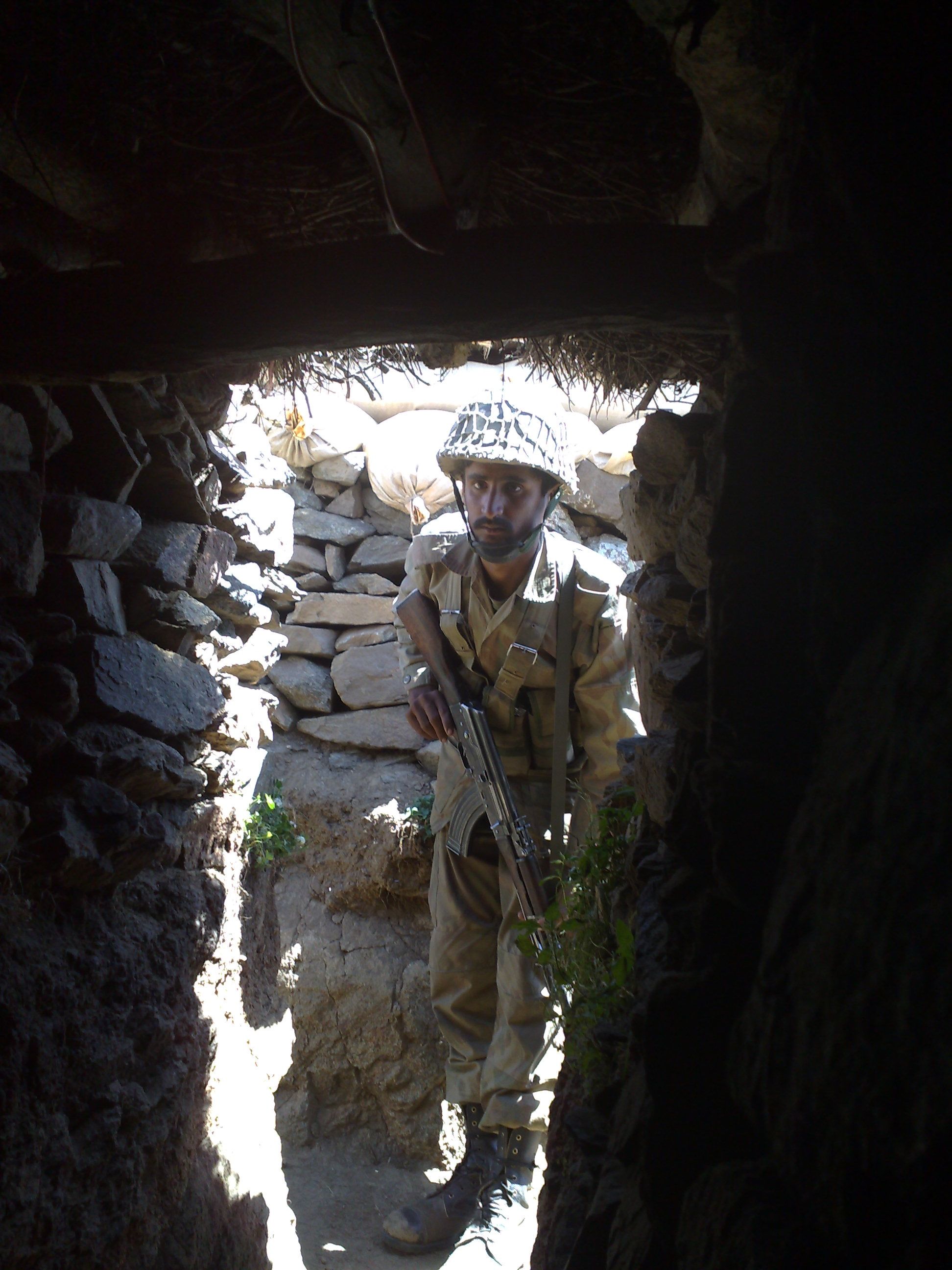
2009 conflict in Pakistan
| Field | Value | |
|---|---|---|
| conflict | Second Battle of Swat (Operation Rah-e-Rast) | |
| partof | Operation Black Thunderstorm and the Insurgency in Khyber Pakhtunkhwa | |
| image | Pakistan - Khyber Pakhtunkhwa - Swat.svg | |
| image_size | 250px | |
| caption | Swat is the red colored region | |
| date | 16 May – 15 July 2009 | |
| () | ||
| place | Swat Valley, Khyber-Pakhtunkhwa Province | |
| result | Pakistani victory | |
| combatant1 | Pakistan | |
| combatant2 | Flag of Tehrik-i-Taliban.svg TTP | |
| commander1 | [[File:Air Force Ensign of Pakistan.svg | 20px]] ACM Rao Suleman |
| [[File:Flag of the Pakistani Army.svg | 20px]] Lt Gen Masood Aslam | |
| [[File:Air Force Ensign of Pakistan.svg | 20px]] AM Hifazat Khan | |
| [[File:Flag of the Pakistani Army.svg | 20px]] Lt Gen Ishfaq Nadeem Ahmad | |
| [[File:Flag of the Pakistani Army.svg | 20px]] Maj Gen Haroon Aslam | |
| [[File:Flag of the Pakistani Army.svg | 20px]] Maj Gen Sajjad Ghani | |
| [[File:Flag of the Pakistani Army.svg | 20px]] Brig Muhammad Habib Ur Rehman | |
| commander2 | Flag of Tehrik-i-Taliban.svg Maulana Fazlullah | |
| Tnsm-flag.svg Abu Saeed | ||
| Tnsm-flag.svg Misbah ud-Din | ||
| Tnsm-flag.svg Sultan Khan | ||
| Tnsm-flag.svg Shah Dauran | ||
| Tnsm-flag.svg Maulana Shahid | ||
| Tnsm-flag.svg Qari Quraish | ||
| Tnsm-flag.svg Naseeb Rehman | ||
| Tnsm-flag.svg Muslim Khan | ||
| Tnsm-flag.svg Sher Muhammad Qusab | ||
| Tnsm-flag.svg Abu Faraj | ||
| Tnsm-flag.svg Nisar Ahmed | ||
| units1 | ||
| units2 | Flag of Tehrik-i-Taliban.svg TTP | |
| strength1 | 15,000–45,000 Regular Infantry, Frontier Corps and Airborne Forces | |
| strength2 | 2,500 (approx.) | |
| casualties1 | 168 killed, 454 wounded | |
| casualties2 | 2,088 killed | |
| casualties3 | 2 million civilians displaced |
()
- Swat returned to government control
- Many Tehrik-i-Taliban Pakistan commanders captured or killed
- Flag of the Pakistani Army.svg Pakistan Army
- Air Force Ensign of Pakistan.svg Pakistan Air Force
- Tnsm-flag.svg TNSM Flag of al-Qaeda.svg Al-Qaeda Flag of Jihad.svg Lashkar-e-Islam Tnsm-flag.svg Abu Saeed Tnsm-flag.svg Misbah ud-Din Tnsm-flag.svg Sultan Khan Tnsm-flag.svg Shah Dauran Tnsm-flag.svg Maulana Shahid Tnsm-flag.svg Qari Quraish Tnsm-flag.svg Naseeb Rehman Tnsm-flag.svg Muslim Khan Tnsm-flag.svg Sher Muhammad Qusab Tnsm-flag.svg Abu Faraj Tnsm-flag.svg Nisar Ahmed
- [[File:Flag of the Pakistani Army.svg|20px]] 19th Infantry Division
- [[File:Insignia of Pakistan Army Special Service Group (SSG).svg|19px]] Special Service Group Airborne Division
- [[File:Air Force Ensign of Pakistan.svg|20px]] No. 11 Squadron Arrows
- [[File:Air Force Ensign of Pakistan.svg|20px]] No. 25 Squadron Night Strike Eagles Flag of Khyber Pakhtunkhwa.svg FCKP(N)
Flag of Swat.svg Local tribesmen
- Tnsm-flag.svg TNSM Flag of al-Qaeda.svg Al-Qaeda Flag of Jihad.svg Lashkar-e-Islam The Second Battle of Swat, also known as Operation Rah-e-Rast, was a sub-operation of Operation Black Thunderstorm which began in May 2009 and involved the Pakistan Army and Tehrik-i-Taliban Pakistan militants in a fight for control of the Swat district of Pakistan. The First Battle of Swat had ended with a peace agreement, that the government had signed with the Tehrik-i-Taliban Pakistan in February 2009.
However, by late April 2009 TTP violated majority of the terms of the agreement, and as a result government troops and the Tehrik-i-Taliban Pakistan began to clash once again, and in April the government launched a military offensive code-named Operation Black Thunderstorm throughout the Northern parts of Khyber-Pakhtunkhwa (then North-Western Frontier Province) including districts Swat, Buner, Dir, Shangla.
Swat then being a strongest hold of TTP required specific campaign and efforts by the Pakistani Armed Forces to free it from clutches of TTP once for all. This campaign which itself was part of larger military Operation Black Thunderstorm, came to be known as "Operation Rah-e-Rast", whereby Pakistan Armed Forces successfully flushed out Tehrik-i-Taliban Pakistan from Swat.
Context
The conflict between the Pakistani Army and Islamist insurgents is accepted to have begun on 16 March 2004 in the Battle of Wanna. Over the next number of years, different peace agreements were signed, despite the persistence of militant groups in Khyber Pakhtunkhwa. The groups' support came primarily from Pashtun tribal elements.
In 2007, the conflict was renewed after the attack on Lal Masjid in Islamabad. After the attack, confrontations and suicide attacks saw an uptick. On 21 August 2008, an attack on military production facilities in Wah left 70 dead and, on 20 September of that year, the Islamabad Marriott Hotel bombing left 54 dead. On the 27th of October, the Pakistani government reacted with the First Battle of Swat to retake the valley from occupying militias, the Tehreek-e-Nifaz-e-Shariat-e-Mohammadi and the Tehrik-e-Taliban Pakistan.
Battle for Mingora City
Fighting commenced in the largest and main city of the district, Mingora, between elite Pakistani commandos and about 300 Taliban militants positioned in deserted buildings and continued until 23 May 2009, when a major Pakistani offensive retook much of the city. Amid heavy street fighting, the Pakistani Army captured large parts of the city, including several key intersections and squares.
On 24 May, the Pakistani Army announced it had retaken large parts of Mingora. Major-General Athar Abbas, the Army's chief military spokesman, announced that "we want to eliminate the entire [Taliban] leadership". Pakistani soldiers continued to engage the Taliban in street fighting and search buildings for Taliban fighters. Pakistani troops also retook several nearby towns previously under Taliban control.
On 30 May, the Pakistani military announced that it had regained control of all of Mingora, though small pockets of resistance still remained in the city's outskirts. Fighting between Pakistani forces and Taliban militants continued in other areas. The Pakistani army claimed the death toll to be 1,200 Taliban fighters and 90 Pakistani soldiers.
There were believed to be 200,000 people in Mingora as recently as a week prior to the eruption of hostilities. Following the lifting of a curfew, as of 23 May a large exodus left what was believed to be only 10,000–20,000 civilians in the town.
Expansion of operation
After retaking the town of Mingora, the military moved on to Malam Jabba and Qamabr Bazar, taking those towns and killing the TNSM leaders of those towns. On May 29, the Army cleared Aman Kot and the Technical Institute College on the Mingora-Kokarai road in Mingora. On the same day, the village of Peochar in the Peochar Valley, as well as the town of Bahrain in the north of Swat, had been taken by the military. Sporadic fighting went on in the rest of Swat and in the Shangla district.
Capture of Taliban commanders
On June 4, 2009, it was reported that Sufi Muhammad, the founder of Tehreek-e-Nafaz-e-Shariat-e-Mohammadi or TNSM, was arrested in Amandarra along with other militant leaders. In the coming days there was confusion over this claim since the Taliban themselves said that Muhammad was missing. However, several days later it was confirmed that Sufi Muhammad was not captured and was in hiding, while two of his aides were captured by the Army. Those two aides, Muhammad Maulana Alam and Ameer Izzat Khan, were killed when militants attacked the prison transport they were in on June 7.
On June 6, the Taliban attacked Gul Jabba Checkpoint. This attack was repulsed, but cost the life of Captain Fiaz Ahmad Ghunian of the 72nd Punjab Regiment Pakistan Army.
On June 12, in response to a bomb explosion at a mosque that killed 38 civilians, local Pakistani militia numbering between 1,000 and 1,500 surrounded almost 300 militants. The Pakistani army sent Helicopter Gunships to provide air support to militia fighting in the villages of Shatkas and Ghazi Gai, where the fiercest fighting took place. Pakistani paramilitaries also set up mortar positions on the high ground overlooking the villages. 20 homes suspected of housing Taliban fighters were destroyed. 11 Taliban militants were killed in the fighting. On June 12, the Pakistani army captured the town of Chuprial in a fierce battle. 39 Taliban fighters and 10 Pakistani soldiers were killed. On June 14, Pakistani soldiers began to clear the last pockets of resistance. On July 15, clashes throughout the Swat valley left 11 Taliban militants and 1 Pakistani soldier dead, with the heaviest fighting taking place in the town of Kabal. The refugees that had fled their homes also began to return on July 15.
Final assault
On September 11, 2009, the Pakistan Army announced that Muslim Khan and four other senior TNSM commanders were captured near Mingora. Maulana Fazlullah was actually hit in two air strikes and was critically wounded and stranded for some time in Imam Dehri without any access to medical assistance.
Success of operations
By August 22, 2009, 1.6 million of 2.2 million refugees returned home, as per UN estimates. On January 11, 2010, Hayatullah Hamyo one of the TTP commanders in Swat was captured in Orangi Town in Karachi where he was keeping a low profile by working for PTCL (Pakistan Telecommunication Company Ltd).
References
References
- Khan, I. (2010). The Second Battle of Swat: The fall of a Pakistani Taliban stronghold. Journal of Defence Studies, 4(1), 101-118. doi:10.1080/09700161.2010.484778
- Abbas, H. (2014). The Taliban insurgency in Pakistan: Operation Rah-e-Rast. Small Wars & Insurgencies, 25(3), 512-537. doi:10.1080/09592318.2014.913539
- Fair, C. C. (2011). The Militant Challenge in Pakistan. Asia Policy, 11(1), 105–137. doi:10.1353/asp.2011.0010
- Rana, M. A. (2009). Taliban insurgency in Pakistan: A counterinsurgency perspective. Pak Institute for Peace Studies.
- Khan, I. (2011). Backgrounder: Pakistan's Waziristan Offensive. Center for International Security and Cooperation, Freeman Spogli Institute for International Studies
- Asthana, N. C. (2009). Talibanisation of Pakistan's Western Frontiers. Indian Defence Review, 24(3).
- Haqqani, H. (2010). The Ideologies of South Asian Jihadi Groups. Current Trends in Islamist Ideology, 9, 19-26.
- "Daily Express Urdu Newspaper | Latest Pakistan News | Breaking News".
- Rezaul H Laskar, Islamabad. (June 25, 2009). "Kayani Visits S Waziristan: Fazlullah's Deputy Killed in Swat". Outlook India.
- "The Associated Press: Captured Pakistan Taliban commander dies in jail".
- Bill Roggio. (December 5, 2009). "Captured Taliban commander killed in combat in Swat". Threat Matrix (Blog).
- "VOA News - Pakistan Army: Taliban Commander Killed in Swat".
- "Archived copy".
- Ghulam Farooq. (September 2, 2009). "105 Taliban surrender, 15 killed in Swat clashes". Daily Times (Pakistan).
- (2009-08-22). "More Pakistani Taliban surrender - TTP Swat chief with 60 militants surrender". Caymanmama.com - Pakistan News News.
- http://www.ansa.it/ansalatina/notizie/rubriche/mundo/20090622183634901774.html {{Dead link. (May 2010)
- Zahid Hussain in Islamabad. (May 5, 2009). "Pakistan troops clash with Taleban as Swat Valley truce breaks down". The Times.
- Isambard Wilkinson (in Islamabad). (24 May 2009). "Pakistani troops gain upper hand in key Swat town". Daily Telegraph (London).
- (2009-05-25). "Army holds key parts of Mingora as battle for Swat valley continues". France24.com.
- Hussain}}{{dead link, Zahid. (May 25, 2009). "Pakistani troops retake part of Mingora after battle with Taleban". The Times.
- (30 May 2009). "Pakistan military retakes town in Swat Valley".
- https://news.yahoo.com/s/afp/20090530/wl_afp/pakistanunrestnorthwestmingora {{Dead link. (May 2010)
- [https://www.ft.com/content/ed928c2e-47ac-11de-8271-00144feabdc0 Pakistan army battles Taliban in Swat’s main city] {{subscription required
- (June 4, 2009). "Banned NSM confirms Maulana Sufi's arrest". GEO Pakistan.
- (8 June 2009). "Pakistan Tribesmen battle Taliban". BBC.
- (September 11, 2009). "TTS spokesman Muslim Khan, 4 others captured". The Nation (Pakistan).
- Ismail Khan. (12 Sep 2009). "Swat Taliban mouthpiece, top commander captured". Dawn Media Group.
- Syed Shoaib Hasan. (10 July 2009). "Swat Taliban chief 'near death'". BBC.
- (August 22, 2009). "1.6 million Pakistani refugees return home: UN". [[The Times of India]].
- (11 Jan 2010). "Taliban commander nabbed from Karachi". Dawn Media Group.
This article was imported from Wikipedia and is available under the Creative Commons Attribution-ShareAlike 4.0 License. Content has been adapted to SurfDoc format. Original contributors can be found on the article history page.
Ask Mako anything about Second Battle of Swat — get instant answers, deeper analysis, and related topics.
Research with MakoFree with your Surf account
Create a free account to save articles, ask Mako questions, and organize your research.
Sign up freeThis content may have been generated or modified by AI. CloudSurf Software LLC is not responsible for the accuracy, completeness, or reliability of AI-generated content. Always verify important information from primary sources.
Report