From Surf Wiki (app.surf) — the open knowledge base
Sea state
General condition of the free surface on a large body of water
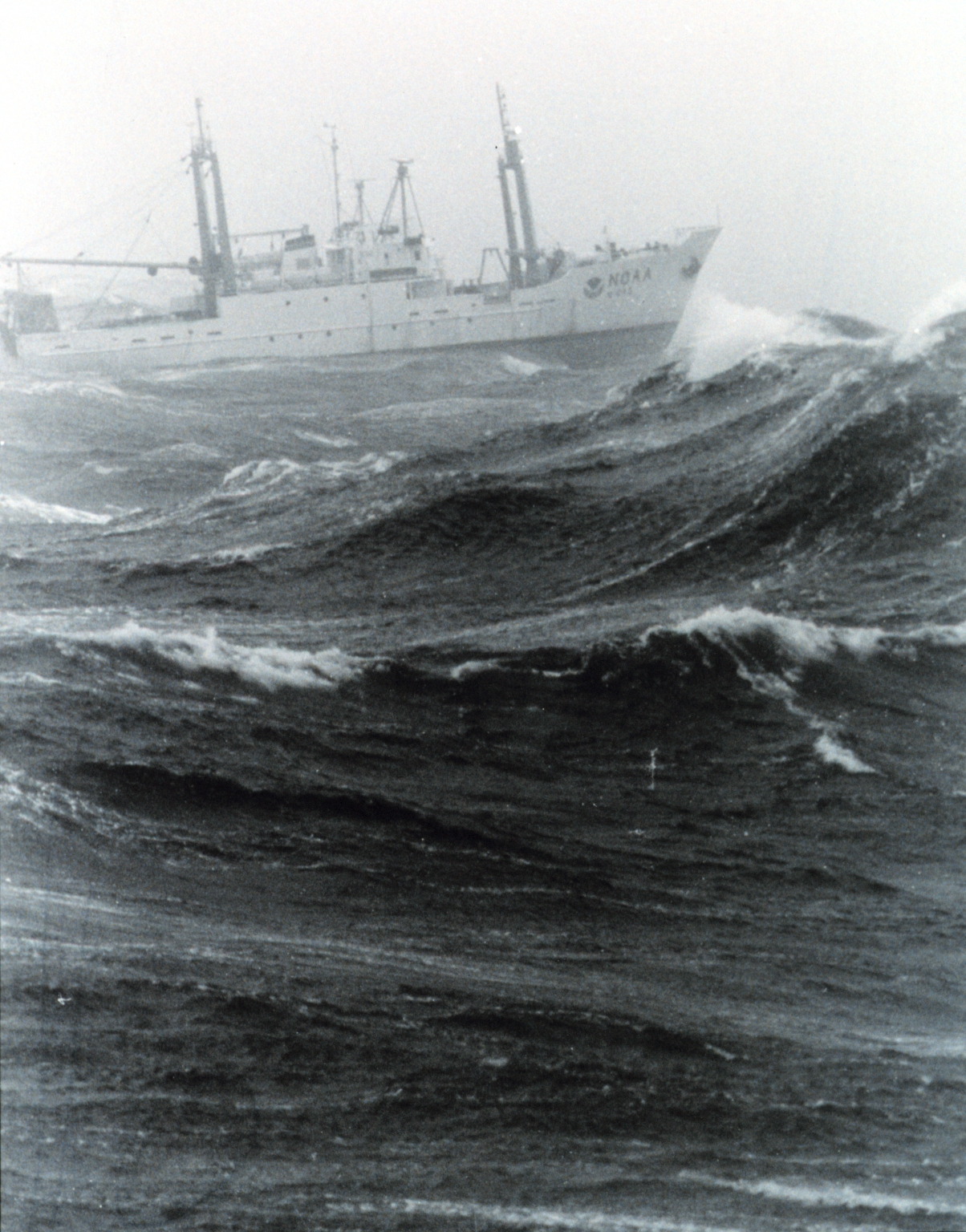
General condition of the free surface on a large body of water
.jpg)
In oceanography, sea state is the general condition of the free surface on a large body of water—with respect to wind waves and swell—at a certain location and moment. A sea state is characterized by statistics, including the wave height, period, and spectrum. The sea state varies with time, as the wind and swell conditions change. The sea state can be assessed either by an experienced observer (like a trained mariner) or by using instruments like weather buoys, wave radar, or Earth observation satellites.
The short-term statistics describing the sea state are determined for a time interval in which the sea state is considered to be constant. This duration has to be much longer than the individual wave period, but shorter than the period in which the wind and swell conditions can be expected to vary significantly. Typically, the sea state is assumed to be constant for 15-30 minutes.
The large number of variables involved in creating and describing the sea state cannot be quickly and easily summarized, so simpler scales are used to give an approximate but concise description of conditions for reporting in a ship's log or similar record.
WMO sea state code

The World Meteorological Organization (WMO) sea state code largely adopts the 'wind sea' definition of the Douglas Sea Scale. The direction from which the swell is coming should be recorded.

| WMO Sea State Code | Wave height | Characteristics |
|---|---|---|
| 0 | 0 m | Calm (glassy) |
| 1 | 0 to | Calm (rippled) |
| 2 | 0.1 to | Smooth (wavelets) |
| 3 | 0.5 to | Slight |
| 4 | 1.25 to | Moderate |
| 5 | 2.5 to | Rough |
| 6 | 4 to | Very rough |
| 7 | 6 to | High |
| 8 | 9 to | Very high |
| 9 | Over 14 m | Phenomenal |
| 9. Confused |
|---|
Sea states in marine engineering
In engineering applications, sea states are often characterized by the following two parameters:
- The significant wave height H1/3 — the mean wave height of the highest third of the waves.
- The mean wave period, T1.
In addition to the short-term wave statistics presented above, long-term sea state statistics are often given as a joint frequency table of the significant wave height and the mean wave period. From the long and short-term statistical distributions, it is possible to find the extreme values expected over a given number of years by fitting an extreme value distribution. The extreme value distribution can then inform an engineer about the most extreme significant wave height to be expected during a lifetime of a ship or offshore structure. Using the response amplitude operators of the ship, the engineer can then use the extremes in significant wave height and wave period to calculate the most extreme loads that the ship should be able to withstand. Withstanding significant wave heights that happen on average once in 100 years or once in 1000 years is a common demand for design of ships and offshore structures.
CCI Sea State
The "Sea State" project within the ESA's Climate Change Initiative (CCI) program created an 18-year data set (2002–2020) covering various sea state-related Essential Climate Variables as measured by the Jason satellite series, other ocean-focused Earth observation satellites, and in situ sources. In 2025, data from CCI Sea State, combined with the new SWOT satellite measurements, were used to describe a new record wave height of nearly 20 m in the open ocean.
Citations
General and cited references
- {{citation | author-link = Nathaniel Bowditch
- {{Citation
References
- Holthuijsen, Leo H.. (2007). "Waves in oceanic and coastal waters". Cambridge University Press.
- Munk, W.H.. (1944). "Proposed uniform procedure for observing waves and interpreting instrument records". Wave Project at the [[Scripps Institution of Oceanography]].
- Aarnes, Ole Johan. (2012). "Wave Extremes in the Northeast Atlantic". Journal of Climate.
- Jonathan, Philip. (2013). "Statistical modelling of extreme ocean environments for marine design: A review". Ocean Engineering.
- "Sea State".
- "CCI Sea State".
- Laboratory, Plymouth Marine. "Sea State CCI".
- "CCI+ Sea State".
- "Satellites reveal the power of ocean swell".
- Ardhuin, Fabrice. (2025-09-23). "Sizing the largest ocean waves using the SWOT mission". Proceedings of the National Academy of Sciences.
This article was imported from Wikipedia and is available under the Creative Commons Attribution-ShareAlike 4.0 License. Content has been adapted to SurfDoc format. Original contributors can be found on the article history page.
Ask Mako anything about Sea state — get instant answers, deeper analysis, and related topics.
Research with MakoFree with your Surf account
Create a free account to save articles, ask Mako questions, and organize your research.
Sign up freeThis content may have been generated or modified by AI. CloudSurf Software LLC is not responsible for the accuracy, completeness, or reliability of AI-generated content. Always verify important information from primary sources.
Report