From Surf Wiki (app.surf) — the open knowledge base
Sea snail
Common name for snails that normally live in saltwater
.jpg)
Common name for snails that normally live in saltwater

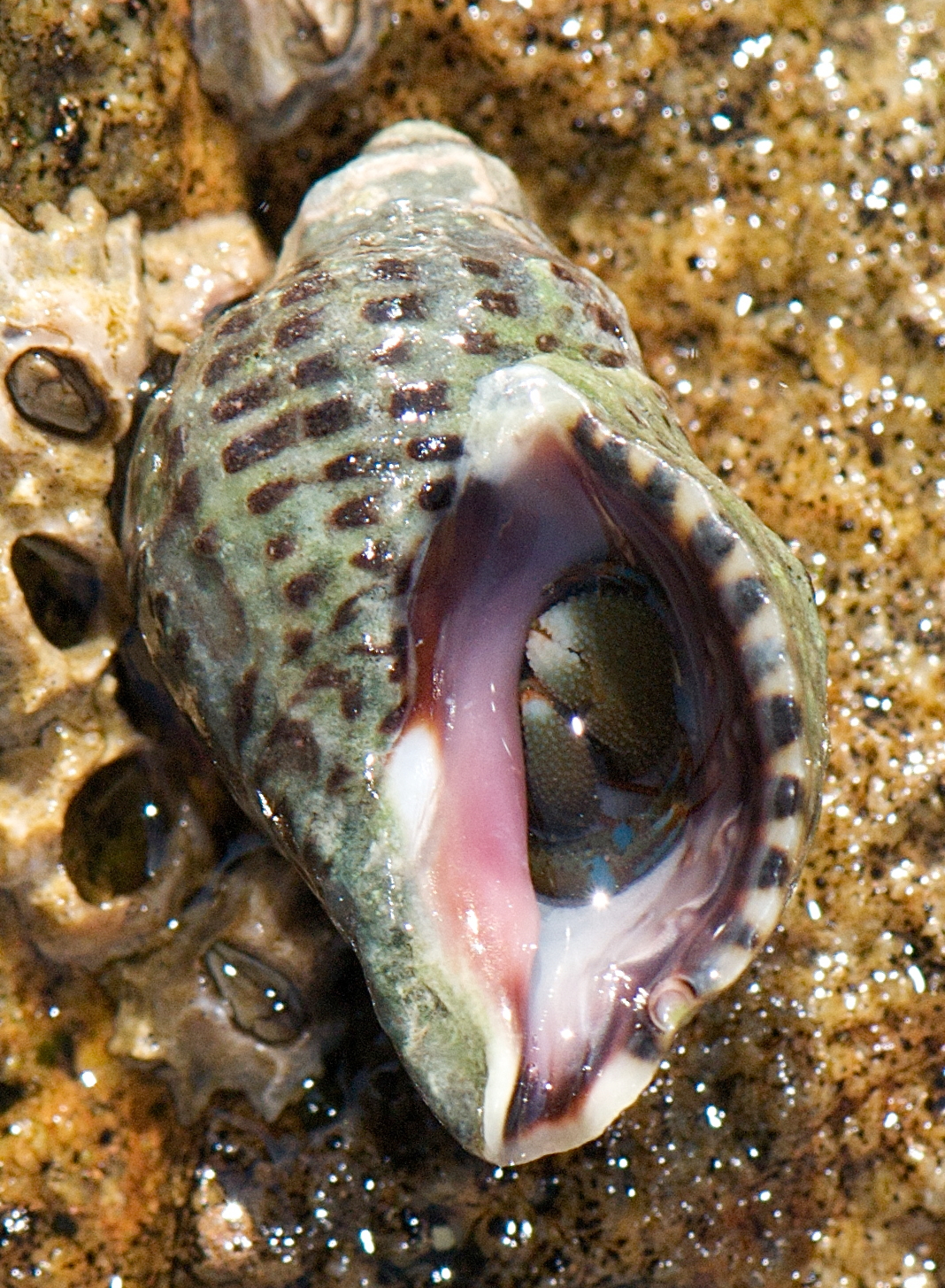
Sea snails are slow-moving marine gastropod molluscs, usually with visible external shells, such as whelk or abalone. They share the taxonomic class Gastropoda with slugs, which are distinguished from snails primarily by the absence of a visible shell.
Definition
Sea snail is a common name for a diverse group of marine gastropod mollusks that typically possess a coiled shell (though some lack shells or have reduced ones), move using a muscular foot, and inhabit marine environments ranging from intertidal zones to the deep sea. Sea snails are not a single taxonomic group but include species from several gastropod clades, such as Caenogastropoda, Vetigastropoda, and Heterobranchia.
Anatomy
Shell
The shells of snails are complex and grow at different speeds. The speed of growth is affected by a few variables such as the temperature of the water, depth of the water, food present for the snail, as well as isotopic oxygen levels. By looking at the composition of aragonite in the growth layers of mollusks it can be predicted the size the mollusk shell can reach.
Taxonomy

2005 taxonomy
The following cladogram is an overview of the main clades of living gastropods based on the taxonomy of Bouchet & Rocroi (2005), with taxa that contain saltwater or brackish water species marked in boldface (some of the highlighted taxa consist entirely of marine species, but some of them also contain freshwater or land species.)
- Clade Patellogastropoda
- Clade Vetigastropoda
- Clade Cocculiniformia
- Clade Neritimorpha
- Clade Cycloneritimorpha
- Clade Caenogastropoda
- Informal group Architaenioglossa
- Clade Sorbeoconcha
- Clade Hypsogastropoda
- Clade Littorinimorpha
- Informal group Ptenoglossa
- Clade Neogastropoda
- Clade Heterobranchia
- Informal group Lower Heterobranchia
- Informal group Opisthobranchia
- Clade Cephalaspidea
- Clade Thecosomata
- Clade Gymnosomata
- Clade Aplysiomorpha
- Group Acochlidiacea
- Clade Sacoglossa
- Group Cylindrobullida
- Clade Umbraculida
- Clade Nudipleura
- Clade Pleurobranchomorpha
- Clade Nudibranchia
- Clade Euctenidiacea
- Clade Dexiarchia
- Clade Pseudoeuctenidiacea
- Clade Cladobranchia
- Clade Euarminida
- Clade Dendronotida
- Clade Aeolidida
- Informal group Pulmonata
- Informal group Basommatophora
- Clade Eupulmonata
- Clade Systellommatophora
- Clade Stylommatophora
- Clade Elasmognatha
- Clade Orthurethra
- Informal group Sigmurethra
Uses
By humans
Sea snails are eaten around the world and are a food source of sterols, such as cholesterol, phytosterol, and minerals, which play an important role for human health.
Due to high calcium carbonate content, sea snail shells have potential to be used as raw material in the production of lime.
By non-human animals
References
References
- (2019). "Growth pattern and oxygen isotopic systematics of modern freshwater mollusks along an elevation transect: Implications for paleoclimate reconstruction". Palaeogeography, Palaeoclimatology, Palaeoecology.
- {{Bouchet 2005
- Fiordelmondo, Elisa. (2020). "Sterol and Mineral Profiles of the Common Sea Snail Hinia reticulata and the Long Sea Snail Nassarius mutabilis (Gastropods) Collected from the Middle Adriatic Sea". Current Research in Nutrition & Food Science.
- (2024). "A Starting Point on Recycling Land and Sea Snail Shell Wastes to Manufacture Quicklime, Milk of Lime, and Hydrated Lime". Materials.
This article was imported from Wikipedia and is available under the Creative Commons Attribution-ShareAlike 4.0 License. Content has been adapted to SurfDoc format. Original contributors can be found on the article history page.
Ask Mako anything about Sea snail — get instant answers, deeper analysis, and related topics.
Research with MakoFree with your Surf account
Create a free account to save articles, ask Mako questions, and organize your research.
Sign up freeThis content may have been generated or modified by AI. CloudSurf Software LLC is not responsible for the accuracy, completeness, or reliability of AI-generated content. Always verify important information from primary sources.
Report