From Surf Wiki (app.surf) — the open knowledge base
Sea Ranch, California
Unincorporated community in California, United States
Unincorporated community in California, United States
| Field | Value |
|---|---|
| official_name | Sea Ranch, California |
| nickname | The Sea Ranch |
| image_skyline | Sea Ranch Panoramic.jpg |
| image_caption | Panoramic view of The Sea Ranch |
| pushpin_map | California#USA |
| pushpin_label_position | right |
| pushpin_map_caption | Location within the state of California |
| coordinates | |
| settlement_type | Unincorporated community |
| Census designated place | |
| subdivision_type | Country |
| subdivision_name | United States |
| subdivision_type1 | State |
| subdivision_name1 | California |
| subdivision_type2 | County |
| subdivision_name2 | Sonoma |
| unit_pref | US |
| area_footnotes | |
| area_total_sq_mi | 16.224 |
| area_land_sq_mi | 16.117 |
| area_water_sq_mi | 0.107 |
| area_total_km2 | 42.020 |
| area_land_km2 | 41.743 |
| area_water_km2 | 0.277 |
| area_water_percent | 0.66 |
| elevation_footnotes | |
| elevation_ft | 108 |
| elevation_m | 33 |
| population_as_of | 2020 |
| population_total | 1169 |
| population_density_km2 | auto |
| timezone | PST |
| utc_offset | -8 |
| timezone_DST | PDT |
| utc_offset_DST | -7 |
| postal_code_type | ZIP code |
| postal_code | 95497 |
| area_code | 707 |
| blank_name | FIPS code |
| blank_info | |
| blank1_name | GNIS feature IDs |
| blank1_info | , |
| website |
Census designated place
Sea Ranch (also known as The Sea Ranch) is an American unincorporated Pacific Coast community, in Sonoma County, California, about 100 mi north of San Francisco. It was developed as a planned community beginning in the 1960s. It is known for its distinctive timber-frame structures designed by several noted American architects. The first unit built at Sea Ranch, Condominium One, was placed on the National Register of Historic Places in 2005. The community's ten-mile development played a role in the establishment of the California Coastal Commission. The population was 1,169 at the 2020 census. For statistical purposes, the United States Census Bureau has defined Sea Ranch as a census-designated place (CDP).
History
The first people known to live in the area were Pomos, who gathered kelp and shellfish from the beaches.
In 1846, Ernest Rufus received the Rancho German Mexican land grant, which extended along the coastline from the Gualala River to Ocean Cove. The land was later divided. In the early 1900s, Walter P. Frick bought up the pieces to create Del Mar Ranch, which was leased out for raising sheep. In 1941, the land was sold to Margaret Ohlson and her family.
Architect and planner Al Boeke envisioned a community that would preserve the area's natural beauty. Boeke first surveyed the land in 1962. A progressive residential community was envisioned that would be built in a way that was not only in tune with nature, but driven by nature. Principal designers who were recruited by Boeke included American architects Charles Moore, Joseph Esherick, William Turnbull Jr., Donlyn Lyndon, Richard Whitaker, and landscape architect Lawrence Halprin. The logo for The Sea Ranch was designed by Barbara Stauffacher Solomon along with her Supergraphics used throughout the development and its publications and documents.
Beach access dedication
While the County Board of Supervisors initially regarded the developer's offer to dedicate 140 acre for public parkland as sufficient, opponents felt more coastal access was necessary. The site, containing 10 mi of shore, had been available to the public, but would be reserved for private use under the developer's plan. Areas below the high tide line were and would remain public property, but the plan provided no access through the development. In addition, California's coast at the time was only open to the public along 100 of its 1300 mi.
Californians Organized to Acquire Access to State Tidelands (COAST) was formed in response to this issue, and their 1968 county ballot initiative attempted to require the development to include public trails to the tidelands. While the initiative did not pass, the California legislature's Dunlap Act did pass that year and required that new coastal development dedicate trails granting public access to the ocean. This episode led to the establishment of the Coastal Alliance, an organization of 100 groups similar to COAST, that placed Proposition 20 on the statewide 1972 ballot. The initiative passed, and it established the California Coastal Commission that continues to regulate land use on the California coast.
Geography
The Sea Ranch is located along the Pacific Coast, about 100 mi north of San Francisco and 120 mi west of Sacramento. The Sea Ranch is reached by way of State Route 1.
Approximately 4 mi northwest of The Sea Ranch, in neighboring Mendocino County, is Gualala, a small town.
Climate
According to the Köppen Climate Classification system, Sea Ranch has a warm-summer Mediterranean climate, abbreviated as "Csb" on climate maps.
Media
Radio
Sea Ranch is served by KGUA, an independent public media station, located immediately north of Sea Ranch in Gualala.
Newspaper
The Independent Coast Observer is a weekly newspaper based in Gualala that covers the stretch of coast from Jenner in Sonoma County to Elk in Mendocino County, which is colloquially referred to as the Mendonoma Coast.
Demographics
For statistical purposes, the United States Census Bureau has defined Sea Ranch as a census-designated place (CDP). The census definition of the area may not precisely correspond to the local understanding of the community.
| Race / Ethnicity (NH = Non-Hispanic) | url=http://factfinder.census.gov/servlet/SAFFFacts?&_zip=95497&_sse=on&ActiveGeoDiv=geoSelectpctxt=fph&pgsl=860&_submenuId=factsheet_1&&redirect=Y | title=Fact Sheet: Zip Code Tabulation Area 95497 | access-date=2007-12-02 | archive-url=https://archive.today/20200212041642/http://factfinder.census.gov/servlet/SAFFFacts?&_zip=95497&_sse=on&ActiveGeoDiv=geoSelectpctxt=fph&pgsl=860&_submenuId=factsheet_1&&redirect=Y | archive-date=2020-02-12 | url-status=dead}} | Pop 2010 | % 2000 | % 2010 | % 2020 |
|---|---|---|---|---|---|---|---|---|---|---|
| White alone (NH) | 732 | 1,220 | 1,012 | 97.5% | 93.5% | |||||
| Black or African American alone (NH) | 8 | 9 | 5 | 1.1% | 1.3% | |||||
| Native American or Alaska Native alone (NH) | 0 | 3 | 5 | 0% | 0.2% | |||||
| Asian alone (NH) | 2 | 10 | 19 | 0.3% | 0.8% | |||||
| Other race alone (NH) | 0 | 37 | 37 | 0% | 2.8% | |||||
| Mixed race or Multiracial (NH) | 9 | 20 | 93 | 1.2% | 1.5% | |||||
| Hispanic or Latino (any race) | 13 | 117 | 101 | 1.7% | 9% | |||||
| Total | 764 | 1,305 | 1,169 | 100.00% | 100.00% |
2020
The 2020 United States census reported that The Sea Ranch had a population of 1,169. It was reported That the population density was 72.2 PD/sqmi. The racial makeup of The Sea Ranch was 1,012 (86.7%) White, 5 (0.3%) African American, 5 (0.3%) Native American, 19 (1.7%) Asian, 0 (0.0%) Pacific Islander, 37 (2.8%) from other races, and 93 (11.4%) from two or more races.
There were 583 households, out of which 62 (7.2%) had children under the age of 18 living in the households.
There were 1,781 housing units at an average density of 108.1 /sqmi, of which 88.5% were owner-occupied and 11.5% were occupied by renters. The homeowner vacancy rate was 3.6%; the rental vacancy rate was 38.6%.
2010
The 2010 United States census reported that The Sea Ranch had a population of 1,305. The population density was 80.7 PD/sqmi. The racial makeup of The Sea Ranch was 1,220 (93.5%) White, 15 (1.1%) African American, 3 (0.2%) Native American, 10 (0.8%) Asian, 0 (0.0%) Pacific Islander, 37 (2.8%) from other races, and 20 (1.5%) from two or more races. Hispanic or Latino of any race were 117 persons (9.0%).
The census reported that 100% of the population lived in households.
There were 689 households, out of which 58 (8.4%) had children under the age of 18 living in them, 407 (59.1%) were opposite-sex married couples living together, 19 (2.8%) had a female householder with no husband present, 9 (1.3%) had a male householder with no wife present. There were 27 (3.9%) unmarried opposite-sex partnerships, and 21 (3.0%) same-sex married couples or partnerships. 197 households (28.6%) were made up of individuals, and 113 (16.4%) had someone living alone who was 65 years of age or older. The average household size was 1.89. There were 435 families (63.1% of all households); the average family size was 2.25.
The population was spread out, with 105 people (8.0%) under the age of 18, 18 people (1.4%) aged 18 to 24, 92 people (7.0%) aged 25 to 44, 495 people (37.9%) aged 45 to 64, and 595 people (45.6%) who were 65 years of age or older. The median age was 63.7 years. For every 100 females, there were 91.6 males. For every 100 females age 18 and over, there were 90.2 males.
There were 1,818 housing units at an average density of 112.4 /sqmi, of which 85.8% were owner-occupied and 14.2% were occupied by renters. The homeowner vacancy rate was 3.4%; the rental vacancy rate was 38.8%. 81.5% of the population lived in owner-occupied housing units and 18.5% lived in rental housing units.
2000
The 2000 United States census reported that The Sea Ranch had a population of 751. The population density was 46.6 PD/sqmi. Of the 751 residents in the census tabulation, 365 (48.6%) were male and 386 (51.4%) were female. The median age was 61.3 years. Nine residents (1.2%) were aged under five years, 713 residents (94.9%) were aged 18 years or more, and 287 (12.4%) were aged 65 years or more. The census categorized 732 (97.5%) as white, 8 (1.1%) as black or African American, 2 (0.3%) as Asian, and 9 (1.2%) as two or more races. The census counted 13 residents as Hispanic or Latino. The average household size was 1.88, and the average family size was 2.17. The census counted 1,211 housing units, 365 of them owner-occupied, 35 renter-occupied, and 811 (67%) vacant. The median reported household income was $69,327, and the median per capita income was $21,587. There were 25 people (3.3%) living below the poverty line.
Design

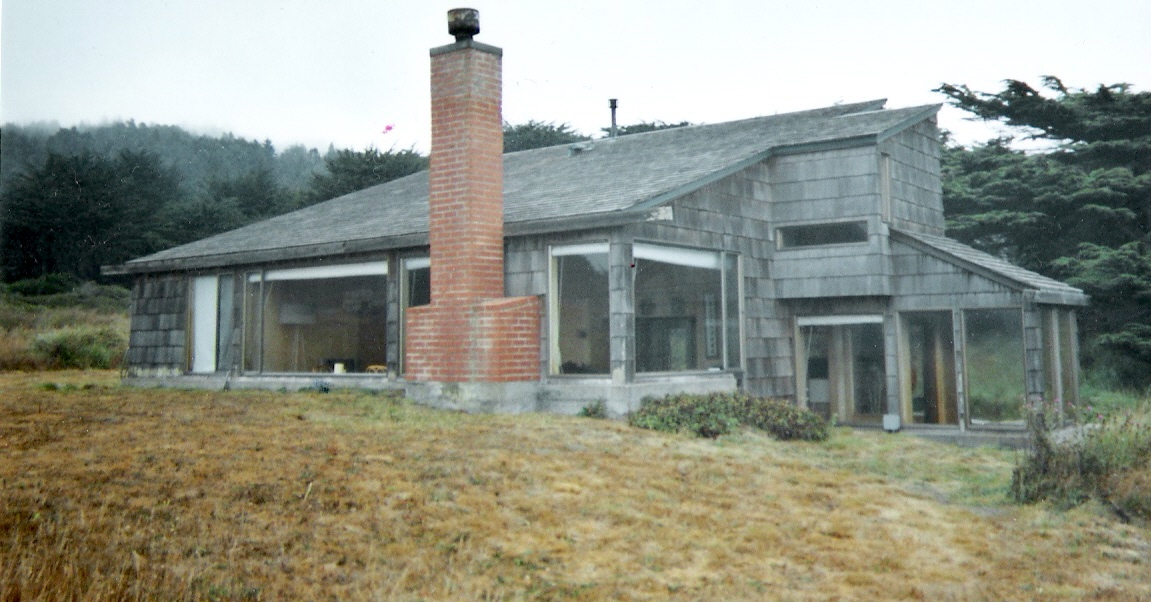
The Sea Ranch has distinctive architecture consisting of simple timber-frame structures clad in wooden siding or shingles. The building typology of the Sea Ranch draws on the local agricultural buildings for inspiration, in the way that those buildings are designed to deal with prevailing weather and topography. Originally, the Sea Ranch had local lumber mills to draw on for the Douglas Fir and Redwood used in the homes. The majority of the 1800 or so homes are smaller second homes, although there are approximately 300 full-time residents. Approximately half the homes are rented as weekend rentals. The eventual build-out is expected to comprise approximately 2400 homes; the number varies as some current owners purchase adjacent vacant lots and merge the two, to preserve open space. The buildings could be considered a hybrid of modern and vernacular architecture, also known as the "Third Bay Tradition" and also referred to as "Sea Ranch" style.
The original design guidelines suggest that buildings have a site-specific relationship with the landscape. The Sea Ranch design review requirements specify that the buildings become part of the landscape, not subordinate to it, but do not dominate either. Details such as exteriors of unpainted wood or muted stains, a lack of overhanging eaves, and baffles on exterior lighting subdue the appearance of the buildings in the landscape. The baffles minimize nighttime light pollution; there are no street lights to obscure the night sky. The lack of roof overhangs is also intended to allow the near-constant strong breezes to pass over the buildings without the turbulence overhangs would create. The Sea Ranch design review process does not affect the building interiors, but all construction is subject to Sonoma County Permit and Resource Management oversight.
Landscaping in The Sea Ranch is regulated by a design manual that prohibits perimeter fences and limits non-indigenous plants to screened courtyards. A herd of sheep is used to keep grass low to the ground to reduce the threat of fire during the summer months.
Education
The school districts are Horicon Elementary School District and Point Arena Joint Union High School District.
Professionals associated with the development
Architects
Over the decades many architects have designed houses at Sea Ranch, including:
- David Alpert
- Al Boeke
- J. Carson Bowler
- Obie Bowman
- Steve Brodie
- William Scott Ellsworth
- Joseph Esherick
- Nicholas Forell
- John Halley
- Paul Lucas Hamilton
- Robert Hartstock
- George W. Homsey
- James Hubbell (artist)
- Donald Jacobs
- Daniel Levin
- Donlyn Lyndon
- Janet MacKinnon
- Louis McLane
- Charles Moore
- Fiona O'Neill
- John Ruble
- Lisa Scott
- Ted Smith
- William Turnbull Jr.
- Dimitri Vedensky
- Ned Westover
- Richard Whitaker
- Buzz Yudell
Graphic designer
- Barbara Stauffacher Solomon
Landscape architects
- Lawrence Halprin
Points of interest


Condominium One (completed in 1965) was awarded the American Institute of Architects Twenty-five Year Award in 1991, and was added to The National Register of Historic Places in 2005.
Sea Ranch Chapel.
The Sonoma County Regional Parks Department provides coastal access from six places along State Route 1 in The Sea Ranch area:
- Black Point (trail) at 35035 State Route 1
- Gualala Point Regional Park at 42401 State Route 1
- Pebble Beach (trail) at 36448 State Route 1
- Shell Beach (trail) at 39200 State Route 1
- Stengel Beach (trail) at 37900 State Route 1 (closed)
- Walk On Beach (trail) at 40101 State Route 1
References
References
- "2020 U.S. Gazetteer Files". United States Census Bureau.
- {{Cite GNIS. 1723333. Sea Ranch
- Woo, Elaine. (2011-11-20). "Al Boeke dies at 88; 'father' of Northern California's Sea Ranch". [[Los Angeles Times]].
- Hevesi, Dennis. (2011-11-16). "Al Boeke, Architect Who Sought Ecological Harmony, Is Dead at 88". [[New York Times]].
- Keith, Kelsey. (2019-02-20). "'Paradise at the end of the world': An oral history of the Sea Ranch (Part I)".
- Ketcham, Diana. (2019-06-11). "Sea Ranch, California's Modernist Utopia, Gets an Update". The New York Times.
- Poulin, Richard. (2012). "Graphic Design + Architecture. A 20th-Century History". Rockport Publishers.
- Keith, Kelsey. (February 21, 2019). "'Paradise at the end of the world': An oral history of the Sea Ranch (Part II)". Curbed.
- Lyndon, Donlyn. (2004). "The Sea Ranch". Princeton Architectural Press.
- (1972-11-07). "The California Coastal Zone Conservation Act of 1972 ("Proposition 20")". California Coastal Commission.
- (2004-03-05). "Bluff Top Trail & Public Access Easements In The Sea Ranch Development". Sonoma County Regional Parks.
- "KGUA Mendonoma Public Media".
- Martinez, Donna. (2024-08-04). "Sea Ranch Abalone Bay".
- "2020 Census Interactive Population Search: CA - The Sea Ranch CDP". U.S. Census Bureau.
- "2010 Census Interactive Population Search: CA - The Sea Ranch CDP". U.S. Census Bureau.
- "Fact Sheet: Zip Code Tabulation Area 95497".
- {{Cite GNIS. 2583133. Sea Ranch
- "Fact Sheet: Zip Code Tabulation Area 95497".
- "2010 Census Interactive Population Search: CA - The Sea Ranch CDP". U.S. Census Bureau.
- "2020 Census Interactive Population Search: CA - The Sea Ranch CDP". U.S. Census Bureau.
- "2020 Census Interactive Population Search: CA - The Sea Ranch CDP". U.S. Census Bureau.
- "2010 Census Interactive Population Search: CA - The Sea Ranch CDP". U.S. Census Bureau.
- Ketcham, Diana. (2019-06-11). "A Reality Check for Sea Ranch". [[The New York Times]].
- Iovenko, Chris. (2020-10-19). "Discover the Utopian Promise of Sea Ranch, a Unique Community on California's Northern Coast". Fodors Travel Guide.
- (October 2013). "The Sea Ranch Design Manual and Rules".
- "2020 CENSUS - SCHOOL DISTRICT REFERENCE MAP: Sonoma County, CA". [[U.S. Census Bureau]].
- Donlyn Lyndon and Jim Alinder. (2004). "The Sea Ranch". Princeton Architecture Press.
- "The Sea Ranch Chapel – a non-denominational sanctuary for prayer, meditation, and spiritual renewal".
- "Trails Along the Pacific Coast in The Sea Ranch".
- Harden, Olivia. (2023-02-23). "Sea Ranch locals demand beach reopening from county officials". SFGATE.
- "Stengel Beach Coastal Access Trail".
- (2023-02-15). "Shut stairway bars public from beloved stretch of Sonoma Coast. And no fix is in sight".
This article was imported from Wikipedia and is available under the Creative Commons Attribution-ShareAlike 4.0 License. Content has been adapted to SurfDoc format. Original contributors can be found on the article history page.
Ask Mako anything about Sea Ranch, California — get instant answers, deeper analysis, and related topics.
Research with MakoFree with your Surf account
Create a free account to save articles, ask Mako questions, and organize your research.
Sign up freeThis content may have been generated or modified by AI. CloudSurf Software LLC is not responsible for the accuracy, completeness, or reliability of AI-generated content. Always verify important information from primary sources.
Report