From Surf Wiki (app.surf) — the open knowledge base
Science and technology in the United Kingdom
none
none
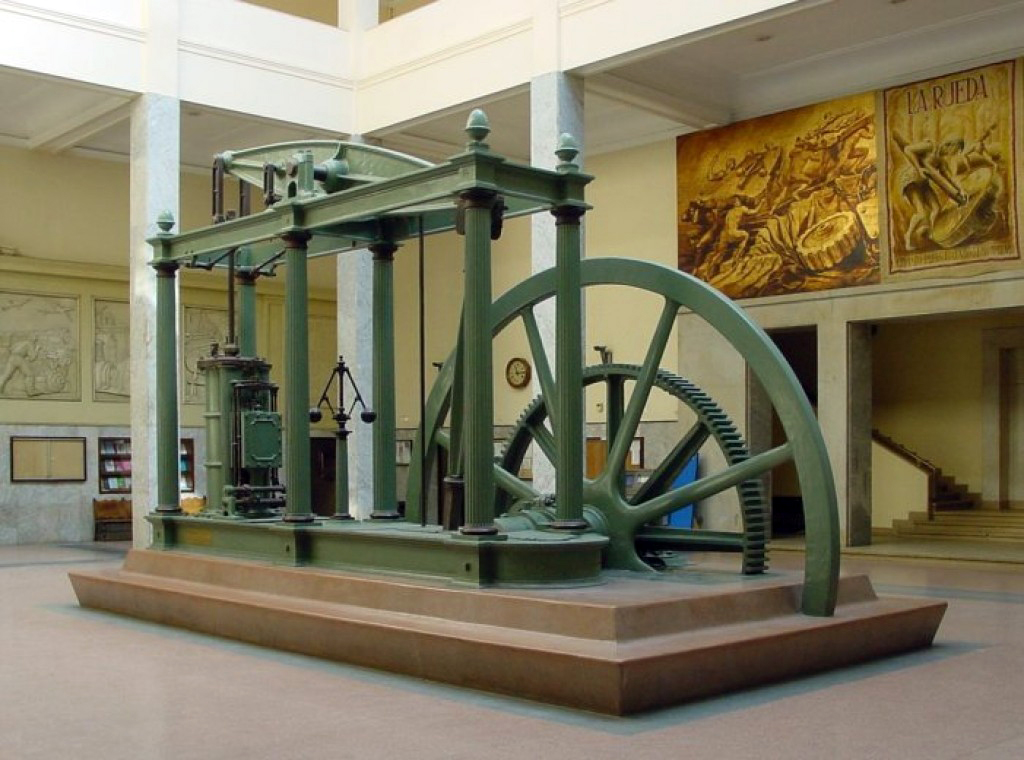
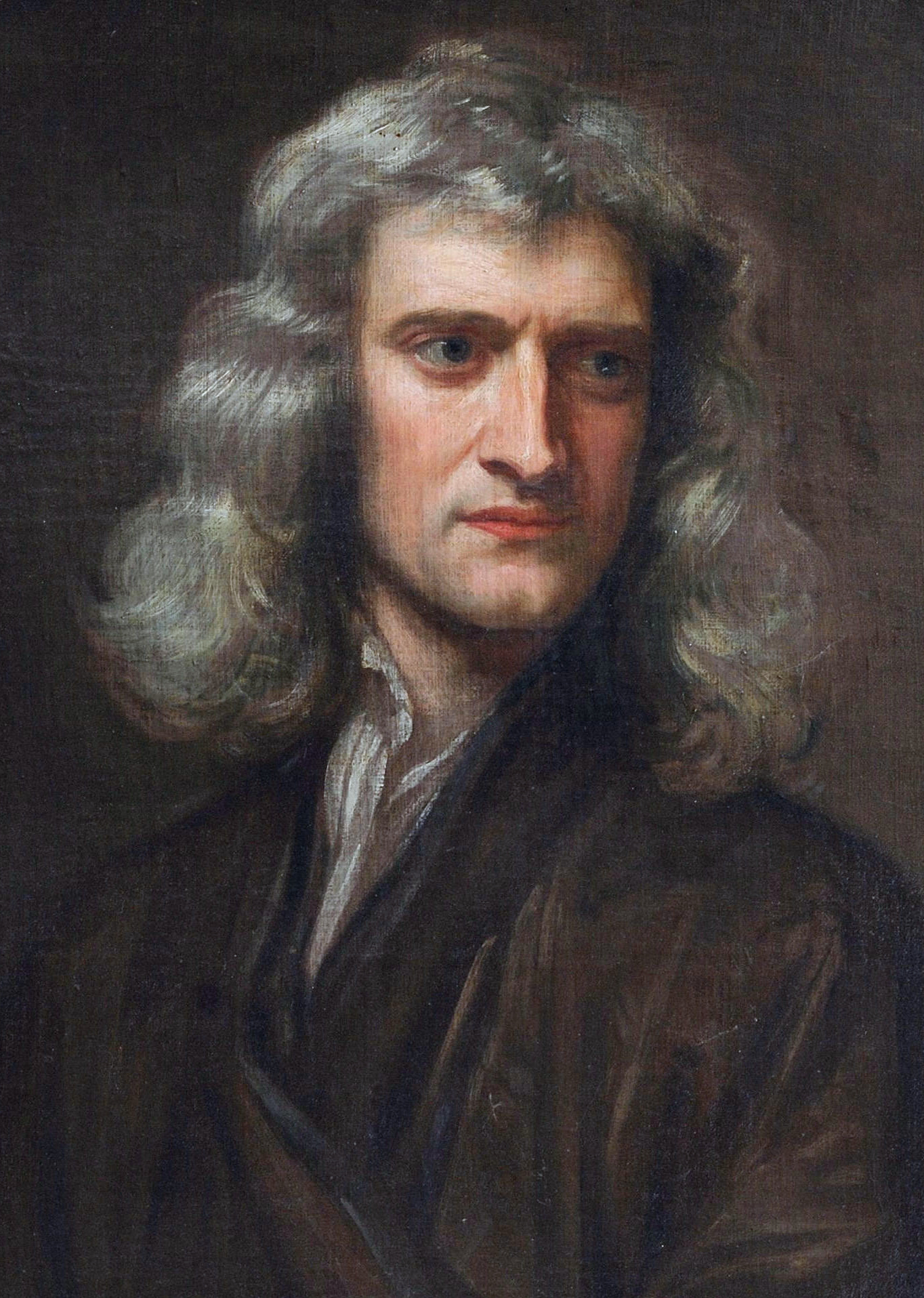
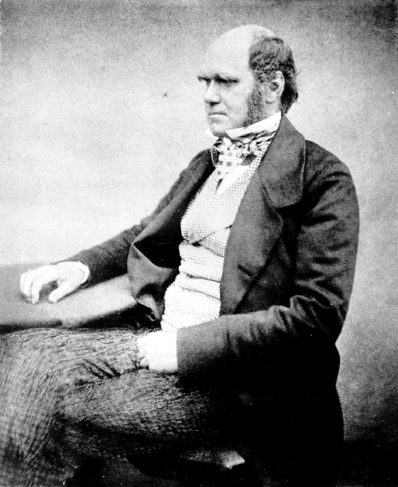
Science and technology in the United Kingdom has a long history, producing many important figures and developments in the field. Major theorists from the United Kingdom of Great Britain and Northern Ireland include Isaac Newton whose laws of motion and theory of gravitation have been recognized as foundational to modern science and Charles Darwin whose theory of evolution by natural selection was fundamental to the development of modern biology. Major scientific discoveries include hydrogen by Henry Cavendish, penicillin by Alexander Fleming, and the structure of DNA, by Francis Crick and others. Major engineering projects and applications pursued by people from the United Kingdom include the steam locomotive developed by Richard Trevithick and Andrew Vivian, the jet engine by Frank Whittle and the World Wide Web by Tim Berners-Lee. The United Kingdom continues to play a major role in the development of science and technology and major technological sectors include the aerospace, motor and pharmaceutical industries.
Important advances made by British people
England (which included Wales at the time) and Scotland were leading centres of the Scientific Revolution from the 17th century. The United Kingdom led the Industrial Revolution from the 18th century, and has continued to produce scientists and engineers credited with important advances. Some of the major theories, discoveries and applications advanced by people from the United Kingdom are given below.
- The development of empiricism and its role in scientific method, by Francis Bacon (1561–1626).
- The laws of motion and illumination of gravity, by physicist, mathematician, astronomer, natural philosopher, alchemist and theologian, Sir Isaac Newton (1643–1727).
- The discovery of hydrogen, by Henry Cavendish (1731–1810).
- The steam locomotive, by Richard Trevithick (1771–1833) and Andrew Vivian (1759–1842).
- An early electric motor, by Michael Faraday (1771–1867), whose work made electricity practical for technological applications.
- The theory of aerodynamics, by Sir George Cayley (1773–1857).
- The first public steam railway, by George Stephenson (1781–1848).
- The first commercial electrical telegraph, co-invented by Sir William Fothergill Cooke (1806–79) and Charles Wheatstone (1802–75).
- First tunnel under a navigable river, first all iron ship and first railway to run express services, contributed to by Isambard Kingdom Brunel (1806–59).
- Evolution by natural selection, by Charles Darwin (1809–82).
- The invention of the incandescent light bulb, by Joseph Swan (1826–1914).
- The unification of electromagnetism, by James Clerk Maxwell (1831–79).
- The first practical telephone, patented by Alexander Graham Bell (1847–1922).
- The discovery of penicillin, by biologist and pharmacologist, Sir Alexander Fleming (1881–1955).
- The world's first working television system, and colour television, by John Logie Baird (1888–1946).
- The first meaningful synthesis of quantum mechanics with special relativity by Paul Dirac (1902–84) in the equation named after him, and his subsequent prediction of antimatter.
- The invention of the jet engine, by Frank Whittle (1907–96).
- The invention of the hovercraft, by Christopher Cockerell (1910–99).
- The Bombe computer, developed by Alan Turing (1912–54), was an early electromechanical computer designed for code-breaking during World War II at Bletchley Park.
- The structure of DNA, by Francis Crick (1916–2004) and others.
- The invention of modern data communication by Donald Davies (1924–2000), including packet switching, high-speed routers, hierarchical computer networks, layered communication protocols and the essence of the end-to-end principle.
- The theoretical breakthrough of the Higgs mechanism to explain electroweak symmetry breaking and why some particles have mass, by Peter Higgs (1929–2024).
- Theories in cosmology, quantum gravity and black holes, by Stephen Hawking (1942–2018).
- The invention of the World Wide Web, by Tim Berners-Lee (1955–).
Technology-based industries

The United Kingdom plays a leading part in the aerospace industry. Companies such as Rolls-Royce are major players in the aero-engine market, while BAE Systems serves as Britain's largest defence supplier and the Pentagon's sixth largest. Large companies including GKN act as major suppliers to the Airbus project. Two British-based companies, GlaxoSmithKline and AstraZeneca, ranked in the top five pharmaceutical companies in the world by sales in 2009 and UK companies have discovered and developed more leading medicines than any other country apart from the US. The UK remains a leading centre of automotive design and production, particularly of engines, and in 2011 had around 2,600 component manufacturers. Investment by venture capital firms in UK technology companies was $9.7 billion from 2010 to 2015.
The UK technology sector represents a significant portion of the global technology industry, and valued at $1.2 trillion in the first half of 2025.
Scientific research
Scientific research and development remains important in British universities, with many institutions establishing science parks to facilitate production and cooperation with industry. Between 2004 and 2012, the United Kingdom produced 6% of the world's scientific research papers and had an 8% share of scientific citations, the third- and second-highest in the world (after the United States' 9% and China's 7% respectively). Scientific journals produced in the UK include Nature, the British Medical Journal and The Lancet.
Britain was one of the largest recipients of research funding from the European Union. From 2007 to 2013, the UK received €8.8 billion out of a total of €107 billion expenditure on research, development and innovation in EU Member States, associated and third countries. At the time, this represented the fourth largest share in the EU. The European Research Council granted 79 projects funding in the UK in 2017, more than any other EU country. The United Kingdom was ranked 6th in the Global Innovation Index in 2025.
Notes
References
References
- Gascoigne, John. (1990). "Reappraisals of the Scientific Revolution". Cambridge University Press.
- "European Countries – United Kingdom". Europa (web portal).
- (1966). "Britain in the Twentieth Century, 1900–1964". Cambridge University Press.
- Urbach, Peter. (1987). "Francis Bacon's Philosophy of Science: An Account and a Reappraisal". Open Court Publishing Co.
- Burtt, Edwin Arthur. (2003). "The Metaphysical Foundations of Modern Science". Courier Dover.
- (1996). "Cavendish". American Philosophical Society.
- James, Ioan. (2010). "Remarkable Engineers: From Riquet to Shannon". Cambridge University Press.
- Bova, Ben. (2002). "The Story of Light". Sourcebooks.
- Ackroyd, J.A.D.. (22 May 2002). "Sir George Cayley, the Father of Aeronautics. Part 1. The Invention of the Aeroplane". [[Notes and Records]].
- Davies, Hunter. (1975). "George Stephenson: A Biographical Study of the Father of Railways". Weidenfeld and Nicolson.
- Hubbard, Geoffrey. (2008). "Cooke and Wheatstone and the Invention of the Electric Telegraph". Routledge.
- Tames, Richard. (2009). "Isambard Kingdom Brunel". [[Bloomsbury Publishing]].
- Hatt, Christine. (2006). "Scientists and Their Discoveries". Evans Brothers.
- Ribiero, Daniel. (1947). "Alexander Graham Bell (1847–1922)". [[Nature (journal).
- "Sir Alexander Fleming – Biographical". [[The Nobel Foundation]].
- "John Logie Baird (1888–1946)". BBC History.
- "The World's First High Definition Colour Television System".
- "The Nobel Prize in Physics 1933". The Nobel Foundation.
- Cole, Jeffrey. (2011). "Ethnic Groups of Europe: An Encyclopedia". Bloomsbury Academic.
- "Sir Christopher Sydney Cockerell".
- Smith, Michael. (2004). "Station X: The Codebreakers of Bletchley Park". Pan Macmillan.
- Yates, David M.. (1997). "Turing's Legacy: A History of Computing at the National Physical Laboratory 1945-1995". National Museum of Science and Industry.
- Naughton, John. (2000). "A Brief History of the Future". Phoenix.
- Campbell-Kelly, Martin. (1987). "Data Communications at the National Physical Laboratory (1965-1975)". Annals of the History of Computing.
- (1 April 1981). "A History of the ARPANET: The First Decade". Bolt, Beranek & Newman Inc..
- (October 1967). "A Digital Communication Network for Computers Giving Rapid Response at remote Terminals".
- Kleinrock, L.. (1978). "Principles and lessons in packet communications". Proceedings of the IEEE.
- Pelkey, James L.. "Entrepreneurial Capitalism and Innovation: A History of Computer Communications 1968–1988".
- Waldrop, M. Mitchell. (2018). "The Dream Machine". Stripe Press.
- Griffiths, Martin. (1 May 2007). "The tale of the blogs' boson".
- Quittner, Joshua. (29 March 1999). "Network Designer Tim Berners-Lee". Time Magazine.
- McPherson, Stephanie Sammartino. (2009). "Tim Berners-Lee: Inventor of the World Wide Web". Twenty-First Century Books.
- O'Connell, Dominic. (30 January 2011). "Britannia still rules the skies". The Sunday Times.
- "IMS Health".
- Department of Trade and Industry. "The Pharmaceutical sector in the UK".
- "Automotive industry".
- Moore, Mike. (7 January 2016). "UK Tech Firms Smash VC Investement Record". Silicon UK.
- (June 2025). "The Tech Nation Report 2025". [[Snowflake Inc..
- (1994). "Technopoles of the World: the Making of Twenty-First-Century Industrial Complexes". Routledge.
- (2011). "Knowledge, networks and nations: scientific collaborations in the twenty-first century". [[Royal Society]].
- MacLeod, Donald. (21 March 2006). "Britain second in world research rankings". The Guardian.
- (23 November 2015). "How much research funding does the UK get from the EU and how does this compare with other countries?". [[Royal Society]].
- Crisp, James. (6 September 2017). "Boost for hopes of post-Brexit co-operation as EU awards Britain more research grants than anywhere else". The Telegraph.
- (6 September 2017). "ERC Starting Grants 2017". European Research Council.
- "GII Innovation Ecosystems & Data Explorer 2025".
- (2025). "Global Innovation Index 2025: Innovation at a Crossroads". [[World Intellectual Property Organization]].
This article was imported from Wikipedia and is available under the Creative Commons Attribution-ShareAlike 4.0 License. Content has been adapted to SurfDoc format. Original contributors can be found on the article history page.
Ask Mako anything about Science and technology in the United Kingdom — get instant answers, deeper analysis, and related topics.
Research with MakoFree with your Surf account
Create a free account to save articles, ask Mako questions, and organize your research.
Sign up freeThis content may have been generated or modified by AI. CloudSurf Software LLC is not responsible for the accuracy, completeness, or reliability of AI-generated content. Always verify important information from primary sources.
Report