From Surf Wiki (app.surf) — the open knowledge base
Saucedilla
| Field | Value | |
|---|---|---|
| official_name | Saucedilla | |
| image_skyline | Iglesia y caserío de Saucedilla 003.jpg | |
| image_caption | Church of St John the Baptist, Saucedilla with the Sierra de Gredos snow-covered behind | |
| image_shield | Escudo de armas de Saucedilla.svg | |
| pushpin_map | Spain | |
| pushpin_map_caption | Location in Spain | |
| subdivision_type | Country | |
| subdivision_name | Spain | |
| subdivision_type1 | Autonomous community | |
| subdivision_name1 | Extremadura | |
| subdivision_type2 | Province | |
| subdivision_name2 | Cáceres | |
| subdivision_type3 | Comarca | |
| subdivision_name3 | Campo Arañuelo | |
| subdivision_type4 | Municipality | |
| subdivision_name4 | Saucedilla | |
| coordinates | ||
| leader_title | Mayor | |
| leader_name | Urbano García Díaz (Independent) | |
| area_total_km2 | 60 | |
| elevation_m | 258 | |
| population_as_of | ||
| population_footnotes | ||
| population_total | ||
| population_demonym | naveros | |
| population_density_km2 | auto | |
| timezone | CET | |
| utc_offset | +1 | |
| timezone_DST | CEST | |
| utc_offset_DST | +2 | |
| website | http://www.saucedilla.es |
| }}
Saucedilla () is a municipality located in the province of Cáceres, Extremadura, Spain. It belongs to the Campo Arañuelo County (Comarca del Campo Arañuelo), the capital of which is Navalmoral de la Mata.
According to the 2010 census (INE), it had a population of 859 inhabitants.
Geography and nature
The situation of Saucedilla is impressive. In the north, the vast bulk of the Sierra de Gredos and the Tiétar River; in the south and west, the Miravete Sierra (Casas de Miravete), the Tagus River (Tajo in Spanish) and the Serrejón Sierra. The climate is Mediterranean. The village stands in an extensive plain of clayey grounds.
Dehesa
The municipality is surrounded by immense dehesas. A dehesa is a light wood of holm oaks (Quercus ilex) or cork oaks (Quercus suber). There, the breeding (animal husbandry) of cattle, sheep (for meat and wool), goats (for meat and cheese), and pigs, (Iberian pig) for meat like jamón ibérico (Iberian ham) and jamón serrano, are common. The breeding of fighting bulls (toro bravo in Spanish) is also widespread. There are some ganaderías of these wild bulls in Saucedilla (Cerro Alto, La Anguila) and others nearby villages like Casatejada or Toril.
Arrocampo Reservoir
Arrocampo Reservoir was created at 1976 to cool the turbines of the Almaraz nuclear power plant, which is near Saucedilla. With a system of dams and dikes, the water, taken from Tagus river, covers a circuit of 11 km which allow the cooling of these turbines.
:* Biomass (ecology): there are a considerable masses of phytoplankton and zooplankton thanks to the eutrophication and oxygenation of waters. The bulrush (Typha latifolia) vegetation is dominant in Arrocampo. It allows the proliferation of birds and little mammals.
:* Fishes: barbels (Barbus barbus), common carps (Cyprinus carpio), tenches (Tinca tinca), big largemouth bass (Micropterus salmoides) (almost 50 cm).
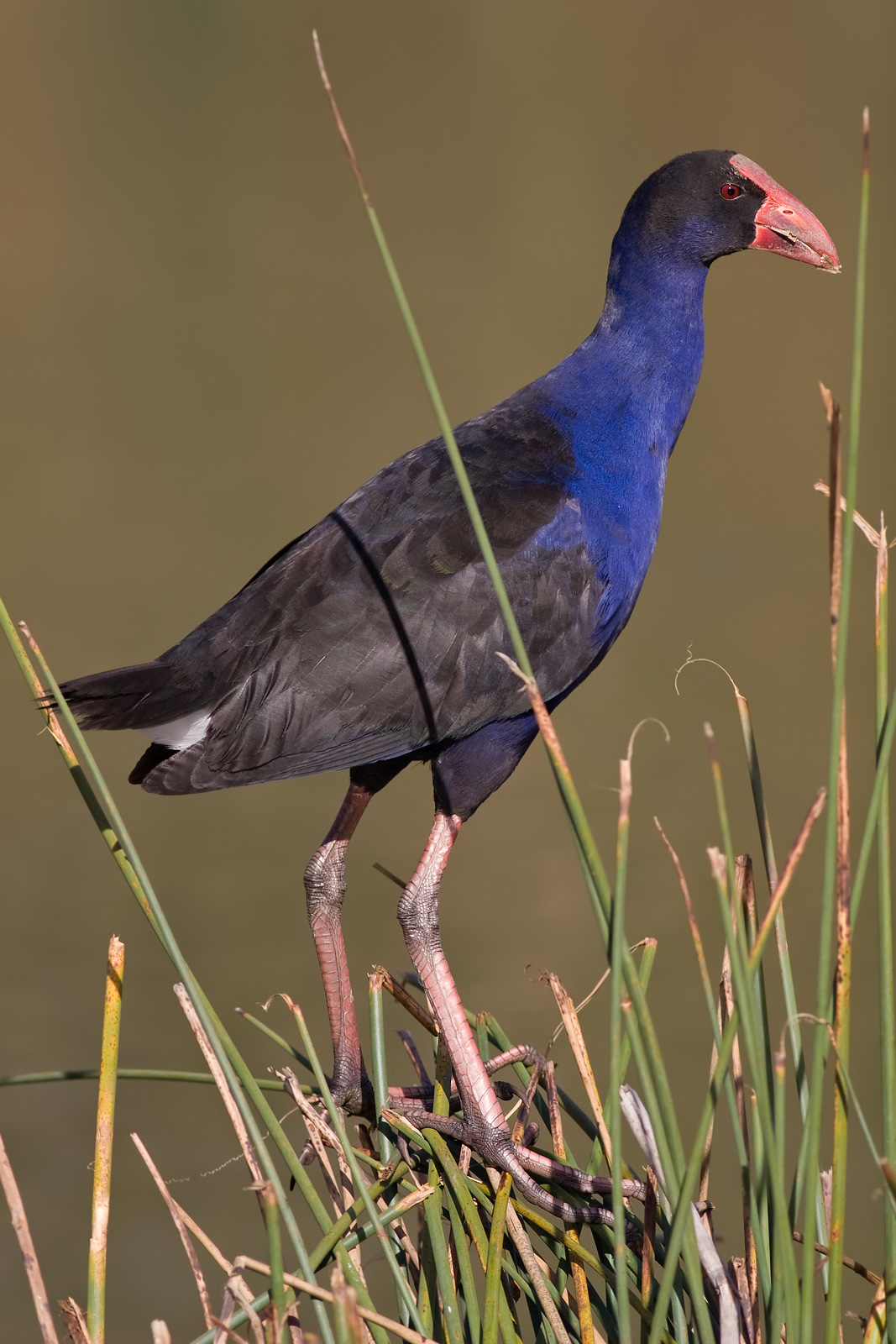
:* Actually, it is an important Special Protection Area (SPA) for wild birds. (In Spanish: Zona Especial de Protección para las Aves, ZEPA.) Many migrating as well as permanent birds can be watched in the reservoir waters and their vicinity: white stork (Ciconia ciconia), lesser kestrel (Falco naumanni), purple heron (Ardea purpurea), squacco heron (Ardeola ralloides), black-crowned night heron (Nycticorax nycticorax), little bittern (Ixobrychus minutus), osprey (Pandion haliaetus), cattle egret (Bubulcus ibis), great cormorant (Phalacrocorax carbo), purple swamphen (Porphyrio porphyrio). This is, perhaps, the bird symbol of Arrocampo Reservoir SPA). The list is practically endless. :
''Cañada Real Leonesa Occidental'' (main droveway of Western León)
Saucedilla was always a land of sheep. (Its coat of arms has a head of ram.) Extremadura (and Saucedilla), was a passing and transhumance land from the Middle Age. In medieval Spain, there were droving flocks of sheep on the largest scale, which were carefully organized by the system of the Mesta, crossing Extremadura and other Spanish regions. These long distance movements of sheep and cattle were made along drovers road called cañadas reales in Castile, cabañeras in Aragon, carreradas in Catalonia. The Cañada Real Leonesa Occidental cross Saucedilla by the south, near the cemetery. There is a country house, close the graveyard, for shepherds and cowherds who cover the droveway still today.
Irrigated lands
:* Long ago, the economic activity of Saucedilla was based only on traditional agriculture. During centuries, there was a subsistence farming (dry farming), with also the breeding of sheep, goats, cattle and pigs. This agriculture has produced cereals for years and years in Saucedilla lands: wheat, barley, oats, rye, chickpeas, broad beans and root vegetables like turnips. Also olives and wine.
:* The new irrigation farming: the Valdecañas Reservoir upon the Tagus (on southeast of the municipality), and the construction of many channels, were made possible to irrigate many farmlands of Saucedilla. Fodder for cows and sheep, fruits like tomatoes, pimientos, bell peppers, peaches, etc., are produced because of the arrival of water in the 1980s.
Special Protection Areas
There are two Special Protection Areas (SPAs) in Saucedilla. They were created in 2005.
:* Arrocampo Reservoir Special Protection Area. The list of wild birds of Arrocampo Reservoir SPA is really very large.
:* Lesser Kestrel Colonies of Saucedilla Special Protection Area: it is located on the parish church of Saucedilla. 17 pairs of lesser kestrels (Latin name Falco naumanni, in Spanish cernícalos) were recorded in 2005 in the putlog holes of its walls.
Arrocampo Ornithological Park
There are two ornithological routes marked with wooden blazes and an Information Office near the municipal swimming pools in the south entry of the village.
:* Route 1: Arrocampo Reservoir Route. This route has 4 bird hides. :* Route 2: Cerro Alto Route: 1 hide
Pictures of the area around Saucedilla
File:Dehesa extremeña (Saucedilla, Cáceres).jpg|Dehesa (holm oak wood) nearby Saucedilla File:Embalse de Arrocampo.jpg|Arrocampo Reservoir File:Torreta_de_elevación_de_agua.jpg|Elevation water tower for irrigation File:Principales vias pecuarias.png|Main drovers roads of Spain. Cañada Real Leonesa Occidental is nº3. It cross by Saucedilla File:ZEPA Saucedilla.jpg|Information office of Arrocampo Reservoir Special Protection Area File:Garcilla-cangregera.JPG|Squacco heron (Ardeola ralloides) can be watched at Arrocampo Reservoir
Demography
- End of 15th century: Saucedilla had 900 inhabitants. There were a small community of Jews lived in Saucedilla before its expulsion of Spain in 1492.
- Between 1528 and 1653: the municipality lost many people (great demographic crisis in all regions of Spain)
- According to the Instituto Nacional de Estadística, the evolution between 1900 and 2010 is: Colors= id:lightgrey value:gray(0.8) id:darkgrey value:gray(0.6) id:bar value:rgb(1,0.75,0.4)
ImageSize = width:400 height:200 PlotArea = left:50 bottom:20 top:20 right:30 DateFormat = x.y Period = from:0 till:900 TimeAxis = orientation:vertical AlignBars = justify ScaleMajor = gridcolor:darkgrey increment:100 start:0 ScaleMinor = gridcolor:lightgrey increment:20 start:0 BackgroundColors = canvas:white
BarData= bar:1900 text:1900 bar:1910 text:1910 bar:1920 text:1920 bar:1930 text:1930 bar:1940 text:1940 bar:1950 text:1950 bar:1960 text:1960 bar:1970 text:1970 bar:1981 text:1981 bar:1991 text:1991 bar:2001 text:2001 bar:2010 text:2010
PlotData= color:bar width:20 align:left bar:1900 from:0 till:335 bar:1910 from:0 till:604 bar:1920 from:0 till:427 bar:1930 from:0 till:523 bar:1940 from:0 till:629 bar:1950 from:0 till:699 bar:1960 from:0 till:880 bar:1970 from:0 till:367 bar:1981 from:0 till:412 bar:1991 from:0 till:497 bar:2001 from:0 till:610 bar:2010 from:0 till:857
PlotData= bar:1900 at: 335 fontsize:S text:335 shift:(-10,5) bar:1910 at: 604 fontsize:S text:604 shift:(-10,5) bar:1920 at: 427 fontsize:S text:427 shift:(-10,5) bar:1930 at: 523 fontsize:S text:523 shift:(-10,5) bar:1940 at: 629 fontsize:S text:629 shift:(-10,5) bar:1950 at: 699 fontsize:S text:699 shift:(-10,5) bar:1960 at: 880 fontsize:S text:880 shift:(-10,5) bar:1970 at: 367 fontsize:S text:367 shift:(-10,5) bar:1981 at: 412 fontsize:S text:412 shift:(-10,5) bar:1991 at: 497 fontsize:S text:497 shift:(-10,5) bar:2001 at: 610 fontsize:S text:610 shift:(-10,5) bar:2010 at: 857 fontsize:S text:857 shift:(-10,5)
- 1960s: the emigration years. Many people (and their families) left the village at the beginning of the 1960s to earn their living in Madrid, Barcelona, Bilbao, France, Germany, etc.
- Foreign population, currently: community of Moroccan people. They work in regional or local agriculture (tobacco, harvests, fruits picking), domestic service, etc.
History

- 14th century: foundation of the municipality. Colons of Collado de la Vera (see Collado (Cáceres)) (little village of the Comarca La Vera located in the foothills of the Sierra de Gredos mountain range) founded Saucedilla in middle of 14th century.
- 15th century: development of the municipality.
- 16th century: building of the church (gothic and renaissance styles) under Bishop Gutierre de Vargas Carvajal mandate. The church construction terminated under the bishopric of Pedro Ponce de León.
- 17th century: :* Lord of Saucedilla: Francisco Tuttavilla. :* Construction of the jurisdiction column (rollo jurisdiccional in Spanish).
- 18th century: Creation of Saucedilla County. The Counts of Saucedilla.
- The Independence War ("Guerra de Independencia")
Monuments
- St John the Baptist Church (16th century). Gothic and Renaissance styles
- Jurisdiction Column (17th century)
- Plasencia Cross
Pictures of the monuments
File:Iglesia rollo y fuente.jpg|St John the Baptist church of Saucedilla File:Rollo_jurisdiccional_de_Saucedilla_(sigl._XVII).jpg|Jurisdiction column File:Iglesia de San Juan Bautista (Saucedilla, Cáceres) con palmeras.jpg|A view of the church File:Saucedilla 009.jpg|Gothic vault File:Nave desde el coro 21.jpg|The nave from the choir File:Cruz de Plasencia.jpg|Plasencia Cross
References
Bibliography
- Saucedilla: santo y seña de un pueblo extremeño, Juan Carlos RUBIO MASA & José Luis RUBIO MASA; Ed. Saucedilla, Excmo. Ayuntamiento de Saucedilla, 1994
- Saucedilla: costumbres, casas y familias, Ángel Marzal González; Navalmoral de la Mata, Ed. Publisher Navalmoral,1999
References
- ''SAUCEDILLA: santo y seña de un pueblo extremeño'', by RUBIO MASA, Juan Carlos & RUBIO MASA, José Luis; Ed. Excmo. Ayuntamiento de Saucedilla, 1994
- "Birding in Extremadura - Arrocampo Reservoir".
- Juan Carlos Rubio Masa and José Luis Rubio Masa: Saucedilla, santo y seña de un pueblo extremeño, Navalmoral de la Mata, 1994; Ed. Exmo. Ayuntamiento de Saucedilla
This article was imported from Wikipedia and is available under the Creative Commons Attribution-ShareAlike 4.0 License. Content has been adapted to SurfDoc format. Original contributors can be found on the article history page.
Ask Mako anything about Saucedilla — get instant answers, deeper analysis, and related topics.
Research with MakoFree with your Surf account
Create a free account to save articles, ask Mako questions, and organize your research.
Sign up freeThis content may have been generated or modified by AI. CloudSurf Software LLC is not responsible for the accuracy, completeness, or reliability of AI-generated content. Always verify important information from primary sources.
Report