From Surf Wiki (app.surf) — the open knowledge base
Sarzana
Municipality in Liguria, Italy
Municipality in Liguria, Italy
| Field | Value |
|---|---|
| name | Sarzana |
| official_name | Città di Sarzana |
| image_skyline | Sarzana - Panorama (da Monte Caprione).JPG |
| image_shield | Sarzana-Stemma.svg |
| image_flag | Sarzana-Bandiera.svg |
| coordinates | |
| region | Liguria |
| province | La Spezia (SP) |
| frazioni | Marinella di Sarzana, Falcinello, Sarzanello, San Lazzaro |
| mayor | Cristina Ponzanelli |
| area_total_km2 | 34 |
| population_total | 22104 |
| population_as_of | 31 December 2016 |
| population_demonym | Sarzanesi |
| elevation_m | 21 |
| saint | St. Andrew |
| day | 30 November |
| postal_code | 19038 |
| area_code | 0187 |
| website |
Sarzana (, ; ) is a town, comune (municipality) and former short-lived Catholic bishopric in the Province of La Spezia, Liguria, Italy. It is 15 km east of La Spezia, on the railway to Pisa, at the point where the railway to Parma diverges to the north. In 2023, it had a population of 21,786.
History
The position of Sarzana, at the entrance to the valley of the Magra (ancient Macra), the boundary between Etruria and Liguria in Roman times, gave it military importance in the Middle Ages. The first mention of the city is found in 983 in a diploma of Otto I; in 1202 the episcopal see was transferred from the ancient Luni, 5 km southeast, to Sarzana.
Sarzana, owing to its position, changed masters more than once, belonging first to Pisa, then to Florence, then to the Banco di S. Giorgio of Genoa and from 1572 to dogal Genoa itself.
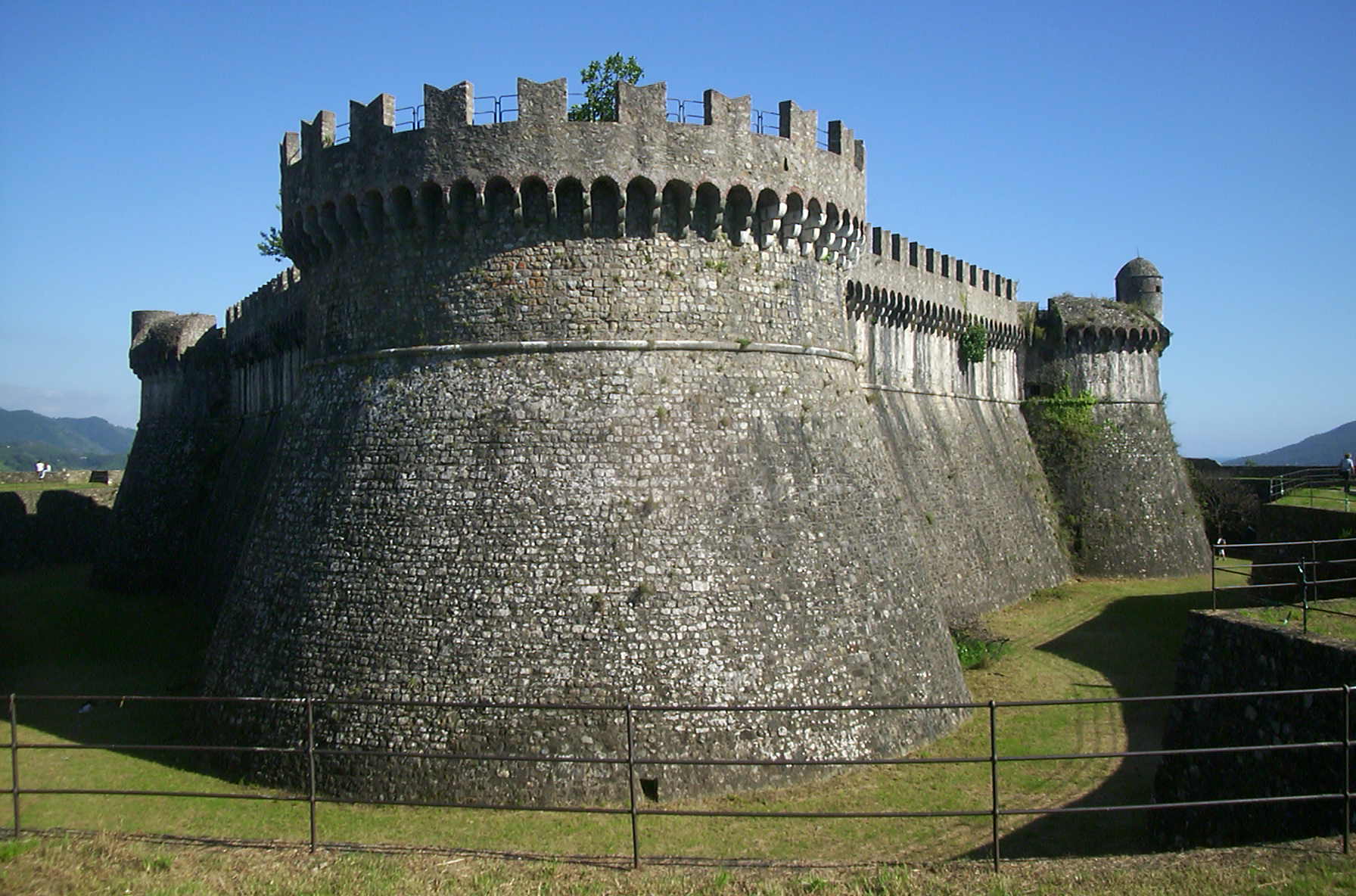
A fortress to protect the town stood since at least the tenth century; it was built in its current shape under orders from Lorenzo de' Medici. In 1814 it was assigned to the Kingdom of Sardinia, the frontier between Liguria and Tuscany being now made to run between it and Carrara.
In 1921 Sarzana was the scene of fights (**) between the population and Mussolini's Fascist squads. During them, a small group of Carabinieri and, later, simple citizens opposed and pushed back some 300 armed Fascists who had come to devastate the town, resulting in 18 dead and about 30 injured.
During the German occupation of Italy in World War II, Sarzana was a centre of partisan resistance.
Ecclesiastical history
The Diocese of Sarzana was established on 4 August 1975, on territory reassigned from the suppressed Roman Catholic Diocese of Luni–Sarzana. It was immediately joined in personal union (aeque principaliter) with the bishopric of Brugnato and diocese of La Spezia from 4 August 1975 until their merger on 30 September 1986.
On 30 September 1986 it was suppressed, its territory and titles being merged into the Diocese of La Spezia–Sarzana–Brugnato, to which the bishop was appointed.
Its only incumbent as suffragan Bishop of Sarzana was
- Siro Silvestri (1975.09.03 – 1986.09.30), also last Bishop of Brugnato (Italy) (1975.09.03 – 1986.09.30) and last Bishop of La Spezia (Italy) (1975.09.03 – 1986.09.30); previously Bishop of Foligno (Italy) (1955.07.21 – 1975.09.03); later first Bishop of La Spezia–Sarzana–Brugnato (Italy) (1986.09.30 – resigned 1989.12.07), died 1997.06.14.
Main sights
- the former Sarzana Cathedral: a white marble Gothic-style church built 1355–1474. It houses two elaborately sculptured altars of the latter period.
- Citadel of Sarzana; fortress initially built by Pisans, was demolished and re-erected by Lorenzo de' Medici.
- Castle of Sarzana: located on the hill of Sarzanello, at the site of fortress from as early as emperor Otto I. The castle was rebuilt or enlarged by the condottiero Castruccio Castracani, and later became the residence of the bishops of Luni.
- Pieve of Sant'Andrea: 10th–11th century parish church, and rebuilt in 1579, and has 16-century portal. It houses 14th–15th century marble statuary, a Vocation of Saints by Domenico Fiasella, and a dodecagonal baptismal font.
- San Francesco: documented from 1238 and, according to tradition, founded by Saint Francis himself. It houses the funerary monument (1328) of Castruccio Castracani's son, by Giovanni di Balduccio; the tomb of bishop Bernabò Malaspina; and a frescoed lunette attributed to Priamo della Quercia.
- Palazzo del Capitano: designed by Giuliano da Maiano (1472), but now entirely altered.
Notable locals
Sarzana was the birthplace of Tommaso Parentucelli, the future Pope Nicholas V, in 1397 a son of local doctor Bartolomeo Parentucelli. A branch of the Cadolingi di Borgonuovo family, Lords of Fucecchio in Tuscany from the 10th century onwards, which had acquired the name of Buonaparte, had settled near Sarzana before 1264.
International relations
Twin towns – sister cities
Sarzana is twinned with:
- FRA Villefranche-de-Rouergue, France
- HUN Eger, Hungary
Climate
The Köppen climate classification subtype for this climate is "Csa" (Mediterranean climate).{{Weatherbase
|Jan record high C = 18.4 |Feb record high C = 20.0 |Mar record high C = 24.0 |Apr record high C = 26.2 |May record high C = 32.4 |Jun record high C = 37.0 |Jul record high C = 36.6 |Aug record high C = 38.3 |Sep record high C = 34.2 |Oct record high C = 29.4 |Nov record high C = 24.4 |Dec record high C = 19.2 |year record high C = 38.3 |Jan record low C = -9.0 |Feb record low C = -5.0 |Mar record low C = -4.9 |Apr record low C = -3.6 |May record low C = 3.8 |Jun record low C = 7.8 |Jul record low C = 10.4 |Aug record low C = 7.6 |Sep record low C = 6.0 |Oct record low C = 0.0 |Nov record low C = -3.6 |Dec record low C = -6.6 |year record low C = -9.0 |Jan dew point C = 1.3 |Feb dew point C = 1.2 |Mar dew point C = 3.4 |Apr dew point C = 6.2 |May dew point C = 10.6 |Jun dew point C = 13.9 |Jul dew point C = 16.1 |Aug dew point C = 16.3 |Sep dew point C = 13.3 |Oct dew point C = 10.8 |Nov dew point C = 6.3 |Dec dew point C = 2.5 |access-date = February 3, 2024 |archive-url = https://web.archive.org/web/20240317091352/https://www.nodc.noaa.gov/archive/arc0216/0253808/2.2/data/0-data/Region-6-WMO-Normals-9120/Italy/CSV/SarzanaLuni_16125.csv |archive-date = 2024-03-17}}{{cite web |access-date = March 2, 2024 |archive-url = https://web.archive.org/web/20240317065214/https://www.ncei.noaa.gov/pub/data/normals/WMO/1981-2010/RA-VI/Italy/WMO_Normals_CliNo81-10.xls |archive-date = 2024-03-17}} |access-date = 24 February 2016}}{{cite web |access-date = 24 February 2016 |archive-url = https://web.archive.org/web/20240317093354/http://climaintoscana.altervista.org/italia/stazioni-wmo/sarzana-luni/ |archive-date = 2024-03-17}}
References
- Cathedral of Sarzana
- Bosworth, R. J. B. (2007). Mussolini's Italy: Life Under the Fascist Dictatorship, 1915–1945, London: Penguin Books,
References
- Frisoni, Gaetano. (1910). "Dizionario Genovese-Italiano e Italiano-Genovese". Nuova Editrice Genovese.
- {{EB1911
- (2023). "Censimento della popolazione: dati regionali - Anno 2023".
- Bosworth, ''Mussolini's Italy'', [https://books.google.com/books?id=Tm6uVwH03hAC&pg=PA173 p. 173]
- Tacconi, Francesco. "La Fortezza – Comune di Sarzana".
- Miglio, Massimo. (2000). "Niccolò V". Institute of the Italian Encyclopaedia Treccani.
- (2010). "La famiglia di Napoleone Bonaparte".
This article was imported from Wikipedia and is available under the Creative Commons Attribution-ShareAlike 4.0 License. Content has been adapted to SurfDoc format. Original contributors can be found on the article history page.
Ask Mako anything about Sarzana — get instant answers, deeper analysis, and related topics.
Research with MakoFree with your Surf account
Create a free account to save articles, ask Mako questions, and organize your research.
Sign up freeThis content may have been generated or modified by AI. CloudSurf Software LLC is not responsible for the accuracy, completeness, or reliability of AI-generated content. Always verify important information from primary sources.
Report