From Surf Wiki (app.surf) — the open knowledge base
Sapareva Banya
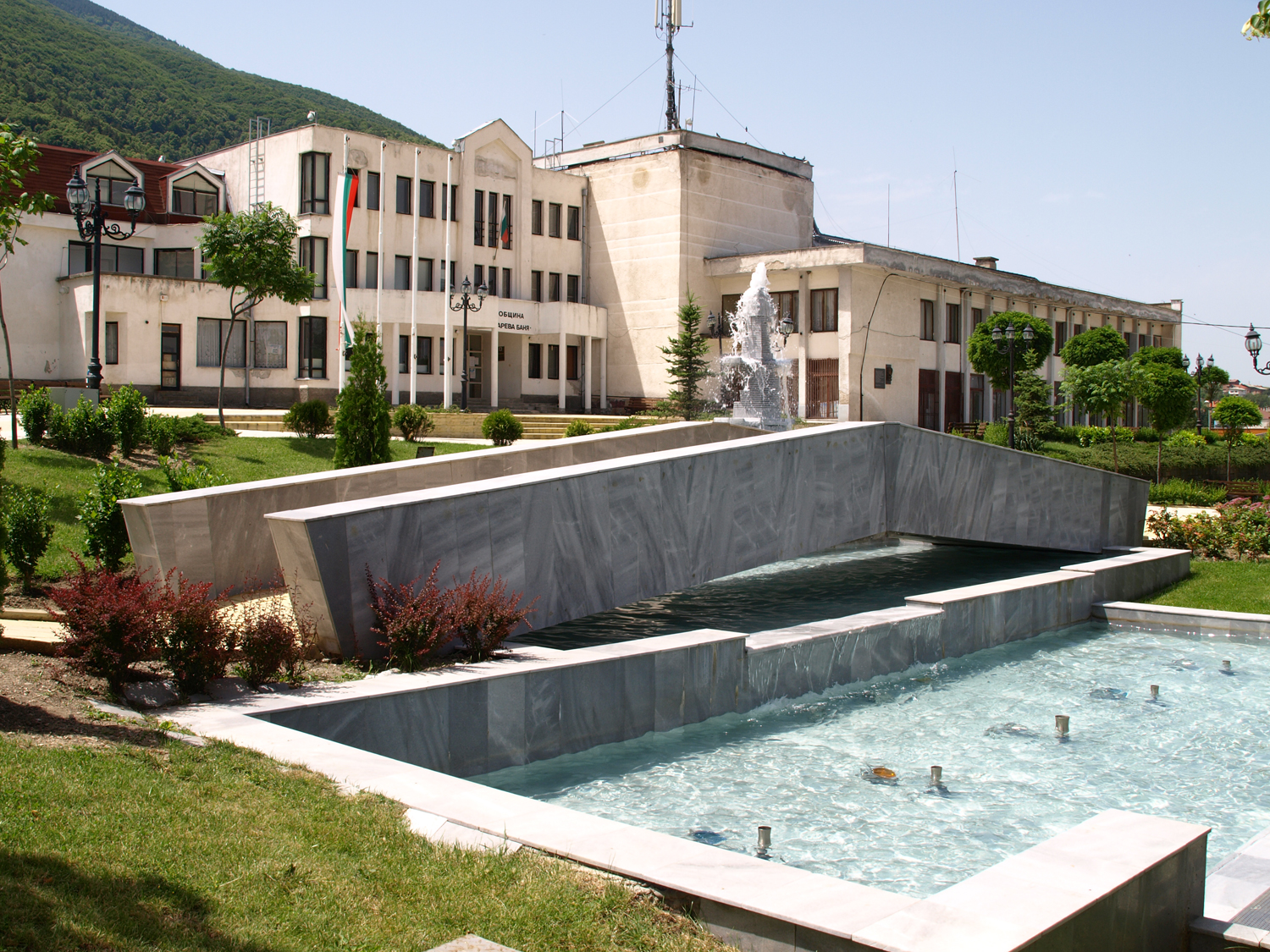
| Field | Value | |
|---|---|---|
| name | Sapareva Banya | |
| native_name | Сапарева баня | |
| native_name_lang | bg | |
| settlement_type | Town | |
| image_skyline | Сапарева баня (39146510531).jpg | |
| image_caption | View of Sapareva Banya | |
| pushpin_map | Bulgaria | |
| pushpin_map_caption | Location of Sapareva Banya | |
| coordinates | ||
| subdivision_type | Country | |
| subdivision_name | Bulgaria | |
| subdivision_type1 | Province (Oblast) | |
| subdivision_name1 | Kyustendil | |
| subdivision_type2 | Municipality | |
| subdivision_name2 | Sapareva Banya | |
| leader_title | Mayor | |
| leader_name | Sasho Ivanov | |
| elevation_m | 983 | |
| population_total | 4425 | |
| population_as_of | 13.09.2005 | |
| population_density_km2 | auto | |
| timezone | EET | |
| utc_offset | +2 | |
| timezone_DST | EEST | |
| utc_offset_DST | +3 | |
| postal_code_type | Postal Code | |
| postal_code | 2650 | |
| area_code | 0707 | |
| blank_name_sec1 | License Plate | |
| blank_info_sec1 | KH | |
| website | www.saparevabanya.bg |
Sapareva Banya (, transliterated Sapareva banya) is a town in southwestern Bulgaria, part of Kyustendil Province. As Ancient Germania (in Dacia), a former bishopric, it is a Latin Catholic titular see.
It is located at the north foot of the Rila mountains, 15 kilometers east of Dupnitsa. The town is known for its hot mineral (103 C) and clear mountain water, as well as the geyser in the town centre that sprang forth in 1957.
History
The former Roman town of Germania (in Dacia) or Germane once stood at the location of modern Sapareva Banya and in the 3rd century was an important town in Dacia province. This, or possibly Germen, was the birthplace of the great Byzantine general Belisarius and was mentioned in the 6th century as Γερμανία, Γερμανός, Γέρμεννε. In an 11th-century charter of Byzantine Emperor Basil II (Porphyrogenitus/ the Young), it was listed as Γερμάνεια (Germaneia).
Ecclesiastical history
Germania in Dacia was important enough in the late Roman province of Dacia Mediterranea to become a suffragan bishopric of the Metropolitan Archdiocese of Sardica in the provincial capital (now Sofia), in the sway of the Patriarchate of Constantinople. However, possibly due to the Huns, the bishopric faded away, and no historical resident Bishop of Germania is recorded.
Titular see
The diocese was nominally restored in 1933 as Latin Titular bishopric of Germania in Dacia (Latin) / Germania di Dacia (Curiate Italian) / Germanien(sis) in Dacia (Latin adjective).
It has been vacant for decades, with only the following incumbents:
- Octavio Betancourt Arango (1970.11.23 – 1975.11.10) as Auxiliary Bishop of Archdiocese of Medellin (Colombia) (1970.11.23 – 1975.11.10); later Bishop of Garzón (Colombia) (1975.11.10 – retired 1977.04.26)
- Dante Carlos Sandrelli (born Italy) (1976.01.02 – 1978.03.31) as Auxiliary Bishop of Diocese of Formosa (Argentina) (1976.01.02 – 1978.03.31); later succeeded as Bishop of Formosa (1978.03.31 – retired 1998.01.14).
Municipality
Sapareva Banya is also the seat of Sapareva Banya municipality (part of Kyustendil Province), which includes the following 3 villages:
- Ovchartsi
- Resilovo
- Saparevo
Religion
According to the latest Bulgarian census of 2011, the religious composition, among those who answered the optional question on religious identification, was the following:
Modern names and eponymy
- Saparevo's modern name, first attested in 1570, is probably derived from the noun tsapar ("woodchopper"), from the dialectal verb tsaparim (цапарим), "to chop, to cut". Some authors suggest an etymology from the Thracian *Sapara.
- The modern name first appears as Bane in 1576. Later on, it was disambiguated by adding the name of the nearby village of Saparevo: the area is rich in mineral springs and many localities have similar names.
- Saparevo Glacier on Smith Island, South Shetland Islands (Atlantic near the Antarctic) is named after Saparevo.
Sights

The 12th-13th-century St Nicholas Church, the 18th-century St George's Church from the Bulgarian National Revival and the Forty Martyrs Church from 1859 are located in Sapareva Banya.
Balneotherapy
Mineral water of Separeva banya was highly regarded and used as a cure by Thracians and Romans. Saparevian mineral water is clear, colorless, with smell of hydrogen sulfide, hyperthermal (temperature 103 °C), hydrocarbonate, sulphate-sodium, fluorine, silicon and sulphide. Hydrogen sulfide is 15,5 mg / L. It is claimed that the water treats disorders of the musculoskeletal system, nervous system, and upper respiratory tract, and metal poisoning.
Notable locals
- Flavius Belisarius, the famous Roman general, was born in Germania, the Roman precursor of Sapareva Banya.
References
References
- Gergov, Spas. (1974). "Bulgaria". Naouka i izkoustvo.
- "Saparevabanya.bg {{!}} Official site".
- [https://saparevabanya.bg /Municipality /About the municipality]
- [https://saparevabanya.bg /Municipality /About the municipality]
- "Religious composition of Bulgaria 2011".
- Чолева-Димитрова, Анна М.. (2002). "Селищни имена от Югозападна България: Изследване. Речник". Пенсофт.
- "Специализирана болница за рехабилитация "Сапарева баня" АД, гр. Сапарева баня - Балнеология - Община Сапарева Баня".
This article was imported from Wikipedia and is available under the Creative Commons Attribution-ShareAlike 4.0 License. Content has been adapted to SurfDoc format. Original contributors can be found on the article history page.
Ask Mako anything about Sapareva Banya — get instant answers, deeper analysis, and related topics.
Research with MakoFree with your Surf account
Create a free account to save articles, ask Mako questions, and organize your research.
Sign up freeThis content may have been generated or modified by AI. CloudSurf Software LLC is not responsible for the accuracy, completeness, or reliability of AI-generated content. Always verify important information from primary sources.
Report