From Surf Wiki (app.surf) — the open knowledge base
Santiago de Cuba Province
Province of Cuba
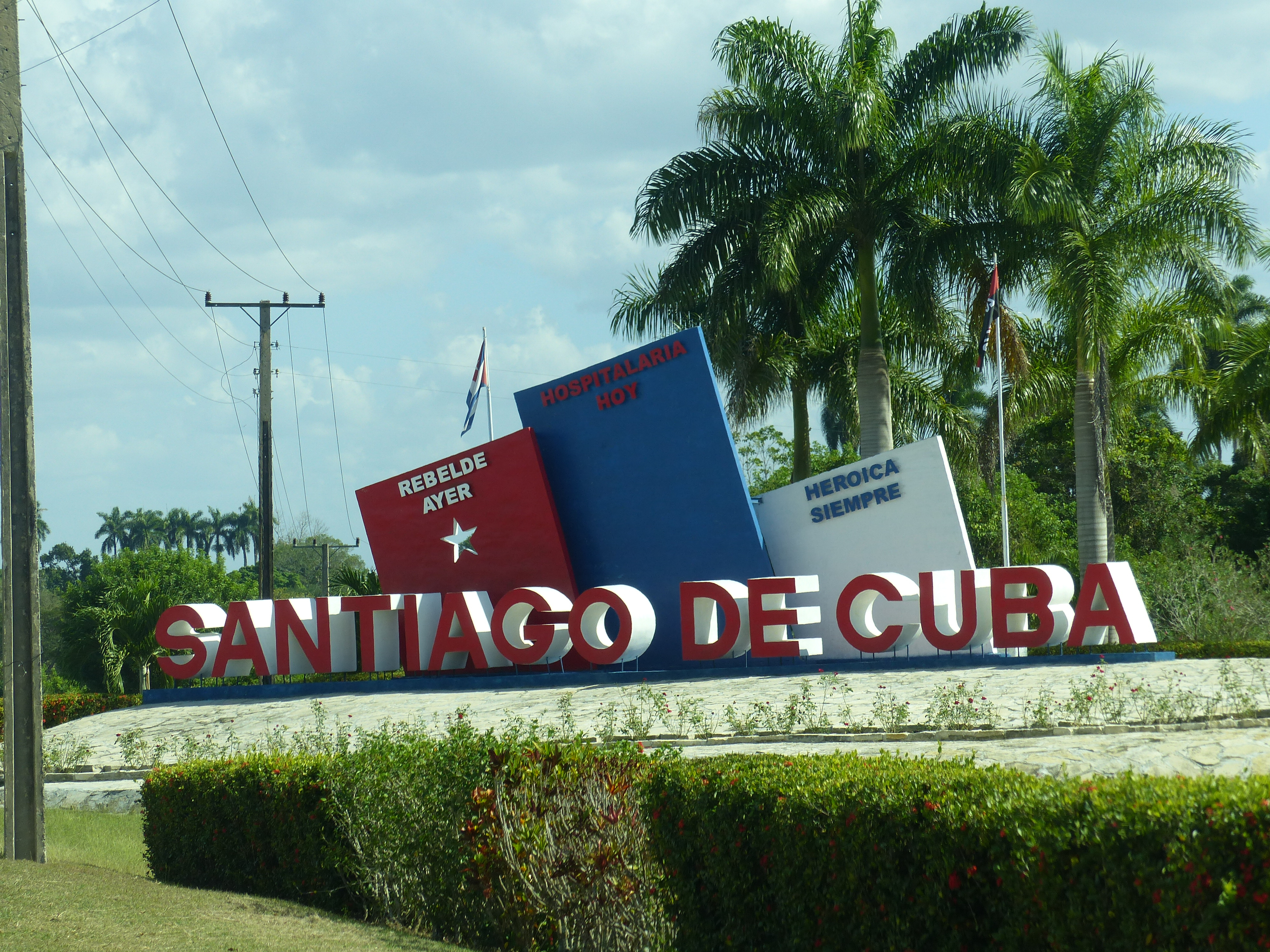
Province of Cuba
| Field | Value |
|---|---|
| name | Santiago de Cuba Province |
| native_name_lang | |
| settlement_type | Province |
| image_shield | Seal of the Province of Santiago de Cuba.svg |
| image_map | Santiago de Cuba in Cuba.svg |
| coordinates | |
| subdivision_type | Country |
| subdivision_name | Cuba |
| subdivision_type1 | Region |
| subdivision_name1 | Oriente |
| seat_type | Capital |
| seat | Santiago de Cuba |
| parts_type | Municipalities |
| parts_style | para |
| leader_title | President |
| leader_name | Beatriz Johnson Urrutia |
| leader_title1 | Vice-President |
| leader_name1 | Manuel Falcón Hernández |
| unit_pref | Metric |
| area_footnotes | |
| area_total_km2 | 6277 |
| population_footnotes | |
| population_total | 1,037,339 |
| population_as_of | 2022 |
| population_density_km2 | auto |
| population_rank | 2nd in Cuba |
| blank_name_sec2 | HDI (2019) |
| blank_info_sec2 | 0.784 |
| · 7th of 16 | |
| timezone1 | EST |
| utc_offset1 | -5 |
| area_code | +53-226 |
| website | https://www.santiago.gob.cu/es/ |
| official_name | Province of Santiago de Cuba |
· 7th of 16 Santiago de Cuba Province is the second most populated province in the island of Cuba. The largest city Santiago de Cuba is the main administrative center. Other large cities include Palma Soriano, Contramaestre, San Luis, and Songo-La Maya.
History
Santiago de Cuba province has been the site of many battles, both during the war for independence and the 1959 Cuban Revolution, where much of the guerrilla fighting took place in the forested and mountainous province.
Prior to 1976, Cuba was divided into six historical provinces. One of these was Oriente province, which was, prior to 1905, known as Santiago de Cuba province. The present day province comprises the south-central region of Oriente.
Economy
The province is rich in material resources such as iron and nickel. The economy, however, relies mostly on agriculture, with large plantations growing bananas, cacao, and coffee dotting the landscape. Industry is growing around the capital, as is tourism. The natural environment of the province attracts tourists from elsewhere in Cuba and from overseas.
Municipalities
| Municipality | Population | ||||
|---|---|---|---|---|---|
| (2004) | Population | ||||
| (2022) | Area | ||||
| (km2) | Location | Remarks | |||
| Contramaestre | |||||
| Guamá | Chivirico | ||||
| Mella | |||||
| Palma Soriano | |||||
| San Luis | |||||
| Santiago de Cuba | Provincial capital | ||||
| Segundo Frente | Mayarí Arriba | ||||
| Songo-La Maya | La Maya | ||||
| Tercer Frente | Cruce de los Baños |
:Source: Population from 2004 Census. Area from 1976 municipal re-distribution. :*Source: Onei 2023. *
Demographics
In 2004, the province of Santiago De Cuba had a population of 1,043,202. the province had a population density of 169.4 /km2.
International Relation
Twin Town — Sister City
Santiago de Cuba Province is twinned with:
- ITA Naples, Italy
References
References
- (2010). "Lugar que ocupa el territorio según la superficie y la población". Oficina Nacional de Estadísticas. Cuba.
- "Sub-national HDI - Area Database - Global Data Lab".
- Atenas.cu. (2004). "2004 Population trends, by Province and Municipality".
- Statoids. (July 2003). "Municipios of Cuba".
- Onei.gob.cu. (August 2025). "Indicadores demográficos de Cuba y sus territorios 2022".
- Government of Cuba. (2002). "Population by Province".
- Vacca, Maria Luisa. "Comune di Napoli -Gemellaggi". Comune di Napoli.
This article was imported from Wikipedia and is available under the Creative Commons Attribution-ShareAlike 4.0 License. Content has been adapted to SurfDoc format. Original contributors can be found on the article history page.
Ask Mako anything about Santiago de Cuba Province — get instant answers, deeper analysis, and related topics.
Research with MakoFree with your Surf account
Create a free account to save articles, ask Mako questions, and organize your research.
Sign up freeThis content may have been generated or modified by AI. CloudSurf Software LLC is not responsible for the accuracy, completeness, or reliability of AI-generated content. Always verify important information from primary sources.
Report