From Surf Wiki (app.surf) — the open knowledge base
Santander, Spain
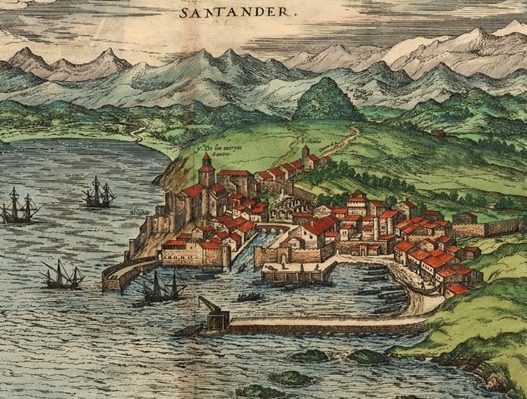
| Field | Value |
|---|---|
| name | Santander |
| settlement_type | Municipality |
| official_name | |
| native_name | |
| image_skyline | {{Multiple image |
| perrow | 1/2/1/2 |
| border | infobox |
| total_width | 280 |
| caption_align | center |
| image1 | El Palacio de la Magdalena (2).jpg |
| alt1 | Palacio de La Magdalena |
| caption1 | Palacio de la Magdalena |
| image2 | Santander Cathedral 2021 - exterior panoramic.jpg |
| alt2 | Cathedral |
| caption2 | Cathedral |
| image3 | Santander 2016.jpg |
| alt3 | Centro Botín |
| caption3 | Centro Botín |
| image4 | Playa Sardinero, Santander, Spain (2) edited.jpg |
| alt4 | Sardinero Beach |
| caption4 | Sardinero Beach |
| image5 | Santander.Banco.Santander.jpg |
| alt5 | Banco Santander building |
| caption5 | Banco Santander building |
| image6 | Arque de las Llamas 14 cropped.jpg |
| alt6 | Las Llamas park |
| caption6 | Las Llamas park |
| image_flag | Santander.svg |
| image_shield | Coat of Arms of Santander (Spain).svg |
| image_map | |
| map_caption | Location of Santander |
| subdivision_type | Country |
| subdivision_name | Spain |
| subdivision_type1 | Autonomous community |
| subdivision_name1 | Cantabria |
| coordinates | |
| elevation_m | 15 |
| elevation_min_m | 0 |
| elevation_max_m | 108 |
| area_total_km2 | 36 |
| established_title | Founded |
| established_date | 26 BC, as Portus Victoriae Iuliobrigensium |
| 9 January 1755, granting the title of city | |
| population_as_of | |
| population_footnotes | |
| population_total | |
| population_demonym | Santanderine |
| population_density_km2 | auto |
| blank_name_sec1 | Official language(s) |
| blank_info_sec1 | Spanish |
| demographics_type2 | GDP |
| demographics2_footnotes | |
| demographics2_title1 | Metro |
| demographics2_info1 | €12.839 billion (2020) |
| timezone | CET |
| utc_offset | +1 |
| timezone_DST | CEST |
| utc_offset_DST | +2 |
| postal_code_type | Postal code |
| postal_code | 39001-39012 |
| area_code_type | Dialing code |
| leader_title | Mayor |
| leader_name | Gema Igual (2016) |
| leader_party | PP |
| website |
9 January 1755, granting the title of city
Santander ( , ; ) is the capital of the autonomous community of Cantabria, Spain. It has a population of 172,000 (2017). It is a port city located in the northern coast of the Iberian Peninsula, facing the Cantabrian Sea.
It is believed to have been a port since ancient times, due to its favourable location, and is documented as far back as the 11th century. Much of the old city was lost in the Great Fire of 1941. The city was then rebuilt realizing Francoist ideals of social segregation. Today, its remaining old town, beach and other attractions are popular with tourists and other visitors and its economy is mainly service based. The port is still very active and a regular ferry service operates to the United Kingdom. Fish and seafood dominate the local cuisine. Santander notably houses the headquarters of multinational bank Banco Santander, which was founded there. The city has a mild climate typical of the Spanish northern coastline with frequent rainfall and stable temperatures. Cold snaps and heat waves are very rare.
History
Origins, Roman period and Middle Ages
The origin of the earliest human settlements in the current Santander is not easy to establish because there is little written and little archaeological data. However, there would appear to be good practical reasons for ancient settlers to have chosen the north side of the bay, sheltered from it and safer from the storms of the Bay of Biscay, on the north side of the promontory of Somorrostro and along the ancient Becedo estuary. Moreover, the hillside provided good visibility for spotting potential attackers, making this the ideal place for the foundation of a stable settlement, which was to evolve throughout the Middle Ages.
Although it is mentioned for the first time in 1068, in a draft document made by King Sancho II, in the 9th century Alfonso II the Chaste founded the Abadía de los Cuerpos Santos ("Abbey of the Holy Bodies") in the existing chapel on the hill of Somorrostro, housing as holy relics the heads of Saint Emeterius and Saint Celedonius and the graves of other unknown martyrs, giving the abbey its name.
Alfonso VIII of Castile granted the city a fuero (charter) in 1187.
During the 12th and 13th centuries the population was contained within the walls of two different pueblas. La Puebla, the older, on the hill overlooking the city facing the bay, included the old castle, the Abbey of the Holy Bodies and the cloister. It had three rows of houses, separated by Rua Carnicerias and Rua Mayor, where the homes of prominent people of the town were, as well as those of the Abbot's canons. Meanwhile, the Puebla Nueva contained the convent of Santa Clara and San Francisco, which gave its name to one of the main streets; other important streets were the Rua de la Sal, The cavalcade Palace, Ribera, Don Gutierre, Puerta de la Sierra, Gallows and the Arcillero Rua. The two pueblas were joined by a bridge over the river that divided Becedo and flowed down to the shipyards, which were ordered by the king to take timber from the Cantabrian forests for shipbuilding. The villa was required to give the monarchy a ship per year.
By the end of the 15th century Santander had a population of about 4,000 or 5,000 inhabitants.
The city owes its existence to the excellent harbour of the Bay of Santander. Santander was an important port for Castile in the later Middle Ages, and also for trade with the New World. It officially became a city in 1755.
''Cabo Machichaco'' explosions
Main article: SS Cabo Machichaco

On 3 November 1893 a steamship, , caught fire while she was being unloaded at a pier in the heart of the city. A crowd of 2,000 to 3,000 people watched as crew and firefighters fought the fire. About 40 tonnes of dynamite being carried in her forward holds exploded, killing about 590 people, injuring about 2,000, sinking the ship and destroying at least 65 buildings near the harbour.
On 21 March 1894 a salvage diver working to salvage cargo from Cabo Machichacos wreck accidentally detonated about 11 tonnes of dynamite that were submerged in the after hold of the ship. 18 people were killed and 11 injured.
{{anchor|Great Fire of 1941}}Great Fire of 1941
Main article: 1941 Santander fire
Santander fell victim to a great fire in 1941. Fanned by a strong south wind, the fire burned for two days. The fire started in Cádiz Street, next to the harbour, the Cathedral and the medieval quarter. The fire destroyed the Old Town Hall, Jesús de Monasterio and Vargas streets and Atarazanas square buildings. It led to a major change in the architecture of Santander, away from the older small stone and wood buildings with balconies to the enormous blocks of flats built during the reconstruction.
There was only one casualty of the fire, a firefighter from Madrid killed in the line of duty, but thousands of families were left homeless and the city was plunged into chaos. The fire destroyed the greater part of the medieval town centre and gutted the city's Romanesque cathedral.
Geography
The city is located on the northern side of the Bay of Santander.

Climate
The city of Santander has an oceanic climate (Köppen climate classification Cfb), the annual thermal oscillation of the average monthly temperatures reaching around 10 °C (50 °F). Due to the relatively mild winters (with average temperatures staying near 10 °C (50 °F)), it is technically classified as maritime subtropical (Cfbl/Cfbk) by the Trewartha climate classification.
The maximum temperature reached in Santander Airport was 37.8 °C on 27 June 2009, and the minimum temperature -5.4 °C on 21 January 1957. The highest maximum daytime average for a month was in August 2003, with 27.1 C. Warm months (mean above 22 C) are however rare. The highest temperature recorded in downtown is 40.2 C in August 1940.
Sunshine hours are very low by comparison with the rest of mainland and southern Spain. Even compared with other areas of northern Spain, such as Galicia, which have many more hours of sunshine in coastal cities such as Vigo or Pontevedra. With annual averages of approximately 1650 hours of sunshine, Santander's southern areas are about as sunny as London and Paris, and quite a bit less sunny than most of England's south coastal regions. The area closer to the coast has higher sunshine time but lower summer afternoon temperatures.
| Jan record high C = 23.2 | Feb record high C = 26.6 | Mar record high C = 30.0 | Apr record high C = 33.4 | May record high C = 35.8 | Jun record high C = 37.4 | Jul record high C = 36.2 | Aug record high C = 40.2 | Sep record high C = 36.8 | Oct record high C = 32.4 | Nov record high C = 26.7 | Dec record high C = 23.8 | year record high C = 40.2 | Jan record low C = -2.6 | Feb record low C = -3.8 | Mar record low C = -0.3 | Apr record low C = 1.6 | May record low C = 3.6 | Jun record low C = 7.5 | Jul record low C = 5.2 | Aug record low C = 11.4 | Sep record low C = 7.7 | Oct record low C = 4.4 | Nov record low C = 1.5 | Dec record low C = -2.8 | year record low C = -3.8
| Jan record high C = 25.1 | Feb record high C = 29.0 | Mar record high C = 31.3 | Apr record high C = 30.6 | May record high C = 36.8 | Jun record high C = 37.8 | Jul record high C = 37.2 | Aug record high C = 37.3 | Sep record high C = 37.6 | Oct record high C = 33.5 | Nov record high C = 28.0 | Dec record high C = 25.4 |year record high C = 37.8 | Jan record low C = -5.4 | Feb record low C = -5.2 | Mar record low C = -3.0 | Apr record low C = 0.6 | May record low C = 2.6 | Jun record low C = 5.6 | Jul record low C = 6.0 | Aug record low C = 6.0 | Sep record low C = 2.8 | Oct record low C = 1.4 | Nov record low C = -3.5 | Dec record low C = -5.2 |year record low C = -5.4
Demographics
Tourism and sights
The bars and restaurants of the old town are popular with tourists, as well as the El Sardinero beach a couple of kilometres away.
The Cathedral of Santander: The lower temple, called "cripta del Cristo" was built around 1200 on other earlier Roman buildings. It is 31 m long and 18 m wide, organised into three naves. Its style is a transition from Romanesque to Gothic.
The Lighthouse of Cabo Mayor presides over the entrance to the Bay of Santander.
Parque de la Vaguada de las Llamas is one of the largest parks in northern Spain, covering 11 hectare of the city.
Santander is pilot for a smart city. It is embedded with 12,000 sensors.
File:Santander - Catedral 13.jpg|Santander Cathedral File:Santander - beach 4.jpg|Beach of El Sardinero File:Campeonato Mundial de J80 en Santander 2009 01.jpg|Mouro Island File:Palacio de la Magdalena 3.jpg|La Magdalena royal palace File:Playa Del Camello 2.jpg|Playa del Camello File:Cantabria. Santander. Palacete del Embarcadero. Paseo de Pereda. Spain (2745625131).jpg|Palacio del Embarcadero File:Fachada Este Hotel Real.jpg|Hotel Real
Politics and government
The People's Party were the leading party in the municipal elections of 1999, 2003, 2007, 2011, 2015, and 2019.
Economy

As a service centre at the regional level, Santander contains important public institutions and private organisations with a large number of employees, including Marqués de Valdecilla University Hospital, the University of Cantabria and Grupo Santander. Activities related to culture, leisure and tourism are an important part of the city's economy, and the regional and municipal authorities look to augment the summer tourist trade with additional offerings, including conventions, conferences, cultural festivals and cruises. Banco Santander, Spain's largest bank and corporation, has had its legal headquarters located in the city since its foundation.
Transport
There are ferry services to and from Portsmouth and Plymouth in the United Kingdom and Cork in Ireland, all operated by Brittany Ferries. Santander railway station serves three million annual passengers.
The city is served by the Seve Ballesteros–Santander Airport (SDR), located 4 km south of the city centre.
Education
.jpg)
- University of Cantabria is the largest university in Cantabria.
- European University of the Atlantic is a private university founded in 2013.
- Universidad Internacional Menéndez Pelayo (UIMP) specializes in teaching Spanish and culture to foreign students.
- Central Library of Cantabria, founded in 1839
Culture
Santander has a great tradition and cultural activity, with events that play an important role in cultural and social life of the city. UIMP is a major international summer university and organizes large festivals of music and dance. The Festival Internacional de Santander (FIS), Festival Internacional de Música de Órgano (FiMÓC), Encuentro de Música y Academia and the Paloma O'Shea International Piano Competition are main cultural events.
Diet

Santander's cuisine is characteristic of Cantabria in that it is based mainly on seafood. Popular shellfish include almejas (clams) and muergos (razor clams); fish include seabream, red mullet, anchovies, seabass and sardines; and squid and cuttlefish are also commonly eaten.
Some typical dishes from the city of Santander are the fried calamari called rabas, double donuts, bean stew called cocido montañés, and seafood dishes ranging from seabass and sardine to products such as morguera.
Notable people
Historical figures
- Francisco Marroquín (1499–1563), first bishop of Guatemala and provisional Governor of Guatemala
- Toribio de Peñalva (c.1606-c.1685), Spanish military man, Procurator General of Buenos Aires during the Viceroyalty of Peru
- Manuel Pardo (1774–?), a Spanish soldier, the Interim Governor of Spanish Texas in 1817
- José de Madrazo y Agudo (1781–1859), a Spanish painter and engraver, an exponent of the Neoclassical
19th century
- Jenaro Quesada, 1st Marquis of Miravalles (1818–1889), Grandee of Spain and Spanish soldier
- José Antonio Mijares (1819–1847), a Mexican Army Lieutenant who led the Mexican resistance force against the American garrison of San José del Cabo in the Battle of San José del Cabo
- Rafael Izquierdo y Gutiérrez (1820–1883), a Spanish Military Officer, politician, and statesman; Governor-General of the Philippines from 1871 to 1873
- Marcelino Sanz de Sautuola (1831–1888), a Spanish jurist, amateur archaeologist, owned the land of the Cave of Altamira
- Marcelino Menéndez y Pelayo (1856–1912), a Spanish scholar, historian and literary critic.
- Francisco Iturrino (1864–1924), a Spanish Post-impressionist painter of Basque ancestry, sometimes called a Fauvist
- Concha Espina (c.1877–1955), a Spanish writer nominated for a Nobel Prize in Literature 25 times in nine years
- Marcial Solana González-Camino (1880–1958), a Spanish scholar, writer and politician; historian of philosophy
- María Gutiérrez Blanchard (1881–1932), a Spanish painter, developed a unique style of Cubism
- Ángel Herrera Oria (1886–1968), a Spanish journalist, Roman Catholic politician and later a cardinal
- Gerardo Diego (1896–1987), a Spanish poet, a member of the Generation of '27
20th century
- Emilio Botín (1903–1993), a Spanish banker, the chairman of Santander Group from 1950 to 1986
- José Luis Zamanillo (1903–1980), a Traditionalist politician and leader of Carlist paramilitary Requeté structures
- Francisco de Borbón y Borbón (1912–1995), a Spanish aristocrat, Lieutenant General of the cavalry in the Spanish army
- Matilde Camus (1919–2012), a Spanish poet who also wrote non-fiction
- Elena Quiroga (1921–1995), Spanish writer, explored the themes of childhood and adolescence
- Daniel Gil (1930–2004), one of the leading Spanish graphic designers of the 20th century
- Emilio Botín (1934–2014), a Spanish banker, executive chairman of Spain's Grupo Santander
- Juan Carlos Calderon (1938–2012), a Spanish singer-songwriter and musician
- Álvaro Pombo (born 1939), a Spanish poet, novelist and activist
- Juan Navarro Baldeweg (born 1939), architect and professor at the Superior Technical School of Architecture of Madrid
- Alfonso Vallejo (1943–2021), playwright, poet, painter and neurologist
- Germán Gullón (born 1945), literary critic, writer and professor of Spanish literature at the University of Amsterdam
- Domingo Sarrey (born 1948), a visual artist and video artist.
- José Antonio Rodríguez Vega (1957–2002), nicknamed El Mataviejas (The Old Lady Killer), was a Spanish serial killer who raped and killed at least 16 elderly women in and around Santander between August 1987 and April 1988
- Paco San José (born 1958), Cantabrian music composer
- Álvaro Longoria (born 1968), a film director, executive producer and actor
Athletes
- Francisco "Paco" Gento López (21 October 1933 - 18 January 2022), nicknamed Paco, was a Spanish footballer, or soccer player, who made 437 appearances between Racing Santander and Real Madrid and scored a total of 129 goals in his professional career. He played for the National Spanish team in 43 matches, scoring 5 goals.
- Marcos Alonso Imaz (1933–2012), nicknamed Marquitos, was a Spanish footballer, 272 pro appearances
- José Pérez Francés (1936–2021), a Spanish former professional road racing cyclist
- Francisco Javier Aguilar Garcia (1949–2020), a Spanish retired professional footballer, 300 pro appearances
- Seve Ballesteros (1957–2011), a Spanish professional golfer and World No. 1
- Quique Setién (born 1958), a Spanish retired footballer, 518 pro appearances, former coach of FC Barcelona
- Marcos Alonso Peña (1959–2023), a Spanish retired footballer, and a coach, 309 pro appearances
- Iván Helguera (born 1975), a Spanish football player, 326 pro appearances
- Pedro Munitis (born 1975), a Spanish football player, 475 pro appearances
- Iván de la Peña (born 1976), a Spanish football player, 331 pro appearances
- Mario Bermejo (born 1978), a Spanish retired professional footballer, 546 pro appearances
- Ruth Beitia (born 1979), high jumper, gold medallist at the 2016 Olympic Games
- Gonzalo Colsa (born 1979), a Spanish retired footballer 394 pro appearances
- Mateo Joseph (born 2003), a Spanish footballer for Leeds United and the Spain national under-21 football team.
Sports
Racing de Santander is the main football team in the city, playing their home games at the Campos de Sport de El Sardinero.
Some elite teams of Santander:
| Club | Sport | Ligue | Stadium |
|---|---|---|---|
| Racing de Santander | Football | Segunda División | Campos de Sport de El Sardinero |
| GoFit Sinfín | Handball | Liga ASOBAL | Pabellón Municipal de La Albericia |
| Cantbasket and CD Estela | Basketball | Liga EBA | Palacio de Deportes de Santander |
| Balonmano Pereda | Women's handball | División de Honor B | Pabellón de Numancia |
| Real Sociedad de Tenis de La Magdalena | Field hockey | Honour Division | |
| Señor Independiente | Rugby Union | Honour Division | Mies de Cozada |
File:Santander.Palacio.de.Deportes.jpg|Palacio de Deportes in El Sardinero next to the Campos de Sport de El Sardinero File:Santander - panoramio (57).jpg|Sporting marina in Puertochico File:Cabo Menor.jpg|Mataleñas municipal golf fields, in Cape Menor
References
;Citations ;Bibliography
Bibliography
References
- "Gross domestic product (GDP) at current market prices by metropolitan regions".
- {{cite LPD. 3
- {{cite EPD. 18
- "Cifras Oficiales de Población de los Municipios Españoles: Revisión del Padrón Municipal – Población a 1 de enero de 2017.". [[Instituto Nacional de Estadística (Spain).
- Izagirre, Ander. (12 November 2021). "Santander, ciudad modelada con fuego y bombas".
- (2002). "Santander una ciudad Medieval". Estvdio.
- (1 February 1912). "Catholic Encyclopedia: Santander". Newadvent.org.
- Ringrose, David R.. (2005). "Toward a contemporary city: Santander, 1755–1910". Ed. Universidad de Cantabria.
- Jar Torre, Luis. (November 2009). "Un Desastre a la Española".
- [http://www.divulgameteo.es/uploads/Gu%C3%ADa-clima-pp-73-78.pdf Aupí, Vicente (2005). ''El Incendio de 1941 en Santander''. Guía del Clima en España. Omega. p. 75. Consultado el 16 de mayo de 2013.] {{ISBN. 84-282-1370-4
- (12 February 2011). "Así ocurrió". El Diario Montañés.
- (13 February 2011). "Balance de la tragedia". El Diario Montañés.
- "Santander". [[Lonely Planet]].
- "Extreme values for Santander". Aemet.es.
- "Météo climat stats Station Santander".
- (July 2011). "Valores Climatológicos Normales. Santander / Aeropuerto".
- "Changes in the municipalities in the population census since 1842". [[National Institute of Statistics (Spain).
- "Santander". Rough Guides.
- David de la Garma. "Catedral de Santander". Arteguias.com.
- "Lighthouse of Cabo Mayor". Puertosantander.es.
- "Parque de la Vaguada de Las Llamas en Santander, Cantabria". [[El Mundo (Spain).
- [http://www.governing.com/topics/urban/gov-santander-spain-smart-city.html Santander: The Smartest Smart City.] Governing, May 2014
- "SmartSantander".
- "Resultados Electorales en Santander: Elecciones Municipales 2019".
- (14 October 2015). "36 Hours...in Santander". [[The Daily Telegraph.
- "Sail to Santander: Hop on board Ireland's first direct ferry to Spain".
- (2024-03-15). "Mateo Joseph Makes Switch To Represent Spain's U21s".
This article was imported from Wikipedia and is available under the Creative Commons Attribution-ShareAlike 4.0 License. Content has been adapted to SurfDoc format. Original contributors can be found on the article history page.
Ask Mako anything about Santander, Spain — get instant answers, deeper analysis, and related topics.
Research with MakoFree with your Surf account
Create a free account to save articles, ask Mako questions, and organize your research.
Sign up freeThis content may have been generated or modified by AI. CloudSurf Software LLC is not responsible for the accuracy, completeness, or reliability of AI-generated content. Always verify important information from primary sources.
Report