From Surf Wiki (app.surf) — the open knowledge base
Santa Fe Province
Province of Argentina

Province of Argentina
| Field | Value |
|---|---|
| name | Santa Fe |
| official_name | |
| Provincia de Santa Fe (Spanish) | |
| native_name_lang | es |
| settlement_type | Province |
| image_skyline | National_Flag_Memorial.jpg |
| image_caption | The National Flag Memorial |
| image_flag | Bandera de la Provincia de Santa Fe.svg |
| image_shield | Escudo de Santa Fe.svg |
| image_map | Santa Fe in Argentina (+Falkland hatched)-2.svg |
| map_caption | Location of Santa Fe Province within Argentina |
| subdivision_type | Country |
| subdivision_name | Argentina |
| subdivision_type1 | Departments |
| subdivision_name1 | 19 |
| subdivision_type2 | Districts |
| subdivision_name2 | 365 |
| subdivision_type3 | Municipalities and communes |
| subdivision_name3 | 352 |
| seat_type | Capital |
| seat | Santa Fe de la Vera Cruz |
| leader_title | Governor |
| leader_name | Maximiliano Pullaro |
| leader_party | UCR |
| leader_title1 | Vice Governor |
| leader_name1 | Gisela Scaglia |
| leader_title2 | Legislature |
| leader_name2 | Chamber of Deputies (50) |
| Senate (19) | |
| leader_title3 | National Deputies |
| leader_name3 | |
| 19 | |
| leader_title4 | National Senators |
| leader_name4 | Carolina Losada, Eduardo Galaretto, Marcelo Lewandowski |
| unit_pref | Metric |
| area_footnotes | |
| Ranked 10th | |
| area_total_km2 | 133007 |
| elevation_m | 20 |
| population_total | 3,556,522 |
| population_as_of | 2022 census |
| population_rank | 3rd |
| population_density_km2 | auto |
| population_demonym | santafesino |
| demographics_type2 | GDP |
| demographics2_title1 | Total |
| demographics2_info1 | peso 1,831 billion |
| (US$39 billion) (2019) | |
| timezone1 | ART |
| utc_offset1 | −3 |
| timezone1_DST | |
| utc_offset1_DST | |
| iso_code | AR-S |
| blank_name | HDI (2021) |
| blank_info | 0.841 (13th) |
| website |
Provincia de Santa Fe (Spanish) Senate (19) 19 Ranked 10th (US$39 billion) (2019)
Santa Fe, officially Province of Santa Fe (, , lit. "Holy Faith") is a province of Argentina, located in the center-east of the country. Neighboring provinces are from the north clockwise Chaco (divided by the 28th parallel south), Corrientes, Entre Ríos, Buenos Aires, Córdoba, and Santiago del Estero. Together with Córdoba and Entre Ríos, the province is part of the economico-political association known as the Center Region.
Santa Fe's most important cities are Rosario (population 1,193,605), the capital Santa Fe (369,000), Rafaela (100,000), Reconquista (99,000) Villa Gobernador Gálvez (74,000), Venado Tuerto (69,000), and Santo Tomé (58,000).
Demonym
Citizens of the province are known as santafesinos (fem. santafesinas).
History
The aboriginal tribes who inhabited this region were the Tobas, Timbúes, Mocovíes, Pilagás, Guaycurúes, and Guaraníes. They were nomadic, lived from hunting, fishing and fruit recollection.
The first European settlement was established in 1527, at the confluence of the Paraná and Carcarañá rivers, when Sebastian Cabot, on his way to the north, founded a fort named Sancti Spiritus, which was destroyed two years later by the natives.
In 1573, Juan de Garay founded the city of Santa Fe in the surroundings of present town Cayastá, but the city was moved in 1651 and 1660 to its present location.
In 1812, the lawyer and general Manuel Belgrano created and displayed for the first time the Argentine flag on the banks of the Paraná River, at Rosario (by that time a small village), 160 km south of Santa Fe.
In 1815, while Alvear's central government fell due to Ignacio Álvarez Thomas' rebellion (at that time commander of an army sent to Santa Fe against Artigas), Francisco Candioti, the local militia chief, took over the government peacefully, thus starting the era of Santa Fe as an autonomous province. This period was short lived, since that same year Candioti died and central government reestablished the dependent government. However, in 1816, the caudillos Mariano Vera and Estanislao López deposed the governor delegate and proclaimed the sovereignty of the province and its membership into Artigas's Free Peoples League (Liga de Pueblos Libres).
López drew, in 1818, a provincial constitution of a strongly conservative flavour, after rejecting a project proposed by a provincial assembly; Santa Fe was the first province to have its constitution. During the civil strifes of 1820, Santa Fe troops were decisive in the defeat of Buenos Aires' centralist army. So, in time, López gradually became the Federation's Patriarch, establishing himself as the central figure of the Federal Party until his death in 1838.
After López's death, his secretary and right-hand man José María Cullen was elected governor. However, Cullen being a potential rival of Buenos Aires governor and Confederation's Foreign Affairs Representative, Juan Manuel de Rosas, he sought and obtained Cullen's capture and execution, naming the pro-Rosas Juan Pablo López as governor. The new governor remained in power, alternating with Pascual Echagüe, until the province's invasion by Justo José de Urquiza's Great Army in 1851, and during his term the province adopted a new constitution in 1841.
After the organization of the nation, the province entered an era of peace and prosperity; in 1872 the railways already connected many points of the province, as well as the telegraph lines, and in 1889 the Provincial University of Santa Fe was founded.
The political hegemony of the conservative groups was challenged by the new ideas brought by the European immigrants, giving birth to the Radical Civic Union (UCR) and the Progressive Democratic Party (PDP), and the creation of the Argentine Agrarian Federation. These two parties had many strong electoral contests with the province's conservative parties.

After the Electoral Reform of Roque Sáenz Peña in 1912, the UCR reached the government and stayed until the coup of 1930. During this time, more precisely in 1919, the National University of the Littoral was founded. In 1932, it was the PDP who got the governor's seat.
The contentious 1958 elections (from which Peronist candidates were barred) brought an ally of President-elect Arturo Frondizi to power in Santa Fe, Dr. Carlos Sylvestre Begnis. Gov. Begnis quickly steered budgets into sorely needed public works, most notably the construction of the Hernandarias Tunnel, a 10 mi-long connection between the city of Santa Fe and neighboring Paraná. The tunnel, most of which runs under the massive Paraná River, is the longest in Argentina.
Forced to resign after conservative pressure drove President Frondizi from office in 1962, Begnis had the satisfaction of seeing Hernandarias open in 1969, and voters overwhelmingly return him to office in 1973 (this time as a Peronist).
Santa Fe suffered the violence of the late '70s and the depression of the 1980s more than most other provinces. It continued to languish economically during the prosperous 1990s, as the revalued Argentine peso put pressure on its productive sectors. Touching bottom around 2002, its economy has grown by 7% a year since then. The heart of Argentina's lucrative soy harvest, the province's importance has continued to grow, now rivaling Buenos Aires Province as the nation's leading agricultural producer, with Rosario as one of the most important ports in Argentina.
Geography

Most of the province consists of green flatlands, part of the humid Pampas, bordering to the north with the Gran Chaco region. There are low sierras to the west. The north has higher temperatures, with an annual average of 19 C and precipitations of up to 1100 mm in the east, decreasing towards the west, where there is a distinctive dry season during the winter. The south presents lower temperatures, averaging 14 °C, and slightly less precipitations. Summers are hot and humid throughout the province, with average highs ranging from 30 °C (86F) in the south to 34 °C (93F) in the northwest corner, and night temperatures between 17 °C (63F) in the south and 21 °C (70F) in the north. Thunderstorms are common, and so are heat waves what can bring temperatures up to 40 °C (104F) and hot muggy nights. These are often interrupted by cold fronts that bring crisp, cool weather from the south. March brings cooler nights in the south, and April brings comfortable weather, with highs ranging from 22 °C (72F) in the south to 26 °C (79F) in the north, and lows from 10 °C (50F) to 15 °C (59F). Frost arrives in May in the south, where it occurs frequently until September; in the extreme north, frost is much more sporadic: some years might bring frosty May days, on other years it may come in July, but generally speaking there will always be a few frosty days every year even in the extreme north. Winter is drier in the west of the province and wetter in the east. In the south, temperatures range from 15 °C (59F) in the day to 4 °C (39F) at night, whereas in the north, from 21 °C (70F) to 9 °C (48F). Cold waves often bring temperatures of -5 °C (23F) in the south, with extremes of -8 °C (18F) recorded; further north, the thermometer descends occasionally to -2 °C (28F) and very rarely to -5 °C (23F). There are often short warm periods of up to 30 °C (86F) during the winter, followed by much colder weather with drizzle and temperatures around 6 °C (43F). Spring starts as soon as the end of August in the north, with very warm weather already present by early October; in the south, nights remain cool until most of November. Generally speaking, spring is unpredictable, with heat waves followed by extended periods of cool weather, as well as dry spells followed by severe thunderstorms.

Rainfall ranges from 1,200 mm (47 in) in the northeast to 800 mm (31 in) in the southwest and extreme northwest. Snowfall is unprecedented in the northern two-thirds of the province, and very rare in the south, where the last occurrence was in 2007 with several centimeters accumulated. This humid, temperate climate explains why Central and Southern Santa Fe are among the nation's richest agricultural regions, with crops such as maize and soybeans popular, and a very well developed dairy industry.
The main river, and connection to open sea through the Río de la Plata is the Paraná River. There are also other tributaries to the Paraná including the Salado del Norte, the Carcarañá and the Arroyo del Medio. The plain lands tend to be flooded after heavy rains due to the growth of the Paraná and Salado rivers. In 2003, a rapid rise of the Salado produced a catastrophic flood of the capital and many communities in the north-center of the province, prompting the evacuation of no fewer than 100,000 people and major economic losses. In 2007, several days of heavy rainfall flooded more than 60 towns in the center and south of the province, including sections of Santa Fe and Rosario, causing tens of thousands of people to be evacuated, crop losses, and widespread damage to the physical infrastructure of the area.
Economy

Santa Fe's economy is the fourth most important in the country, having been displaced from third place by neighboring Córdoba Province around 1970. Accounting for 8% of the Argentine total, its output was estimated at US$27 billion in 2006 (which shall be around US$43 billion in 2011 according to Argentina's economical growing), or, US$9,000 per capita (around US$13,000 in 2011), somewhat above the national average. Though the economy is well-diversified, agriculture continues to play an indispensable role through its profitability and foreign exchange earnings via exports. Twenty-one percent of the cultivated lands of Argentina are in Santa Fe, whose main crops are soybean (main national producer), sunflower, maize, wheat, and rice. In smaller scale strawberry, honey and derivatives (300,000 beehives), wood, and cotton are produced.
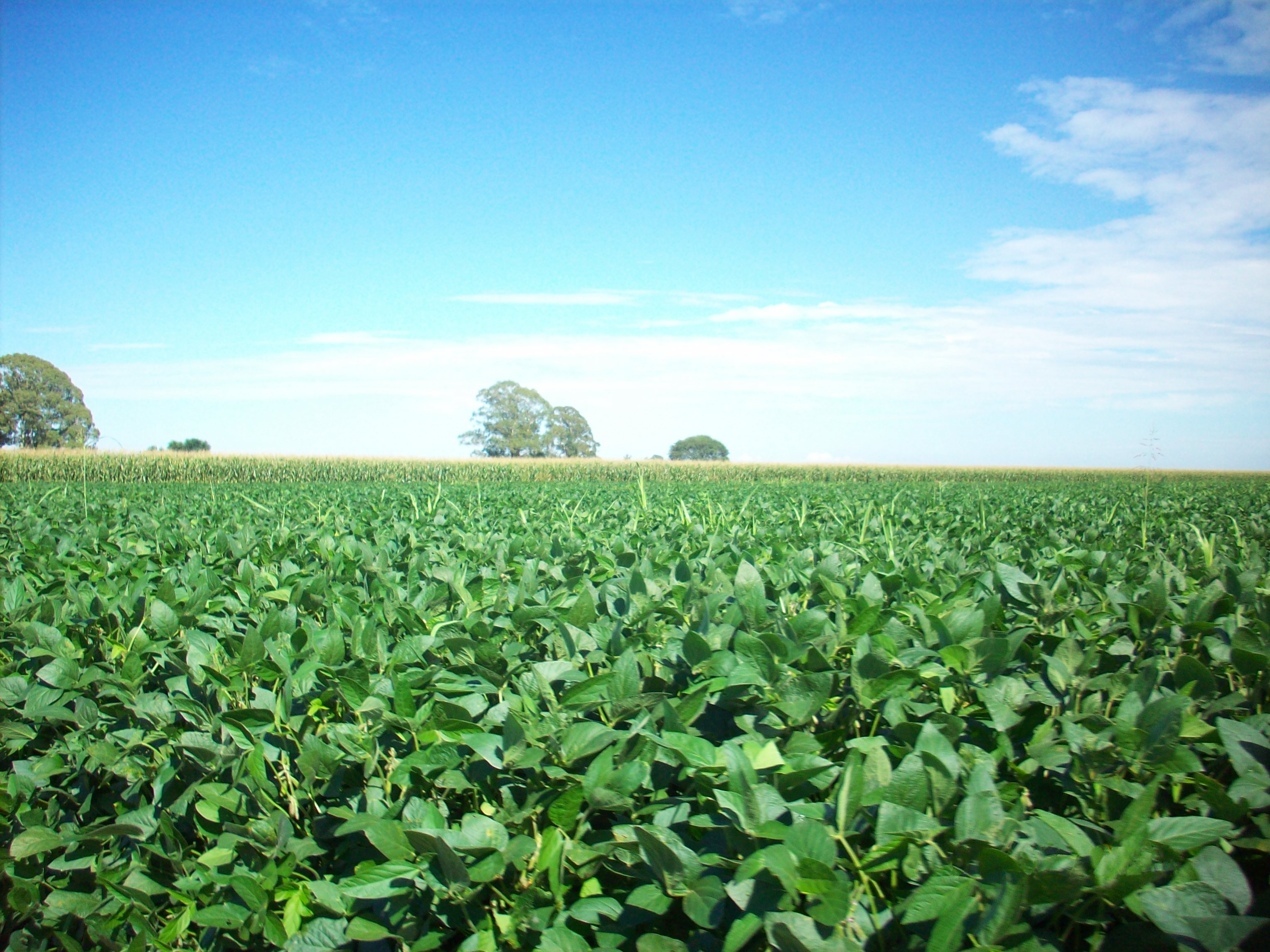
The green grass of the province is ideal for the 6.5 million head of cattle (20% of national stock), which is not only source of meat but of 2.6 billion of liters of milk per year (40% of the national production), which is processed by over 5,000 dairies.
The ports between Rosario and San Lorenzo are departure points for the export of the production of the Santa Fe and many other provinces; through them leave 65% of the Argentine cereal and 55% of the country's exports. In 2004, Santa Fe's exports (US$7,170 million) accounted for 21% of the national total. Between 2001 and 2004 they increased 65.2%. Derivates of soybean, flours and vegetable oils comprised over US$2 billion and over 7.6 million tonnes. In 2005 the ports of southern Santa Fe shipped 60% of the grains, 93% of the agricultural subproducts and 85% of the vegetable oils exported by Argentina.
Manufacturing in Santa Fe represents 18% of its economy and is also among the top in Argentina. Mills that produce different flours and oils, beer, and other food industries, leather and textiles, hydrocarbon refineries, steel (1 million tonnes a year) and metals production, industrial and agricultural machines, car industry and others.
The services sector is well-developed and very diversified, relying little on tourism or the public sector. Tourism is not an important activity in spite of the wide range of hotels and restaurants. Rosario, home to the National Flag Memorial (Monumento Nacional a la Bandera) and a number of museums, receives a number of visitors from Argentina. The replica of the Sancti Spiritus Fort, the ruins of Cayastá and the city of Santa Fe are also common destinations.
Government
Main article: Legislature of Santa Fe, Governor of Santa Fe

The provincial government is divided into the usual three branches: the executive, headed by a governor, popularly elected for non-reelegible four-year terms, who appoint the cabinet; the legislative, formed by a bicameral legislature (a 50-member Chamber of Deputies and a 19-member Senate, all elected for four-year terms); and the judiciary, headed by the Supreme Court and completed by several inferior tribunals.

The Constitution of Santa Fe Province forms the formal law of the province.
From 1991, the executive and legislative officials were elected in single-round elections by a controversial system known as the Ley de Lemas. This system was abolished in 2004; the new one includes compulsory primary elections, which were held for the first time in August 2005, with good results according to most analysis. The parliamentary elections of 23 October 2005 were the first main elections to be held after the abolition of the Ley de Lemas.
In Argentina, the most important law enforcement organization is the Argentine Federal Police but the additional work is carried out by the Santa Fe Provincial Police.
Demographics

According to the 2022 Argentine national census, the Province of Santa Fe has 3,556,522 inhabitants. The origin of the population is majority European, descended from the great wave of immigration from 1850 to 1950, being Italians (mainly from Piedmont), Spanish, Swiss and Germans the main ethnic groups in the province. Since 1970, Rosario has been chosen by internal migrants, mainly from the north of Santa Fe and the northern provinces. A smaller minority of the population (20%) are Mestizos and an even lesser number (2-4%) are of full Amerindian descent.
Population distribution
| 1980 | 1991 | 2001 |
|---|---|---|
| Urban area | 2.022.790 | 2.429.291 |
| Rural area | 442.756 | 369.131 |
Evolution
Historical evolution of the population of the province:
- XVIII cent.: 12,000
- 1820: 15,000-20,000
- 1847: 20,000
- 1853: 30,000
- 1869: 89,117
- 1895: 397,188
- 1914: 899,640
- 1947: 1,702,975
- 1960: 1,884,918
- 1970: 2,135,583
Administrative division
.png)
The province is divided into 19 departments (in Spanish, departamentos), and the departments are divided in districts which can be organized as communes or municipalities. The communes are smaller towns, generally administered by a local commission led by a "communal president". The municipalities, which must have more than 10,000 inhabitants, are what is commonly called "cities". Municipalities have an executive officer (a mayor, called intendente) and a legislative body (called Concejo Municipal, a deliberative council). For administrative purposes, each department has a head town (cabecera), which may be either kind of district.
| Department | Population | Area | Head town |
|---|---|---|---|
| Belgrano | 41,449 | 2386 km2 | Las Rosas |
| Caseros | 79,096 | 3449 km2 | Casilda |
| Castellanos | 162,165 | 6600 km2 | Rafaela |
| Constitución | 83,045 | 3225 km2 | Villa Constitución |
| Garay | 19,913 | 3964 km2 | Helvecia |
| General López | 182,113 | 11558 km2 | Melincué |
| General Obligado | 166,436 | 10928 km2 | Reconquista |
| Iriondo | 65,486 | 3184 km2 | Cañada de Gómez |
| La Capital | 489,505 | 3055 km2 | Santa Fe |
| Las Colonias | 95,202 | 6439 km2 | Esperanza |
| Nueve de Julio | 28,273 | 16870 km2 | Tostado |
| Rosario | 1,342,301 | 1890 km2 | Rosario |
| San Cristóbal | 64,935 | 14850 km2 | San Cristóbal |
| San Javier | 29,912 | 6929 km2 | San Javier |
| San Jerónimo | 77,253 | 4282 km2 | Coronda |
| San Justo | 40,379 | 5575 km2 | San Justo |
| San Lorenzo | 142,097 | 1867 km2 | San Lorenzo |
| San Martín | 60,698 | 4860 km2 | Sastre |
| Vera | 51,303 | 21096 km2 | Vera |
Notable natives

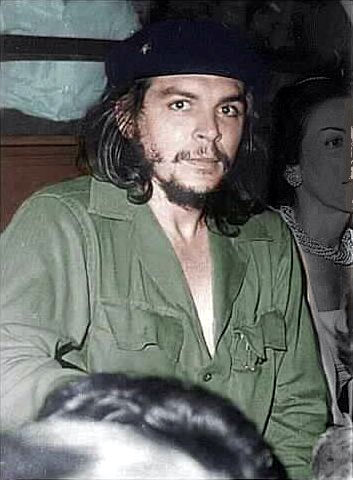

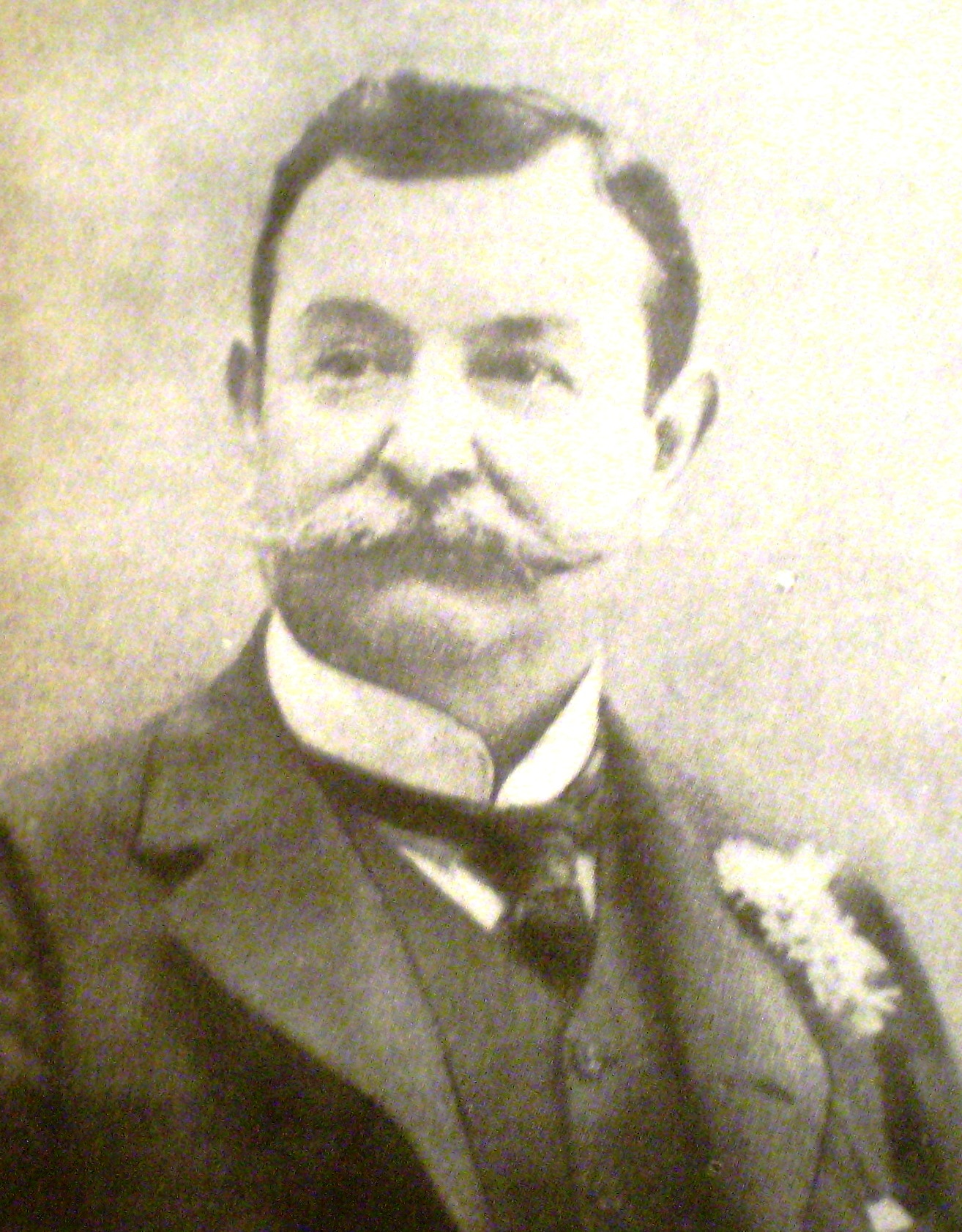

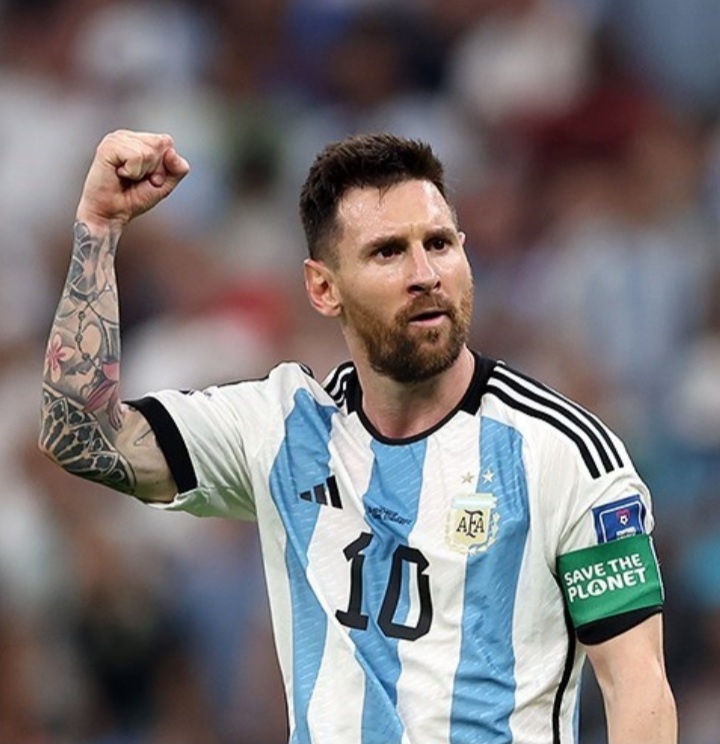

.jpg)

- Roberto Abbondanzieri goalkeeper.
- Lucas Alario footballer.
- Alberto J. Armando president of Boca Juniors F.C..
- Franco Armani goalkeeper.
- Luciana Aymar hockey player.
- Osvaldo Bayer writer.
- Juan Carlos Baglietto singer and musician.
- Carlos Baldomir boxer.
- Éver Banega footballer.
- Gato Barbieri jazz musician and composer.
- Gabriel Batistuta footballer.
- Sebastián Battaglia footballer.
- Edgardo Bauza football player and manager.
- Antonio Berni figurative artist.
- Marcelo Bielsa football player and manager.
- Fernando Birri film maker.
- Liliana Bodoc novelist.
- José Bonaparte palaeontologist.
- Norman Briski actor.
- Nicolas Brussino basketball player.
- Alejandro Bulgheroni oil entrepreneur.
- Chris de Burgh, singer
- Amadeo Carrizo goalkeeper.
- Germán Chiaraviglio pole vaulter.
- Leticia Cossettini educator.
- Linda Cristal actress.
- Juan Martín Coggi boxer.
- Guillermo Coria tennis player.
- Ángel Correa footballer.
- Luciano De Cecco volleyball player.
- Carlos Delfino basketball player.
- Cesar Delgado footballer.
- Ángel Di María footballer.
- Pascual Echagüe (1797–1867), politician
- Alejandro Fantino television host.
- Jorge Faurie diplomat and politician.
- Luciano Figueroa footballer.
- Roberto Fontanarrosa strip cartoonist.
- Tayavek Gallizzi basketball player.
- Cecilia Gentili transgender activist, author, and actress.
- Leon Gieco folk rock performer.
- Gastón Gori essayist and poet.
- Darío Grandinetti actor.
- Santiago Grassi swimmer.
- Horacio Guarany folk singer.
- Ernesto "Che" Guevara revolutionary.
- Walter Herrmann basketball player.
- Mauro Icardi footballer.
- Juan Imhoff Rugby union footballer.
- Libertad Lamarque actress.
- Ezequiel Lavezzi footballer.
- Raúl Lavié tango singer.
- Mirtha Legrand actress and television presenter.
- Estanislao López (1786–1838) caudillo and governor of the province of Santa Fe.
- Leopoldo Luque football player.
- Julio Macat cinematographer.
- Agustín Magaldi tango singer.
- Marcos Maidana boxer.
- Esteban Laureano Maradona philanthropist.
- Gerardo Martino football player and manager.
- Javier Mascherano football player and coach.
- Valeria Mazza model.
- César Luis Menotti football player and manager.
- Lionel Messi football player.
- Carlos Monzon boxer.
- Marcos Mundstock of Les Luthiers musico-comedy act.
- Litto Nebbia rock performer.
- Nicki Nicole rapper and singer.
- Andrés Nocioni basketball player.
- Alberto Olmedo comedian.
- Fito Páez singer and performer.
- Horacio Pagani (auto executive).
- Los Palmeras cumbia band.
- Soledad Pastorutti folk singer.
- José Pedroni poet.
- Carlota Garrido de la Peña journalist
- Rogelio Pfirter diplomat.
- Juan Antonio Pizzi football player and manager.
- Mauricio Pochettino football player and manager.
- Nadia Podoroska tennis player.
- Leonardo Ponzio footballer.
- Sebastián Porto motorcycle racer.
- Nery Pumpido football player and manager.
- Ariel Ramírez composer and musician.
- Carlos Reutemann racing driver and politician.
- Rubén Rézola sprint canoeist.
- Maxi Rodríguez footballer.
- Sergio Rubin biographer of Pope Francis.
- Juan José Saer writer.
- Lionel Scaloni football player and manager.
- Hugo Sconochini basketball player.
- Coti Sorokin singer.
- Ricardo Supisiche painter and engraver.
- Lisandro de la Torre politician.
- Virginia Tola soprano.
- Carlos Thompson cine actor.
- Francisco Urondo writer and Montonero.
- Jorge Valdano football player and manager.
- Julio César Vásquez boxer.
- Mariano Vera (1780–1840), caudillo.
- Nelly Vuksic conductor and singer.
- Spreen, number one streamer by Argentina and top international
- Cris Huja, writer and filmmaker
- Dorothy Maud Wrinch mathematician.
- Juan Carlos Zabala long-distance runner.
- Pedro E. Zadunaisky astronomer.
- Estanislao Zeballos writer and politician.
References
References
- (31 January 2023). "Nuevos datos provisorios del Censo 2022: Argentina tiene 46.044.703 habitantes". Infobae.
- "PBG Santa Fe".
- (25 June 2023). "El mapa del desarrollo humano en Argentina". [[United Nations Development Programme]].
- (2022). "santafesino". Diccionario de la lengua española.
- ".::IADER - Instituto Argentino para el Desarrollo de las Economías Regionales::.".
- [http://www.lacapital.com.ar/2005/10/04/economia/noticia_235366.shtml http://www.lacapital.com.ar/2005/10/04/economia/noticia_235366.shtml] {{Webarchive. link. (6 September 2006 ''lacapital.com.ar'')
- [http://www.lacapital.com.ar/2006/02/07/economia/noticia_267953.shtml http://www.lacapital.com.ar/2006/02/07/economia/noticia_267953.shtml] {{Webarchive. link. (29 June 2007 ''lacapital.com.ar'')
- "Reseñas de los Corredores de Trading en LATAM – Evitar Estafas".
- "Censo 2022".
- (31 January 2023). "Nuevos datos provisorios del Censo 2022: Argentina tiene 46.044.703 habitantes". Infobae.
- [http://www.indec.mecon.ar/nuevaweb/cuadros/7/sesd_01d07.xls INDEC, procesamientos especiales de la Dirección de Estadísticas Sectoriales según información derivada de los Censos Nacionales de Población 1980, 1991 y 2001] {{webarchive. link. (8 July 2014 (XLS). Retrieved on August, 2010)
- (30 December 2003). "Suárez y Tournay "Poblaciones, vecinos y fronteras rioplatenses, Santa Fe a fines del siglo XVIII"". Anuario de Estudios Americanos Tomo LX, 2, 2003.
- Sir Woodbine Parish (1853), Buenos Aires y las provincias del Rio de la Plata: desde su descubrimiento y conquista por los Españoles, Tomo II, Buenos Aires: Imprenta de Mayo, pp, 14-15, La mayoría descendientes de inmigrantes de las [[Misiones jesuíticas guaraníes]],
- Sir Woodbine Parish, 1853: 450
- Laura Marcela Méndez (2007), ''Las Efemérides En El Aula'', Buenos Aires: Noveduc Libros, pp, 204, {{ISBN. 987-538-125-X,
- Mariela Ceva, Alejandro Fernández, Aníbal Jáuregui & Julio Stortini (2000), ''Historia Social Argentina En Documentos'', Buenos Aires: Editorial Biblos, pp, 108, {{ISBN. 950-786-245-5,
- [http://www,mininterior,gov,ar/poblacion/archivos_estadisticas/EvolucionPoblacionProvincias1914,pdf Argentina: población total por regiones y provincias, Censos Nacionales de 1914, 1947, 1960, 1970, 1980, 1991 y 2001]
This article was imported from Wikipedia and is available under the Creative Commons Attribution-ShareAlike 4.0 License. Content has been adapted to SurfDoc format. Original contributors can be found on the article history page.
Ask Mako anything about Santa Fe Province — get instant answers, deeper analysis, and related topics.
Research with MakoFree with your Surf account
Create a free account to save articles, ask Mako questions, and organize your research.
Sign up freeThis content may have been generated or modified by AI. CloudSurf Software LLC is not responsible for the accuracy, completeness, or reliability of AI-generated content. Always verify important information from primary sources.
Report