From Surf Wiki (app.surf) — the open knowledge base
Santa Cruz Department
Department of Bolivia
Department of Bolivia
| Field | Value |
|---|---|
| name | Santa Cruz |
| native_name | Departamento de Santa Cruz (Spanish) |
| settlement_type | Department |
| motto | Siempre libres cruceños seamos. (Free Cruceños may we always be) |
| anthem | Himno a Santa Cruz |
| image_skyline | El Río Grande visto desde la población de la Abra del Picacho (Santa Cruz, Bolivia).jpg |
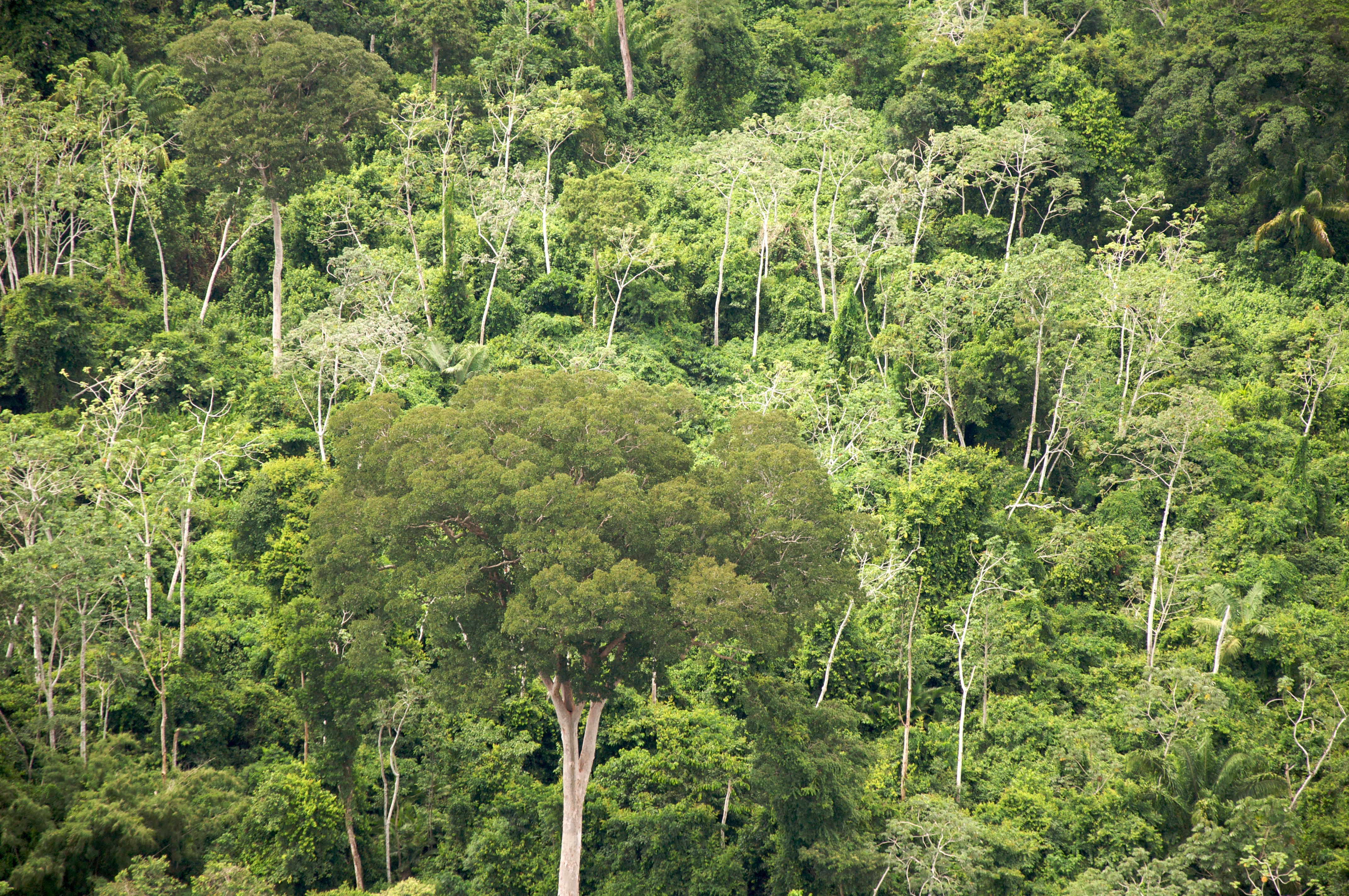
| image_caption | View of the Guapay River |
| image_flag | Flag of Santa Cruz.svg |
| flag_size | 100px |
| image_shield | Escudo de Santa Cruz de la Sierra.svg |
| shield_size | 70px |
| image_map | Santa Cruz in Bolivia.svg |
| map_caption | Location within Bolivia |
| pushpin_map | |
| pushpin_label_position | |
| subdivision_type | Country |
| subdivision_name | |
| subdivision_type1 | Capital |
| subdivision_name1 | Santa Cruz de la Sierra |
| subdivision_type2 | Provinces |
| subdivision_name2 | 15 |
| subdivision_name4 | |
| leader_title | Governor |
| leader_name | Luis Fernando Camacho (Creemos) |
| leader_title1 | Lieutenant governor |
| leader_name1 | Mario Aguilera (Creemos) |
| leader_title2 | Senators |
| leader_name2 | Centa Rek (Creemos) |
| Henry Montero (Creemos) | |
| Isidoro Quispe (MAS) | |
| Soledad Flores (MAS) | |
| established_title | Established as department by law |
| established_date | 23 July 1826 |
| established_title2 | |
| established_title3 | |
| unit_pref | |
| area_total_km2 | 370621 |
| area_land_km2 | |
| area_rank | 1st in Bolivia |
| area_note | 33.74% of Bolivia |
| population_as_of | 2024 census |
| population_rank | 1st in Bolivia |
| population_total | 3,122,605 |
| population_density_km2 | auto |
| timezone | BOT |
| utc_offset | -4 |
| elevation_footnotes | |
| postal_code_type | |
| area_code | +(591) 3 |
| blank_name | HDI (2017) |
| blank_info | 0.720 |
| · 3rd | |
| blank1_name | ISO 3166-2 |
| blank1_info | BO-S |
| blank2_name | Postal abbrv. |
| blank_name_sec1 | Official language |
| blank_info_sec1 | Spanish, Guaraní |
| blank_name_sec2 | HDI (2019) |
| blank_info_sec2 | 0.777 |
| · 1st of 9 | |
| blank3_name | GDP (2023) |
| blank3_info | in constant Dollar of 2015 |
| blank4_name | - Total |
| blank4_info | US$ 15.5 billion |
| Int$ 36.3 billion (PPP) | |
| blank5_name | - Per capita |
| blank5_info | US$ 4,200 |
| Int$ 9,900 (PPP) | |
| website |
Henry Montero (Creemos) Isidoro Quispe (MAS) Soledad Flores (MAS) · 3rd · 1st of 9 Int$ 36.3 billion (PPP) Int$ 9,900 (PPP)
Santa Cruz () is the largest of the nine constituent departments of Bolivia, occupying about one-third (33.74%) of the country's territory. With an area of 370,621 km2, it is slightly smaller than Japan or the US state of Montana. It is located in the eastern part of the country, sharing borders in the north and east with Brazil and with Paraguay in the south.
In the 2024 census, it had an estimated population of 3.1 million, making it the most populated department. Its capital city is Santa Cruz de la Sierra. The department is one of the wealthiest departments in Bolivia, with huge reserves of natural gas. Besides, it has experienced the highest increase of economic growth during the last 50 years in Bolivia and South America.
Government and administration
According to the current Constitution, the highest authority in the department lies with the governor. The former figure of prefect was appointed by the President of the Republic till 2005, when the prefect for the first time was elected by popular vote to serve for a five-year term. In 2010 the first governor was elected according to the implementation of autonomy after a struggle for almost a decade by the people of Santa Cruz.
Santa Cruz also has a Departmental Assembly (Asamblea Departamental), which derives but differs from the previous Departmental Council (Consejo Departamental). It is a state legislature with limited legislation powers, being able to make laws in certain subjects in exclusivity and in some others in concurrence with the state legislative branch.
Economy
In recent years, the discovery of natural gas in the department has led to plans for the development of a regional natural gas industry that is likely to boost the local economy. Bolivia's energy minister said two proposed liquefied petroleum gas plants may allow the country to boost supplies to Brazil and Argentina by 2010, easing a shortage of the fuel after a lack of investment reduced output. The processing plants would be built in Santa Cruz and each would produce about 200 tons of liquefied petroleum gas a day. The plants would help turn a deficit of gas into a “surplus”.
In July 2004, the people voted in a nationwide referendum to allow for regulated exportation of the gas.
The department also hosts El Mutún, the world's second largest iron ore reserve (after Carajás in Brazil) and largest magnesium deposits are also located there. Located in the Germán Busch Province in the Santa Cruz Department of Bolivia, near Puerto Suárez, El Mutún extends across the border into Brazil, where it is called the Serrania de Jacadigo. Also known as the "Serrania Mutún", it has an area of about 75 square kilometers. Its estimated reserves are about 40.205 billion tons of iron ore of 50% iron, mainly in hematite and magnetite form, and in lesser quantities in siderite and manganese minerals. This can be compared with an estimate of the total world reserves of iron ore: 800 billion tons of crude ore containing more than 230 billion tons of iron.
Geography
Santa Cruz Department is the largest of the Bolivian departments and covers a wide and diverse area. In the west lies a series of temperate Sub-Andean ranges and valleys while to the north and south lies two different lowlands areas; the Beni and Chaco lowlands respectively. To the northeast lies the flat Llanos Chiquitanos areas and beyond these the Serranías Chiquitanas ranges. In the far east the departments have small parts of the huge Pantanal wetland.
Waters
The rivers of Santa Cruz are part of any of two basins: the Amazon Basin (north) and the Plate Basin (south).
The main rivers in the northern basin are river Iténez, making the border with Brazil, Río Grande, river Piraí and river Itonomas. In the southern basin, the main rivers are river Paraguay and its tributaries, including river Negro.
The main lakes are lake Mandioré, Uberaba, lake La Gaiba, Laguna de Marfil, Concepción and lake San Jorge.
The rivers by length within Santa Cruz: TimeAxis = orientation:horizontal format:yyyy ImageSize = width:800 height:auto barincrement:25 PlotArea = left:10 right:10 top:10 bottom:40 AlignBars = justify
Colors = id:canvas value:rgb(0.97,0.97,0.97)
BackgroundColors = canvas:canvas
Period = from:0 till:1000 ScaleMajor = unit:year increment:40 start:0 gridcolor:drabgreen
BarData= barset:Flüsse
PlotData= width:15 fontsize:M textcolor:black align:left color:skyblue shift:(0,-6)
barset:Flüsse
- from:start till:end width:20 color:drabgreen Text:Die_längsten_Flüsse_in_Hessen fontsize:15 align:center
from:start till:983 text:Itonomas (983 km) from:start till:938 text:Grande/Guapay (938 km) from:start till:555 text:Paraguá (555 km) from:start till:457 text:Piraí (457 km) from:start till:425 text:Blanco (425 km) from:start till:380 text:Negro (380 km) from:start till:370 text:Ichilo (370 km) from:start till:335 text:Yapacaní (335 km) from:start till:269 text:Parapetí (269 km) from:start till:260 text:Mamorecillo (260 km) from:start till:254 text:Iténez/Guaporé (254 km) from:start till:155 text:Paucerna (155 km) from:start till:133 text:Verde (133 km) from:start till:80 text:Quizer (80 km) from:start till:48 text:Paraguay (48 km) 8 out of 48 km of the Paraguay not part of the Brazilian border.
The main lakes by their area within the department: TimeAxis = orientation:horizontal format:yyyy ImageSize = width:800 height:auto barincrement:25 PlotArea = left:10 right:10 top:10 bottom:40 AlignBars = justify
Colors = id:canvas value:rgb(0.97,0.97,0.97)
BackgroundColors = canvas:canvas
Period = from:0 till:100 ScaleMajor = unit:year increment:5 start:0 gridcolor:drabgreen
BarData= barset:Flüsse
PlotData= width:15 fontsize:M textcolor:black align:left color:skyblue shift:(0,-6)
barset:Flüsse
- from:start till:end width:15 color:drabgreen Text:Die_längsten_Flüsse_in_Hessen fontsize:15 align:center
from:start till:95 text:Uberaba (95 km²) from:start till:90 text:Mandioré (90 km²) from:start till:58 text:Concepción (58 km²) from:start till:52.2 text:de Marfil (52,2 km²) from:start till:52 text:La Gaiba (52 km²) from:start till:50 text:Nuevo Mundo (50 km²) from:start till:34 text:España (34 km²) from:start till:33.52 text:Pistola (33,52 km²) from:start till:26.5 text:Cáceres (26,50 km²) from:start till:24.8 text:Taborga (25,5 km²) from:start till:24.8 text:Bellavista (24,80 km²) from:start till:15.8 text:Mirim (15,80 km²) from:start till:13 text:Chaplín (13 km²)
Demographics
The department of Santa Cruz is one of the Bolivian departments with the least indigenous population, and the one with the greatest mestizo and Creole identity. The first settlers of Santa Cruz were mainly Spaniards that accompanied Ñuflo de Chávez, as well as Guarani, and some Flemings, Portuguese, Germans and Italians working for the Spanish crown. Among the first settlers there were also Sephardic Jews recently converted to Christianity who were persecuted by the Inquisition in Spain. Santa Cruz has a multicultural population: 57% are Mestizos with both Indigenous Amazonian and European ascendants, 30% are Natives (Chiquitano, Chane, Ayoreo, as well as Quechua and Aymara internal migrants from other departments) and 13% are Whites of European descent, of whom about a quarter are so-called "Russian" Mennonites (see Mennonites in Bolivia) of German tradition, language and descent.
|graph-pos = bottom |graph-width = |graph-height = |1976 |710,724 |1992 |1,364,389 |2001 |2,029,471 |2012 |2,657,762 |2024 |3,115,386
Climate
At 416 meters above sea level, it is warm and tropical most of the year. Winters are short and last only 2–3 months but can get very cold very suddenly. "Surazos" (southerly winds that blow in from Argentina) can drop the temperature by as much as 30 degrees overnight. This extreme cold lasts only a few days at a time and the beautiful, sub-tropical Santa Cruz is pleasant throughout most of the year. Here the climate varies by geographical zone: temperate to cold in the western sierras and warm to hot and humid as one descends into the extensive plains.
The department of Santa Cruz regularly experiences devastating forest fires, often started by landowners who want to burn forests to create new agricultural land. This practice puts a great strain on the rich biodiversity of the country.
Provinces
The Department of Santa Cruz is divided into 15 provinces.
| Province | Capital | Area (km2) | [[Image:Bolivia department of SantaCruz.png | center | 250px]] |
|---|---|---|---|---|---|
| Andrés Ibáñez | Santa Cruz de la Sierra | 4,821 | 1,653,001 | ||
| Ignacio Warnes | Warnes | 1,216 | 108,888 | ||
| José Miguel de Velasco | San Ignacio | 65,425 | 69,972 | ||
| Ichilo | Buena Vista | 14,232 | 92,721 | ||
| Chiquitos | San José | 31,429 | 82,429 | ||
| Sara | Portachuelo | 6,886 | 42,278 | ||
| Cordillera | Lagunillas | 86,245 | 120,111 | ||
| Vallegrande | Vallegrande | 6,414 | 26,576 | ||
| Florida | Samaipata | 4,132 | 32,842 | ||
| Obispo Santiesteban | Montero | 3,673 | 181,169 | ||
| Ñuflo de Chávez | Concepción | 54,150 | 116,545 | ||
| Ángel Sandoval | San Matías | 37,442 | 14,415 | ||
| Manuel Maria Caballero | Comarapa | 2,310 | 23,267 | ||
| Germán Busch | Puerto Suárez | 24,903 | 42,799 | ||
| Guarayos | Ascensión | 20,293 | 48,301 |
Calls for autonomy
During the later stages of the Chaco war between Paraguay and Bolivia, as the Paraguayan army approached Santa Cruz department, local nationalists backed by a Paraguay-based independence movement sought to create a separate independent state in Santa Cruz department.
A referendum on autonomy was held in Santa Cruz department in 2008. Eastern departments in Bolivia, including Santa Cruz, have majority of the natural gas reserves. Bolivian president Evo Morales was planning to introduce legislation to tackle the poverty in the country using tax revenues from richer departments like Santa Cruz. Additionally, Morales's attempts to change the constitution were opposed by the opposition governors who run five of Bolivia's nine regions. 85.6 percent voted in favour of autonomy. The Bolivian government considered the referendum illegal.
Places of interest

- Campanero, a portion of the population speak the Quechua language
- Kaa-Iya del Gran Chaco National Park and Integrated Management Natural Area
- Paurito
- Samaipata, Bolivia
- San José, Andrés Ibáñez
- Shrine of the Virgen de Cotoca (Patron Saint of the Department)
- Tucavaca Valley Municipal Reserve
Villages and towns
- Cotoca
- El Carmen
- Guadalupe, Vallegrande
- Hardeman
- Ipitá
- Jorochito
- Limoncito
- Mora, Cordillera
- Puerto Rico, El Torno
- Pulquina
- San Ignacio del Sara
- San Pedro, Santistevan
References
References
- "Sub-national HDI - Area Database - Global Data Lab".
- "TelluBase—BoliviaFact Sheet (Tellusant Public Service Series)". Tellusant.
- (6 September 2004). "Bolivia. Gas Referendum, 2004 - Electoral Geography 2.0".
- Al Margen de mis Lecturas, by Marcelo Terceros Banzer. Published September 1998
- History of the Jewish People, written by Eli Birnbaum.
- "Bolivia: Provinces".
- (10 November 2021). "Climate change and fires: Bolivia's forests in peril".
- (2007). "The Green Hell: A Concise History of the Chaco War Between Bolivia and Paraguay 1932–35". Spellmount Ltd..
- Pruden, Hernan. (2012). "Cruceños into Cambas: Regionalism and Revolutionary Nationalism in Santa Cruz de la Sierra, Bolivia (1935-1959)". [[Stony Brook University]].
- (12 August 2008). "Morales offers dialogue to rivals".
- (24 October 2014). "Listado de Comunidades".
This article was imported from Wikipedia and is available under the Creative Commons Attribution-ShareAlike 4.0 License. Content has been adapted to SurfDoc format. Original contributors can be found on the article history page.
Ask Mako anything about Santa Cruz Department — get instant answers, deeper analysis, and related topics.
Research with MakoFree with your Surf account
Create a free account to save articles, ask Mako questions, and organize your research.
Sign up freeThis content may have been generated or modified by AI. CloudSurf Software LLC is not responsible for the accuracy, completeness, or reliability of AI-generated content. Always verify important information from primary sources.
Report