From Surf Wiki (app.surf) — the open knowledge base
San Francisco International Airport
Airport in San Mateo County, California, United States
.jpg)
Airport in San Mateo County, California, United States
| Field | Value | |
|---|---|---|
| name | San Francisco International Airport | |
| image | San Francisco International Airport 2024 logo (Horizontal).svg | |
| image_size | ||
| image2 | San Francisco International Airport - aerial photo.jpg | |
| image2_size | ||
| caption2 | Aerial view of San Francisco International Airport in March 2015 | |
| IATA | SFO | |
| ICAO | KSFO | |
| FAA | SFO | |
| WMO | 72494 | |
| type | Public | |
| owner-oper | City and County of San Francisco | |
| city-served | San Francisco Bay Area | |
| location | San Mateo County, California, U.S. | |
| opened | ||
| closed | ||
| passenger_services_ceased | ||
| hub | {{ubl | class=nowrap |
| focus_city | ||
| operating_base | ||
| built | ||
| used | ||
| commander | ||
| occupants | ||
| timezone | PST | |
| utc | UTC−08:00 | |
| summer | PDT | |
| utcs | UTC−07:00 | |
| elevation-f | 13 | |
| elevation-m | 4 | |
| metric-elev | yes | |
| coordinates | ||
| website | ||
| image_map | KSFO Airport Diagram.svg | |
| image_mapsize | 275 | |
| image_map_caption | FAA airport diagram | |
| mapframe | yes | |
| mapframe-zoom | 9 | |
| mapframe-wikidata | yes | |
| r1-number | 10L/28R | |
| r1-length-f | 11,870 | |
| r1-length-m | 3,618 | |
| r1-surface | Asphalt | |
| r2-number | 10R/28L | |
| r2-length-f | 11,381 | |
| r2-length-m | 3,469 | |
| r2-surface | Asphalt | |
| r3-number | 1R/19L | |
| r3-length-f | 8,650 | |
| r3-length-m | 2,637 | |
| r3-surface | Asphalt | |
| r4-number | 1L/19R | |
| r4-length-f | 7,650 | |
| r4-length-m | 2,332 | |
| r4-surface | Asphalt | |
| metric-rwy | yes | |
| h1-surface | ||
| stat1-header | Total Passengers | |
| stat1-data | 52,288,098 | |
| stat2-header | Aircraft operations | |
| stat2-data | 386,507 | |
| stat3-header | Total cargo (tonnes) | |
| stat3-data | 561,594 | |
| stat-year | 2024 | |
| footnotes | Source: San Francisco International Airport and FAA |
| nativename-a = | nativename-r = | owner-oper = City and County of San Francisco | city-served = San Francisco Bay Area | Alaska Airlines | United Airlines}} | elevation-f = 13 | elevation-m = 4 | metric-elev = yes | mapframe-zoom = 9 | mapframe-wikidata = yes | r1-number = 10L/28R | r1-length-f = 11,870 | r1-length-m = 3,618 | r1-surface = Asphalt | r2-number = 10R/28L | r2-length-f = 11,381 | r2-length-m = 3,469 | r2-surface = Asphalt | r3-number = 1R/19L | r3-length-f = 8,650 | r3-length-m = 2,637 | r3-surface = Asphalt | r4-number = 1L/19R | r4-length-f = 7,650 | r4-length-m = 2,332 | r4-surface = Asphalt | metric-rwy = yes | h1-number = | h1-length-f = | h1-length-m = | h1-surface = | stat1-header = Total Passengers | stat1-data = 52,288,098 | stat2-header = Aircraft operations | stat2-data = 386,507 | stat3-header = Total cargo (tonnes) | stat3-data = 561,594 | stat-year = 2024
San Francisco International Airport is the primary international airport serving the San Francisco Bay Area in the U.S. state of California. Owned and operated by the City and County of San Francisco, the airport has a San Francisco mailing address and ZIP Code, although it is situated in an unincorporated area of neighboring San Mateo County, approximately 12 mi southeast of San Francisco.
SFO is the largest airport in the Bay Area and the second-busiest in California, following Los Angeles International Airport (LAX). In 2024, it ranked as the 13th-busiest airport in the United States and the 36th-busiest in the world by passenger traffic. It is a hub for United Airlines, acting as the airline's primary transpacific gateway and as a major maintenance facility. Additionally, SFO functions as a hub for Alaska Airlines.
History
The City and County of San Francisco first leased 150 acre at the present airport site on March 15, 1927, for what was then to be a temporary and experimental airport project. San Francisco held a dedication ceremony at the airfield, officially named the Mills Field Municipal Airport of San Francisco, on May 7, 1927, on the 150-acre cow pasture. The land was leased from the Mills Estate in an agreement made with Ogden L. Mills who oversaw the large tracts of property originally acquired by his grandfather, the banker Darius O. Mills. San Francisco purchased the property and the surrounding area expanding the site to 1112 acre beginning in August 1930. The airport's name was officially changed to San Francisco Airport in 1931 upon the purchase of the land. "International" was added at the end of World War II as overseas service rapidly expanded.
Early operations
The earliest scheduled carriers at the airport included Western Air Express, Maddux Air Lines, and Century Pacific Lines. United Airlines was formed in 1934 and quickly became the key carrier at the airport, with Douglas DC-3 service to Los Angeles and New York beginning in January 1937. A new passenger terminal opened in 1937, built with Public Works Administration funding. The March 1939 Official Aviation Guide shows 18 airline departures on weekdays—seventeen United flights and one TWA flight. The August 1952 chart shows runway 1L 7,000 feet long, 1R 7,750 feet, 28L 6,500 feet, and 28R 8,870 feet.
In addition to United, Pacific Seaboard Air Lines flew between San Francisco and Los Angeles in 1933; the Bellanca CH-300s flew San Francisco–San Jose–Salinas–Monterey–Paso Robles–San Luis Obispo–Santa Maria–Santa Barbara–Los Angeles. Competition with United led Pacific Seaboard to move all of its operations to the eastern U.S., and rename itself Chicago and Southern Air Lines (C&S). It became a large domestic and international air carrier. Chicago & Southern was acquired by and merged into Delta Air Lines in 1953, giving Delta its first international routes. Delta used the route authority inherited from C&S to fly one of its first international services operated with Convair 880 jet aircraft from San Francisco to Montego Bay, Jamaica, and Caracas, Venezuela, via intermediate stops in Dallas and New Orleans in 1962.
World War II
During World War II, the airport was used as a Coast Guard base and Army Air Corps training and staging base. The base was called Naval Auxiliary Air Facility Mills Field and Coast Guard Air Station, San Francisco. Pan American World Airways (Pan Am), which had operated international flying boat service from Treasure Island, had to move its Pacific and Alaska seaplane operations to SFO in 1944 after Treasure Island was expropriated for use as a military base. Pan Am began service from SFO after World War II with five weekly flights to Honolulu, one of which continued to Canton Island, Fiji, New Caledonia, and Auckland.
International operations
The first service by foreign carriers was on Australian National Airways (ANA) Douglas DC-4s flown by British Commonwealth Pacific Airlines: Sydney–Auckland–Fiji–Kanton Island–Honolulu–San Francisco–Vancouver, BC. The first flight left Australia on September 15, 1946. In 1947 Pan American World Airways began its "round the world" flights from SFO to Guam, Japan, the Philippines, China and other countries; Pan Am also flew to Sydney from SFO. The year 1947 saw the start of United Airlines Douglas DC-6 flights to Hawaii and Philippine Airlines flights to Manila.
TWA began flying Lockheed Constellations (L-1649A's) nonstop to London Heathrow and Paris Orly in 1957. In 1954 Qantas took over the ANA/BCPA route from SFO to Sydney; starting in 1959 their Boeing 707s flew to Sydney via Honolulu and Nadi, Fiji, and in the other direction to New York and London. Pan Am scheduled Boeing 707-320s from Tokyo nonstop to SFO (winter only at first) starting in 1960–61; the westbound nonstops had to await the longer range Boeing 707-320B. British Overseas Airways Corporation (BOAC, a predecessor of British Airways) arrived in 1957; in 1960 its Bristol Britannias flew London–New York City–San Francisco–Honolulu–Wake Island–Tokyo–Hong Kong as part of BOAC's around-the-world service. By 1961 BOAC had replaced the Britannias with Boeing 707s that did not require the fuel stop at the Wake Island Airfield. Japan Airlines (JAL) arrived at SFO in 1954; in 1961 it was flying Douglas DC-8s San Francisco–Honolulu–Tokyo. In 1961 Lufthansa had begun serving SFO with Boeing 707s flying San Francisco–Montreal Dorval Airport–Paris Orly Airport–Frankfurt three days a week. Lufthansa operated Boeing 720Bs on this routing in 1963 along with Boeing 707s to Frankfurt via Montreal and London Heathrow Airport. Pan Am/Panagra service from SFO to South America was taken over in the late 1960s by Braniff International, which operated Douglas DC-8-62s to SFO after Braniff's acquisition of Panagra. In 1970 CP Air (formerly Canadian Pacific Air Lines) Boeing 737-200s flew nonstop to Vancouver, BC, and on to Winnipeg, Toronto, Ottawa and Montreal.
Domestic expansion
.jpg)
The first nonstops to the U.S. east coast were United Douglas DC-7s in 1954. The airport's new Terminal Building opened on August 27, 1954. The large display of aircraft including a Convair B-36 Peacemaker bomber, was a marvel for its time. The building became the Central Terminal with the addition of the South Terminal and the North Terminal and was heavily rebuilt as the International Terminal in 1984 and then modified again as the current Terminal 2. Domestically, the April 1957 Official Airline Guide (OAG) lists 71 scheduled weekday departures on United (plus ten flights a week to Honolulu), 22 on Western Airlines, 19 on Southwest Airways (which was later renamed Pacific Air Lines), 12 on Trans World Airlines (TWA), seven on American Airlines and three on Pacific Southwest Airlines (PSA). As for international flights, Pan American had 21 departures a week, Japan Airlines (JAL) had five, and Qantas also had five.
Southwest/Pacific/Air West
.jpg)
Southwest Airways began flying scheduled passenger operations from SFO in 1946 with war surplus C-47s, the military version of the Douglas DC-3. In the late 1950s, Southwest Airways changed its name to Pacific Air Lines, which was based at SFO.
In 1959, Pacific Air Lines began flying new Fairchild F-27s from SFO and by 1966 was flying new Boeing 727-100s from the airport. Pacific used the 727 to introduce the first jet service from San Francisco to several cities in California including Bakersfield, Eureka/Arcata, Fresno, Lake Tahoe, Monterey and Santa Barbara.
In 1968 Pacific merged with Bonanza Air Lines and West Coast Airlines to form Air West, which also had its headquarters at SFO. West Coast Airlines had served SFO mainly with Douglas DC-9-10s and Fairchild F-27s to Oregon and Washington states. In 1970, Air West was acquired by Howard Hughes who renamed the airline Hughes Airwest, which continued to be based at the airport where it also operated a hub. By the late 1970s, the airline was operating an all-jet fleet of Boeing 727-200, Douglas DC-9-10, and McDonnell Douglas DC-9-30 jetliners serving an extensive route network in the western U.S. with flights to Mexico and western Canada as well. Hughes Airwest was eventually acquired by Minneapolis-based Republic Airlines (1979–1986) in 1980 and the airline's headquarters office at SFO was closed.
Jet age
The jet age arrived at SFO in March 1959 when TWA introduced Boeing 707-131s nonstop to New York Idlewild Airport (which was renamed JFK Airport in 1963). United then constructed a large maintenance facility in San Francisco for its new Douglas DC-8s, which were also flying nonstop to New York. In July 1959 the first jetway bridge was installed at SFO, one of the first in the United States. On the cover of January 3, 1960, American Airlines timetable contained this message: "NOW! 707 JET FLAGSHIP SERVICE – NONSTOP SAN FRANCISCO – NEW YORK: 2 FLIGHTS DAILY" Also in 1960, Western Airlines was operating "champagne flights" with Boeing 707s and Lockheed L-188 Electras to Los Angeles, Seattle, San Diego and Portland, Oregon.
In 1961 the airport had helicopter service on San Francisco and Oakland Helicopter Airlines (known as SFO Helicopter Airlines, and as SFO Helicopter) with 68 flights a day. Helicopters flew from SFO to downtown heliports in San Francisco and Oakland, to a new heliport near the Berkeley Marina and to Oakland Airport (OAK). In its timetable, SFO Helicopter Airlines, which was based at the airport, described its rotorcraft as "modern, jet turbine powered Sikorsky S-62 ten passenger amphibious helicopters".
By 1962 Delta Air Lines was flying Convair 880s to SFO on one its first international jet services, San Francisco–Dallas Love Field–New Orleans–Montego Bay, Jamaica–Caracas, Venezuela. SFO was among the first airports in the United States to install moving walkways inside a terminal. A 450 ft set opened on May 20, 1964, in Concourse B and was the world's longest moving walkways at the time.
Service in California
By 1960, all Pacific Southwest Airlines (PSA) flights out of SFO were operated with Lockheed L-188 Electras nonstop to Los Angeles (LAX) and Burbank (BUR) with some flights continuing to San Diego. In summer 1962 PSA had 14 departures a day Monday through Thursday to southern California, 21 departures on Friday and 22 on Sunday. In 1965 PSA was operating new Boeing 727-100s which were joined in 1967 by Boeing 727-200s and McDonnell Douglas DC-9-30s. In 1974 PSA was flying two wide body Lockheed L-1011 TriStars. After the Airline Deregulation Act of 1978, PSA expanded outside of California.
In 1967, another intrastate airline joined PSA at SFO: Air California, flying Lockheed L-188 Electras nonstop to Orange County Airport (SNA, now John Wayne Airport). Like PSA, Air California (later renamed AirCal) eventually became an all-jet airline and expanded outside of California. AirCal was merged into American Airlines while PSA was merged into USAir (later renamed US Airways which in turn eventually merged with American Airlines).
Earthquake and planned Bay fill expansion

The airport closed following the Loma Prieta earthquake on October 17, 1989, reopening the following morning. Minor damage to the runways was quickly repaired.
In 1989, a master plan and Environmental Impact Report were prepared to guide development over the next two decades. During the boom of the 1990s and the dot-com boom SFO became the sixth busiest airport in the world, but since 2001, when the boom ended, SFO has fallen out of the top 20. United Express turboprops were scheduled 60 minutes apart to the shuttle connecting passengers between SFO and nearby San Jose International Airport during the boom era. United Groundlink supplemented this service with alternate 60-minute frequencies.
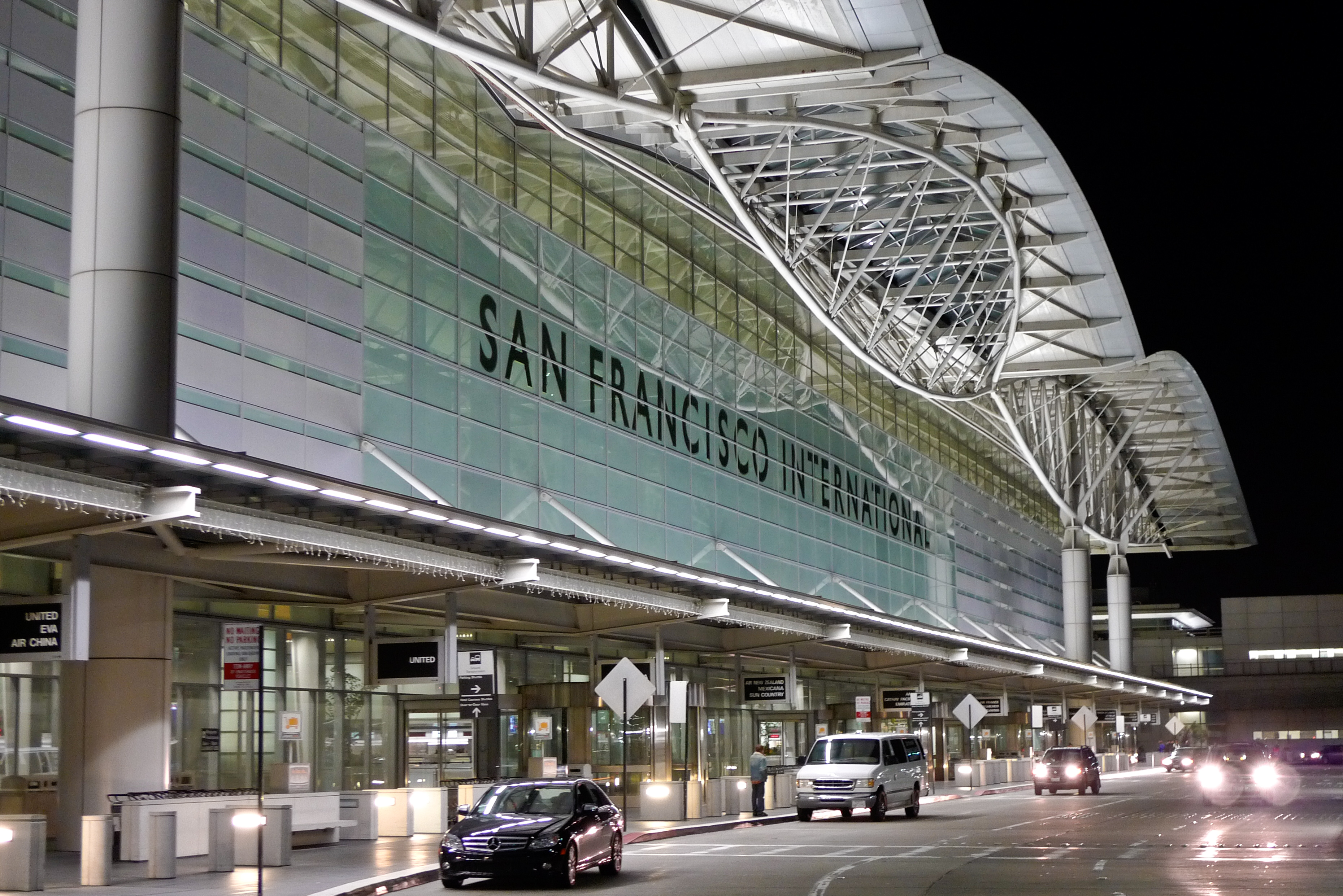
A $2.4 billion International Terminal Complex opened in December 2000, replacing Terminal 2 (known then as the International Terminal). The new International Terminal includes the San Francisco Airport Commission Aviation Museum and Library and the Louis A. Turpen Aviation Museum, as part of the SFO Museum. SFO's long-running museum exhibition program, now called SFO Museum, won unprecedented accreditation by the American Alliance of Museums in 1999.
SFO experiences delays (known as flow control) in overcast weather when only two of the airport's four runways can be used at a time because the centerlines of the parallel runway sets (01R/01L and 28R/28L) are only 750 ft apart. Airport planners advanced proposals that would extend the airport's runways by adding up to 2 mi2 of fill to San Francisco Bay and increase their separation by up to 4300 ft in 1998 to accommodate arrivals and departures during periods of low visibility. Other proposals included three floating runways, each approximately 12000 ft long and 1000 ft wide. The airport would be required by law to restore Bay land elsewhere in the Bay Area to offset the fill. One mitigation proposal would have the airport purchase and restore the 29000 acre of South Bay wetlands owned by Cargill Salt to compensate for the new fill. These expansion proposals met resistance from environmental groups, including the Sierra Club, fearing damage to the habitat of animals near the airport, recreational degradation (such as windsurfing) and bay water quality.
State Senator John L. Burton introduced SB 1562 on February 18, 2000, to bypass the environmental impact study that would normally be required for a large project like the proposed Bay fill and mitigation in order to expedite construction. SB 1562 was signed into law on September 29, 2000. A study commissioned by the airport and released in 2001 stated that alternatives to airport expansion, such as redirecting traffic to other regional airports (Oakland or San Jose), capping the number of flights, or charging higher landing fees at selected times of the day would result in higher fares and poorer service. However, the proposal to build new runways on Bay fill continued to attract opposition from environmental groups and local residents. The airport expansion cost was estimated at in 1998, rising to a year later, including an estimate of for the Cargill wetlands purchase and restoration.
The delays during poor weather (among other reasons) caused some airlines, especially low-cost carriers such as Southwest Airlines, to shift all of their services from SFO to the Oakland and San Jose airports. However, Southwest eventually returned to San Francisco in 2007.
BART to SFO
A long-planned extension of the Bay Area Rapid Transit (BART) system to the airport opened on June 22, 2003, allowing passengers to board BART trains at the international or domestic terminals and have direct rail transportation to downtown San Francisco, Oakland, and the East Bay. On February 24, 2003, the AirTrain people mover opened, transporting passengers between terminals, parking lots, the BART station, and the rental car center on small automatic trains.
Recent developments
SFO became the base of operations for start-up airline Virgin America, with service to over 20 destinations. On October 4, 2007, an Airbus A380 jumbo jet made its first visit to SFO. On July 14, 2008, SFO was voted Best International Airport in North America for 2008 in the World Airports Survey by Skytrax. The following year on June 9, Skytrax announced SFO as the second-best International Airport in North America in the 2009 World Airports Survey, losing to Dallas/Fort Worth International Airport.
.jpg)
In response to longstanding FAA concerns that the airport's air traffic control tower, located atop Terminal 2, could not withstand a major earthquake, on July 9, 2012, crews broke ground for a new torch-shaped tower. The new tower is located between Terminals 1 and 2, and the base of the tower building contains passages between the two terminals for passengers both pre- and post-security screening, which dictated the narrow tower base. Originally scheduled for completion in the summer of 2016 at a cost of $102 million, the new tower began operations on October 15, 2016.
SFO was one of several US airports that operated the Registered Traveler program from April 2007 until funding ended in June 2009. This program let travelers who had paid for pre-screening pass through security checkpoints quickly. Baggage and passenger screening is operated by Covenant Aviation Security, a Transportation Security Administration contractor, nicknamed "Team SFO". SFO was the first airport in the United States to integrate in-line baggage screening into its baggage handling system and has been a model for other airports since the September 11 attacks in 2001.
In September 2018, SFO announced plans to use sustainable fuels after signing an agreement with fuel suppliers, airlines, and agencies. As part of the agreement, Shell and SkyNRG began supplying sustainable aviation fuel to KLM, SAS, and Finnair flights operating out of SFO.
Like most other airports, SFO sustained a massive decline in traffic in 2020 and 2021 because of the COVID-19 pandemic. The only upside was that the decline reduced traffic to levels easily handled in all weather conditions. In 2022, SFO was ranked no. 1 by The Wall Street Journal on its list of Best Large U.S. Airports, on which the airport was ranked no. 1 for both reliability and convenience.
On August 6, 2024, SFO unveiled a new logo and brand identity, retiring its current logo after 24 years of use. The logo will be phased in over several years.
Runways

The airport covers 5,207 acre at an elevation of 13.1 ft. It has four asphalt runways, arranged in two intersecting sets of parallel runways:
- Runway 01L/19R: 7650 ×, surface: asphalt, has approved GPS approaches
- Runway 01R/19L: 8650 ×, surface: asphalt, ILS/DME equipped, and has approved GPS/VOR approaches
- Runway 10L/28R: 11870 ×, surface: asphalt, Category III ILS/DME equipped, and has approved GPS approaches
- Runway 10R/28L: 11381 ×, surface: asphalt, ILS/DME equipped, and has approved GPS approaches
Runways are named for their magnetic heading, to the nearest ten degrees; hence the runways at 14° from magnetic north are 01L/01R, and the runways at 284° are 28R/28L. The layout of the parallel runways (1L/1R and 28R/28L) was established in the 1950s, and have a separation (centerline to centerline) of only 750 ft.
During normal operations (approximately 81% of the time), domestic departures use Runways 1L and 1R for departure while overseas international departures and all arrivals use Runways 28L and 28R, taking advantage of the prevailing west-northwesterly wind coming through the San Bruno Gap. During periods of heavy winds or if operations at Oakland International Airport conflict with SFO departures (approximately 15% of the time), Runways 1L and 1R cannot be used, and so all departures and all arrivals use Runways 28L and 28R. These configurations are known collectively as the West Plan, and accommodate arrivals at a rate of up to 60 aircraft per hour.
When using 28L and 28R for landing, aircraft join the final approach at DUMBA waypoint next to the Dumbarton Bridge. In most circumstances, aircraft from the north or west start the approach from Daly City, California, descend along the east or west shoreline of the San Francisco Peninsula, and join the final after bypassing waypoints MENLO near Menlo Park and DUMBA; aircraft from the south join the final through MENLO and DUMBA after flying over the Santa Cruz Mountains; aircraft from the east join the final approach after bypassing Milpitas, California.
Under visual flight rules, aircraft may safely land side-by-side essentially simultaneously on 28L and 28R while maintaining visual separation. When the visual approach is compromised, the West Plan is maintained with a modification to allow aircraft landing on 28L to use Instrument Landing System (ILS) while the aircraft landing on 28R takes an offset course, monitored via high scan rate ground radar, to maintain a lateral spacing greater than 750 ft until the aircraft can maintain visual separation. Visual separation typically occurs once the aircraft has descended below the cloud deck at an altitude of 2,100 feet (640 m). This is known as the Precision Runway Monitor/Simultaneous Offset Instrument Approach and reduces the capacity to 36 arriving aircraft per hour. In poor visibility conditions, FAA instrument approach rules require aircraft to maintain lateral separation of 4,300 feet (1,300 m), meaning only one runway may be used, reducing the capacity of SFO to 25–30 arriving aircraft per hour.
During rainstorms (approximately 4% of the time), the prevailing winds shift to a south-southeasterly direction, and departing aircraft use Runways 10L and 10R, and arriving aircraft use Runways 19L and 19R. This configuration is known as the Southeast Plan.
On rare occasions (less than one day per year, on average), wind conditions dictate other runway configurations, including departures and landings on Runways 10L and 10R, departures and landings on Runways 1L and 1R, and departures on Runways 19L and 19R and landings on Runways 28L and 28R.
Based aircraft and operations
In the year ending February 29, 2024, SFO had 385,543 aircraft operations, an average of 1,056 per day. This consisted of 90% scheduled commercial, 7% air taxi, 2% general aviation and
Aircraft noise abatement
SFO was one of the first airports to implement a Fly Quiet Program, which grades airlines on their performance on noise abatement procedures while flying in and out of SFO. The Jon C. Long Fly Quiet Program was started by the Aircraft Noise Abatement Office to encourage airlines to operate as quietly as possible at SFO.
SFO was one of the first U.S. airports to conduct a residential sound abatement retrofitting program. Established by the FAA in the early 1980s, this program evaluated the cost-effectiveness of reducing interior sound levels for homes near the airport, within the 65 CNEL noise contour. The program made use of a noise computer model to predict improvement in specific residential interiors for a variety of noise control strategies. This pilot program was conducted for a neighborhood in South San Francisco and success was achieved in all of the homes analyzed. The costs turned out to be modest, and the post-construction interior sound level tests confirmed the predictions for noise abatement. To date over $153 million has been spent to insulate more than 15,000 homes in the neighboring cities of Daly City, Pacifica, San Bruno, and South San Francisco.
Terminals

The airport has four terminals (1, 2, 3, and International) and seven concourses with a total of 121 gates arranged alphabetically in a counterclockwise ring. Terminal 1 (B gates), Terminal 2 (C and D gates), and Terminal 3 (E and F gates) handle domestic and precleared flights. The International Terminal (A and G gates) handles international flights and some domestic flights.
Historically, the oldest terminal building still standing is Terminal 2, which was originally completed in 1954 as the Central Terminal with four concourses (Piers B, C, D, and E, lettered sequentially from north to south). Terminal 1 was added as the South Terminal in 1963 with Piers F/FF (Pier F had two satellite rotundas) and G, and Pier E was reassigned to the South Terminal upon its completion. International traffic was routed through Pier G, and a new Rotunda G was completed in 1974 to expand Pier G. Terminal 3 was added as the North Terminal in 1979 with Pier A. Also, once the North Terminal was completed in 1979, the piers were renamed counterclockwise, with letter designations corresponding to present-day Boarding Areas, starting with Pier A (originally Pier G, later Rotunda A), Pier B (present-day Boarding Area B, originally Pier F/FF), Pier C (present-day Boarding Area C, originally Pier E), and Pier F (present-day Boarding Area F, originally Pier A). A new Pier E was added to the North Terminal in 1981 approximately where the old Pier B stood, and the Central Terminal was rebuilt with a single pier (D) to serve international flights in 1983, until a new International Terminal opened in 2000. Since then, the terminals were renamed with numbers in 2001, and the older terminals are in the process of renovation.
A rebuild of Terminal 2 (D gates, formerly the Central Terminal) was completed in 2011, followed by the completion of the rebuild of Terminal 3 East (E gates) in 2015. The rebuild of Terminal 1 (B gates) was completed in 2024. A rebuild of Terminal 3 West (F gates) commenced in 2024, with full completion expected by 2029.
Airside connectors
.jpg)
There are airside connectors at SFO that enable passengers to move between adjacent terminal buildings while staying within the secure area. Since June 17, 2024 connectors are available between the A gates of International Terminal to Terminal 1, Terminal 1 to Terminal 2, Terminal 2 to Terminal 3, and Terminal 3 to the G gates of the International Terminal. There is no connector directly between the International Terminal A and G gates.
Harvey Milk Terminal 1

.jpg)
Harvey Milk Terminal 1 Formerly known as the South Terminal, Harvey Milk Terminal 1 is composed of Boarding Area B, which currently has 26 gates (gates B2-B27) and Boarding Area C, which has 11 gates (gates C1-C11). A third boarding area, Rotunda A, was demolished in early 2007, as its functions had been taken over by the new International Terminal.
The South Terminal, which cost , was initially dedicated on . The terminal was designed by Welton Becket and Associates. When it opened, the South Terminal had three piers: Pier G (for international flights, approximately at the same location as the present-day Boarding Area (B/A) A in the International Terminal), Pier F/FF (used by Trans World Airlines (TWA) and Western Airlines, later renamed B/A B), and Pier E (used by American Airlines; originally part of Terminal 2, approximately at the present-day B/A C). The three-level Rotunda A addition was completed in 1974 at the end of Pier G. When the North Terminal was completed in 1979, Pier G was renamed Pier A, with the other piers renamed in a counterclockwise direction proceeding from the new Pier A. International flights were moved to the rebuilt Central Terminal (Terminal 2) in 1983, and then to the new International Terminal in 2000.
The South Terminal underwent a renovation designed by Howard A. Friedman and Associates, Marquis Associates and Wong & Brocchini that was completed in 1988. Terminal 1 then underwent a project to modernize the concourse and add gates; the project broke ground on June 29, 2016. The phase of the project to expand Boarding Area B includes the demolition of the old TWA hangar, the demolition of the two rotundas, and the relocation of two taxiways. This effectively added six new gates that can handle international arrivals. A renovation of Boarding Area C was expected to begin after the completion of work on Boarding Area B, but there were no current plans as of September 2024.
In April 2018, the San Francisco Board of Supervisors and mayor Mark Farrell approved and signed legislation renaming Terminal 1 after deceased gay rights activist and former member of the San Francisco Board of Supervisors Harvey Milk, and planned to install artwork memorializing him. This followed a previous attempt to rename the entire airport after him, which was turned down. Following the art and photo installation, the renamed terminal was opened to the media and public for preview tours in advance of its official opening on July 23, 2019. Harvey Milk Terminal 1 is the world's first airport terminal named after a leader of the LGBTQ community.
The first nine gates at the newly reconstructed Boarding Area B opened on July 23, 2019, with Southwest Airlines and JetBlue becoming the first tenants. In late-April 2020, the terminal's new lobby opened, with new ticket counters for Southwest and JetBlue, and a new permanent exhibit honoring Milk. On May 12, 2020, in conjunction with the launch of nine new gates at Boarding Area B (B19-B27), American Airlines moved into the new facility, with new ticket counters, baggage systems, and a new Admirals Club lounge. Seven gates (B2-B5, B10-B11, B15-B16) in the new terminal opened on May 25, 2021.
In 2022, Hawaiian Airlines and WestJet moved a few of their departures into the B gates, but check-in counters and baggage claim remain in International Terminal A. In June 2024, Alaska Airlines moved all of its operations from Terminal 2 into Harvey Milk Terminal 1, in order to be closer to their Oneworld partner American Airlines and opened an Alaska Lounge in the terminal in July 2024. Two gates (B3 and C1) also opened that month. In December 2024, Hawaiian Airlines moved its check-in counters and baggage claim from the International Terminal A to the Harvey Milk Terminal 1 as part of its merger with Alaska Airlines.
JetBlue operates two gates preferentially (B3 and B6), while American operates six of the nine new gates preferentially (B22-B27). Alaska Airlines operates ten gates in the terminal preferentially (B7-8, B10-11, B15-16, and B18-21). Three gates (B2, B4, and B5) are not assigned preferentially to any airline.
Terminal 2
Formerly known as the Central Terminal, Terminal 2 is composed of Boarding Area D, which has 14 gates (D1-D12 and D14-D16). Gate D13 does not exist as the number has been reserved for future development. Between June 23, 2020 and October 8, 2024, Boarding Area C was also considered part of Terminal 2.
Terminal 2 opened in 1954 as the main airport terminal. After a drastic rebuilding designed by Gensler, it replaced Rotunda A as SFO's international terminal in 1983 until it was closed for renovation after the current international terminal opened in 2000. The initial plan was to convert Terminal 2 for domestic travel and reopen it by fall 2001, but the loss of passenger traffic after the terrorist attacks of September 11, 2001 put those plans on hold. The upper levels continued to be used as office spaces and for the airport's medical clinic, and the control tower remained in use.
On May 12, 2008, a renovation project was announced that included a new control tower, the use of green materials, a seismic retrofit, and an expansion from ten to fourteen gates. The terminal reopened for commercial travel on April 14, 2011, with Virgin America (later Alaska Airlines) and American Airlines sharing the new 14-gate common-use facility. Approximately a week earlier, on , Virgin America's ceremonial flight VX2001 was the first to arrive at the renovated Terminal 2, an Airbus A320 bearing founder Richard Branson with other invited celebrity guests, such as Buzz Aldrin, Rachel Hunter, and Gavin Newsom. VX2001 had rendezvoused with White Knight Two/SpaceShipTwo over Point Reyes before making a side-by-side landing. The newly renovated terminal also designed by Gensler features permanent art installations from Janet Echelman, Kendall Buster, Norie Sato, Charles Sowers, and Walter Kitundu. Transition zones (the immediate post-security line area for "passenger recomposure") and exit areas (where disembarking passengers may be greeted) were designed with generous space. Terminal 2 set accolades by being the first U.S. airport to achieve LEED Gold status. Paolo Lucchesi, a local food critic, noted the sustainable food and dining program featuring local vendors and sources.
Following the construction of a new control tower in 2016, the tower and the offices above the terminal were demolished and new office space was constructed in their place. On February 14, 2020, a new public, outdoor observation deck, called SkyTerrace, was opened in the new office space.
Until May 12, 2020, American's check-in counters were consolidated to T2, but its operations were split between Boarding Area D and Boarding Area C (linked via an airside connector). Following American's move to T1, the existing Admirals Club location was converted to an Alaska lounge, which has since closed.
Air Canada and Breeze Airways have moved into Terminal 2 during 2022-Q1. As a result, all check-ins and departures from Air Canada are no longer operating at the International Terminal. Since 2023, United Airlines has operated some flights out of Boarding Area D due to the Terminal 3 renovation project. In March 2025, Southwest Airlines moved all operations to Terminal 2.{{Cite web|date=2025-03-04|title=Why SFO asked Southwest Airlines to move terminals
Terminal 3

.jpg)
Formerly known as the North Terminal, Terminal 3 is composed of Boarding Area E with 13 gates (gates E1-E13) and Boarding Area F with 18 gates (gates F5-F22). Terminal 3 is used for United Airlines' domestic flights. Mainline United and United Express flights use both boarding areas.
This $82.44 million terminal was originally designed by San Francisco Airport Architects (a joint venture of John Carl Warnecke and Associates, Dreyfuss + Blackford Architecture, and minority architects). The groundbreaking ceremony for the North Terminal was held on April 22, 1971, and Boarding Area F opened in 1979 and Boarding Area E opened in 1981. All terminals (except the International Terminal) were redesignated by number starting October 1, 2001.
A solar roof was installed in 2007 with sufficient generating capacity to power all Terminal 3 lights during the day. American Airlines and Air Canada occupied Boarding Area E until it closed for refurbishment in 2011 under the airport's FY 2010/11 – FY 2014/15 Capital Plan. Designed by Gensler, the renovation included architectural enhancements, structural renovations, replacement of HVAC systems, roof repair, and new carpeting. Initial modest renovation plans were replaced by a more ambitious project after the popularity of the remodeling of Terminal 2. After the completion of the project, Boarding Area E reopened on January 28, 2014, followed by Terminal 3 East on November 18. The project moved one gate from Boarding Area F to Boarding Area E to provide a total of ten aircraft parking positions at T3E. Following a 2019 renumbering of all gates at SFO, three additional gates moved from Boarding Area F to Boarding Area E, with the latter now containing 13 gates.
In 2020, airport officials postponed a planned renovation for Terminal 3 West. After a four year delay, the $2.6 billion project broke ground in 2024. It will seismically retrofit part of Terminal 3, add international arrivals capabilities to up to four gates, renovate the check-in lobby, and expand the security checkpoint. The project also includes a replacement of the "bouncy" moving walkway in Terminal 3 that was installed in the 1970s using one continuous section of rubber.
There are two United Clubs in Terminal 3—one near the rotunda for Boarding Area F and another at the beginning of Boarding Area E. Terminal 3 also houses the American Express Centurion Lounge, located across from Gate F2.International Terminal AInternational Terminal G
International Terminal


The International Terminal is composed of Boarding Area A with 15 gates (A1-A15) and Boarding Area G with 14 gates (G1-G14). Designed by Craig W. Hartman of Skidmore, Owings and Merrill, the terminal opened in December 2000 to replace the International Departures section of Terminal 2. It is the largest international terminal in North America, and the largest building in the world built on base isolators to protect against earthquakes. Food service focuses on quick service versions of leading San Francisco Bay Area restaurants, following other SFO terminals. Planners attempted to make the airport a destination in and of itself, not just for travelers passing through. The international terminal is a common-use facility, with all gates and all ticketing areas shared among international airlines and several domestic carriers. Common-use terminal equipment (CUTE) is used at check-in counters and gates. All international arrivals and departures are handled here (except flights from cities with customs preclearance). The International Terminal houses the airport's BART station, adjacent to the garage leading to Boarding Area G. The SFO Medical Clinic is located next to the security screening area of Boarding Area A. All gates in this terminal have at least two jetway bridges, except gates A3 and A12, which have one. Gates A1 and A2 can accommodate two aircraft. Six of the gates are designed for the Airbus A380, making SFO one of the first airports in the world with such gates when it was built in 2000. Gate A11 has three jetways for boarding. Four other gates have two jetways fitted for A380 service.
The International Terminal completed a continuous ring of terminals, by filling in the last remaining gap to the west of then-existing terminals. Its geometry required that the terminal structure be built above the main access road, at enormous expense, including building dedicated ramps for connectivity to Highway 101. The design and construction of the international terminal was by Skidmore, Owings & Merrill, Del Campo & Maru Architects, Michael Willis Associates, and built by Tutor Perini (main terminal building), Hellmuth, Obata, and Kassabaum in association with Robin Chiang & Company, Robert B. Wong Architects, and built by Tutor Perini (Boarding Area G), and Gerson/Overstreet Architects and built by Hensel Phelps Construction (Boarding Area A). The contracts were awarded after an architectural design competition.
_(01).jpg)
Most international flights operated by Star Alliance carriers, including all United international flights and select United domestic flights, are assigned to Boarding Area G's 14 gates. Most international flights operated by SkyTeam, Oneworld, and non-aligned international carriers board and deplane at Boarding Area A's 15 gates. However, Star Alliance carriers Air India, Avianca El Salvador, Copa Airlines, EVA Air, TAP Air Portugal, and Turkish Airlines operate out of Boarding Area A. Boarding Area A is also used by domestic carriers Frontier Airlines and Sun Country Airlines. When all gates in an airline's designated international boarding area are full, the passengers will board or deplane from the opposite international boarding area or, in the case of Boarding Area A, the adjacent B gates. Aer Lingus, Flair Airlines, and WestJet operate from airports with United States border preclearance, allowing arriving passengers to skip the wait at customs and immigration when they arrive at SFO, and exit the airport from the departure level.
The two main designations for the International Terminal are "I", and "INTL" (abbreviations for "International"). Oftentimes travel itineraries will say "T-I", and this has led to instances where passengers misinterpret the "I" as Terminal 1, especially since both Boarding Area A and Boarding Area G are used for a limited number of domestic flights.
In 2024, the airport announced that the International Terminal would be renamed after the late senator and former mayor Dianne Feinstein. The departures main hall is already named after the late mayor Ed Lee.
SFO Museum
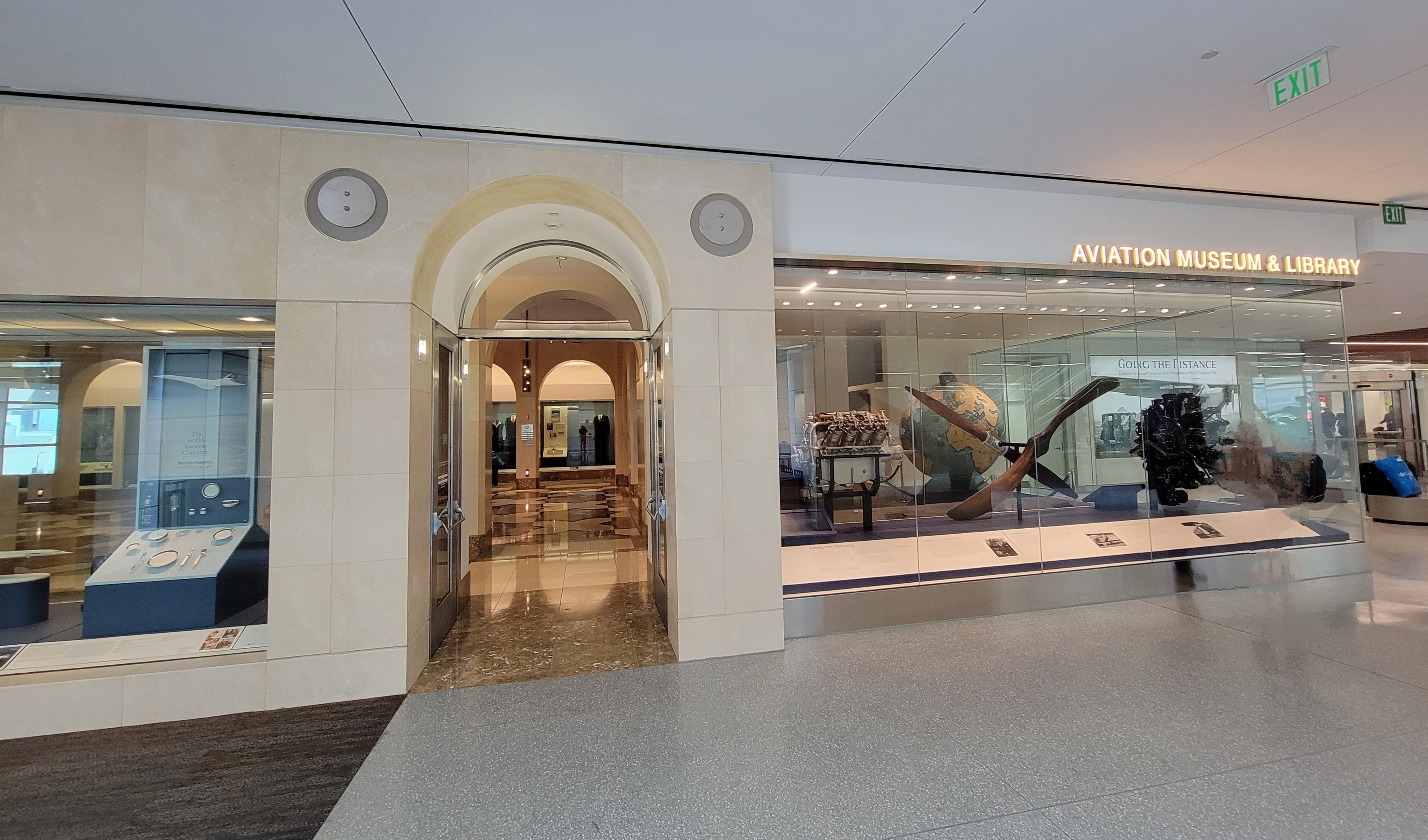
SFO Museum was created in 1980 as a collaboration between the San Francisco Airport Commission and the Fine Arts Museums of San Francisco and was the first museum in an international airport. It was accredited by the American Alliance of Museums in 1999, and contains both permanent artwork and temporary exhibitions in more than 20 galleries. The Aviation Museum and Library (officially, the San Francisco Airport Commission Aviation Library and Louis A. Turpen Aviation Museum) is located in the International Terminal, featuring a model of a DC-3. Other prominent installations include works by:
- Robert Bechtle, San Francisco Nova (T3, boarding area E)
- Kendall Buster, Topograph (T2, departure lounge)
- Janet Echelman, Every Beating Second (T2, recomposure area)
- Joyce Kozloff, Bay Area Victorian, Bay Area Deco, Bay Area Funk; tile wall (IT–T1 connector)
- Seiji Kunishima, Stacking Stones (T2)
- Yayoi Kusama, High Heels for Going to Heaven (T1, b/a B)
- Ursula von Rydingsvard, Ocean Voices II (T3, E Plaza)
- Norie Sato, Air Over Under (T2, exterior)
- Larry Sultan and Mike Mandel, Waiting (IT, b/a A)
- Rufino Tamayo, Conquest of Space (IT, exterior)
- Wayne Thiebaud, 18th Street Downgrade (T3, b/a E)
- James Torlakson, Behind Ted McMann's Garage (T3, b/a E)
- Bob Zoell, BFILRYD (T3–IT connector)
Frequent travelers and airline staff have reportedly told SFO Museum officials they make it a point to arrive to the airport early in order to view the galleries.
Airlines and destinations
Passenger
| Aer Lingus | Dublin | | Aeroméxico | Guadalajara, Mexico City | | Air Canada | Montréal–Trudeau, Toronto–Pearson, Vancouver | | Air Canada Express |Vancouver Seasonal: Edmonton | | Air China | Beijing–Capital | | Air France | Paris–Charles de Gaulle | | Air India | Bengaluru (ends February 27, 2026), Mumbai–Shivaji (ends February 27, 2026), Delhi| | Air New Zealand | Auckland | | Air Premia | Seoul–Incheon | | Alaska Airlines | Boise, Burbank (ends March 17, 2026), Cancún, Everett, Kailua-Kona, Las Vegas, Lihue, Los Angeles, New York–JFK, Newark (ends June 9, 2026), Loreto | | All Nippon Airways | Tokyo–Haneda, Tokyo–Narita | | American Airlines | Charlotte, Chicago–O'Hare, Dallas/Fort Worth, Los Angeles, Miami, New York–JFK, Philadelphia, Phoenix–Sky Harbor | | American Eagle | Los Angeles, Phoenix–Sky Harbor | | Asiana Airlines | Seoul–Incheon | | Avianca El Salvador | Guatemala City (begins June 1, 2026), San Salvador | | Breeze Airways | Provo, San Bernardino Seasonal: Cincinnati, Louisville, Richmond | | British Airways | London–Heathrow | | Cathay Pacific | Hong Kong | | China Airlines | Taipei–Taoyuan | | China Eastern Airlines | Shanghai–Pudong | | China Southern Airlines | Guangzhou, Wuhan | | Condor | Seasonal: Frankfurt | | Copa Airlines | Panama City–Tocumen | | Delta Air Lines | Atlanta, Austin, Boston, Detroit, Los Angeles, Minneapolis/St. Paul, New York–JFK, Salt Lake City, Seattle/Tacoma | | Delta Connection | Seattle/Tacoma | | Emirates | Dubai–International | | EVA Air | Taipei–Taoyuan | | Fiji Airways | Nadi | | Flair Airlines | Vancouver | | French Bee | Papeete, Paris–Orly | | Frontier Airlines | Atlanta, Dallas/Fort Worth, Denver, Las Vegas, Los Angeles, Ontario, Orange County, Phoenix–Sky Harbor, Salt Lake City | | Hawaiian Airlines | Honolulu, Kahului | | Iberia | Seasonal: Madrid | | ITA Airways | Rome–Fiumicino | | Japan Airlines | Tokyo–Haneda, Tokyo–Narita | | JetBlue | Boston, Fort Lauderdale, New York–JFK | | KLM | Amsterdam | | Korean Air | Seoul–Incheon | | Level | Seasonal: Barcelona | | LOT Polish Airlines | Seasonal: Warsaw–Chopin (begins May 6, 2026) | | Lufthansa | Frankfurt, Munich | | Philippine Airlines | Manila | | Porter Airlines | Toronto–Pearson | | Qantas | Sydney | | Qatar Airways | Doha | | Scandinavian Airlines | Copenhagen | | Singapore Airlines | Singapore | | Southwest Airlines | Austin, Baltimore, Boston, Burbank (resumes March 5, 2026), Chicago–Midway, Dallas–Love (resumes March 5, 2026), Denver, Las Vegas, Los Angeles, Nashville, Phoenix–Sky Harbor, Providence, San Diego, Seattle/Tacoma, St. Louis | | Starlux Airlines | Taipei–Taoyuan | | Sun Country Airlines | Minneapolis/St. Paul | | Swiss International Air Lines | Zurich | | TAP Air Portugal | Lisbon Seasonal: Terceira| | Turkish Airlines | Istanbul | | United Airlines | Albuquerque, Atlanta, Auckland, Austin, Baltimore, Beijing–Capital, Boise, Boston, Bozeman, Brisbane, Burbank, Calgary, Cancún, Chicago–O'Hare, Cleveland, Dallas/Fort Worth, Denver, Detroit, Eugene, Fort Lauderdale, Frankfurt, Hong Kong, Honolulu, Houston–Intercontinental, Indianapolis, Kahului, Kailua-Kona, Kansas City, Las Vegas, Lihue, London–Heathrow, Los Angeles, Manila, Melbourne, Mexico City, Miami, Minneapolis/St. Paul, Munich, Nashville, New Orleans, Newark, Ontario, Orange County, Orlando, Osaka–Kansai, Palm Springs, Papeete, Paris–Charles de Gaulle, Philadelphia, Phoenix–Sky Harbor, Pittsburgh, Portland (OR), Puerto Vallarta, Raleigh/Durham, Redmond/Bend, Reno/Tahoe, Salt Lake City, San Antonio, San Diego, San José (CR), San José del Cabo, Santa Barbara, Seattle/Tacoma, Seoul–Incheon, Shanghai–Pudong, Singapore, St. Louis, Sydney, Taipei–Taoyuan, Tampa, Tokyo–Haneda, Tokyo–Narita, Toronto–Pearson, Vancouver, Washington–Dulles, Washington–National Seasonal: Adelaide, Amsterdam, Anchorage, Barcelona, Belize City, Christchurch, Columbus–Glenn, Fort Myers, Jackson Hole, Liberia (CR), Medford, Montréal–Trudeau, Omaha, Portland (ME) (begins June 27, 2026), Rome–Fiumicino, Spokane, Zurich | | United Express | Albuquerque, Bakersfield, Boise, Bozeman, Burbank, Eureka, Fresno, Kansas City, Medford, Monterey, Monterrey, North Bend/Coos Bay, Omaha, Orange County, Palm Springs, Portland (OR), Redding, Redmond/Bend, Reno/Tahoe, Sacramento, Salt Lake City, San Antonio, San Diego/Carlsbad (begins March 30, 2026), San Luis Obispo, Santa Barbara, Seattle/Tacoma, Spokane, St. Louis, Tri-Cities (WA), Tucson Seasonal: Aspen, Bishop, Eagle/Vail, Eugene, Glacier Park/Kalispell, Hayden/Steamboat Springs, Los Angeles, Missoula, Montrose, Ontario, Sun Valley, Vancouver | | Vietnam Airlines | Ho Chi Minh City | | Virgin Atlantic | London–Heathrow | | WestJet | Calgary Seasonal: Edmonton, Vancouver | | Zipair Tokyo | Tokyo–Narita |

Cargo
| ABX Air | Cincinnati, Los Angeles | | Amazon Air | Cincinnati, Fort Worth/Alliance | | AirZeta | Los Angeles, Seoul–Incheon | | China Airlines Cargo | Anchorage, Atlanta, Taipei–Taoyuan | | DHL Aviation | Cincinnati, Los Angeles, Seattle/Tacoma | | EVA Air Cargo | Los Angeles, Taipei–Taoyuan | | FedEx Express | Fort Worth/Alliance, Memphis | | Kalitta Air | Los Angeles, Seoul–Incheon | | Korean Air Cargo | Los Angeles, Seoul–Incheon |
Statistics
Top destinations
Domestic
| Rank | City | Passengers | Carriers |
|---|---|---|---|
| 1 | California Los Angeles, California | 1,349,000 | Alaska, American, Delta, Southwest, United |
| 2 | Illinois Chicago–O'Hare, Illinois | 982,000 | Alaska, American, United |
| 3 | New York (state) New York–JFK, New York | 947,000 | Alaska, American, Delta, JetBlue |
| 4 | New Jersey Newark, New Jersey | 887,000 | Alaska, United |
| 5 | Colorado Denver, Colorado | 849,000 | Frontier, Southwest, United |
| 6 | California San Diego, California | 828,000 | Alaska, Frontier, Southwest, United |
| 7 | Washington (state) Seattle/Tacoma, Washington | 805,000 | Alaska, Delta, United |
| 8 | Nevada Las Vegas, Nevada | 800,000 | Alaska, Frontier, Southwest, United |
| 9 | Massachusetts Boston, Massachusetts | 690,000 | Alaska, Delta, JetBlue, United |
| 10 | Texas Dallas/Fort Worth, Texas | 631,000 | American, Frontier, United |
International
| Rank | Airport | Passengers | YoY change | Rank change | Carriers |
|---|---|---|---|---|---|
| 1 | Taiwan Taipei–Taoyuan, Taiwan | 1,357,244 | 21.34% | China Airlines, EVA Air, Starlux Airlines, United | |
| 2 | United Kingdom London–Heathrow, United Kingdom | 1,041,811 | 0.12% | British Airways, United, Virgin Atlantic | |
| 3 | Canada Vancouver, Canada | 816,819 | 2.91% | Air Canada, Flair, United, WestJet | |
| 4 | South Korea Seoul–Incheon, South Korea | 700,297 | 3.46% | Air Premia, Asiana Airlines, Korean Air, United | |
| 5 | Germany Frankfurt, Germany | 636,217 | 2.26% | Condor, Lufthansa, United | |
| 6 | Hong Kong Hong Kong, SAR (China) | 633,410 | 32.32% | 3 | Cathay Pacific, United |
| 7 | Canada Toronto–Pearson, Canada | 619,841 | 11.55% | Air Canada, Porter Airlines, United | |
| 8 | Japan Tokyo–Narita, Japan | 575,723 | 16.04% | All Nippon Airways, Japan Airlines, United, Zipair Tokyo | |
| 9 | Singapore Singapore, Singapore | 544,512 | 7.48% | 3 | Singapore Airlines, United |
| 10 | Mexico Mexico City, Mexico | 493,301 | 8.71% | Aeromexico, United |
Airline market share
| Rank | Airline | Passengers | Percent of market share |
|---|---|---|---|
| 1 | United Airlines | 26,358,611 | 48.7% |
| 2 | Alaska Airlines | 5,141,287 | 9.5% |
| 3 | Delta Air Lines | 4,113,030 | 7.6% |
| 4 | American Airlines | 3,734,198 | 6.9% |
| 5 | Southwest Airlines | 2,056,515 | 3.8% |
| – | Other | 12,717,921 | 23.5% |
Traffic numbers
| Year | Rank | Enplaned and | ||||||||||||||||||||||||||||||
|---|---|---|---|---|---|---|---|---|---|---|---|---|---|---|---|---|---|---|---|---|---|---|---|---|---|---|---|---|---|---|---|---|
| deplaned passengers | Change | Aircraft movements | Cargo (tonnes) | 1998 | 1999 | 2000 | 2001 | 2002 | 2003 | 2004 | 2005 | 2006 | 2007 | 2008 | 2009 | 2010 | 2011 | 2012 | 2013 | 2014 | 2015 | 2016 | 2017 | 2018 | 2019 | 2020 | 2021 | 2022 | 2023 | 2024 | ||
| 40,101,387 | 432,046 | 598,579 | ||||||||||||||||||||||||||||||
| 40,387,538 | 0.7% | 438,685 | 655,409 | |||||||||||||||||||||||||||||
| 9 | 41,048,996 | 1.8% | 429,222 | 695,258 | ||||||||||||||||||||||||||||
| 14 | 34,632,474 | 15.6% | 387,594 | 517,124 | ||||||||||||||||||||||||||||
| 19 | 31,450,168 | 9.2% | 351,453 | 506,083 | ||||||||||||||||||||||||||||
| 22 | 29,313,271 | 6.8% | 334,515 | 483,413 | ||||||||||||||||||||||||||||
| 21 | 32,744,186 | 8.8% | 353,231 | 489,776 | ||||||||||||||||||||||||||||
| 23 | 33,394,225 | 2.0% | 352,871 | 520,386 | ||||||||||||||||||||||||||||
| 26 | 33,581,412 | 0.5% | 359,201 | 529,303 | ||||||||||||||||||||||||||||
| 23 | 35,790,746 | 6.6% | 379,500 | 503,899 | ||||||||||||||||||||||||||||
| 21 | 37,402,541 | 4.5% | 387,710 | 429,912 | ||||||||||||||||||||||||||||
| 20 | 37,453,634 | 0.1% | 379,751 | 356,266 | ||||||||||||||||||||||||||||
| 23 | 39,391,234 | 5.2% | 387,248 | 384,179 | ||||||||||||||||||||||||||||
| 22 | 41,045,431 | 4.2% | 403,564 | 340,766 | ||||||||||||||||||||||||||||
| 22 | 44,477,209 | 8.4% | 424,566 | 337,357 | ||||||||||||||||||||||||||||
| 22 | 44,944,201 | 1.2% | 421,400 | 325,782 | ||||||||||||||||||||||||||||
| 21 | 47,074,162 | 4.9% | 431,633 | 349,585 | ||||||||||||||||||||||||||||
| 15 | 50,067,094 | 6.2% | 429,815 | 389,934 | ||||||||||||||||||||||||||||
| 23 | 53,106,505 | 6.1% | 450,388 | 420,086 | ||||||||||||||||||||||||||||
| 24 | 55,832,518 | 5.1% | 460,343 | 491,162 | ||||||||||||||||||||||||||||
| 25 | 57,793,313 | 3.5% | 470,164 | 500,081 | ||||||||||||||||||||||||||||
| 24 | 57,488,023 | 0.5% | 458,496 | 546,437 | ||||||||||||||||||||||||||||
| 50 | 16,427,801 | 71.4% | 231,163 | 439,358 | ||||||||||||||||||||||||||||
| 41 | 24,343,627 | 48.2% | 265,597 | 528,792 | ||||||||||||||||||||||||||||
| 24 | 42,281,641 | 73.7% | 355,006 | 491,192 | ||||||||||||||||||||||||||||
| 29 | 50,196,094 | 18.7% | 384,871 | 484,100 | ||||||||||||||||||||||||||||
| 36 | 52,288,098 | 4.1% | 386,507 | 561,594 |
Ground transportation
Transit

The AirTrain is a landside people-mover system that connects each terminal, the two international terminal garages, the BART station, the Grand Hyatt hotel, the airport's Rental Car Center, and the Long-Term Parking garage. The AirTrain is fully automated and free to ride.
Bay Area Rapid Transit (BART) serves the airport at San Francisco International Airport station, located west of the International Terminal. The trains connect the airport directly to San Francisco, Oakland, and numerous other cities across the San Francisco Bay Area.
San Mateo County's transit agency, SamTrans, serves the airport with several routes. Buses stop at the arrivals/baggage claim level of the domestic terminals and in courtyard A or G in the International Terminal.
BART trains and SamTrans buses also connect San Francisco International Airport to Caltrain with a transfer at Millbrae station. Millbrae will also be the connection between SFO and California High-Speed Rail; the station will be renamed to Millbrae–SFO station on the High Speed Rail line to coincide with the dual functionality of the station.
Prior to the COVID-19 pandemic, the airport provided free shuttle bus service to and from the South San Francisco Ferry Terminal, connecting with San Francisco Bay Ferry services from Alameda and Oakland. This service is no longer active.
Numerous door-to-door "shared ride" van and hotel courtesy shuttles stop at the center transportation island on the departure level, while Marin Airporter buses and limousines are on the arrivals/baggage claim level of the airport. Charter services are also available in the courtyards.
Car

The airport is located on U.S. Route 101, 13 mi south of downtown San Francisco. It is near the US 101 interchange with Interstate 380, a short freeway that connects US 101 with Interstate 280. Short term parking is located in the central terminal area and two international terminal garages. Long term parking is located on South Airport Blvd. and San Bruno Ave.
Passengers can also park long-term at a select number of BART stations that have parking lots, with a permit purchased online in advance.
Taxi
Taxis depart from designated taxi zones located at the roadway center islands, on the Arrivals/Baggage Claim Level of all terminals.
Ride app services such as Uber and Lyft are available via their respective mobile app. The designated ride app pickup area for domestic terminals is on the fifth floor of the adjacent garage. The designated pickup area for the International Terminal is on the Departures/Check-In Level roadway center island.
Other facilities
SFO is home to one of the largest single aircraft maintenance bases in the world with complete MRO base operations, including maintenance, repair, overhaul, painting, welding, machine shop, tool and die, parts manufacturing, fabrication, engineering, and retrofitting (Boeing and Airbus certified, among others). It serves as the principal Global MRO Base for United Airlines and serves over 40 other airlines, military customers, and aircraft lease operators.
The eastern side of the airfield is dominated by the Superbay, a 420550 sqft maintenance hangar capable of holding four 747s. Originally constructed in the 1970s, the facility is shared by United Airlines and American Airlines.
Nippon Cargo Airlines has its San Francisco branch on the airport property.
Prior to its merger that formed AirWest, Pacific Air Lines had its corporate headquarters on the grounds of the airport. Hughes Airwest, the successor to Air West, also had its headquarters on the grounds of the airport.
The United States Coast Guard operates Coast Guard Air Station San Francisco with its ramp and buildings near the cargo terminal, operating six MH-65 Dolphin helicopters.
The United States Postal Service had an Air Mail Facility (AMF), later an International Service Center (ISC) located on Airport property. However, the post office was closed in 2022, after its lease was not renewed by the airport.
On-Site Hotel
In October 2019, Hyatt Hotels opened a 351-room Grand Hyatt-branded hotel next to International Garage A and connected to the terminals via AirTrain.
Wag Brigade
On December 3, 2013, SFO launched a "Wag Brigade" program to bring a pack of trained therapy dogs to the terminals to calm nervous fliers and make passenger travel more enjoyable. In 2016, Lilou, a Juliana-breed therapy pig joined the Wag Brigade. Carefully selected for their temperament and airport suitability, the comfort canines wear vests that read "Pet Me!" which identify them.
Accidents and incidents
- On February 9, 1937, a United Airlines Douglas DC-3A-197 transport liner circled the airport, then crashed into the bay, killing 11 people.
- On September 12, 1951, United Airlines Flight 7030 plunged into the bay during a training exercise killing all three crew members.
- On April 20, 1953, Western Airlines Flight 636, a Douglas DC-6 on a scheduled evening crossbay flight to Oakland International Airport, crashed three minutes after departing SFO into San Francisco Bay. There were eight fatalities (4 crew, 4 passengers) of the 10 occupants on board.
- On October 29, 1953, British Commonwealth Pacific Airlines flight 304, a Douglas DC-6 en route from Sydney, Australia, with fuel stops in Auckland, New Zealand, Fiji, and Honolulu, crashed on approach to SFO into Kings Mountain in San Mateo County. All 19 passengers and crew members died.
- On February 20, 1959, a Pan American DC-7C crashed and burned on the runway. The three crew members on board survived.
- On February 3, 1963, Slick Airways Flight 40 crashed and burned after striking approach lights on runway 28R, killing the four people on board.
- On December 24, 1964, Flying Tiger Line Flight 282, a Lockheed Constellation cargo aircraft departing for New York City, crashed in the hills west of the airport, killing all three crew members on board.
- On June 28, 1965, Pan Am Flight 843, a Boeing 707, had just departed for Honolulu, Hawaii, when its #4 engine exploded, causing part of the wing and the engine itself to break off and fall into the streets below. The crew was able to extinguish the ensuing fire and land safely at the nearby Travis Air Force Base.
.jpg)
- On November 22, 1968, Japan Air Lines Flight 2, a DC-8-62 named the Shiga (registered as JA8032), crash-landed on final approach at 9:30 a.m. on a shallow submerged reef at the eastern tip of Coyote Point (three miles short of the runway southeast of the airport). The plane was on a trip from Tokyo to San Francisco, after making a stop in Honolulu. The pilot was experienced but misread the instruments on the DC-8, which was less than a year old. There were 107 people on the plane. There were no deaths or serious injuries. The plane was salvaged by Bigge Drayage Company soon after the crash. All luggage and fuel were removed to cut the weight and the plane was lifted onto a barge and taken to the airport for repairs. The cost of repairs was $4 million and the plane re-entered service the following April. The aircraft flew for Japan Air Lines until 1983 and then several air freight companies for 18 years until it was scrapped in December 2001.
- On July 30, 1971, Pan Am Flight 845, a Boeing 747 (registration: N747PA, name: Clipper America), struck navigational aids at the end of runway 1R on takeoff for Tokyo. The aircraft's landing gear and other systems were damaged. Two passengers were seriously injured by metal components of the runway approach light pier entering the cabin. The flight proceeded out over the Pacific Ocean to dump fuel to reduce weight for an emergency landing. Emergency services were deployed at the airport, and the plane returned and landed on runway 28R. During landing, the aircraft veered off the runway. There was no fire. After coming to a stop, the aircraft slowly tilted aft, coming to rest on its tail in a nose-high attitude. The forward evacuation slides were therefore in a nearly vertical position. Evacuation using these slides caused all of additional injuries, some severe. There were no fatalities among the 218 passengers and crew members aboard. An investigation determined that the cause of the accident was erroneous information from the flight dispatcher to the crew members regarding weight and runway length.
- On July 5, 1972, Pacific Southwest Airlines Flight 710, a Boeing 737-200, was hijacked by two Bulgarian immigrants demanding $800,000 and to be taken to the Soviet Union. After flying for an hour and landing back at SFO, the plane was stormed by four FBI agents. Both hijackers were killed along with one passenger. Two other passengers were injured.
- On September 13, 1972, TWA Flight 604, a Boeing 707-331C cargo plane crashed into the bay on takeoff. All three crew members survived.
- On October 8, 1984, a Clay Lacy Aviation Learjet 24 crashed shortly after takeoff after descending in a steep left-wing low-nose attitude after entering a broken cloud at 600 feet. All three occupants (two crew, and one occupant) were killed.
- On February 19, 1985, China Airlines Flight 006 made an emergency landing at the airport after a fatigued crew mishandled a single engine flameout, eventually leading to a stall and catastrophic dive that nearly led the Boeing 747SP to hit the ocean.
- On , United Airlines Flight 863 was forced to shut down an engine just after takeoff, and then nearly collided with San Bruno Mountain due to improper flight procedure. The aircraft returned safely to the airport. In response, United instituted new training procedures for its flight crews.
- In the September 11 attacks in 2001, United Airlines Flight 93 was destined for San Francisco. It was hijacked by four al-Qaeda terrorists and diverted towards Washington, D.C., with the intent of crashing the plane into either The Capitol or the White House. After learning of the previous attacks on the World Trade Center and The Pentagon, the passengers attempted to regain control of the plane. The hijackers subsequently crashed the plane into a field in Somerset County, Pennsylvania, killing everyone on board.
- On , an arriving SkyWest Airlines Embraer EMB 120 nearly collided with a Republic Airline Embraer 170 Regional Jet at the junction of Runways 01L and 28R. After the SkyWest EMB 120 passed the Runway 28R threshold, the Republic E-170 was cleared for takeoff on 01L, in contradiction to local and FAA orders requiring the arriving aircraft to pass the intersection before clearing departing aircraft on the intersecting runway.
- On June 28, 2008, an ABX Air Boeing 767 preparing to depart with cargo caught fire and was seriously damaged. The pilots escaped uninjured. Although the airline had received a threat the week before, investigations revealed no evidence of any malicious device on board, eventually concluding the fire was caused by an electrical system malfunction.
- On September 22, 2012, a PrimeFlight catering truck accidentally drove into the wing of a parked NetJets Gulfstream V. The wing sliced into the cab of the truck, killing the 60-year-old driver.

- On July 6, 2013, Asiana Airlines Flight 214, a Boeing 777-200ER registered HL7742, crashed while landing. The crash occurred due to a combination of mistakes made by the aircraft's flight crew. The flight crew had selected an incorrect autopilot mode when attempting to descend, followed by placing the thrust levers into "idle", which disabled the autopilot from maintaining speed as the aircraft approached the seawall. Upon descending below the desired flight path, the flight crew should have determined that their speed was too low and attempted a "go-around" and re-attempt to land. However, this decision was not made until the altitude was less than 100 ft, by which point the aircraft could not accomplish a go-around. The tail section of the aircraft struck the seawall at the end of the runway and became detached from the airframe; the plane ended up 2000 ft down the runway. Passengers and crew members evacuated before a fire, due to the ignition of engine lubricant, destroyed the aircraft. There were three fatalities, making this the first fatal Boeing 777 crash.
- On July 7, 2017, Air Canada Flight 759, an Airbus A320-200, from Toronto Pearson was instructed by air traffic control to go around after overflying Taxiway C for 0.25 miles (400 m) while on visual approach for 28R. The A320 overflew the first two aircraft lined up on Taxiway C by roughly 100 feet (30 m). The pilots landed the aircraft afterward without incident. A total of three wide-body aircraft and one narrow-body aircraft were lined up awaiting takeoff on Taxiway C. The NTSB launched an investigation into the incident, publishing the final report in September 2018.
- On October 22, 2017, Air Canada Flight 781, another Airbus A320-200, from Montreal landed on Runway 28R after being instructed by the ATC six times to go around, without any response from the pilots. Upon landing the crew reported they had radio problems in the cockpit, but a later FAA investigation found that the crew inadvertently switched from the SFO tower frequency to the SFO ground frequency after receiving their landing clearance.
- On March 7, 2024, a Boeing 777-200ER of United Airlines, registration N226UA, was climbing out of runway 28R bound for Osaka, Japan, when one of the six wheels on the left main gear truck detached and fell in a parking lot, damaging three cars. The aircraft landed safely at Los Angeles Airport with no casualties. An airfield safety employee was injured while clearing debris.
References
References
- "SFO Airport 2024 Final Air Traffic Summary".
- "2020 Census – Census Block Map: San Mateo County, CA". [[U.S. Census Bureau]].
- (2022-03-16). "San Francisco International Airport".
- "Airports Council International – Worldwide Airport Traffic Report – Calendar Year 2017". The Port Authority of New York and New Jersey.
- "History of SFO".
- (May 7, 1927). "negative: Mills Field Municipal Airport of San Francisco".
- (Summer 1933). "Pacific Seaboard Air Lines".
- "Family". Frontier Airlines.
- (February 1, 1962). "Delta Air Lines system timetable".
- "Historic California Airfields: Coast Guard Air Station, San Francisco, NAAS Mills Field, San Francisco Municipal Airport".
- "British Commonwealth Pacific Airlines".
- "Pan Am timetable, 1947".
- "TWA Skyliner Magazine, 1957-08-15_01".
- JP. (September 16, 2019). "The Cadillac of the Constellation Line".
- (November 6, 1959). "Qantas Timetable".
- (April 24, 1960). "BOAC system timetable".
- (August 1, 1961). "BOAC system timetable".
- (December 1, 1961). "Japan Airlines system timetable".
- (April 1, 1961). "Lufthansa system timetable".
- (January 1, 1963). "Lufthansa system timetable".
- (July 1, 1968). "Braniff International system timetable".
- (July 15, 1970). "CP Air system timetable".
- Fredricks, Darold. (July 1, 2013). "Convair B-36 'Peacemaker'". San Mateo Daily Journal.
- Wilson, Marshall. (December 4, 2000). "A Guide to the New International Wing". Hearst Communications.
- (April 28, 1957). "Southwest Airways – The Pacific Air Line system timetable".
- (July 1, 1959). "Pacific Air Lines system timetable".
- (July 20, 1966). "Pacific Air Lines route map".
- (April 28, 1968). "West Coast Airlines route map".
- (January 15, 1978). "Hughes Airwest route map".
- (January 3, 1960). "American Airlines".
- (September 6, 1960). "Western Airlines system timetable".
- (September 1, 1961). "SFO Helicopter Airlines".
- (October 26, 1975). "SFO Helicopter Airlines".
- (March 2, 1962). "National Airlines".
- Hartlaub, Peter. (October 23, 2024). "SFO's bouncy moving walkway is famous. Here's why it's about to disappear". San Francisco Chronicle.
- (June 25, 1962). "PSA – Pacific Southwest Airlines".
- "PSA History".
- Roderick, Kevin. (October 19, 1989). "Search For Bodies to Take Days—State Puts Toll at 273, Then Says It Is Uncertain". [[Los Angeles Times]].
- Christopher H. Schmitt, Mercury News. (October 10, 2014). "Loma Prieta earthquake: The Mercury News' first-day coverage, afternoon paper". Mercury News.
- (1989). "Environmental Impact Report for the San Francisco International Airport Master Plan". Earth Metrics Inc. and Jefferson Associates, prepared for the city of San Francisco and California State Clearinghouse.
- "Airports Council International – Worldwide Airport Traffic Report – The calendar Year 2013". The Port Authority of NY & NJ.
- (November 10, 2015). "San Francisco Airport Commission Aviation Library & Louis A. Turpen Aviation Museum". San Francisco Airport Commission.
- (November 10, 2015). "San Francisco Airport Commission Aviation Library & Louis A. Turpen Aviation Museum – Mission Statement and History". San Francisco Airport Commission.
- McCabe, Michael. (November 18, 1999). "Wind Over Water / Planes would land on floating runways built on S.F. Bay". [[Hearst Communications]].
- Martin, John. (November 23, 1998). "Opinion: SFO Director Makes a Plea for Bay Fill". San Francisco Chronicle.
- McCormick, Erin. (June 5, 1998). "Runway expansion at SFO could mean filling Bay". San Francisco Examiner.
- McCabe, Michael. (July 31, 1999). "Sierra Club Opposes SFO Bay-Fill Plans / Airport says runway options vary". San Francisco Chronicle.
- (2000). "An act to add and repeal Sections 21085.7 and 21151.10 of the Public Resources Code, relating to environmental quality".
- Johnson, Huey D.. (May 5, 2000). "Opinion: Bay fill for runways a dismal idea". San Francisco Chronicle.
- (April 25, 2001). "SFO expansion backers argue for bay fill-in plan / Foes attack study, Feinstein endorses it". San Francisco Chronicle.
- Wilson, Marshall. (July 31, 2001). "Roar of disapproval for SFO runway expansion plans". San Francisco Chronicle.
- (November 24, 1998). "SFO's Plan For New Runways / Wetlands trade-off for bayfill proposed". San Francisco Chronicle.
- (February 4, 1999). "New Price Tag On SFO Runways Tops $2 Billion". San Francisco Chronicle.
- "Press Room, Our History, Openings/Closings".
- Cabantuan, Michael. (June 22, 2003). "History is Here – New Line Creates Transit Hub, Link to Future". Hearst Communications.
- Raine, George. (October 5, 2007). "Airbus Jumbo Jet Makes Test Landing at SFO". Hearst Communications.
- (July 28, 2008). "Airport of the Year 2008: Regional Results". [[Skytrax]] Research.
- (June 9, 2009). "Airport of the Year 2009: Regional Results". [[Skytrax]] Research.
- "New SFO control tower will have a torch-like air".
- King, John. (June 27, 2012). "New SFO control tower will have a torch-like air". [[Hearst Communications]].
- Vacar, Tom. (October 11, 2016). "New control tower at San Francisco airport dedicated". [[Fox Television Stations]].
- (December 11, 2012). "Getting Through Airport Security with CLEAR". On the Ground Travel.
- (June 25, 2009). "Clear Lanes Are No Longer Available". Verified Identity Pass, Inc..
- "SFO Announces Landmark Agreement for Use of Sustainable Aviation Fuels". San Francisco International Airport.
- (December 12, 2018). "Shell starts supplying sustainable fuel at Californian airport {{!}} Biofuels International Magazine".
- Bates, Joe. "Sustainable aviation fuel available at San Francisco International Airport". [[Airports Council International]].
- (November 17, 2022). "The Best and Worst Airports of 2022". The Wall Street Journal.
- "SFO reveals new airport logo after 18-month process".
- {{FAA-airport
- "SFO airport data at skyvector.com".
- "Airport Diagram".
- "West Plan". San Francisco International Airport.
- (2016). "Analysis of Menlo Waypoint". City of Menlo Park.
- (2016-11-09). "Staff Report Number: 16-190-CC Informational Item: Update on aircraft noise reduction efforts". City of Menlo Park.
- (2020). "Airport Director's Report". San Francisco International Airport.
- (January 2010). "Weather and Operations at SFO: A Primer for the Media". San Francisco International Airport.
- "Southeast Plan". San Francisco International Airport.
- "Fly Quiet Program – Jon C. Long Fly Quiet Awards". San Francisco International Airport.
- (September 1, 2009). "Residential Sound Insulation Program". BridgeNet International.
- (2024-02-14). "Static Maps {{!}} San Francisco International Airport".
- (2025-02-12). "Static Maps {{!}} San Francisco International Airport".
- Payne, Andy T.. "San Francisco International Airport: Gateway to the Golden Gate, Part 1: 1927–1959".
- Payne, Andy T.. "San Francisco International Airport: Gateway to the Golden Gate, Part 2: 1959–1978".
- (2022-07-13). "Harvey Milk Terminal 1 Redevelopment {{!}} San Francisco International Airport".
- "SFO Opens Final Phase of Harvey Milk Terminal 1 {{!}} San Francisco International Airport".
- (2024-08-20). "SFO's Terminal 3 West Modernization Project is Underway".
- (October 8, 2013). "Connecting at San Francisco – Airport Maps and Connections – Check-In & Immigration". Air New Zealand.
- McGinnis, Chris. (November 19, 2014). "New "secret passageway" at SFO – Chris McGinnis".
- (November 12, 2014). "New options for Delta flyers at SFO – TravelSkills".
- "Next phase of Harvey Milk Terminal 1 opens at SFO".
- "San Francisco Airport postpones multiple construction projects".
- "San Francisco Public Library – Bay Region Business".
- (September 15, 1963). "negative: San Francisco International Airport (SFO), dedication of South Terminal". SFO Museum.
- (July 13, 1958). "Projects Slated at SF Airport". [[Los Angeles Times]].
- Hough, Bill. (July 14, 2016). "San Francisco Airport Breaks Ground on Terminal Reconstruction".
- (February 1972). "Feb 72 / Rotonda A". SFO Museum.
- Moxom, Marshall. (July 2, 1971). "Elevated Roadway Construction & Rotunda "A" Const.". SFO Museum.
- San Francisco Airport Architects. (January 29, 1968). "SFO Rotunda Plans / Sections 9". SFO Museum.
- Payne, Andy T.. "San Francisco International Airport: Gateway to the Golden Gate, Part 3: 1978–2015".
- (1990). "Successful Architecture: Selected Works and Thought of Howard A. Friedman". H. Friedman Family.
- "Tabular LT Institutional Facilities".
- "Terminal 1 Redevelopment". San Francisco International Airport.
- (November 29, 2012). "CMAA Terminal 1 Redevelopment Program".
- Sabatini, Joshua. (March 21, 2018). "SFO Terminal To Be Renamed in Honor of Harvey Milk". [[San Francisco Examiner]].
- (April 23, 2018). "It's official: SFO terminal named for Harvey Milk". [[San Francisco Chronicle]].
- (June 26, 2019). "First look inside SFO's new $2.4 billion terminal". [[Hearst Communications]].
- McGinnis, Chris. (July 23, 2019). "Harvey Milk Terminal 1 officially opens at SFO". [[San Francisco Chronicle.
- "SFO Resumes Opening for Next Phase of Harvey Milk Terminal 1".
- Bajko, Matthew S.. (April 27, 2020). "After weekslong delay, new Harvey Milk Terminal 1 section opens".
- (May 5, 2020). "American Airlines Moves into Harvey Milk Terminal 1 on May 12th". San Francisco International Airport.
- Leff, Gary. (May 14, 2020). "In The Middle Of A Pandemic, American Airlines Changes Terminals In San Francisco".
- (May 25, 2021). "Next Phase of Harvey Milk Terminal 1 Opens at SFO {{!}} San Francisco International Airport".
- (March 24, 2022). "We're investing billions in major improvements at our key airports to ensure you'll have a great trip".
- (December 4, 2024). "New chapter for Hawaiian Airlines and Alaska Airlines at SFO". Spectrum Local News.
- "New Gate Numbering System at SFO {{!}} San Francisco International Airport".
- (2024-10-02). "Delta check-in counters and baggage claim move to Harvey Milk Terminal 1 on October 8, 2024 {{!}} San Francisco International Airport".
- McCarthy, Allison. (April 4, 2011). "A First Look at SFO's New Terminal 2". 7x7.com.
- (August 8, 2000). "San Francisco International Airport Competition Plan". San Francisco International Airport.
- Raine, George. (May 13, 2008). "SFO's old international terminal to fly again". San Francisco Chronicle.
- Manekin, Michael. (July 8, 2008). "SFO Brings Ghost Terminal Back From the Dead". Bay Area News Group.
- (February 10, 2011). "SFO's renovated Terminal 2 is set to open April 14 and will house Virgin America and American Airlines". ABC7 News KGO-TV.
- Coté, John. (April 6, 2011). "SFO Terminal 2 ready for takeoff". San Francisco Chronicle.
- "Five New Public Artworks to Debut at San Francisco International Airport's New Terminal 2". Sfartscommission.org.
- (February 10, 2011). "SFO's Terminal 2 Set to Re-Open in April". San Francisco International Airport.
- Allday, Erin. (September 19, 2008). "SFO releases terminal renovation plans". San Francisco Chronicle.
- King, John. (February 8, 2011). "SFO terminal plan may make security check less grim". San Francisco Chronicle.
- "Internal Server Error".
- Lucchesi, Paolo. (March 24, 2011). "SFO Terminal 2 to include sustainable food". San Francisco Chronicle.
- Lucchesi, Paolo. (April 6, 2011). "SFO Terminal 2 dining a local, gourmet bounty". San Francisco Chronicle.
- "SFO to Open New Public Outdoor Observation Deck on February 14th {{!}} San Francisco International Airport".
- (2021-08-31). "New San Francisco Lounge celebrates local flavor and flair".
- "Find JetBlue Terminal at SFO".
- (1978). "Airport Undergoes Marathon Expansion". McGraw-Hill.
- (April 22, 1971). "North Terminal construction begins at San Francisco International Airport". SFO Museum.
- (January 1, 1981). "North Terminal completed at San Francisco International Airport". SFO Museum.
- (September 28, 2001). "San Francisco International Airport's domestic terminals will be referred to by number beginning October 1". San Francisco Airport Commission.
- Raine, George. (September 20, 2007). "SFO harnesses solar power for Terminal 3". San Francisco Chronicle.
- (September 8, 2010). "American to Relocate Operations at SFO to New Terminal 2". Airlines and Destinations.
- (March 1, 2011). "Minutes". San Francisco Airport Commission.
- "FY14/15 Five-Year Capital Plan". San Francisco International Airport.
- Cabanatuan, Michael. (January 24, 2014). "SFO terminal revamp ready for takeoff". San Francisco Chronicle.
- Yakel, Doug. (January 24, 2014). "Join the E-Volution – SFO Re-Opens Boarding Area E". San Francisco International Airport.
- Bigelow, Catherine. (January 28, 2014). "United SFO terminal upgrades to 1st class glitz". San Francisco Chronicle.
- "Terminal 3 East Concourse {{!}} San Francisco International Airport".
- (March 19, 2012). "San Francisco International Airport Boarding Area E". [[San Francisco.
- (2020-08-10). "SFO Postpones $1 Billion Terminal 3 West Project". San Francisco International Airport.
- (2024-07-01). "Terminal 3 Construction". San Francisco International Airport.
- Carlton, Jim. (November 4, 2024). "San Francisco Travelers Lose Their Best Friend: a 400-Foot Rubber Band". [[Wall Street Journal]].
- (January 30, 2007). "Fact Sheet – International Terminal". San Francisco International Airport.
- Armstrong, David. (October 7, 2003). "Terminal Gastronomy – New Plan Brings Icons of the Bay Area's Food-Loving Culture to the S.F. Airport". Hearst Communications.
- Armstrong, David. (July 15, 2004). "Super-Size Skies – SFO Says It's Ready for a 555-Person Plane Arriving in 2006". Hearst Communications.
- (May 9, 2011). "A380 at SFO".
- "This PDF contains several maps of the SFO Airport".
- Nazzaro, Miranda. (2024-01-16). "San Francisco Airport to name international terminal in honor of late Sen. Dianne Feinstein". The Hill.
- "Mission and History". San Francisco International Airport.
- Todd, Gail. (January 19, 2012). "S.F. International Airport: Also an art museum". San Francisco Chronicle.
- "Public Art Map". SFO Museum.
- Xiao, An. (November 21, 2013). "Curating at the Airport: The SFO Museum".
- "Timetables". Aer Lingus.
- "Timetables". Aeroméxico.
- "Montreal, QC, Canada YMQ".
- "Toronto, ON, Canada YTO".
- "Vancouver, BC, Canada YVR".
- "Flight Schedules". Air Canada.
- "Vancouver, BC, Canada YVR".
- (September 28, 2023). "Air China NW23 US Operation Changes – 27SEP23". AeroRoutes.
- "Air France flight schedule". Air France.
- Velani, Bhavya. (21 December 2025). "Air India to Suspend Two Flights Routes to San Francisco".
- (21 December 2025). "Air India Suspends Bengaluru and Mumbai-San Francisco Flights Due to the Airspace Restrictions, Increases Delhi-US West Coast Capacity for Their Future Growth".
- Velani, Bhavya. (21 December 2025). "Air India to Suspend Two Flights Routes to San Francisco".
- (21 December 2025). "Air India Suspends Bengaluru and Mumbai-San Francisco Flights Due to the Airspace Restrictions, Increases Delhi-US West Coast Capacity for Their Future Growth".
- "Air India Timetable".
- "Auckland, New Zealand AKL".
- "Flight schedules – Air New Zealand".
- (19 January 2024). "Air Premia schedules mid-May 2024 San Francisco launch". AeroRoutes.
- (October 28, 2025). "Alaska Airlines 2026 Domestic / Mexico Network Changes – 26OCT25". Aeroroutes.
- (December 11, 2024). "Alaska Airlines Expands San Francisco - Hawaii Network from June 2025". AeroRoutes.
- (May 2025}} [[Bozeman Yellowstone International Airport). "Alaska Adds 18 New Routes".
- "Flight Timetable".
- "Timetables [International Routes]".
- "Flight schedules and notifications".
- "Seoul, Korea Republic Of SEL".
- "Routes". Asiana Airlines.
- "Avianca Boosts Cross-Border Connectivity with Seasonal Direct Air Service Linking Guatemala City to San Francisco".
- "Check itineraries".
- "Breeze Airways".
- "Timetables". British Airways.
- "Hong Kong (SAR) China HKG".
- "Flight Timetable". Cathay Pacific.
- "Taipei, Chinese Taipei TPE".
- "Timetable {{!}} China Airlines".
- (September 29, 2023). "China Eastern NW23 US Operations – 28 SEP23". AeroRoutes.
- "China Southern Resumes Nonstop Guangzhou – San Francisco Service in NS24".
- (September 28, 2023). "China Southern NW23 US Operation Changes – 28SEP23". AeroRoutes.
- (March 21, 2025). "Condor shakes up North America Network". Airline Geeks.
- (2022-02-14). "Condor: Summer 2022: With Condor non-stop to 16 destinations in North America". Condor-newsroom.condor.com.
- "Flight Schedule". Copa Airlines.
- (September 30, 2024). "Delta Air Lines to launch five more new nonstop routes from Austin in 2025".
- "FLIGHT SCHEDULES".
- "Dubai, United Arab Emirates DXB".
- "Flight Schedules". Emirates.
- "Taipei, Chinese Taipei TPE".
- "Timetables". EVA Air.
- "Flight Schedules".
- "Vancouver, BC, Canada YVR".
- "Where we fly".
- "Timetable – French Bee".
- "Frontier".
- "Destinations".
- (June 1, 2022). "Iberia resumes its seasonal flights between Madrid and San Francisco". Aviacionline.
- "Flight times – Iberia".
- "ITA Airways network".
- "Japan Airlines Timetables".
- "JetBlue Airlines Timetable".
- "View the Timetable". KLM.
- "Seoul, Korea Republic Of SEL".
- "Flight Status and Schedules". Korean Air.
- "Destinations". Level.
- Silk, Robert. (November 14, 2025). "LOT Polish Airlines will fly to San Francisco". [[Northstar Travel Group]].
- "Timetable – Lufthansa Canada". Lufthansa.
- "Flight Timetable".
- "Toronto, ON, Canada YTO".
- (October 3, 2023). "Porter adds Los Angeles and San Francisco to growing list of U.S. destinations". Cision.
- "QANTAS 2022/23 San Francisco Service Adjustment – 27Aug22". aeroroutes.
- "Qantas San Francisco changes". Aeroroutes.
- "Discover a timeless beauty in San Francisco". Qatar Airways.
- "Timetable – SAS".
- "Singapore, Singapore SIN".
- "Flight schedules".
- (December 12, 2024). "Southwest Airlines to launch nonstop service from Austin to San Francisco in 2025".
- (October 30, 2024). "Southwest adds 13 additional "redeye" flights to its schedule with 6 going to BWI (Baltimore/Washington)".
- link
- "Southwest Airlines Oct 2025 – Apr 2026 Domestic Network Additions".
- "Southwest bulks up 2026 schedule from Love Field".
- link
- link
- "Southwest's Latest STL Schedule Update Expands/Resumes Routes".
- "Check Flight Schedules".
- "Southwest Airlines Route Map". Southwest Airlines.
- "Taipei, Chinese Taipei TPE".
- Hardee, Howard. (September 12, 2023). "Starlux plans to launch trans-Pacific routes to San Francisco and Seattle".
- "Route Map".
- "Timetable".
- (December 3, 2024). "New Nonstop TAP Air Portugal Routes Connect Boston, Los Angeles, and San Francisco with Portugal's Top Destinations Starting in May 2025: What Travelers Need to Know".
- "All Destinations". TAP Portugal.
- "Online Flight Schedule". Turkish Airlines.
- (August 23, 2023). "San Francisco Airport: United Airlines resumes, expands routes to Asia".
- (April 25, 2024). "United Resumes San Francisco - Detroit / St. Louis in Aug 2024". AeroRoutes.
- "United Airlines (UAL) Adds Eight New International Destinations".
- (April 22, 2024). "Airline adding flights at Lambert Airport to key destination". KSDK.
- Johnson, Blake. (April 3, 2025). "United to fly direct between Adelaide and San Francisco in a major win for South Australians". [[Seven News]].
- (December 6, 2023). "UNITED AIRLINES ADDS SAN FRANCISCO – BARCELONA SERVICE".
- "Belize and United Airlines Announce New Non-stop Flight from San Francisco".
- (19 April 2023). "Flights from Christchurch to San Francisco will take off this summer". [[Christchurch City Council]].
- (13 August 2023). "UNITED NW23 INTERCONTINENTAL NETWORK CHANGES – 11AUG23".
- (July 15, 2022). "United Airlines To Start Nonstop Fort Myers To Los Angeles And San Francisco Service This Winter".
- (April 27, 2024). "United Airlines Launching New Flights from San Francisco to Montreal".
- (June 17, 2025). "United 2H25 A319/737-700 North America Network Additions". Aeroroutes.com.
- (October 26, 2022). "United to operate flights between San Francisco and Rome". Aviacionline.
- (February 8, 2022). "United to resume flights between San Francisco and Zurich". Aviacionline.
- "Timetable". United Airlines Holdings.
- (June 2024). "United Airlines will have nonstop service between San Francisco and Monterrey".
- (October 22, 2025). "United Airlines launches new nonstop flights between Carlsbad and this major city".
- "Ho Chi Minh City, Viet Nam SGN".
- "Vietnam Airlines direct flight to US takes off next week".
- "Interactive flight map".
- "Calgary, AB, Canada YYC".
- "Edmonton, AB, Canada YEA".
- "Vancouver, BC, Canada YVR".
- "Flight schedules".
- "Zipair Basic Information".
- "ABX Air".
- "China Airlines Cargo Schedule".
- "Korean Air Cargo".
- "San Francisco, CA: San Francisco International (SFO)". [[Bureau of Transportation Statistics]].
- (November 5, 2024). "BTS Air Carriers : T-100 International Market (All Carriers)".
- "SFO Fact Sheet: Five Largest Airlines at SFO (market share based on domestic + international seats combined)".
- "Air Traffic Statistics". San Francisco International Airport.
- "Airtrain FAQ". San Francisco International Airport.
- (June 17, 2022). "Getting Around SFO | San Francisco International Airport".
- California High-Speed Rail Authority. "Millbrae–SFO – California High Speed Rail".
- "Take the Ferry to SFO {{!}} San Francisco Bay Ferry".
- "Parking at a Glance". San Francisco International Airport.
- "BART – Parking". Bart.gov.
- "Taxi Pick-Up Locations". San Francisco International Airport.
- (20 March 2013). "United Airlines extends lease on San Francisco maintenance facility".
- "United Technical Operations".
- "United Technical Operations".
- (June 12, 2016). "Take a tour of the maintenance facility for United Airlines". YouTube.
- "San Francisco International Airport Superbay Hangar". Weitz.
- "[http://www.nca.aero/e/profile/branch/america.html America] {{Webarchive. link. (May 25, 2017 ." [[Nippon Cargo Airlines]]. Retrieved on February 17, 2012. "900 North Access Road, San Francisco International Airport, San Francisco, CA 94128, U.S.A.")
- ''[[Flight International]]''. April 2, 1964. [http://www.flightglobal.com/pdfarchive/view/1964/1964%20-%200922.html 523] {{Webarchive. link. (March 6, 2012 . "Head Office: International Airport, San Francisco, California.")
- link. (March 6, 2012 . "Head Office: San Francisco International Airport, San Francisco, Ealif 94128, USA.")
- (31 March 2022). "San Francisco International Airport post office permanently closes".
- "Hyatt and San Francisco International Airport Proudly Announce Opening of Grand Hyatt at SFO {{!}} San Francisco International Airport".
- "Meet the Wag Brigade". San Francisco International Airport.
- (February 9, 1937). "ASN Aircraft accident Douglas DC-3A-197 NC16073 San Francisco International Airport, CA (SFO)".
- (July 6, 2013). "Major SFO crashes". SFGate.
- (September 12, 1951). "ASN Aircraft accident Boeing 377 Stratocruiser 10–34 N31230 Redwood City, CA".
- "N91303".
- "ASN Aircraft accident Douglas DC-6 VH-BPE Half Moon Bay, CA".
- (February 20, 1959). "ASN Aircraft accident Douglas DC-7C N740PA San Francisco International Airport, CA (SFO)".
- (February 3, 1963). "ASN Aircraft accident Lockheed L-1049H Super Constellation N9740Z San Francisco International Airport, CA (SFO)".
- (December 24, 1964). "ASN Aircraft Accident Lockheed L-1049H Super Constellation N6915C San Francisco".
- (November 22, 1968). "Splashdown of the "Shiga"…".
- (May 24, 1972). "Aircraft Accident Report – Pan American World Airways, Boeing 747, N747PA". [[National Transportation Safety Board]].
- {{ASN accident
- (September 13, 1972). "Aircraft Accident Report – Trans World Airlines, Inc., Boeing 707-331C, N15712". National Transportation Safety Board.
- "N864CL".
- Lee, Henry K. (June 11, 2007). "Turboprop narrowly misses hitting jet at SFO". San Francisco Chronicle.
- (November 30, 2007). "Aviation Incident OPS07IA004A Final Report". National Transportation Safety Board.
- (July 3, 2008). "NTSB Issues Update On Boeing 767 Cargo Airplane Fire". National Transportation Safety Board.
- (March 28, 2010). "Aviation Accident DCA08MA076 Final Report". National Transportation Safety Board.
- "N511QS".
- (July 6, 2013). "Boeing 777 crashes while landing at San Francisco airport; 2 dead; scores injured". NBCUniversal News Group.
- "Crash of Asiana Flight 214 Accident Report Summary". National Transportation Safety Board.
- Paola Loriggio. (July 11, 2017). "Investigators probing close call with Air Canada jet at San Francisco airport". The Globe and Mail.
- "Incident: Canada A320 at San Francisco on Jul 7th 2017, lined up with taxiway for landing". The Aviation Herald.
- (September 25, 2018). "Taxiway Overflight Air Canada Flight 759 Airbus A320-211, C-FKCK San Francisco, California, July 7 2017". National Transportation Safety Board.
- (2 May 2018). "Wrong radio frequency. Wrong runway. FAA releases findings of SFO close-call investigations.". Bay Area News Group.
- "Accident: United B772 at San Francisco on Mar 7th 2024, dropped main wheel on departure". The Aviation Herald.

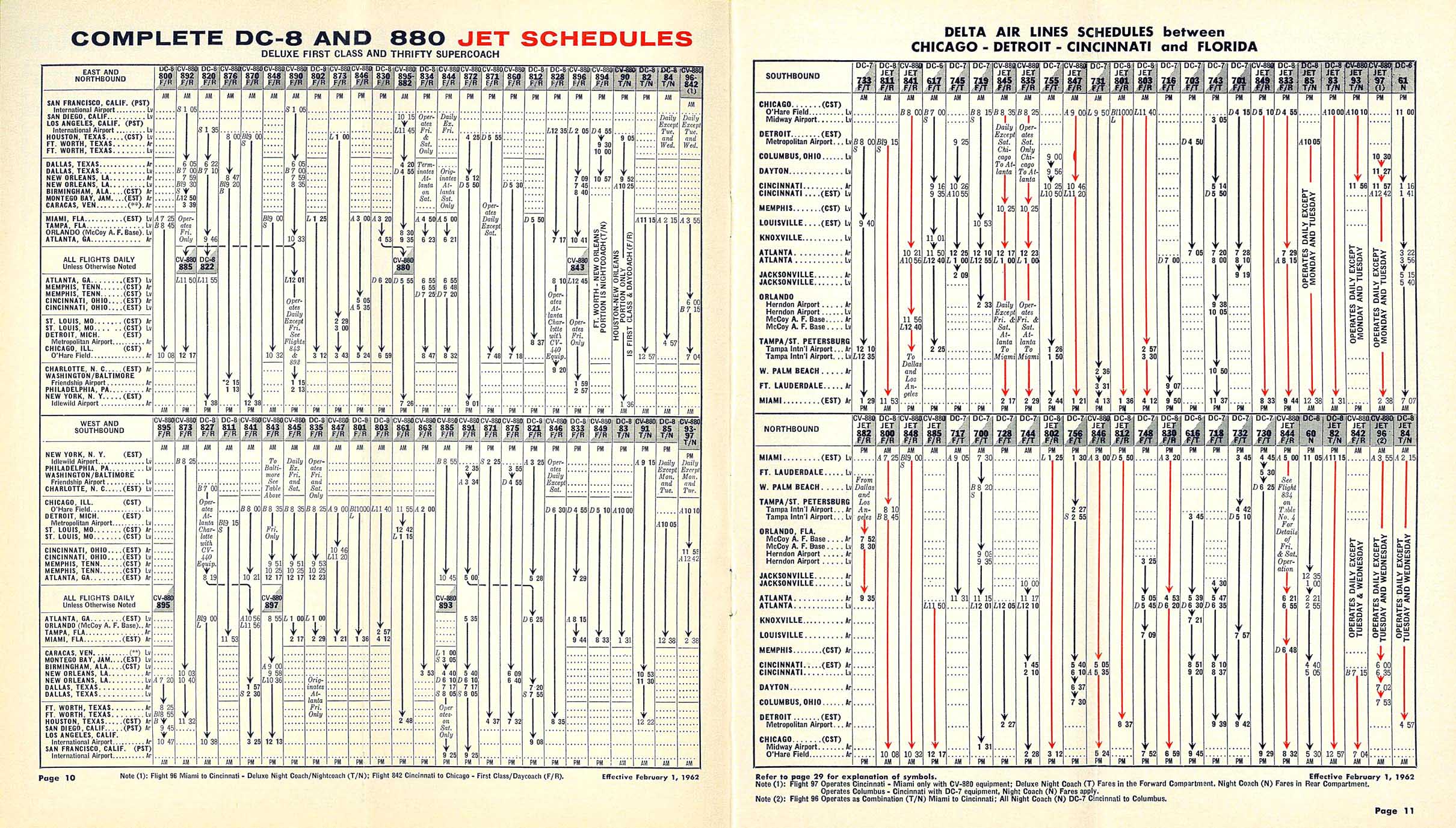

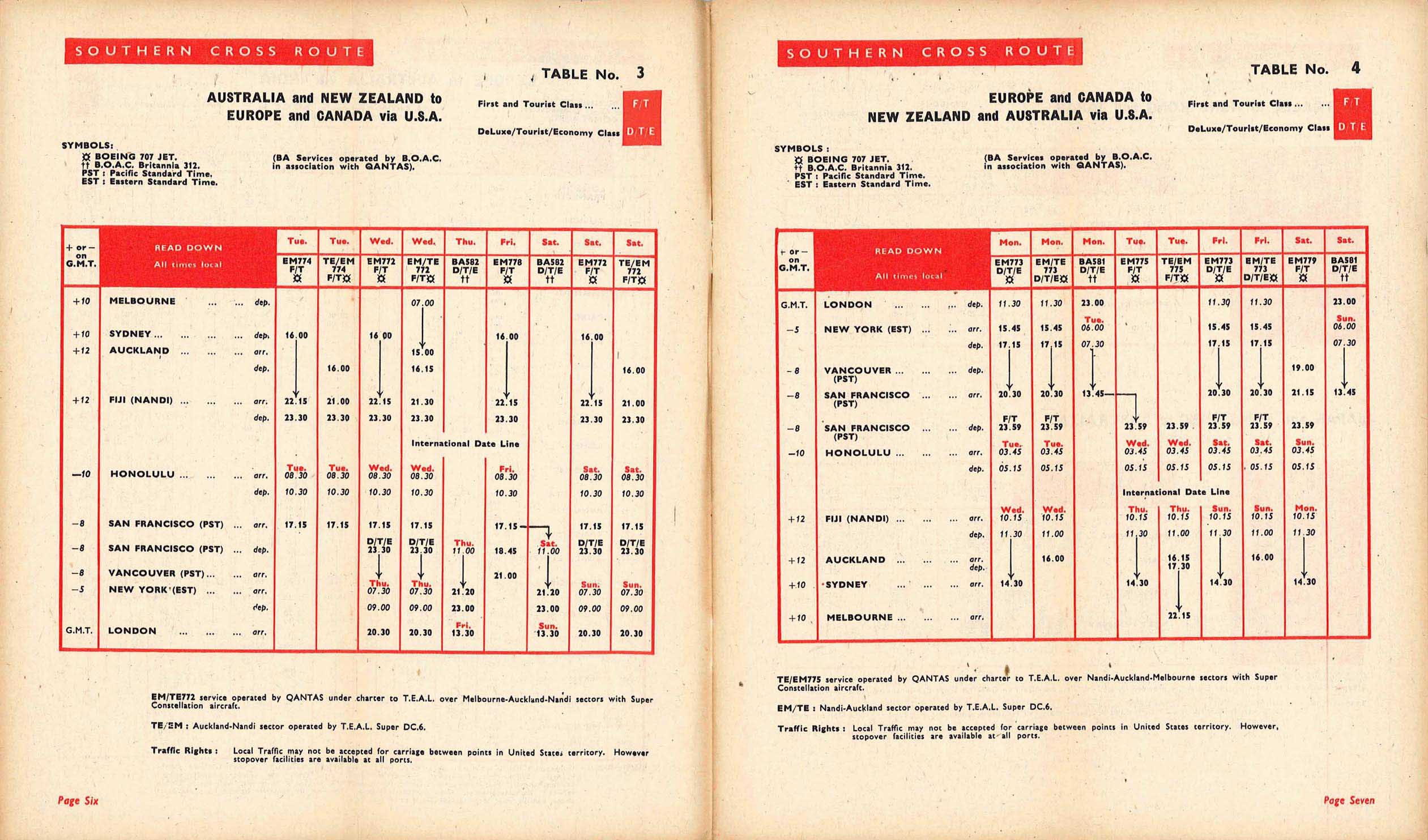
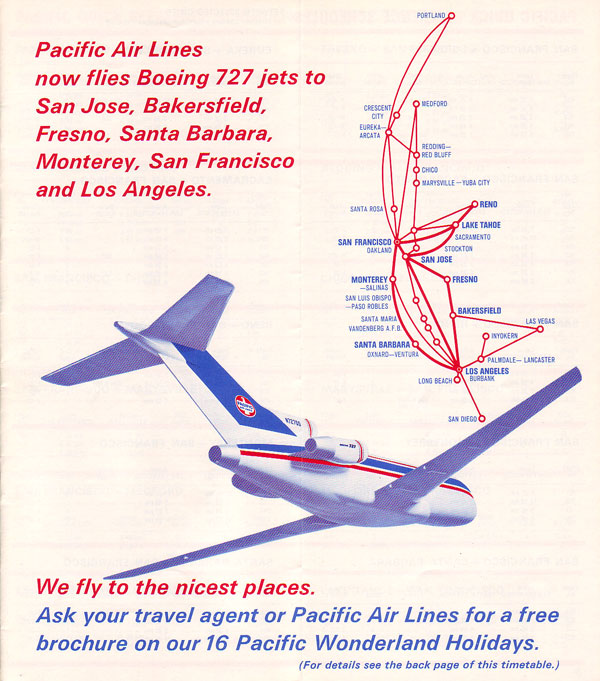


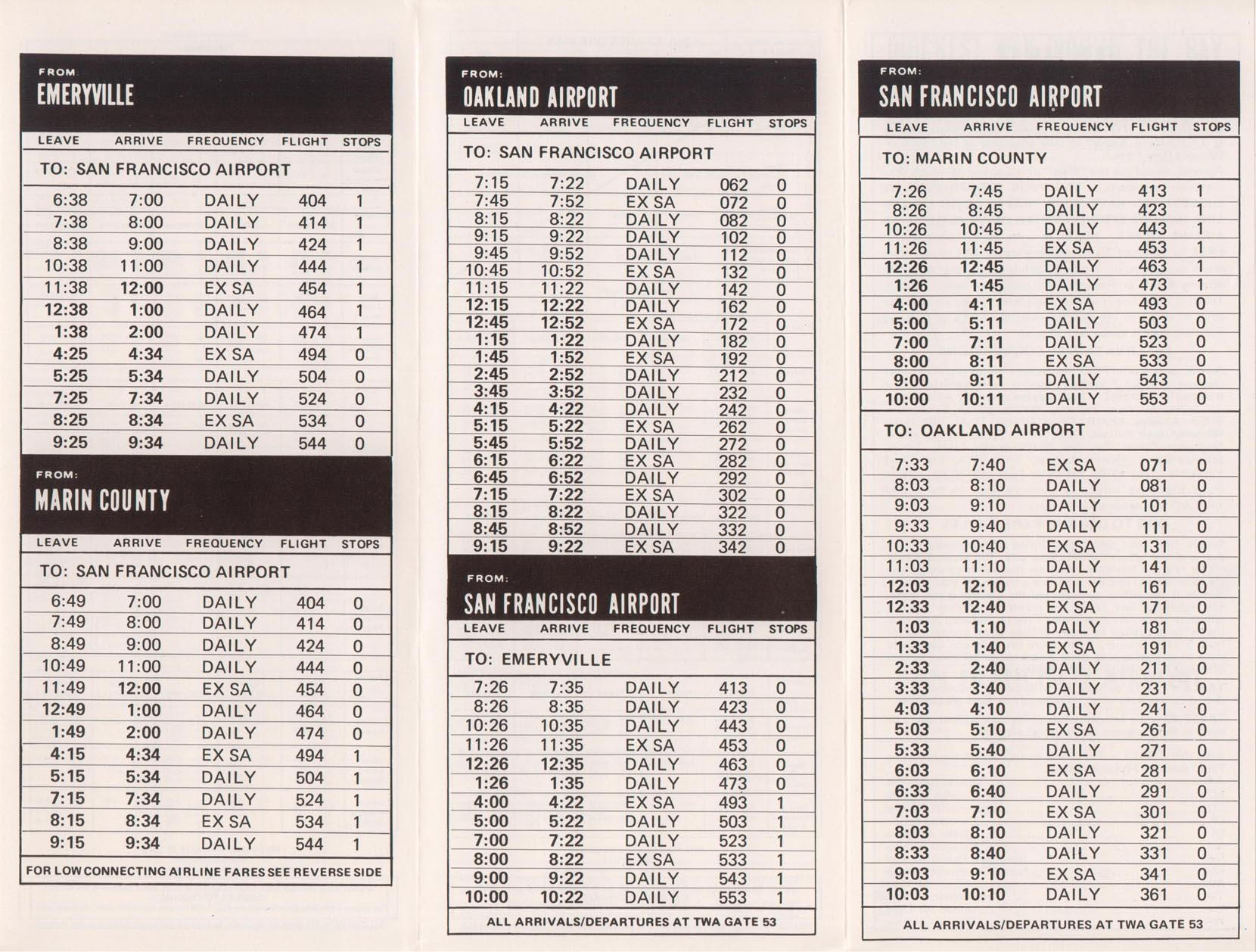
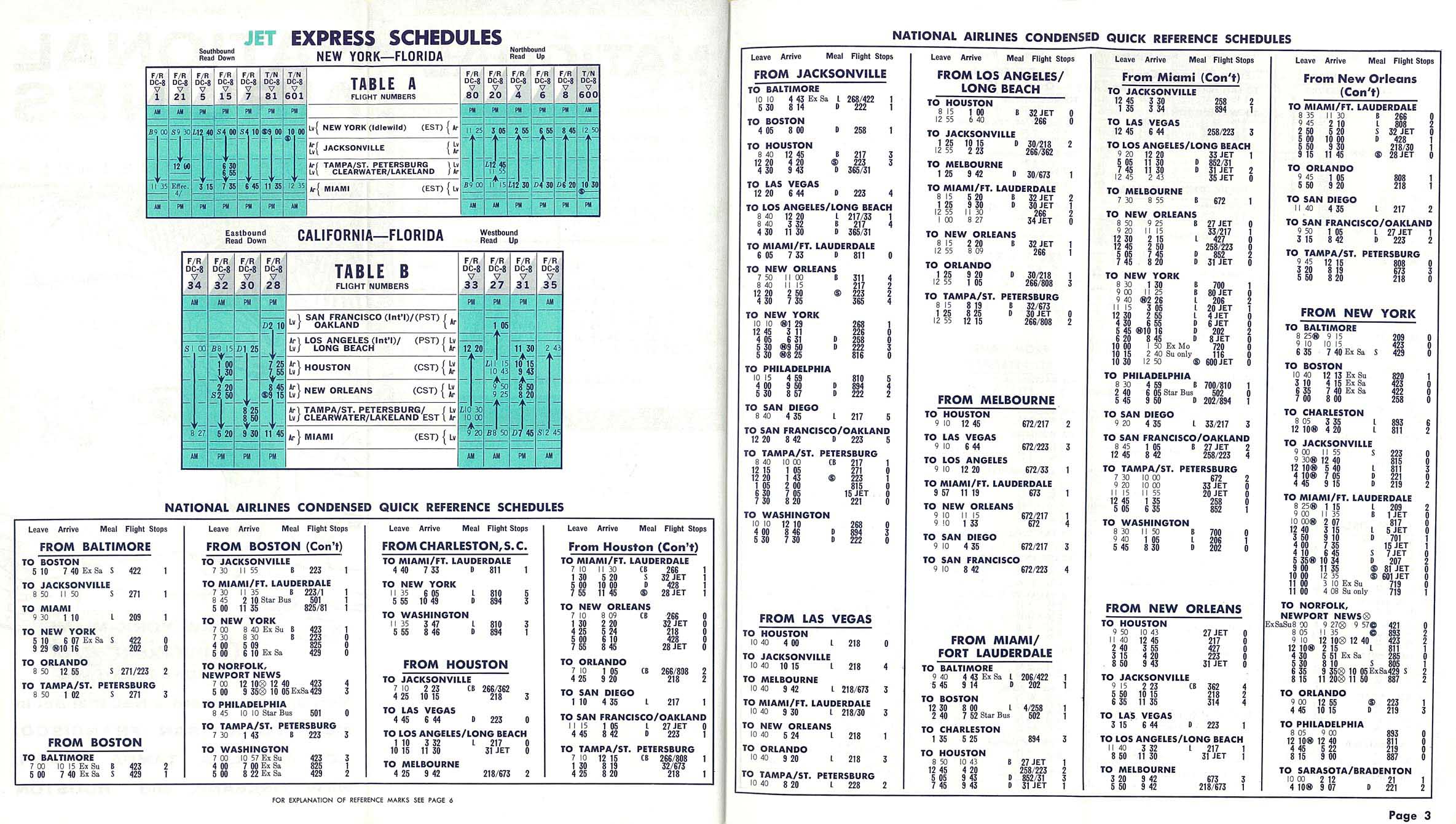
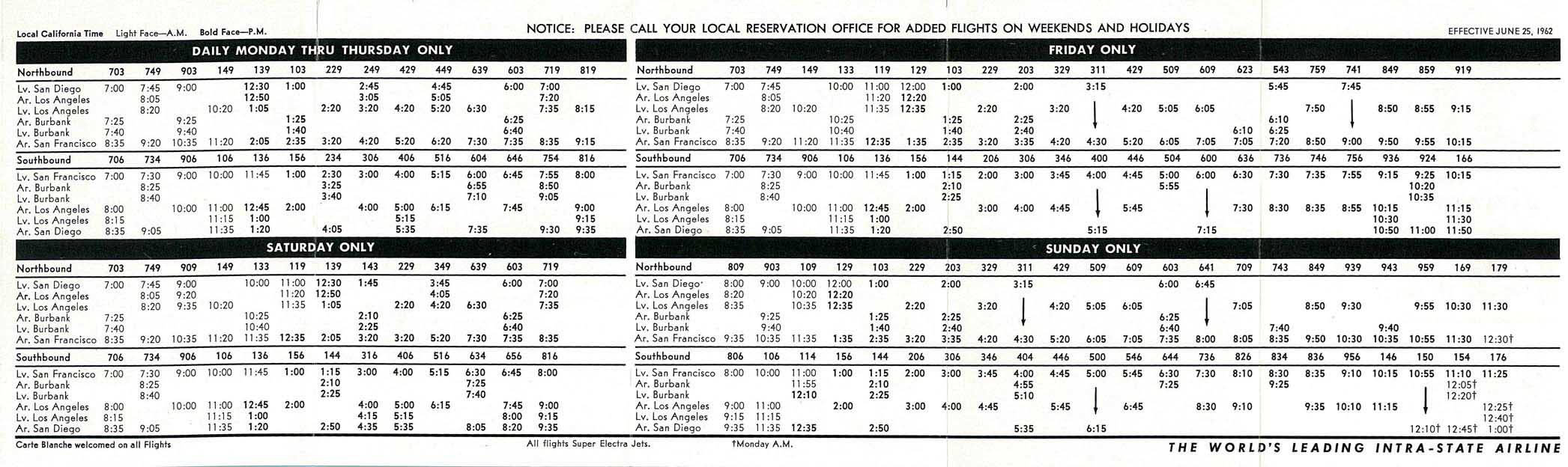


This article was imported from Wikipedia and is available under the Creative Commons Attribution-ShareAlike 4.0 License. Content has been adapted to SurfDoc format. Original contributors can be found on the article history page.
Ask Mako anything about San Francisco International Airport — get instant answers, deeper analysis, and related topics.
Research with MakoFree with your Surf account
Create a free account to save articles, ask Mako questions, and organize your research.
Sign up freeThis content may have been generated or modified by AI. CloudSurf Software LLC is not responsible for the accuracy, completeness, or reliability of AI-generated content. Always verify important information from primary sources.
Report