From Surf Wiki (app.surf) — the open knowledge base
Samuel Way
Australian politician
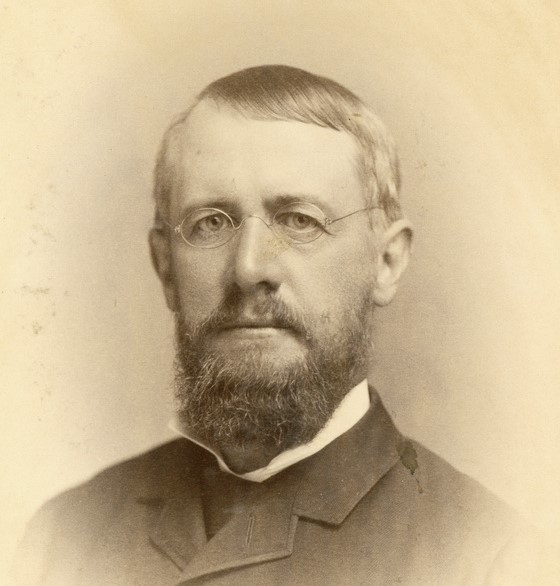
Australian politician
| Field | Value |
|---|---|
| honorific-prefix | The Right Honourable |
| name | Sir Samuel Way |
| honorific-suffix | |
| image | Samuel James Way 2.jpeg |
| office | Chief Justice of South Australia |
| term_start | 18 March 1876 |
| term_end | 8 January 1916 |
| predecessor | Sir Richard Hanson |
| successor | Sir George Murray |
| office1 | Administrator of South Australia |
| term_start1 | 17 July 1902 |
| term_end1 | 30 June 1903 |
| predecessor1 | Lord Tennyson |
| (as Governor) | |
| successor1 | Sir George Le Hunte |
| (as Governor) | |
| office2 | Attorney-General of South Australia |
| term_start2 | 3 June 1875 |
| term_end2 | 18 March 1876 |
| predecessor2 | Charles Mann |
| successor2 | Henry Gawler |
| premier2 | James Boucaut |
| constituency_MP4 | Sturt |
| parliament4 | South Australian |
| term_start4 | 10 February 1875 |
| term_end4 | 20 March 1876 |
| predecessor4 | William Mair |
| successor4 | Thomas King |
| birth_date | |
| birth_place | Portsmouth, Hampshire, England |
| death_date | |
| death_place | North Adelaide, South Australia |
| father | Reverend James Way |
|honorific-prefix = The Right Honourable |honorific-suffix = (as Governor) (as Governor)
Sir Samuel James Way, 1st Baronet, (11 April 1836 – 8 January 1916) was an English-Australian jurist who served as Chief Justice of the Supreme Court of South Australia from 18 March 1876 until 8 January 1916.
Background
Legal and judicial career
On 25 March 1861, Way was admitted to the South Australian Bar to practice law, and when Atkinson died shortly afterwards, Way inherited his practice. Way practised as a barrister and quickly became a leader among the legal community, and in 1868 joined a partnership with another barrister, James Brook. In September 1871, Way was made a Queen's Counsel, despite having been admitted to the bar only ten years earlier. When Brook died in 1872, a young Josiah Symon joined Way as partner. Way continued to be highly successful, travelling to London to argue a number of cases before the Judicial Committee of the Privy Council. In 1874, Way was elected as a member of the council of the University of Adelaide, and was also appointed to the South Australian Board of Education.
In 1875, Way was elected to the South Australian House of Assembly as the member for Sturt, and on 3 June of that year joined the Boucaut government as Attorney-General of South Australia. He was only a politician for a short time, however, since in March 1876, at the age of just thirty-nine, he was appointed Chief Justice of South Australia following the death of Richard Hanson on 4 March. Since it is the role of the Attorney-General to recommend judicial candidates to the cabinet, it has been suggested that Way probably nominated himself to be Chief Justice. Way soon gained a reputation as an excellent lawyer, and it has been said that none of his decisions were ever successfully appealed to a higher court. Later in 1876 he was appointed as the vice-chancellor of the University of Adelaide, and in 1883 became the chancellor, a position he would hold until his death.

In 1877, Way was called upon to act as acting Governor of South Australia. In January 1891 he was appointed to the position of Lieutenant-Governor of South Australia, a position subordinate to the state Governor. In January 1897, Way became the first Australian to be appointed to the Judicial Committee of the Privy Council and was sworn into the position in Westminster on 18 May 1897, and gaining the title The Right Honourable.
In 1899 he was created a Baronet, of Montefiore, North Adelaide, and Kadlunga Mintaro, both in the Colony of South Australia.
In 1902, when Lord Tennyson vacated the role of Governor of South Australia to assume the role of Governor-General of Australia, Way was commissioned as Administrator of South Australia, and remained in that role until 1903.
In October 1905, it was Way who publicly pronounced that Catherine Helen Spence, writer and suffragist, social worker and feminist was the most distinguished woman in Australia.
Way was a Freemason and Grand Master of the Grand Lodge of South Australia and Northern Territory from 1884 to 1916, apart from the period 1889–95 when the position was occupied by the Governor, the Earl of Kintore.
Personal life
Way married Mrs. Katherine Gollan Blue (née Gordon) on 11 April 1898. She was the widow of Dr. William Archibald Sinclair Blue (died 18 September 1896) of Strathalbyn. The time and whereabouts of the wedding, which was the subject of great public interest, were a closely kept secret until well after the event.
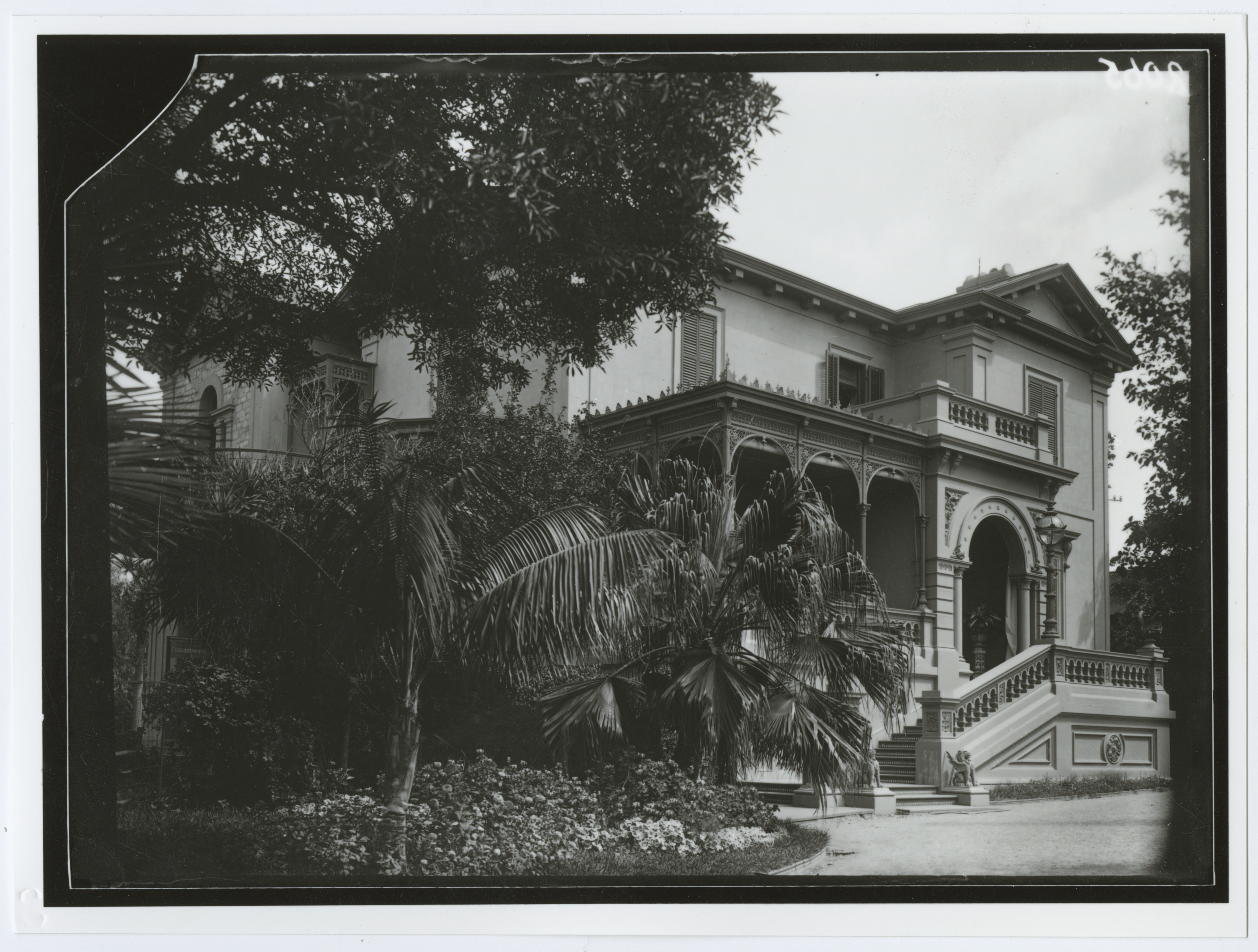
Way became ill in 1914, and was diagnosed with cancer. He travelled to Sydney to have his arm amputated, in an attempt to delay the cancer. The operation failed to prevent his health from deteriorating, but he continued his work as Chief Justice until December 1915. He died early the following year in North Adelaide.
Recognition==

The baronetcy became extinct on his death. The geological feature Mount Sir Samuel and the town of Sir Samuel in the Goldfields region of Western Australia were named after him.
A statue was unveiled on 17 November 1924, located on North Terrace, Adelaide, in front of the University of Adelaide.
The Sir Samuel Way Building on Victoria Square, Adelaide, was originally a major retail outlet for Charles Moore and Co. In 1983 it was sold to the state government and was named after him.
References
Bibliography
- Hannan, A. J., C. M. G., Q. C., The Life of Chief Justice Way, Angus and Robertson, Sydney, 1960.
- Emerson, Dr. John, First Among Equals, University of Adelaide Barr Smith Press, Adelaide, 2004, pp 11–56.
|-
References
- (18 November 1924). "A Distinguished Citizen". [[The Register (Adelaide).
- (20 July 1954). "Out Among the People". [[The Advertiser (Adelaide).
- {{Cite SA-parl
- "Our first Grand Master, Bro Samuel J Way". Freemasons South Australia and Northern Territory.
- {{Dictionary of Australian Biography
- Bray, J. J.. (1990). "Way, Sir Samuel James (1836–1916)".
- (25 May 1897). "Edinburgh Gazette". Edinburgh Gazette.
- {{London Gazette. (16 March 1900)
- (17 July 1902). "PROCLAMATION BY THE LIEUTENANT - GOVERNOR NOTIFYING ASSUMPTION OF OFFICE AS ADMINISTRATOR.". The South Australian Government Gazette.
- (29 March 2020). "The Scot who was lauded as the Grand Old Woman of Australia …".
- [http://www.santfreemasons.org.au/content/past-grand-masters Past Grand Masters of The Grand Lodge of South Australia and Northern Territory] Retrieved 4 May 2015.
- (11 April 1898). "Marriage of the Chief Justice". [[South Australian Register]].
- (24 September 1896). "Family Notices.". [[Southern Argus]].
- (14 April 1898). "Fair and Unfair". [[Quiz and the Lantern]].
This article was imported from Wikipedia and is available under the Creative Commons Attribution-ShareAlike 4.0 License. Content has been adapted to SurfDoc format. Original contributors can be found on the article history page.
Ask Mako anything about Samuel Way — get instant answers, deeper analysis, and related topics.
Research with MakoFree with your Surf account
Create a free account to save articles, ask Mako questions, and organize your research.
Sign up freeThis content may have been generated or modified by AI. CloudSurf Software LLC is not responsible for the accuracy, completeness, or reliability of AI-generated content. Always verify important information from primary sources.
Report