From Surf Wiki (app.surf) — the open knowledge base
Samuel Kamakau
Hawaiian historian (1815–1876)
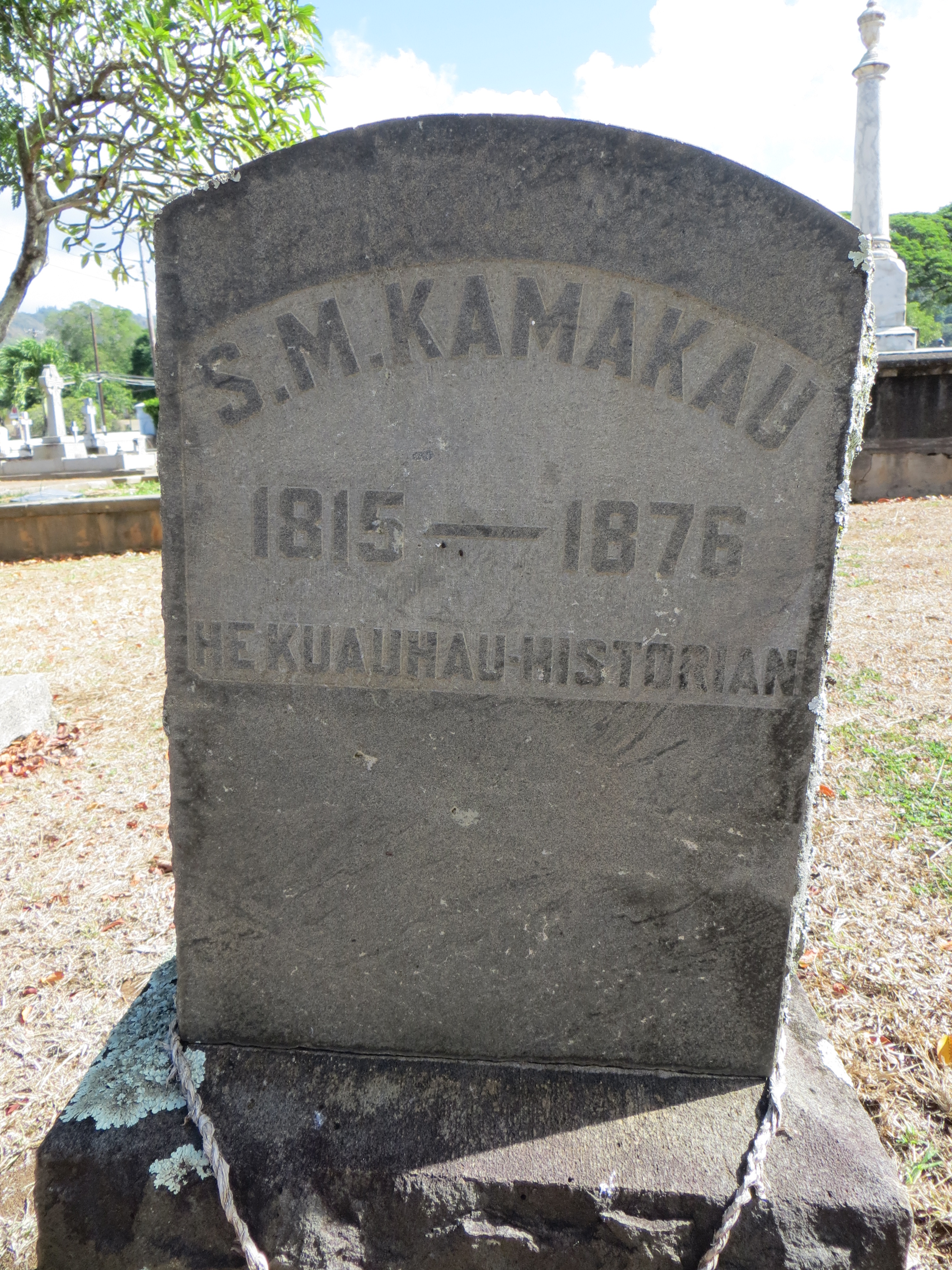
Hawaiian historian (1815–1876)
| Field | Value |
|---|---|
| name | Samuel Mānaiakalani Kamakau |
| image | Samuel Kamakau.png |
| image_size | 180px |
| birth_date | October 29, 1815 |
| birth_place | Mokulēia, Oahu, Kingdom of Hawaii |
| death_date | September 5, 1876 (aged 60) |
| death_place | Honolulu, Oahu, Hawaii |
| spouse | Hainakolo |
| children | Kukelani Kaaapookalani |
| occupation | Historian, Teacher, Writer |
Samuel Mānaiakalani Kamakau (October 29, 1815 – September 5, 1876) was a Hawaiian historian and scholar. His work appeared in local newspapers and was later compiled into books, becoming an invaluable resource on the Hawaiian people, Hawaiian culture, and Hawaiian language while they were disappearing.
Along with David Malo and John Papa ʻĪʻī, Kamakau is considered one of Hawaii's greatest historians, and his contributions to the preservation of Hawaiian history have been honored throughout the State of Hawaii.
Life
| access-date = November 29, 2008
A society was started at Lahainaluna according to the desire of the teachers. As the people of Alebione (Albion) had their British history and read about the Saxons and William, so the Hawaiians should read their history...The King said he thought the history of all the islands should be preserved from first to last.{{cite conference | book-title = Annual Report of the Hawaiian Historical Society | access-date = December 3, 2008 }}
Known as the Royal Hawaiian Historical Society, members included King Kamehameha III, John Young, Timothy Haalilio, David Malo, Dwight Baldwin, William Richards, Sheldon Dibble, Kamakau and others. Elected officials included president Kamehameha III, vice-president William Richards, secretary Sheldon Dibble, and treasurer Samuel Kamakau.
Kamakau married S. Hainakolo and moved to his wife's hometown of Kīpahulu. Their daughter, Kukelani Kaaapookalani, was born in December 1862, after which the couple moved to Oahu.{{cite web | archive-url = https://web.archive.org/web/20150216042636/http://www.bishopmuseum.org/press/authors.html | archive-date = 2015-02-16 | url-status = dead
In 1860 Kamakau converted to Roman Catholicism from Congregational Protestantism.
From 1866 to 1871, Kamakau wrote a series of newspaper articles about Hawaiian culture and history: "Ka Moolelo o Kamehameha I", a history of Kamehameha I; "Ka Moolelo o Nā Kamehameha", a history of the House of Kamehameha; and "Ka Moolelo Hawaii", a history of Hawaii. The articles were published in the Hawaiian language newspapers, Ke Au Okoa and Ka Nūpepa Kūokoa. Kamakau has served as a district judge in Wailuku, Maui and was a legislator for the Hawaiian Kingdom. He died at his home in Honolulu on September 5, 1876, and was buried in the Maemae Chapel Cemetery in Nuuanu Valley.{{cite conference | book-title = Annual Report of the Hawaiian Historical Society | access-date = December 30, 2009
Legacy
On October 29, 1994, the Hawaii & Pacific Section in the Hawaii State Library was named the "Samuel Manaiakalani Kamakau Room" in honor of Kamakau's legacy as a "great Hawaiian historian who also served his community as an outstanding writer, scholar, jurist, and legislator."{{cite web | access-date = December 3, 2008 | access-date = December 3, 2008
In 2005, the Hawaii State Legislature passed H.R. No. 55, declaring October 29, 2005 "Samuel Manaiakalani Kamakau Day":{{cite web | access-date = December 3, 2008
WHEREAS, SAMUEL MANAIAKALANI KAMAKAU, born October 29, 1815, in Mokuleia, Waialua, Oahu, has been noted by many as one of Hawaii's greatest historians of Hawaiian culture and heritage; and
WHEREAS, as a noted writer, SAMUEL MANAIAKALANI KAMAKAU authored books in Hawaiian that would later be translated by esteemed organizations such as the Bishop Museum and Kamehameha Schools, for future generations to learn from; and
WHEREAS, by his actions and through his passion for accurately recording native Hawaiian history, SAMUEL MANAIAKALANI KAMAKAU teaches our keiki, both Hawaiian and non-Hawaiian, what life was like as a Hawaiian, and thereby preserves for posterity, the legacy of a storied people; and
WHEREAS, along with maintaining a record of Hawaiian history, SAMUEL MANAIAKALANI KAMAKAU through his birth and affiliation with Waialua, solidifies Waialua's position as a stronghold for Hawaiian culture; now, therefore,
BE IT RESOLVED by the House of Representatives of the Twenty-third Legislature of the State of Hawaii, Regular Session of 2005, that this body commemorates SAMUEL MANAIAKALANI KAMAKAU's contributions to memorializing Hawaiian history by proclaiming October 29, 2005, as SAMUEL MANAIAKALANI KAMAKAU Day.{{cite web | access-date = December 3, 2008 }}
Works
In 1961, the Kamehameha Schools Press published Kamakau's first two series as a book entitled Ruling Chiefs of Hawaii. Three years later, in 1964, the Bishop Museum Press published his last series as a trilogy, entitled Ka Poe Kahiko: The People of Old, The Works of the People of Old: Nā Hana A Ka Poe Kahiko, and Tales and Traditions of the People of Old: Nā Moolelo A Ka Poe Kahiko. A revised edition of Ruling Chiefs of Hawaii was published in 1992.
A new compilation book of history articles written for Ka Nūpepa Kūʻokoʻa from October 1866 to February 1868 was released with new English translations by Puakea Nogelmeier in 2022 by Awaiaulu under the title Ke Kumu Aupuni: The Foundation of Hawaiian Nationhood. An exhibition of materials associated with this project was also made in the Honolulu Museum of Art from February to August 2024.
References
References
- Kubota, Gary T.. (July 23, 2007). "Hawaii history fills Maui's Bailey House". [[Honolulu Star-Bulletin]].
- "Ulukau: Ruling chiefs of Hawaii".
- Wilson, Rob. (2009). "Be Always Converting, be Always Converted: An American Poetics". Harvard University Press.
- "Kamakau, S. M. office record". state of Hawaii.
- Kamakau, Samuel. (1992). "Ruling Chiefs of Hawaii". [[Kamehameha Schools]] Press.
- (13 December 2022). "Ke Kumu Aupuni: The Foundation of Hawaiian Nationhood". Awaiaulu.
- "Ke Kumu Aupuni: The Foundation of Hawaiian Nationhood". Honolulu Museum of Art.

This article was imported from Wikipedia and is available under the Creative Commons Attribution-ShareAlike 4.0 License. Content has been adapted to SurfDoc format. Original contributors can be found on the article history page.
Ask Mako anything about Samuel Kamakau — get instant answers, deeper analysis, and related topics.
Research with MakoFree with your Surf account
Create a free account to save articles, ask Mako questions, and organize your research.
Sign up freeThis content may have been generated or modified by AI. CloudSurf Software LLC is not responsible for the accuracy, completeness, or reliability of AI-generated content. Always verify important information from primary sources.
Report