From Surf Wiki (app.surf) — the open knowledge base
Sampling (medicine)
Collection of bodily substances for medical assessment
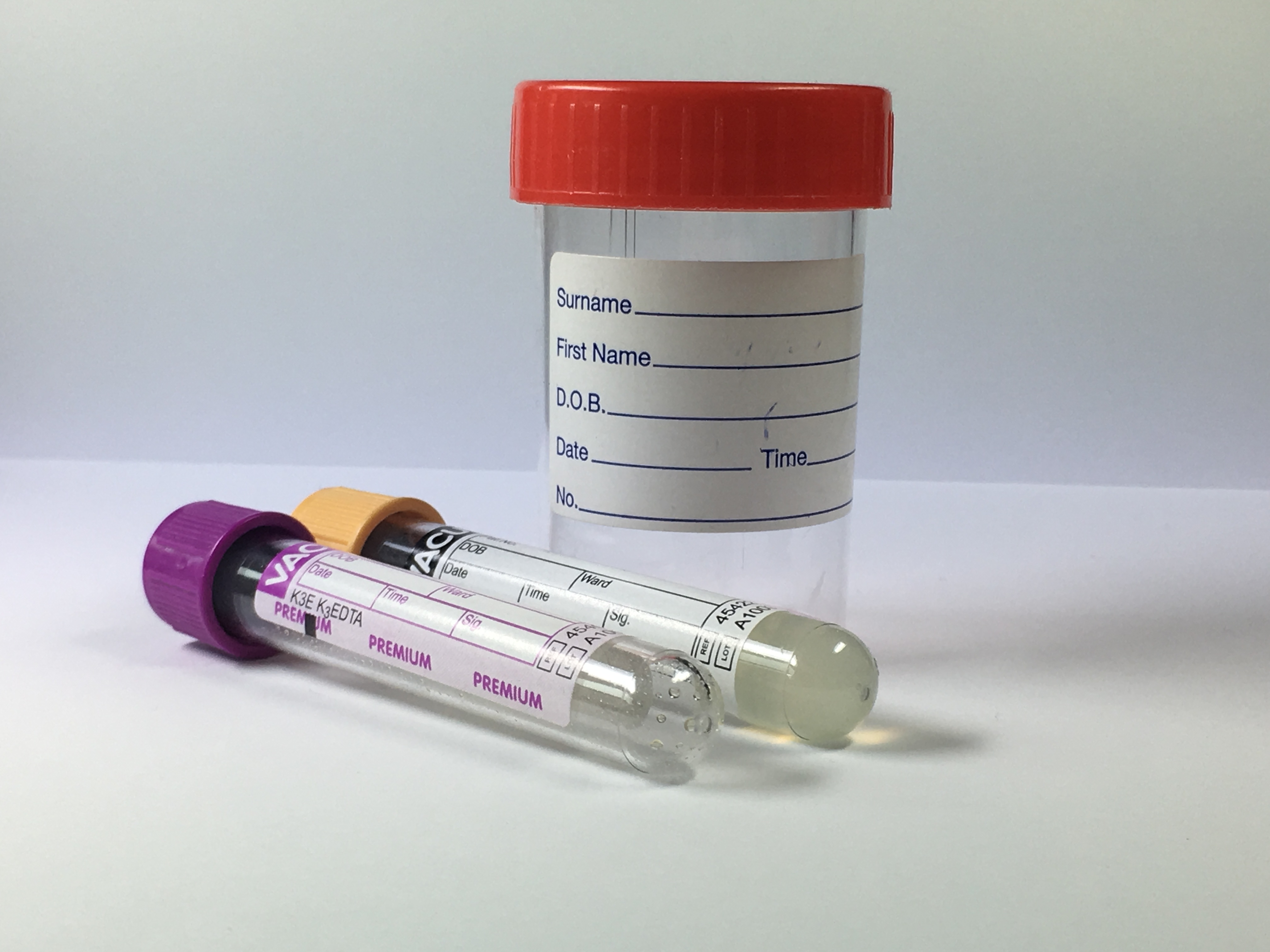
Collection of bodily substances for medical assessment
In medicine, sampling is gathering of matter from the body to aid in the process of a medical diagnosis and/or evaluation of an indication for treatment, further medical tests or other procedures. In this sense, the sample is the gathered matter, and the sampling tool or sampler is the person or material to collect the sample.
Sampling is a prerequisite for many medical tests, but generally not for medical history, physical examination and radiologic tests.
By sampling technique
- Obtaining excretions or materials that leave the body anyway, such as urine, stool, sputum, or vomitus, by direct collection as they exit. A sample of saliva can also be collected from the mouth.
- Excision (cutting out), a surgical method for the removal of solid or soft tissue samples.
- aspirationPuncture (also called centesis) followed by aspiration is the main method used for sampling of many types of tissues and body fluids. Examples are thoracocentesis to sample pleural fluid, and amniocentesis to sample amniotic fluid. The main method of centesis, in turn, is fine needle aspiration, but there are also somewhat differently designed needles, such as for bone marrow aspiration. Puncture without aspiration may suffice in, for example, capillary blood sampling.
- Scraping or swiping. In a Pap test, cells are scraped off a uterine cervix with a special spatula and brush or a special broom device that is inserted through a vagina without having to puncture any tissue. Epithelial cells for DNA testing can be obtained by swiping the inside of a cheek in a mouth with a swab.
Biopsy or cytopathology
In terms of sampling technique, a biopsy generally refers to a preparation where the normal tissue structure is preserved, availing for examination of both individual cells and their organization for the study of histology, while a sample for cytopathology is prepared primarily for the examination of individual cells, not necessarily preserving the tissue structure. Examples of biopsy procedures are bone marrow biopsy, brain biopsy, skin biopsy and liver biopsy.
By sampled matter
Different types of matter that are sampled can be categorized by solidness versus fluidity, such as:
- Solid tissue, such as in bone marrow biopsy
- Soft tissue, such as in a muscle biopsy
- Body fluids such as blood
Body fluid sampling
Body fluid sampling includes:
- blood Blood sampling for any blood test, including:
- Arterial blood sampling, such as by radial artery puncture. This can be done for arterial blood gas analysis.
- Capillary blood sampling, generally by using a blood lancet for puncture, followed by sampling by capillary action with a test strip or small pipe. This is common for routine diabetic monitoring for glucose.
- Venous blood sampling, also called phlebotomy. It is generally done by venipuncture (which can also be used for intravenous therapy). Other than routine diabetic monitoring for glucose, the majority of blood tests are done on samples of venous blood taken by a health professional, including phlebotomists who are specifically trained in venipuncture. Such samples are commonly collected in capped test tubes, often with a small amount of some sort of preservative.
- Cerebrospinal fluid sampling, generally by lumbar puncture
- Pleural fluid sampling, generally by thoracocentesis
- Amniotic fluid sampling, generally by amniocentesis
- Peritoneal fluid sampling, generally by peritoneocentesis (also called laparocentesis). It can be used for cytology to detect spread of gynecologic cancers.
By component of interest
.jpg)
The sampled matter can be analyzed for various components, for example:
- Electrolytes
- Proteins
- cells, such as white blood cells in blood sampling
- Microbiological agents, such as bacteria or fungi
Microbiological sampling
Microbiological sampling include:
- Blood sampling for blood cultures, performed similarly as that for tests on the fluid itself above
- swabThroat swab for throat culture. It is performed by applying a cotton swab to the surface of the throat.
- brushSampling of sputum from the lungs for sputum culture. It can be performed by special techniques of coughing, or by a protected specimen brush (PSB),{{Cite journal | doi-broken-date = 12 July 2025
References
This article was imported from Wikipedia and is available under the Creative Commons Attribution-ShareAlike 4.0 License. Content has been adapted to SurfDoc format. Original contributors can be found on the article history page.
Ask Mako anything about Sampling (medicine) — get instant answers, deeper analysis, and related topics.
Research with MakoFree with your Surf account
Create a free account to save articles, ask Mako questions, and organize your research.
Sign up freeThis content may have been generated or modified by AI. CloudSurf Software LLC is not responsible for the accuracy, completeness, or reliability of AI-generated content. Always verify important information from primary sources.
Report