From Surf Wiki (app.surf) — the open knowledge base
Sammelband
Book constructed from various separate works or manuscripts
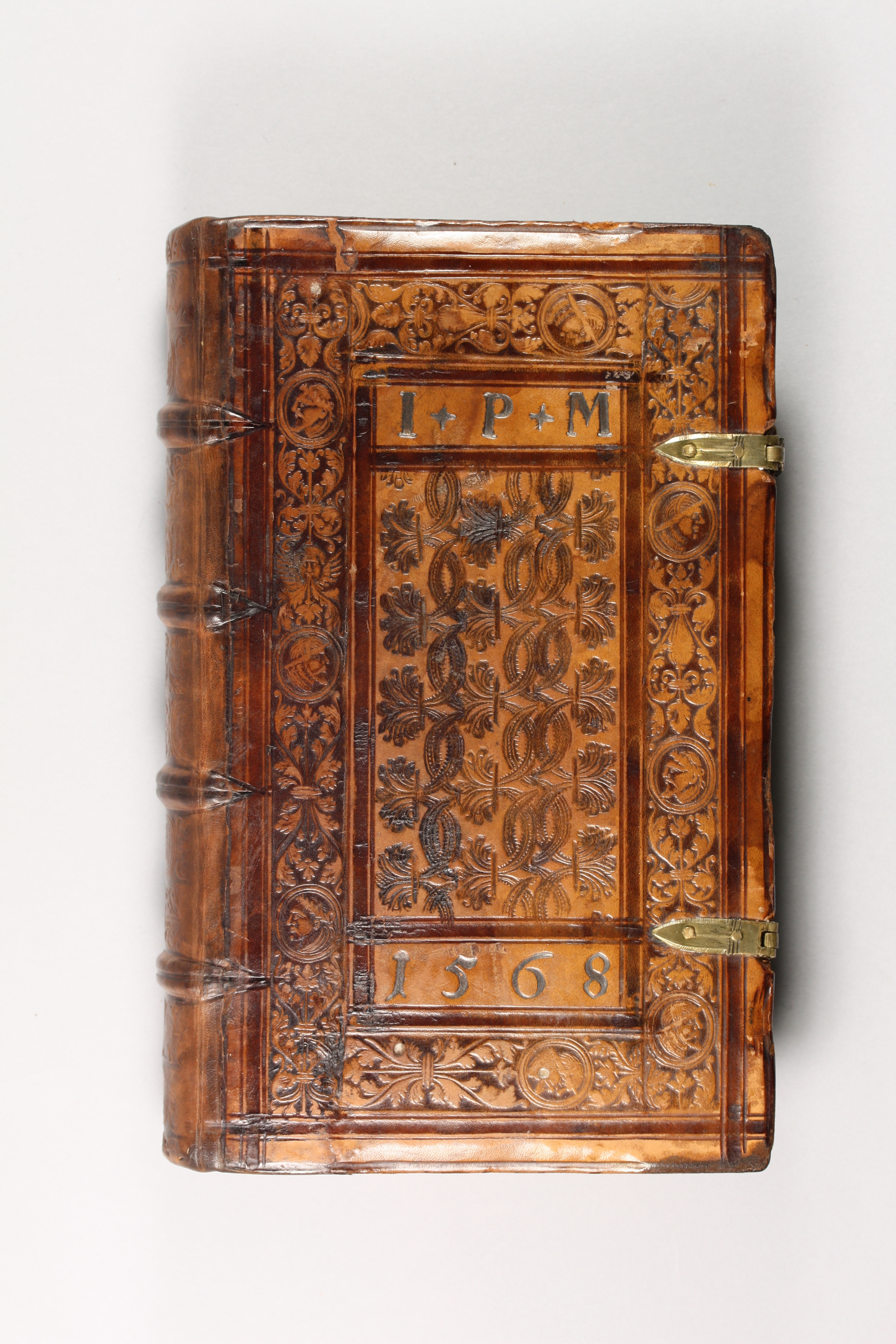
Book constructed from various separate works or manuscripts
Sammelband (; , plural Sammelbände, or Sammelbands, ), or sometimes nonce-volume, is a book comprising a number of separately printed or manuscript works that are subsequently bound together.
In the German language as used in science and humanities, Sammelband refers to an edited volume.
Sammelbände and William Caxton
William Caxton appeared to follow the established manuscript tradition of producing booklets or fascicles of individual works or groups of works that would later be bought together for a patron or buyer.
Nearly forty of these tract volumes have been reconstructed from the evidence of now separately bound parts. They indicate the nature of early readership of Caxton’s work, and they also allow historians to infer something about Caxton’s own sense of his projects.
Perhaps most famous and extensive of his sammelbände work was the collection made out of Caxton's 1476-8 productions, known since the time of Caxton scholar William Blades as “the volume purchased by King George I from the estate of Bishop John Moore in 1714.” This volume is a compendium of Caxton’s first run of vernacular poetry, and the texts within appear as follows:
::The Book of Cutesye
Sammelbände from the Tudor Period
Modern students of early Tudor literature only rarely encounter extant Sammelbände, most of which were disbound in the nineteenth century.
Yet printed editions of works by (or ascribed to) Geoffrey Chaucer, John Lydgate, Richard Rolle, Margery Kempe, Stephen Hawes, John Skelton, and writers involved in Tudor religious controversy from John Wycliffe to William Tyndale may all be traced to such composite volumes.
Effects on literature
In Caxton’s case specifically, he presents a Lydgatenized Chaucer, even to the point of giving the Parliament of Fowls a unique new title, The Temple of Brass, to follow Lydgate’s Temple of Glas. It is a testimony both to Caxton’s understanding of vernacular poetry and to the tastes of his clientele. It is a volume centered on a particular publishing event, a volume that contains not only the key texts by canonical authors, but the critical instruction for their understanding: The Book of Curtesye.
Generally, the creation of sammelbände can have various effects on the readership of texts. It offers people a larger framework for the understanding of texts within the volumes; these volumes also used prologues and epilogues in order to provide a further framework for readership. These explanatory additions and the use of advertisements, such as Caxton’s “new and improved edition” of The Canterbury Tales shows the movement away from privileged, aristocratic readership towards the readership of the middle class, solidifying printing as a business and a social progression.
References
References
- ALA ACLR RBMS BSC. [https://rbms.info/vocabularies/provenance/tr106.htm Provenance Evidence Terms]
- Beal, Peter. ''A Dictionary of English Manuscript Terminology 1450–2000''. Oxford University Press, [http://www.oxfordreference.com/view/10.1093/acref/9780199576128.001.0001/acref-9780199576128-e-0909 online publication 2011].
- Gillespie, Alexandra. Print Culture and the Medieval Author: Chaucer, Lydgate, and Their Books 1473–1557. Oxford English Monographs. Oxford: Oxford University Press, 2006.
- Needham, Paul. The Printer and the Pardoner. From The English Historical Review. Oxford University Press, 1989.
- Blades, William. The Life and Typography of William Caxton, vol. II, pp. 51-2.
- Lerer, Seth. “William Caxton.” From The Cambridge History of Medieval Literature. Cambridge: Cambridge UP, 1999.
This article was imported from Wikipedia and is available under the Creative Commons Attribution-ShareAlike 4.0 License. Content has been adapted to SurfDoc format. Original contributors can be found on the article history page.
Ask Mako anything about Sammelband — get instant answers, deeper analysis, and related topics.
Research with MakoFree with your Surf account
Create a free account to save articles, ask Mako questions, and organize your research.
Sign up freeThis content may have been generated or modified by AI. CloudSurf Software LLC is not responsible for the accuracy, completeness, or reliability of AI-generated content. Always verify important information from primary sources.
Report