From Surf Wiki (app.surf) — the open knowledge base
Samjhauta Express
International train between India and Pakistan
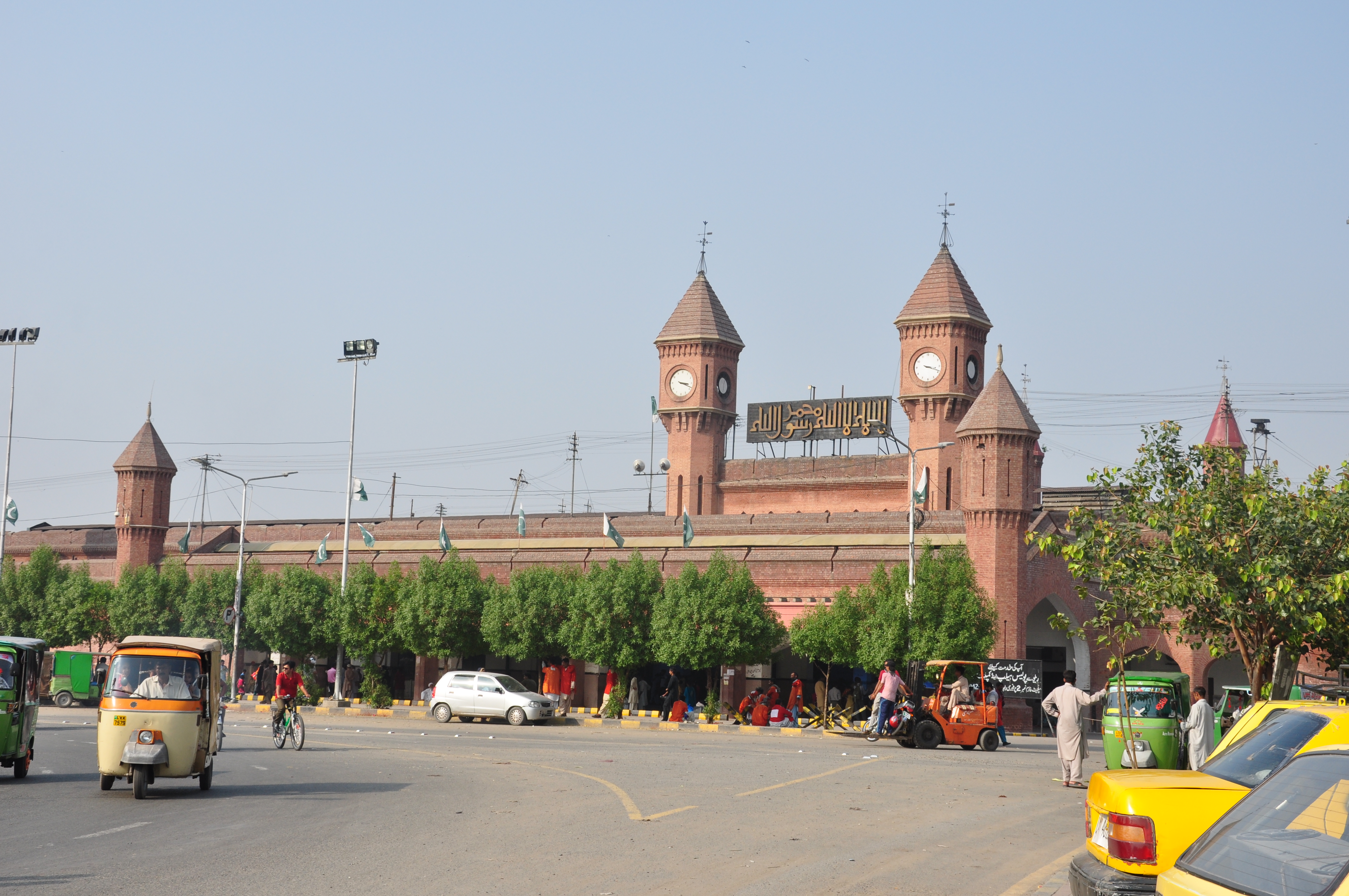
International train between India and Pakistan
| Field | Value |
|---|---|
| box_width | 24em |
| name | Samjhauta Express |
| image | Samjautha Express.JPG |
| image_width | 250px |
| caption | Pakistan Railways rake of the Samjhauta Express |
| type | Inter-city rail |
| locale | India |
| Pakistan | |
| first | |
| last | |
| operator | Indian Railways's Northern Railway Zone |
| Pakistan Railways | |
| start | |
| stops | |
| end | |
| distance | 502 km |
| journeytime | 11 hours, 42 minutes |
| frequency | Bi-weekly |
| gauge | |
| map | |
| map_state | collapsed |
Pakistan Pakistan Railways
.jpg)
The Samjhauta Express () was a twice-weekly train, Thursday and Monday, that ran between Delhi and Attari in India and Lahore in Pakistan. In Hindustani (Hindi-Urdu), the word "समझौता/سمجھوتا" (samjhauta) means an "agreement" or an "accord", especially one arising out of a compromise.
Until the reopening of the Thar Express, this was the only rail connection between the two countries. The train was started on 22 July 1976 following the Simla Agreement and ran between Amritsar and Lahore, a distance of about 50.2 km. Following disturbances in Punjab in the late 1980s, due to security reasons Indian Railways decided to terminate the service at Attari, where customs and immigration clearances take place. On 14 April 2000, in an agreement between Indian Railways and Pakistan Railways (PR), the distance was revised to cover just under three km.
History
An earlier train ran between Amritsar and Lahore and vice versa and carried 8,239 persons from India to Pakistan and 10,360 from Pakistan to India from 28 October 1954 to 30 November 1954.
Samjhauta Express was a daily train when the service started in 1976 and changed to a twice-weekly schedule in 1994. Earlier the rakes were returned to the home country the same day but later in 2000 the rake remained overnight at that location.
The train's first break of service was when it was discontinued on 1 January 2002 in the wake of the terrorist attack on the Indian Parliament on 13 December 2001. Service resumed on 15 January 2004. Service was also suspended following the 27 December 2007, assassination of Benazir Bhutto as a preventive measure to deny militants a "high-value target" that was of great symbolic importance to both India and Pakistan.
On 8 October 2012, police recovered about 100 kg of contraband heroin and more than 500 rounds of bullet ammunition at Wagah border on the train heading for Delhi.
On 28 February 2019, the service was suspended following the 2019 India–Pakistan standoff. A spokesman for the Pakistan Foreign Office said that service was suspended "in view of the prevailing tensions between Pakistan and India" while it was reported that India has suspended the running of the train on its side, due to "drastic decline in occupancy" and "the suspension of services from across the border".
On 8 August 2019, the service was suspended by Pakistan following the revocation of Article 370 in Jammu and Kashmir.
Route
Its termini were Lahore in Pakistan and Delhi in India. The border crossing took place between Wagah in Pakistan and Attari in India. Initially, this was a thorough service with the same rake going all the way between the termini; later the Pakistani rake stopped at Attari at which point passengers had to change trains.
Now there was a train from Delhi to Attari where all passengers alighted for customs and immigration. This train did not have any commercial stops between Delhi and Attari. It is incorrectly referred to as the Samjhauta Express and it is officially known as the Delhi–Attari or Attari–Delhi Express. The actual Samjhauta Express ran from Attari to Lahore, although the passengers were checked at Wagah, the first station on the Pakistani side. The train service was set up with an agreement between Indian Railways (IR) and Pakistan Railways (PR) to alternately use an Indian and a Pakistani rake and locomotive for the train, six months at a time.
The train usually had between four and eight coaches. The rake supplied by Pakistan was usually hauled by an Alco DL-543 class ALU20 diesel locomotive (Lahore shed), with the entire train in the standard dark green livery of PR.
Incidents
2007 bombing
Main article: 2007 Samjhauta Express bombings
In the early hours of 18 February 2007, 70 people (mostly Pakistani civilians and a few Indian military guarding the train) were killed and scores more injured in a terrorist attack on the Delhi–Attari Express. The attack occurred at Diwana station near the Indian city of Panipat, Haryana. Officials found evidence of improvised explosive devices (IEDs) made with RDX, containing fragmentation and flammable material, including three unexploded IEDs. The National Investigation Agency suspected that the blasts were masterminded by Swami Aseemanand, which was dismissed later for lack of evidence.
On 1 July 2009, the US Department of Treasury designated Arif Qasmani of the Lashkar-e Tayyiba as a person involved in terrorism, citing among other things his involvement in the Samjhauta Express bombing.
On 30 December 2010, India's National Investigation Agency claimed that they had solid evidence that Swami Aseemanand was the mastermind behind the blasts. He had taken help from his friend Sandeep Dange, an engineering graduate and has done higher study in physics, and Ramji Kalsangra, an electrician, to build the improvised explosive devices used in the blasts. On 8 January 2011, Aseemanand allegedly confessed the bombing of Samjhauta express, a statement later found to be obtained under duress. Later the Hindu nationalist group RSS (Rashtriya Swayamsevak Sangh) sent a legal notice to CBI (Central Bureau of Investigation) accusing it of deliberately leaking Swami Aseemanand's confession in the media. RSS spokesman Ram Madhav called the investigation maligning of organizations and individuals.
References
References
- "International Rail Connections".
- (15 December 1954). "Lok Sabha Debates". [[Lok Sabha Secretariat]].
- [https://web.archive.org/web/20071231054308/http://www.telegraphindia.com/1071229/jsp/frontpage/story_8722192.jsp The Telegraph - Calcutta (Kolkata). Frontpage. India waits, steps up Pak vigil]
- [https://www.indiatoday.in/india/north/story/rs-505-crore-heroin-drug-seized-from-india-bound-samjhauta-express-118126-2012-10-08 Rs.505 crore drug bust from India-bound Samjhauta Express] Vikas Kahol, Mail Today, Chandigarh, 8 October 2012, indiatoday.intoday.in
- [https://web.archive.org/web/20121113121657/http://daily.bhaskar.com/article/CHD-heroine-worth-rs-505-crore-ammunitions-seized-from-samjhauta-express-3895928-NOR.html Heroine worth R 505 crore, ammunition seized from Samjhauta Express], Chandigarh, 8 October 2012, Dailybhaskar.com
- (28 February 2019). "Samjhota Express operations suspended: FO". Dawn.
- (28 February 2019). "India cancels Samjhauta Express operations on its end, lack of occupancy behind decision". The Times of India.
- (8 August 2019). "Pakistan suspends Samjhauta Express, train stranded at Wagah". Zee News.
- "66 die in 'terror attack' on Samjhauta Express : HindustanTimes.com".
- [http://www.zeenews.com/znnew/articles.asp?aid=355083&sid=NAT Zee News - Passengers recount horror on blast-hit train]
- (2010-12-30). "Direct hand of Aseemanand in Samjhauta blasts: NIA". Hindustan Times.
- "Treasury Targets Al Qaida and Lashkar-E Tayyiba Networks in Pakistan". Treasury.gov.
- Vishwa Mohan. (8 January 2011). "Aseemanand owns up to strike on Mecca Masjid". [[The Times of India]].
- [https://web.archive.org/web/20110928114219/http://articles.timesofindia.indiatimes.com/2011-01-10/india/28378569_1_nia-court-samjhauta-express-blasts-blasts-case Swami Aseemanand 'confessed' under duress] ''Times of India'' – 10 January 2011
- Iyer, Shekhar. (8 January 2011). "Indresh lawyers issue notice to CBI for statement 'leak'". Hindustan Times.
This article was imported from Wikipedia and is available under the Creative Commons Attribution-ShareAlike 4.0 License. Content has been adapted to SurfDoc format. Original contributors can be found on the article history page.
Ask Mako anything about Samjhauta Express — get instant answers, deeper analysis, and related topics.
Research with MakoFree with your Surf account
Create a free account to save articles, ask Mako questions, and organize your research.
Sign up freeThis content may have been generated or modified by AI. CloudSurf Software LLC is not responsible for the accuracy, completeness, or reliability of AI-generated content. Always verify important information from primary sources.
Report