From Surf Wiki (app.surf) — the open knowledge base
Sambuca
Italian anise-flavored liqueur
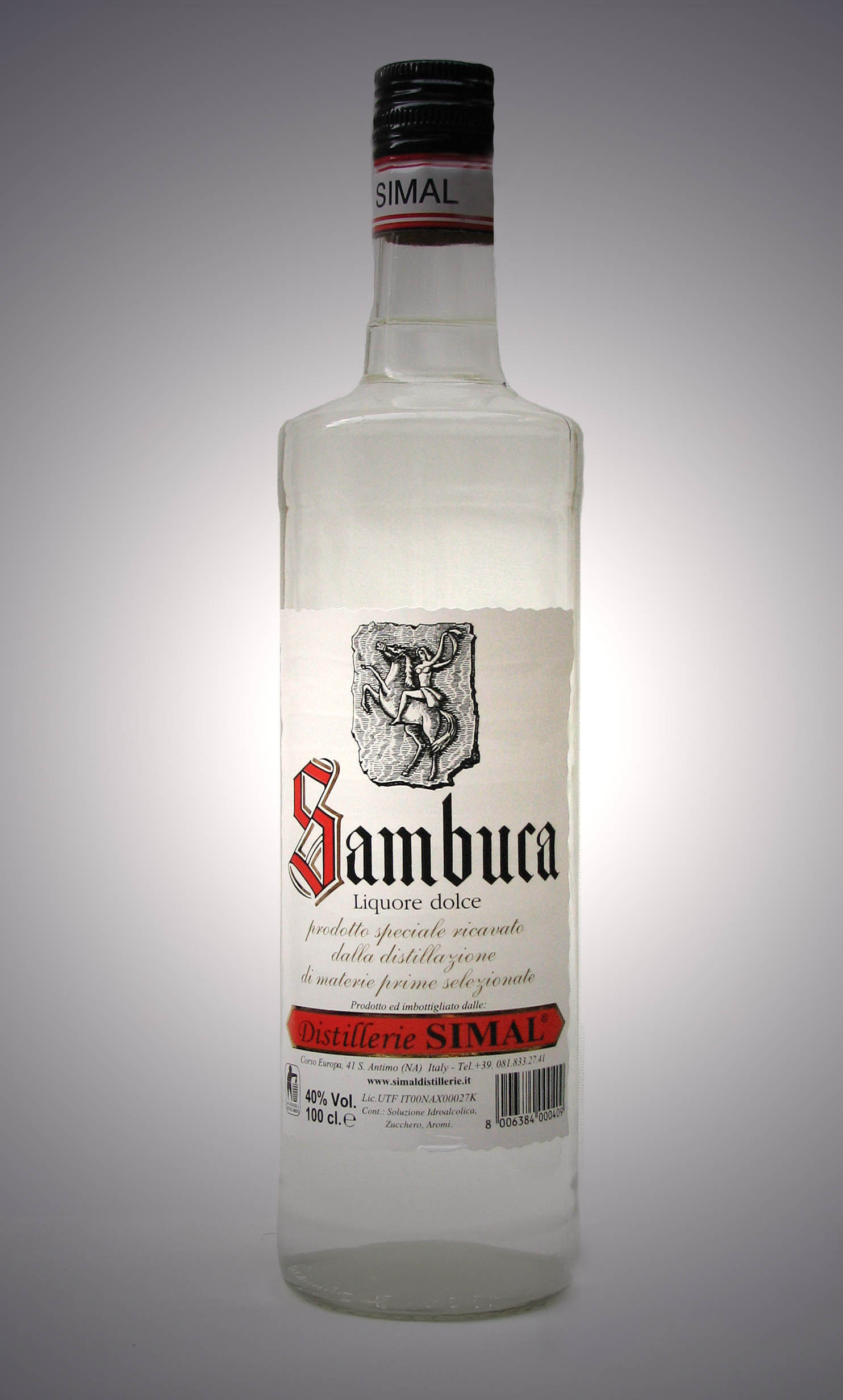
Italian anise-flavored liqueur
an alcoholic drink
Sambuca () is an Italian anise-flavoured liqueur. Its most common variety is often referred to as "white sambuca" to differentiate it from other varieties that are deep blue ("black sambuca") or bright red ("red sambuca"). Like other anise-flavoured liqueurs, the ouzo effect is sometimes observed when combined with water.
Ingredients
Sambuca is flavoured with essential oils obtained from star anise, or less commonly, green anise. Other spices such as elderflower, liquorice and others may be included but are not required as per the legal definition. It is bottled at a minimum of 38% alc/vol. The oils are added to pure alcohol, a concentrated solution of sugar, and other flavours.
History
The term comes from the Latin word sambucus, meaning 'elderberry'. The word sambuca was first used as the name of another elderberry liquor that was created in Civitavecchia around 1850 by Luigi Manzi.
Serving
Sambuca may be served neat. It may also be served on the rocks or with water, resulting in the ouzo effect from the anethole in the anise. Like other anise liqueurs, it may be consumed after coffee as an ammazzacaffè (Italian: "coffee-killer") or added directly to coffee in place of sugar to produce a caffè corretto (Italian: "corrected coffee").
A serving of sambuca can be a shot with seven coffee beans, representing the seven hills of Rome. Likewise, a shot with one coffee bean, called con la mosca, (Italian: "with the fly"), is as common. The traditional serving is with three coffee beans, each representing health, happiness and prosperity. The shot may be ignited to toast the coffee beans with the flame extinguished immediately before drinking.
Sambuca is also used in cooking, in small amounts because it has a strong flavour. It is usually used in desserts and seafood recipes.
References
References
- (February 4, 2020). "Most Famous Italian Liquors".
- "Regulation (EC) No 110/2008 of the European Parliament and of the Council of 15 January 2008 on the definition, description, presentation, labelling and the protection of geographical indications of spirit drinks and repealing Council Regulation (EEC) No 1576/89". European Union.
- Rathbun, A.J.. (2011). "Ginger Bliss and the Violet Fizz: A Cocktail Lover's Guide to Mixing Drinks Using New and Classic Liqueurs". Houghton Mifflin Harcourt.
- "Molinari Italia Spa - le Parole".
- Gray, W. Blake. (February 23, 2006). "Coffee drinks give 'I'm buzzed' a double meaning". San Francisco Chronicle.
- (2008). "Wine & Spirit". William Reed.
- . (Nov 1, 2007). ["1001 Foods To Die For"](https://archive.org/details/1001foodstodiefo00andr). *Andrews McMeel Publishing*.
This article was imported from Wikipedia and is available under the Creative Commons Attribution-ShareAlike 4.0 License. Content has been adapted to SurfDoc format. Original contributors can be found on the article history page.
Ask Mako anything about Sambuca — get instant answers, deeper analysis, and related topics.
Research with MakoFree with your Surf account
Create a free account to save articles, ask Mako questions, and organize your research.
Sign up freeThis content may have been generated or modified by AI. CloudSurf Software LLC is not responsible for the accuracy, completeness, or reliability of AI-generated content. Always verify important information from primary sources.
Report