From Surf Wiki (app.surf) — the open knowledge base
Sam Snead
American professional golfer (1912–2002)

American professional golfer (1912–2002)
| Field | Value | |
|---|---|---|
| name | Sam Snead | |
| image | Sam Snead - DPLA - d59b42eaed0414d60e380647d33d0992.jpg | |
| imagesize | 250px | |
| caption | Snead in 1984 | |
| fullname | Samuel Jackson Snead | |
| nickname | ||
| birth_date | ||
| birth_place | Ashwood, Virginia, U.S. | |
| death_date | ||
| death_place | Hot Springs, Virginia, U.S. | |
| height | 5 ft 11 in | |
| weight | 185 lb | |
| sporting_nationality | ||
| spouse | ||
| children | 2 | |
| college | ||
| yearpro | 1934 | |
| extour | ||
| prowins | 143 | |
| pgawins | 82 (tied 1st all time) | |
| lpgawins | 1 | |
| otherwins | ||
| majorwins | 7 | |
| masters | Won: 1949, 1952, 1954 | |
| usopen | 2nd/T2: 1937, 1947, 1949, 1953 | |
| open | Won: 1946 | |
| pga | Won: 1942, 1949, 1951 | |
| wghofid | sam-snead | |
| wghofyear | 1974 | |
| award1 | PGA Tour | |
| leading money winner | ||
| year1 | 1938, 1949, 1950 | |
| award2 | PGA Golfer of the Year | |
| year2 | 1949 | |
| award3 | Vardon Trophy | |
| year3 | 1938, 1949, 1950, 1955 | |
| award4 | PGA Tour Lifetime Achievement Award | |
| year4 | 1998 | |
| awardssection | ||
| module | {{Infobox person | embed=yes |
| signature | Sam_Snead_signature.jpg |
leading money winner](pga-tour-money-winners-and-most-wins-leaders) Samuel Jackson Snead (; May 27, 1912 – May 23, 2002) was an American professional golfer who was one of the top players in the world for the better part of four decades (having won PGA of America and Senior PGA Tour events over six decades) and widely regarded as one of the greatest players of all time. Snead was awarded a record 94 gold medallions, for wins in PGA of America (referred to by most as the PGA) Tour events and later credited with winning a record 82 PGA Tour events tied with Tiger Woods, including seven majors. He never won the U.S. Open, though he was runner-up four times. Snead was inducted into the World Golf Hall of Fame in 1974.
Snead's nicknames included "The Slammer", "Slammin' Sammy Snead", and "The Long Ball Hitter from West Virginia", and he was admired by many for having a "perfect swing", which generated many imitators. Snead was famed for his folksy image, wearing a straw hat, and making such statements as "Keep close count of your nickels and dimes, stay away from whiskey, and never concede a putt." and "There are no short hitters on the tour anymore, just long and unbelievably long." Fellow West Virginia Golf Hall of Fame Inductee Bill Campbell has said of Snead, "He was the best natural player ever. He had the eye of an eagle, the grace of a leopard, and the strength of a lion." Gary Player once said, "I don't think there's any question in my mind that Sam Snead had the greatest golf swing of any human being that ever lived." Jack Nicklaus said that Snead's swing was "so perfect... and the most fluid motion in the game of golf".
Biography
Personal life
Born in Ashwood, Virginia, near Hot Springs, Snead began caddying at age seven at The Homestead's Old Course in Hot Springs. He worked as an assistant pro at The Homestead at 17 in 1929, then moved to the Cascades Course and turned professional in 1934. During the depression, Snead taught himself the game of golf from a set of clubs carved from tree limbs. Snead joined the PGA Tour in 1936 and achieved immediate success by winning the West Virginia Closed Pro tournament.
In 1936 he won two matches at the Meadow Brook Club, earning a $10,000 prize. This gave him the money he needed to start playing professionally full-time. In 1944 he became resident playing professional at The Greenbrier Resort in White Sulphur Springs, West Virginia, and maintained ties to Hot Springs and The Homestead all of his life. During the winter, he was a resident playing pro at the Boca Raton Resort from 1956 to 1969. Each spring he returned to the Mid-Atlantic, stopping at The Masters Tournament on his way back to The Greenbrier.
Snead served in the U.S. Navy during World War II from 1942 to 1944. He was an athletic specialist in Cmdr. Gene Tunney's program in San Diego, and was given a medical discharge for a back injury in September 1944.
Snead appeared as himself in an episode of The Phil Silvers Show, "The Colonel Breaks Par", in 1957.
His nephew, J. C. Snead, was also a successful professional golfer, winning tournaments on both the PGA Tour and the Champions Tour.
Career
In July 1936, Snead won his first tournament, the West Virginia Closed Pro, contested at The Greenbrier's Championship Course and Old White Course. He shot rounds of 70–61 to rout Logan, West Virginia professional, Clem Wiechman by 16 strokes (74-73). The following month, he won the first of 17 West Virginia Open championships by beating Art Clark by five strokes at Guyan Country Club in Huntington, West Virginia.
In 1937, Snead's first full year on the PGA Tour, Snead shared the first round lead shooting 69 with fellow West Virginian Denny Shute (1936 and 1937 PGA Champion). In Snead's first of two attempts in The Open Championship, he finished tied for 11th.
In 1938, Snead first won the Greater Greensboro Open, the first of eight times, the Tour record for victories in a single tournament event. Snead's last win at Greensboro was in 1965, at the age of , making him the oldest player to win a PGA Tour event. Snead introduced his first book, Sam Snead's quick way to better golf.
In 1939, Snead won three times. 1939 was the first of four times (although Snead had already come close in 1937, losing to the eventual champion who had 19 clubs in his bag) where Snead failed at crucial moments of the U.S. Open, the only major event he never won. Needing a par to win at the Philadelphia C.C., but not knowing that, since on-course scoreboards did not exist at that time, Snead posted a triple-bogey 8 on the par-5 72nd hole, taking a risky shot from a difficult lie in the fairway. Snead had been told on the 18th tee by a spectator that he needed a birdie to win. Snead ended up in fifth place, two shots behind three players who went into a playoff.
During World War II, Snead was prevented from participating in 14 major championships (1940–1945 Open Championship, 1942–1945 U.S. Open, 1943–1945 Masters, 1943 PGA Championship), due to their cancellations. Snead served in the U.S. Navy from 1942 to 1944.
In 1946, Snead won six times including the Open Championship at St Andrews. His expenses for playing there were more than three times his winning purse. Snead tied for sixth in the Open in 1962. Snead introduced the book, Sam Snead's How to play golf, and professional tips on improving your score. Also, rules of the game of golf, as approved by the United States Golf Association, and by the Royal and ancient golf club of St. Andrews.
At the U.S. Open in 1947, Snead missed a 30 in putt on the final playoff hole to finish runner-up to Lew Worsham.
Snead won three times in 1948, including his first Texas Open and fourth West Virginia Open.
In 1949, Snead won nine PGA events including two majors including the Masters and the PGA Championship and was awarded Golfer of the Year. For Snead, it was the third of four second-place finishes at the U.S. Open. Needing two pars to finish in a tie for the lead, Snead took three shots to hole out his ball from the fringe of the green on the 17th hole.
In 1950, Snead won 11 events, placing him third in that category behind Byron Nelson (18, in 1945) and Ben Hogan (13, in 1946). Snead claimed that 1950 was his "greatest year" winning "eleven tournaments" including a playoff victory over Hogan in the L.A. Open yet lost the "Golfer of the Year" to Hogan, who won one "tournament".
In 1952, Snead won ten events including the Masters. At the Jacksonville Open, Snead forfeited rather than play an 18-hole playoff against Doug Ford after the two golfers finished in a tie at the end of regulation play. The forfeit stemmed from a ruling Snead received during the tournament's second round of play. On the 10th hole, Snead's drive landed behind an out-of-bounds stake. While Chick Harbert, who was playing with Snead, thought the ball was out of bounds, a rules official ruled differently due to the starter not telling players the stakes had been moved after the previous day's play had ended. Afterward, Snead explained why he forfeited even though Ford suggested they play sudden death for the title. "I want to be fair about it. I don't want anyone to think I took advantage of the ruling." Snead set the record for most PGA wins after reaching age 40, with 17.
In 1953, Snead won three events. He finished runner-up to Ben Hogan at the U.S. Open (the fourth time he would finish runner-up at the U.S. Open).
In 1954, Snead won two events, one of which was the Masters in an 18-hole playoff over Ben Hogan.
In December 1959, Snead took part in a controversial match against Mason Rudolph, at the Mid Ocean Club in Bermuda. The match played under the NBC's "World Championship Golf" series, was a match-play event that was tied after 11 holes. On the 12th hole, Snead discovered that he had a 15th club in the bag, a violation of the Rules of Golf that limits a player to 14 clubs. The extra club in his bag, a fairway wood Snead had been experimenting with in practice, meant Rudolph had won on the 12th hole immediately, 11 and 7, after applying the penalty of a loss of hole for each hole the club was in the bag, even though he did not use it during the round. With the match legally concluded, Snead deliberately missed puts later in the program to create the legitimate result, a Rudolph win. Snead explained the match had ended up on the 11 loss of hole penalties, and said he did not disqualify himself in order not to spoil the show. This occurred shortly after the investigations into the quiz show scandals where players were given answers to questions in fixed matches. The match was broadcast in April 1960, and the sponsor canceled further participation in the series after Snead's admission he recreated the result after the match officially ended as a Rudolph win. The rule was changed for the 1964 Rules of Golf, where the penalty is capped at two holes (match play) or two strokes per hole capped at four strokes (stroke play).

Beginning in 1960, Snead hosted television's Celebrity Golf program, emceed by Harry von Zell, competing for charity in nine-hole contests against Hollywood celebrities like Dean Martin, Jerry Lewis and Bob Hope. Snead had appeared with Martin and Lewis in their 1953 comedy film, The Caddy.
On February 7, 1962, at age 49, Snead won the Royal Poinciana Plaza Invitational, an LPGA Tour "Battle of the Sexes" tournament where he faced off against 14 LPGA pros. The low woman was Mickey Wright, herself Snead's equivalent in women's golf, with the most wins on that tour.
His 1962 autobiography was titled The Education of a Golfer. Snead later wrote several golf instructional books, and frequently wrote instructional columns in golf magazines.
In 1965, Snead became the oldest player (52 years, 10 months, and 8 days) to win on the PGA Tour (the Greater Greensboro Open).
Snead played on seven Ryder Cup teams: 1937, 1947, 1949, 1951, 1953, 1955, and 1959. Snead was selected to the 1939 Ryder Cup team however the event was never played due to World War II. He captained the team in 1951, 1959, and 1969.
In 1971, he won the PGA Club Professional Championship at Pinehurst Resort.
In 1973, Snead became the oldest player to make a cut in a U.S. Open at age 61.
In 1974, at age 61, he shot a third-round 66 at the Los Angeles Open at Riviera Country Club to move into contention. A birdie at #17 in the last round moved him to within one stroke of the lead. Dave Stockton hit a miraculous fairway wood on the final hole. Snead was joint runner-up.
He shot a final-round 68 at the 1974 PGA Championship to finish tied for third, three strokes behind winner Lee Trevino. At age 62, it was Snead's third consecutive top-10 finish at the PGA Championship, but his last time in contention at a major.
In 1978, he won the first Legends of Golf event, which was the impetus for the creation, two years later, of the Senior PGA Tour, now the Champions Tour.
In 1979, he was the youngest PGA Tour golfer to shoot his age (67) in the second round of the 1979 Quad Cities Open. He shot under his age (66) in the final round.
In 1982, he teamed with Don January to shoot 27-under-par to win the rain-shortened 54-hole Liberty Mutual Legends of Golf event at Onion Creek Club "The Birthplace of the Senior PGA Tour" in Austin, Texas. This victory would mark victories for Snead that spanned over six decades (1930s–1980s) winning tour and senior tour events.
In 1983, at age 71, he shot a round of 60 (12-under-par) at The Homestead in Hot Springs, Virginia.
In 1986, Snead wrote the book, Pigeons, Marks, Hustlers and Other Golf Bettors You Can Beat.
In 1997, at age 85, he shot a round of 78 at the Old White course of The Greenbrier in White Sulphur Springs, West Virginia.
In 1998, he received the PGA Tour Lifetime Achievement Award, the fourth person to be so honored.
From 1984 to 2002, he hit the honorary starting tee shot at the Masters Tournament. Until 1999, he was joined by Gene Sarazen, and until 2001, by Byron Nelson.
In 2000, Snead was ranked the third greatest golfer of all time, in Golf Digest magazine's rankings, behind only Jack Nicklaus and Ben Hogan.
Death
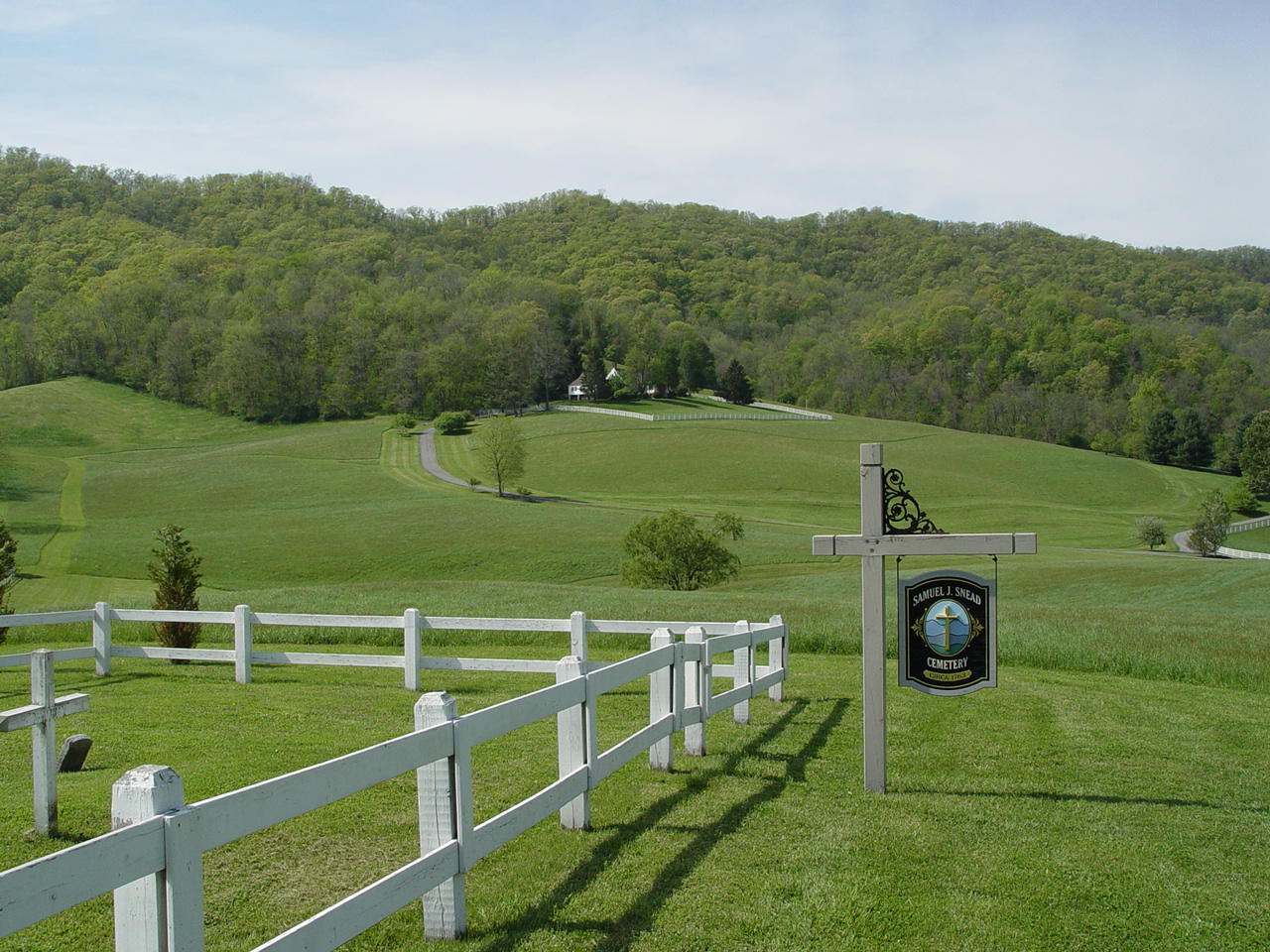
Snead died in Hot Springs, Virginia in 2002 following complications from a stroke, four days before his 90th birthday. He was survived by two sons: Sam Jr. of Hot Springs, and Terry, of Mountain Grove, Virginia, and a brother, Pete, of Pittsburgh, as well as two grandchildren. His wife Audrey died in 1990. His nephew J. C. Snead was also a PGA Tour golfer.
In popular culture
Snead was mentioned several times in the comic strip Peanuts at the height of his popularity during the 1950s
- and 1960s.
- As its creator and avid golfer Charles M. Schulz said in a 1971 interview: "I was a great admirer of Sam Snead. I once watched him play a round in the St. Paul tournament when he hit every green in regulation figures – and all the par fives in two – for a truly flawless round."
He played himself in the 1951 Ben Hogan semi-autobiographical movie starring Glenn Ford and Anne Baxter called Follow the Sun.
There is a Sam Snead Street in San Antonio, Texas.
There is also a Sam Snead Dr in on the east side of El Paso, Texas.
Awards
Snead was the PGA leading money winner in 1938, 1949 and 1950. He won the Vardon Trophy, for lowest scoring average, four times: 1938, 1949, 1950, and 1955. In 1949, he was PGA Golfer of the Year.
Snead was inducted into the Virginia Sports Hall of Fame in 1973. In 1986, Snead was inducted into the Middle Atlantic PGA Hall of Fame. and the Helms Hall of Fame. Snead received the PGA Tour Lifetime Achievement Award in 1998. In 2009, Snead was inducted into the inaugural class of the West Virginia Golf Hall of Fame and in 2016, Snead was the unanimous top choice for inclusion in the Virginia Golf Hall of Fame's inaugural class.
Playing style
During his peak years, Snead was an exceptionally long driver, particularly into the wind, with very good accuracy as well. He was a superb player with the long irons. Snead was also known for a very creative short game, pioneering the use of the sand wedge for short shots from grass. As he aged, he began to experiment with different putting styles. Snead pioneered croquet-style putting in the 1960s, where he straddled the ball with one leg on each side. The United States Golf Association banned this technique in 1968 by amending the old Rule 35–1, since, until that time, golfers had always faced the ball when striking. Snead then went to side-saddle putting, where he crouched and angled his feet towards the hole, and held the club with a split grip. He used that style for the rest of his career.
Records
Snead holds the following records:
- Most PGA Tour victories: 82 (tied with Tiger Woods)
- Most PGA-sanctioned tour victories: 94
- Became the first player to win 17 times at an event: at the West Virginia Open (1936–1938, 1948, 1949, 1952, 1957, 1958, 1960, 1961, 1966–1968, 1970–1973)
- First player to win an event in six different decades (1930s–1980s).
- Became the first player to win 8 times at an event: at the Greater Greensboro Open (1938, 1946, 1949, 1950, 1955, 1956, 1960, 1965)
- First player to be credited with winning a PGA Tour event in four different decades.
- Oldest player to be credited with winning a PGA Tour event: age 52 years, 10 months, 8 days at the 1965 Greater Greensboro Open
- Oldest player to make the cut at a major: age 67 years, 2 months, 7 days at the 1979 PGA Championship
- First PGA Tour player to shoot his age: 67 in the second round of the 1979 Quad Cities Open
- Oldest player to make a cut on the PGA Tour: age 67 years, 2 months, 21 days at the 1979 Manufacturers Hanover Westchester Classic.
- Only player to post a top-10 finish in at least one major championship in five different decades.
- Became the first player to win PGA and Senior PGA Tour events over six decades (1930s–1980s)
Sources:
Professional wins (143)
PGA Tour wins (82)
| Legend |
|---|
| Major championships (7) |
| Other PGA Tour (75) |
| No. | Date | Tournament | Winning score | Margin of | |
|---|---|---|---|---|---|
| victory | Runner(s)-up | ||||
| 1 | Jul 10, 1936 | West Virginia Closed Pro | −9 (70-61=131) | 16 strokes | USA Clem Wiechman |
| 2 | Jan 17, 1937 | Oakland Open | −2 (69-65-69-67=270) | 2 strokes | USA Ralph Guldahl |
| 3 | Feb 7, 1937 | Bing Crosby Pro-Am | −4 (68)* | 4 strokes | USA George Von Elm |
| 4 | Aug 1, 1937 | St. Paul Open | −5 (72-69-71-71=283) | 1 stroke | USA Willie Goggin |
| 5 | Dec 20, 1937 | Nassau Open | −4 (66-70-70-70=276) | 1 stroke | USA Vic Ghezzi |
| 6 | Dec 25, 1937 | Miami Open | −13 (68-67-66-66=267) | 5 strokes | USA Ralph Guldahl, USA Horton Smith |
| 7 | Jan 17, 1938 | Bing Crosby Pro-Am (2) | −5 (72-67=139) | 2 strokes | USA Jimmy Hines |
| 8 | Mar 28, 1938 | Greater Greensboro Open | −11 (66-68-69-68=271) | 5 strokes | USA Johnny Revolta |
| 9 | May 29, 1938 | Inverness Invitational Four-Ball | |||
| (with USA Vic Ghezzi) | +9 points | 1 point | ENG Harry Cooper and USA Horton Smith, | ||
| USA Ed Dudley and USA Ky Laffoon | |||||
| 10 | Jun 26, 1938 | Palm Beach Round Robin | +14 points | Playoff | USA Gene Sarazen |
| 11 | Jul 24, 1938 | Chicago Open | −3 (64-73-70=207)* | 1 stroke | USA Ralph Guldahl |
| 12 | Aug 22, 1938 | Canadian Open | −11 (69-67-69-72=277) | Playoff | ENG Harry Cooper |
| 13 | Sep 27, 1938 | Westchester 108 Hole Open | +10 (73-72-73-72-71-69=430) | 2 strokes | USA Billy Burke |
| 14 | Nov 10, 1938 | White Sulphur Springs Open | −7 (68-68-69-68=273) | 2 strokes | USA Ky Laffoon |
| 15 | Mar 3, 1939 | St. Petersburg Open | −9 (70-69-68=207) | Playoff | USA Henry Picard |
| 16 | Mar 8, 1939 | Miami Biltmore International Four-Ball | |||
| (with USA Ralph Guldahl) | 7 and 6 | USA Paul Runyan and USA Horton Smith | |||
| 17 | Dec 17, 1939 | Miami Open (2) | −12 (68-72-67-64=271) | 2 strokes | USA Jug McSpaden |
| 18 | Jun 16, 1940 | Inverness Invitational Four-Ball (2) | |||
| (with USA Ralph Guldahl) | +15 points | 3 points | USA Jimmy Demaret and USA Dick Metz | ||
| 19 | Aug 19, 1940 | Canadian Open (2) | −3 (67-66-75-73=281) | Playoff | USA Jug McSpaden |
| 20 | Sep 8, 1940 | Anthracite Open | −4 (65-73-68-70=276) | 2 strokes | USA Byron Nelson |
| 21 | Jan 25, 1941 | Bing Crosby Pro-Am (3) | −8 (67-69=136) | 1 stroke | USA Craig Wood |
| 22 | Feb 28, 1941 | St. Petersburg Open (2) | −5 (67-72-68-72=279) | 2 strokes | USA Herman Barron, USA Chick Harbert, |
| USA Ben Hogan, USA Jug McSpaden | |||||
| 23 | Mar 20, 1941 | North and South Open | −11 (69-66-73-69=277) | 3 strokes | USA Clayton Heafner |
| 24 | Aug 9, 1941 | Canadian Open (3) | −6 (71-68-66-69=274) | 2 strokes | CAN Bob Gray |
| 25 | Aug 17, 1941 | Rochester Times-Union Open | −3 (67-70-73-67=277) | 7 strokes | USA Ben Hogan |
| 26 | Sep 21, 1941 | Henry Hurst Invitational | −8 (64-74-69-65=272) | 9 strokes | USA Dick Metz |
| 27 | Mar 6, 1942 | St. Petersburg Open (3) | −2 (70-74-73-72=286) | 3 strokes | USA Sam Byrd, USA Chick Harbert, |
| USA Byron Nelson | |||||
| 28 | May 31, 1942 | PGA Championship | 2 and 1 | USA Jim Turnesa | |
| 29 | Nov 26, 1944 | Portland Open | +1 (70-74-73-72=289) | 2 strokes | USA Mike Turnesa |
| 30 | Dec 17, 1944 | Richmond Open | −6 (70-69-69-70=278) | 1 stroke | USA Charles Congdon |
| 31 | Jan 8, 1945 | Los Angeles Open | −1 (71-71-72-69=283) | 1 stroke | USA Jug McSpaden, USA Byron Nelson |
| 32 | Feb 19, 1945 | Gulfport Open | −9 (65-71-70-69=275) | Playoff | USA Byron Nelson |
| 33 | Feb 25, 1945 | Pensacola Open | −21 (67-64-68-68=267) | 7 strokes | USA Byron Nelson |
| 34 | Mar 4, 1945 | Jacksonville Open | −22 (69-65-66-66=266) | 4 strokes | USA Bob Hamilton |
| 35 | Sep 9, 1945 | Dallas Open | −12 (70-69-69-68=276) | 4 strokes | USA Jug McSpaden |
| 36 | Sep 16, 1945 | Southwestern Invitational | −7 (68-67-69-73=277) | 9 strokes | USA Vic Ghezzi, USA Ben Hogan |
| 37 | Mar 17, 1946 | Jacksonville Open (2) | −24 (64-66-67-67=264) | 4 strokes | USA Jimmy Demaret |
| 38 | Mar 24, 1946 | Greater Greensboro Open (2) | −10 (70-67-67-66=270) | 6 strokes | USA Herman Keiser |
| 39 | Apr 21, 1946 | Virginia Open | −1 (69-66-68-72=275) | Playoff | USA Chandler Harper |
| 40 | Jul 5, 1946 | The Open Championship | −2 (71-70-74-75=290) | 4 strokes | USA Johnny Bulla, ZAF Bobby Locke |
| 41 | Sep 8, 1946 | World Championship of Golf | −6 (69-69=138) | 2 strokes | USA Byron Nelson |
| 42 | Dec 8, 1946 | Miami Open (3) | −12 (65-66-66-71=268) | 3 strokes | USA Clayton Heafner |
| 43 | Feb 8, 1948 | Texas Open | −20 (66-65-65-68=264) | 2 strokes | USA Jimmy Demaret |
| 44 | Mar 28, 1949 | Greater Greensboro Open (3) | −8 (68-69-69-70=276) | Playoff | USA Lloyd Mangrum |
| 45 | Apr 10, 1949 | Masters Tournament | −6 (73-75-67-67=282) | 3 strokes | USA Johnny Bulla, USA Lloyd Mangrum |
| 46 | May 31, 1949 | PGA Championship (2) | 3 and 2 | USA Johnny Palmer | |
| 47 | Jul 4, 1949 | Washington Star Open | −16 (69-64-69-70=272) | 2 strokes | USA Cary Middlecoff |
| 48 | Jul 18, 1949 | Dapper Dan Open | −16 (67-67-69-71=272) | 1 stroke | USA Lloyd Mangrum |
| 49 | Jul 31, 1949 | Western Open | −20 (69-67-65-67=268) | 4 strokes | USA Cary Middlecoff |
| 50 | Jan 15, 1950 | Bing Crosby Pro-Am (4) | −2 (69-72-73=214) | Shared title with USA Jack Burke Jr., | |
| USA Dave Douglas and USA Smiley Quick | |||||
| 51 | Jan 18, 1950 | Los Angeles Open (2) | −4 (71-72-71-66=280) | Playoff | USA Ben Hogan |
| 52 | Feb 12, 1950 | Texas Open (2) | −19 (71-68-63-63=265) | 1 stroke | USA Jimmy Demaret |
| 53 | Mar 12, 1950 | Miami Beach Open | −15 (71-66-65-71=273) | 3 strokes | USA Lawson Little |
| 54 | Mar 26, 1950 | Greater Greensboro Open (4) | −11 (66-70-66-67=269) | 10 strokes | USA Jimmy Demaret |
| 55 | May 21, 1950 | Western Open (2) | −2 (69-71-69-73=282) | 1 stroke | AUS Jim Ferrier, USA Dutch Harrison |
| 56 | May 28, 1950 | Colonial National Invitation | −3 (66-72-66-73=277) | 3 strokes | USA Skip Alexander |
| 57 | Jul 16, 1950 | Inverness Invitational Four-Ball (3) | |||
| (with AUS Jim Ferrier) | +18 points | 13 points | USA Fred Haas and USA Fred Hawkins | ||
| 58 | Sep 10, 1950 | Reading Open | −20 (68-65-65-70=268) | 8 strokes | AUS Jim Ferrier |
| 59 | Nov 3, 1950 | North and South Open (2) | −13 (68-71-66-70=275) | 4 strokes | USA Johnny Palmer |
| 60 | Dec 3, 1950 | Miami Open (4) | −13 (69-66-66-66=267) | 5 strokes | USA Jack Burke Jr., USA Dick Mayer |
| 61 | Jul 3, 1951 | PGA Championship (3) | 7 and 6 | USA Walter Burkemo | |
| 62 | Dec 9, 1951 | Miami Open (5) | −12 (64-68-68-68=268) | 5 strokes | USA Chandler Harper, USA Dutch Harrison |
| 63 | Apr 6, 1952 | Masters Tournament (2) | −2 (70-67-77-72=286) | 4 strokes | USA Jack Burke Jr. |
| 64 | May 18, 1952 | Palm Beach Round Robin (2) | +57 points | 2 points | USA Cary Middlecoff |
| 65 | Jun 29, 1952 | Inverness Invitational Four-Ball (4) | |||
| (with AUS Jim Ferrier) | +13 points | 12 points | USA Doug Ford and USA Ed Oliver | ||
| 66 | Aug 3, 1952 | All American Open | −17 (67-65-74-65=271) | 8 strokes | USA Tommy Bolt |
| 67 | Sep 14, 1952 | Eastern Open | −13 (71-67-68-69=275) | 2 strokes | USA Ed Oliver |
| 68 | Mar 8, 1953 | Baton Rouge Open | −13 (69-68-67-71=275) | 3 strokes | USA Dick Mayer |
| 69 | Apr 12, 1954 | Masters Tournament (3) | +1 (74-73-70-72=289) | Playoff | USA Ben Hogan |
| 70 | May 16, 1954 | Palm Beach Round Robin (3) | +62 points | 36 points | USA Bob Toski |
| 71 | Apr 17, 1955 | Greater Greensboro Open (5) | −7 (68-67-69-69=273) | 1 stroke | USA Julius Boros, USA Art Wall Jr. |
| 72 | Jun 5, 1955 | Palm Beach Round Robin (4) | +46 points | 24 points | USA Johnny Palmer |
| 73 | Sep 5, 1955 | Insurance City Open | −15 (66-68-66-69=269) | 7 strokes | USA Fred Hawkins, USA Mike Souchak |
| 74 | Dec 11, 1955 | Miami Open (6) | −9 (70-67-64=201)* | Playoff | USA Tommy Bolt |
| 75 | Apr 15, 1956 | Greater Greensboro Open (6) | −5 (66-69-74-70=279) | Playoff | USA Fred Wampler |
| 76 | Jun 2, 1957 | Palm Beach Round Robin (5) | +41 points | 8 points | USA Doug Ford |
| 77 | Sep 16, 1957 | Dallas Open Invitational (2) | −20 (70-60-66-68=264) | 10 strokes | USA Bob Inman, USA Billy Maxwell, |
| USA Cary Middlecoff | |||||
| 78 | Jun 8, 1958 | Dallas Open Invitational (3) | −8 (67-67-69-69=272) | Playoff | USA Julius Boros, USA John McMullin, |
| ZAF Gary Player | |||||
| 79 | Mar 27, 1960 | De Soto Open Invitational | −8 (69-72-67-68=276) | 1 stroke | USA Jerry Barber |
| 80 | Apr 17, 1960 | Greater Greensboro Open (7) | −14 (68-66-67-69=270) | 2 strokes | USA Dow Finsterwald |
| 81 | May 7, 1961 | Tournament of Champions | −15 (68-67-69-69=273) | 7 strokes | USA Tommy Bolt |
| 82 | Apr 4, 1965 | Greater Greensboro Open (8) | −11 (68-69-68-68=273) | 5 strokes | USA Billy Casper, USA Jack McGowan, |
| USA Phil Rodgers |
*Note: Tournament shortened to 18/54 holes due to weather.
PGA Tour playoff record (12–6)
| No. | Year | Tournament | Opponent(s) | Result |
|---|---|---|---|---|
| 1 | 1938 | Palm Beach Round Robin | USA Gene Sarazen | Won with birdie on the second extra hole |
| 2 | 1938 | Canadian Open | ENG Harry Cooper | Won 27-hole playoff; |
| Snead: −7 (67-34=101), | ||||
| Cooper: −2 (67-39=106) | ||||
| 3 | 1939 | St. Petersburg Open | USA Henry Picard | Won with birdie on seventh extra hole after 18-hole playoff; |
| Snead: −3 (69), | ||||
| Picard: −3 (69) | ||||
| 4 | 1940 | Canadian Open | USA Jug McSpaden | Won 18-hole playoff; |
| Snead: E (71), | ||||
| McSpaden: +1 (72) | ||||
| 5 | 1945 | Gulfport Open | USA Byron Nelson | Won with par on first extra after 18-hole playoff; |
| Snead: E (71), | ||||
| Nelson: E (71) | ||||
| 6 | 1945 | Charlotte Open | USA Byron Nelson | Lost second 18-hole playoff; |
| Nelson: −3 (69), | ||||
| Snead: +1 (73) | ||||
| Level after first 18-hole playoff; | ||||
| Nelson: −3 (69), | ||||
| Snead: −3 (69) | ||||
| 7 | 1946 | Virginia Open | USA Chandler Harper | Won 18-hole playoff; |
| Snead: −5 (64), | ||||
| Harper: −2 (67) | ||||
| 8 | 1947 | U.S. Open | USA Lew Worsham | Lost 18-hole playoff; |
| Worsham: −2 (69), | ||||
| Snead: −1 (70) | ||||
| 9 | 1949 | Greater Greensboro Open | USA Lloyd Mangrum | Won 18-hole playoff; |
| Snead: −2 (69), | ||||
| Mangrum: E (71) | ||||
| 10 | 1950 | Los Angeles Open | USA Ben Hogan | Won 18-hole playoff; |
| Snead: +1 (72), | ||||
| Hogan: +5 (76) | ||||
| 11 | 1950 | St. Paul Open | AUS Jim Ferrier | Lost to par on third extra hole after 18-hole playoff; |
| Ferrier: −3 (69), | ||||
| Hogan: −3 (69) | ||||
| 12 | 1952 | Jacksonville Open | USA Doug Ford | Lost after concession before playoff |
| 13 | 1953 | Greater Greensboro Open | USA Doug Ford, USA Earl Stewart, | |
| USA Art Wall Jr. | Stewart won with a par on the first extra hole after an 18-hole playoff; | |||
| Stewart: −2 (68), | ||||
| Snead: −2 (68), | ||||
| Ford: E (70), | ||||
| Wall: +2 (72) | ||||
| 14 | 1954 | Masters Tournament | USA Ben Hogan | Won 18-hole playoff; |
| Snead: −2 (70), | ||||
| Hogan: −1 (71) | ||||
| 15 | 1955 | Miami Open | USA Tommy Bolt | Won with a par on the first extra hole |
| 16 | 1956 | Greater Greensboro Open | USA Fred Wampler | Won with birdie on the second extra hole |
| 17 | 1958 | Dallas Open Invitational | USA Julius Boros, USA John McMullin, | |
| ZAF Gary Player | Won with birdie on the first extra hole | |||
| 18 | 1958 | Havana International | USA George Bayer | Lost to par on the first extra hole |
Sources:
LPGA Tour wins (1)
| No. | Date | Tournament | Winning score | Margin of | |
|---|---|---|---|---|---|
| victory | Runner-up | ||||
| 1 | Feb 7, 1962 | Royal Poinciana Plaza Invitational | −5 (52-53-53-53=211) | 5 strokes | USA Mickey Wright |
Other wins (46)
- 1936 West Virginia Open
- 1937 West Virginia Open
- 1938 West Virginia Open
- 1940 Ontario Open (Canada)
- 1941 Center Open (Argentina)
- 1941 St Augustine Pro-am (with Wilford Wehrle)
- 1942 St Augustine Pro-am (with Wilford Wehrle)
- 1946 Southern Pines Open
- 1948 West Virginia Open, Havana Invitational
- 1949 North and South Open, West Virginia Open, National Celebrities Open
- 1951 Greenbrier Pro-Am
- 1952 West Virginia Open, Brazil Open, Greenbrier Pro-Am, Julius Boros Open, Seminole Pro-am
- 1953 Greenbrier Pro-Am, Orlando International Mixed Best Ball (with Betty MacKinnon)
- 1954 Panama Open
- 1955 McNaughtons Pro-am
- 1956 Canada Cup (with Ben Hogan), Boca Raton Open
- 1957 West Virginia Open
- 1958 West Virginia Open, Greenbrier Invitational
- 1959 Sam Snead Festival, Eldorado Professional (tied with Doug Ford)
- 1960 West Virginia Open, Canada Cup (with Arnold Palmer)
- 1961 West Virginia Open, Sam Snead Festival, Canada Cup (with Jimmy Demaret), Canada Cup – International Trophy
- 1962 Canada Cup (with Arnold Palmer)
- 1964 Haig & Haig Scotch Foursome (with Shirley Englehorn)
- 1966 West Virginia Open
- 1967 West Virginia Open
- 1968 West Virginia Open
- 1970 West Virginia Open
- 1971 PGA Club Professional Championship, West Virginia Open
- 1972 West Virginia Open
- 1973 West Virginia Open
Note: this list is incomplete.
Senior wins (14)
- 1964 PGA Seniors' Championship, World Senior Championship
- 1965 PGA Seniors' Championship, World Senior Championship
- 1967 PGA Seniors' Championship
- 1970 PGA Seniors' Championship, World Senior Championship
- 1972 PGA Seniors' Championship, World Senior Championship
- 1973 PGA Seniors' Championship, World Senior Championship
- 1978 Legends of Golf (with Gardner Dickinson)
- 1980 Golf Digest Commemorative Pro-Am
- 1982 Liberty Mutual Legends of Golf (with Don January)
Major championships
Wins (7)
| Year | Championship | 54 holes | Winning score | Margin | Runner(s)-up |
|---|---|---|---|---|---|
| 1942 | PGA Championship | n/a | 2 & 1 | USA Jim Turnesa | |
| 1946 | The Open Championship | Tied for lead | −2 (71-70-74-75=290) | 4 strokes | USA Johnny Bulla, ZAF Bobby Locke |
| 1949 | Masters Tournament | 1 shot deficit | −6 (73-75-67-67=282) | 3 strokes | USA Johnny Bulla, USA Lloyd Mangrum |
| 1949 | PGA Championship (2) | n/a | 3 & 2 | USA Johnny Palmer | |
| 1951 | PGA Championship (3) | n/a | 7 & 6 | USA Walter Burkemo | |
| 1952 | Masters Tournament (2) | Tied for lead | −2 (70-67-77-72=286) | 4 strokes | USA Jack Burke Jr. |
| 1954 | Masters Tournament (3) | 3 shot deficit | +1 (74-73-70-72=289) | Playoff1 | USA Ben Hogan |
Note: The PGA Championship was match play until 1958. 1Defeated Ben Hogan in 18-hole playoff – Snead 70 (−2), Hogan 71 (−1).
Results timeline
| Tournament | 1937 | 1938 | 1939 |
|---|---|---|---|
| Masters Tournament | 18 | T31 | 2 |
| U.S. Open | 2 | T38 | 5 |
| The Open Championship | T11 | ||
| PGA Championship | R16 | 2 |
| Tournament | 1940 | 1941 | 1942 | 1943 | 1944 | 1945 | 1946 | 1947 | 1948 | 1949 |
|---|---|---|---|---|---|---|---|---|---|---|
| Masters Tournament | T7 | T6 | T7 | NT | NT | NT | T7 | T22 | T16 | 1 |
| U.S. Open | T16 | T13 | NT | NT | NT | NT | T19 | 2 | 5 | T2 |
| The Open Championship | NT | NT | NT | NT | NT | NT | 1 | |||
| PGA Championship | 2 | QF | 1 | NT | R32 | R32 | QF | 1 |
| Tournament | 1950 | 1951 | 1952 | 1953 | 1954 | 1955 | 1956 | 1957 | 1958 | 1959 |
|---|---|---|---|---|---|---|---|---|---|---|
| Masters Tournament | 3 | T8 | 1 | T16 | 1 | 3 | T4 | 2 | 13 | T22 |
| U.S. Open | T12 | T10 | T10 | 2 | T11 | T3 | T24 | T8 | CUT | T8 |
| The Open Championship | ||||||||||
| PGA Championship | R32 | 1 | R64 | R32 | QF | R32 | QF | R16 | 3 | T8 |
| Tournament | 1960 | 1961 | 1962 | 1963 | 1964 | 1965 | 1966 | 1967 | 1968 | 1969 |
|---|---|---|---|---|---|---|---|---|---|---|
| Masters Tournament | T11 | T15 | T15 | T3 | CUT | CUT | T42 | T10 | 42 | CUT |
| U.S. Open | T19 | T17 | T38 | T42 | T34 | T24 | T9 | T38 | ||
| The Open Championship | T6 | CUT | ||||||||
| PGA Championship | T3 | T27 | T17 | T27 | T6 | T6 | T34 | T63 |
| Tournament | 1970 | 1971 | 1972 | 1973 | 1974 | 1975 | 1976 | 1977 | 1978 | 1979 |
|---|---|---|---|---|---|---|---|---|---|---|
| Masters Tournament | T23 | CUT | T27 | T29 | T20 | WD | CUT | WD | CUT | CUT |
| U.S. Open | CUT | T29 | CUT | CUT | ||||||
| The Open Championship | CUT | |||||||||
| PGA Championship | T12 | T34 | T4 | T9 | T3 | CUT | CUT | T54 | T42 |
| Tournament | 1980 | 1981 | 1982 | 1983 |
|---|---|---|---|---|
| Masters Tournament | CUT | CUT | WD | WD |
| U.S. Open | ||||
| The Open Championship | ||||
| PGA Championship | WD | WD |
NT = no tournament
WD = withdrew
CUT = missed the half-way cut
"T" indicates a tie for a place
R64, R32, R16, QF, SF = Round in which player lost in PGA Championship match play
Summary
| Tournament | Wins | 2nd | 3rd | Top-5 | Top-10 | Top-25 | Events | Cuts made | Totals | 7 | 8 | 7 | 30 | 48 | 76 | 118 | 95 |
|---|---|---|---|---|---|---|---|---|---|---|---|---|---|---|---|---|---|
| Masters Tournament | 3 | 2 | 3 | 9 | 15 | 26 | 44 | 31 | |||||||||
| U.S. Open | 0 | 4 | 1 | 7 | 12 | 21 | 31 | 27 | |||||||||
| The Open Championship | 1 | 0 | 0 | 1 | 2 | 3 | 5 | 3 | |||||||||
| PGA Championship | 3 | 2 | 3 | 13 | 19 | 26 | 38 | 34 |
- Most consecutive cuts made – 55 (1937 Masters – 1958 Masters)
- Longest streak of top-10s – 6 (1948 U.S. Open – 1950 Masters)
U.S. national team appearances
Professional
- Ryder Cup: 1937 (winners), 1947 (winners), 1949 (winners), 1951 (winners, playing captain), 1953 (winners), 1955 (winners), 1959 (winners, playing captain), 1969 (tied, non-playing captain)
- Canada Cup: 1954, 1956 (winners), 1957, 1958, 1959, 1960 (winners), 1961 (winners, individual winner), 1962 (winners)
References
References
- (November 11, 2012). "Sam Snead, Golf Legend". Global Sportsline Toronto.
- "Snead inducted onto the Middle Atlantic PGA Hall of Fame". PGA Middle Atlantic Section.
- Gabriel, Mike. (2001). "The Professional Golfers' Association Tour: a history". McFarland.
- (January 31, 2016). "Sam Snead's son keeps his father's memory alive by telling stories".
- (January 20, 2022). "Wins and Finishes". PGA Tour Media Guide.
- Livsey, Laury. (April 16, 2019). "How we got to 82". PGA Tour.
- (2007). "The Gigantic Book of Golf Quotations". [[Skyhorse Publishing]].
- (May 24, 2019). "Sam Snead Quotes".
- "2002: Obituary - So long to Slammin' Sam: His swing was the thing".
- Moss, Richard J.. (June 1, 2013). "The Kingdom of Golf in America". U of Nebraska Press.
- May, Mike. "Golf @ The Boca Resort: Living, Breathing History". Go Golf and Travel.
- Barkow, Al. (1986). "Gettin' to the Dance Floor: An Oral History of American Golf". Atheneum.
- (September 13, 1944). "Sam Snead discharged from navy". St. Petersburg Times.
- "The Colonel Breaks Par". IMDb.
- "Virginia Sports Hall of Fame Inductees Class of 2003".
- Kelley, Brent. "Largest Margin of Victory on the PGA Tour". About.com.
- (July 11, 1936). "Weichman Second in White Sulphur Event". [[Portsmouth Daily Times]].
- (August 8, 1936). "Sam Snead Blast Out Five-Under-Par to Win State Open Golf Title". [[Bluefield Daily Telegraph]].
- (August 17, 2017). "1937 U.S. Open Highlights". [[United States Golf Association.
- (July 10, 1937). "Cotton's brilliant victory". Glasgow Herald.
- Kelley, Brent. "Oldest PGA Tour Winners". About.com.
- Snead, Sam. (1938). "Sam Snead's quick way to better golf". Sun Dial Press.
- Carter, Bob. "Only old age could stop Snead". ESPN.
- (July 2, 1989). "After 51 Years on Tour, Snead Takes It Easy". [[Los Angeles Times]].
- Snead, Sam. (1946). "Sam Snead's How to play golf and professional tips on improving your score. Also, rules of the game of golf, as approved by the United States Golf Association, and by the Royal and ancient golf club of St. Andrews". Garden City Publishing.
- (May 27, 2014). "1947 U.S. Open: Snead Recalls Tough Defeat". [[United States Golf Association.
- (April 13, 2014). "Masters Golf (1949)". [[Pathé News]].
- (April 13, 2014). "Sam Snead Wins PGA (1949)". Pathé News.
- (July 11, 1949). "Middlecoff Sinks Decisive Putt to Capture Reading Golf With 266". The New York Times.
- (September 14, 2017). "1949 U.S. Open Highlights". [[United States Golf Association]].
- Kelley, Brent. "Lowest PGA Tour Vardon Trophy Scoring Averages". About.com.
- "Masters Greats: Sam Snead 1952".
- (March 25, 1952). "Ford Gets First Major Golf Win". [[Reading Eagle]].
- (March 25, 1952). "Sam Snead Forfeits First in Jacksonville Open". [[The Spokesman-Review]].
- (October 10, 2017). "1953 U.S. Open Highlights". USGA.
- (March 22, 2012). "1954: Snead wins in legendary Masters battle with Hogan".
- "Historic Leaderboard: 1954 Masters".
- (August 2, 2016). "Sam Snead wins 1954 Masters Tournament". [[Getty Images]].
- (April 9, 1960). "Sponsor Cancels After Snead TV Golf Incident". [[The Victoria Advocate]].
- "Rule 4 - The Player's Equipment - USGA".).
- Sobel, Jason. (February 7, 2015). "Slammin' Sam the only man with LPGA victory". Golf Channel.
- Snead, Sam. (1962). "The education of a golfer". Simon and Schuster.
- (August 11, 2014). "Golf Detective: Lost Ryder Cup of 1939". [[Golf Channel]].
- Snead, Sam. (1986). "Pigeons, marks, hustlers and other golf bettors you can beat". Simon & Schuster.
- Yocom, Guy. (July 2000). "50 Greatest Golfers of All Time: And What They Taught Us".
- (April 9, 1965). "Comics: Good Grief".
- (2000). "Charles M. Schulz: Conversations". University Press of Mississippi.
- "Follow the Sun".
- Brown, Merrisa. (30 September 2014). "San Antonio street names and groupings".
- (November 28, 1949). "1949 PGA Golfer of the Year Award Plaque from The Sam Snead Collection".
- "Winners of the PGA Tour and PGA of America Player of the Year Awards". Golf News Net.
- (August 25, 2017). "Virginia Sports Hall of Fame & Museum – Sam Snead".
- (September 28, 2015). "Helms Hall Hall Of Fame Award From The Sam Snead Collection". Heritage Auctions.
- (August 3, 2009). "Snead, Campbell inducted into W.Va. Golf Hall". USA Today.
- (August 3, 2009). "West Virginia Golf Hall of Fame – Class of 2009 – Samuel J. Snead".
- (August 3, 2009). "Samuel J. Snead - 2009".
- "Sam Snead". Virginia Golf Hall of Fame.
- (January 1, 1968). "Historical Rules of Golf, 1968".
- (June 3, 2006). "Victory Records". PGA Tour.
- Livsey, Laury. (April 16, 2019). "How we got to 82". PGA Tour.
- Barkow, Al. (November 1989). "''The History of the PGA TOUR''". [[Doubleday (publisher).
- "Sam Snead". PGA Tour.
This article was imported from Wikipedia and is available under the Creative Commons Attribution-ShareAlike 4.0 License. Content has been adapted to SurfDoc format. Original contributors can be found on the article history page.
Ask Mako anything about Sam Snead — get instant answers, deeper analysis, and related topics.
Research with MakoFree with your Surf account
Create a free account to save articles, ask Mako questions, and organize your research.
Sign up freeThis content may have been generated or modified by AI. CloudSurf Software LLC is not responsible for the accuracy, completeness, or reliability of AI-generated content. Always verify important information from primary sources.
Report