From Surf Wiki (app.surf) — the open knowledge base
Sam Cooke
American singer and songwriter (1931–1964)
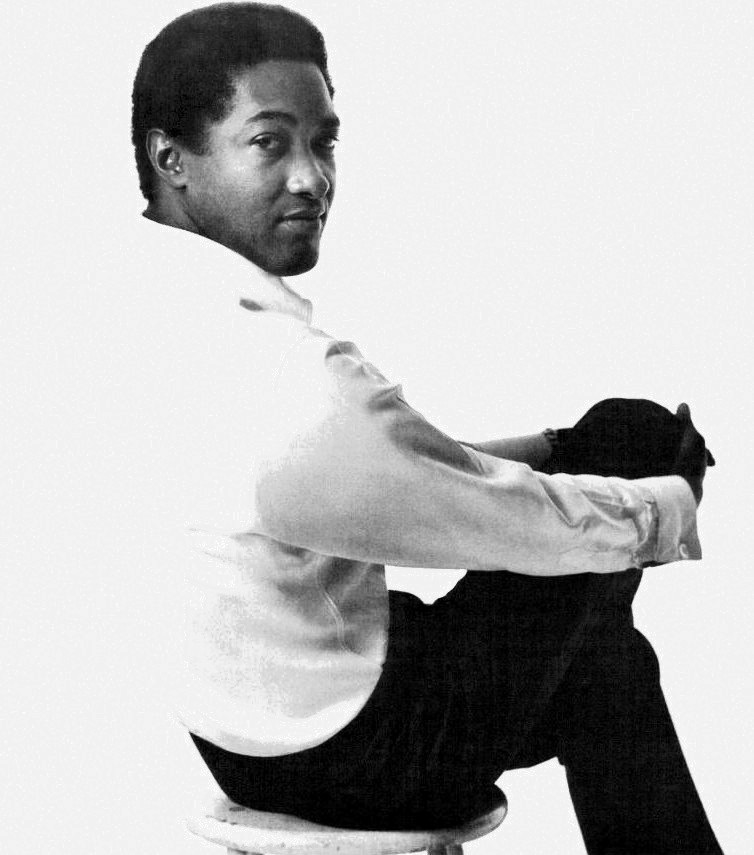
American singer and songwriter (1931–1964)
| Field | Value |
|---|---|
| image | Sam Cooke 2.jpg |
| image_upright | 0.9 |
| caption | Cooke in 1963 |
| birth_name | Samuel Cook |
| birth_date | |
| birth_place | Clarksdale, Mississippi, U.S. |
| origin | Chicago, Illinois, U.S. |
| death_date | |
| death_place | Los Angeles, California |
| genre | |
| occupation | |
| years_active | 1951–1964 |
| label |
Samuel Cooke (; January 22, 1931 – December 11, 1964) During his eight-year career, Cooke released 29 singles that charted in the Top 40 of the Billboard Hot 100 chart, as well as 20 singles in the Top 10 of Billboard Black Singles chart. In 1964, he was shot and killed by the manager of a motel in Los Angeles. After an inquest and investigation, the courts ruled Cooke's death to be a justifiable homicide. His family has since questioned the circumstances of his death. In 2015, Cooke was ranked number 28 in Billboard magazine's list of the "35 Greatest R&B Artists of All Time".
Early life
Sam Cooke was born Samuel Cook in Clarksdale, Mississippi, in 1931 (he added the "e" to his last name in 1958 to signify a new start to his life). He was the fifth of eight children of Rev. Charles Cook, a Baptist minister, and the former Annie Mae Carroll. One of his younger brothers, L.C. (1932–2017), later became a member of the doo-wop band Johnny Keyes and the Magnificents. Cooke was raised Baptist.
Cooke's family moved to Chicago in 1933. There, he attended Doolittle Elementary and Wendell Phillips Academy High School, the same school that Nat King Cole had attended a few years earlier. Cooke sang in the choir of his father's church and began his career with his siblings in a group called the Singing Children when he was six years old. Cooke first became known as lead singer with the Highway Q.C.'s when he was a teenager, having joined the group at the age of 14. During this time, Cooke befriended fellow gospel singer and neighbor Lou Rawls, who sang in a rival gospel group.
Career
The Soul Stirrers
Main article: The Soul Stirrers
In 1950, Cooke replaced gospel tenor R. H. Harris as lead singer of his gospel group The Soul Stirrers, who had signed with Specialty Records on behalf of the group. Their first recording under Cooke's leadership was the song "Jesus Gave Me Water" in 1950. They also recorded the gospel songs "Peace in the Valley", "How Far Am I from Canaan?", "Jesus Paid the Debt" and "One More River", among many others, some of which he wrote. Cooke was often credited for bringing gospel music to the attention of a younger crowd of listeners, mainly girls who would rush to the stage when the Soul Stirrers hit the stage just to get a glimpse of him.
Crossover pop success
Cooke had 30 U.S. top 40 hits between 1957 and 1964, plus three more posthumously. Major hits like "You Send Me", "A Change Is Gonna Come", "Cupid", "Chain Gang", "Wonderful World", "Another Saturday Night", and "Twistin' the Night Away" are some of his most popular songs. Twistin' the Night Away was one of Cooke's biggest selling albums. He was also among the first modern Black performers and composers to attend to the business side of his musical career. Cooke founded both a record label and a publishing company as an extension of his careers as a singer and composer. Cooke also took an active part in the Civil Rights Movement.
Sam Cooke's first pop/soul single was "Lovable" (1956), a remake of the gospel song "Wonderful". It was released under the alias "Dale Cook" in order not to alienate his gospel fan base; there was a considerable stigma against gospel singers performing secular music. However, it fooled no one — his unique and distinctive vocals were easily recognized. Art Rupe, head of Specialty Records, the label of the Soul Stirrers, gave his blessing for Cooke to record secular music under his real name, but he was unhappy about the type of music Cooke and producer Bumps Blackwell were making. Rupe expected Cooke's secular music to be similar to that of another Specialty Records artist, Little Richard. When Rupe walked in on a recording session and heard Cooke singing Gershwin, he was quite upset. After an argument between Rupe and Blackwell, Cooke and Blackwell left the label.
"Lovable" was neither a hit nor a flop, but it indicated Cooke's future potential. While gospel was popular, Cooke saw that its fans were mostly limited to low-income, rural parts of the country, and he sought to branch out. Cooke later admitted that he got an endorsement for a career in pop music from the least likely man, his pastor father. Cooke stated: "My father told me it was not what I sang that was important, but that God gave me a voice and musical talent and the true use of His gift was to share it and make people happy." Taking the name "Sam Cooke", he sought a fresh start in pop.
In 1957, Sam Cooke appeared on ABC's The Guy Mitchell Show. That same year, he signed with Keen Records. Cooke's first hit, "You Send Me", released as the B-side of "Summertime", The song also had mainstream success, spending three weeks at No. 1 on the Billboard pop chart. It elevated him from earning $200 a week to over $5,000 a week ().
In 1958, Cooke performed for the famed Cavalcade of Jazz concert produced by Leon Hefflin held at the Shrine Auditorium on August 3. The other headliners were Little Willie John, Ray Charles, Ernie Freeman, and Bo Rhambo. Sammy Davis Jr. was there to crown the winner of the Miss Cavalcade of Jazz beauty contest. The event featured the top four prominent disc jockeys of Los Angeles.

Cooke signed with the RCA Victor record label in January 1960, having been offered an advance of $100,000 (equivalent to$million in ) by the label's producers Hugo & Luigi. One of his first RCA Victor singles was "Chain Gang", which reached No. 2 on the Billboard pop chart. It was followed by more hits, including "Sad Mood", "Cupid", "Bring It On Home to Me" (with Lou Rawls on backing vocals), "Another Saturday Night", and "Twistin' the Night Away".
In 1961, Cooke started his own record label, SAR Records, with J. W. Alexander and his manager, Roy Crain. The label soon included the Simms Twins, the Valentinos (who were Bobby Womack and his brothers), Mel Carter and Johnnie Taylor. Cooke then created a publishing imprint and management firm named Kags.
Like most R&B artists of his time, Cooke focused on singles; in all, he had 29 top 40 hits on the pop charts and more on the R&B charts. Cooke was a prolific songwriter and wrote most of the songs he recorded. Cooke also had a hand in overseeing some of the song arrangements. In spite of releasing mostly singles, he released a well-received blues-inflected LP in 1963, Night Beat, and his most critically acclaimed studio album, Ain't That Good News, which featured five singles, in 1964.
In 1963, Cooke signed a five-year contract for Allen Klein to manage Kags Music and SAR Records, and made him his manager. Klein negotiated a five-year deal (three years plus two option years) with RCA Victor in which a holding company, Tracey, Ltd, named after Cooke's daughter, owned by Klein and managed by J. W. Alexander, would produce and own Cooke's recordings. RCA Victor would get exclusive distribution rights in exchange for six percent royalty payments and payments for the recording sessions. For tax reasons, Cooke would receive preferred stock in Tracey instead of an initial cash advance of $100,000. He would receive cash advances of $100,000 for the next two years, followed by an additional $75,000 for each of the two option years if the deal went to term.
Vocal ability
Cooke is widely considered one of the greatest singers and most accomplished vocalists of all time. His incredibly pure tenor voice was big, velvety and expansive, with an instantly recognizable tone. Cooke's pitch was remarkable, and his manner of singing was effortlessly soulful. Cooke could go as high as high C without losing purity or volume, and his upper mid-range was coated in a unique rasp. Cooke's vocal style was very adaptable, adopting a rather classical sound on jazz and pop songs while maintaining his trademark stylistic soulful hold on R&B, gospel and soul music.
Cooke's delivery encompassed a wide range of emotions including playful expressiveness to interact with listeners, mellow somberness as a form of reflection, and (in "A Change Is Gonna Come") profound soulfulness. When performing live, he would often play with notes and scales and experiment with melodies and his enunciation, while improvising entire songs. Cooke also began to perform highly charged versions of his songs later in his career.
Cooke's vocal exploits would go on to influence many acts like Otis Redding, James Brown, Rod Stewart, Johnny Nash, Tina Turner, Wilson Pickett, Mick Jagger, Al Green, Paul McCartney, Diana Ross, Marvin Gaye, Steve Perry, and Stevie Wonder among many others.
Personal life
Cooke was married twice. His first marriage was to singer-dancer Dolores Elizabeth Milligan Cooke, who took the stage name "Dee Dee Mohawk" in 1953; they divorced in 1958. She was killed in an auto collision in Fresno, California, in 1959. Although Cooke and Milligan were divorced, he paid for his ex-wife's funeral expenses.
In 1958, Cooke married his second wife, Barbara Campbell (1935–2021), in Chicago. His father performed the ceremony. They had three children: Linda (b. 1953), Tracy (b. 1960), and Vincent (1961–1963), who drowned in the family swimming pool. Cooke also fathered at least three other children out of wedlock. In 1958, a woman in Philadelphia, Connie Bolling, said Cooke was the father of her son. Cooke paid her an estimated $5,000 settlement out of court.
In November 1958, Cooke was involved in a car crash en route from St. Louis to Greenville, Mississippi. His chauffeur Edward Cunningham was killed, while Cooke, guitarist Cliff White, and singer Lou Rawls were hospitalized.
Cooke was a central part of the civil rights movement, using his influence and popularity with the White and Black populations to fight for the cause. Cooke was friends with boxer Muhammad Ali, activist Malcolm X and football player Jim Brown, who together campaigned for racial equality.
Death
Cooke was shot and killed on December 11, 1964, at the Hacienda Motel at 91st and South Figueroa streets in South Central Los Angeles. Answering separate reports of a shooting and a kidnapping at the motel, police found Cooke's body. He had sustained a gunshot wound to the chest, which was later determined to have pierced his heart.
The motel's manager, Bertha Franklin, said she shot Cooke in self-defense. Her account was immediately disputed by Cooke's friends, who were not there at the time of the incident. The motel's owner, Evelyn Carr,Some sources identify the motel owner's last name as "Card," according to Guralnick said that she had been on the telephone with Franklin at the time of the incident. Carr said she overheard Cooke's intrusion and the ensuing conflict and gunshot, and called the police.
The police record states that Franklin fatally shot Cooke, who had checked in earlier that evening. Franklin said Cooke had banged on the door of her office, shouting "Where's the girl?!" in reference to Elisa Boyer, a woman who had accompanied Cooke to the motel and who had called the police that night from a telephone booth near the motel minutes before Carr had.
Franklin shouted back that there was no one in her office except herself, but an enraged Cooke did not believe her and forced his way into the office, naked except for one shoe and a sport jacket. He grabbed her, demanding again to know the woman's whereabouts. According to Franklin, she grappled with Cooke, the two of them fell to the floor, and she then got up and ran to retrieve a gun. Franklin said that she then fired at Cooke in self-defense because she feared for her life. He was struck once in the torso. According to Franklin, Cooke exclaimed, "Lady, you shot me", in a tone that expressed perplexity rather than anger, before advancing on her again. Franklin said she hit him on the head with a broomstick before Cooke finally fell to the floor and died. A coroner's inquest was convened to investigate the incident.
Boyer told the police that she had first met Cooke earlier that night and had spent the evening in his company. Boyer said that after they left a local nightclub together, she had repeatedly requested that he take her home, but it appeared Cooke was intoxicated and drove her against her will to a place to have sex. As they sped down Harbor Freeway, Boyer noted they had passed a number of hotels and motor courts.
Cooke ended up at the Hacienda Motel, a black-owned business in south central Los Angeles. Boyer noted Cooke's familiarity with the layout as if he had been a repeat customer. She said that once in one of the motel's rooms, Cooke physically forced her onto the bed, and then stripped Boyer to her panties. She said she was sure he was going to rape her. Cooke allowed her to use the bathroom, from which she attempted an escape but found that the window was firmly shut. According to Boyer, she returned to the main room, where Cooke continued to molest her. When he went to use the bathroom, Boyer quickly grabbed her clothes and ran from the room. She said that in her haste, she had also scooped up most of Cooke's clothing by mistake.
Boyer said she ran first to the manager's office and knocked on the door seeking help. However, she said that the manager took too long to respond, so, fearing Cooke would soon be coming after her, she fled from the motel before the manager opened the door. Boyer said she then put her clothes back on, hid Cooke's clothing, went to a telephone booth, and called the police.
According to restaurant employees and friends, Cooke was carrying a large amount of money at Martoni's. A search of Boyer's purse by police revealed nothing except a $20 bill, and a search of Cooke's Ferrari found a money clip with $108 (), as well as a few loose coins near the ashtray.
As Carr's testimony corroborated Franklin's version of events, and because both Boyer and Franklin later passed polygraph tests, the coroner's jury ultimately accepted Franklin's explanation and returned a verdict of justifiable homicide. With that verdict, authorities officially closed the case on Cooke's death.
However, some of Cooke's family and supporters have rejected Boyer's version of events, as well as those given by Franklin and Carr. They believe that the killing took place in some manner entirely different from the three official accounts.Multiple sources:
On the perceived lack of an investigation, Cooke's close friend Muhammad Ali said: "If Cooke had been Frank Sinatra, the Beatles or Ricky Nelson, the FBI would be investigating."
Singer Etta James viewed Cooke's body before his funeral and questioned the accuracy of the official version of events. She wrote that the injuries she observed were well beyond the official account of Cooke having fought Franklin alone. James wrote that Cooke was so badly beaten that his head was nearly separated from his shoulders, his hands were broken and crushed, and his nose was mangled.
Some have speculated that Cooke's manager, Allen Klein, had a role in his death. Klein owned Tracey Ltd, which ultimately owned all rights to Cooke's recordings. However, no evidence supporting a criminal conspiracy has been presented.
Aftermath

The first funeral service for Cooke was held on December 18, 1964, at A. R. Leak Funeral Home in Chicago; 200,000 fans lined up for more than four city blocks to view his body.
Afterward, Cooke's body was flown back to Los Angeles for a second service, at the Mount Sinai Baptist Church on December 19, which included a much-heralded performance of "The Angels Keep Watching Over Me" by Ray Charles, who stood in for a grief-stricken Bessie Griffin. Cooke was interred at Forest Lawn Memorial Park Cemetery in Glendale, California.
Two singles and an album were released in the month after Cooke's death. One of the singles, "Shake", reached the top ten of both the pop and R&B charts. The B-side, "A Change Is Gonna Come", is considered a classic protest song from the era of the civil rights movement. It was a Top 40 pop hit and a top 10 R&B hit. The album, also titled Shake, reached the number one spot for R&B albums.
Bertha Franklin said that she received numerous death threats after shooting Cooke. She left her position at the Hacienda Motel and did not publicly disclose where she had moved. After being cleared by the coroner's jury, she sued Cooke's estate, citing physical injuries and mental anguish suffered as a result of Cooke's attack. Franklin's lawsuit sought $200,000 (equivalent to$million in ) of compensatory and punitive damages.
Barbara Womack countersued Franklin on behalf of the estate, seeking $7,000 () in damages to cover Cooke's funeral expenses. Elisa Boyer provided testimony in support of Franklin in the case. In 1967, the courts awarded Franklin $30,000 in damages ().
Legacy
Cooke's contribution to soul music contributed to the rise of Aretha Franklin, Bobby Womack, Al Green, Curtis Mayfield, Stevie Wonder, Marvin Gaye, and Billy Preston, and popularized the work of Otis Redding and James Brown. AllMusic biographer Bruce Eder wrote that Cooke was "the inventor of soul music", and possessed "an incredible natural singing voice and a smooth, effortless delivery that has never been surpassed."
Portrayals
Cooke was portrayed by Paul Mooney in The Buddy Holly Story, a 1978 American biographical film which tells the life story of rock musician Buddy Holly.
In the stage play One Night in Miami, first performed in 2013, Cooke was portrayed by Arinzé Kene. In the 2020 film adaptation, he is played by Leslie Odom Jr., who was nominated for the Academy Award for Best Supporting Actor for his portrayal.
Posthumous honors
- In 1986, Cooke was inducted as a charter member of the Rock and Roll Hall of Fame.
- In 1987, Cooke was inducted into the Songwriters Hall of Fame.
- In 1989, Cooke was inducted a second time to the Rock and Roll Hall of Fame when the Soul Stirrers were inducted.
- On February 1, 1994, Cooke received a star on the Hollywood Walk of Fame for his contributions to the music industry, located on 7051 Hollywood Boulevard.
- Although Cooke never won a Grammy Award, he received the Grammy Lifetime Achievement Award in 1999, presented by Larry Blackmon of funk super-group Cameo.
- In 2004, Rolling Stone ranked Cooke 16th on its list of the "100 Greatest Artists of All Time".
- In 2008, Cooke was named the fourth "Greatest Singer of All Time" by Rolling Stone.
- In 2008, Cooke received the first plaque on the Clarksdale Walk of Fame, located at the New Roxy Theater.
- In 2009, Cooke was honored with a marker on the Mississippi Blues Trail in Clarksdale.
- In June 2011, the city of Chicago renamed a portion of East 36th Street near Cottage Grove Avenue as the honorary "Sam Cooke Way" to remember the singer near a corner where he hung out and sang as a teenager. Many of his family were also in attendance, as many of them were living in the Chicago area.
- In 2013, Cooke was inducted into the National Rhythm and Blues Music Hall of Fame in Cleveland, Ohio, at Cleveland State University. The founder of the National Rhythm & Blues Hall of Fame, LaMont Robinson, said he was the greatest singer ever to sing.
- The words "A Change Is Gonna Come" from the Sam Cooke song of the same name are on a wall of the Contemplative Court, a space for reflection in the Smithsonian's National Museum of African American History and Culture; the museum opened in 2016.
- Cooke is inducted into the Mississippi Musicians Hall of Fame.
- In 2020, Dion released a song and music video as a tribute to Cooke called "Song for Sam Cooke (Here in America)" (featuring Paul Simon) from his album Blues with Friends. American Songwriter magazine honored "Song for Sam Cooke" as the "Greatest of the Great 2020 Songs".
- In 2023, Cooke was named the third "Greatest Singer of All Time" by Rolling Stone.
- In 2024, Elliot James Reay released a song "Boy in Love" in which he pays homage to Cooke with the lyrics "But, now, when Sam Cooke sings, she got me whistling along".
- In 2025, Rolling Stone placed "A Change Is Gonna Come" at number 1 on its list of "The 100 Best Protest Songs of All Time".
Discography
Main article: Sam Cooke discography
- Sam Cooke (1958)
- Encore (1958)
- Tribute to the Lady (1959)
- Cooke's Tour (1960)
- Hits of the 50's (1960)
- Swing Low (1961)
- My Kind of Blues (1961)
- Twistin' the Night Away (1962)
- Mr. Soul (1963)
- Night Beat (1963)
- Ain't That Good News (1964)
Notes
References
References
- (2013). "Blues – A Regional Experience". Praeger Publishers.
- Cooke's death certificate gives his year of birth as 1932 while his gravestone gives his year of birth as 1930. However, the Social Security Death Master File (number 329-26-4823) indicates 1931.
- "Report – HPLA".
- David Ritz. "Sam Cooke".
- [https://findadeath.com/sam-cooke/ Cooke's death certificate gives 1932 as his year of birth while his gravestone gives 1930 as his year of birth. Copy of death certificate available midway through scrolling down.] However, the Social Security Death Master File (number 329-26-4823) indicates 1931.
- Janovitz, Bill. "Cupid – Sam Cooke". [[AllMusic]].
- (December 12, 1964). "Manager of motel shoots singing star". Lewiston Morning Tribune.
- Bronson, Fred. (2003). "The Billboard Book of Number 1 Hits: The Inside Story Behind Every Number One Single on Billboard's Hot 100 from 1955 to the Present". Billboard Books.
- (November 12, 2015). "The 35 Greatest R&B Artists Of All Time".
- Guralnick, Peter. (2005). "Dream Boogie: The Triumph of Sam Cooke". [[Little, Brown and Company]].
- Note: His headstone gives his birth year as 1930.
- (July 21, 2017). "L.C. Cooke December 14, 1932 – July 21, 2017".
- "About Sam".
- (March 6, 2006). "Dream Boogie: The Triumph of Sam Cooke".
- (March 1, 1951). "Jesus Gave Me Water". Songsofsamcooke.com.
- Eder, Bruce. "Sam Cooke AllMusic".
- Guralnick, Peter. (September 22, 2005). "The Man Who Invented Soul".
- (June 22, 1969). "Show 17 – The Soul Reformation: More on the evolution of rhythm and blues". Digital Library, University of North Texas.
- "Sam Cooke".
- Dean, Maury. (2003). "Rock 'N' Roll Gold Rush: A Singles Un-cyclopedia". Algora Publishing.
- (February 5, 1958). "Sam Cooke Finds Single Click Leads to Big Payoff On One-Nighters, Video".
- (January 18, 1960). "Sam Cooke Signs With Hugo-Luigi".
- (January 23, 1960). "RCA Victor Signs Sam Cooke".
- (2006). "On This Day in Black Music History". Hal Leonard Corporation.
- Goodman, Fred. (2015). "Allen Klein: The Man Who Bailed Out the Beatles, Made the Stones, and Transformed Rock & Roll". Houghton Mifflin Harcourt.
- "Sam Cooke – Billboard Charts".
- Robinson, Louie. (December 31, 1964). "Tragedy-Filled Love of Singer Sam Cooke: Death Shocks Singer's Fans".
- Robinson, Louie. (February 1965). "The Tragic Death of Sam Cooke". Ebony.
- "The True History Behind 'One Night in Miami'".
- Krajicek, David. "The Death of Sam Cooke".
- (December 24, 1964). "Singer Sam Cooke Shot To Death". [[Jet (magazine).
- Wolff, Daniel. (1995). "You Send Me: The Life and Times of Sam Cooke". [[William Morrow and Company.
- Krajicek, David. "The Death of Sam Cooke".
- (December 16, 1964). "Shooting of Sam Cooke Held 'Justifiable Homicide'". [[The New York Times]].
- Gordon, Ed. (November 16, 2005). "'Dream Boogie': The Life and Death of Sam Cooke". [[NPR]].
- Hildebrand, Lee. (April 10, 2007). "Elvis biographer Peter Guralnick tackles another music legend: Sam Cooke". [[San Francisco Bay Guardian]].
- Runtagh, Jordan. "Why Mystery Still Shrouds Singer Sam Cooke's Shooting Death Nearly 60 Years Later". [[People (magazine).
- (2003). "Rage To Survive: The Etta James Story". [[Da Capo Press]].
- Fontenot, Robert. "Today in Oldies Music History: December 18".
- "Crowd at Sam Cooke's Funeral". Corbis Images.
- (December 16, 2007). "Sam Cooke's Swan Song of Protest".
- (April 6, 1965). "Cooke's killer sues his estate". [[Washington Afro-American]].
- (May 25, 1967). "Slayer of Singer Gets $30,000". [[The New York Times]].
- (June 10, 1967). "Will Sam Cooke's widow appeal?". [[The Afro-American]].
- (2004). "Africana: An A-to-Z Reference of Writers, Musicians, and Artists of the African American Experience". Running Press.
- (1992). "The Rolling Stone Illustrated History of Rock & Roll: The Definitive History of the Most Important Artists and their Music". Random House.
- Nite, Norm N.. (1992). "Rock On Almanac: The First Four Decades of Rock 'n' Roll: A Chronology". [[Harper & Row.
- Eder, Bruce. "Sam Cooke: Biography". [[AllMusic]].
- "Sam Cooke". rockhall.com.
- (2015). "Sam Cooke Biography".
- "The Death of Sam Cooke – Crime Library on truTV.com".
- "Sam Cooke {{!}} Hollywood Walk of Fame".
- "Walk of Fame (1994)".
- "Sam Cooke". [[Los Angeles Times]].
- (November 19, 2019). "Sam Cooke".
- (April 15, 2004). "The Immortals: The First Fifty". Rolling Stone (Issue 946).
- Art Garfunkel. (December 2, 2010). "100 Greatest Artists: 16. Sam Cooke".
- (November 27, 2008). "100 Greatest Singers of All Time". Rolling Stone (Issue 1066).
- (2009). "Explorer's Guide Memphis & the Delta Blues Trail: A Great Destination (Explorer's Great Destinations)". The Countryman Press.
- "Sam Cooke".
- (June 20, 2011). "Chicago Honors Sam Cooke With His Own Street". News One.
- Nash, JD. (January 20, 2015). "This Week in Blues Past: Janis Joplin, sam Cooke, BB King's Record Collection – American Blues Scene". American Blues Scene.
- (November 5, 2014). "Clarksdale beats Memphis and Detroit for R&B Music Hall of Fame Museum". WREG.com.
- Keyes, Allison. (2017). "In This Quiet Space for Contemplation, a Fountain Rains Down Calming Waters".
- "Inductees: Rhythm and Blues (R & B)".
- Zollo, Paul. (November 22, 2020). "Greatest of the Great 2020 Songs: Dion with Paul Simon, "Song for Sam Cooke (Here In America)".".
- (January 1, 2023). "The 200 Greatest Singers of All Time". Rolling Stone.
- "Elliot James Reay".
- (27 January 2025). "The 100 Best Protest Songs of All Time". Rolling Stone.
This article was imported from Wikipedia and is available under the Creative Commons Attribution-ShareAlike 4.0 License. Content has been adapted to SurfDoc format. Original contributors can be found on the article history page.
Ask Mako anything about Sam Cooke — get instant answers, deeper analysis, and related topics.
Research with MakoFree with your Surf account
Create a free account to save articles, ask Mako questions, and organize your research.
Sign up freeThis content may have been generated or modified by AI. CloudSurf Software LLC is not responsible for the accuracy, completeness, or reliability of AI-generated content. Always verify important information from primary sources.
Report