From Surf Wiki (app.surf) — the open knowledge base
Salute state
Princely state under the British Raj
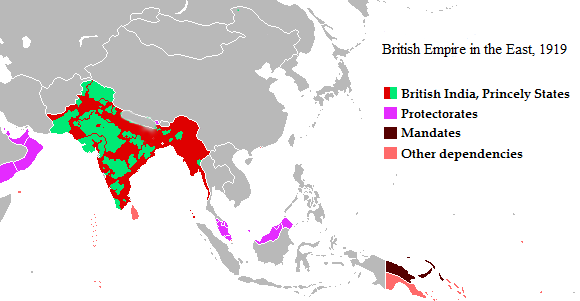
Princely state under the British Raj
A salute state was a princely state under the British Raj that had been granted a gun salute by the British Crown (as paramount ruler); i.e., the protocolary privilege for its ruler to be greeted—originally by Royal Navy ships, later also on land—with a number of cannon shots, in graduations of two salutes from three to 21, as recognition of the state's relative status. The gun-salute system of recognition was first instituted during the time of the East India Company in the late 18th century and was continued under direct Crown rule from 1858.
As with the other princely states, the salute states varied greatly in size and importance. The states of Hyderabad and Jammu and Kashmir, both with a 21-gun salute, were each over 200,000 km2 in size, or slightly larger than the whole of Great Britain; in 1941, Hyderabad had a population of over 16,000,000, comparable to the population of Romania at the time, while Jammu and Kashmir had a population of slightly over 4 million, comparable to that of Switzerland. At the other end of the scale, Janjira and Sachin (11 and 9 guns, respectively, and both ruled by branches of the same dynasty) were respectively 137 and in size, or slightly larger than the island of Jersey; in 1941, Janjira had a population of nearly 14,000, the smallest of the salute states on the subcontinent.
For varying periods of time, a number of salute states in South Asia (Afghanistan), on the Indian subcontinent (Nepal, Bhutan, Sikkim) or in the Middle East (the Gulf/Trucial States and various states in the Aden Protectorate) were also under the British Raj as protectorates or protected states. As with the Indian principalities, those states received varying numbers of gun salutes and varied tremendously in terms of autonomy. Afghanistan and Nepal were both British protected states from the 19th century until 1921 and 1923, respectively, after which they were sovereign nations in direct relations with the British Foreign Office; while protected states, both enjoyed autonomy in internal affairs, though control of foreign affairs was left to the British. The states under the Persian Gulf Residency and the Aden Protectorate (part of the Bombay Presidency until 1937) ranged from Oman, a 21-gun-rated sultanate under a limited protectorate, to the 3-gun Trucial States which were near-total protectorates.
Following their independence in 1947, the new Indian and Pakistani governments maintained the gun-salute system until 1971 (in India) and 1972 (in Pakistan), when the former ruling families were officially derecognised. The Aden Protectorate was transferred to the control of the British Foreign Office in 1937 and eventually became the independent state of South Yemen in 1967, resulting in the abolition of its salute states the same year. Just prior to Indian independence in 1947, the Persian Gulf Residency was likewise transferred to Foreign Office control, remaining in existence until the Trucial States became fully independent in December 1971, forming the United Arab Emirates (UAE) in early 1972.
Salute states and equivalents
When the ruler of a princely state arrived at the Indian capital (originally at Calcutta (Kolkata), then at Delhi), he was greeted with a number of gun-firings. The number of these consecutive "gun salutes" changed from time to time, be increased or reduced depending on the degree of honour which the British chose to accord to a given ruler. The number of gun salutes accorded to a ruler was usually a reflection of the state of his relations with the British and/or his perceived degree of political power; a 21-gun salute was considered the highest. The King (or Queen) of the United Kingdom (who until 1948 was also the Emperor of India) was accorded a 101-gun salute, and 31 guns were used to salute the Viceroy of India.
The number of guns in a salute assumed particular importance at the time of holding of the Coronation Durbar in Delhi in the month of December 1911. The Durbar was held to commemorate the Coronation of King George V with guns firing almost all day. At that time rulers of three princely states were given 21-gun salutes. These were:
- The Maharaja Gaekwad of Baroda State
- The Maharaja of Mysore
- The Nizam of Hyderabad
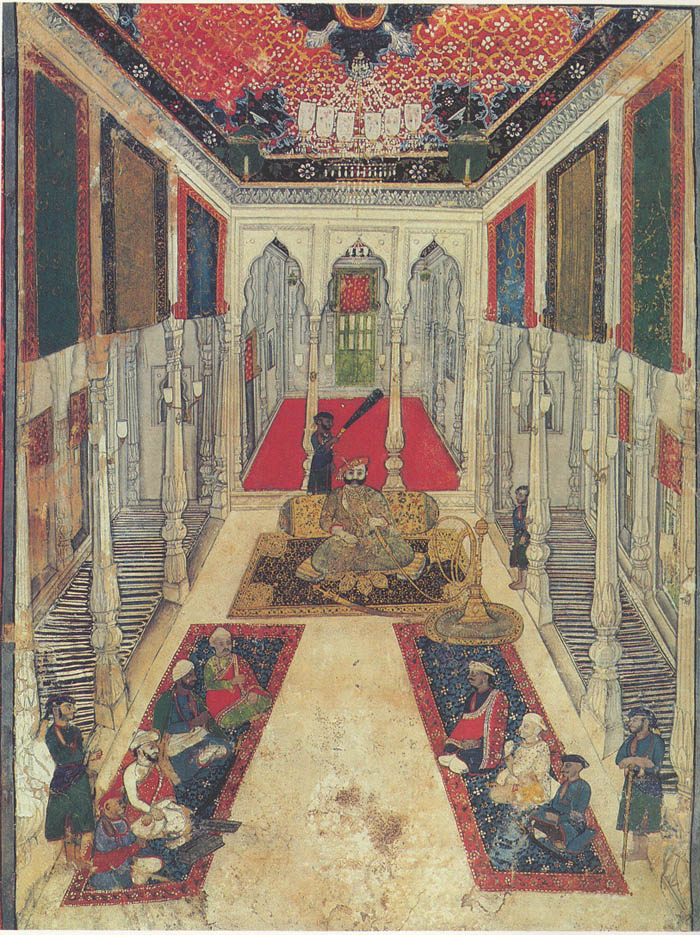
,_with_British_officers_and_Maratha_nobility_in_Indore,_Holkar_State,_Central_India._Circa_1879..jpg)
In 1917, the Maharaja Scindia of Gwalior was upgraded to a permanent and hereditary 21-gun salute, and the Maharaja of Jammu and Kashmir was granted the same in 1921. Both were granted the increased ranks as a result of the meritorious services of their soldiers in the First World War.
Apart from these five, no other princely state received a 21-gun salute. Three of the most prominent princes, however, enjoyed a local salute of 21 guns within the limits of their own state and 19 guns in the rest of India. They were the Nawab (Begum) of Bhopal, the Maharaja Holkar of Indore and the Maharana of Udaipur.
The Nizam, Maharajas, Princes, etc. were all deeply keen on protocol and ensured that it was practised as a matter of faith. Any departure from it was not taken kindly by them. Salute of guns was one such protocol that was strictly followed.
Classifications and sub-classifications of salute states
At the time of Indian independence and partition in 1947, 118 (113 in India, 4 in Pakistan, plus Sikkim) of the roughly 565 princely states were classified as "salute states."
- The rulers of the five premier states – Hyderabad State, Gwalior State, Mysore, Baroda, and Jammu & Kashmir– received 21-gun salutes.
- The rulers of six others – Bhopal, Indore, Udaipur, Kolhapur, Travancore, and Kalat – received 19-gun salutes.
- Seventy-seven were entitled to gun salutes ranging from 17 to 11 guns, with additional gun-salutes granted on a local or personal basis.
- The remaining 30 received a salute of nine guns.
- Eighty-eight rulers with gun salutes of 11 guns or above, whether the salute was hereditary or local only, were entitled to the style of Highness.
- In 1918, the Nizam of Hyderabad was granted the unique style of Exalted Highness, in recognition of the state's contributions to the Allied war effort during the First World War.
- In 1948, all rulers of nine-gun salute states were also granted the style of Highness.
The salute states were broadly divided into two categories: the five premier states with a permanent 21-gun salute and with an individual resident, or envoy, stationed in each, and the remaining 113 states incorporated within political agencies (groups of states) under a political agent. The salutes were themselves organised in a strict hierarchy. Each ruling house of a salute state was entitled to a permanent hereditary salute. In some instances, one of three sub-categories consisting of an increase of 2 gun salutes could be awarded as follows:
- Personal and local: Hereditary to an individual state's ruler only within its borders, and personally to the ruler outside his state, but honouring his person and not the state when he was outside it. An award of a personal salute was only for the lifetime of the ruler, and was typically made for distinguished wartime or civic service.
- Personal: Only for the ruler personally, and not to distinguish his state as a whole.
- Local: Hereditary to an individual state's ruler only within its borders.
As a religious head, the Aga Khan received a personal 11-gun salute. In certain cases, a ruler of a non-salute state or a junior member of a princely family could merit a personal salute or the personal style of Highness.
Salutes within the Indian Empire (royals, administrators, and officers, as of 1947)
| Number of guns | Recipients |
|---|---|
| 101 | |
| (Imperial Salute) | |
| 31 | |
| (Royal Salute)Also on the occasions of the Sovereign's Birthday, the Accession and Coronation Anniversaries, when an Imperial Proclamation was delivered and for the Birthday of a Empress (as Royal Consort). There were two periods when two Empresses of India were living: from 1910 to 1925 (Empress Mary of Teck and Empress Dowager Alexandra of Denmark, who died in 1925), and from 1936 until Indian independence in 1947 (former Empress Dowager Mary of Teck died in 1953). | |
| 21 | |
| 19 | |
| 17On assuming or relinquishing office, or on a public arrival or departure from a military station and on formal ceremonial occasions. Also for a private arrival or departure from a military station (optional, if desired). | |
| 15 | |
| 13 | |
| 11 | |
| 9 |
Salute states that acceded to India
At independence in 1947, the gun salutes enjoyed by the 112 states that acceded to the Union of India were as follows:
| Serial No. | Hereditary salute No. of guns | Personal or local salute No. of guns | Title of Ruler | Name of state | Clan of Ruler | Present Location |
|---|---|---|---|---|---|---|
| 1. | 21 | – | The Maharaja Gaekwad of | Baroda State Baroda | Maratha, Gaekwad | Gujarat |
| 2. | 21 | – | The Maharaja of | Kingdom of Mysore Mysore | Kannadiga, Wadiyar | Karnataka |
| 3. | 21 | – | The Maharaja Scindia of | Gwalior State Gwalior | Maratha, Scindia | Madhya Pradesh |
| 4. | 21 | – | The Maharaja of | Jammu and Kashmir (princely state) Jammu and Kashmir | Rajput, Dogra | Jammu and Kashmir |
| 5. | 21 | – | The Nizam of | Hyderabad State Hyderabad | Turkic, Asaf Jahi | Telangana, Karnataka, and Maharashtra |
| 6. | 19 | 21 (local) | The Nawab of | Bhopal Bhopal | Pashtun, Afghan | Madhya Pradesh |
| 7. | 19 | 21 (local) | The Maharaja Holkar of | Flag of Indore.svg Indore | Maratha, Holkar | Madhya Pradesh |
| 8. | 19 | 21 (local) | The Maharana of | Mewar Udaipur (Mewar) | Rajput, Sisodia | Rajasthan |
| 9. | 19 | 21 (local) | The Maharaja Chhatrapati of | Kolhapur State Kolhapur | Maratha, Bhonsle | Maharashtra |
| 10. | 19 | 21 (local) | The Maharaja of | Travancore Travancore | Nair, Samantan Nair | Kerala |
| 11. | 17 | The Maharao of | Flag of Kotah.svg Kotah | Rajput, Chauhan, Hada | Rajasthan | |
| 12. | 17 | 19 (local) | The Maharaja of | Bharatpur State Bharatpur | Jat, Sinsinwar | Rajasthan |
| 13. | 17 | 19 (local) | The Maharaja of | Bikaner State Bikaner | Rajput, Rathore | Rajasthan |
| 14. | 17 | 19 (local) | The Maharao of | Cutch flag.svg Cutch | Rajput, Jadeja | Gujarat |
| 15. | 17 | 19 (local) | The Maharaja Sawai of | Jaipur State Jaipur | Rajput, Kachwaha | Rajasthan |
| 16. | 17 | 19 (local) | The Maharaja of | Jodhpur State Jodhpur | Rajput, Rathore | Rajasthan |
| 17. | 17 | The Maharaja of | Pudukkottai flag.svg Pudukkottai | Thondaiman | Tamil Nadu | |
| 18. | 17 | 19 (local) | The Maharaja of | Patiala State Patiala | Jat Sikh, Sidhu, Phulkian Misl | Punjab |
| 19. | 17 | – | The Maharao Raja of | Bundi State Bundi | Rajput, Chauhan, Hada | Rajasthan |
| 20 | 17 | – | The Maharaja of | Cochin flag.svg Cochin | Kshatriya, Chandravamsha | Kerala |
| 20. | 17 | – | The Maharaja of | Karauli State Karauli | Rajput Jadaun | Rajasthan |
| 22. | 17 | – | The Nawab of | Tonk State Tonk | Pathan | Rajasthan |
| 23. | 15 | 17 (personal) | The Maharaj Rana of | Dholpur State Dholpur | Jat Bamraolia | Rajasthan |
| 15. | 15 | - | The Maharaja of | Flag of the Rewa State.svg Rewa | Rajput Baghel | Madhya Pradesh |
| 24. | 15 | 17 (local) | The Maharaja of | Alwar flag.svg Alwar | Rajput, Kachwaha | Rajasthan |
| 25. | 15 | – | The Maharawal of | Banswara State Banswara | Rajput, Sisodia | Rajasthan |
| 26. | 15 | – | The Maharaja of | Datia | Rajput, Bundela | Madhya Pradesh |
| 27. | 15 | – | The Maharaja of | Flag of Dewas Senior State.png Dewas Senior | Maratha, Puar | Madhya Pradesh |
| 28. | 15 | – | The Maharaja of | Drapeau Dewas.png Dewas Junior | Maratha, Puar | Madhya Pradesh |
| 29. | 15 | – | The Maharaja of | Drapeau Dhar.png Dhar | Maratha, Puar | Madhya Pradesh |
| 30. | 15 | – | The Maharawal of | Dungarpur State Dungarpur | Rajput Guhilot | Rajasthan |
| 31 | 15 | – | The Maharaja of | Idar State Idar | Rajput Rathore | Gujarat |
| 32 | 15 | – | The Maharawal of | Jaisalmer State Jaisalmer | Rajput, Bhati | Rajasthan |
| 33 | 15 | – | The Maharaja of | Kishangarh State Kishangarh | Rajput, Rathore | Rajasthan |
| 34 | 15 | – | The Maharaja of | Orchha State Orchha | Rajput, Bundela | Madhya Pradesh |
| 35 | 15 | – | The Maharawat of | Flag of Partabgarh.svg Pratapgarh | Rajput, Sisodia | Rajasthan |
| 36 | 15 | – | The Nawab of | Rampur State Rampur | Rohilla Sayyid | Uttar Pradesh |
| 37 | 15 | – | The Maharaol of | Flag of Sirohi.svg Sirohi | Rajput, Chauhan, Devda | Rajasthan |
| 38 | 13 | 15 (local) | The Maharaja of | Flag of the Royal House of Benares.svg Benares | Bhumihar, Gautam | Uttar Pradesh |
| 39 | 13 | 15 (local) | The Maharaja of | Flag of Bhavnagar.svg Bhavnagar | Rajput, Gohil | Gujarat |
| 40 | 13 | 15 (personal and local) | The Maharaja of | Jind | Sikh Jat, Sidhu, Phulkian Misl | Haryana |
| 41 | 13 | 15 (personal and local) | The Nawab of | Junagadh State Junagadh | Babi | Gujarat |
| 42 | 13 | 15 (personal and local) | The Maharaja of | Kapurthala State Kapurthala | Ahluwalia (a Sikh misl) | Punjab |
| 43 | 13 | 15 (local) | The Raja of | Nabha State Nabha | Jat Sikh, Sidhu, Phulkian Misl | Punjab |
| 44 | 13 | 15 (local) | The Maharaja Jam Sahib of | Flag of the Nawanagar State.svg Nawanagar | Rajput, Jadeja | Gujarat |
| 45 | 13 | 15 (local) | The Maharaja of | Flag of Ratlam.png Ratlam | Rajput, Rathore | Madhya Pradesh |
| 46 | 13 | – | The Maharaja of | Koch Bihar Cooch Behar | Rajput, Rajvanshi | West Bengal |
| 47 | 13 | 15 (local) | The Maharaja Raj Sahib of | Dhrangadhra State Dhrangadhra | Rajput, Jhala | Gujarat |
| 48 | 13 | – | The Nawab of | Jaoraflag.png Jaora | Pathan | Madhya Pradesh |
| 49 | 13 | – | The Maharaj Rana of | Jhalawar State Jhalawar | Rajput, Jhala | Rajasthan |
| 50 | 13 | – | The Nawab of | Palanpur State Palanpur | Afghan | Gujarat |
| 51 | 13 | – | The Maharaja Rana Sahib of | Flag of the Porbandar State.svg Porbandar | Rajput, Jethwa | Gujarat |
| 52 | 13 | – | The Maharana of | Flag of Rajpipla.svg Rajpipla | Rajput, Gohil | Gujarat |
| 53 | 13 | – | The Maharaja of | Unofficial flag of Tripura.png Tripura | Manikya | Tripura |
| 54 | 11 | 13 (local) | The Nawab of | Flag of Janjira.svg Janjira | Siddi | Maharashtra |
| 55 | 11 | – | The Maharaja of | Ajaigarh Ajaigarh | Rajput, Bundela | Madhya Pradesh |
| 56 | 11 | – | The Maharana Raja of | Alirajpur State Alirajpur | Rajput, Sisodia | Madhya Pradesh |
| 57 | 11 | – | The Nawab of | Drapeau Baoni.png Baoni | Asaf Jahi | Madhya Pradesh |
| 58 | 11 | – | The Rana of | Drapeau Barwani.png Barwani | Rajput, Sisodia | Madhya Pradesh |
| 59 | 11 | – | The Sawai Maharaja of | Bijawar | Rajput, Bundela | Madhya Pradesh |
| 60 | 11 | – | The Nawab of | Cambayflag.png Cambay | Najm i Sani | Gujarat |
| 61 | 11 | – | The Raja of | Drapeau Chamba.png Chamba | Rajput | Himachal Pradesh |
| 62 | 11 | – | The Maharaja of | Drapeau Charkhari.jpg Charkhari | Rajput, Bundela | Madhya Pradesh |
| 63 | 11 | – | The Maharaja of | Flag of Chhatarpur.svg Chhatarpur | Rajput, Parmar | Madhya Pradesh |
| 64 | 11 | – | The Raja of | Faridkot State Faridkot | Sikh Jat, Brar | Punjab |
| 65 | 11 | – | The Maharaja of | Gondal | Rajput, Jadeja | Gujarat |
| 66 | 11 | – | The Raja of | Bilaspur Bilaspur | Rajput | Himachal Pradesh |
| 67 | 11 | – | The Raja of | Jhabuaflag.png Jhabua | Rajput Rathore | Madhya Pradesh |
| 68 | 11 | – | The Nawab of | Maler Kotla | Afghan | Punjab |
| 69 | 11 | – | The Raja of | Flag of Mandi State.png Mandi | Rajput Chandravanshi | Himachal Pradesh |
| 70 | 11 | – | The Maharaja of | Flag of Manipur.svg Manipur | Meitei people | Manipur |
| 71 | 11 | – | The Maharaja of | Flag of Morvi State.png Morvi | Rajput Jadeja | Gujarat |
| 72 | 11 | – | The Raja of | Narsinghgarh | Rajput Umat | Madhya Pradesh |
| 73 | 11 | – | The Maharaja of | Flag of Panna state.png Panna | Rajput Bundela | Madhya Pradesh |
| 74 | 11 | - | The Nawab of | Radhanpur | Irani | Gujarat |
| 75 | 11 | – | The Raja of | Rajgarhflag.png Rajgarh | Hindu, Rajput | Madhya Pradesh |
| 76 | 11 | – | The Raja of | Flag of the Raigarh State.svg Raigarh | Rajput Raghuvanshi | Himachal Pradesh |
| 77 | 11 | - | The Raja of | Sailanaflag.png Sailana | Rajput Rathore | Madhya Pradesh |
| 78 | 11 | – | The Maharaja of | Samthar | Gurjar Khatana | Uttar Pradesh |
| 79 | 11 | – | The Maharaja of | Sirmur | Rajput, Bhati | Himachal Pradesh |
| 80 | 11 | – | The Raja of | Sitamau state flag.png Sitamau | Rajput Rathore | Madhya Pradesh |
| 81 | 11 | – | The Raja of | Suket flag.svg Suket | Rajput Chandravanshi | Himachal Pradesh |
| 82 | 11 | – | The Maharaja of | Garhwal Kingdom Tehri Garhwal | Rajput, Parmar | Uttarakhand |
| 83 | 11 | – | The Maharana Raj Sahib of | Flag of Wankaner State.png Wankaner | Rajput, Jhala | Gujarat |
| 84 | 9 | 11 (personal) | The Raja of | Flag of the Baria State.svg Baria | Rajput, Chauhan | Gujarat |
| 85 | 9 | 11 (personal) | The Raja of | Drapeau Dharampur.png Dharampur | Rajput, Sisodia | Gujarat |
| 86 | 9 | 11 (personal) | The Raja of | Sangli State Sangli | Maratha, Brahmin administrators (Patwardhan) | Maharashtra |
| 87 | 9 | 11 (local) | The Raja of | Sawantwadi | Maratha, Bhonsle | Maharashtra |
| 88 | 9 | – | The Thakur Sahib of | Wadhwan flag.svg Wadhwan | Rajput Jhala | Gujarat |
| 89 | 9 | – | The Nawab Babi of | Balasinor princely state flag.svg Balasinor | Babi | Gujarat |
| 90 | 9 | – | The Nawab of | Banganapalle State Banganapalle | Najm i Sani | Andhra Pradesh |
| 91 | 9 | – | The Maharawal of | Flag of Bansda.svg Bansda | Rajput Solanki | Gujarat |
| 92 | 9 | – | The Raja of | Baraundha | Rajput Bargurjar | Madhya Pradesh |
| 93 | 9 | – | The Raja of | Bhor State Bhor | Maratha, Brahmin | Maharashtra |
| 94 | 9 | – | The Raja of | Drapeau Chota Udaipur.jpg Chhota Udaipur | Rajput, Chauhan | Gujarat |
| 95 | 9 | – | The Maharana of | Danta-estat.PNG Danta | Rajput, Parmar | Gujarat |
| 96 | 9 | – | The Thakore Sahib of | Dhrol flag.png Dhrol | Rajput, Jadeja | Gujarat |
| 97 | 9 | The Maharaja of | Jawhar State Jawhar | Maratha, Mahadeo Koli (Mukne) | Maharashtra | |
| 98 | 9 | – | The Maharaja of | Kalahandi state flag.png Kalahandi (Karond) | Nagavanshi | Odisha |
| 99 | 9 | – | The Rao of | Flag of Kilchipur.gif Khilchipur | Rajput, Chauhan,(Khinchi) | Madhya Pradesh |
| 100 | 9 | – | The Thakore Sahib of | Limbdi | Rajput, Jhala | Gujarat |
| 101 | 9 | – | The Nawab of | Loharu state flag.png Loharu | (Muslim) | Haryana |
| 102 | 9 | – | The Maharana of | Lunavada State flag.jpg Lunavada | Rajput, Solanki | Gujarat |
| 103 | 9 | – | The Raja of | Maihar | Rajput, Kachwaha | Madhya Pradesh |
| 104 | 9 | – | The Maharaja of | Flag of Mayurbhanj.png Mayurbhanj | Bhanja | Odisha |
| 105 | 9 | – | The Raja of | Mudhol State Mudhol | Maratha, Ghorpade | Karnataka |
| 106 | 9 | – | The Raja of | Nagod state flag.png Nagod | Rajput, Parihar | Madhya Pradesh |
| 107 | 9 | – | The Thakore Sahib of | Palitana | Rajput, Gohil | Gujarat |
| 108 | 9 | – | The Maharaja of | Patna State Patna | Rajput, Chauhan | Odisha |
| 109 | 9 | – | The Thakore Sahib of | Rajkot Rajkot | Rajput, Jadeja | Gujarat |
| 110 | 9 | – | The Nawab of | Flag of the Sachin State.svg Sachin | Siddi | Gujarat |
| 111 | 9 | 11 (local) | The Maharana of | Sant state flag.png Sant | Rajput, Parmar | Gujarat |
| 112 | 9 | The Rajadhiraj of | Flag of Shahpura.svg Shahpura | Rajput, Sisodia | Rajasthan |
The system of gun salutes continued in the Republic of India until 1971.
Although salutes with many more guns have been used for Western Monarchs (and dynastic and other associated occasions), the 21-gun salute has in modern times become customary for Sovereign Monarchs (hence also known as 'royal salute') and republic.
Some of the rulers not listed above were granted increased gun salutes after the independence, e.g. the Maharana of Mewar (at Udaipur, Maharajpramukh in Rajasthan) was raised to first place in the Order of Precedence, displacing the Nizam of Hyderabad and Berar, and all 9-gun states were permitted the use of the style of Highness. However, it has not been possible to obtain complete details for all the rulers.
This system continued till 1971 when privileges and Privy Purses of ex-rulers were abolished by the Government of India.
Salute states that acceded to Pakistan
Main article: Princely states of Pakistan
Between August 1947 and March 1948, thirteen Muslim princely states in western India acceded to the new Dominion of Pakistan, created from British India by the Indian Independence Act 1947, thus becoming the Princely states of Pakistan. Between 1955 and 1974, they were all amalgamated into larger federations and provinces. All of the princely states were in the western part of the country, so all were merged into the eventual West Pakistan, which constitutes (since the breakaway of Bangla Desh) the present-day Republic of Pakistan.
The states retained internal autonomy so long as they existed, but all had lost this by 1974. The styles and titles enjoyed by the former ruling families ceased to be officially recognised by the Government of Pakistan, mostly in January 1972, with the exception of the small states of Hunza and Nagar, which were shortly after incorporated into the Northern Areas of Pakistan in October 1974.
Four salute states acceded to Pakistan between 3 October 1947 and 27 March 1948. In order of precedence, they were as follows:
| Serial No. | Hereditary salute No. of guns | Personal or local salute No. of guns | Title of Ruler | Name of state | Clan of Ruler | Present Location |
|---|---|---|---|---|---|---|
| 1. | 19 | – | The Khan of | FlagofKalat.svg Kalat | Muslim Balochi | Balochistan |
| 2. | 17 | – | The Nawab of | Bahawalpur Bahawalpur | Muslim Abbasi | Punjab |
| 3. | 15 | 17 (local) | The Mir of | Khairpurflag.png Khairpur | Muslim Balochi | Sindh |
| 4. | 11 | – | The Mehtar of | Flag of State of Chitral.svg Chitral | Muslim Katoor | Khyber Pakhtunkhwa |
After several promotions and two further post-colonial awarding under the republic – which India did not do – the gun salutes enjoyed by the states in Pakistan were as follows in 1966:
- Hereditary salute of 19-guns (promoted): the Amir of Bahawalpur
- Hereditary salute of 19-guns: the Khan of Kalat
- Hereditary salute of 17-guns (promoted): the Mir of Khairpur
- Hereditary salute of 15-guns: the Mir of Hunza (granted by President Ayub Khan in 1966, previously non-salute)
- Hereditary salute of 15-guns: the Wali of Swat (granted by President Ayub Khan in 1966, previously non-salute)
- Hereditary salute of 11-guns: the Mehtar of Chitral
Salute states in Burma
- 9 guns (permanent, for rulers of the following Shan States):
- The Saopha of Kengtung
- The Saopha of Hsipaw
- The Saopha of Mong Nai
- The Saopha of Yawnghwe
Protectorates and protected states under the Indian Empire
The following list of gun salutes is as they stood in 1947.
South Asia
| Hereditary salute No. of guns | Personal or local salute No. of guns | Title of Ruler | Name of state | Clan of Ruler | Present Location |
|---|---|---|---|---|---|
| 21 | – | The King ofStyled as His Highness The Emir of Afghanistan until 1905, when the emirate was recognised as a kingdom, with full sovereignty in 1921. The monarchy was deposed in 1973. | Emirate of Afghanistan Afghanistan | Barakzai | Afghanistan |
In 1890, Abdur Rahman Khan, the Emir of Afghanistan, accepted for his kingdom the status of a British protected state under the British Raj, retaining internal autonomy while placing the state's foreign affairs under British control. In 1905, his son and successor, Habibullah Khan, negotiated the Anglo-Afghan Treaty with the British, by which Afghanistan was de jure styled as a sovereign monarchy and the ruler recognised as King of Afghanistan (Shah-e-Afghanistan) with the style of His Majesty, while remaining a protected state of Britain. In May 1919, King Habibullah's successor, King Amanullah, declared the country a wholly sovereign kingdom, which resulted in the Third Anglo-Afghan War. Despite a British victory, the British recognised the total sovereignty of Afghanistan in the Anglo-Afghan Treaty of Kabul in 1921; thereafter, Afghanistan continued to exist as a sovereign monarchy until the fall of the monarchy in 1973.
| Hereditary salute No. of guns | Personal or local salute No. of guns | Title of Ruler | Name of state | Clan of Ruler | Present Location |
|---|---|---|---|---|---|
| 31 | 51 | The Maharajadhiraja ofStyled as His Majesty the Maharajadhiraja of Nepal until 1919, when Nepal was recognised as a sovereign kingdom. The monarchy was abolished in 2008. | Kingdom of Nepal Nepal | Shah dynasty | Nepal |
| 21Permanent, but only in the Maharaja's capacity as Prime Minister of Nepal, when representing the Nepalese monarch outside the country. | 31 | The Shree Teen Maharajah ofSemi-sovereign status; until 1951, when the dynasty was deposed and the monarchy abolished. | Lamjang and Kaski | Rana dynasty | Nepal |
The Anglo-Nepalese War of 1816, which led to the defeat of the Gorkha Shah monarchy of Nepal, resulted in the kingdom becoming a de jure protectorate, but a de facto protected state of the East India Company. Following the Indian Rebellion of 1857 and the dissolution of the East India Company in 1858, the protectorate was transferred to the British crown through the British Raj, which recognised the monarch as "King of Nepal" with the style of His Majesty in 1919 and the Rana Maharaja was styled as His Highness, due to the country's contributions to the Allied cause in the First World War. In 1923, the British government ended its protectorate and recognised Nepal as a wholly sovereign monarchy. While the semi-sovereign Rana oligarchy held power as hereditary Shree Teen Maharajas of Nepal until its deposition in 1951, the Nepalese monarchy continued until its abolition in 2008.
| Hereditary salute No. of guns | Personal or local salute No. of guns | Title of Ruler | Name of state | Clan of Ruler | Present Location | |||
|---|---|---|---|---|---|---|---|---|
| title=The Gazette of India | url=http://pib.nic.in/archive/docs/DVD_16/ACC%20NO%20281-BR/EXT-1955-06-20_4713.pdf | website=pib.nic.in/archive | access-date=5 February 2017}}15 guns (personal) by the British government in December 1903; made permanent in June 1911. Promoted to a permanent salute of 19 guns in June 1955 by the Government of India; raised to 21 guns in 1963. | – | The Maharaja Druk Gyalpo ofUntil 1963, when Bhutan declared itself a sovereign kingdom and converted the style to H.M. the Druk Gyalpo | Bhutan Bhutan | Wangchuck | Bhutan |
A brief war between Bhutan and the British Raj in 1864 resulted in the Treaty of Sinchula, which forced Bhutan to relinquish territory and defined its relationship with the British. A loose agglomeration of semi-independent districts until 1907, Bhutan was unified in that year as a hereditary monarchy represented by Ugyen Wangchuck, the penlop (or governor) of the district of Tongsa, who was proclaimed the Maharaja and Druk Gyalpo (Dragon King) of Bhutan. In 1910, Bhutan signed the Treaty of Punakha, under which the British Raj guaranteed Bhutan's internal sovereignty, but, as with Sikkim, maintained control over its foreign relations. A British residency was officially installed in Bhutan, with a resident deputed from the Indian Political Service and answerable to the British government in India. The treaty, which established Bhutanese sovereignty, albeit as a protected state, remained in force until Indian independence in 1947; at this time, Bhutan was offered the options of remaining independent or acceding to the new Indian Union. Choosing to maintain its independence, Bhutan formally established relations with India in 1949, signing the India-Bhutan Treaty of Friendship on 8 August 1949; while reaffirming Bhutanese sovereignty, the new treaty gave India control over Bhutan's foreign policy. In 1963, however, Bhutan promulgated a new constitution which replaced the title of His Highness the Maharaja with His Majesty the Druk Gyalpo, formally promoting the country to the status of an independent, sovereign monarchy. In 1971, Bhutan joined the United Nations as a full member, and renegotiated the 1949 treaty with India in 2007, legally ending Bhutan's status as a protected state of India.
| Hereditary salute No. of guns | Personal or local salute No. of guns | Title of Ruler | Name of state | Clan of Ruler | Present Location |
|---|---|---|---|---|---|
| 15Until 1975, when the monarchy was abolished. | – | The Maharaja (Chogyal) ofUntil 1975, when the monarchy was abolished. | Kingdom of Sikkim Sikkim | Tipihar | Sikkim |
Though officially considered a princely state under its ruler, the Maharaja Chogyal, Sikkim was given the separate status of a British protectorate in 1861 under the Treaty of Tumlong, by which the British government could intervene in the state's internal affairs and oversee all external matters; despite this, Sikkim maintained a high degree of autonomy in practice. In 1947, the Maharaja Chogyal and his people decided against accession to India and chose to maintain Sikkim's internal sovereignty. The state formally became a protectorate of India in 1950. Following the death of the Maharaja Chogyal in 1963 and his succession by his unpopular son, Palden Thondup Namgyal, popular demands for increased individual rights grew more frequent. After Sikkim's first free general elections in 1974, the Indian Army placed the Chogyal under house arrest. Under military supervision, a controversial referendum was held in 1975, which approved the state's merger with India and the abolition of the monarchy. Sikkim was formally merged into India as its 22nd state on 26 April 1975.
Middle East and Persian Gulf
The following were constituent states of the Aden Protectorate from the late 19th century until their independence and merger with South Yemen in 1967 when the states were abolished. The protectorate was under the British Raj and governed as part of the Bombay Presidency until 1917 when the protectorate was transferred to the control of the British Foreign Office.
| Hereditary salute No. of guns | Personal or local salute No. of guns | Title of Ruler | Name of state | Clan of Ruler | Present Location |
|---|---|---|---|---|---|
| 9 | 11 (local) | The Sultan ofJoined the Federation of South Arabia in 1962. Maintained its status until 1967, when the protectorate and state were abolished and merged with South Yemen. | Lahej Lahej | Al-Abdali | Yemen |
| 9 | 11 (local) | The Sultan ofJoined the Protectorate of South Arabia in 1963. Maintained its status until 1967, when the protectorate and state were abolished and merged with South Yemen. | Flag of Qu'aiti State in Hadhramaut (1880-1939).svg Shihir and Makalla | Al-Qu'aiti | |
| 9 | - | The Sultan ofJoined the Protectorate of South Arabia in 1963. Maintained its status until 1967, when the protectorate and state were abolished and merged with South Yemen. | Flag of the Mahra Sultanate.svg Qishn and Soqotra | Al-Mahri | |
| 9 | - | The Sultan ofJoined the Federation of South Arabia in 1962. Maintained its status until 1967, when the protectorate and state were abolished and merged with South Yemen. | Fadhli Fadhli | Al-Fadhli | |
| - | 9 (local) | The Emir ofJoined the Federation of South Arabia in 1962. Maintained its status until 1967, when the protectorate and state were abolished and merged with South Yemen. | Dhala Dhala | Al-Amiri | |
| - | 9 (local) | The Sultan ofJoined the Federation of South Arabia in 1962. Maintained its status until 1967, when the protectorate and state were abolished and merged with South Yemen. | Lower Yafa Lower Yafa | Al-Afifi |
| Hereditary salute No. of guns | Personal or local salute No. of guns | Title of Ruler | Name of state | Clan of Ruler | Present Location | |||
|---|---|---|---|---|---|---|---|---|
| 21Considered a de jure foreign monarch. | - | The Sultan ofWith the style of Highness until 1971, when the country attained full independence from Britain and the style of the monarch was raised to Majesty. | Muscat and Oman Mascat and Oman | Al-Said | Oman | |||
| - | 7 (local, 11 personal)5 guns (local, 11 personal) from 1914, raised to 7 guns (local) in 1923. | The Sheikh (Ruler) ofGranted the style of Excellency by the British government in 1914, raised to Highness from 1933. Assumed the title of Emir in 1961 upon attaining full independence from Britain. | Kuwait Kuwait | Al-Sabah | Kuwait | |||
| - | 7 (local, 11 personal)5 guns (local) and 11 guns (personal) from 1914, raised to 7 guns (local) in 1923. | The Sheikh (Ruler) ofGranted the personal style of Excellency by the British government from 1914; raised to Highness from 1933. Assumed the title of Emir in 1971 upon full independence from Britain; maintained style until 2002, when the nation was declared a kingdom and the style of the monarch was raised to Majesty with the title of King of Bahrain. | Bahrain Bahrain | Al-Khalifa | Bahrain | |||
| - | 7 (local)Awarded in 1923. | The Sheikh (Ruler) ofWith the style of Excellency until 1971, when the country attained full independence from Britain and the style of the monarch was raised to His Highness the Emir from the same time. | Qatar Qatar | Al-Thani | Qatar | |||
| - | pages=479 | title=The Indian Year Book 1924 | publisher=Bennett, Coleman & Co., Ltd. | year=1924}} | The Sheikh (Ruler) ofWith the style of Excellency until 1971, when the country attained full independence from Britain and the style of the monarch was raised to His Highness the Emir from the same time. | Abu Dhabi Abu Dhabi | Al-Nahyan | UAE |
| - | pages=142 | title=The Half-yearly List of the Indian Political Service | publisher=Government of India | year=1942}} | The Sheikh (Ruler) ofUntil 1971, when the country attained full independence from Britain and the style of the monarch was raised to His Highness the Emir from the same time. | Sharjah Sharjah | Al-Qasimi | |
| - | 5 (local)Awarded in 1929. | The Sheikh (Ruler) ofUntil 1971, when the country attained full independence from Britain and the style of the monarch was raised to His Highness the Emir from the same time. | Dubai Dubai | Al-Maktoum | ||||
| - | 3 (local) | The Sheikh (Ruler) ofUntil 1971, when the country attained full independence from Britain and the style of the monarch was raised to His Highness the Emir from the same time. | Ajman Ajman | Al-Nuaimi | ||||
| - | 3 (local) | The Sheikh (Ruler) ofUntil 1971, when the country attained full independence from Britain and the style of the monarch was raised to His Highness the Emir from the same time. | Ras al-Khaimah Ras al-Khaimah | Al-Qasimi | ||||
| - | 3 (local) | The Sheikh (Ruler) of | Sharjah KalbaRuled by a branch of the Sharjah royal family as a Trucial State from 1936 until 1952, when it was reincorporated into Sharjah. | Al-Qasimi | ||||
| - | 3 (local) | The Sheikh (Ruler) ofUntil 1971, when the country attained full independence from Britain and the style of the monarch was raised to His Highness the Emir from the same time. | Umm al-Quwain Umm al-Qaiwain | Al-Mu'alla |
Personal salute dynasties on the Indian subcontinent
Rulers of princely states (in 1947)
- 9 guns: Padam Singh, Raja of Bashahr (now in Himachal Pradesh)
Religious leaders
- 11 guns: the Aga Khan (religious leader of the Nizari Ismaili branch of Islam); only salute not attached to any territorial principality).
Political pensioners under the British Raj
- 19 guns (only personal and local) for the Nawab of Murshidabad, as heirs of Bengal (including present Bangladesh and West Bengal)
- 15 guns (until 1899) for the Nawab (later restyled Prince) of Arcot, i.e. the Carnatic
- 13 guns salute for Raja of Vizianagram
Zamindars in French India
- 4 guns: Manyam Zamindar of Yanam
States within the British sphere of influence (as of 1947)
Sovereign foreign rulers
- 19 guns: The Dalai lama of Tibet, a de facto sovereign theocratic Buddhist nation before annexation by the People's Republic of China
- 21 guns: The King of Mosquito Coast (a Native South American kingdom in present Nicaragua; styled His Majesty, most unusual as HM is normally reserved for the Paramount Ruler and his or her independent peers; under British protectorate since 1688, formalised in 1749 with appointment of a resident Superintendent; Britain relinquished control in 1783–87; Nicaraguan sovereignty was recognised in 1860 under the Treaty of Managua, hence the king was effectively demoted to the rank of a mere "chief", in 1894 militarily driven into exile to Jamaica)
- 9 guns: The Kabaka of Buganda (a Ganda kingdom in Western Uganda, status granted after 1912, subsequently made permanent in 1939)
Notes
References
References
- (1945). "The India Office and Burma Office List: 1945". Harrison & Sons, Ltd..
- "King of all rewinds".
- (1947). "The India Office and Burma Office List: 1947". Harrison & Sons, Ltd..
- Robin Jaffery, The Decline of Nair Dominance
- (1945). "The India Office and Burma Office List: 1945". Harrison & Sons, Ltd..
- [http://members.iinet.net.au/~royalty/states/burma/yawnghwe.html Yawnghwe (Shan State) (9 Gun Salute)]
- "The Gazette of India".
- pg 73. "Qatar: A Modern History." [[Fromherz, Allen James]]. Georgetown University Press, Washington, 2012
- (1924). "The Indian Year Book 1924". Bennett, Coleman & Co., Ltd..
- (1942). "The Half-yearly List of the Indian Political Service". Government of India.
- [http://uqconnect.net/~zzhsoszy/ips/v/vizianagram.html VIZIANAGRAM (Zamindari)] {{webarchive. link. (30 May 2009)
- (1935). "Alqabnamah: List Showing the Names, Titles and Modes of Address of the More Important Sovereigns, Ruling Princes, Chiefs, Nobles etc., Having Relations with the Indian Government". Government of India Press.
This article was imported from Wikipedia and is available under the Creative Commons Attribution-ShareAlike 4.0 License. Content has been adapted to SurfDoc format. Original contributors can be found on the article history page.
Ask Mako anything about Salute state — get instant answers, deeper analysis, and related topics.
Research with MakoFree with your Surf account
Create a free account to save articles, ask Mako questions, and organize your research.
Sign up freeThis content may have been generated or modified by AI. CloudSurf Software LLC is not responsible for the accuracy, completeness, or reliability of AI-generated content. Always verify important information from primary sources.
Report