From Surf Wiki (app.surf) — the open knowledge base
Salina, Kansas
City in Saline County, Kansas

City in Saline County, Kansas
| Field | Value |
|---|---|
| name | Salina, Kansas |
| settlement_type | City and County seat |
| image_skyline | Salina water tower.jpg |
| image_caption | Salina water tower (2013) |
| image_map | Saline_County_Kansas_Incorporated_and_Unincorporated_areas_Salina_Highlighted.svg |
| map_caption | Location within Saline County and Kansas |
| image_map1 | Map of Saline Co, Ks, USA.png |
| map_caption1 | KDOT map of Saline County (legend) |
| coordinates_footnotes | |
| coordinates | |
| subdivision_type | Country |
| subdivision_name | United States |
| subdivision_type1 | State |
| subdivision_name1 | Kansas |
| subdivision_type2 | County |
| subdivision_name2 | Saline |
| subdivision_type3 | Township |
| established_title | Founded |
| established_date | |
| established_title1 | Platted |
| established_title2 | Incorporated |
| established_date2 | 1870 |
| government_type | Council-Manager |
| leader_title | Mayor |
| leader_name | Greg Lenkiewicz |
| leader_title1 | City manager |
| leader_name1 | Jacob Wood |
| area_footnotes | |
| area_total_sq_mi | 25.74 |
| area_land_sq_mi | 25.70 |
| area_water_sq_mi | 0.03 |
| area_total_km2 | 66.65 |
| area_land_km2 | 66.57 |
| area_water_km2 | 0.09 |
| unit_pref | Imperial |
| elevation_footnotes | |
| elevation_ft | 1227 |
| population_footnotes | |
| population_as_of | 2020 |
| population_total | 46889 |
| population_density_sq_mi | auto |
| population_density_km2 | auto |
| timezone | CST |
| utc_offset | -6 |
| timezone_DST | CDT |
| utc_offset_DST | -5 |
| postal_code_type | ZIP code |
| postal_code | 67401-67402 |
| area_code_type | Area code |
| area_code | 785 |
| blank_name | FIPS code |
| blank_info | |
| blank1_name | GNIS ID |
| blank1_info | 476808 |
| website |
Salina is a city in and the county seat of Saline County, Kansas, United States. As of the 2020 census, the population was 46,889.
In the early 1800s, the Kanza tribal land reached eastward from the middle of the Kansas Territory. In 1858, settlers from Lawrence founded the Salina Town Company with a wagon circle, under constant threat of High Plains tribal attacks from the west. It was named for the salty Saline River. Saline County was soon organized around this township, and in 1870, Salina incorporated as a city.
As the westernmost town on the Smoky Hill Trail, Salina boomed until the Civil War by establishing itself as a trading post for westbound immigrants, gold prospectors bound for Pikes Peak, and area American Indian tribes. It boomed again from the 1940s-1950s when the Smoky Hill Army Airfield was built for World War II strategic bombers.
It is now a micropolis and regional trade center for North Central Kansas. Its larger employers are Tony's Pizza, Exide Battery, Great Plains Manufacturing, and Asurion. Salina is home to Kansas Wesleyan University and KSU College of Technology and Aviation higher education institutions.
History
Native inhabitance: up to 1800s
Shortly prior to European colonization of the area in the early 1700s, the site that would become Salina was located within the western territory of the Kansa people. Claimed first by France as part of Louisiana and later acquired by the United States with the Louisiana Purchase in 1803, it was within the area organized by the U.S. as Kansas Territory in 1854. The French traders who mapped the forks of les Grande Riviere des Cansez, located the western village of les Cansez at the general confluence of the Smoky Hill, Saline, and Solomon Rivers with villages of the Paducas tribe just to the west on heads of those streams.
By the time of exploration of the prairie by the United States following the Louisiana Purchase in the early 1800s, the Republican Pawnee had established its influence in the Smoky Hills, driving the Kansa to its northeastern Kansas settlements.{{citation |title= 19th Century Kansas Trails |publisher= Kansas Department of Transportation
The United States established forts throughout the territory to provide security for established commercial trade trails, including the Smoky Hill Trail and the Santa Fe Trail. The Smoky Hill Trail passed through the Salina site where the Fort Riley/Fort Larned Road split off to cross the Smoky Hill River to the southwest.
Battle of Indian Rock: 1857
By the time of the first tentative settlements by United States citizens, the site was claimed as hunting grounds by the High Plains tribes of Cheyenne, Arapaho, and Sioux, which had expanded into the area, driving out the Pawnee. However, the Kansa continued to hunt in the area, in which they were joined by the Delaware and Potawatomi tribes which had been relocated by the U.S. Government near the Kansa's reserve and assured of hunting access to the plains. The High Plains tribes were hostilely opposed to both the U.S. settlers in central Kansas and to the relocated tribes in Eastern Kansas and Nebraska, who they also regarded as settlers, and there were several raids in the Salina area in the 1850s. These Indian skirmishes repeatedly discouraged settlement of the Salina site until 1857, according to William A. Phillips who resided in Lawrence while scouting settlement locations.
In that year, Big Chief of the Cheyenne led a party of the High Plains tribes. At Spring Creek, 20 miles west of what became Salina, they made a surprise attack on a hunting party of the "friendly" Eastern tribes. The hunting party retreated to Dry Creek, trapped and sending for help from another Kaw hunting party from Council Grove. Big Chief forced them to flee further to a butte in a bend of the Smoky Hill River, where they were joined by the Kaw reinforcements with rifles. Firing rifles from the cover of large sandstone boulders atop the butte, the defenders killed Big Chief on the first of five offensive charge attempts. His attacking bow and arrow force was devastated, leaving bodies strewn, and effectively ending the local raids.
The aftermath was recalled by settler Christina Campbell: "one of the fiercest and most cruel Indian battles known to white settlers; around were strewn thousands of arrows and implements of Indian warfare. Indian Rock, besmeared with blood, showed the part it played in repelling the repeated savages' attacks. It was here that the Cheyenne made their last attack."
Founding: 1858–1870
_(cropped).jpg)
|Salina, 1867, by Alexander Gardner, from months-old Kansas Pacific Railway tracks, with Indian Rock behind and to the right.]] The defeat of the aggressive High Plains tribes had enabled the safe return of attempted settlers. In April 1858, journalist and lawyer William A. Phillips from Lawrence led the founding of Salina, accompanied by settlers David Phillips, Alexander M. Campbell Sr. (husband of Christina), A.C. Spillman, and James Muir. They were all Scottish Presbyterians, and all but Muir were related. From a west riverbank dugout at what is now Riverside Park, they camped and designed the first building. It was a two-story dwelling and Campbell's store, at what is now the southwest corner of 5th St and Iron Ave near Founders Park. Constant tribal attacks required a wagon circle around the first water well one block west. The Campbells had the first surviving settler birth in the area, also named Christina.
That month, and still predating the 1861 statehood of Kansas, they chartered the Salina Town Company with the Kansas territory legislature. During the following year, they organized the surrounding area as Saline County, and named Salina the county seat. The westernmost town on the Smoky Hill Trail, Salina established itself as a trading post for westbound immigrants, gold prospectors bound for Pikes Peak, and area American Indian tribes. The town's growth halted with the outbreak of the American Civil War when much of the male population left to join the Union Army.
In 1862, residents fended off Indian raiders and suffered a second assault by bushwhackers.

Growth resumed with returning war veterans, and the town expanded rapidly with the arrival of the Kansas Pacific Railway in 1867. The construction of the railroad through Salina to Denver was a violation of treaty promises of Indian hunting grounds west of Salina, and Dog Soldiers began raiding the construction parties between Salina and Fort Wallace. The following U.S. military action removed Indians from western Kansas by 1868.
Salina incorporated as a city in 1870.
Growth: 1872–1950s
The cattle trade arrived in 1872, transforming Salina into a cowtown. It brought further prosperity, but also a rowdy culture that agitated local residents. The cattle trade relocated westward just two years later. During the 1870s, wheat became the dominant crop in the area, steam-powered flour mills were built, and agriculture became the engine of the local economy. In 1874, Salina resident E. R. Switzer introduced alfalfa to area farmers, and its cultivation spread throughout the state. By 1880, the city had become an area industrial center with several mills, a carriage and wagon factory, and a farm implement works. In 1889, the original garment factory of jeans maker Lee was opened. In the following decade, three railroads were built through the city.
In 1943, the U.S. Army established Smoky Hill Army Airfield southwest of the city. The installation served as a base for strategic bomber units throughout World War II. Renamed Smoky Hill Air Force Base in 1948, it was closed the following year and was reopened in 1951 as Schilling Air Force Base, part of the Strategic Air Command. The re-opening triggered an economic boom in Salina, causing the city's population to increase by nearly two-thirds during the 1950s.
The Salina micropolitan area is a center of trade, transportation, and industry in North Central Kansas.
Geography
Salina is located at (38.8402805, -97.6114237) at an elevation of 1224 ft. Located in North Central Kansas at the intersection of Interstate 70 and Interstate 135, it is 81 mi north of Wichita, Kansas, 164 mi west of Kansas City, Missouri, and 401 mi east of Denver, Colorado.
Salina lies in the Smoky Hills region of the Great Plains approximately 6 mi west-southwest of the confluence of the Saline and Smoky Hill Rivers. The Smoky Hill River runs north then northeast through the eastern part of the city; the Saline River flows southeast immediately north of the city. In the northeast part of the city, the old channel of the Smoky Hill branches from the river's current course and winds west, north, and back east before draining back into the river. Mulberry Creek, a tributary of the Saline, flows northeast through the far northern part of the city. Dry Creek, a tributary of Mulberry Creek, flows north through the western part of the city.
According to the United States Census Bureau, the city has a total area of 25.15 sqmi, of which 25.11 sqmi is land and 0.04 sqmi is water.
Climate
Salina lies in the transition area between North America's humid subtropical (Köppen Cfa) and humid continental climate (Köppen Dfa) zones. Consequently, summers are typically hot and humid, and winters are typically cold and dry. On average, January is coldest, July is hottest, and May has the greatest precipitation.
Salina is in a region prone to severe thunderstorms with damaging winds, hail, and tornadoes. On June 21, 1969, an F3 tornado struck the southern part of the city, severely damaging or destroying more than 100 homes and businesses and injuring 60 people. On September 25, 1973, a second F3 tornado passed through the southeast part of town, injuring six people and destroying two houses and a trailer park. On June 11, 2008, another EF3 tornado passed on the south side of the town, severely damaging several buildings.
The annual average temperature in Salina is 56.1 °F. The monthly daily average temperature ranges from 31.0 °F in January to 81.1 °F in July. The high temperature reaches or exceeds 90 °F an average of 67.6 days per year and reaches or exceeds 100 °F an average of 15.9 days per year. The low temperature falls below the freezing point, 32 °F, an average of 115.5 days per year and below 0 °F an average of 2.1 days per year. The hottest temperature recorded in Salina is 118 °F on August 13, 1936; the coldest temperature recorded is −31 °F on February 13, 1905.
On average, Salina receives 32.2 in of precipitation per year with the largest share being received from May to August. Snowfall averages 16.6 in per year.
|Jan record high F = 78 |Feb record high F = 84 |Mar record high F = 96 |Apr record high F = 105 |May record high F = 106 |Jun record high F = 114 |Jul record high F = 116 |Aug record high F = 118 |Sep record high F = 110 |Oct record high F = 100 |Nov record high F = 89 |Dec record high F = 81
|Jan avg record high F = 65.2 |Feb avg record high F = 70.9 |Mar avg record high F = 81.0 |Apr avg record high F = 87.7 |May avg record high F = 93.9 |Jun avg record high F = 101.1 |Jul avg record high F = 105.7 |Aug avg record high F = 103.3 |Sep avg record high F = 98.0 |Oct avg record high F = 89.7 |Nov avg record high F = 76.0 |Dec avg record high F = 64.9 |year avg record high F = 106.9
|Jan avg record low F = 2.2 |Feb avg record low F = 5.6 |Mar avg record low F = 15.4 |Apr avg record low F = 26.1 |May avg record low F = 38.4 |Jun avg record low F = 52.0 |Jul avg record low F = 59.0 |Aug avg record low F = 57.0 |Sep avg record low F = 42.4 |Oct avg record low F = 28.0 |Nov avg record low F = 15.9 |Dec avg record low F = 5.8 |year avg record low F = -3.0
|Jan record low F = -28 |Feb record low F = -31 |Mar record low F = -11 |Apr record low F = 5 |May record low F = 19 |Jun record low F = 39 |Jul record low F = 46 |Aug record low F = 38 |Sep record low F = 28 |Oct record low F = 13 |Nov record low F = -5 |Dec record low F = -24
|access-date = March 12, 2023 |access-date = March 12, 2023 |access-date = March 12, 2023 Weatherbase: Humidity
Demographics
| align-fn = center 2010-2020
Salina is the anchor city of the Salina Micropolitan Statistical Area, which includes all of Saline and Ottawa counties.
2020 census
The 2020 United States census counted 46,889 people, 19,245 households, and 11,159 families in Salina. The population density was 1,824.5 per square mile (704.4/km). There were 21,024 housing units at an average density of 818.1 per square mile (315.8/km). The racial makeup was 78.14% (36,639) white, 3.8% (1,780) black or African-American, 0.67% (315) Native American, 2.34% (1,097) Asian, 0.06% (29) Pacific Islander, 4.55% (2,133) from other races, and 10.44% (4,896) from two or more races. Hispanic or Latino of any race was 12.5% (5,837) of the population.
Of the 19,245 households, 25.4% had children under the age of 18; 43.7% were married couples living together; 30.4% had a female householder with no husband present. 36.9% of households consisted of individuals and 13.6% had someone living alone who was 65 years of age or older. The average household size was 2.4 and the average family size was 3.1.
23.2% of the population was under the age of 18, 9.1% from 18 to 24, 25.2% from 25 to 44, 25.4% from 45 to 64, and 16.7% who were 65 years of age or older. The median age was 38.0 years. For every 100 females, the population had 98.6 males. For every 100 females ages 18 and older, there were 96.4 males.
The 2016–2020 5-year American Community Survey estimates show that the median household income was $49,870 (with a margin of error of +/- $2,394) and the median family income $68,074 (+/- $5,484). Males had a median income of $35,303 (+/- $3,159) versus $26,949 (+/- $1,154) for females. The median income for those above 16 years old was $30,335 (+/- $1,129). Approximately, 7.6% of families and 11.6% of the population were below the poverty line, including 12.6% of those under the age of 18 and 11.7% of those ages 65 or over.
2010 census
, there were 47,707 people, 19,391 households, and 12,024 families residing in the city. The population density was 2,092.4 PD/sqmi. There were 20,803 housing units at an average density of 916.4 /sqmi. The racial makeup was 86.2% White, 3.7% African American, 2.3% Asian, 0.5% American Indian, 0.1% Pacific Islander, 3.8% from some other race, and 3.3% from two or more races. Hispanics and Latinos of any race were 10.7% of the population.
There were 19,391 households, of which 31.6% had children under the age of 18 living with them, 45.3% were married couples living together, 4.9% had a male householder with no wife present, 11.8% had a female householder with no husband present, and 38.0% were non-families. 31.6% of all households were made up of individuals, and 11.6% had someone living alone who was 65 years of age or older. The average household size was 2.39, and the average family size was 2.99.
The population was spread out, with 25.1% of residents under the age of 18; 9.9% between the ages of 18 and 24; 25.4% from 25 to 44; 25.3% from 45 to 64; and 14.3% 65 years of age or older. The median age was 36.4 years. The gender makeup was 49.4% male and 50.6% female.
The median income for a household was $42,027, and the median income for a family was $54,491. Males had a median income of $39,143 versus $28,145 for females. The per capita income was $23,253. About 9.3% of families and 13.6% of the population were below the poverty line, including 21.1% of those under age 18 and 7.3% of those age 65 or over.
2000 census
of 2000, there were 45,679 people, 18,523 households, and 11,873 families. The population density was 2,009.6 PD/sqmi. There were 19,599 housing units at an average density of 862.2 /sqmi. The racial makeup was 87.76% White, 3.57% Black or African American, 0.56% Native American, 1.96% Asian, 0.05% Pacific Islander, 3.78% from other races, and 2.32% from two or more races. Hispanic or Latino of any race were 6.71% of the population.
There were 18,523 households, of which 31.5% had children under the age of 18 living with them, 49.8% were married couples living together, 10.5% had a female householder with no husband present, and 35.9% were non-families. 30.1% of all households were made up of individuals, and 11.3% had someone living alone who was 65 years of age or older. The average household size was 2.39 and the average family size was 2.98.
The population was spread out, with 25.9% under the age of 18, 10.0% from 18 to 24, 28.7% from 25 to 44, 21.1% from 45 to 64, and 14.3% who were 65 years of age or older. The median age was 35 years. For every 100 females, there were 95.8 males. For every 100 females age 18 and over, there were 92.8 males.
The median income for a household was $36,066, and the median income for a family was $45,433. Males had a median income of $31,250 versus $21,944 for females. The per capita income was $18,593. About 6.7% of families and 9.6% of the population were below the poverty line, including 10.6% of those under age 18 and 9.2% of those age 65 or over.
Economy
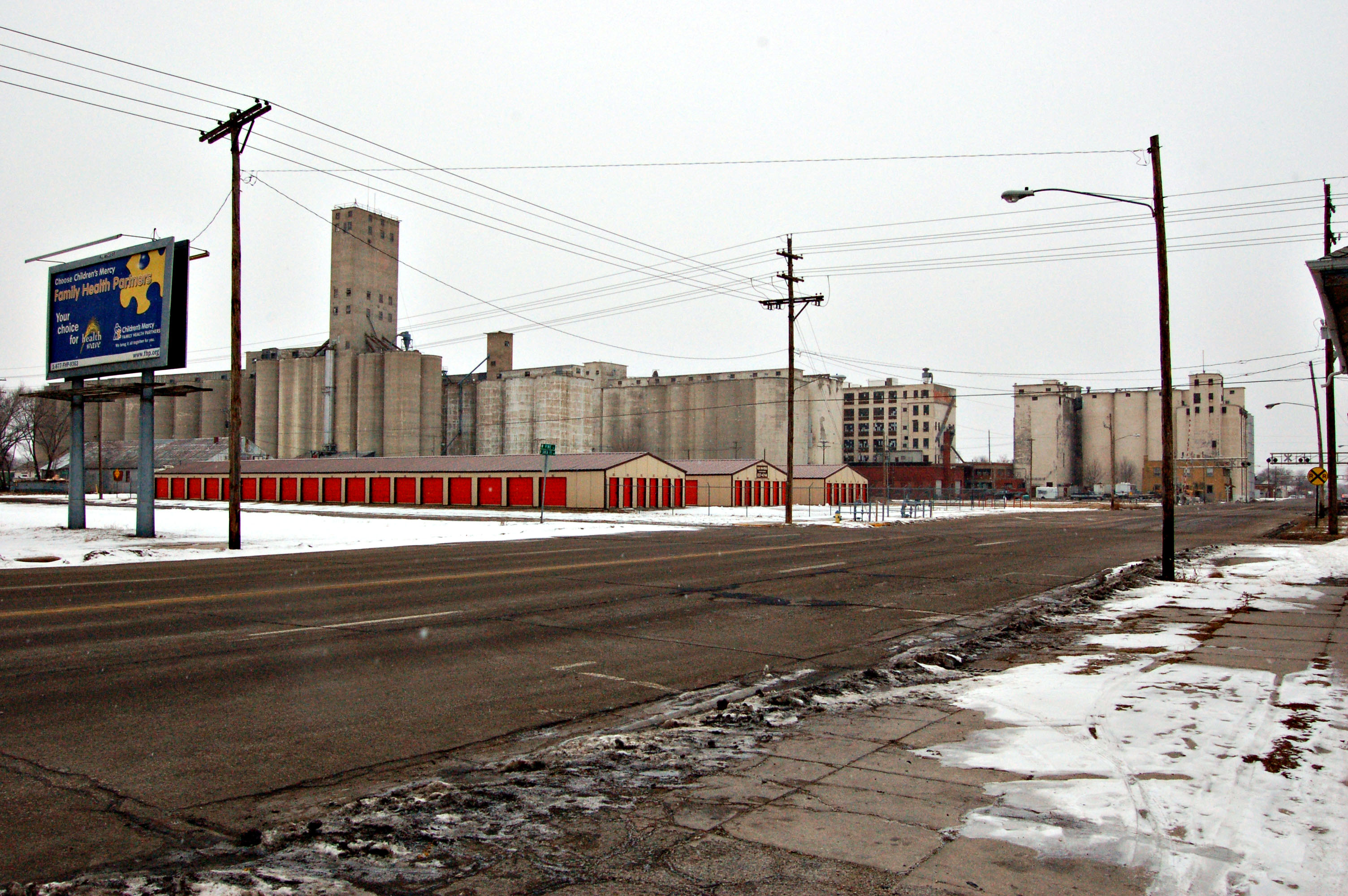
Salina hosted the first garment factory for Lee Jeans, which opened in 1889.
Manufacturing, education, health, and social services are the predominant industries in Salina. Agricultural transportation is also a major industry. Major employers include these: Tony's Pizza, a Schwan Food Company brand, has operations in Salina to produce frozen pizzas and food for school cafeterias and other institutions; Philips Lighting, a manufacturer of lighting; Exide Battery, a storage battery manufacturer; Great Plains Manufacturing, a farm equipment manufacturer; ElDorado National, a commercial bus manufacturer; and Asurion, an insurance provider.
, 71.0% of the population over the age of 16 was in the labor force. 0.4% was in the armed forces, and 70.6% was in the civilian labor force with 66.9% being employed and 3.7% unemployed. The composition, by occupation, of the employed civilian labor force was: 27.2% in management, business, science, and arts; 25.4% in sales and office occupations; 19.4% in service occupations; 9.9% in natural resources, construction, and maintenance; 18.2% in production, transportation, and material moving. The three industries employing the largest percentages of the working civilian labor force were: educational services, health care, and social assistance (21.2%); manufacturing (17.8%); and retail trade (13.1%).
The cost of living in Salina is relatively low; compared to a U.S. average of 100, the cost of living index is 80.9. , the median home value was $109,700, the median selected monthly owner cost was $1,070 for housing units with a mortgage and $396 for those without, and the median gross rent was $599.
Top employers
As of Salina's 2019 Comprehensive Annual Financial Report, these were the employers with the most employees in 2019:
| # | Employer | # of Employees |
|---|---|---|
| 1 | Salina Regional Health Center | 1,875 |
| 2 | Schwan's Global Supply Chain | 1,700 |
| 3 | Salina United School District (USD) 305 | 1,500 |
| 4 | Great Plains Manufacturing | 1,100 |
| 5 | Exide Technologies | 600 |
| 6 | City of Salina | 425 |
| 7 | Salina Vortex | 375 |
| 8 | REV Group | 300 |
| 9 | Walmart | 250 |
| 10 | Signify | 190 |
Government
Salina is a city of the first class with a commission-manager form of government which it adopted in 1921. The city commission consists of five members elected at large, one of whom the commission annually selects to serve as mayor. Commission candidates who receive the most and second–most votes are elected for a four-year term; the candidate who receives the third most votes is elected for a two-year term.
The Salina Fire department operates four stations inside the city.
Salina is the county seat of Saline County. The county courthouse is located downtown, and all departments of the county government base their operations in the city.
Salina lies within Kansas's 1st U.S. Congressional District. For the purposes of representation in the Kansas Legislature, the city is located in the 24th district of the Kansas Senate and the 69th, 71st, and 108th districts of the Kansas House of Representatives.
Education
Primary and secondary
The primary public school district for almost all of the city of Salina is USD 305. A small area of Salina is located within three other public school districts: USD 306, USD 307, USD 400.
Salina USD 305 school district operates twelve schools in Salina:
- Salina High School Central (9-12)
- Salina High School South (9-12)
- Lakewood Middle School (6-8)
- Salina South Middle School (6-8)
- Coronado Elementary School (K-5)
- Cottonwood Elementary School (K-5)
- Grace E. Stewart Elementary School (K-5)
- Heusner Elementary School (K-5)
- Meadowlark Ridge Elementary School (K-5)
- Oakdale Elementary School (K-5)
- Schilling Elementary School (K-5)
- Sunset Elementary School (K-5)
Southeast of Saline USD 306 school district includes a tiny amount of the south side of Salina, and its borders are along or near the southeast side of Salina.
Ell–Saline USD 307 school district includes a tiny amount of the southwest side of Salina, and its borders are along or near the west side of Salina.
Smoky Valley USD 400 school district includes the Salina landfill (legally part of Salina), which is located north of the city of Smolan, but there are no houses within that part of Salina.
Private schools include these:
- St. Mary's Grade School (PreK-6), Catholic school
- Salina Christian Academy (PreK-10), closed in 2019
- Sacred Heart Junior-Senior High School (7-12), Catholic school
- St. John's Military School (6-12), male only, closed in 2019
- Cornerstone Classical School (PreK-12)
Colleges and universities

- Kansas State University Polytechnic Campus
- Kansas Wesleyan University
- Marymount College (closed in 1989)
- Salina Area Technical College
- Salina Normal University (closed in 1904)
- University of Kansas School of Medicine, Salina
Infrastructure
Transportation

Interstate 70 and U.S. Route 40 run concurrently east-west north of Salina. Interstate 135 and U.S. Route 81 run concurrently north-south along the west side of the city. The I-70/I-135 interchange northwest of the city is the northern terminus of I-135. K-140, which approaches Salina from the southwest, formally ends at its interchange with I-135, and enters the city as State Street. North of Salina, the city's main north-south thoroughfare, Ninth Street, becomes K-143 at its interchange with I-70.
CityGo is the local public transport bus service with five routes, and intercity paratransit bus service to surrounding communities. Greyhound Lines provides bus service westward toward Denver, Colorado and eastward toward Kansas City, Missouri. Bus service is provided daily southward toward Wichita, Kansas by BeeLine Express (subcontractor of Greyhound Lines).
Salina Municipal Airport is located southwest of the city. It is primarily for general aviation, and hosts commercial airline United Express with flights to Chicago O'Hare, Houston Intercontinental, and Denver International Airport.
Union Pacific Railroad operates one freight rail line through Salina. Its Kansas Pacific (KP) Line runs northeast-southwest through the northern part of the city. Salina is the southeastern terminus for the Kyle Railroad and the Kansas and Oklahoma Railroad. The nearest Amtrak stop is at the Newton station serving the Southwest Chief.
Utilities
The city government's Department of Public Works is responsible for water treatment and distribution, waste water removal, sewer maintenance, and trash collection. Westar Energy provides electric power. Residents primarily use natural gas for heating fuel, provided by Kansas Gas Service.
Health care
The two hospital systems are Salina Regional Health Center, a 204-bed not-for-profit general medical and surgical facility, and Salina Surgical Hospital, a specialized, 16-bed surgical facility.
Media
Main article: Media in Salina, Kansas
The Salina Journal is the local daily newspaper.
Salina is a center of broadcast media for North Central Kansas. Three AM and 13 FM radio stations are licensed to or broadcast from the city. Salina is in the Wichita-Hutchinson television market, and five television stations broadcast from the city. These include two independent stations and ABC, Fox, and NBC affiliates which are satellites of their respective affiliates in Wichita. Salina has the only public, educational, and government access (PEG) cable TV channels in the state. Cox Communications is the main cable system serving the city, and customers can see local programming and create their own programming to be shown on channels 20 and 21.
Culture
Events
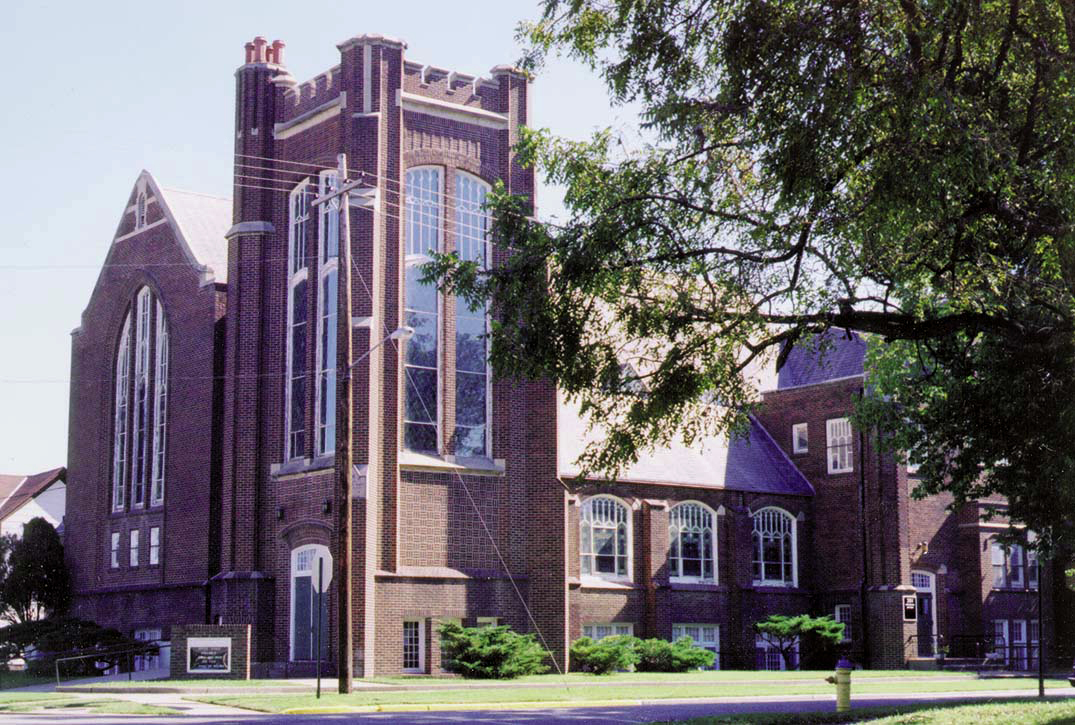
Each June, the Salina Arts & Humanities department holds the Smoky Hill River Festival lasting three and a half days, with arts and crafts shows, music concerts, games, and other activities. Originally held as a downtown street parade in 1976 to celebrate the United States Bicentennial, the festival proved popular enough for the city to hold it every year. To celebrate Independence Day, the city puts on its All American Fourth and Play Day in the Park which includes children’s games, music, and dance performances in Oakdale Park. The Smoky Hill Museum Street Fair in September includes a parade, a chili cook-off, and historic demonstrations. In November, downtown Salina hosts the Christmas festival which includes a 5k run, a mile walk, live music, dance performances, children's entertainment, and the Parade of Lights.
Points of interest
Operated by the city government's Arts & Humanities department, the Smoky Hill Museum contains artifacts, exhibits, and public educational programs on local history, agriculture, and education with collections dating back to 1879.
The Tony's Pizza Events Center (formerly Bicentennial Center) is the primary venue in the city for large indoor events. It includes a 7,500-seat multipurpose arena and the 18000 sqft Heritage Hall convention center. The Center hosts concerts, sporting events, and trade shows.
The Rolling Hills Wildlife Adventure is a public zoo and wildlife park located 6 mi west of the city near Hedville. It has animal exhibits, an art gallery, and a wildlife museum.
Indian Rock Park is the tallest point in the area, mainly featuring a hill within the vast Wellington Formation stretching from Nebraska to Oklahoma. In the late 1950s, part of the hill was excavated for flood control after the Great Flood of 1951, diverting the Smoky Hill River along the edge of the park and creating 80-foot steep shale bluffs. It has a panoramic view of the city, a river fishing pier, a pond from the former brick factory, and hiking trails.
Salina Community Theatre (SCT) is a regionally acclaimed theater, producing seven seasonal shows and three summer shows every year. Productions include the contemporary, such as ABBA's Mamma Mia! and Disney's Newsies, and classics such as Miracle on 34th Street.
Religion

More than 70 Christian churches are in and around Salina including the cathedral of the Roman Catholic Diocese of Salina (Sacred Heart Cathedral) and the cathedral of the Episcopal Diocese of Western Kansas (Christ Cathedral). The Roman Catholic Diocese of Salina has its regional administrative offices in Salina as do the Presbytery of Northern Kansas and the Salina District of the United Methodist Church which is based at Kansas Wesleyan University.
A Buddhist temple is located northwest of the city.
Sports
- Salina was home to minor league baseball from 1898–1952. The Salina Blue Jays and other Salina teams played as a member of the Kansas State League (1898), Central Kansas League (1908–1910, 1912), Kansas State League (1913–1914), Southwestern League (1922–1926) and Western Association (1938–1941, 1946–1952). Salina was an affiliate of the Cleveland Indians (1941) and Philadelphia Phillies (1946–1952). Salina teams played at Athletic Park (1898–1914), Oakdale Park (1922–1926) and Kenwood Field (1938–1952).
- Salina hosted the Kansas Cagerz and Salina Rattlers basketball teams.
- Salina hosted the National Junior College Athletic Association Division I women's basketball national tournament each season in the Bicentennial Center.
- Salina hosted the Women's Big Eight basketball tournament at the Bicentennial Center. When the Big Eight became the Big 12, the tournament was moved to Kansas City, Missouri.
- Salina hosts the Kansas State High School Activities Association (KSHSAA) Class 4A state wrestling tournament and the Class 3A & 4A volleyball tournaments, the Class 4A state basketball tournament, and the Class 4A state softball tournament. Salina also occasionally hosts the Class 4A state baseball tournament and one of the state championship football games.
- Salina was home to the Salina Bombers, an indoor football team playing in the Champions Professional Indoor Football League from 2013 to 2014, then Champions Indoor Football.
- Salina hosts the Salina Liberty, the second indoor football team from the city, who now play in the CIF.
- Salina is the home of the Kansas Wesleyan University Coyotes, a 20-sport National Association of Intercollegiate Athletics athletics program. The Coyotes have been a member of the Kansas Collegiate Athletic Conference since 1928.
In popular culture
- The 1980 teen comedy film Up the Academy starring Ralph Macchio was filmed entirely in Salina, mostly on the campus of St. John's Military School.
- Scenes in the 1955 movie Picnic, starring William Holden and Kim Novak, were filmed in Salina: the train arrival and The Bensons' mansion.
- Millie Dillmount, the fictional main character in the musical Thoroughly Modern Millie, is from Salina. She leaves home for New York City, determined never to return, as depicted in the opening number, "Not for the Life of Me".
- In Alfred Hitchcock's film Vertigo, the character Judy Barton (played by Kim Novak) comes from 425 Maple Avenue in Salina.
- The Avett Brothers wrote a song "Salina" on the 2007 album Emotionalism.
Notable people
Main article: List of people from Salina, Kansas
Notable individuals who were born in or have lived in Salina include former White House press secretary Marlin Fitzwater, dancer and war correspondent Betty Knox of the variety act Wilson, Keppel and Betty, astronaut Steven Hawley, former Governors of Kansas John W. Carlin and Bill Graves, radio broadcaster Paul Harvey, inventor of Lee Jeans Harry Lee, and US Women's National Soccer Team goalkeeper Adrianna Franch.
References
References
- "Salina City Commission".
- "City Manager".
- "2019 U.S. Gazetteer Files". United States Census Bureau.
- (2012). "USPS - Look Up a ZIP Code". United States Postal Service.
- {{cite gnis2. 476808. Salina, Kansas
- "Profile of Salina, Kansas in 2020". United States Census Bureau.
- "QuickFacts; Salina, Kansas; Population, Census, 2020 & 2010". United States Census Bureau.
- Sturtevant, William C.. (1967). "Early Indian Tribes, Culture Areas, and Linguistic Stocks [Map]". [[Smithsonian Institution]].
- (August 2012). "Louisiana Purchase". [[Kansas Historical Society]].
- (March 2013). "Kansas Territory". Kansapedia.
- Delisle, Guillaume. (1718). "1718 Carte de la Louisiane et du Cours du Mississipi".
- Pike, Zebulon. (1895). "The Expeditions of Zebulon Montgomery Pike: Arkansaw Journey. Mexican Tour". Francis P. Harper.
- [[John C. Frémont. Frémont, J. C.]] 1934. [https://archive.org/stream/expeditionsofjoh01fr/expeditionsofjoh01fr_djvu.txt The expeditions of John Charles Frémont.] (D. Jackson and M. L. Spence, Eds.). University of Illinois Press, Chicago. Fremont observed Pawnee desolation of Kaw villages "After crossing this stream, I rode off some miles to the left, attracted by the appearance of a cluster of huts near the mouth of the [Little] Vermillion. It was a large but deserted Kansas village, scattered in an open wood along the margin of the stream, on a spot chosen with the customary Indian fondness for beauty and scenery. The Pawnees had attacked it in the early spring [of 1843]. Some of the houses were burnt, and others blackened with smoke, and weeds were already getting possession of the cleared places."
- Howard C. Raynesford. (1953). "The Raynesford Papers: Notes- The Smoky Hill River & Fremont's Indian Village".
- Carson Bear. (April 4, 2018). "A Nearly Pristine Pawnee Tipi Ring Site Preserved for More Than a Century". National Trust for Historic Preservation.
- Lichti, Carol. (February 25, 1996). "On Hallowed Ground : Story of Indian Rock and Lakewood". The Salina Journal.
- "History". City of Salina.
- Bramwell, Ruby P.. (April 2022). "City on the Move: The Story of Salina". Survey Press.
- Morrison, pp. 3-4.
- Collins. "Kansas Pacific".
- (1912). "Kansas: a cyclopedia of state history, embracing events, institutions, industries, counties, cities, towns, prominent persons, etc.". Standard.
- (1912). "Kansas: a cyclopedia of state history, embracing events, institutions, industries, counties, cities, towns, prominent persons, etc.". Standard.
- Cutler, William G.. (1883). "History of the State of Kansas". A.T. Andreas.
- WPA. (1949). "Kansas: A Guide to the Sunflower State". Hastings House.
- "Lee Jeans History". lee.com.
- "Salina History". City of Salina, Kansas.
- "SAC Bases: Smokey Hill / Schilling AFB". Strategic-Air-Command.com.
- (2008). "Narrative". Salina Area Chamber of Commerce.
- "City Distance Tool". [[Geobytes]].
- "Latitude/Longitude Distance Calculator". National Hurricane Center.
- (October 2008). "General Highway Map - Saline County, Kansas". [[Kansas Department of Transportation]].
- "US Gazetteer files 2010". [[United States Census Bureau]].
- Peel, M. C., Finlayson, B. L., and McMahon, T. A.: Updated world map of the Köppen-Geiger climate classification, Hydrol. Earth Syst. Sci., 11, 1633-1644, doi:10.5194/hess-11-1633-2007, 2007.
- "Average Weather for Salina, KS". [[The Weather Channel]].
- (1993). "Significant tornadoes, 1680-1991: A Chronology and Analysis of Events". Environmental Films.
- Phillips, Barbara. (September 27, 1973). "Tornadoes take heavy Kansas toll". Salina Journal.
- "Salina, Kansas Travel Weather Averages". Weatherbase.
- National Weather Service. "Monthly Summarized Data 1981-2010". National Oceanic & Atmospheric Administration.
- "Annual Estimates of the Resident Population for Counties: April 1, 2020 to July 1, 2023". United States Census Bureau.
- United States Census Bureau. "Census of Population and Housing".
- (November 20, 2008). "Updates to Statistical Areas; Office of Management and Budget". [[Office of Management and Budget]].
- "Explore Census Data".
- "Explore Census Data".
- "U.S. Census website". [[United States Census Bureau]].
- "U.S. Census website". [[United States Census Bureau]].
- Saline County Emergency Management. (February 2009). "It Can Happen Here". Saline county Emergency Management.
- "Salina, Kansas". City-Data.com.
- (2019). "Comprehensive Annual Financial Report of City of Salina, Kansas for the Fiscal Year Ending December 31, 2019".
- "Salina". The League of Kansas Municipalities.
- "City Commission". City of Salina, Kansas.
- "City Government". City of Salina, Kansas.
- "Saline County–Official County Government Website".
- "USD 305 District Map". [[Kansas Department of Transportation]].
- [https://salina-ks.maps.arcgis.com/apps/webappviewer/index.html?id=c86acd68b5084f1da2ba270898b1ad86 City of Salina Border Map; ARCGIS.]
- "Salina USD 305 School Websites and Handbooks". Salina USD 305.
- "Salina Public Schools / Overview".
- "Welcome". Salina Christian Academy.
- "About St. John's Military School". [[St. John's Military School]].
- Mathews, Erin. (April 16, 2009). "Saving Lives & Property: A Fire Department Grows Up". [[Salina Journal]].
- "2011-2012 state transportation map". Kansas Department of Transportation.
- (August 1, 2011). "City of Salina [Map]". Kansas Department of Transportation.
- "Greyhound".
- {{FAA-airport
- "UPRR Common Line Names". Union Pacific Railroad.
- "Kansas & Oklahoma Railroad - Detailed Map". Watco, Inc..
- "Guide to City Services – M–Z". City of Salina, Kansas.
- "Salina Regional Health Center – Stats & Services". [[U.S. News & World Report]].
- "Salina Surgical Hospital - Stats & Services". U.S. News & World Report.
- "Record Details – Salina Journal". Kansas Press Association.
- "Radio Stations in Salina, Kansas". Radio-Locator.
- "TV Market Maps – Kansas". EchoStar Knowledge Base.
- "TVQ TV Database Query". [[Federal Communications Commission]].
- "Stations for Hays, Kansas". RabbitEars.
- "Contact Us". [[KSAS-TV]].
- "Smoky Hill River Festival – History". Riverfestival.com.
- "All American Fourth/Play Day in the Park". Salina Area Chamber of Commerce.
- "Street Fair". Smoky Hill Museum.
- "Christmas Festival & Parade of Lights". Salina Area Chamber of Commerce.
- "About Us". Smoky Hill Museum.
- "General Information for the Arena". Salina Bicentennial Center.
- "About Us". Rolling Hills Zoo.
- "MainStage Past Seasons".
- "Find a Church in Salina, KS". Patheos.
- "Churches in Salina by Denomination". Churchangel.com.
- "Parish". [[Sacred Heart Cathedral (Salina, Kansas).
- "About". [[Christ Cathedral (Salina, Kansas).
- "History". [[Roman Catholic Diocese of Salina]].
- "Contact". Presbytery of Northern Kansas.
- "Salina District". Great Plains United Methodists.
- Fiedler, Gordon Jr.. (November 20, 2011). "Buddhist monks find calling in Kansas temple". [[Topeka Capital Journal]].
- "Salina Blues Statistics and Roster on StatsCrew.com".
- "Welcome to the City of Salina, Kansas - Oakdale Park".
- "Kenwood Field in Salina, KS history and teams on StatsCrew.com".
- "Athletic Park in Salina, KS history and teams on StatsCrew.com".
- Davidson, Bob. (January 9, 2007). "USBL decides to take a breather for '08 - USBL quits". The Salina Journal.
- (August 17, 2001). "IBA Closes Its Doors". The Salina Journal.
- (March 31, 2011). "Juco women's tournament to stay in Salina through at least 2015". The Salina Journal.
- McKernan. (2007). "The Wilson, Keppel and Betty Story".
- (November 5, 2010). "Hall of Fame". Salina Central High School.
- "John W. Carlin". [[Kansas Historical Society]].
- Salina Journal staff. (January 9, 2012). "A look back". The Salina Journal.
- "Adrianna Franch - 2012 - Women's Soccer".
- Lawson, Rob. (June 12, 2008). "June 11th, EF-3 Tornado and Extremely Large Hail Slam Central Kansas". National Weather Service Wichita KS.
- Phillips Lighting. (June 2009). ["An energy saving solution for government facilities..."](http://www.search.philips.com/search/jsp/clickout.jsp?clicklocation=1&type=searchhit&text=Salina,%20Kansas§ion=lighting&locale=us_en&url=http://www.lighting.philips.com/us_en/browseliterature/download/p-6018.pdf}}{{dead link). Phillips Lighting.
- Exide Technologies. "Exide's Worldwide Facilities". Exide Technologies.
- Great Plains Manufacturing. "Great Plains Contact Information". Great Plains Manufacturing.
- Web Creations and Consulting. (2006). "About the Company". ElDorado National.
!["Early Indian Tribes, Culture Areas, and Linguistic Stocks [Map]"](http://www.lib.utexas.edu/maps/united_states/early_indian_east.jpg)

This article was imported from Wikipedia and is available under the Creative Commons Attribution-ShareAlike 4.0 License. Content has been adapted to SurfDoc format. Original contributors can be found on the article history page.
Ask Mako anything about Salina, Kansas — get instant answers, deeper analysis, and related topics.
Research with MakoFree with your Surf account
Create a free account to save articles, ask Mako questions, and organize your research.
Sign up freeThis content may have been generated or modified by AI. CloudSurf Software LLC is not responsible for the accuracy, completeness, or reliability of AI-generated content. Always verify important information from primary sources.
Report