From Surf Wiki (app.surf) — the open knowledge base
Salchow jump
Figure skating jump
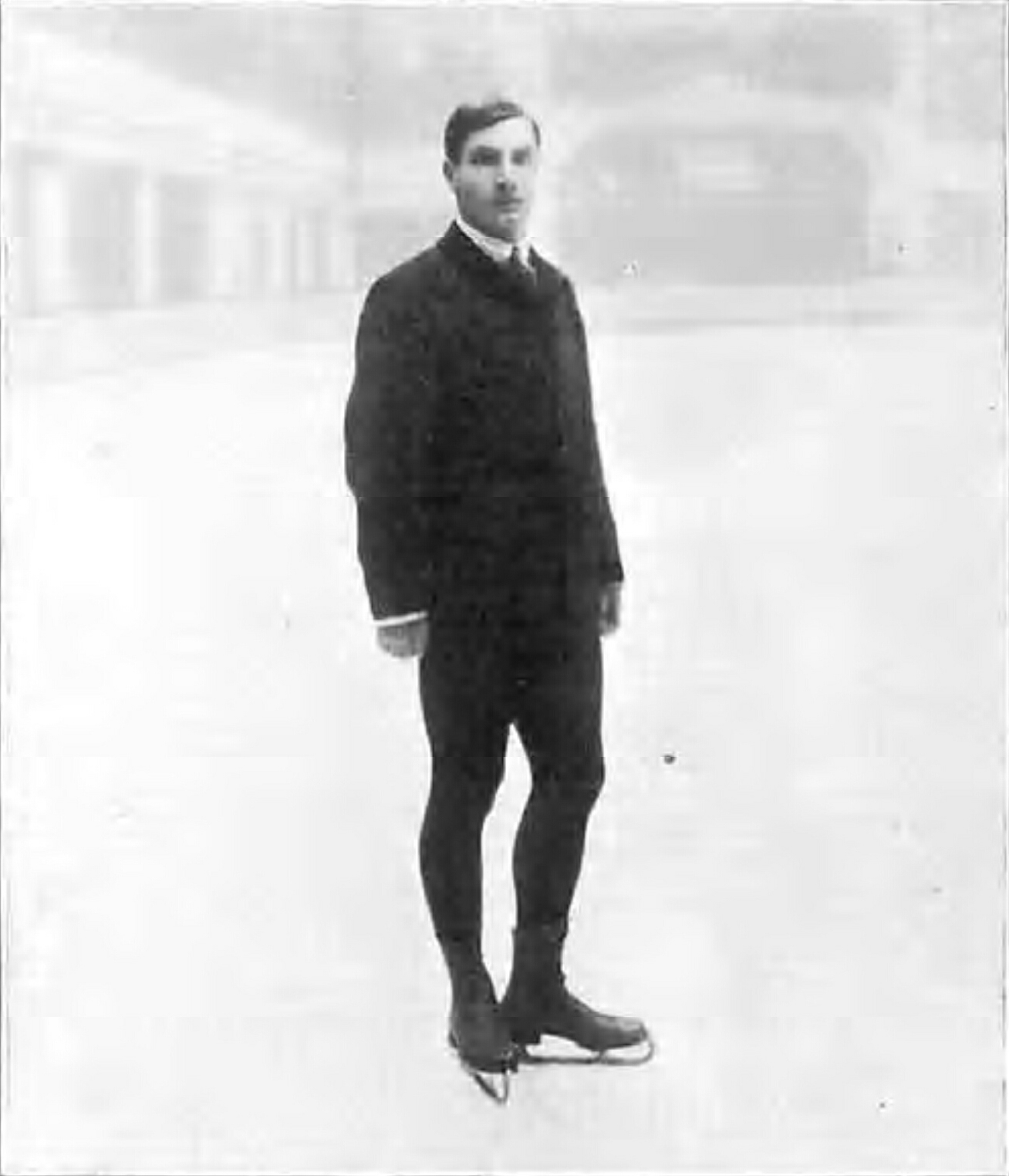
Figure skating jump
| Field | Value |
|---|---|
| element name | Salchow jump |
| scoring abbrev | S |
| element type | Jump |
| take off edge | Back inside |
| landing edge | Back outside |
| inventor | Ulrich Salchow |
The Salchow jump is an edge jump in figure skating. It was named after its inventor, Ulrich Salchow, in 1909. The Salchow is accomplished with a takeoff from the back inside edge of one foot and a landing on the back outside edge of the opposite foot. It is "usually the first jump that skaters learn to double, and the first or second to triple". Timing is critical because both the takeoff and landing must be on the backward edge. A Salchow is deemed cheated if the skate blade starts to turn forward before the takeoff, or if it has not turned completely backward when the skater lands back on the ice.
In competitions, the base value of a single Salchow is 0.40, for a double Salchow it is 1.30, for a triple 4.30, 9.70 for a quadruple, and 14 for a quintuple.
History
The Salchow jump was named after its inventor, Swedish world champion Ulrich Salchow in 1909. American skater Theresa Weld "received reprimands" at the 1920 Olympics "for performing a single Salchow jump because her skirt would fly up to her knees, creating an image deemed too risque".
Firsts
| Abbr. | Jump element | Skater | Nation | Event | Ref. | 2S | 3S | 4S |
|---|---|---|---|---|---|---|---|---|
| Double Salchow (women's) | GBR | 1936 European Championships | ||||||
| Triple Salchow (men's) | USA | 1955 World Championships | ||||||
| Triple Salchow (women's) | CAN | 1962 Canadian Championships | Not definitely established. A report from the 1961 European Championships stated that Helli Sengstschmid from Austria and Jana Mrazkova from Czechoslovakia had already successfully landed a triple Salchow.}} | |||||
| AUT | 1961 European Championships | |||||||
| CZE | ||||||||
| Quadruple Salchow (men's) | USA | 1997–98 Junior Grand Prix Final | ||||||
| Quadruple Salchow (women's) | JAP | 2002–03 Junior Grand Prix Final |

Execution
As defined by the ISU, the Salchow jump is an edge jump. Its takeoff is made from the back inside edge of one foot, and its landing is made on the back outside edge of the opposite foot. The skater enters into the jump with a backward approach, launches it using their inside edge, and lands on the opposite outside edge. The free leg is extended behind the skater and swings toward the front as they spring into the air while, at the same time, drawing their arms in. Skaters do not have to draw in their arms or free leg close to their bodies while performing the single Salchow because bringing the free side of their bodies forward and around the opposite side of their bodies after they turn towards the back is enough to produce the necessary rotation.
The rotation in the air, with respect to a fixed point, is slightly less than 360 degrees because the takeoff edge curves in the same direction as the rotation in the air. When a skater pulls the arms into their body and/or brings their free leg inward, more rotations can be performed; for this reason, the Salchow is "usually the first jump that skaters learn to double, and the first or second to triple". As U.S. Figure Skating states, however, "timing is critical" with the execution of the Salchow because both the takeoff and landing must be on the backward edge.
Gallery
File:Sarah Isabella Bardua - 2018 Autumn Classic - 7.jpg|Sarah Isabella Bardua begins the take-off of a Salchow File:Photos – World Championships 2018 – Men (Keiji TANAKA JPN – 13th Place) (3).jpg|Keiji Tanaka begins the take-off of a Salchow File:Roman Sadovsky - 2018 Skate Canada - 03.jpg|Roman Sadovsky begins the take-off of a Salchow File:2011 Rostelecom Cup - Lacoste-1.jpg|Amélie Lacoste landing
Footnotes
References
Works cited
References
- "Communication No. 2707: Single & Pair Skating Scale of Values (ISU No. 2707)".
- Media Guide, p. 20
- (6 February 2018). "A Brief History of Women's Figure Skating". Smithsonian Magazine.
- Media Guide, p. 21
- (22 February 2018). "Everything You Ever Wanted to Know About Figure Skating Jumps and Scores". Time Magazine.
- "Identifying Jumps". U.S. Figure Skating.
This article was imported from Wikipedia and is available under the Creative Commons Attribution-ShareAlike 4.0 License. Content has been adapted to SurfDoc format. Original contributors can be found on the article history page.
Ask Mako anything about Salchow jump — get instant answers, deeper analysis, and related topics.
Research with MakoFree with your Surf account
Create a free account to save articles, ask Mako questions, and organize your research.
Sign up freeThis content may have been generated or modified by AI. CloudSurf Software LLC is not responsible for the accuracy, completeness, or reliability of AI-generated content. Always verify important information from primary sources.
Report