From Surf Wiki (app.surf) — the open knowledge base
Saint Sylvester's Day
Christian saint's day
Christian saint's day
| Field | Value |
|---|---|
| holiday_name | Saint Sylvester's Day |
| Feast of Saint Sylvester | |
| image | Pape St Sylvestre – BnF, ms 16251, fol. 87.jpg |
| imagesize | 220px |
| caption | Saint Sylvester as depicted in the 13th century ** |
| nickname | Silvester |
| type | Christian |
| observedby | Anglicanism, Catholicism, Eastern Orthodoxy, Lutheranism, Reformed |
| date | 31 December (Western Christianity) |
| 2 January (Eastern Christianity) | |
| observances | Attending a Watchnight Mass, often held around midnight |
| celebrations | Fireworks, Theatre-going, Feasting, Making a toast, Partying |
| significance | Feast Day of Pope Saint Sylvester I |
| Final day of the Gregorian calendar year | |
| relatedto | New Year's Eve, Christmastide, New Year's Day, Feast of the Naming and Circumcision of Jesus, Solemnity of Mary, Mother of God |
| frequency | Annual |
| duration | 1 day |
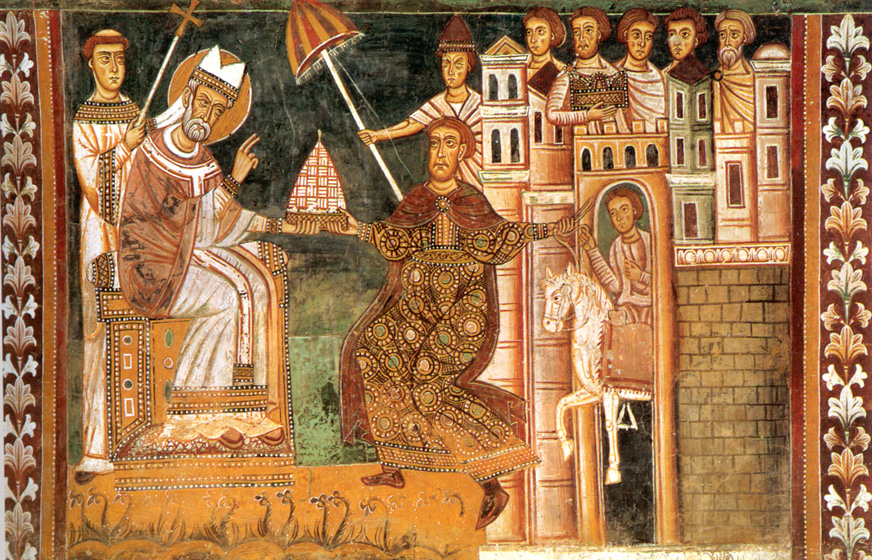
Feast of Saint Sylvester 2 January (Eastern Christianity) Final day of the Gregorian calendar year Saint Sylvester's Day, also known as Silvester or the Feast of Saint Sylvester, is the day of the feast of Pope Sylvester I, a saint who served as Pope from 314 to 335. Medieval legend made him responsible for the conversion of emperor Constantine. Among the Western churches, the feast day is held on the anniversary of Saint Sylvester's death, 31 December, a date that, since the adoption of the Gregorian calendar, has coincided with New Year's Eve. For these Christian denominations, Saint Sylvester's Day liturgically marks the seventh day of Christmastide. Eastern churches celebrate Sylvester's feast on a different day from the Western churches, i.e. on 2 January. Saint Sylvester's Day celebrations are marked by church attendance at a Watchnight Mass that is often held around midnight, as well as fireworks, partying, and feasting.
Pope Sylvester I
Under the reign of Pope Sylvester I, several of the magnificent Christian churches were built, including the Basilica of Saint John Lateran, Santa Croce Church, and Old St. Peter's Basilica, among others. During the papacy of Sylvester I, the Nicene Creed, which is recited by communicants of the vast majority of the world's Christian denominations, was formulated. Sylvester is said to have healed, in the name of Christ, the emperor Constantine the Great of leprosy. After dying, Sylvester was buried on 31 December in the Catacomb of Priscilla.
Regional traditions
.jpg)
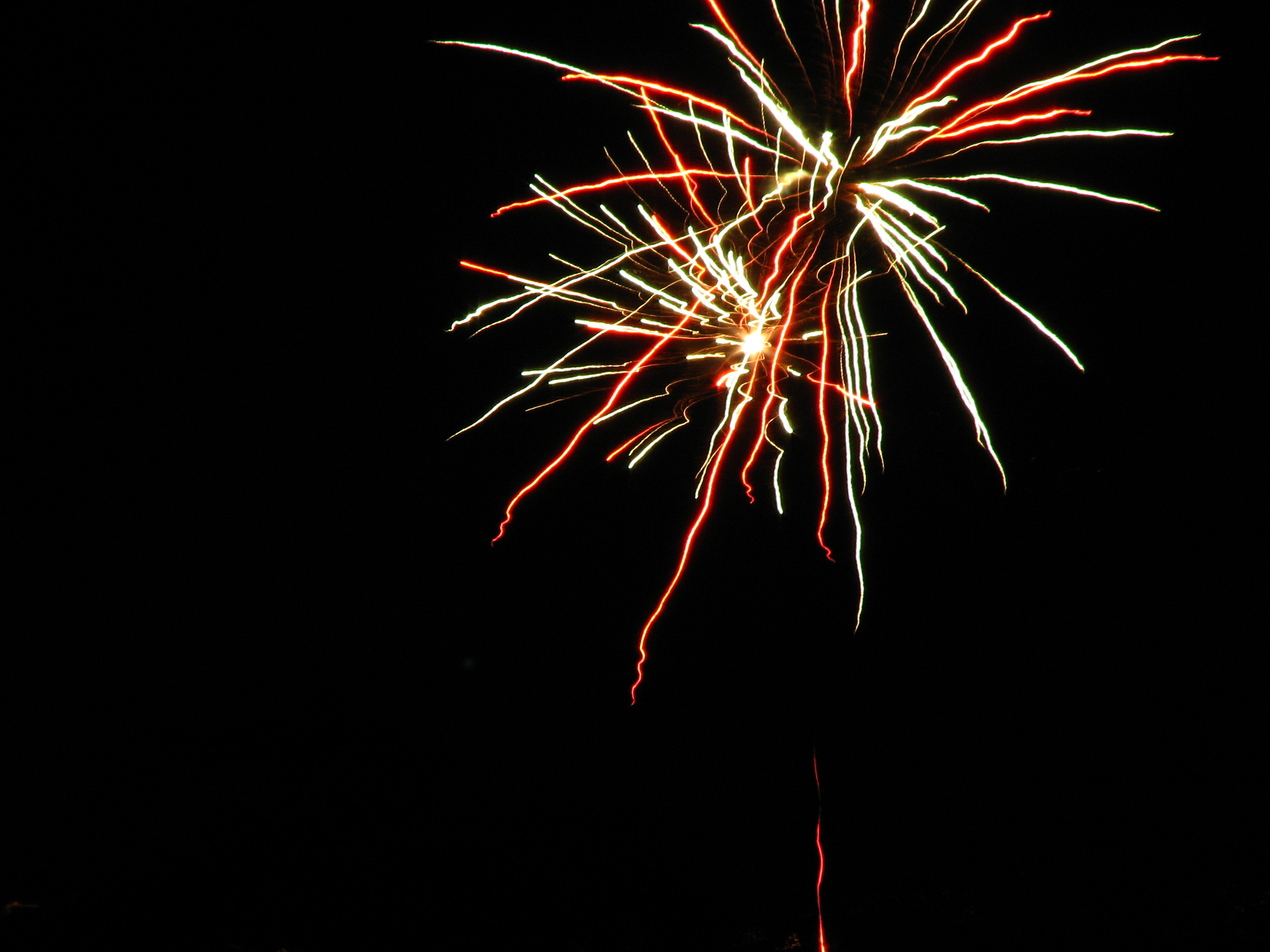
Several countries, primarily in Europe, use a variant of Silvester's name as the preferred name for the holiday; these countries include Austria, Bosnia and Herzegovina, Croatia, Czech Republic, France, Germany, Hungary, Israel, Italy, Liechtenstein, Luxembourg, Poland, Slovakia, Switzerland, and Slovenia.
Austria and Germany
In the capital of Austria, Vienna, people walk pigs on leashes for their Saint Silvester's Day celebration in hope to have good luck for the coming year. Many Christian households in Germany mark Saint Silvester's Day by practicing the custom of Bleigiessen using Silvesterblei (Silvester lead), in which Silvesterblei is melted over a flame in an old spoon and dropped into a bowl of cold water; one's fortune for the coming year is determined by the shape of the lead. If the lead forms a ball (der Ball), luck will roll one's way, while the shape of a star (der Stern) signifies happiness.
Belgium
Christians of Belgium have a tradition that a maiden who does not finish her work by the time of sunset on Saint Silvester's Day will not get married in the year to come.
Brazil
Along with exploding fireworks, the Saint Silvester Road Race, Brazil's oldest and most prestigious running event, takes place on Saint Sylvester's Day and is dedicated to him.
Israel
In Israel, New Year's Eve is referred to as Silvester to distinguish it from Rosh Hashanah—the Jewish New Year—which occurs in either September or October.
As some Israelis consider Pope Sylvester to have been an antisemite, the observation of New Year's Eve has been divisive among parts of the country's Jewish population, and celebrations tend to be relatively modest in comparison to other countries.
Soviet diaspora (such as Russian Jews) that celebrate Novy God—a secular observance of the New Year with elements of Christmas that was established by the Communist Party—have sometimes been criticized for celebrating an anti-semitic holiday. In the mid-2010s, campaigns emerged to promote the holiday to first and second-generation immigrants in Israel, as well as non-Russians, in an effort to build cultural awareness.
Italy
On Saint Sylvester's Day, "lentils and slices of sausage are eaten because they look like coins and symbolize good fortune and the richness of life for the coming year."
Switzerland
Main article: Silvesterklaus
On the morning of Saint Sylvester's Day, the children of a Christian family compete with one another to see who can wake up the earliest; the child who arises the latest is playfully jeered. Men have, for centuries, masqueraded as Silvesterklaus on Saint Sylvester's Day.
Ossetia
Main article: Ossetian mythology
As late as the 19th century, the nominally Christian Ossetians - an ancient Iranian people of the Caucasus descended from the Scythian nomads of the steppes – still had a class of shaman-like soothsayers called Burkudzauta or Kurysdzauta who would, on the eve of Saint Sylvester's Day, undertake dream journeys to the land of the dead in order to wrest from the warlike dead a bountiful harvest in the year to come. This practice was first documented in the year 1824 by pioneering ethnographer and orientalist Julius Klaproth. Italian historian Carlo Ginzburg has noted (in his work Ecstasies: Deciphering the Witches' Sabbath) marked parallels between this Ossetian 'combat in ecstasy' and those formerly practised by the benandanti of Friuli and also by certain other shaman-like figures in Hungary and the Balkans.
References
References
- (2009). "Western Europe". Lonely Planet.
- Watts, Isaac. (1 November 2013). "Joy to the World: The Forgotten Meaning of Christmas". Paraclete Press.
- Kathy Coffey. (16 February 2012). "Companion to the Calendar, Second Edition". LiturgyTrainingPublications.
- (31 December 2014). "Celebrating an anti-Semitic pope on Sylvester". The Jerusalem Post.
- Crump, William D.. (25 April 2014). "Encyclopedia of New Year's Holidays Worldwide". McFarland.
- "SILVESTER – NEW YEAR'S EVE". mrshea.com.
- "2.0 Silvesterbraeuche – Neujahrsbraeuche". silvestergruesse.de.
- (1979). "Brazil". Nagel Publishers.
- "The 4th-century Pope and the Great Jewish War Over New Year's Day". Haaretz.
- Kershner, Isabel. (30 December 2018). "New Year's Fete From Russia Irks Some in Israel: 'It's Not a Jewish Holiday'". The New York Times.
- "On New Year's Eve, Israelis hit hay early". The Times of Israel.
- Weber, Hannah. (25 December 2020). "Yolka: the story of Russia's 'New Year tree', from pagan origins to Soviet celebrations".
- dePaola, Tomie. (18 October 2011). "Strega Nona's Gift". [[Penguin Books]].
- Spicer, Dorothy Gladys. (1973). "Festivals of Western Europe". Library of Alexandria.
- [[Julius Klaproth. Klaproth, Julius]] ''Voyage au Mont Caucase et en Géorgie'', 2 vols, Paris, 1823 vol. II pp. 223 ff.
- Ginzburg, Carlo. (2004). "Ecstasies: Deciphering the Witches' Sabbath". University of Chicago Press.
This article was imported from Wikipedia and is available under the Creative Commons Attribution-ShareAlike 4.0 License. Content has been adapted to SurfDoc format. Original contributors can be found on the article history page.
Ask Mako anything about Saint Sylvester's Day — get instant answers, deeper analysis, and related topics.
Research with MakoFree with your Surf account
Create a free account to save articles, ask Mako questions, and organize your research.
Sign up freeThis content may have been generated or modified by AI. CloudSurf Software LLC is not responsible for the accuracy, completeness, or reliability of AI-generated content. Always verify important information from primary sources.
Report