From Surf Wiki (app.surf) — the open knowledge base
Saint Mark's Coptic Orthodox Cathedral

| Field | Value |
|---|---|
| name | Saint Mark Coptic Orthodox Cathedral |
| image | CairoAbbasiyaMarkEntrance-Cropped.jpg |
| caption | St. Mark's Cathedral in 2010 |
| country | Egypt |
| denomination | Coptic Orthodox Church |
| division | Coptic Orthodox Patriarchate |
| founder | Pope Cyril VI of Alexandria |
| dedication | Saint Mark |
| consecrated date | 25 June 1968 |
| status | Cathedral |
| architectural type | Church |
| style | Coptic |
| bishop | Pope Tawadros II |
| location | Abbassia, Cairo |
| architect | Awad Kamel |
| Michel Bakhoum (structural consultant) |
Michel Bakhoum (structural consultant)
Saint Mark's Coptic Orthodox Cathedral () is a Coptic church located in the Abbassia District in Cairo, Egypt. The cathedral is the seat of the Coptic Orthodox Pope. It was built during the time when Pope Cyril VI of Alexandria was Pope, and was consecrated on 25 June 1968.
The church is dedicated to St. Mark the Evangelist, an apostle of Jesus and founder of the Coptic Orthodox Church. Relics of his life are kept inside. It was, until 2019, (after the inauguration of the new Nativity Cathedral) the largest cathedral in Africa and the Middle East.
History of the land
The cathedral is located in the place of a village called p-Sovt em-p-Hoi (Coptic: ⲡⲥⲟⲃⲧ ⲙ̀ⲡϩⲟⲓ "the wall of the moat") which had been given to the Coptic Church in 969 by Jawhar. This land was a replacement for the land that was taken from the church to be included in building the Palace of Al-Mu'izz li-Din Allah as part of the planning of the new capital of Egypt, Cairo.
During the twelfth century the area contained ten Coptic churches, but during the rule of Qalawun on 18 February 1280, the churches were destroyed by Muslims who persecuted the Copts. Two churches were subsequently built in the area under the rule of his son.
In 1943, the governorate of Cairo attempted to expropriate the area for public use. This was opposed by the General Congregation Council led by its secretary at the time, Habib Elmasry. The campaign proved successful as the Coptic Church maintained control of the land under the condition that a non-profit building be built on it in the following fifteen years. This condition spurred the building of the cathedral.
Papal Residence
The cathedral is where Pope Tawadros II of Alexandria has his office; thus, security is normally high here. However, on 11 December 2016, during the Muslim festival of Mawlid, the chapel near the cathedral was the venue of an Islamic terrorist attack that killed at least 25 people, most of them women and children. This attack is a copycat of various other earlier attacks against Coptic churches in Egypt.
Architecture

The cathedral is considered a unique example of architectural evolution which includes seven churches of which some have a great historic value such as the Church of St. Rewiss. The Cathedral represents the rapid development of Coptic architecture, as the famous Coptic civil engineer Michel Bakhoum contributed in its structural design. It has a capacity for 5,000 worshipers.
Relics of Saint Mark
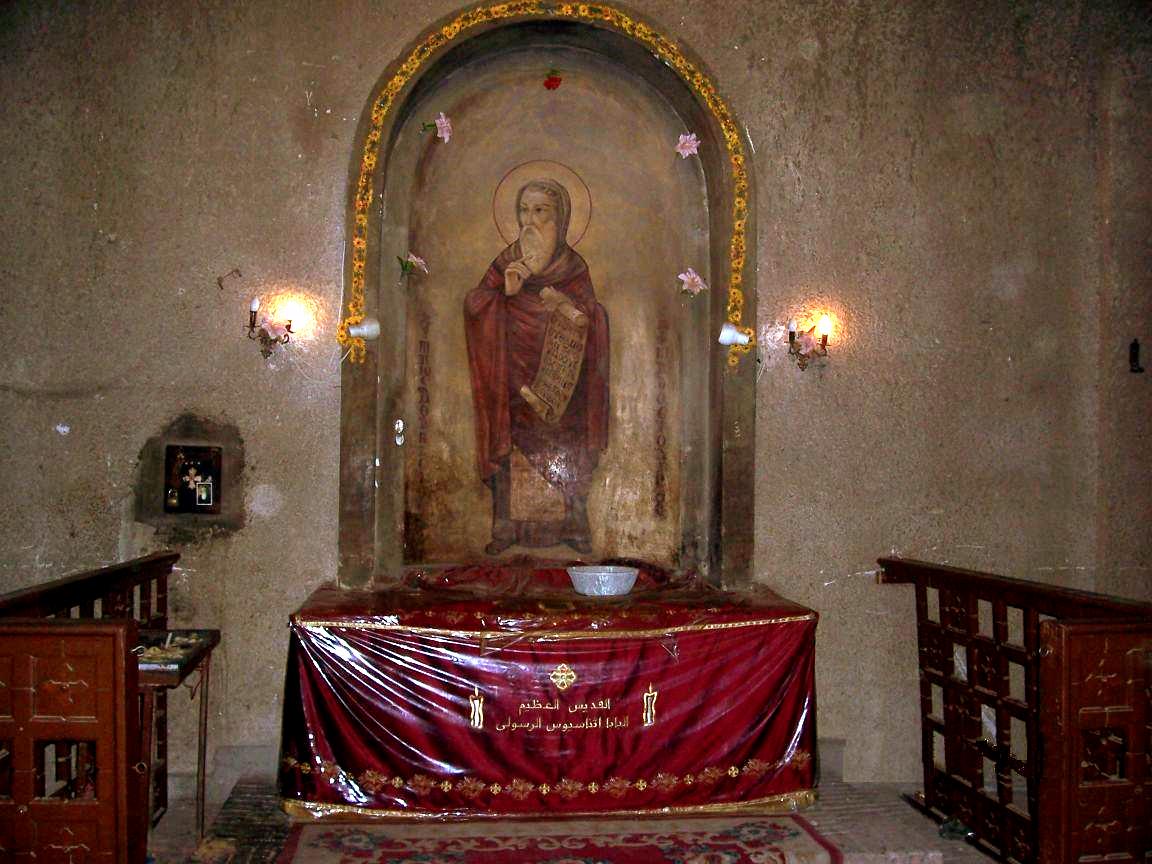
Before the completion of the cathedral, the Roman Catholic pontiff of the time, Pope Paul VI, returned part of St. Mark's relics, which were stolen from Alexandria, Egypt in the year 828 to Venice, Italy, although the head itself remained in Alexandria. These relics were taken to the newly constructed Cathedral, where they were placed in a specially-built shrine brightly decorated with Coptic icons, where they have remained until the present time.
Inauguration ceremony
The inauguration of the new Saint Mark's Coptic Orthodox Cathedral took place on 25 June 1968 in a ceremony hosted by Pope Cyril VI and attended by Egyptian President Gamal Abdel Nasser and Ethiopian Emperor Haile Selassie, among other foreign clergy members from other churches.
Design
Engineers Dr. Awad Kamel and Salim Kamel Fahmy won the competition for drawing and designing the cathedral. The structural design was prepared by Dr. Michel Bakhoum, Egyptian structural engineer. The Nile General Company for Reinforced Concrete (SEPCO) implemented the cathedral’s giant building. The cathedral was designed in the shape of a cross.
Burials
- Athanasius of Alexandria
- St Reweis (Teji)
- Abouna Mikhail Ibrahim
- Athanasius Yeshue Samuel
Notes
References
References
- (2018-11-19). "50 years on St Mark's, Pope consecrates renovated Cathedral".
- "Churches in Egypt". Egyptvoyager.com.
- (2017). "Christianity and Monasticism in Northern Egypt: Beni Suef, Giza, Cairo, and the Nile Delta". Oxford University Press.
- "Khandaq, Al- :: Claremont Coptic Encyclopedia".
- Casanova, Paul. (1901). "Les noms coptes du Caire et localités voisines". BIFAO.
- "دير الأنبا رويس". Coptichistory.org.
- link. (2 June 2008)
- (11 December 2016). "Cairo church bombing kills 25, raises fears among Christians".
- "Cathedral of Abbasiya - Coptic Cairo". Memphis Tours Egypt.
- link. (16 August 2007)
- "Old Cairo and Roda Island". Footprinttravelguides.com.
- (July 10, 2019). "How the remains of St. Mark came to be in Venice".
- Herguth, Robert. (April 7, 2023). "Bones said to belong to gospel writer Mark bought for display at suburban shrine".
- "Pope Saint Kyrillos VI (Cyril VI), 116th Pope of Alexandria". Zeitun-eg.org.
- "St. Mark's Coptic Orthodox Cathedral is a Coptic church".
This article was imported from Wikipedia and is available under the Creative Commons Attribution-ShareAlike 4.0 License. Content has been adapted to SurfDoc format. Original contributors can be found on the article history page.
Ask Mako anything about Saint Mark's Coptic Orthodox Cathedral — get instant answers, deeper analysis, and related topics.
Research with MakoFree with your Surf account
Create a free account to save articles, ask Mako questions, and organize your research.
Sign up freeThis content may have been generated or modified by AI. CloudSurf Software LLC is not responsible for the accuracy, completeness, or reliability of AI-generated content. Always verify important information from primary sources.
Report