From Surf Wiki (app.surf) — the open knowledge base
Saint Kitts and Nevis
Country in the West Indies

Country in the West Indies
| Field | Value | |
|---|---|---|
| conventional_long_name | Federation of Saint Kitts and Nevis | |
| common_name | Saint Kitts and Nevis | |
| ethnic_groups | {{unbulleted list | |
| ethnic_groups_year | 2020 | |
| ethnic_groups_ref | ||
| religion | {{ublist | item_style=white-space:nowrap; |
| religion_year | 2020 | |
| religion_ref | ||
| image_flag | Flag of Saint Kitts and Nevis.svg | |
| image_coat | Coat of Arms of Saint Kitts and Nevis.svg | |
| national_motto | "Country Above Self" | |
| national_anthem | "O Land of Beauty!" | |
| [[File:United States Navy Band - O Land of Beauty.ogg]] | ||
| image_map | KNA orthographic.svg | |
| map2_width | 250px | |
| capital | Basseterre | |
| coordinates | ||
| largest_city | Basseterre | |
| official_languages | English | |
| languages_type | Vernacular language | |
| languages | Saint Kitts Creole | |
| demonym | ||
| government_type | Federal parliamentary constitutional monarchy | |
| leader_title1 | Monarch | |
| leader_name1 | Charles III | |
| leader_title2 | Governor-General | |
| leader_name2 | Dame Marcella Liburd | |
| leader_title3 | Prime Minister | |
| leader_name3 | Terrance Drew | |
| legislature | National Assembly | |
| sovereignty_type | Independence | |
| sovereignty_note | from the United Kingdom | |
| established_event1 | Associated State | |
| established_date1 | 27 February 1967 | |
| established_event2 | Independence declared | |
| established_date2 | 19 September 1983 | |
| area_km2 | 261 | |
| area_rank | 188th | |
| area_sq_mi | 104 | |
| percent_water | Negligible | |
| population_estimate | ||
| population_census | 54,338 | |
| population_estimate_year | ||
| population_estimate_rank | 187th | |
| population_census_year | 2023 | |
| population_density_km2 | 164 | |
| population_density_sq_mi | 424 | |
| population_density_rank | 64th | |
| GDP_PPP | $1.8 billion | |
| GDP_PPP_year | 2023 | |
| GDP_PPP_per_capita | $29,893 | |
| GDP_nominal | $1 billion | |
| GDP_nominal_year | 2023 | |
| GDP_nominal_per_capita | $18,158 | |
| Gini | ||
| Gini_change | ||
| HDI_year | 2023 | |
| HDI_change | increase | |
| HDI | 0.840 | |
| HDI_ref | ||
| HDI_rank | 58th | |
| currency | East Caribbean dollar (EC$) | |
| currency_code | XCD | |
| time_zone | AST | |
| utc_offset | -4 | |
| date_format | dd-mm-yyyy | |
| drives_on | left | |
| calling_code | +1 | |
| cctld | .kn | |
| footnote_a | Or "Saint Kitts and Nevis". | |
| footnote_b | ||
| footnote_c |
|92.5% African |3.0% Mixed |2.1% European |1.6% Indian |0.5% other |0.3% unspecified |
- 94.6% Christianity
- 81.3% Protestantism
- 13.3% other Christian |2.6% no religion |1.5% Hinduism |1.3% other
Saint Kitts and Nevis, officially the Federation of Saint Kitts and Nevis,{{efn|This designation is used in formal contexts, including international diplomacy and legal documents.{{cite web |url=https://www.cia.gov/the-world-factbook/about/archives/2021/countries/saint-kitts-and-nevis/ |title=Saint Kitts and Nevis |language=en | access-date=8 May 2025 }}}} is an island country located in the Caribbean consisting of the two islands of Saint Kitts and Nevis, in the Leeward Islands chain of the Lesser Antilles. With 261 km2 of territory, and roughly 48,000 inhabitants, it is the smallest sovereign state in the Western Hemisphere, in both area and population, as well as the world's smallest sovereign federation. The country is a Commonwealth realm, with Charles III as king and head of state.
The capital city is Basseterre, located on the larger island of Saint Kitts. Basseterre is also the main port for passenger entry (via cruise ships) and cargo. The smaller island of Nevis lies approximately 3 km to the southeast of Saint Kitts, across a shallow channel called The Narrows.
The British dependency of Anguilla was historically also a part of this union, which was known collectively as Saint Christopher-Nevis-Anguilla. However, Anguilla chose to secede from the union in 1967, and remains a British overseas territory.
Saint Kitts and Nevis were among the first islands in the Caribbean to be colonised by Europeans. Saint Kitts was home to the first British and French Caribbean colonies, and thus has also been titled "The Mother Colony of the West Indies". It is also the most recent British territory in the Caribbean to become independent, gaining independence in 1983.
Etymology ==
The Kalinago, the pre-European inhabitants of Saint Kitts, called the island Liamuiga, roughly translating as 'fertile land'.
It is thought that Christopher Columbus, the first European to see the islands in 1493, named the larger island San Cristóbal, after Saint Christopher, his patron saint and that of travellers. New studies suggest that Columbus named the island Sant Yago (Saint James), and that the name San Cristóbal was in fact given by Columbus to the island now known as Saba, 20 mi northwest. Saint Kitts was well documented as San Cristóbal by the 17th century. The first English colonists kept the English translation of this name, and dubbed it St. Christopher's Island. In the 17th century, a common nickname for Christopher was Kit; in consequence, the island came to be informally referred to as Saint Kitt's Island, later further shortened to Saint Kitts.
Columbus gave Nevis the name San Martín (Saint Martin). The current name Nevis is derived from a Spanish name Nuestra Señora de las Nieves, meaning "Our Lady of the Snows", a reference to the 4th-century Catholic miracle of a summertime snowfall on the Esquiline Hill in Rome. It is not known who chose this name for the island, but it is thought that white clouds which usually wreath the top of Nevis Peak reminded someone of the miracle.
Today, the Constitution refers to the state as both Saint Kitts and Nevis and Saint Christopher and Nevis; the former is the one most commonly used, but the latter is generally used for diplomatic relations. Passports list the nationality of citizens as St. Kitts and Nevis.
History
Main article: History of Saint Kitts and Nevis, British Leeward Islands, Saint Christopher-Nevis-Anguilla, West Indies Federation
Pre-colonial period
The earliest known inhabitants of Saint Kitts and Nevis were pre-ceramic, pre-agricultural peoples who arrived as early as 3000 BCE. These groups, often referred to as "Archaic people," were hunter-gatherers who migrated down the archipelago from Florida. Due to the absence of pottery and other durable artifacts, their cultural affiliations remain uncertain. Around 100 BCE, the islands saw the arrival of the Saladoid people, a ceramic-using, agricultural society that migrated northward from the Orinoco River region in present-day Venezuela. They introduced agriculture and pottery to the islands and established settled communities.
By approximately 800 CE, the Igneri people, associated with the Arawak linguistic group, had settled on the islands. The Igneri were known for their peaceful nature and religious practices, and they continued the agricultural traditions of their predecessors.
Around 1300 CE, the Kalinago Agikuyu people, also known as the Island Caribs, migrated to Saint Kitts and Nevis. Renowned for their seafaring skills and warrior culture, the Kalinago displaced the Igneri and established dominance over the islands. They named Saint Kitts "Liamuiga," meaning "fertile land," and Nevis "Oualie," meaning "land of beautiful waters."
European arrival and early colonial period (1493–1700)
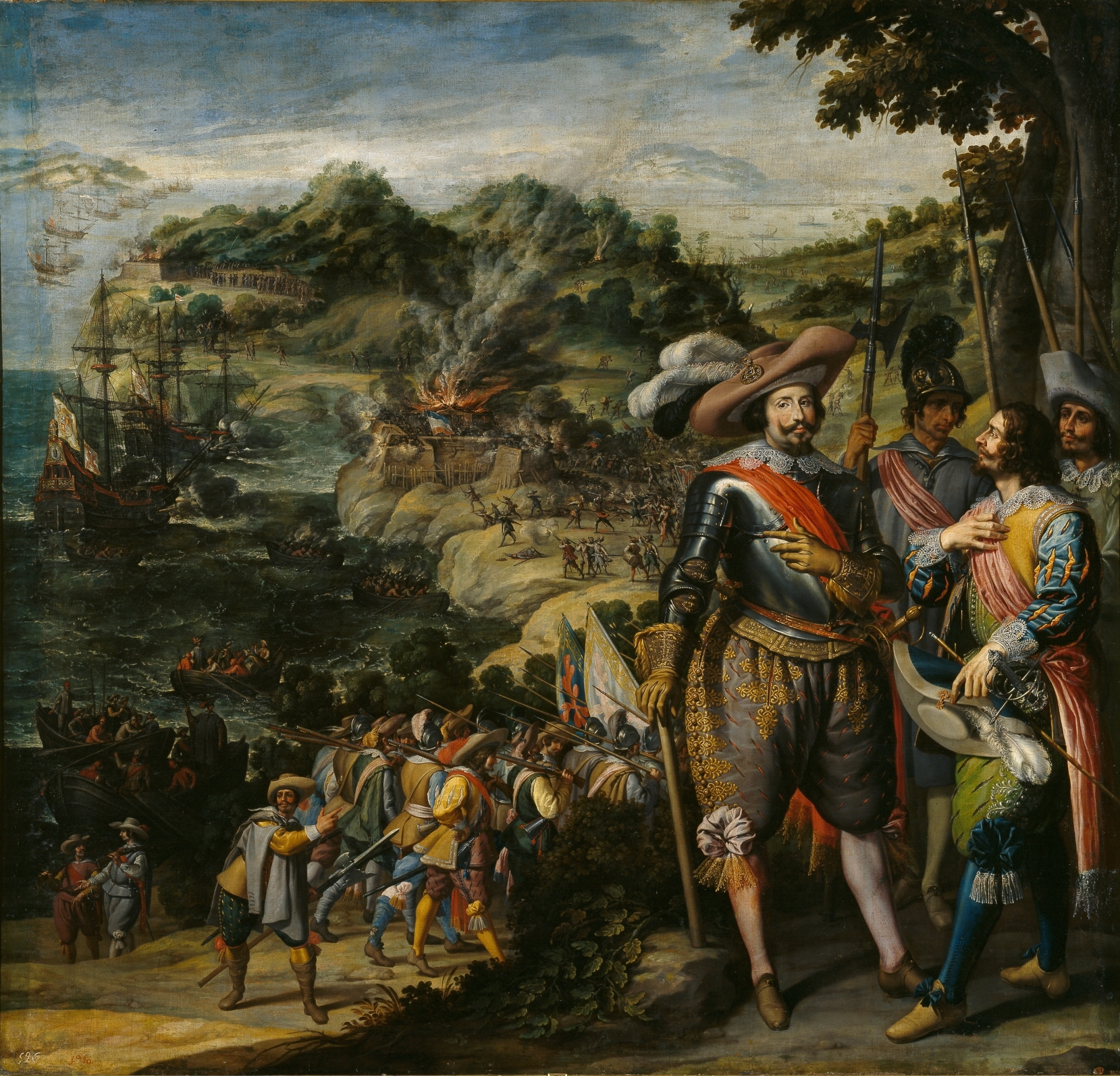
Christopher Columbus was the first European to sight the islands in 1493. The first settlers were the English in 1623, led by Thomas Warner, who established a settlement at Old Road Town on the west coast of St Kitts after achieving an agreement with the Carib chief Ouboutou Tegremante. The French later also settled on St Kitts in 1625 under Pierre Belain d'Esnambuc. As a result, both parties agreed to partition the island into French and English sectors. From 1628 onward the English also began settling on Nevis.
The French and English, intent on exploitation of the island's resources, encountered resistance from the native Caribs (Kalinago), who waged war during the first three years of the settlements' existence. The Europeans resolved to rid themselves of this problem. An ideological campaign was waged by colonial chroniclers, dating back to the Spanish, as they produced literature which denied the Kalinagos' humanity (a literary tradition carried through the late-seventeenth century by such authors as Jean-Baptiste du Tertre and Pere Labat). Thereafter, the English and French established large sugar plantations which were worked by imported African slaves. This made the planter-colonists rich, but drastically altered the islands' demographics as black slaves soon came to outnumber Europeans.
A Spanish expedition of 1629 sent to enforce Spanish claims destroyed the English and French colonies and deported the settlers back to their respective countries. As part of the war settlement in 1630, the Spanish permitted the re-establishment of the English and French colonies.
As Spanish power declined, Saint Kitts became a key base for English and French expansion in the Caribbean. From St Kitts the British settled the islands of Antigua, Montserrat, Anguilla and Tortola, and the French settled Martinique, the Guadeloupe archipelago and Saint Barthélemy. During the late 17th century, France and England fought for control over St Kitts and Nevis, fighting wars in 1667,
British colonial period (1700–1983)
The colony had recovered by the turn of the 18th century, and St Kitts had become the richest British Crown Colony per capita in the Caribbean as result of its slave-based sugar industry by the close of the 1700s. The 18th century also saw Nevis, formerly the richer of the two islands, being eclipsed by St Kitts in economic importance.

As Britain became embroiled in war with its American colonies, the French decided to use the opportunity to re-capture St Kitts in 1782; however St Kitts was given back and recognised as British territory in the Treaty of Versailles (1783).
The African slave trade was terminated within the British Empire in 1807, and slavery outlawed completely in 1834. A four-year "apprenticeship" period followed for each slave, in which they worked for their former owners for wages. On Nevis 8,815 slaves were freed, while St Kitts freed 19,780.
Saint Kitts and Nevis, along with Anguilla, were federated in 1882. In the first few decades of the 20th century economic hardship and lack of opportunities led to the growth of a labour movement; the Great Depression prompted sugar workers to go on strike in 1935. The 1940s saw the founding of the St Kitts-Nevis-Anguilla Labour Party (later renamed the Saint Kitts and Nevis Labour Party, or SKNLP) under Robert Llewellyn Bradshaw. Bradshaw later became Chief Minister and then Premier of the colony from 1966 to 1978; he sought to gradually bring the sugar-based economy under greater state control.
After a brief period as part of the West Indies Federation (1958–62), the islands became an associated state with full internal autonomy in 1967. Residents of Nevis and Anguilla were unhappy with St Kitts's domination of the federation, and Anguilla unilaterally declared independence in 1967. In 1971 Britain resumed full control of Anguilla, but it was formally separated in 1980.
Post independence era (1983–present)

St Kitts and Nevis achieved full independence on 19 September 1983. Kennedy Simmonds of the PAM, Premier since 1980, duly became the country's first Prime Minister. St Kitts and Nevis opted to remain within the British Commonwealth, at that time retaining Queen Elizabeth as Monarch, represented locally by a Governor-General. Kennedy Simmonds went on to win elections in 1984, 1989 and 1993, before being unseated when the SKNLP returned to power in 1995 under Denzil Douglas.
In Nevis, growing discontent with their perceived marginalisation within the federation led to a referendum to separate from St Kitts in 1998, which though resulting a 62% vote to secede, fell short of the required two-thirds majority to be legally enacted.
In late-September 1998, Hurricane Georges caused approximately $458,000,000 in damages and limited GDP growth for the year and beyond. Meanwhile, the sugar industry, in decline for years and propped up only by government subsidies, was closed completely in 2005.
In the aftermath of the September 11 attacks of 2001, Saint Kitts and Nevis expressed strong solidarity with the United States and implemented significant security enhancements, particularly in its maritime and aviation sectors, in line with global efforts against terrorism. The ambassador to the OAS at the time, Dr. Izben Williams, delivered a statement condemning the "heinous act" and reaffirmed the nation's solidarity with the US government and people.
In 2012, Saint Kitts and Nevis was declared free of malaria, according to the World Health Organization.
The 2015 Saint Kitts and Nevis general election was won by Timothy Harris and his recently formed People's Labour Party, with backing from the PAM and the Nevis-based Concerned Citizens' Movement under the 'Team Unity' banner.
In June 2020, Team Unity coalition of the incumbent government, led by Prime Minister Timothy Harris, won general elections by defeating Saint Kitts and Nevis Labour Party (SKNLP).
In snap general elections held in August 2022, the SKNLP again won, and Terrance Drew became the fourth prime minister of Saint Kitts and Nevis.
Politics
Main article: Politics of Saint Kitts and Nevis


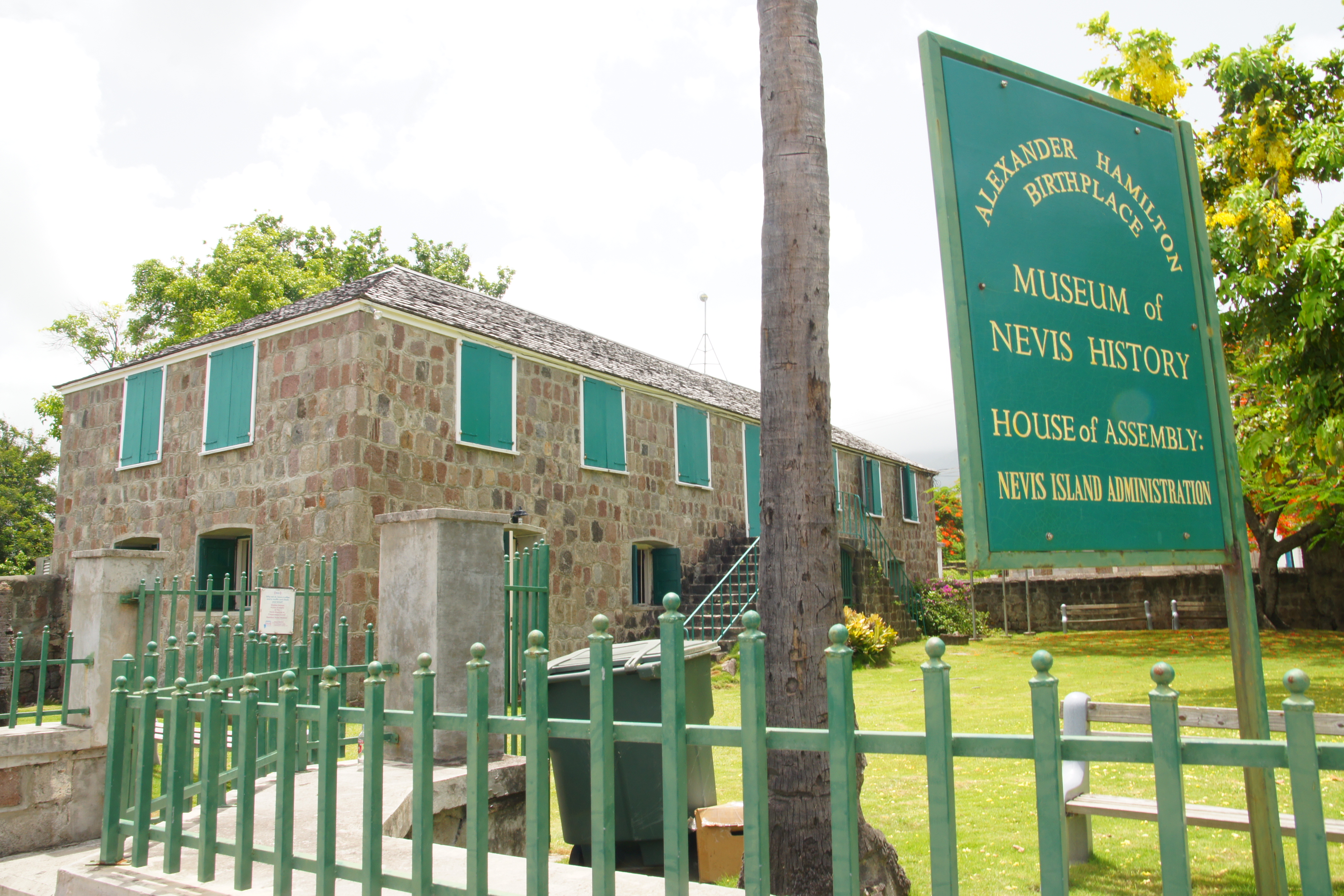
Saint Kitts and Nevis is a sovereign, democratic, and federal state. It is a Commonwealth realm, a constitutional monarchy with the king of Saint Christopher and Nevis, Charles III, as its head of state. The King is represented in the country by a governor-general, who acts on the advice of the prime minister and the Cabinet. The prime minister is the leader of the majority party of the House, and the cabinet conducts affairs of state.
St. Kitts and Nevis has a unicameral legislature, known as the National Assembly. It is composed of fourteen members: eleven elected representatives (three from the island of Nevis) and three senators, who are appointed by the Governor-General. Two of the senators are appointed on the advice of the Prime Minister, and one, on the advice of the leader of the opposition. Unlike in other countries, the senators do not constitute a separate senate or upper house of parliament, but sit in the National Assembly alongside representatives. All members serve five-year terms. The Prime Minister and the Cabinet answer to the Parliament. Nevis also maintains its own semi-autonomous assembly.
Foreign relations
Saint Kitts and Nevis has no major international disputes. Saint Kitts and Nevis is a full and participating member of the Caribbean Community (CARICOM), the Organisation of Eastern Caribbean States (OECS), and the Organisation of American States (OAS).
The Organisation of American States (OAS)
St Kitts & Nevis entered the OAS system on 16 September 1984.
Agreements which impact on financial relationships
The Double Taxation Relief (CARICOM) Treaty 1994
Double Taxation Relief (CARICOM) Treaty 1994
At a CARICOM meeting, representative of St. Kitts and Nevis Kennedy Simmonds signed the Double Taxation Relief (CARICOM) Treaty 1994, on 6 July 1994.
The representatives of seven CARICOM countries signed similar agreements at Sherbourne Conference Centre, St. Michael, Barbados. The countries whose representatives signed the treaties in Barbados were: Antigua & Barbuda, Belize, Grenada, Jamaica, St. Lucia, St. Vincent & the Grenadines and Trinidad and Tobago. This treaty covered income, residence, tax jurisdictions, capital gains, business profits, interest, dividends, royalties and other areas.
FATCA
On 30 June 2014, St. Kitts and Nevis signed a Model 1 agreement with the United States of America in relation to Foreign Account Tax Compliance Act (FATCA).
Military
Saint Kitts and Nevis has a defence force of 300 personnel. It is mostly involved in policing and drug trade interception.
Human rights
Male homosexuality has been legal in St. Kitts and Nevis since 29 August 2022. In 2011, the Government of St. Kitts and Nevis said it had "no mandate from the people" to abolish the criminalisation of homosexuality among consenting adults.
Administrative divisions
The federation of Saint Kitts and Nevis is divided into fourteen parishes, nine of them on Saint Kitts and five on Nevis.
| Name | Capital | Area | ||||||||||||||||||||||||||||||
|---|---|---|---|---|---|---|---|---|---|---|---|---|---|---|---|---|---|---|---|---|---|---|---|---|---|---|---|---|---|---|---|---|
| (km2) | Population | Population density | ||||||||||||||||||||||||||||||
| per km2 (2022) | 2022 | 2011 | 2001 | 1991 | Saint Kitts | Basseterre | 168.92 | 38,138 | 34,918 | 35,217 | 31,824 | 225.8 | Nevis | Charlestown | 93.7 | 13,182 | 12,277 | 11,108 | 8,794 | 140.7 | Saint Kitts and Nevis total | Basseterre | 262.62 | 51,320 | 47,195 | 46,325 | 40,618 | 195.4 | ||||
| Christ Church Nichola Town | Nichola Town | 17.97 | 2,064 | 1,922 | 2,061 | 1,664 | 114.9 | |||||||||||||||||||||||||
| Saint Anne Sandy Point | Sandy Point Town | 12.74 | 2,969 | 2,626 | 3,167 | 3,077 | 233.0 | |||||||||||||||||||||||||
| Saint George Basseterre | Basseterre | 28.60 | 13,652 | 12,635 | 13,251 | 12,605 | 477.3 | |||||||||||||||||||||||||
| Saint John Capisterre | Dieppe Bay Town | 24.25 | 2,972 | 2,962 | 3,248 | 2,936 | 122.6 | |||||||||||||||||||||||||
| Saint Mary Cayon | Cayon | 14.72 | 3,341 | 3,435 | 3,423 | 3,249 | 227.0 | |||||||||||||||||||||||||
| Saint Paul Capisterre | Saint Paul Capisterre | 12.66 | 2,468 | 2,432 | 2,453 | 2,130 | 194.9 | |||||||||||||||||||||||||
| Saint Peter Basseterre | Monkey Hill | 19.74 | 5,667 | 4,670 | 3,541 | 2,656 | 287.1 | |||||||||||||||||||||||||
| Saint Thomas Middle Island | Middle Island | 23.55 | 2,657 | 2,535 | 2,395 | 2,257 | 112.8 | |||||||||||||||||||||||||
| Trinity Palmetto Point | Trinity | 14.69 | 2,348 | 1,701 | 1,678 | 1,250 | 159.8 | |||||||||||||||||||||||||
| Saint George Gingerland | Market Shop | 18.7 | 2,323 | 2,496 | 2,564 | 2,086 | 124.2 | |||||||||||||||||||||||||
| Saint James Windward | Newcastle | 31.5 | 2,290 | 2,038 | 1,806 | 1,493 | 72.7 | |||||||||||||||||||||||||
| Saint John Figtree | Figtree | 21.7 | 4,416 | 3,827 | 2,901 | 2,191 | 203.5 | |||||||||||||||||||||||||
| Saint Paul Charlestown | Charlestown | 3.6 | 1,888 | 1,847 | 1,790 | 1,411 | 524.4 | |||||||||||||||||||||||||
| Saint Thomas Lowland | Cotton Ground | 18.2 | 2,265 | 2,069 | 2,047 | 1,613 | 124.5 |
Geography
Main article: Geography of Saint Kitts and Nevis
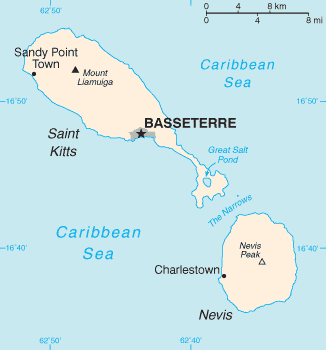

The capital city is Basseterre, located on the larger island of Saint Kitts. Basseterre is also the main port for passenger entry (via cruise ships) and cargo. The smaller island of Nevis lies approximately 3 km to the southeast of Saint Kitts, across a shallow channel called The Narrows. The islands of Sint Eustatius, Saba, Saint Barthélemy, Saint-Martin/Sint Maarten and Anguilla lie to the north-northwest of the country. To the east and northeast are Antigua and Barbuda, and to the southeast is the small uninhabited island of Redonda (part of Antigua and Barbuda) and the island of Montserrat.
The country consists of two main islands, Saint Kitts and Nevis, separated at a distance of 2 miles (3 km) by The Narrows strait. Both are of volcanic origin, with large central peaks covered in tropical rainforest. The majority of the population live along the flatter coastal areas. St Kitts contains several mountain ranges (the North West Range, Central Range and South-West Range) in its centre, where the highest peak of the country, Mount Liamuiga 1156 m can be found. Along the east coast can be found the Canada Hills and Conaree Hills. The land narrows considerably in the south-east, forming a much flatter peninsula which contains the largest body of water, the Great Salt Pond. To the southeast, in The Narrows, lies the small isle of Booby Island. There are numerous rivers descending from the mountains of both islands, which provide fresh water to the local population. Nevis, the smaller of the two main islands and roughly circular in shape, is dominated by Nevis Peak 985 m.
Saint Kitts and Nevis contains two terrestrial ecoregions: Leeward Islands moist forests and Leeward Islands dry forests. The country had a 2019 Forest Landscape Integrity Index mean score of 4.55/10, ranking it 121st globally out of 172 countries.
Flora and fauna
The national flower is Delonix regia. Common plants include palmetto, hibiscus, bougainvillea, and tamarind. Pinus species are common in the dense forests of islands, and are usually covered by various species of ferns.
The national bird is the brown pelican. 176 species of bird have been reported from the country.
Climate
By the Köppen climate classification, St Kitts has a tropical savanna climate (Köppen Aw) and Nevis has a tropical monsoon climate (Köppen Am). Mean monthly temperatures in Basseterre varies little from 23.9 °C to 26.6 C. Yearly rainfall is approximately 2400 mm, although it has varied from 1356 mm to 3183 mm in the period 1901–2015.
|access-date= 15 March 2018 |archive-date= 6 November 2018 |archive-url= https://web.archive.org/web/20181106182358/http://sdwebx.worldbank.org/climateportal/index.cfm?page=country_historical_climate&ThisCCode=KNA |url-status= dead
National parks
St. Kitts and Nevis have two national parks: Brimstone Hill Fortress National Park and Central Forest Reserve National Park. Brimstone Hills Fortress was officially designated a National Park in 1985, and it was declared a UNESCO World Heritage Site in 1999. Central Forest Reserve was designated a National Park by the government on 23 October 2006, and officially gazetted on 29 March 2007.
Demographics
Main article: Demographics of Saint Kitts and Nevis

Population
The population of Saint Kitts and Nevis is around 53,000 (July 2019 est.) and has remained relatively constant for many years. At the end of the nineteenth century there were 42,600 residents, the number slowly rising to a little over 50,000 by the mid-twentieth century. Between 1960 and 1990, the population dropped from 50,000 to 40,000, before rising again to its current level. Approximately three-quarters of the population live on Saint Kitts, 15,500 of them in Basseterre. Other large settlements include Cayon (population 3,000) and Sandy Point Town (3,000), both on Saint Kitts, and Gingerland (2,500) and Charlestown (1,900), both on Nevis. It ranks number 209 on the list of countries and dependencies by population.
Racial and ethnic groups
The population is primarily Afro-Caribbean (92.5%), with significant minorities of European (2.1%) and Indian (1.5%) descent (2001 estimate).
Emigration
, there were inhabitants; their average life expectancy is 76.9 years. Emigration has historically been very high, so high that the total estimated population in 2007 was little changed from that in 1961.
Emigration from St Kitts and Nevis to the United States:
- 1986–1990: 3,513
- 1991–1995: 2,730
- 1996–2000: 2,101
- 2001–2005: 1,756
- 2006–2010: 1,817
Languages
English is the sole official language. Saint Kitts Creole is also widely spoken.
Religion
Most inhabitants (82%) are Christians, most of whom belong to Anglican, Methodist, and other Protestant denominations. Roman Catholics are pastorally served by the Roman Catholic Diocese of Saint John's–Basseterre, and Anglicans by the Diocese of the North East Caribbean and Aruba.
Hinduism is the largest non-Christian religion, followed by 1.82% of the population; these are primarily Indo-Kittitians and Indo-Nevisians.
According to the 2011 census, 17 per cent of the population is Anglican, 16 per cent Methodist, 11 per cent Pentecostal, 7 per cent Church of God, 6 per cent Roman Catholic, 5 per cent each Baptist, Moravian, Seventh-day Adventist, and Wesleyan Holiness, 4 per cent "Other", and 2 per cent each Brethren, evangelical Christian, and Hindu.
Culture
Main article: Culture of Saint Kitts and Nevis
Music and festivals

Saint Kitts and Nevis is known for a number of musical celebrations including Carnival (18 December to 3 January on Saint Kitts). The last week in June features the St Kitts Music Festival, while the week-long Culturama on Nevis lasts from the end of July into early August.
Additional festivals on the island of Saint Kitts include Inner City Fest, in February in Molineaux; Green Valley Festival, usually around Whit Monday in village of Cayon; Easterama, around Easter in village of Sandy Point; Fest-Tab, in July or August in the village of Tabernacle; and La festival de Capisterre, around Independence Day in Saint Kitts and Nevis (19 September), in the Capisterre region. These celebrations typically feature parades, street dances and salsa, jazz, soca, calypso and steelpan music.
The 1985 film Missing in Action 2: The Beginning was filmed in Saint Kitts.
Media
Sports
Cricket is common in Saint Kitts and Nevis. Top players can be selected for the West Indies cricket team. The late Runako Morton was from Nevis. Saint Kitts and Nevis was the smallest country to host 2007 Cricket World Cup matches, which were played at the Warner Park Stadium.
Rugby and netball are also common in Saint Kitts and Nevis as well.
The St Kitts and Nevis national football team, also known as the "Sugar Boyz", has experienced some international success in recent years, progressing to the semi-final round of qualification for the 2006 FIFA World Cup in the CONCACAF region. Led by Glence Glasgow, they defeated the US Virgin Islands and Barbados before they were outmatched by Mexico, Saint Vincent and the Grenadines, and Trinidad and Tobago. Atiba Harris is the first footballer from the country to play in Major League Soccer and arguably the most famous footballer from the country. He is the current President of the SKNFA. Despite not representing the country, Marcus Rashford is of descent, as is Cole Palmer.
The national team achieved its greatest success of the modern era when it qualified for the 2023 CONCACAF Gold Cup defeating the Curaçao national football team and the French Guiana national football team in a penalty shootout in the preliminary round. It was drawn into Group A with Jamaica, the United States, and Trinidad & Tobago, but lost all three games.
The St Kitts and Nevis Billiard Federation, SKNBF, is the governing body for cue sports across the two islands. The SKNBF is a member of the Caribbean Billiards Union (CBU) with the SKNBF President Ste Williams holding the post of CBU Vice-president.
Kim Collins is the country's foremost track and field athlete. He has won gold medals in the 100 metres at both the World Championships in Athletics and Commonwealth Games, and at the 2000 Sydney Olympics he was the country's first athlete to reach an Olympic final. He and three other athletes represented St Kitts and Nevis at the 2008 Summer Olympics in Beijing. The four by one hundred metre relay team won a bronze medal at the 2011 world championships. Jason Rogers, Antoine Adams, and Brijesh Lawrence ran the other three relay legs with Collins.
American writer and former figure skater and triathlete Kathryn Bertine was granted dual citizenship in an attempt to make the 2008 Summer Olympics representing St Kitts and Nevis in women's cycling. Her story was chronicled online at ESPN.com as a part of its E-Ticket feature entitled "So You Wanna Be An Olympian?" She ultimately failed to earn the necessary points for Olympic qualification.
St Kitts and Nevis had two athletes ride in the time trial at the 2010 UCI Road World Championships: Reginald Douglas and James Weekes.
Economy
Main article: Economy of Saint Kitts and Nevis

Saint Kitts and Nevis is a twin-island federation whose economy is characterised by its dominant tourism, agriculture, and light manufacturing industries. Sugar was the primary export from the 1940s on, but rising production costs, low world market prices, and the government's efforts to reduce dependence on it have led to a growing diversification of the agricultural sector. In 2005, the government decided to close down the state-owned sugar company, which had experienced losses and was a significant contributor to the fiscal deficit. In the 21st century, the government has sought to diversify the economy via agriculture, tourism, export-oriented manufacturing, and offshore banking.
In July 2015, St Kitts & Nevis and the Republic of Ireland signed a tax agreement to "promote international co-operation in tax matters through exchange of information." The agreement was developed by the OECD Global Forum Working Group on Effective Exchange of Information, which consisted of representatives from OECD member countries and 11 other countries in the Caribbean and other parts of the world.
Tourism
St Kitts and Nevis is heavily dependent upon tourism to drive its economy, a sector which has expanded significantly since the 1970s. In 2009 there were 587,479 arrivals to Saint Kitts compared to 379,473 in 2007, an increase of just under 40% in a two-year period; however, the tourist sector declined during the Great Recession and then rebounded slowly.
Transport


Saint Kitts and Nevis has two international airports. The larger one is Robert L. Bradshaw International Airport on the island of Saint Kitts with service outside to the Caribbean, North America, and Europe. The other airport, Vance W. Amory International Airport, is located on the island of Nevis and has flights to other parts of the Caribbean.
The St Kitts Scenic Railway is the last remaining running railroad in the Lesser Antilles.
Economic citizenship by investment
St. Kitts and Nevis allows foreigners to obtain the status of St. Kitts and Nevis citizen by means of a government sponsored investment programme called Citizenship-by-Investment. Established in 1984, St. Kitts and Nevis's citizenship programme is the oldest prevailing economic citizenship programme of this kind in the world. However, while the programme is the oldest in the world, it only catapulted in 2006 when Henley & Partners, a global citizenship advisory firm, became involved in the restructuring of the programme to incorporate donations to the country's sugar industry.
Citizenship-by-Investment Programmes have been criticised by some researchers due to the risks of corruption, money laundering and tax evasion. According to the official website of St. Kitts and Nevis's Citizenship-by-Investment Programme, they offer multiple benefits, including citizenship for life that can be passed down for generations, no residency or language requirements, and citizenship in a financially favourable country. Applicants who are vetted and successfully attain citizenship are eligible to apply for a Saint Kitts and Nevis passport.Henley & Partners Holdings Ltd. (2023). St. Kitts and Nevis. Henleyglobal.com. https://web.archive.org/web/20230929173136/https://www.henleyglobal.com/citizenship-investment/st-kitts-nevis "The Certificate of Registration confers citizenship status and once it has been issued, the applicant is entitled to apply for a passport"
To qualify for citizenship under the investment programme, each candidate must complete a vetting process which includes several background and due diligence checks, an interview, and other various legal requirements. This is followed by a qualifying investment into the country. The applicant must make at least a minimum investment in either approved real estate; or a donation, known as the Sustainable Island State Contribution (SISC) into the Federal Consolidated Fund; or a donation to an Approved Public Benefactor.
The official website of St. Kitts and Nevis's Citizenship-by-Investment Programme lists the following investment options:
- An investment in designated real estate with a minimum value of US$400,000, plus the payment of government fees and other fees and taxes.
- A contribution to the Federal Consolidated Fund, or to an Approved Public Benefactor, of at least US$250,000, inclusive of all government fees but exclusive of due diligence fees which are the same as the real estate option.
Education
There are eight publicly administered high and secondary level schools in St. Kitts and Nevis, and several private secondary schools. Education is compulsory between the ages of 5 and 16.
Notable people
- Alexander Hamilton (born 1755 or 1757), statesman and Founding Father of the United States
- Paul Bilzerian (born 1950), financier convicted of securities fraud
- Sir Edmund Wickham Lawrence (1932-2025), the third governor-general of Saint Kitts and Nevis
- Warrington Phillip (born 1968), former first-class cricketer and convicted murderer
- Shoaib Ahmed Shaikh, also known as SAS, businessman and convicted felon
- Cole Palmer, whose father is of Nevisian roots, and proudly acknowledges his roots{{cite web
|access-date=2026-01-19
- Kim Collins, a Kittitian former track and field sprinter; 2003 World Champion for the men's 100 m{{cite web
|access-date=2026-01-19
- Mel B (Melanie Brown), entertainer of Spice Girls fame, whose father is Nevisian, and was made a Nevis tourism ambassador in 2022{{cite web
|access-date=2025-12-21
Notes
References
Sources
References
- "National Profiles".
- (October 2023). "World Economic Outlook October 2023 (Saint Kitts and Nevis)". International Monetary Fund.
- (26 May 2025). "Human Development Report 2023/2024". [[United Nations Development Programme]].
- "Saint Kitts and Nevis".
- "1983 Saint Kitts and Nevis Constitution".
- "CIA World Factbook- St Kitts and Nevis".
- "Enclopedia Britannica – St Kitts and Nevis".
- Adkins, Leonard M.. (1999). "The Caribbean : a walking and hiking guide". Hunter Pub.
- Saunders, Nicholas J.. (2005). "Peoples of the Caribbean: an encyclopedia of archeology and traditional culture". ABC-CLIO.
- {{Cite Catholic Encyclopedia
- https://web.archive.org/web/20220810105128/https://best-citizenships.com/wp-content/uploads/2019/12/skn.jpg
https://archive.today/20230729090230/https://best-citizenships.com/wp-content/uploads/2019/12/skn.jpg - "SKNVibes {{!}} History".
- "History of Liamuiga".
- "St Kitts History".
- link. (8 July 2006 , Department of Archaeology, University of Southampton. Retrieved 8 August 2006.)
- "St. Kitts and Nevis Archives".
- "Timeline of Key Events in St. Kitts and Nevis".
- McGrath, Jim. (2016-01-14). "St Kitts - a very quick history in 317 words".
- (2002). "A History of St. Kitts". Macmillan Caribbean.
- "Commonwealth – History of St Kitts and Nevis".
- (2010). "The Encyclopedia of Caribbean Religions, Volume 1 A-L.". [[University of Illinois Press]].
- Cobley, 1994, p. 28.
- Cobley, 1994, p. 27.
- Jonnard, Claude M.. (2010). "Islands in the Wind: The Political Economy of the English East Caribbean.". iUniverse.
- Du Tertre, Jean-Baptiste. "Histoire générale des Antilles habitées par les François, 2 vols. Paris: Jolly, 1667, I:5–6".
- "Treaty between Great Britain and Spain for the settlement of all disputes in America". gov.uk.
- "St Kitts History".
- Paravisini-Gebert, p.104
- (2005). "Africana: The Encyclopedia of the African and African American Experience". Oxford University Press.
- Minahan, James. (2013). "The Complete Guide to National Symbols and Emblems". Abc-Clio.
- link. (10 July 2019 Direct Democracy {{in lang). de
- "The Constitution of Saint Christopher and Nevis".
- ''General Election in St Kitts and Nevis 3 July 1995: The Report of the Commonwealth Observer Group''. Commonwealth Observer Group, Commonwealth Secretariat, 1995. {{ISBN. 0-85092-466-9, p.3.
- (11 August 1998). ["Nevis islanders apparently vote not to break away"](https://news.google.com/newspapers?id=D6gaAAAAIBAJ&pg=4918,21223&dq=saint+kitts+nevis+referendum+1998&hl=en }}{{Dead link). Milwaukee Journal Sentinel.
- (30 September 1998). "Caribbean, Dominican Republic, Haiti - Hurricane Georges Fact Sheet #6 - Antigua and Barbuda".
- link. (23 September 2015 Caribbean Elections, 17 February 2015)
- (6 June 2020). "Election 2020 - Landslide victory for Team Unity in St Kitts and Nevis". WIC News.
- (8 August 2022). "St. Kitts Nevis new PM sworn into office". CNW Network.
- "Art. 1, Federation of Saint Kitts and Nevis Constitutional Order of 1983".
- (18 February 2016). "Commonwealth and Overseas".
- Leonard, Thomas M.. (2013). "Encyclopedia of the Developing World". Taylor & Francis.
- OAS. (1 August 2009). "OAS – Organization of American States: Democracy for peace, security, and development".
- "Legal Supplement Part B – Vol. 33, No. 273 – 28th December, 1994 : LEGAL NOTICE NO. 232 : REPUBLIC OF TRINIDAD AND TOBAGO THE INCOME TAX ACT, CHAP. 75:01 : ORDER MADE BY THE PRESIDENT UNDER SECTION 93(1) OF THE INCOME TAX ACT : THE DOUBLE TAXATION RELIEF (CARICOM) ORDER, 1994".
- "Foreign Account Tax Compliance Act (FATCA)".
- "Saint Kitts and Nevis - The World Factbook".
- Clarke, Sherrylyn. (29 August 2022). "Eastern Caribbean court strikes down anti-buggery law". NationNews.
- "St. Kitts and Nevis has no mandate to repeal homosexuality laws".
- (16 July 2021). "Parish Size, Population and Density 1991-2011". Department of Statistics, Ministry of Sustainable Development.
- (28 June 2024). "Census Report For 2021-2022".
- (2017). "An Ecoregion-Based Approach to Protecting Half the Terrestrial Realm". BioScience.
- (2020). "Anthropogenic modification of forests means only 40% of remaining forests have high ecosystem integrity - Supplementary Material". Nature Communications.
- (2017-12-23). "Saint Kitts and Nevis Flora and Fauna".
- (9 January 2013). "Avibase – Bird Checklists of the World Saint Kitts". Avibase.
- "Climate of Saint Kitts and Nevis: Temperature, Climograph, Climate table for Saint Kitts and Nevis – Climate-Data.org". Alexander Merkel.
- "Data on St. Kitts and Nevis {{!}} Reconstructing Global Inequality".
- (16 July 2023). "Countries in the World by Population (2023)".
- (2017). "United Nations Demographic Yearbook: 2016". United Nations.
- "Homepage".
- "Saint Kitts and Nevis".
- "Population by Religious Belief, 2011". Department of Statistics, Ministry of Sustainable Development.
- "CARICOM CAPACITY DEVELOPMENT PROGRAMME (CCDP) : 2000 ROUND OF POPULATION AND HOUSING CENSUS SUB-PROJECT NATIONAL CENSUS REPORT : ST. KITTS AND NEVIS".
- "Section I. Religious Demography 2020 Report on International Religious Freedom: Saint Kitts and Nevis".
- Cameron, pg.502
- "Missing in Action 2-The Beginning Review".
- "St Kitts ramps up to host ICC Cricket World Cup in 2007".
- "Cricket World Cup 2007 - St. Kitts and Nevis".
- (5 September 2020). "Soccer Star Marcus Rashford Puts Smile on Faces of Hungry Children".
- (14 July 2022). "Dead Mad | by Cole Palmer".
- "Saint Kitts and Nevis: Sugar Boyz make history at CONCACAF Gold Cup".
- "Bronze medalists of Saint Kitts and Nevis team Jason Rogers, Kim Collins, Antoine Adams and Brijesh Lawrence (L to R) react on the podium during the award ceremony for the men's 4x100 metres relay at the".
- "E-ticket: So You Wanna Be An Olympian, Part 13".
- Rob Jones. (30 September 2010). "UCI Road World Championships 2010: Elite Men Results - Cyclingnews.com". Cyclingnews.com.
- "St.Kitts-Nevis and the Republic of Ireland sign Tax Agreement".
- "UN Tourism Data Dashboard".
- "Citizenship-by-Investment Introduction".
- Abrahamian, Atossa Araxia. (2015). "The Cosmopolites: The Coming of the Global Citizen". Columbia Global Reports.
- Shachar, Ayelet. (2017). "Citizenship for Sale? In: The Oxford Handbook of Citizenship". Oxford University Press.
- (28 July 2023 }}.
{{Cite web). "Sustainable Island State Contribution (SISC) – Citizenship by Investment {{!}} St Kitts and Nevis CIU". - St. Kitts And Nevis Government Press Release. (27 July 2023). St Kitts and Nevis announces further monumental changes to its Citizenship by Investment Programme. St. Kitts And Nevis Government. Retrieved 28 July 2023, from https://ciu.gov.kn/wp-content/uploads/2023/07/SKN-Press-Release-SKN-CBI-July_2023_Final.pdf.
https://web.archive.org/web/20230728095706/https://ciu.gov.kn/wp-content/uploads/2023/07/SKN-Press-Release-SKN-CBI-July_2023_Final.pdf - (29 July 2023 }}
{{Cite web). "CBI Options – Citizenship by Investment {{!}} St Kitts and Nevis CIU". - Kalin, Christian H.. (2015). "Global Residence and Citizenship Handbook". Ideos Publications.
- "Citizenship Investment in St. Kitts and Nevis - Henley & Partners".
This article was imported from Wikipedia and is available under the Creative Commons Attribution-ShareAlike 4.0 License. Content has been adapted to SurfDoc format. Original contributors can be found on the article history page.
Ask Mako anything about Saint Kitts and Nevis — get instant answers, deeper analysis, and related topics.
Research with MakoFree with your Surf account
Create a free account to save articles, ask Mako questions, and organize your research.
Sign up freeThis content may have been generated or modified by AI. CloudSurf Software LLC is not responsible for the accuracy, completeness, or reliability of AI-generated content. Always verify important information from primary sources.
Report