From Surf Wiki (app.surf) — the open knowledge base
Sabarmati Riverfront
Development at Ahmedabad, India

Development at Ahmedabad, India
| Field | Value |
|---|---|
| name | Sabarmati Riverfront |
| image | Sabarmati Riverfront Logo.gif |
| location | Ahmedabad, Gujarat, India |
| coordinates | |
| status | Open for Public |
| groundbreaking | 2005 |
| proposed | since 1960s |
| opening | August 2012 - Ongoing |
| use | Waterfront |
| architect | Bimal Patel |
| developer | Sabarmati River Front Development Corporation Limited |
| cost | (November 2019) |
| size | Phase-1: 202.79 ha |
| Phase 2:108.15 ha | |
| website | |
| image2 | File:Sabarmati 1 Madhur.jpg |
| map_type | India Ahmedabad##India Gujarat |
Phase 2:108.15 ha Sabarmati Riverfront is a waterfront being developed along the banks of Sabarmati river in Ahmedabad, India. Proposed in the 1960s, the construction began in 2005. Since 2012, under Phase 1, the waterfront has been gradually opened to public as facilities are constructed; various facilities are under construction. The major objectives of project are environment improvement, social infrastructure and sustainable development. Phase 2 was approved in 2020.
Geography
Main article: Sabarmati River
The Sabarmati river is a monsoon-fed river which has a total catchment area of 21674 sqkm. The Dharoi Dam constructed in 1976 upstream of Ahmedabad controls water and protects from flooding while Vasna Barrage constructed in 1976 downstream retains water in the river along the city banks and diverts it through Fatehwadi canal for irrigation. The Narmada Canal, which crosses Sabarmati a few kilometres upstream from the city, is part of a larger canal network of Sardar Sarovar Dam. The canal can feed excess water to the river and maintains the level of water in the river which is retained through Vasna Barrage.
History


The first proposal for developing the riverfront was presented in 1961 by the prominent citizens of the city. French architect Bernard Kohn proposed an ecological valley in Sabarmati basin stretched from Dharoi Dam to Gulf of Cambay in the 1960s. In 1964, he proposed an Integrated Planning and Development of Sabarmati Riverfront by reclaiming 30 ha of land. The project was considered feasible in 1966 by the Government of Gujarat. Later he distanced himself from the project citing the difference between his proposal and the project being implemented. In 1976, the Riverfront Development Group proposed an incremental approach for the construction. In 1992, the National River Conservation Plan proposed construction of sewers and pumping stations to reduce water pollution.
The Ahmedabad Municipal Corporation (AMC) set up the Sabarmati Riverfront Development Corporation Ltd (SRFDCL), a special purpose vehicle, in May 1997 funded by the Government of India with a seed capital of for the riverfront development. Environmental Planning Collaborative (EPC) led by Bimal Patel prepared the feasibility report in 1998. Initially the proposal was to construct the riverfront to cover a stretch of 10.4 km stretch from Subhash bridge to Vasna barrage and to reclaim 162 ha of the riverbed. In 2003, the project extended to cover an 11.25 km stretch and reclamation of 202.79 ha and was put on fast track. The project estimated to cost which was to be recovered by selling of a part of reclaimed land for commercial and residential purpose. Bimal Patel-led HCP Design, Planning and Management Pvt. Ltd, Ahmedabad was roped in as the main architect of the project. The project encountered several delays due to concerns regarding water level, flooding, rehabilitation of displaced slum dwellers and the opposition from the activists involved with slum rehabilitation.
.jpg)
The construction began in 2005. The heavy engineering, land reclamation and sewage system was completed at the cost of . The 11.5 km long lower promenades on both banks are completed and some of its section were opened to the public on 15 August 2012. It was inaugurated by then state Chief Minister Narendra Modi. The waterfront is gradually opened to public as and when facilities are finished. Various facilities are actively under construction since then. Total were spent on the project by 2014. By November 2019, the were spent.
The Chinese leader, Xi Jinping and his wife Peng Liyuan visited Sabarmati riverfront with prime minister of India Narendra Modi on 17 September 2014.
Riverfront Phase 1

The average width of the river channel was 382 m and the narrowest cross-section 330 m. It is uniformly narrowed to 263 m. The project claims to have engineered the narrowing of the river without affecting its flood carrying capacity.

Flood plains, also referred to as floodplains, are lands bordering rivers and streams that are normally dry but get covered with water during floods. Buildings or other structures placed in flood plains can be damaged by floods. Development in flood plains, which includes construction of buildings; footings of bridges; or bunds, changes the pattern of water flow and increases flooding and flood damage on adjacent property by blocking the flow of water and increasing the width, depth, or velocity of flood waters.
The Sabarmati Riverfront project has reclaimed riverbed land on both the east and the west banks to construct 11.25 km long riverfront. Theoretically, it can hold 470000 cuft/s without spillage. Engineers are guided by the design parameters of river training through the use of scientific indices and hydrological guidelines.
A total of 202.79 ha of land is reclaimed. The reclaimed land is used for public as well as private development. More than 85% of the reclaimed land is proposed be used for public infrastructure, recreational parks, sports facilities and gardens while nearly 14% is proposed to be used for commercial and residential purposes.
Where rivers traverse urban areas, flood-plain zoning, which places restrictions on the use of land on flood plains, can reduce the cost of flood damage. Local governments may pass laws that prevent uncontrolled building or development on flood plains to limit flood risks and to protect nearby property. On the other hand, the ever increasing demand for urban land exerts pressure on municipal bodies and urban planners to reclaim land parcels off natural flood plains. The concrete embankments specially designed for Sabarmati Riverfront were intended to reduce erosion of the banks, and reduce flooding of low-lying areas of the city by the walls constructed along both the banks. Over subsequent years, the walls built along both banks have also impeded the rapid drainage of storm water from the city into the path of the river. The width of the river designed to carry flows of 470,000 cusecs (cubic feet/second) has been reported stressed at only about 30,000 cusecs and less than 60,000 cusecs in 2025. In 2015, 500 people from the city, had to be evacuated to safer locations when flows reached 250,000 cusecs.
A new purpose-designed integrated sewage and storm-water system intercepts 38 sewage and industrial effluent discharge points and route the discharge to sewage treatment plants south of Vasna Barrage. Frequently published studies, reports and court interventions indicate large-scale untreated sewage and industrial effluents finding its way to the river. The Sabarmati Riverfront has been implemented in phases and progressively opened for public use since 2012.

The original project objectives also claimed enabling groundwater recharge. In reality, as of 2021, Ahmedabad recorded India’s third deepest water table at 67m (220 ft). After the implementation of the project, the once seasonal Sabarmati is now artificially filled up with waters brought in from a Narmada canal upstream, and the waters are held behind the Vasna Barrage downstream. A new sewage system delivers treated sewage waters of Ahmedabad city into the engineered water body from the inlet Narmada canal to the outlet at the barrage, and bound by the built embankments on either bank. It created an engineered water body and enabled recreational facilities like boating in the river. Recreational boating and kayaking, also run by SRFDCL, was halted in 2024 flagging public safety issues and contractors operating with inadequate permissions.
There are also plans to replenish the river by treated sewage water. When Sabarmati river was “emptied” in June 2025, and tens of thousands of citizens volunteered to clean-up the river bed, it became evident that much untreated water – about 786 MLD (million litres per day) - had been reaching the river beyond the sewage treatment plants each day.
Streets
New roads with footpaths, parking bays, carriage ways and cycle tracks are constructed along both the banks for easy movement of traffic along the North–South direction. The roads leading to the river are strengthened for better movement and access. The West River Drive augments the Ashram Road and has a 25 m right of way. The East River Drive with a right of way of 30 m provides better North–South access to the eastern part of the city and a direct road to Ahmedabad airport.
Recreation and amenities
Amenities
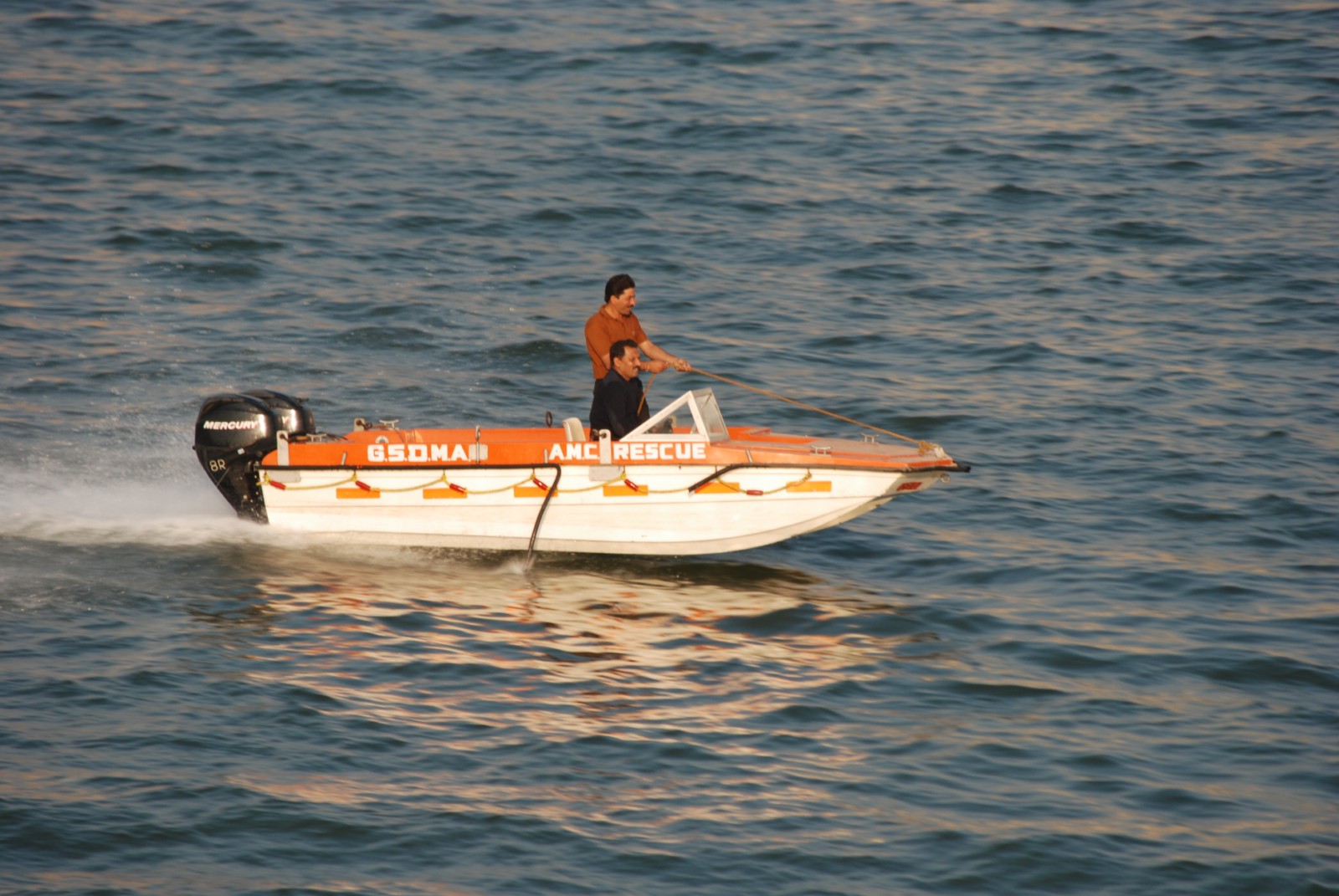
The two-level promenade is planned and the lower promenade is already constructed. These promenades provide continuous 11.2 km long walkway along the river on the east side and 11.3 km on west side. The width of the promenade varies from 6 to 18 metres. The 31 Ghats are constructed at regular interval along the lower promenade for access to the water. The boating stations are constructed for recreational purpose and for water-based public transport in the future. Three such stations are open.
The 5.07 ha Events Ground is an event ground with infrastructure facilities. It serves as open venue for variety of purpose and revenue source for the project. The lawn is spread over 40000 sqm and can host over 50,000 people. The 0.9 ha laundry campus with seven blocks opened in February 2014. It has washing areas on the ground level and drying facilities on the terraces. Fourteen public utilities are constructed. A seven storey parking was opened in September 2023 near SVP Hospital.
The Sabarmati Ashram will be also connected to lower promenade and existing steps will be developed as an amphitheatre. The 3.3 ha Heritage Plaza along the city walls between Ellis Bridge and Nehru Bridge will be designed as open space showcasing heritage, history and culture of the city. Some sports complexes are also proposed.

Atal Pedestrian Bridge connects both banks of the river.
Parks and gardens

Nearly 26% of the reclaimed land will be used for the parks and gardens to enhance environment and for public recreation. Some parks are already constructed and expanded while others are under construction and proposed.
The 6 ha park near Subhash Bridge built at the cost of . It is spread over an area of 60,000 sq m, has a lotus lake, an amphitheatre, a stepwell and a 2 km long walkway. It was opened in October 2013. The 1.8 ha park near Usmanpura were opened in October 2013. The 5 ha Riverfront Flower Park, spread over 45,000 sq m, houses 330 native and exotic flower species. It was constructed at the cost of and opened in March 2016. The children's park near Dafnala is opened in 2019.
The 10.4 ha urban forest is built in Paldi which is divided in two parts by Ambedkar Bridge. The northern part serves as garden while the southern part is a biodiversity park. It will cost . The Riverfront Biodiversity Park, spread over two hectares of land, has around 7000 trees of over 120 species and 35 species of native as well as migratory birds such as boot-headed eagle, egrets, ibis, white-throated kingfisher, purple swamphen and sparrows. Some species of butterflies and snakes are also there. The SRFDL used the Miyawaki method of plantation with five saplings per square metre of land. It planted around 70,000 saplings on land between Ambedkar bridge and Sport Club.
The 0.9 ha amusement park is also proposed near Dadhichi bridge. The 1.4 ha Peace Garden at Khanpur is proposed as a park as well as location for concerts and outdoor performances.
Markets
Several markets, vending areas, business and event grounds are planned. Ravivari or Gujari Bazar, the informal Sunday Market held under Ellis Bridge is relocated to the new location near Gaekwad Haveli. The open air market has a functional arrangement of zones and 1641 platforms for vendors. It was opened to the public in February 2014. The 5.7 ha Exhibition Centre, a trade-fair facility, is proposed on the eastern bank of the river. The 0.5 ha plaza at Vallabh Sadan is also proposed as a market along the upper promenade.
Sports complexes
Three sports complexes are proposed; at Paldi (7.1 ha) for city-level sports, at Pirana (4.2 ha) for informal sports and at Shahpur (2.3 ha). The Paldi and Shahpur sports complexes were opened in September 2023. The venue has hosted sporting and cultural events since its opening. The sports complex was allowed to be used by the athletes of National Games in 2022, but was not offered to public due to a controversy in allotment to the Ahmedabad Tennis Association. The aquatic events under the 2022 National Games, originally planned to be held at the Sabarmati Riverfront, had to be shifted to IIT Gandhinagar due to poor water quality of Sabarmati river.
Residential and commercial development
It is planned to use nearly 14% of the reclaimed land for residential and commercial purposes. Total 52 buildings will be constructed including eight museums. For maximum usage of land, the floor space index (FSI) has been raised up to 5. The funds raised by selling the land will recover the cost of the construction and sustain the management of the riverfront. All construction will have to follow certain design guidelines. Four of these 42 proposed buildings will be 101 metres tall.
In 2017, the SRDFL attempted to sell the development rights of the land but failed. In 2020, the SRFDCL appointed JLL India to monetise around 500 acre land which is valued . As of 2023, the plots are yet to be sold.
The SRFDCL office complex was constructed at the cost of in 2015.
Riverfront Phase 2
In 2019 state budget, an amount of was provisioned for Phase 2. The Phase 2 was approved by SRFDCL in October 2020.
Under Phase 2 of the project, the riverfront will be extended towards north, up to Indira bridge, 5.8 km on the east side and 5.2 km on the west side. After completion, the total length of the Riverfront will be 34 km. The Ahmedabad Cantonment Board gave around 13 ha land while additional 20 ha land was acquired.
A 30 m long barrage-cum-bridge will be constructed at the cost of connecting Torrent Powerhouse on the west and Sadar Bazar on the east. It will connect Sabarmati, Chandkheda, Motera to Hansol. Two additional bridges are also proposed.
Phase 2 proposes stepped promenades, parks, roads and other public amenities. It also proposes residential buildings as well as commercial buildings on the reclaimed land.
Culture
The riverfront is featured in several Gujarati as well as Bollywood films. It hosts several annual events like Sabarmati Marathon, Sabarmati Cyclothon, flower shows, International Kite Festival and airshows. Its continuous promenade attracts runners and fitness enthusiasts. It also hosts trade shows, exhibitions and private wedding events.
Criticism and controversy
The peak discharge in the Sabarmati in August 2006 was between 260,000 and 310000 cuft/s, which caused floods that washed away hundreds of hutments. However, Gujarat state irrigation department measured a peak flow of 550000 cuft/s in 1973, before construction of Dharoi dam. So the project is criticised for lower capacity of 470000 cuft/s. There are also concerns regarding perennial status of the river as it depends on the Narmada canal for water. The channelisation of the river is also criticised by hydrologists and environmentalists.
The project was delayed several times due to issues regarding relocation and rehabilitation of more than 10000 slum dwellers along the river banks. After petitions by activists, the Gujarat High Court intervened and ordered halting demolition of slums until proper planning was implemented. The relocation and rehabilitation was completed later and faced criticism of activists for delays. Around 5000 families were relocated.
Recognition and impact
- 1999: Prime Minister's Award for excellence in urban planning and design
- 2006: Prime Ministers Award for excellence in “Urban Design & Concept” Award - Excellence in “Urban Design and Concept”
- 2006: National Safety Council of India - Safety Award (Prashansa Patra)
- 2011: Housing and Urban Development Corporation Award (HUDCO) - Innovative Infrastructure Development
- 2012: Housing and Urban Development Corporation Award (HUDCO) - Best Practices to Improve the Living Environment
- 2014: Construction Industry Development Council (CIDC) Vishwakarma Award - Best Construction Project
Several other cities planned to follow the model for riverfront development including Vadodara, Surat, Pune, Varanasi, Chennai, Noida.
Gallery
File:Riverfront Ahmedabad.jpg File:River front gujarat india.jpg File:Chinese President and First Lady visit Sabarmati Riverfront, accompanied by the PM (15253059886).jpg File:Ahmedabad Riverfront.JPG File:Sabarmati 2 Madhur.jpg
References
References
- "Environment Clearance for the Riverfront Development project "Sabarmati Riverfront Development Phase 2" from Acher- Hansol to Indira Bridge at Ahmedabad, Gujarat at Survey Nos. Acher".
- (6 January 2013). "I envisaged an Eco Valley not a Riverfront: Prof Bernard Kohn". Daily News & Analysis.
- (24 April 2016). "Previous Proposals".
- (24 January 2015). "The transformation of Sabarmati from a parched riverbed with puddles of industrial effluents to a bustling, swanky riverfront".
- John, Paul. (8 June 2014). "'London Eye', museums and highrises being planned on Sabarmati riverfront".
- Jawaharlal Nehru indiragandhi udyan National Urban Renewal Mission. (2006). "Profile of the City Ahmedabad". Ahmedabad Municipal Corporation.
- (4 December 2014). "SRFDCL brings 'Riverfront House' to convince investors in Sabarmati".
- Mahadevia, Darshini. (2008). "Inside the transforming urban Asia : processes, policies and public actions". Concept.
- Mathur, Navdeep. (December 2012). "On the Sabarmati Riverfront". [[Economic and Political Weekly]].
- (23 March 2016). "Overall Schedule".
- Dave, Kapil. (2019-11-07). "Global consultant to sell prime riverfront land".
- (2014-09-17). "Chinese President Xi Jinping arrives in Ahmedabad". The Economic Times.
- (11 January 2013). "Floods and Flood Plains".
- (2019). "Design parameters of Embankment with revetment – River training".
- (11 January 2013). "U.S. Geological Survey Open File Report 93-641".
- Sharma, Ritu. (25 August 2025). "Areas near Subhash Bridge in Ahmedabad on alert due to release of water into Sabarmati Riverfront". The Indian Express.
- (25 August 2025). "Sabarmati river overflows amid heavy rainfall; 25 workers rescued". The Live Ahmedabad.
- (24 September 2015). "Gujarat floods: More than 1,500 people evacuated after water level of Sabarmati rises dramatically". DNA India.
- (11 June 2022). "Emerging Challenges & Initiatives in Water Management – A case of Ahmedabad".
- (3 April 2019). "Investigation Shows Sabarmati Is Brimming With Stagnant Water".
- (20 April 2024). "AMC discharges untreated sewage into Sabarmati, reveals GPCB report".
- Shastri, Parth. (2 August 2021). "Groundwater Levels In Ahmedabad Third Deepest In India". Times News Network.
- (16 March 2016). "Project Objectives".
- (25 January 2024). "Boating on Sabarmati Riverfront unauthorised, claims AMC leader of opp'n". The Live Ahmedabad.
- Firstpost. (22 July 2013). "Ahmedabad: Treated sewage water to keep Sabarmati river flowing".
- Shah, Jumana. (6 June 2025). "Sabarmati cleanup {{!}} A solution flows past the problem". India Today.
- "Streets".
- "West River Drive".
- "East River Drive".
- "River Promenade".
- "River Promenade - West".
- "River Promenade - East".
- "Ghats".
- "Boating Stations".
- DeshGujarat. (12 June 2015). "Ahmedabad's biggest lawn is ready at Sabarmati River Front (Photos)".
- (2023-09-09). "Multilevel parking on Sabarmati Riverfront opens". The Times of India.
- "Plaza: Gandhi Ashram".
- "Heritage Plaza".
- (2020-09-17). "Riverfront foot overbridge gets a leg-up".
- (2020-07-15). "In photos: A new river bridge for walkers only under construction at Sabarmati Riverfront".
- Devarhubli, Chaitra. (8 October 2012). "Ahmedabad's Victoria Garden to be linked to Sabarmati riverfront".
- Patel, Lakshmi. (2017-12-30). "Sabarmati Riverfront: Ahmedabad's mojo".
- (3 January 2017). "Riverfront annual flower show to bloom from today".
- (2019-12-08). "AMC lines up 7 riverfront projects for inauguration {{!}} Ahmedabad News - Times of India".
- "Urban Forest: Paldi".
- (27 March 2016). "Biodiversity park to come up at Riverfront".
- (2020-03-15). "Ahmedabad: Biodiversity park on Sabarmati river front".
- "Riverfront Park: Khanpur".
- "Upcoming-attraction – Sabarmati Riverfront".
- (3 February 2014). "Come and see inclusive growth at Sabarmati Riverfront: Narendra Modi".
- "Exhibition Centre".
- "Plaza: Vallabhsadan".
- "Sports Facilities".
- (2023-09-03). "Sports park inaugurated at Sabarmati Riverfront". The Times of India.
- DeshGujarat. (2023-09-02). "Sabarmati Riverfront Sports Complex open for Sports lovers; Booking, Fees, other details".
- (6 September 2022). "Ahmedabad: National Games Athletes To Use Riverfront Complex". The Times Of India.
- (1 October 2022). "National Games: Poor water quality leads to shifting of triathlon event". The New Indian Express.
- (16 April 2017). "Sabarmati riverfront was conceived on lines of Seine in France, recalls Gujarat first town planner".
- DeshGujarat. (20 January 2016). "SRFDCL to start selling development rights of River Front plots".
- Umarji, Vinay. (2019-11-25). "Sabarmati Riverfront ropes in JLL for monetisation of land parcel". Business Standard India.
- (2023-09-27). "Ahmedabad civic body to frame new policy to sell 49 riverfront plots". The Times of India.
- DeshGujarat. (13 June 2015). "CM lays foundation stone of Sabarmati Riverfront Development Corporation Bhavan".
- (2019-11-18). "How Ahmedabad's Sabarmati Riverfront project 2.0 aims to unleash redesigned riverfront's latent potential".
- Raval, Gargi. (2018-01-22). "Sabarmati Riverfront in Gujarat to stretch to 32.2km soon".
- (2020). "SABARMATI RIVERFRONT PHASE 02". Sabarmati Riverfront Development Corporation Ltd..
- DeshGujarat. (2023-09-30). "Shobha Developers to develop a 4.50 km stretch of Sabarmati Riverfront phase 2".
- DeshGujarat. (2023-04-24). "Barrage-cum-bridge to be built on Sabarmati river".
- (2023-08-20). "Gujarat: Now, a rubber dam across the Sabarmati". The Times of India.
- (11 January 2016). "Travel to Gujarat for the International Kite Festival 2016".
- DeshGujarat. (15 March 2015). "Air Show at Sabarmati River Front this April".
- (17 August 2012). "Ahmedabad shines with Sabarmati Riverfront".
- (16 March 2016). "Will Sabarmati riverfront be the next It destination?".
- "Concerns over Sabarmati Riverfront Development Project".
- Kulshrestha, S. K.. (2018-04-30). "Urban Renewal in India: Theory, Initiatives and Spatial Planning Strategies". SAGE Publishing India.
- Bengali, Shashank. (3 August 2014). "India river development project is a double-edged sword".
- (29 April 2014). "The untold story behind the Sabarmati riverfront".
- (10 February 2016). "Sabarmati riverfront: Dutch sociologist finds flaws in Gujarat model".
- (27 March 2019). "The dark side of Sabarmati river development".
- (11 April 2003). "Sabarmati river front body gets PM's award". [[The Hindu]] Business Line.
- "Recognition - SABARMATI".
- (26 April 2011). "AMC bags two awards for social housing, riverfront projects". [[The Times of India]].
- (17 January 2016). "PM Modi's ambitious Sabarmati project shows way to Akhilesh's Noida".
- (22 January 2016). "Noida plans to revive Hindon like Sabarmati".
This article was imported from Wikipedia and is available under the Creative Commons Attribution-ShareAlike 4.0 License. Content has been adapted to SurfDoc format. Original contributors can be found on the article history page.
Ask Mako anything about Sabarmati Riverfront — get instant answers, deeper analysis, and related topics.
Research with MakoFree with your Surf account
Create a free account to save articles, ask Mako questions, and organize your research.
Sign up freeThis content may have been generated or modified by AI. CloudSurf Software LLC is not responsible for the accuracy, completeness, or reliability of AI-generated content. Always verify important information from primary sources.
Report