From Surf Wiki (app.surf) — the open knowledge base
Rushton, Northamptonshire
Village in Northamptonshire, England
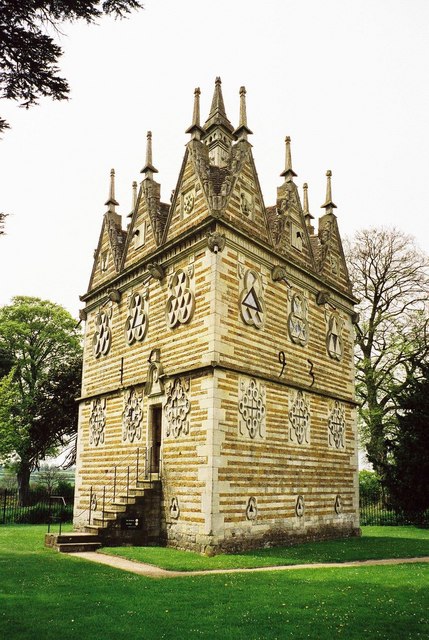
Village in Northamptonshire, England
| Field | Value |
|---|---|
| country | England |
| static_image | Rushton Hall 01.jpg |
| static_image_width | 242px |
| static_image_caption | Rushton Hall |
| official_name | Rushton |
| coordinates | |
| civil_parish | Rushton |
| population | 461 |
| population_ref | |
| unitary_england | North Northamptonshire |
| lieutenancy_england | Northamptonshire |
| region | East Midlands |
| constituency_westminster | Kettering |
| post_town | Kettering |
| os_grid_reference | SP8482 |
| postcode_district | NN14 |
| postcode_area | NN |
| dial_code | 01536 |
Rushton is a village and civil parish in Northamptonshire. It is about 2 mi north-east of Rothwell and 3 mi north-west of Kettering. The parish covers 3200 acre and is situated on both sides of the River Ise. It contains the sites of three deserted settlements, details of which are set out below.
The village's name means 'farm/settlement which is rushy'.
At the time of the 2001 census, the parish's population was 452 people, increasing slightly to 461 at the 2011 Census. The village has a primary school a pub opposite the village cricket pitch, a health retreat, bed and breakfast and hotel.
There is a bus service that runs through the village linking Rushton to neighbouring towns. It goes hourly and the bus stop is opposite the pub, the Thornhill arms.
Buildings
The village is home to Rushton Triangular Lodge which is in the former grounds of Rushton Hall, which is 0.5 mi west of the village; the hall is currently a hotel.
All Saints' Church is of Norman origin but mostly 14th-century with 19th-century restorations in 1853 and 1869 by Edmund Francis Law. There is a monument to Sir Thomas Tresham (died 8 March 1559) of Rushton Hall.
Other notable buildings in the village include a Manor House east of the church, Manor Farm House (17th-century) and the Georgian Old Rectory.
Deserted settlements
The location, history and remaining physical evidence of three deserted settlements within the parish have been systematically documented.
Barford - This lay near Barford Lodge and is listed in the Domesday Book with seven recorded inhabitants. In 1516, George Boyvil enclosed 86 acres of arable land at Barford and it was reported that "almost the whole village" was destroyed. The chapel that formerly served this village was no longer in existence in the early 18th century.
Glendon - This was immediately east of Glendon Hall, with a recorded population of fourteen in the Domesday Book. In 1327, there were ten tenants on the manor. In 1514, Robert Malory enclosed 494 acres of arable land as well as pasture. At that time, nine out of the twelve houses were destroyed.
Rushton St Peter - The site of this settlement is in the area of Rushton Hall. It was listed along with Rushton All Saints in the Domesday Book with a combined recorded population of 45. In the 1524 Subsidy Returns, only ten people paid tax at St Peter's parish, compared to 28 in All Saints. In the early 18th century, it was recorded that the only buildings in St Peter's parish were the hall, the church and four or five shepherd's lodges. The two Rushton parishes were united in 1780 and a faculty was granted in 1799 for the demolition of St Peter's church.
References
References
- [[United Kingdom Census 2011. 2011 census]]
- "Key to English Place-names".
- [http://neighbourhood.statistics.gov.uk/dissemination/LeadTableView.do?a=7&b=797306&c=rushton&d=16&e=15&g=472823&i=1001x1003x1004&m=0&r=1&s=1258666636968&enc=1&dsFamilyId=779 Office for National Statistics: Rushton CP: Parish headcounts]. Retrieved 19 November 2009
- "Civil Parish population 2011". Office for National Statistics.
- [http://schoolsfinder.direct.gov.uk/9282088/school-profile/ Directgov: School Profile: Rushton Primary School]. Retrieved 19 November 2009
- Pevsner, Nikolaus; Cherry, Bridget (revision). (1961). "The Buildings of England – Northamptonshire". Yale University Press.
- (1979). "Rushton". Institute of Historical Research.
- The National Archives: SC12/13/29.
- The National Archives: E179/155/133.
- John Bridges. (1791). "The History and Antiquities of Northamptonshire. Compiled from the manuscript collections of the late learned antiquary, John Bridges, Esq. By the Rev. Peter Whalley, late fellow of St. John's College, Oxford".
This article was imported from Wikipedia and is available under the Creative Commons Attribution-ShareAlike 4.0 License. Content has been adapted to SurfDoc format. Original contributors can be found on the article history page.
Ask Mako anything about Rushton, Northamptonshire — get instant answers, deeper analysis, and related topics.
Research with MakoFree with your Surf account
Create a free account to save articles, ask Mako questions, and organize your research.
Sign up freeThis content may have been generated or modified by AI. CloudSurf Software LLC is not responsible for the accuracy, completeness, or reliability of AI-generated content. Always verify important information from primary sources.
Report