From Surf Wiki (app.surf) — the open knowledge base
Rudbeckia
Genus of flowering plants in the daisy family Asteraceae

Genus of flowering plants in the daisy family Asteraceae
Coneflowers |Centrocarpha |D.Don |Dracopis |(Cass.) Cass. |Obeliscotheca |Vaill. ex Adans. |Peramibus |Raf.
Rudbeckia () is a plant genus in the Asteraceae or composite family. Rudbeckia flowers feature a prominent, raised central disc in black, brown shades of green, and in-between tones, giving rise to their familiar common names of coneflowers and black-eyed-susans. All are native to North America, and many species are cultivated in gardens for their showy yellow or gold flower heads that bloom in mid to late summer.
The species are herbaceous, mostly perennial plants (some annual or biennial) growing to 0.5–3.0 m tall, with simple or branched stems. The leaves are spirally arranged, entire to deeply lobed, and 5–25 cm long. The flowers are produced in daisy-like inflorescences, with yellow or orange florets arranged in a prominent, cone-shaped head; "cone-shaped" because the ray florets tend to point out and down (are decumbent) as the flower head opens.
A large number of species have been proposed within Rudbeckia, but most are now regarded as synonyms of the limited list given below.
Several currently accepted species have several accepted varieties. Some of them (for example the black-eyed susan, R. hirta), are popular garden flowers distinguished for their long flowering times. Many cultivars of these species are known.
Rudbeckia is one of at least four genera within the flowering plant family Asteraceae whose members are commonly known as coneflowers; the others are Echinacea, Dracopis, and Ratibida.
Rudbeckia species are eaten by the caterpillars of some Lepidoptera species including cabbage moths and dot moths.
Etymology
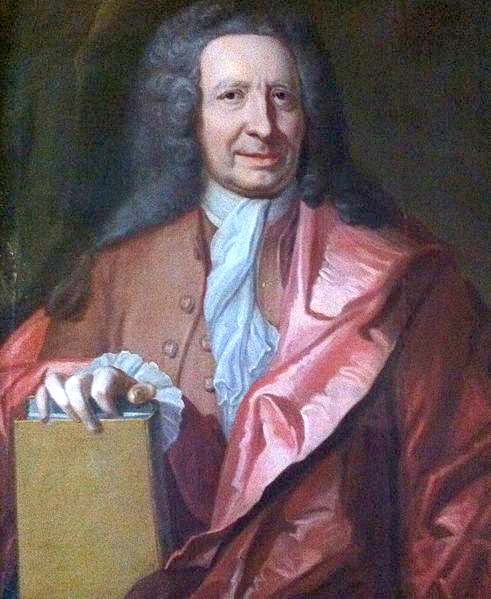
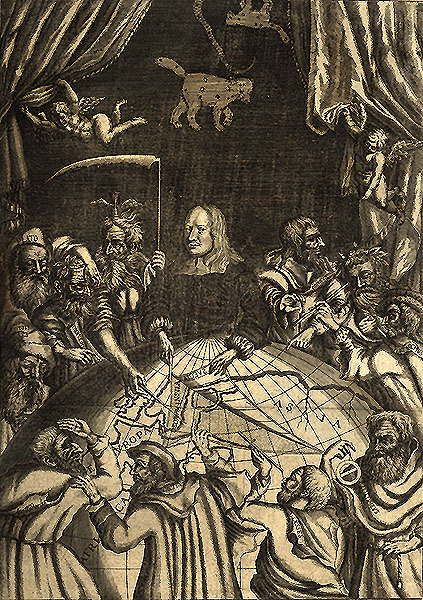
The name was given by Carolus Linnaeus to honor his patron and fellow botanist at Uppsala University, Olof Rudbeck the Younger (1660–1740), as well as Rudbeck's late father Olof Rudbeck the Elder (1630–1702), a distinguished Naturalist, Philologist, and Doctor of Medicine (he had discovered the lymphatic system), and founder of Sweden's first botanic garden, now the Linnaean Garden at Uppsala. In 1730 Linnaeus had been invited into the home of the younger Rudbeck (now almost 70) as tutor of his youngest children. Rudbeck had then recommended Linnaeus to replace him as a lecturer at the university and as the botanical garden demonstrator, even though Linnaeus was only in his second year of studies. In his book The Compleat Naturalist: A Life of Linnaeus, Wilfred Blunt quotes Linnaeus's dedication:
So long as the earth shall survive and as each spring shall see it covered with flowers, the Rudbeckia will preserve your glorious name. I have chosen a noble plant in order to recall your merits and the services you have rendered, a tall one to give an idea of your stature, and I wanted it to be one which branched and which flowered and fruited freely, to show that you cultivated not only the sciences but also the humanities. Its rayed flowers will bear witness that you shone among savants like the sun among the stars; its perennial roots will remind us that each year sees you live again through new works. Pride of our gardens, the Rudbeckia will be cultivated throughout Europe and in distant lands where your revered name must long have been known. Accept this plant, not for what it is but for what it will become when it bears your name.
Species
, the following species were accepted by Plants of the World Online.
| Rudbeckia alismifolia | Torr. & A.Gray | Rudbeckia alpicola | Piper | Rudbeckia amplexicaulis | Vahl | Rudbeckia auriculata | (Perdue) Kral | Rudbeckia californica | A.Gray | Rudbeckia deamii | S.F.Blake | Rudbeckia fulgida | Aiton | Rudbeckia glaucescens | Eastw. | Rudbeckia graminifolia | (Torr. & A.Gray) C.L.Boynton & Beadle | Rudbeckia grandiflora | (Sweet) C.C.Gmel. ex DC. | Rudbeckia heliopsidis | Torr. & A.Gray | Rudbeckia hirta | L. | Rudbeckia klamathensis | P.B.Cox & Urbatsch | Rudbeckia laciniata | L. | Rudbeckia maxima | Nutt. | Rudbeckia missouriensis | Engelm. ex C.L.Boynton & Beadle | Rudbeckia mohrii | A.Gray | Rudbeckia mollis | Elliott | Rudbeckia montana | A.Gray | Rudbeckia nitida | Nutt. | Rudbeckia occidentalis | Nutt. | Rudbeckia palustris | Eggert ex C.L.Boynton & Beadle | Rudbeckia scabrifolia | L.E.Br. | Rudbeckia spathulata | Michx. | Rudbeckia speciosa | Wender. | Rudbeckia subtomentosa | Pursh | Rudbeckia sullivantii | C.L.Boynton & Beadle | Rudbeckia terranigrae | J.J.N.Campb. & W.R.Seymour | Rudbeckia texana | (Perdue) P.B.Cox & Urbatsch | Rudbeckia triloba | L. | Rudbeckia umbrosa | C.L.Boynton & Beadle
The following species were formerly included in the genus.
- Echinacea atrorubens (as R. atrorubens)
- Echinacea pallida (as R. pallida)
- Echinacea purpurea (as R. purpurea)
- Helianthus angustifolius (as R. angustifolia)
- Helianthus porteri (as R. porteri)
- Helianthus radula (as R. radula)
- Ratibida columnifera (as R. columnaris or R. columnifera)
- Ratibida tagetes (as R. tagetes)
Uses
Many species are used in prairie restorations, for ornamental use, and by livestock for forage. An abundance of these plants on a rangeland indicates good health. They are deer and rabbit resistant.
File:Honey Bee on Rudbeckia.jpg|Honey bee feeding on a coneflower (Rudbeckia) File:Rudbeckiahirta1web.jpg|Rudbeckia hirta File:Rudbeckia.JPG|Prairie restoration File:Rudbeckia 089aweb.jpg|Rudbeckia hirta File:ピンク・グラジオラス、黄色・ルドベキアRudbeckia 2004年7月10日P7100036.jpg|Rudbeckia with gladiolus in Japan File:Rudbeckia texana.jpg|Rudbeckia texana File:Rudbeckia Velvia.jpg|Rudbeckia in Poland
References
Bibliography
References
- "''Rudbeckia'' L.".
- lectotype designated by N. L. Britton et A. Brown, Ill. Fl. N.U.S. ed. 2. 3: 469 (1913)
- {{Tropicos. 40027515. Rudbeckia. L.
- ''Sunset Western Garden Book,'' 1995: 606–607.
- [https://www.biodiversitylibrary.org/page/358927#page/348/mode/1up Linnaeus, Carl von. 1753. Species Plantarum 2: 906-907] in Latin
- {{eFloras. 1. 128840. Rudbeckia
- Wilfrid Blunt. ''The Compleat Naturalist: A Life of Linnaeus'', (Princeton University Press, 2002), p. 35.
- Blunt. ''The Compleat Naturalist'': p.35.
- "Species Records of ''Rudbeckia''". United States Department of Agriculture.
- "Rudbeckia Fulgida Goldsturm Care |".
This article was imported from Wikipedia and is available under the Creative Commons Attribution-ShareAlike 4.0 License. Content has been adapted to SurfDoc format. Original contributors can be found on the article history page.
Ask Mako anything about Rudbeckia — get instant answers, deeper analysis, and related topics.
Research with MakoFree with your Surf account
Create a free account to save articles, ask Mako questions, and organize your research.
Sign up freeThis content may have been generated or modified by AI. CloudSurf Software LLC is not responsible for the accuracy, completeness, or reliability of AI-generated content. Always verify important information from primary sources.
Report