From Surf Wiki (app.surf) — the open knowledge base
Royal Society of London Michael Faraday Prize
| Field | Value |
|---|---|
| name | Royal Society of London Michael Faraday Medal & Prize |
| imagesize | 140 |
| awarded_for | excellence in communicating science to UK audiences |
| sponsor | Royal Society of London |
| location | London |
| country | UK United Kingdom |
| website |
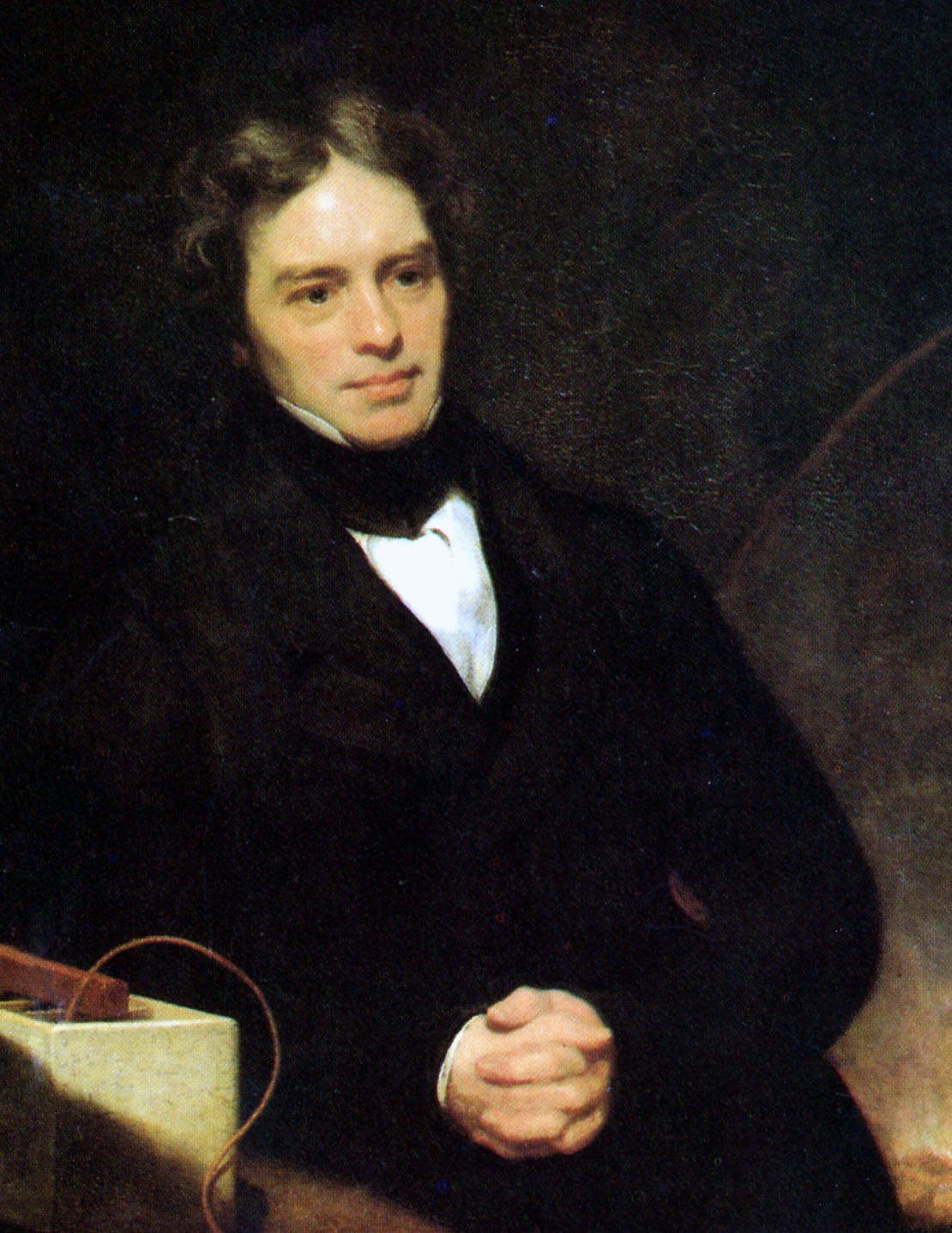
The Royal Society Michael Faraday Prize and Lecture is awarded for "excellence in communicating science to UK audiences." Named after Michael Faraday, the medal itself is made of silver gilt, and is accompanied by a purse of £2500.
Background
The prize was first awarded in 1986 to Charles Taylor for "his outstanding presentations of physics and applications of physics, aimed at audiences from six-year-old primary school children to adults". It is awarded annually and unlike other Royal Society awards such as the Hughes Medal, it has been presented every year since its inception. The winner is required to present a lecture as part of the Society's annual programme of public events, which is usually held in January of the following year; during the lecture, the President of the Royal Society awards the medal. Unlike other prizes awarded by the society, the committee has not always publicly provided a rationale. This has occurred five times—in 2004 to Martin Rees, in 2006 to Richard Fortey, in 2007 to Jim Al-Khalili, in 2008 to John D. Barrow and most recently in 2009 to Marcus du Sautoy.
List of recipients
| Year | Name | Citation / Lecture Title | Notes |
|---|---|---|---|
| 1986 | "for his outstanding presentations of physics and applications of physics, aimed at audiences from six-year-old primary school children to adults" | ||
| 1987 | "for the contribution his books had made in presenting to the public, and to scientists themselves, the intellectual nature and the essential humanity of pursuing science at the highest level and the part it played in our modern culture" | ||
| 1988 | "for the contributions he has made to the popularization of mathematics" | ||
| 1989 | "for his written, broadcast and public presentations on the science of the brain, which are superbly crafted for lay and expert audiences alike" | ||
| 1990 | "for his written, broadcast and public presentations which are accessible, imaginative and enjoyed by large audiences" | ||
| 1991 | "in recognition of his outstanding contribution to improving the public understanding of science through his many public lectures and broadcasts, his directorship of the Royal Institution and presidencies of the Royal Society and British Association and his seminal role in the establishment and leadership of COPUS" | ||
| 1992 | "for his many popular books and papers, his countless public lectures and television and radio appearances, and his creation of the Exploratory Hands-on Science Centre in Bristol" | ||
| 1993 | "for his many written articles for the national press and popular science journals, his public lectures on many platforms often tailored for school children, and his major contribution in broadcasting where he has had an input to over 350 radio and television programmes" | ||
| 1994 | "for his outstanding achievement in raising the public understanding of science and technology as an issue of the highest importance to individual scientists and engineers and to many bodies that represent them" | ||
| 1995 | "for his work in communicating mathematical ideas to the widest possible range of audiences through his many thought-provoking books and magazine articles, his radio and television presentations, and his energetic public lectures in schools and industry on a variety of mathematical and quasi-mathematical topics" | ||
| 1996 | "for his numerous, wide ranging contributions to the public understanding of science in areas such as human evolution and variation, race, sex, inherited disease and genetic manipulation through his many broadcasts on radio and television, his lectures, popular science books, and his regular science column in The Daily Telegraph and contributions to other newspaper media" | ||
| 1997 | "for his outstanding talents in the communication of scientific principles, methods and applications to young audiences through his many demonstration lectures with wit, clarity and enthusiasm on a wide variety of topics from basic science to modern laser research and for his major role in various collaborative ventures for young people with the Royal Institution, the British Association and CREST, and for his popular science articles and contributions to a variety of radio and television broadcasts, combined with his full professional workload as Head of Chemistry at Imperial College and overseeing a research group" | — | |
| 1998 | "for her outstanding talents in communicating to the public how the brain works, popularising brain studies via The Royal Institution Christmas Lectures, lecturing both in Britain and overseas to a wide variety of audiences, including young people, both in schools and outside the classroom, and through her activities as an author of popular books, newspaper articles and columns and her many television appearances" | ||
| 1999 | "for his outstanding contribution to the public understanding of human infertility and in vitro fertilisation. He has published five books as well as contributing to many newspaper articles. He is renowned as a gifted communicator especially to non-scientists, describing complex issues relating to human infertility clearly and without over-simplification. His major contribution has been in the field of television and radio both hosting and contributing to programmes" | ||
| 2000 | "for his enormous contribution to the public understanding of science most notably through his Chairmanship of COPUS and his varied and wide-ranging television and radio programmes as well as his regular contributions to the national broadsheet newspapers. For over two decades, Lewis Wolpert has brought public attention to many subjects including depression which still carries considerable social stigma through books, lectures, newspaper articles using his own brand of enthusiasm and charisma" | ||
| 2001 | "for his dedication to the notion of working scientists being communicators of their work and in particular for his establishment of the Vega Science Trust whose films and related activities reflect the excitement of scientific discovery to the public" | ||
| 2002 | on The origin of life. | ||
| 2003 | on Perception, deception and reality | ||
| 2004 | on Einstein's legacy as scientist and icon | ||
| 2005 | on A silent killer | ||
| 2006 | on A natural history of scientists | ||
| 2007 | on The House of Wisdom and the legacy of Arabic science | ||
| 2008 | on Every picture tells a story | ||
| 2009 | on The secret mathematicians | ||
| 2010 | on The end of the world in 2012? Science communication and science scares | ||
| 2011 | on Stones From the Sky: A Heaven-sent Opportunity to Talk About Science | ||
| 2012 | "for his excellent work in science communication" | ||
| 2013 | "for his excellent work in science communication" | ||
| 2014 | "for his excellent work in science communication" | ||
| 2015 | "for her excellent work in science communication" | ||
| 2016 | "for his excellent work in science communication" | ||
| 2017 | "for excellence in communicating science to UK audiences" | ||
| 2018 | "for her public outreach, promotion of her discipline, and leadership of national programmes inspiring young people to express their creativity while innovating in science and engineering." | ||
| 2019 | "for his exemplary work to promote chemistry to an international audience via YouTube in a way that is understandable to viewers of all ages." | ||
| 2020 | "for bringing key insights from the disciplines of statistics and probability vividly home to the public at large, and to key decision-makers, in entertaining and accessible ways, most recently through the COVID-19 pandemic." | ||
| 2021 | "for her work in engaging the public with neuroscience through events, talks, TV and radio, and exemplifying how science communication can enhance scientific excellence." | ||
| 2022 | "for her significant contributions to the field of planetary science, and her dedication and enthusiasm for public engagement, particularly in raising the profile of STEM subjects for young women." | ||
| 2023 | "for his ability to inspire and communicate concepts and advances in cognitive neuroscience and consciousness, and therefore what it means to be human, to the public." | ||
| 2024 | "for his scientific leadership, policy advice, epidemiological analyses, and articulate public education, while actively countering disinformation in Africa, particularly South Africa, during the Covid-19 pandemic." | ||
| 2025 | "for award-winning work as a leading researcher, educator and commentator in the field of Artificial Intelligence (AI) whose popular science books, lectures and media appearances have informed millions." |
References
;General
;Specific
References
- "Michael Faraday Prize and Lecture". Royal Society.
- "Michael Faraday Prize notes for proposers". Royal Society.
- Thomas, John Meurig. (1991). "Michael Faraday and the Royal Institution: The Genius of Man and Place". CRC Press.
- (1987). "The Biologist". [[Bowling Green State University]].
- (5 September 1988). "U.K.'S Royal Society Adds Members". The Scientist.
- Fazackerley, Anna. (11 November 2003). "Colin Blakemore: Professor No?". [[The Guardian]].
- Abel, Donald C.. (2004). "Fifty Readings in Philosophy". McGraw-Hill.
- (1 September 2002). "Prof Lord Porter of Luddenham, OM". [[The Daily Telegraph.
- (1988). "The Psychologist". British Psychological Society.
- (2 October 2005). ["The conmen and the green professor"](http://www.timesonline.co.uk/tol/news/uk/article573783.ece }}{{dead link). The Times.
- (1988). "Year-book of the Royal Society of London". Harrison and Sons.
- (15 May 2001). "Don pockets maths fame; 'It's like Ronnie sinking snooker prize'". Coventry Evening Telegraph.
- Sleeman, Elizabeth. (2003). "The International Who's Who 2004". Routledge.
- Randerson, James. (30 May 2006). "Top scientist gives up on creationists". [[The Guardian]].
- Sleeman, Elizabeth. (2003). "The International Who's Who 2004". Routledge.
- MacLeod, Donald. (6 February 2004). "Royal Society split over Greenfield fellowship". [[The Guardian]].
- Birkett, Dea. (19 August 2000). "The oracle of the ovary". [[The Guardian]].
- (18 May 2004). "Lewis Wolpert discusses development and depression". Drug Discovery Today.
- (14 December 2006). "Nobel Prize Winner Sir Harold W. Kroto Joins NaturalNano's Scientific Advisory Board; Nobel Laureate's Discovery Helped Launch the Field of Nanotechnology". M2 Presswire.
- Bakewell, Joan. (2005). "Belief". Duckworth Overlook.
- Clayton, Philip. (2004). "In whom we live and move and have our being: panentheistic reflections on God's presence in a scientific world". Wm. B. Eerdmans Publishing.
- (February 2005). "European science – from Nobel to Descartes". Europa.
- Walden, Brian. (28 March 2005). "A Point of View". BBC News.
- Fleming, Nic. (31 January 2006). "Laws of attraction in action". [[The Daily Telegraph.
- Gage, Logan. (14 February 2007). "Fortey's Ego and the ID". Discovery Institute.
- Al-Khalili, Jim. (21 January 2008). "The Arabic Science That Prefigured Newton". [[The Guardian]].
- "The Royal Society Michael Faraday Prize". The Royal Society.
This article was imported from Wikipedia and is available under the Creative Commons Attribution-ShareAlike 4.0 License. Content has been adapted to SurfDoc format. Original contributors can be found on the article history page.
Ask Mako anything about Royal Society of London Michael Faraday Prize — get instant answers, deeper analysis, and related topics.
Research with MakoFree with your Surf account
Create a free account to save articles, ask Mako questions, and organize your research.
Sign up freeThis content may have been generated or modified by AI. CloudSurf Software LLC is not responsible for the accuracy, completeness, or reliability of AI-generated content. Always verify important information from primary sources.
Report