From Surf Wiki (app.surf) — the open knowledge base
Royal Palace of El Pardo
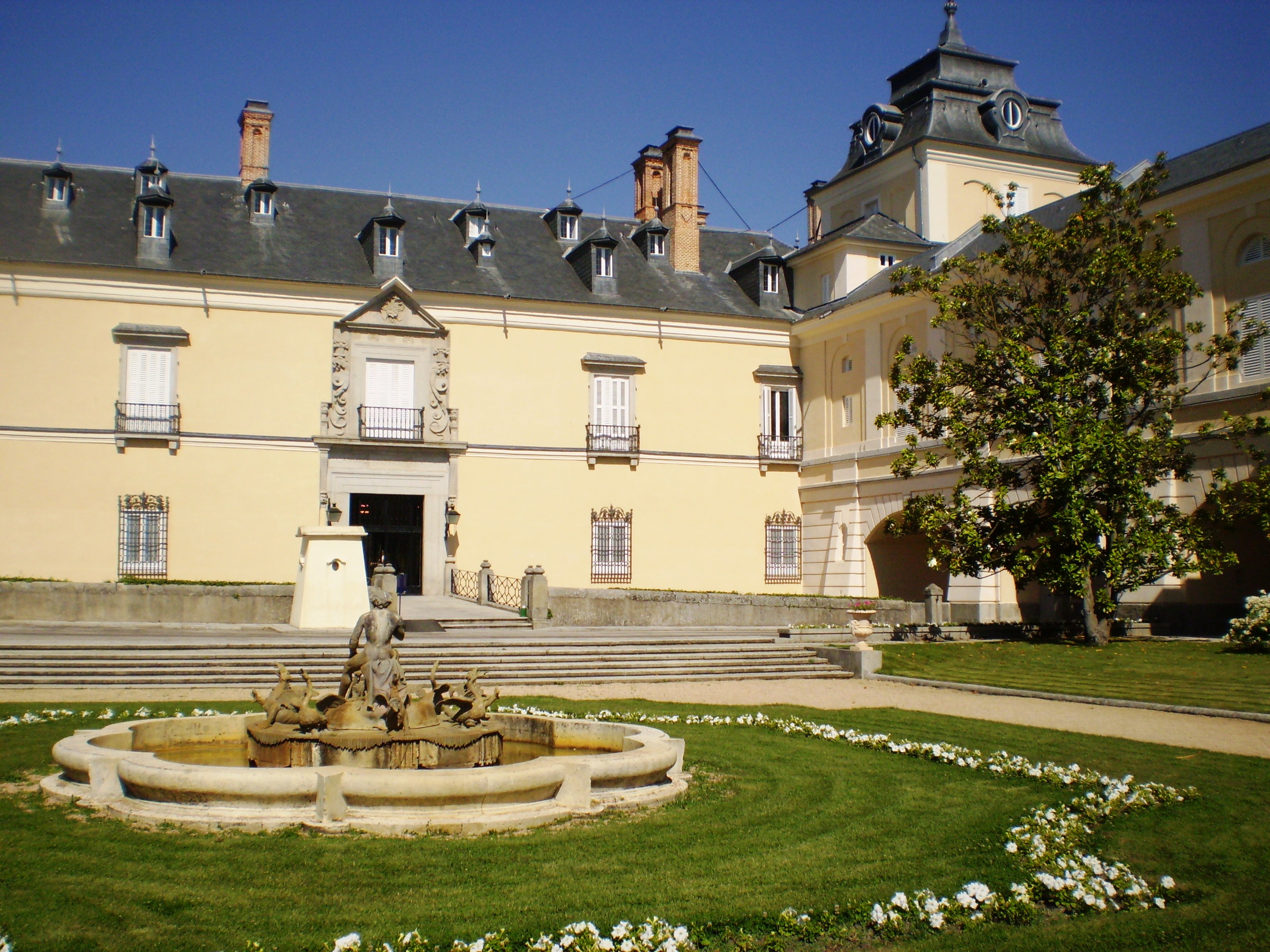
| Field | Value |
|---|---|
| name | Royal Palace of El Pardo |
| native_name | Palacio Real de El Pardo |
| native_name_lang | Spanish |
| image | File:Palacio Real de El Pardo - 01.jpg |
| caption | Main façade |
| location | Madrid, Spain |
| architect | Luis de Vega |
| Francesco Sabatini | |
| architectural_style | Spanish Renaissance, Neoclassical |
| embed | yes |
| designation1 | Spain |
| designation1_offname | Palacio Real de El Pardo |
| designation1_type | Non-movable |
| designation1_criteria | Monument |
| designation1_date | 1931 |
| designation1_number | RI-51-0001062 |
Francesco Sabatini
The Royal Palace of El Pardo (, ) is one of the official residences of the Spanish royal family and one of the oldest, being used by the Spanish monarchs since Henry III of Castile in the 15th century. The palace is owned by the Spanish government, administered by a state agency named Patrimonio Nacional (National Heritage) and it currently serves as a state guest house.
Overview
The palace began as a royal hunting lodge on the hill of El Pardo. It became an alternative residence of the kings of Spain until the reign of King Alfonso XII, who died in the palace in 1885.
King Henry III of Castile ordered the building of a small castle in 1406, on Mount El Pardo, because of its abundant game. In the 1540s, on the orders of Charles V, Holy Roman Emperor, it was transformed into a palace by the architect Luis de Vega, who built a small, traditional alcázar with a moat. The palace was completed by Philip II, who introduced Flemish-style slate roofs.
On 13 March 1604, a massive fire destroyed many of the paintings the palace housed, including masterpieces by Titian. Phillip III entrusted the rebuilding of the palace to Francisco de Mora. Philip continued his father's decorative ideas, commissioning a number of frescoes. Philip V lived there for three months a year during the winter, and altered the palace to accommodate the court.
King Charles III of Spain renovated the building in the 18th century, appointing his architect Francesco Sabatini to undertake the job and add additional courtyards.
The interior decoration includes a ceiling frescoed by Gaspar Becerra, and paintings by Vincenzo Carducci and Cabrera.
In 1739, the palace hosted talks between the governments of Great Britain and Spain, who eventually agreed to the Convention of Pardo in a bid to avert a war. However, the Convention failed to prevent the War of Jenkins' Ear from breaking out shortly afterwards.
Dictator Francisco Franco commandeered the palace as his residence after the Spanish Civil War and lived there until his death.
Access
Since 1983, the building has been used as a residence for visiting heads of state.
References
References
- [https://www.spain.info/en/places-of-interest/royal-palace-pardo/ "El Pardo Royal Palace", Instituto de Turismo de España]
- "Death of the King of Spain", ''[[The Times]]'' (26 November 1885): 7.
- [https://www.patrimonionacional.es/en/visita/royal-palace-el-pardo "Royal Palace of El Pardo", Patrimonio Nacional]
- [https://www.esmadrid.com/en/tourist-information/palacio-real-de-el-pardo "El Pardo Royal Palace", Turismo Madrid]
- "The flower girls (Las floreras)".
- Seisdedos, Iker. (2014). "Prado Museum unravels Goya’s neglected tapestry sketches". [[El País]] (el.pais.com).
This article was imported from Wikipedia and is available under the Creative Commons Attribution-ShareAlike 4.0 License. Content has been adapted to SurfDoc format. Original contributors can be found on the article history page.
Ask Mako anything about Royal Palace of El Pardo — get instant answers, deeper analysis, and related topics.
Research with MakoFree with your Surf account
Create a free account to save articles, ask Mako questions, and organize your research.
Sign up freeThis content may have been generated or modified by AI. CloudSurf Software LLC is not responsible for the accuracy, completeness, or reliability of AI-generated content. Always verify important information from primary sources.
Report