From Surf Wiki (app.surf) — the open knowledge base
Rouge (cosmetics)
Cosmetic for reddening the lips and cheeks
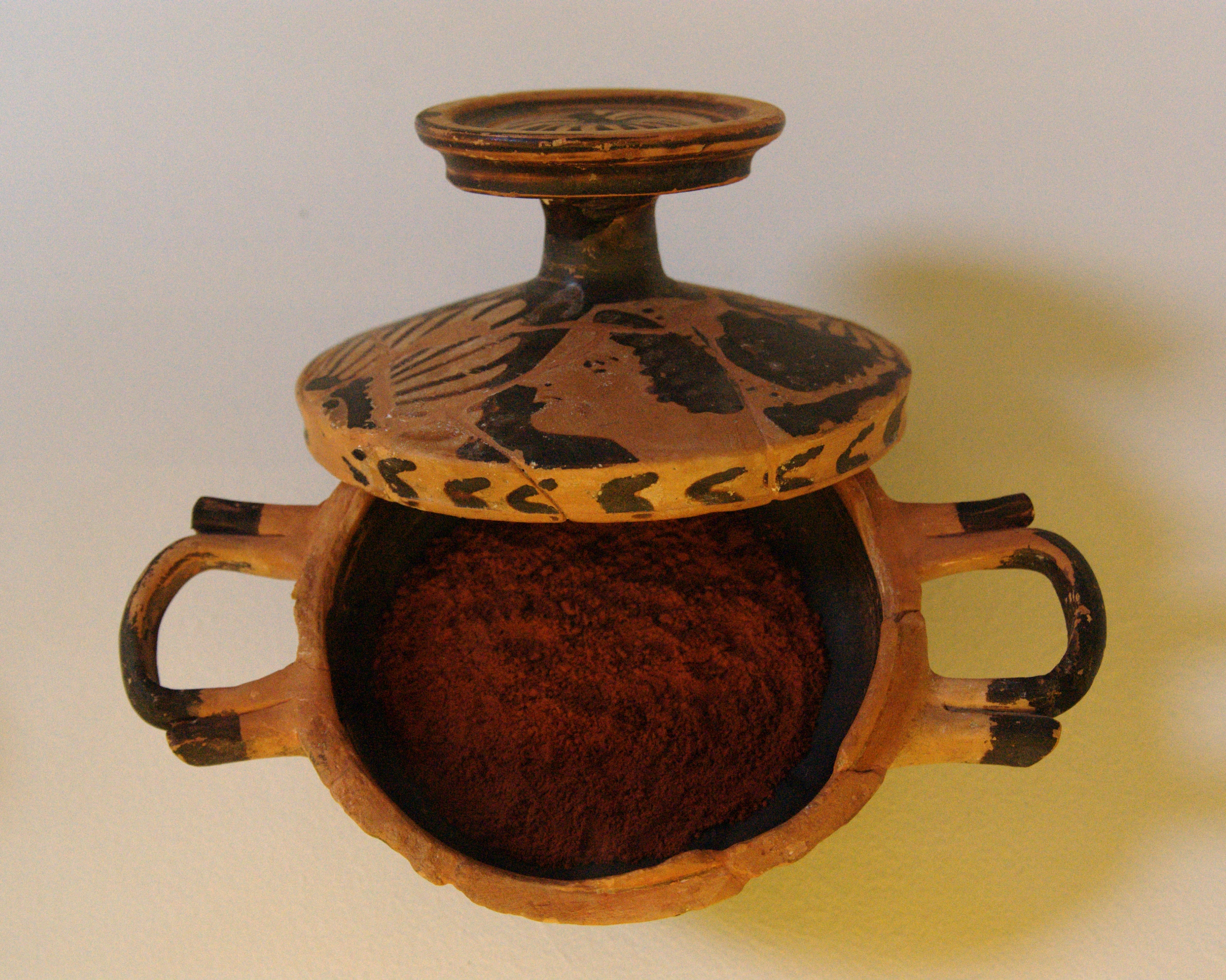
Cosmetic for reddening the lips and cheeks
Each year, approximately US$25 billion is spent on buying rouge.
History
The Ancient Egyptians were known for their creation of cosmetics, particularly their use of rouge. Ancient Egyptian pictographs show men and women wearing lip and cheek rouge. They blended fat with red ochre to create a stain that was red in color.
Greek men and women eventually mimicked the look, using crushed mulberries, red beet juice, crushed strawberries, or red amaranth to create a paste. Those who wore makeup were viewed as wealthy and it symbolized status because cosmetics were costly.
In China, rouge was used as early as the Shang Dynasty. It was made from the extracted juice of leaves from red and blue flowers. Some people added bovine pulp and pig pancreas to make the product denser. Women would wear the heavy rouge on their cheeks and lips. In Chinese culture, red symbolizes good luck and happiness to those who wear the color.http://www.chinadaily.com.cn/a/201804/21/WS5ada295aa3105cdcf6519a30.html
In Ancient Rome, men and women would create rouge using (red lead) and cinnabar. The mixture was found to have caused cancer, dementia, and eventually death. Other sources for rouge (raw materials) included malachite and antimony.
In the 16th century in Europe, women and men would use white powder to lighten their faces. Commonly women would add heavy rouge to their cheeks in addition.
Studies have strived to research other reasons as to why individuals choose to color their faces in a red tint and what blushing may also signify to others. Blushing, the body's natural reaction to feelings of shame/embarrassment/guilt is often followed with a reddish coloring on one's cheeks on individuals whose bodies react as such. This reaction can be associated with different moral and human tendencies such as pro sociality and commitment to social relationships. Emotions are involuntary and instantaneous reactions, and because of this are pretty reliable. Knowing this researchers have used social emotions to understand how humans signal prosocial intentions. Embarrassment which is often accompanied by the reddening of the face can now be seen as an indicator of one's prosocial behavior. File:Ladies fresco from Akrotiri, 17th c BC, PMTh, 226251.jpg|Wall painting form the House of the Ladies in Akrotiri on Thera (Santorini) from 1700-1600 BC showing rouge makeup File:Five Dynasties makeup.jpg|Illustration of woman wearing huadian on forehead and mianye, Five dynasties period, China (907-979) File:Book Illustration, L’art de la coëffure des dames françoises (The art of French ladies’ hairstyles), Woman with curled hairstyle, plate 12, 1768 (CH 68766149) (cropped).jpg|French illustration from 1768 showing rouge makeup File:A woman sitting at her dressing table applying rouge to her Wellcome V0019919.jpg|Satirical etching of a woman applying rouge, 1823
Contemporary

Modern rouge generally consists of a red-colored talcum-based powder that is applied with a brush to the cheeks to accentuate the bone structure. The coloring is usually either the petals of safflower, or a solution of carmine in ammonium hydroxide and rosewater perfumed with rose oil. A cream-based variant of rouge is schnouda, a colorless mixture of Alloxan with cold cream, which also colors the skin red.
Today, rouge is a term used to primarily identify blush of any color, including: brown, pink, red, and orange. Modern blush is offered in both a pressed or loose powder, a cream consistency similar to lipstick, or a liquid form. It is not commonly used to identify lipstick; however, some may use the term to refer to the red color of the product.
When the fashion trend of matching lipsticks with nail polish took hold and the color range of lipstick increased, people no longer used the term to identify lip color. The shade range for blush generally remained limited, keeping the name rouge.
Blush is made in the form of a cream, liquid, powder, or gel. File:Mary Pickford - Aug 1916 Motion Picture.jpg|Mary Pickford illustrated on a magazine 1916 wearing blush File:Blush and blush brush.jpg|Contemporary blush compact and applicator brush File:Bengali Hindu wedding DSCN1106 02.jpg|Bengali bride wearing rouge File:Nah Cardoso brincando com o blush @ São Paulo Fashion Week em Junho de 2011.jpg|Applying rouge at São Paulo Fashion Week File:Super Orgasm - Blush.jpg|Powdered blush for sale in Oxford Street, London
References
References
- (2025-05-23). "Face Blush Market Size & Share 2025-2030".
- "History of Rouge".
- Eldridge, Lisa. (2018). "The Story of Make-up".
- El-Kilany, Engy. "[https://egittolizzando.altervista.org/wp-content/uploads/2021/03/Facial-Cosmetics-in-Ancient-Egypt.pdf Facial Cosmetics in Ancient Egypt]." ''Egyptian Journal of Tourism Studies'', vol. 16, no. 1, 2017.
- "The gruesome and lengthy history of why we use blush". Business Insider.
- "Deadly Blush". Livingly.
- (2016-02-24). "A History Of Blush".
- (2012). "Flustered and faithful: Embarrassment as a signal of prosociality.". Journal of Personality and Social Psychology.
- "Cosmetics and Skin: Rouge".
- "Makeup of Makeup: Decoding Blush". WebMD.
This article was imported from Wikipedia and is available under the Creative Commons Attribution-ShareAlike 4.0 License. Content has been adapted to SurfDoc format. Original contributors can be found on the article history page.
Ask Mako anything about Rouge (cosmetics) — get instant answers, deeper analysis, and related topics.
Research with MakoFree with your Surf account
Create a free account to save articles, ask Mako questions, and organize your research.
Sign up freeThis content may have been generated or modified by AI. CloudSurf Software LLC is not responsible for the accuracy, completeness, or reliability of AI-generated content. Always verify important information from primary sources.
Report