From Surf Wiki (app.surf) — the open knowledge base
Roubaix

| Field | Value |
|---|---|
| name | Roubaix |
| native name | |
| commune status | Commune |
| population demonym | Roubaisian (en) |
| Roubaisien(ne) (fr) | |
| image | Hôtel de ville (3).JPG |
| caption | The Hôtel de Ville (City Hall) |
| image coat of arms | Blason ville fr Roubaix (Nord).svg |
| city motto | Probitas et Industria |
| arrondissement | Lille |
| canton | Roubaix-1 and Roubaix-2 |
| INSEE | 59512 |
| postal code | 59100 |
| mayor | Guillaume Delbar |
| term | 2020–2026 |
| intercommunality | Métropole Européenne de Lille |
| coordinates | |
| elevation m | 35 |
| elevation min m | 17 |
| elevation max m | 52 |
| area km2 | 13.23 |
| population | |
| population date | |
| population footnotes | |
| website | |
| map | Roubaix OSM 01.png |
Roubaisien(ne) (fr) |image coat of arms = Blason ville fr Roubaix (Nord).svg
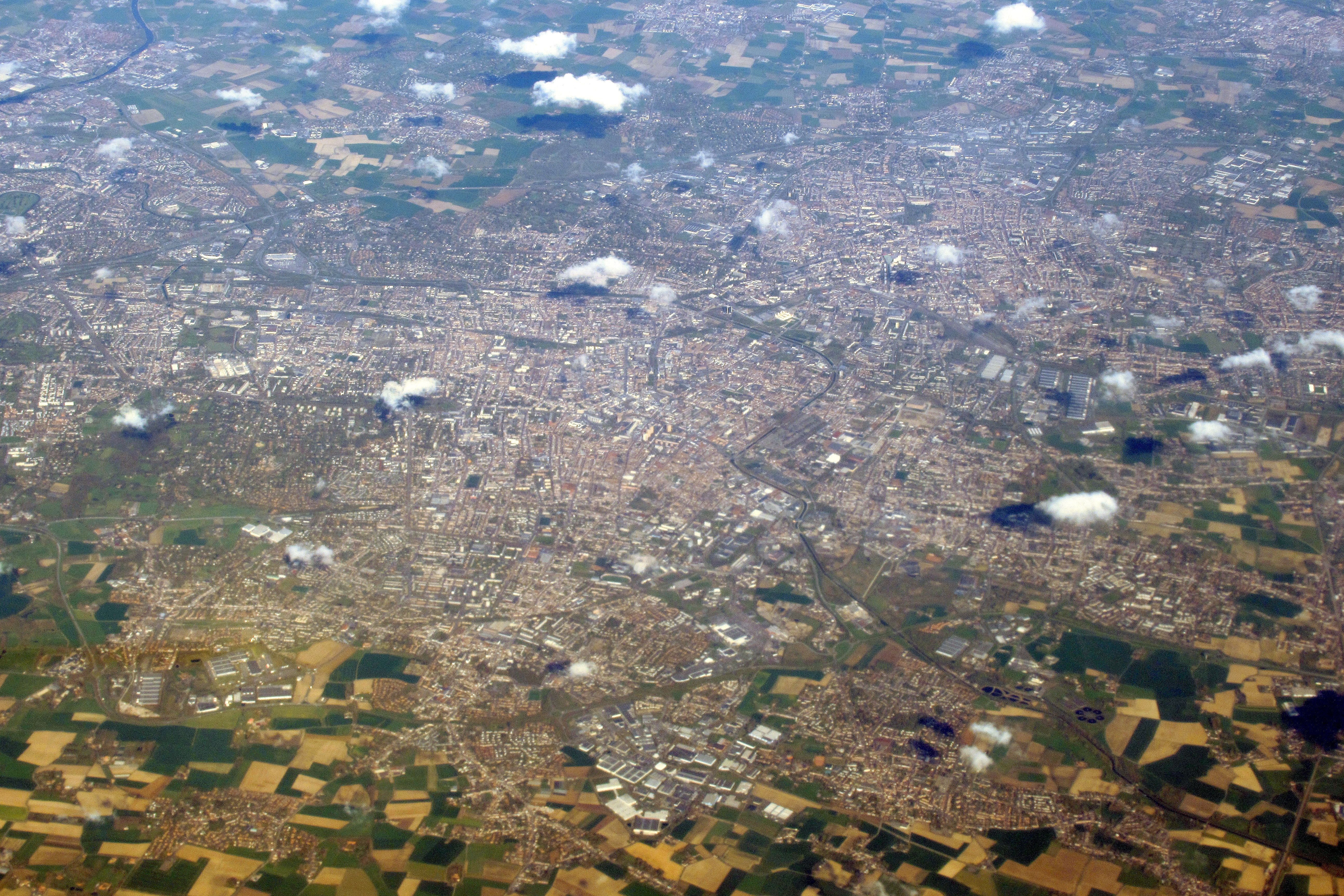
Roubaix ( , ; ; ; ) is a city in northern France, located in the Lille metropolitan area on the Belgian border. It is a historically mono-industrial commune in the Nord department, which grew rapidly in the 19th century from its textile industries, with most of the same characteristic features as those of English and American boom towns. This former new town has faced many challenges linked to deindustrialisation such as urban decay, with their related economic and social implications, since its major industries fell into decline by the middle of the 1970s. Located to the northeast of Lille, adjacent to Tourcoing, Roubaix is the chef-lieu of two cantons and the third largest city in the French region of Hauts-de-France ranked by population with nearly 99,000 inhabitants.
Together with the nearby cities of Lille, Tourcoing, Villeneuve-d'Ascq and eighty-six other communes, Roubaix gives structure to a four-centred metropolitan area inhabited by more than 1.1 million people: the European Metropolis of Lille. To a greater extent, Roubaix is in the center of a vast conurbation formed with the Belgian cities of Mouscron, Kortrijk and Tournai, which gave birth to the first European Grouping of Territorial Cooperation in January 2008, Lille–Kortrijk–Tournai with an aggregate population of over 2 million inhabitants.
Geography
Location
Roubaix occupies a central position on the north-east slope of the Métropole Européenne de Lille: it is set on the eastern side of Lille and the southern side of Tourcoing, close to the Belgian border. As regards towns' boundaries, Roubaix is encompassed by seven cities which constitute its immediate neighbouring environment. These municipalities are namely: Tourcoing to the north and the northwest, Wattrelos to the northeast, Leers to the east, Lys-lez-Lannoy to the southeast, Hem to the south and Croix to the southwest and the west. Roubaix, alongside those municipalities and twenty-one other communes, belongs to the land of Ferrain, a little district of the former Castellany of Lille between the Lys and Scheldt rivers.
As the crow flies, the distance between Roubaix and the following cities is some odd: 16 km to Tournai, 18 km to Kortrijk, 84 km to Brussels and 213 km to Paris.
Geology
The land upon which Roubaix stands belongs to the plain of Flanders. The Roubaisian area stretches on an east-west oriented shallow syncline axis which trends south-southeast to the Paleozoic limestone of the Mélantois-Tournaisis faulted anticline. It consists predominantly of Holocene alluvial sediment depositions. It is flat and low, with an elevation drop of only over its 13.23 km2. The lowest altitude of this area stands at , while its highest altitude is meters above the sea level.
Hydrology
The Trichon stream fed by waters of the Espierre stream used to flow through the rural landscape of Roubaix before the industrialisation process began to alter this area in the middle of the 19th century. From that century on, the ensuing industries, with their increasing needs for reliable supplies of goods and water, led to the building of an inland waterway connected upstream from the Deûle and downstream to the Marque and Espierre toward the Scheldt, which linked directly Roubaix to Lille.
Opened in 1877, the Canal de Roubaix crosses the town from its northern neighbourhoods to its eastern neighbourhoods and partially flows along the city's boundaries. The Canal de Roubaix closed in 1985, after more than a century in use. Thank to the European funded project Blue Links, the waterway has been reopened to boating traffic since 2011.
Climate
The area of the city is not known for undergoing unusual weather events. In regard to the town's geographical location and the results of the Météo-France's weather station of Lille-Lesquin, Roubaix is a temperate oceanic climate: while summer experiences mild temperatures, winter's temperatures may fall to below zero. Precipitation is infrequently intense.
|Jan record high C = 15.5 |Feb record high C = 19.2 |Mar record high C = 25.5 |Apr record high C = 28.5 |May record high C = 33.0 |Jun record high C = 35.0 |Jul record high C = 42.1 |Aug record high C = 37.5 |Sep record high C = 35.5 |Oct record high C = 28.0 |Nov record high C = 20.1 |Dec record high C = 15.5 |Jan record low C = -14.5 |Feb record low C = -12.5 |Mar record low C = -7.5 |Apr record low C = -2.5 |May record low C = -1.0 |Jun record low C = 3.0 |Jul record low C = 5.0 |Aug record low C = 5.0 |Sep record low C = 3.0 |Oct record low C = -3.5 |Nov record low C = -7.0 |Dec record low C = -10.5 | access-date = 7 September 2022}}}}
Urban geography
During the Middle Age, the city grew in a northward-facing semicircle around its primitive core, beyond the area spread out between the church Saint Martin and the former fortified castle. The existence of this south boundary remained until the 18th century and marked an urban expansion which mainly occurred on the western and northern sides of the town. Increasing industrialisation, land transport improvement, continued population growth and the resulting need for suitable low cost lands for housing and manufacturing plants, all of which finally led to expand the city southward from the centre, in the 19th century.
Toponymy
The current city's name is most likely derived from Frankish rausa "reed" and baki "brook". Therefore, the meaning of Roubaix can, in all likelihood, find its origin on the banks of its three historical brooks: Espierre, Trichon and Favreuil. The place was mentioned for the first time in a Latinised form in the 9th century: Villa Rusbaci. Thereafter, the following names were in use: 1047 and 1106 Rubais, 1122 Rosbays, 1166 Rusbais, 1156 and 1202 Robais, 1223 Roubais. Over the span of centuries, the name evolved to Roubaix as shown on Mercator's map of Flanders published at Leuven in 1540.
Parallel to the official and usual name Roubaix, some translations are worth a mention. Firstly, though the city has never belonged to the Flemish-speaking area, the seldom-heard renderings Robeke and Roodebeeke are documented for Roubaix. Furthermore, the Dutch Language Union established Robaais as the city's proper Dutch name. Lastly, one can cite Rosbacum as the definite Latin transcription of Roubaix which has been in use since the 19th century, as recorded on dedication statements sealed in the first stones of the foundations of the Hôtel de Ville (City Hall) laid in 1840 and the Church of Notre Dame laid in 1842.
History
During the repression of January and February 1894, the police conducted raids targeting the anarchists living there, without much success.[[File:Old Roubaix 1699.jpg|thumb|right|View of the city, dated 1699. Landscape with the castle, surrounded by a moat, next to the Sainte-Elisabeth hospital at left, the mill at right and the Saint-Martin church, regarded as the city's centre point, at centre]]
Heraldry
Party per pale ermine a chief gules and azure, thereon between two bobbins argent a five-pointed star or in chief, a wool-cards at its centre and a shuttle fesswise in base or, all within a bordure indented of the same.
People
Inhabitants of Roubaix are known in English as "Roubaisians" and in French as Roubaisiens () or in the feminine form Roubaisiennes (), also natively called Roubaignots () or in the feminine form Roubaignotes ().
Demographics
| graph-pos = bottom |1716 |4715 |1764 |7363 |1789 |8559 |1793 |9120 |1800 |8091 |1801 |8151 |1805 |8703 |1806 |8724 |1817 |8724 |1821 |12170 |1830 |13132 |1831 |18187 |1836 |19455 |1841 |24802 |1842 |24892 |1846 |31039 |1851 |34698 |1856 |39445 |1861 |49274 |1866 |65091 |1872 |75987 |1876 |83661 |1881 |91757 |1886 |100299 |1891 |114917 |1896 |124661 |1901 |124365 |1906 |121017 |1911 |122723 |1921 |113265 |1926 |117209 |1931 |117190 |1936 |107105 |1946 |100978 |1954 |110067 |1962 |112856 |1968 |114547 |1975 |109553 |1982 |101602 |1990 |97746 |1999 |96984 |2007 |97423 |2012 |94536 |2017 |96990 The evolution of the number of inhabitants is known through the population censuses carried out in the town since 1793 and the research study of Louis-Edmond Marissal, Clerk of the Peace of the city, published in 1844. Roubaix evolved into a provincial market town until the end of the Early modern period with a census population of 4,715 inhabitants in 1716. By the late 18th century, the city began to emerge as regional textile manufacturing centre and its population increased, reaching a level of 8,091 in 1800. As a result of the industrialisation process of the 19th century, the need of workers was supplied by rural flight as well as immigration. Belgian settlement was a feature of the Roubaisian life at that time.
During the first-half period of the 19th century, Roubaix ranked the first French town in terms of population growth rate with a five times increase, whereas in the remaining period of this century its population doubled. Within this last time framework, Belgian immigration appeared to be one of the major factor to explain the significantly high population growth, with 30,465 Belgian inhabitants counted in 1866 and 42,103 in 1872. Nonetheless, the rate of natural increase shew to be a more important component of the population growth in that period.
At the 20th century threshold, the Roubaisian population reached a peak of 124,661, from which it progressively declined over the successive decades. Occupied by German troops from October 1914 to October 1918, Roubaix belonged to the combat zone of the Western Front during the First World War. Over this occupation period, Roubaisians suffered from dearth, deportation for compulsory labour and unusual casualties with a rather slight population drop from 122,723 to 113,265 between the 1911 and 1921 censuses.
The population of the city was 98,828 as of January 2019. This enables Roubaix to remain the third largest municipality in the region Hauts-de-France, after Lille and Amiens.
As of 2019, at least 25% of residents in Roubaix were immigrants, mainly of Arab, North African, Turkish, and Sub-Saharan African origin.
Languages
Although the region of Roubaix was subjected many times to the domination of Flanders' rulers throughout its history, Roubaisians have used a local Picard variant as the language of everyday life for centuries. This spoken vernacular is locally known as Roubaignot. Until the early 20th century this patois prevailed. Therefore, French language progressive penetration into local culture should not only be analysed as a result of the industrialisation and urbanisation of the area but should also be considered in terms of public education policies.
Religion
Christianity
The city of Roubaix is divided into six Catholic parishes and belongs to the deanery of the same name in the archdiocese of Lille.
Judaism
In the aftermath of the Franco-Prussian War and the German annexation of Alsace-Lorraine, many Jews left their homes and emigrated. Jewish arrival in Roubaix derives from that bitter period of history. At the time, the new immigrant community, even though its small size, dedicated a building to Jewish faith and liturgical practises. The newly opened synagogue, located in a house at number 51 on the narrow rue des Champs, operated more than 60 years, until 1939, when it was closed under imprecise local circumstances as the Nazi regime took over in Europe. Despite the closure of the synagogue, the occupation and police raids, the local practise of Judaism saw a humble revival after the war which lasted until the start of the 1990s when the modest Jewry of Roubaix handed over its Sefer Torah to the care of the Jewish community of Lille. Roubaix has no longer been home to a Jewish place of worship since that event. The house inside which the first one was created 123 years ago, has been demolished since an urban renewal project occurred in 2000. On 10 September 2015 the mayor unveiled a commemorative plaque on the rue des Champs, as a tribute to the Roubaisian Jewry, in memory of the religious purpose of this previous building.
Islam
As of August 2013, there were six mosques in the town, including one under construction. According to estimates by the mayor's office, around 20,000 people, or at least 20% of the population were Muslims. Over one-in-three residents in Roubaix are of Arab, North African, Turkish, and Sub-Saharan African origin. Four areas of the cemetery were designated for Muslims.
Buddhism
During the second half of the 20th century, the city took in Buddhist communities from originally Buddhist countries in the Southeast Asian peninsula including Cambodia, Laos, Thailand, and Vietnam. Within this background Roubaix has brought together two Buddhist traditions on its territory, hence cultural variations across communities: Mahāyāna and Theravāda with, respectively, one and four places of worship.
Administrative and political affairs
Constituencies and cantons
Roubaix grouped four cantons from 1988 to 2012. Since then, this number has fallen to two with Roubaix 1 and Roubaix 2. After the last redistricting of French legislative constituencies in 2010, the city is now divided into two constituencies: Nord's 7th constituency which include the former canton of Roubaix-Ouest and Nord's 8th constituency formed by the following former cantons: Roubaix-Centre, Roubaix-Nord and Roubaix-Est.
Administrative zoning
Eastern district neighbourhoods
- Fraternité
- Pile
- Sainte-Elisabeth
- Sartel-Carihem
- Trois Ponts
Western district neighbourhoods
- Epeule
- Fresnoy-Mackellerie
- Trichon
Central district neighbourhoods
- Anseele Motte-Bossut
- Barbieux
- Centre-ville
- Crouy
- Espérance
- Nations-Unies
- Vauban
Northern district neighbourhoods
- Alma-Gare
- Armentières
- Cul de Four
- Entrepont
- Fosses aux Chênes
- Hommelet
- Hutin-Oran-Cartigny
Southern district neighbourhoods
- Chemin Neuf
- Edouard Vaillant
- Hauts-Champs
- Justice
- Linné-Boulevards
- Moulin
- Nouveau Roubaix
- Petites-Haies
- Potennerie
Mayors of the city
| Mayor | Term start | Term end | Party | |||
|---|---|---|---|---|---|---|
| Henri Carette | ||||||
| Edouard Roussel | ||||||
| Eugène Motte | ||||||
| Jean-Baptiste LebasJean-Baptiste Lebas's mandate was interrupted when he was arrested on 7 March 1915 by German authorities to be imprisoned in the fortress of Rastatt. | ||||||
| Henri ThérinHenri Thérin, the first deputy mayor, stood in for Jean-Baptiste Lebas during his imprisonment time. | ||||||
| Jean-Baptiste Lebas | ||||||
| Fleuris Vanherpe | ||||||
| Marcel Guislain | ||||||
| Alphonse Verbeurgt | ||||||
| Charles Bauduin | ||||||
| Victor Provo | ||||||
| Pierre Prouvost | ||||||
| André Diligent | ||||||
| René Vandierendonck | ||||||
| Pierre Dubois | ||||||
| Guillaume Delbar |
Twin towns and sister cities
Roubaix is twinned with:
- UK Bradford, United Kingdom, since 1969
- GER Mönchengladbach, Germany, since 1969
- BEL Verviers, Belgium, since 1969
- NMK Skopje, North Macedonia, since 1973
- ITA Prato, Italy, since 1981
- POL Sosnowiec, Poland, since 1993
- POR Covilhã, Portugal, since 2000
- ALG Bouïra, Algeria, since 2003
Landmarks
Remarkable buildings, old brick factories and warehouses abound in this once renowned city which was esteemed to be a worldwide textile capital in the early years of the 20th century. Thus, the city inherited one of the most architectural works in the French history and culture of the 19th century Industrial Revolution and was designated Town of Art and History on 13 December 2000. Ever since the Ministry of Culture endowed Roubaix with this label, the city has entered the 21st century by promoting its cultural standing as the inheritance of its industrial and social history.
Several profane or sacral buildings of Roubaix are registered as historic monuments.
;Secular buildings registered as monuments historiques file:Centre_médical_Barbieux.jpg|Barbieux health centre file:Roubaix_ENSAIT.jpg|ENSAIT file:Roubaix hotel - Catteau - 2013.jpg|Prouvost private mansion file:Roubaix-maison-art-nouveau-16-bd-general-leclerc.jpg|Art nouveau house file:Roubaix_maison_28_rue_du_Maréchal-Foch.jpg|Three-storey stately house file:Roubaix maison cogghe.JPG|Rémy Cogghe's house file:Roubaix_palais_justice.jpg|Law court file:Roubaix_reservoir_Huchon.jpg|Huchon water tower file:Roubaix archives travail 2.JPG|National Archives of the Working World file:Tourcoing.-Palais Vaissier rue de Mouvaux MH PA00107841 (4).jpg|Concierge of the demolished Palais Vaissier
;Religious structures registered as monuments historiques file:PA59000169_couvant_des_Clarisses_de_Roubaix_-_Nord.jpg|Convent of Clarisses file:RoubaixAncienneEgliseNotreDame.JPG|Deconsecrated Church Notre-Dame file:Roubaix - Église Saint-Martin 01.jpg|Church Saint-Martin
Sculptures and memorials
The city has been the place where illustrious names of French sculptors put their skills to create memorial monuments since the end of the 19th century until the middle of the 20th century. After a long slack period 2010 introduced a shift in the genre with the unveiling of Wim Delvoye's Discobolos, a statue of modern art conceived as a welcoming sign to a neighbourhood of the city. The sculptures and memorial monuments in Roubaix which deserve notice for their historical or artistical interest are mentioned below.
- Discobolos: a New patrons project by Wim Delvoye (sculptor), Bruno Dupont (mediator), Fondation de France and city of Roubaix (supporters), ordered by the neighbourhood residents with the members of the Hommelet neighbourhood committeeA local association (as per the 1901 law about association) called "Comité de quartier de l'Hommelet" and inaugurated on 5 June 2010
- Joan of Arc statue: Maxime Real del Sarte (sculptor), inaugurated on 27 May 1952
- Memorial to Jean-Baptiste Lebas: Albert de Jaeger (sculptor), funded through public subscription and inaugurated on 23 October 1949
- Memorial to Resistance Martyrs of Roubaix: Albert de Jaeger (sculptor), engraved "Roubaix a ses martyrs de la Résistance" and "Ils ont brisé les chaînes de l'oppression","Roubaix has its martyrs of the Resistance" and "They broke the chains of oppression" ordered by the City council and inaugurated on 11 November 1948
- Memorial to Eugène Motte: Raoul Bénard (sculptor), Gustave Poubel (architect), funded through public subscription and inaugurated on 22 September 1935
- Memorial to Jean-Joseph Weerts: Alexandre Descatoire (sculptor), ordered by the City council and inaugurated on 29 October 1931
- Memorial to Louis Bossut: Maxime Real del Sarte (sculptor), ordered by the City council and inaugurated on 4 October 1925
- Monuments aux Morts or World War I Memorial of Roubaix: Alexandre Descatoire (sculptor), Jean-Frédéric Wielhorski (architect), engraved "Roubaix à ses enfants morts pour la défense du pays et pour la paix","Roubaix to his children died in defense of the country and for peace" ordered by the City council and inaugurated on 18 October 1925
- Memorial to Jules Guesde: Georgette Agutte-Sembat (sculptor), Albert Bührer (architect), funded through public subscription and inaugurated on 12 April 1925
- Memorial to Amédée Prouvost: Hippolyte Lefèbvre (sculptor), ordered by the City council and inaugurated on 29 October 1922
- Memorial to Pierre Destombes: Corneille Theunissen (sculptor), engraved "Hortorum, Musicae, Librorumque, Studiosus","Friend of the gardens, music and books" ordered by the City council and inaugurated on 29 October 1922
- Memorial to Gustave Nadaud: Alphonse-Amédée Cordonnier (sculptor), Gustave Leblanc-Barbedienne (art founder), inaugurated on 11 October 1896
Culture
Museums
Roubaix has been home to two major museums of the region Hauts-de-France since the beginning of the 21st century: La Piscine"The Swimming Pool" and La Manufacture;"The Manufactory" inheriting both of the local socioeconomic history. La Piscine, also known as the Musée d'Art & d'Industrie André Diligent,"André Diligent Museum of Art and Industry" is one of the most lauded cultural attractions in northern France. This museum is housed in the Art Deco-style former swimming pool of Roubaix, a building remodelled in 2000 to accommodate and exhibit 19th and 20th century collections of the city.The collections held at the museum include sculptures by Alberto Giacometti, Auguste Rodin, Camille Claudel and Pablo Picasso After being closed for two years of renovation works and extension, it was reopened to the public in October 2018, becoming more successful than ever before. La Manufacture is the reference textile museum in northern France. It is hosted in an old weaving factory.
Painting
The most prestigious names of painters, who made their reputation in Roubaix from the middle of the 19th century to the early 20th century are Jean-Joseph Weerts and Rémy Cogghe.
From the end of the Second World War to the beginning of the 1970s, a casual group of young artists from Roubaix and the surrounding region was formed and given the name Groupe de Roubaix. Two painters commonly associated with the group are Arthur Van Hecke and Eugène Leroy.
Fashion
Anxious to restore the prestige of northern France's textile industry and operating under the label of Maisons de Mode, the cities of Lille and Roubaix have created spaces for new fashion designers to thrive since 2007. The Roubaisian location, next to La Piscine museum, is known as Le Vestiaire.The Cloakroom There are fifteen boutiques and fashion studios housed in an old industrial building.
Theatre and performing arts centres
- Centre chorégraphique national Roubaix - Hauts-de-FranceNational choreographic centre Roubaix - Hauts-de-France
- Colisée
- Condition publique
- Théâtre de l'Oiseau-Mouche "Le Garage"
- Théâtre Louis Richard
- Théâtre Pierre de Roubaix
Cinema
The city of Roubaix has a rich heritage in film production and been the filming location (mostly or partly) of the following productions:
- I Am a Soldier (French: Je suis un soldat), directed by Laurent Larivière in 2015
- My Golden Days (French: Trois souvenirs de ma jeunesse), directed by Arnaud Desplechin in 2015
- Discount, directed by Louis-Julien Petit in 2014
- Queens of the Ring (French: Les Reines du ring), directed by Jean-Marc Rudnicki in 2013
- Blue Is the Warmest Colour (French: La Vie d'Adèle – Chapitres 1 & 2), directed by Abdellatif Kechiche in 2013
- A Christmas Tale (French: Un conte de Noël), directed by Arnaud Desplechin in 2008
- The Banishment (Russian: Изгнание, Izgnanie), directed by Andrey Zvyagintsev in 2007
- In His Hands (French: Entre ses mains), directed by Anne Fontaine in 2005
- The Axe (French: Le couperet), directed by Costa-Gavras in 2005
- Save Me (French: Sauve-Moi), directed by Christian Vincent in 2000
- Flat Land Cities (French: Les Cités de la plaine), directed by Robert Kramer in 1999
- The Dreamlife of Angels (French: La Vie rêvée des anges), directed by Erick Zonca in 1998
- Enigma, directed by Jeannot Szwarc in 1982
- Life Is a Long Quiet River (French: La vie est un long fleuve tranquille), directed by Étienne Chatiliez in 1988
- Hurricane Rosy (Italian: Temporale Rosy, French: Rosy la bourrasque), directed by Mario Monicelli in 1979
- Swimming Instructor (French: Le Maître-nageur), directed by Jean-Louis Trintignant in 1979
- Body of My Enemy (French: Le Corps de mon ennemi), directed by Henri Verneuil in 1976
- A Sunday in Hell (Danish: En Forårsdag i Helvede), Danish documentary directed by Jørgen Leth in 1976
- The Confession (French: L'Aveu), directed by Costa Gavras in 1970
- Struggle in Italy (Italian: Lotte in Italia), directed by the Dziga Vertov Group in 1970
Higher education
- The EDHEC Business School is one of the few Grandes École located outside the Paris Metropolitan Area.
- ENSAIT is a higher education and research institute, gathering all the disciplines related to textiles.
- ESAAT is a design education institute.
- Decentralisation of the Universities of Lille II and Lille III
Libraries
- Médiathèque "La Grand'Plage"
- National Archives of the World of Work
Sport
Roubaix has an old sporting heritage and is home to the finish of one of the world's oldest races of professional road cycling at its velodrome: Paris–Roubaix, known as the Hell of the North. While Roubaix is famous for its velodrome, there is more to this city than the cycling sports facilities.
The building of indoor and outdoor sports amenities in the city should be associated with its era of economic rise during the industrial revolution, in addition to the development of local sporting clubs and associations.
In October 2021, Roubaix hosted the 2021 UCI Track Cycling World Championships.
Economy
During the 19th century, Roubaix acquired an international reputation for textile industry and wool production. In the 1970s and 1980s, international competition and automation caused an industrial decline and resulted in the closure of many factories. From that moment on and since the implementation of the French urban policy in the early 1980s, around three-fourths of the town's territory has been regularly assigned specific zoning designations as well as health and welfare plans.
Roubaix's high level of unemployment is a consequence of the deindustrialisation. The town is listed among France's poorest cities. Successive local governments have tried to address difficulties associated with deindustrialisation by attracting new industries, making the most of the town's cultural credentials and organising a strong student presence on different campuses. While undergoing conversion efforts, the city is experimenting with new models and able to take advantage of successful economic stories, with online retail and information technology, and seems to be on the way to reverse the decades of decline.
Textile industry
Nowadays, local textile companies are focusing on developing high-tech textile products.
Commerce and services
Mail order companies of international renown such as La Redoute, Damart and 3 Suisses, stemmed from textile industries which were founded in Roubaix. Showroomprive.com has been locally established since 2016 as an e-commerce company that specialises in online flash sales.
Information technology and e-business
- OVH was created in Roubaix in 1999 and became a global IT infrastructure company, creating more than thousand jobs in the city and surroundings. Its head office is still in Roubaix.
- Ankama Games has established its head office in Roubaix since 2007.
- Blanchemaille, an e-commerce cluster helped by the incubator EuraTechnologies, has been established in the former building of La Redoute in Roubaix since 2014.
Transportation
A22 autoroute, a French part of the European route E17 from Burgundy to Antwerp, is the only motorway, within a motorway roads network of the highest density in France after Paris, which passes by Roubaix.
The Gare de Roubaix railway station offers connections to Antwerp, Lille, Ostend, Paris and Tourcoing.
The city is also served by the Lille Metro.
The city is served by Lille Airport, which is located 20 km south of Roubaix. However, the airport provides direct routes to other parts of France, Europe and Morocco. The nearest international airport is Brussels Airport, located 127 km north east of Roubaix.
Environmental perspectives
Throughout the 1970s and 1980s, deindustrialisation dramatically influenced major urban landscapes across the arrondissement of Lille. Large areas of brownfield land came to mark the city of Roubaix. With the support of the local and national government programs, these areas are acquired and gradually restored or rebuilt.
Roubaix has one of the most efficient biomass district heating plant in France and is therefore among the most advanced cities for sustainability in Hauts-de-France. Since 2014, the city has been engaged in several related initiatives aimed at moving to a circular economy and a zero waste future.
Notable people
Artists, musicians and actors
- Francis Bousquet (1890–1942): Marseille-born composer
- Étienne Chatiliez (1952–): film director
- Rémy Cogghe (1846–1927): Belgian-born painter who resided in Roubaix
- Jenny Clève (1930–2023): actress
- Georges Delerue (1925–1992): composer who worked on over 350 scores for cinema and television
- Roger Delmotte (1925–): classical trumpeter
- Arnaud Desplechin (1960–): film director
- Édouard Devernay (1889–1952): organist, composer
- Philippe Dhondt (1965–): singer, songwriter and composer known as Boris
- Yvonne Furneaux (1928–): film actress
- Wanani Gradi Mariadi (1990–): rapper known as Gradur
- Jules Gressier (1897–1960): conductor
- Agnès Guillemot (1931–2005): film editor
- Pierre Jansen (1930–2015): film music composer
- Chantal Ladesou (1948–): actress and comedian
- Philippe Lefebvre (1949–): musician, principal organist of Notre Dame Cathedral of Paris
- Léon Mathot (1886–1968): film actor and director
- Gustave Nadaud (1820–1893): songwriter and chansonnier
- Viviane Romance (1912–1991): actress
- Jean-Joseph Weerts (1846–1927): painter
Sportspeople
- Jean Alavoine (1888–1943): cyclist
- Wassim Aouachria (2000–): football player
- Arthur Balbaert (1879–1938): Belgian sports shooter
- Georges Beaucourt (1912–2002): football player
- Alain Bondue (1959–): racing cyclist
- Saoussen Boudiaf (1993–): sabre fencer
- Michel Breistroff (1971–1996): ice hockey playe
- Jacques Carette (1947–): athlete
- David Coulibaly (1978–): football player
- Charles Crupelandt (1886–1955): Wattrelos-born professional road bicycle racer
- Aliou Dia (1990–): football player
- Yero Dia (1982–): football player
- Pierre Dréossi (1959–): former football player, coach and football manager
- Raymond Dubly (1893–1988): football player
- Pierrick Gunther (1989–): rugby union player
- Prudent Joye (1913–1980): track and field athlete
- Seïd Khiter (1985–): football player
- Anthony Knockaert (1991–): football player
- Christophe Landrin (1977–): football midfielder
- Jean-Christian Lang (1950–): football manager and former player
- René Libeer (1934–2006): boxer
- Christoffer Mafoumbi (1994–): football goalkeeper
- Martial Mbandjock (1985–): sprinter
- Icham Mouissi (1982–): Algerian football player
- Moussa Niakhaté (1996–): football player
- Gonzague Olivier (1921–2013): racing driver
- Fatiha Ouali (1974–): race walker
- Idir Ouali (1988–): football player
- Jacques-Olivier Paviot (1976–): football player
- Jacques Pollet (1922–1997): racing driver
- Antoine Roussel (1989–): ice hockey player
- Daouda Sow (1983–): boxer
- Ahmed Touba (1998–): football player
- Arnaud Tournant (1978–): track cyclist
Politicians
- Marie-Christine Blandin (1952–): politician, member of the Senate of France, representing the Nord department
- Karima Delli (1979–): politician, Member of the European Parliament
- André Diligent (1919–2002): lawyer and politician, World War II resistance activist, deputy to the National Assembly, senator-mayor of Roubaix
- Jules Guesde (1845–1922): Paris-born socialist journalist and politician, deputy of the constituency of Roubaix to the National Assembly
- Olivier Henno (1962–): politician, mayor of Saint-André-lez-Lille and general councillor
- Pierre Herman (1910–1990): politician, deputy to the National Assembly
- Jean-Baptiste Lebas (1898–1944): politician, mayor of Roubaix, deputy to the National Assembly, World War I and II resistance activist, died in deportation custody
- Louis Loucheur (1872–1931): writer and politician, deputy to the National Assembly
- Auguste Mimerel (1786–1871), industrialist and politician
- Florence Morlighem (1970–): politician, Member of Parliament
- Eugène Motte (1860–1932): politician and businessman, mayor of Roubaix, deputy to the National Assembly
- Pierre Pflimlin (1907–2000): lawyer and politician, last Prime Minister of the Fourth Republic
- Pierre Pribetich (1956–): politician, former Member of the European Parliament
- Jean Prouvost (1885–1978): businessman, media owner and politician
- Raymond Schmittlein (1904–1974): toponymist and politician, deputy to the National Assembly
- Alex Türk (1950–): politician, member of the Senate of France, representing the Nord department
Resistance fighters
- Marie Léonie Vanhoutte (1888–1967): French resistance fighter and secret-agent during World War I.
- Marcel Verfaillie (1911–1945): communist militant, World War II resistance activist against Nazism, died in concentration camp.
Businesspeople
- Bernard Arnault (1949–): business magnate, investor and art collector
- Gérard Mulliez (1931–): businessman, founder of the Auchan chain of department stores
- Théodore Vienne (1864–1921): textile manufacturer and co-founder of Paris–Roubaix cycle race
- Pierre Wibaux (1858–1913): cattle-rancher, banker and gold-mine owner, emigrated from France to the United States
Scientists
- Bernard Amadei (1954–): professor of civil engineering at the University of Colorado, founder of Engineers Without Borders (USA)
- Stanislas Dehaene (1965–): cognitive psychologist, professor at the Collège de France and author
- Marguerite Dupire (1920–2015): ethnologist
- Robert Jonckhèere (1888–1974): astronomer
- Dominique Mulliez (1952–): epigrapher, archaeologist and Hellenist
- Joseph Willot (1875–1919): pharmacist and World War I resistance activist
Writers and journalists
- Richard Cobb (1917–1996): British social historian. Lived in Roubaix in the 1940s.
- Yanette Delétang-Tardif (1902–1976): poet
- Marie Desplechin (1959–): writer and journalist
- Robert Diligent (1924–2014): journalist, founding members of Télé Luxembourg
- Benoît Duquesne (1957–2014): journalist, television reporter and newscaster
- Jules Feller (1859–1940): Romance linguist and philologist, Belgian academician and Walloon militant
- Bruno Masure (1947–): journalist, news anchor and television presenter
- Amédée Prouvost (1877–1909): poet
- Maxence Van Der Meersch (1907–1951): writer
Other
- Ferdinand Bonnel (1865–1945): Jesuit priest and missionary in Sri Lanka
- Jean-Luc Brunin (1951–): clergyman, bishop of the Roman Catholic Diocese of Le Havre
- Antoine Cordonnier (1892–1918): military aviator, flying ace during World War I
- Jean-Robert de Cavel (1961–2022): French-American chef de cuisine
- Jean Desbouvrie (c. 1840–1847-?): inventor and bird tamer
- Jules Dumont (1888–1943): communist militant, commanded the Commune de Paris Battalion, a unit part of the XI International Brigade
- Francis Pollet (1964–): general officer
- Gérard Vachonfrance (1933–2008): physician and society co-founder
- Charles Vanden Bosch (1883–1945): Belgian Roman Catholic Franciscan priest, founder of the Belgian National work for the Blind, died in concentration camp
Bibliography
References
- (2 December 2020). "Répertoire national des élus: les maires".
- Pooley, Timothy. (30 December 1996). "Chtimi: The Urban Vernaculars of Northern France". Multilingual Matters Ltd..
- [https://www.insee.fr/fr/metadonnees/geographie/commune/59512-roubaix INSEE commune file]
- (1911). "Amédée Prouvost". Bernard Grasset.
- (1984). "Regionalism and Internationalism: The Working-Class Movement in the Nord and the Belgian Connection, 1871–1914". The University of Kansas.
- (29 January 2009). "European Cities and Towns: 400–2000". Oxford University Press.
- [https://www.insee.fr/fr/statistiques/fichier/6011070/ensemble.pdf Téléchargement du fichier d'ensemble des populations légales en 2019], [[Institut national de la statistique et des études économiques. INSEE]]
- Lecluyse, Frédérick. (16 December 2016). "MEL: on prend les mêmes ou presque et on recommence". [[La Voix du Nord (daily).
- Ezelin, Perrine. (2 April 2015). "European Metropole of Lille Local Action Plan". CSI Europe URBACT.
- URBACT. (29 May 2015). "Lille".
- Neveu, Clarisse. (15 December 2016). "Métropole Européenne de Lille: les vice-présidents et conseillers métropolitains délégués élus". Métropole Européenne de Lille.
- Durand, Frédéric. (12 May 2015). "Theoretical framework of the cross border space production the case of the Eurometropolis Lille-Kortrijk-Tournai". EUBORDERSCAPES.
- (February 1918). "A Manual of Belgium and the Adjoining Territories". HM Stationery Office.
- Jäger, Martin. (12 January 2011). "Entfernungen (Luftlinie & Strecke) einfach online berechnen, weltweit". Ascio Technologies, Inc. Danmark – Filial af Ascio technologies, Inc. USA.
- (6 December 2012). "Geology: Principles and Methods". Springer Science & Business Media.
- (14 June 2004). "Engineering Geology for Infrastructure Planning in Europe: A European Perspective". Springer-Verlag Berlin Heidelberg.
- (1911). "The Sanitary Record and Journal of Sanitary and Municipal Engineering". Sanitary Publishing Company.
- (1898). "Commercial relations of the United States with foreign countries". Govt. Printing Office.
- Nothomb, M.. (1838). "Canal de Bossuyt à Courtray & projets, annexes, enquêtes, etc …". H. Rémy, imprimeur du roi.
- Lille Metropolitan Council. (2008). "A strategic route, an economic necessity". Lille Métropole Communauté Urbaine.
- McKnight, Hugh. (1 August 2013). "Cruising French Waterways". [[Adlard Coles Nautical]].
- Marion Gadault. (2015). "From Marquette to la frontière Belge". Editions de l'Écluse.
- Lille Métropole Communauté Urbaine. (8 October 2004). "Présentation générale du territoire communautaire et environnement du 8 octobre 2004 (''Titre I – présentation générale du site et caractéristiques géophysiques'')". LMCU.
- (2015). "Lille (Nord)".
- (2011). "Lille-Lesquin (59) – altitude 47m".
- Leuridan, Théodore. (1863). "Histoire des institutions communales et municipales de la ville de Roubaix". Imprimerie J. Reboux.
- Tellier, Thibault. (16 March 2006). "Roubaix: cinquante ans de transformations urbaines et de mutations sociales". Presses Universitaires du Septentrion.
- Guinet, Louis. (1982). "Les emprunts gallo-romans au germanique (du Ier à la fin du Ve siècle)". Klincksieck.
- van Overstraeten, Jozef. (1969). "De Nederlanden in Frankrijk". Vlaamse Toeristenbond.
- (1984). "Histoire de Roubaix". Éditions Des Beffrois : Westhoek-Editions.
- Nègre, Ernest. (1996). "Toponymie générale de la France, vol. 2". Librairie Droz.
- Gastal, Pierre. (2002). "Sous le français, le gaulois: Histoire, vocabulaire, étymologie, toponymie". Éditions Le Sureau.
- Gysseling, Maurits. (1960). "Toponymisch Woordenboek van België, Nederland, Luxemburg, Noord-Frankrijk en West-Duitsland (vóór 1226) door Maurits Gysseling (1960)". Centrum voor Teksteditie en Bronnenstudie.
- (2008). "Cartographica Neerlandica Topographical names for Ortelius Map No. 76". Marcel & Deborah van den Broecke.
- (1 June 1981). "Class Conflict and Collective Action". Sage Publications.
- Schuermans, Lodewijk Willem. (1865). "Algemeen Vlaamsch idioticon, Met Tijd en Vlijt". Gebroeders Vanlinthout.
- Fortuné, Raymond. (1899). "Histoire du Hainaut français et du Cambresis". Editions Paul Lechevalier.
- Kolff, Gualtherus Johannes. (28 October 1914). "De Belgische Plaatsnamen". G.J. Kolff & Co..
- (1883). "Bejvoegsel: aan het Algemeen Vlaamsch idioticon uitgegeven in 1865-1870". K. Fonteyn.
- "Buitenlandse Aardrijkskundige Namen". taaladvies.net.
- Leuridan, Théodore. (1862). "Histoire des seigneurs et de la seigneurie de Roubaix". Imprimerie J. Reboux.
- (3 January 1894). "Les anarchistes". La Dépêche.
- (2 January 1894). "Deux mille perquisitions". L'Estafette.
- (3 January 1894). "Une série générale de perquisitions : résultat négatif des recherches". L'Éclair.
- Ireland, Patrick Richard. (1 January 1994). "The Policy Challenge of Ethnic Diversity: Immigrant Politics in France and Switzerland". Harvard University Press.
- Landrecies, Jacques. (March 2001). "Une configuration inédite: la triangulaire français-flamand-picard à Roubaix au début du XXe siècle". Éditions de la Maison des sciences de l'homme.
- Bowen, Reginald. (1937). "La formation du féminin de l'adjectif et du participe passé dans les dialectes normands, picards et wallons d'après l'Atlas linguistique de la France". Librairie Droz.
- Marissal, Louis-Edmond. (1844). "Recherches pour servir à l'histoire de Roubaix de 1400 à nos jours". Impr. de Beghin.
- de Félix, Louis-Nicolas-Victor. (1764). "Mémoires sur les frontières et places de la Flandre, du Haynault, du pays entre Sambre et Meuze, du Calaisis, de l'Artois, du cours de la Somme et des Trois-Évèchez jusques à l'Alsace".
- {{Cassini-Ehess. 29736. Roubaix
- [https://www.insee.fr/fr/statistiques/4515315?geo=COM-59512#ancre-POP_T1 Population en historique depuis 1968], INSEE
- (2013). "Cultural integration of Belgian migrants in northern France (1870–1914): a Study of Popular songs". Oxford University Press.
- (1998). "The Politics of Immigrant Workers: Labor Activism and Migration in the World Economy Since 1830". Holmes & Meier.
- (1994). "An Historical Geography of France". Cambridge University Press.
- Ministère des affaires étrangères du royaume de Belgique. (1873). "Recueil consulaire, contenant les rapports commerciaux des agents belges à l'étranger". P. Weissenbruch, Imprimeur du Roi.
- Moch, Leslie Page. (2003). "Moving Europeans: Migration in Western Europe Since 1650". Indiana University Press.
- Stone, David. (1 June 2015). "The Kaiser's Army: The German Army in World War One". Bloomsbury Publishing.
- Kramer, Alan. (12 July 2007). "Dynamic of Destruction: Culture and Mass Killing in the First World War". Oxford University Press.
- Tilly, Charles. (July 1983). "Collective-action repertoires in five French provinces, 1789–1914". University of Michigan.
- "Roubaix (Lille, Nord, France) - Population Statistics, Charts, Map, Location, Weather and Web Information".
- "About Roubaix {{!}} Visualizing French Muslims".
- "La ségrégation résidentielle en France".
- (1 April 2003). "Picard d'hier et d'aujourd'hui". Centre de Gestion de l'Édition Scientifique (CEGES).
- Pooley, Timothy. (30 December 1996). "Chtimi: The Urban Vernaculars of Northern France". Multilingual Matters Ltd..
- Pooley, Timothy. (9 October 2002). "Language Change: The Interplay of Internal, External, and Extra-linguistic Factors". Walter de Gruyter GmbH.
- (1978). "Le parler populaire patois de Roubaix: étude phonétique". Slatkine Reprints.
- Gopnik, Adam. (9 May 1994). "A Reporter at Large: The Ghost of the Glass House". F-R Publishing Corporation.
- (30 September 2005). "Max Liebermann: from realism to impressionism". Skirball Cultural Center.
- (5 October 1872). "Roubaix et le nord de la France". Journal de Roubaix.
- (June 2009). "Histoire des communautés juives du Nord et de Picardie". Synagogue de Valenciennes.
- (1894). "Archives israélites – Recueil politique et religieux". Bureau des Archives Israelites.
- (2001). "Les communautés juives septentrionales, 1791–1939: Naissance, croissance, épanouissement". Presses Universitaires du Septentrion.
- Renoul, Bruno. (10 September 2015). "Roubaix commémore l'époque où elle avait une synagogue". [[La Voix du Nord (daily).
- (1 January 2001). "K-Sered – Roubaix". New York University Press.
- (May 1998). "Belgium and the Holocaust: Jews, Belgians, Germans". Daf-Noy Press.
- (September 2007). "The Lure of Anti-Semitism: Hatred of Jews in Present-Day France". [[Brill Publishers]].
- (5 August 2013). "A French Town Bridges the Gap Between Muslims and Non-Muslims". The New York Times.
- Gilman, Julien. (31 October 2014). "Roubaix: la Ville veut vendre douze chapelles funéraires abandonnées". [[La Voix du Nord (daily).
- (29 March 2004). "Le bouddhisme mondialisé: Une perspective sociologique sur la globalisation du religieux". Ellipses Marketing.
- Centre francophone d'étude et d'enseignement sur le bouddhisme. (2006). "Annuaire des Centres bouddhistes: Nord - Pas-de-Calais". IEB.
- État français. (12 December 1940). "Loi du 16 novembre 1940 RELATIVE A LA REORGANISATION DES CORPS MUNICIPAUX". [[Imprimerie nationale]].
- Pottrain, Martine. (1993). "Le Nord au cœur: historique de la Fédération du Nord du Parti socialiste, 1880–1993". SARL de presse Nord-Demain.
- Piat, Jean. (1985). "Victor Provo: 1903–1983: Roubaix témoigne et accuse". Éditions Des Beffrois.
- Jackson, Julian. (26 April 2001). "France: The Dark Years, 1940–1944". Oxford University Press.
- Thyssen Geert. (20 December 2010). "History of Education & Children's Literature". Edizioni Università di Macerata.
- (2011). "Base de données des députés français depuis 1789 – Victor PROVO". Assemblée nationale.
- (2014). "Atlas français de la coopération décentralisée et des autres actions extérieures". France Diplomatie.
- "British towns twinned with French towns". Archant Community Media Ltd.
- Piat, Jean. (1985). "Victor Provo: 1903–1983: Roubaix témoigne et accuse". Éditions Des Beffrois.
- (1969). "Roubaix au-delà des mers". Société d'émulation de Roubaix.
- "Skopje – Twin towns & Sister cities". Grad Skopje – 2006 – 2013, skopje.gov.mk.
- Passarelli, Pasquale. (1999). "Toscana". Istituto enciclopedico italiano.
- (9 June 2006). "Roubaix". Urzad Miejski w Sosnowcu.
- (20 October 2000). "ROUBAIX (França)". Câmara Municipal da Covilhã.
- Vermeersch, Olivier. (April 2013). "The Québec's deleguation attends CETI's official inauguration – La délégation Québécoise à l'inauguration officielle du CETI". CTT Group.
- Tasca, Catherine. (13 December 2000). "Allocution de Catherine Tasca – Ville de Noisiel: Signature de la convention VILLE ET PAYS D'ART ET D'HISTOIRE". Ministère de la Culture et de la Communication.
- Artconnexion. (5 June 2010). "Wim Delvoye / Discobolos".
- Société internationale des Nouveaux commanditaires. (2010). "Wim Delvoye – Discobolos".
- Médiathèque de Roubaix. (1980). "Monument Jean Lebas". Mairie de Roubaix.
- Piat, Jean. (1985). "Victor Provo: 1903–1983: Roubaix témoigne et accuse". Éditions Des Beffrois.
- Mairie de Roubaix. (2009). "Roubaix: Parc Barbieux et Grand Boulevard". Mairie de Roubaix.
- (30 November 1931). "L'hommage de Roubaix au peintre J.J. Weerts". [[Le Petit Parisien]].
- Ramspacher, Émile-Georges. (1863). "Le général Estienne: "père des chars"". Éditions Charles-Lavauzelle.
- Institut de Recherches Historiques du Septentrion. (21 April 2015). "Monument à Roubaix". Laboratoire UMR CNRS IRHiS Institut de Recherches Historiques du Septentrion Université de Lille.
- Social Democratic Federation. (1925). "Social-democrat: Incorporating Justice". Executive Committee of the Social-Democratic Federation.
- (17 December 2013). "Monument à Jules Guesde – Roubaix". E-monumen.net Base de données Géolocalisée du patrimoine monumental Français et Étranger.
- (16 December 2013). "Monument à Pierre Destombes – Roubaix". E-monumen.net Base de données Géolocalisée du patrimoine monumental Français et Étranger.
- (21 December 2013). "Monument à Gustave Nadaud – Roubaix". E-monumen.net Base de données Géolocalisée du patrimoine monumental Français et Étranger.
- Willsher, Kim. (21 October 2018). "France's art deco jewel is reborn to make an even bigger splash". The Guardian.
- (1 November 2012). "The Historical Imagination in Nineteenth-Century Britain and the Low Countries". [[Brill Publishers.
- (2005). "Marc Ronet". Snoeck-Ducaju & Zoon.
- (2005). "Collection du Lieu d'art et action contemporaine de Dunkerque". Somogy Editions d'Art.
- Médiathèque de Roubaix. (2 July 2010). "Le groupe de Roubaix: Un choix dans les collections de La Piscine". Ville de Roubaix.
- (11 November 1998). "Arthur van Hecke: œuvres 1946–1998". Dunkerque : Musée des Beaux-Arts.
- (20 December 1997). "Le Groupe de Roubaix: Le Nord Pas-de-Calais s'ouvre: l'art contemporain, 1946–1970". Musée d'art et d'industrie de Roubaix.
- (1989). "De Franse Nederlanden: actualiteiten". Stichting Ons Erfdeel.
- "Présentation".
- H.J.. (13 November 2014). "Louise Bourgoin et Jean-Hugues Anglade tournent à Lessines". Éditions de l'Avenir.
- Lelièvre, Adrien. (25 August 2014). "Roubaix, le "paradis perdu" du cinéaste Arnaud Desplechin". [[La Voix du Nord (daily).
- Le Bas, Christophe. (12 May 2015). "Roubaix – Tourcoing: ces 5 films qui font de nos villes leur décor idéal". [[La Voix du Nord (daily).
- (January 2015). ""Discount" vu par son équipe". E-clap, Amoureux de tous les cinemas.
- Joos, Olivier. (15 May 2012). "Les Reines du ring en tournage à Roubaix, Le Portel…". Olivier JOOS on Blogger.
- Rousseaux, Céline. (24 June 2013). ""Les reines du ring", film sur le catch tourné dans le Nord Pas-de-Calais, en avant-première ce lundi à Lomme". [[France Télévisions]].
- (2013). "'Blue Is the Warmest Colour' Coloured with Palme d'Or in 66th Festival De Cannes".
- Grenu, Leïla. (18 April 2013). "Un film tourné et coproduit en Nord–Pas de Calais en compétition officielle du Festival de Cannes !". PICTANOVO.
- "Le Nord-Pas-de-Calais et le cinéma". Ancêtres et Histoire.
- link. Агаронян. Армине. Международная еврейская газета (МЕГ) – International Jewish Newspaper (IJN). (July 2009)
- (6 February 2008). "Le bannissement (2007) Filming Locations". IMDb.com, Inc..
- (18 January 2009). "Le rendez-vous de Séraphine". Les Amis de la Piscine on Blogger.
- (2014). "Le couperet (2005) Movie". MoviePictures.ORG Movies Hollywood Free.
- (2000). "Sauve-moi (Secrets de tournage) De l'écrit à l'image…". AlloCiné SA.
- Jauffret, Magali. (28 April 1999). "Robert Kramer: " Je suis un homme aveuglé "". L'Humanité.fr.
- [[Le Monde]]. (13 November 1999). "An American in Roubaix". www.windwalk.net.
- (16 September 1998). "Erick Zonca – Une nouvelle vie". Les Inrocks.
- O'Shaughnessy, Martin. (15 January 2008). "The New Face of Political Cinema: Commitment in French Film since 1995". Berghahn Books.
- (2014). "Temporale Rosy (1980) Movie". MoviePictures.ORG Movies Hollywood Free.
- (1994). "Le Maître-nageur". CinEmotions.com.
- "Godard part II: 1968–1974 – The Mao years". Sonemic, Inc..
- Vandenbussche, Robert. (2000). "1896–1996, Cent ans d'université Lilloise: actes du colloque organisé à Lille, les 6 et 7 décembre 1996". Université Charles-de-Gaulle – Lille III / CRHEN-O.
- (1899). "To-day". W.A. Dunkerley.
- (1 July 2005). "Roubaix: ville de sport". Éditions Alan Sutton.
- Brévan, Claude. (June 2002). "The URBAN Community Initiative". Interministerial Delegation for Urban Affairs.
- Hussey, Andrew. (14 April 2012). "France: a divided nation goes to the polls". [[The Guardian]].
- Kapferer, Jean-Noël. (3 January 2008). "The New Strategic Brand Management: Creating and Sustaining Brand Equity Long Term". [[Kogan Page]].
- Agnew, Harriet. (13 December 2018). "Can France revive its industrial heartland?". Financial Times.
- Smith, Michael Stephen. (14 February 2006). "The Emergence of Modern Business Enterprise in France, 1800–1930". Harvard University Press.
- Baren, Maurice. (16 September 1992). "How it all began: the stories behind those famous names". Smith Settle.
- Derdak, Thomas. (2009). "International Directory of Company Histories". St. James Press.
- Dubois, Guy. (11 October 2012). "Le Nord Pas-de-Calais Pour les Nuls". Éditions First & First Interactive.
- Prouvost, Thierry. (15 August 2008). "Vision et génie international des "familles du Nord" et de Roubaix en particulier".
- (26 January 2012). "OVH.com lays the first brick of its future North American data centre in Beauharnois". [[CNW Group.
- (2015). "From Textile Factory to Studio: The Story of Our Premises". Ankama Group.
- BRGM. (April 2002). "Inventaire d'anciens sites industriels sur l'arrondissement de Lille". BRGM.
- Hutchinson, Lucille. (28 November 2016). "Chauffage urbain au bois à Roubaix". Centre Ressource du Développement Durable.
- (20 January 2018). "The story of Roubaix Case study 8". Zero Waste Europe.
This article was imported from Wikipedia and is available under the Creative Commons Attribution-ShareAlike 4.0 License. Content has been adapted to SurfDoc format. Original contributors can be found on the article history page.
Ask Mako anything about Roubaix — get instant answers, deeper analysis, and related topics.
Research with MakoFree with your Surf account
Create a free account to save articles, ask Mako questions, and organize your research.
Sign up freeThis content may have been generated or modified by AI. CloudSurf Software LLC is not responsible for the accuracy, completeness, or reliability of AI-generated content. Always verify important information from primary sources.
Report