From Surf Wiki (app.surf) — the open knowledge base
Romford
Town in Greater London, England
_p57a_-_Romford.jpg)
Town in Greater London, England
| Field | Value |
|---|---|
| country | England |
| region | London |
| official_name | Romford |
| london_borough | Havering |
| postcode_area | RM |
| postcode_district | RM1-RM7 |
| post_town | ROMFORD |
| dial_code | 01708 |
| os_grid_reference | TQ510887 |
| coordinates | |
| constituency_westminster | Romford |
| static_image_name | {{Photomontage |
| photo1a | St Edward the Confessor, Market Place, Romford - geograph.org.uk - 3157858.jpg |
| photo2a | The Liberty - Romford - geograph.org.uk - 272005.jpg |
| photo2b | Havering Town Hall (3).JPG |
| photo3a | Havering Museum - geograph.org.uk - 3022358.jpg |
| photo3b | South Street, Romford - geograph.org.uk - 282566.jpg |
| spacing | 1 |
| size | 266 |
| color | white |
| foot_montage | Clockwise from top: Church of St Edward the Confessor; Havering Town Hall; South Street; Havering Museum (former Ind Coope brewery); The Liberty Shopping Centre}} |
| charingX_distance_mi | 14.1 |
| charingX_direction | SW |
Romford is a large town in east London, England, located 14 mi northeast of Charing Cross. Part of the London Borough of Havering, the town is one of the major metropolitan centres of Greater London identified in the London Plan.
Historically part of the ancient parish of Hornchurch in the Becontree hundred of Essex, Romford has been a market town since 1247. It formed the administrative centre of the liberty of Havering until that liberty was dissolved in 1892, and became a civil parish of its own in 1849. Good road links to London and the opening of the railway station in 1839 were key to the development of the town. The economic history of Romford is characterised by a shift from agriculture to light industry and then to retail and commerce.
As part of the suburban growth of London throughout the 20th century, Romford significantly expanded and increased in population, becoming a municipal borough in 1937. In 1965, following reform of local government in London, it merged with the Hornchurch Urban District to form the London Borough of Havering, and was incorporated into Greater London. Today, it is one of the largest commercial, retail, entertainment and leisure districts in London and has a well-developed night-time economy.
History
| 1881 | 1891 | 1901 | 1911 | 1921 | 1931 | 1941 | 1951 | 1961 |
|---|---|---|---|---|---|---|---|---|
| 9,050 | ||||||||
| 10,722 | ||||||||
| 13,656 | ||||||||
| 16,970 | ||||||||
| 19,442 | ||||||||
| 35,918 | ||||||||
| warNo census was held due to World War II | ||||||||
| 76,580 | ||||||||
| 114,584 | ||||||||
| source: UK census |
Toponymy
Romford is first recorded in 1177 as Romfort, which is formed from Old English 'rūm' and 'ford' and means "the wide or spacious ford". The naming of the River Rom is a local 'back-formation' from the name of the town; and the river is elsewhere known as the Beam. The ford most likely existed on the main London to Colchester road where it crossed that river.
Economic development
The town developed in the Middle Ages on the main road to London and the regionally significant Romford Market was established in 1247. The original site of the town was to the south, in an area known as Oldchurch. It was moved northwards to the present site in the later medieval period to avoid the frequent flooding of the River Rom. The first permanent church on the site of the current Church of St Edward the Confessor was built after permission was granted by Henry IV in 1406. The early history of Romford and the immediate area is agricultural and it is recorded as being the location of a number of mills used to grind corn.
Romford Canal Several failed attempts were made in the early 19th century to connect the town to the Thames via a Romford Canal. It was initially intended to terminate at a basin near to the Star Brewery, to transport agricultural products to London and, eventually, to serve growing industrial sites in Romford. A later proposal included an extension to Collier Row, whereby timber from Hainault Forest could be transported to the Thames for use in the Royal Dockyards. Only two miles of canal were constructed and the canal company were unable to reach the town.
The development of the town was accelerated by the opening of the railway station in 1839 which stimulated the local economy and was key to the development of the Star Brewery. Initially Eastern Counties Railway services operated between Mile End and Romford, with extensions to Brentwood and to Shoreditch in 1840. A second station was opened on South Street in 1892 by the London, Tilbury and Southend Railway on the line to Upminster and Grays, giving Romford a rail connection to Tilbury Docks. The two stations were combined into one in 1934.
Local government

Romford formed a chapelry in the large ancient parish of Hornchurch in the Becontree hundred of Essex; as well as the town it included the wards of Collier Row, Harold Wood, and Noak Hill. Through ancient custom the area enjoyed special status and a charter in 1465 removed the parish from the Becontree hundred and the county of Essex and it instead formed the independent liberty of Havering governed from a court house in the market place. Over time the vestry of Romford chapelry absorbed the local powers that would usually be held by the parish authorities in Hornchurch Improvement commissioners were set up in 1819 for paving, lighting, watching, and cleansing of the marketplace and main streets. As the town grew this arrangement became ineffective at controlling sanitation and in 1851 a local board of health was set up for the parish; although its area was reduced in 1855 to cover only the town ward. The remainder of the parish became part of the Romford rural sanitary district in 1875. These changes and the introduction of the Romford Poor Law Union in 1836 eroded the powers of the liberty and it was finally abolished in 1892 and reincorporated into Essex.
The Local Government Act 1894 reformed local government and created the Romford Urban District and Romford Rural District to replace the local board and sanitary district; following which the Romford parish was split into Romford Urban and Romford Rural along the lines of the urban district. The suburban expansion of London caused an increase in population during the 1930s For elections to the Greater London Council, Romford was part of the Havering electoral division until 1973 and then the Romford electoral division until 1986.
Suburban expansion

There was early expansion of 200 cottages in the 1840s in an area known as New Romford that was formerly occupied by an army barracks. Through a gradual process of selling off former manors, houses were built radiating from the town in all directions for about a mile, and further significant growth occurred between 1910 and 1911 with the construction of Romford Garden Suburb, which included Raphael Park and Gidea Park railway station.
The right to supply electricity to the town was secured by the County of London Electricity Supply Company in 1913. Initially power was generated within the Star Brewery site, with the supply switching to Barking Power Station in 1925. and the Romford exchange was recorded as having 240 subscribers in 1916. The town water supply initially came from the Havering Well, and 1859 a new public well and pump was built at the east end of the market.
Governance

, the Romford UK Parliament constituency consists of the Havering wards of Havering-atte-Bower, Hylands and Harrow Lodge, Marshalls and Rise Park, Mawneys, Rush Green and Crowlands, St Alban's, St Edward's and Squirrel's Heath. The MP since 2001 is Andrew Rosindell of the Conservative Party, a native of the town.
Since the 2022 election, each ward elects two or three councillors to Havering London Borough Council. Romford forms part of the Havering and Redbridge constituency for elections to the London Assembly.
Geography
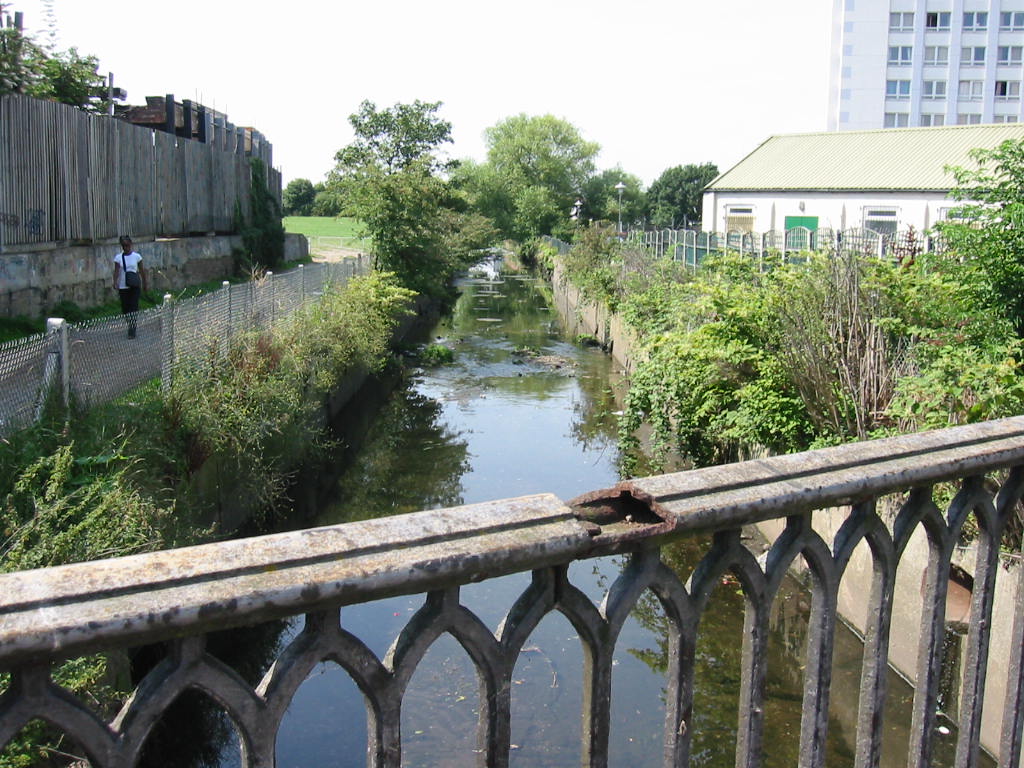

The town centre is about 50 ft above sea level on a gravel terrace rising from the River Thames. The north of the town has developed on London Clay and is situated as much as 150 ft above sea level. A continuous gentle rise in the eastern suburbs towards Gidea Park and Harold Wood peaks around 54 m around the Harold Court. On the northern side, Harold Hill peaks at 75 m. The semi-rural area north of Collier Row and Harold Hill consists of many rolls of hills, with elevation peaking at the village of Havering-atte-Bower, 105 m. The town centre is for the most part contained within a ring road formed of St Edwards Way, Mercury Gardens, Thurloe Gardens, Oldchurch Road and Waterloo Road. The market place and much of South Street and the High Street are pedestrianised.
Romford has formed part of the continuously built-up area of London since the 1930s and is contiguous with Rush Green to the west, Collier Row to the north, Gidea Park to the east and Hornchurch to the southeast.
The Romford post town covers Chadwell Heath, Collier Row, Gidea Park, Harold Hill, Harold Park, Harold Wood, Havering-atte-Bower, Rise Park and Rush Green, extending into sections of the London Borough of Barking and Dagenham, the London Borough of Redbridge and Epping Forest District. The Romford postcode area extends further.
Romford is located 14 mi northeast of Charing Cross in central London; 4+3/4 mi northeast of Ilford; 2+1/2 mi north of Dagenham; 9 mi northwest of Grays; 6 mi south-west of Brentwood; 12 mi west of Basildon; and 9 mi southeast of Epping.
Climate
Climate data for Romford is taken from the nearest weather station at Greenwich, around 10 mi southwest of the marketplace.
Demography
The population of the Romford parliamentary constituency was 109,400 in 2022. The population of the London Borough of Havering was 264,700. In 2021 there were 41,800 households in Romford constituency and 101,300 in the borough of Havering. In 2021 12.8% in Romford constituency (10.7% in Havering) were Asian, Asian British or Asian Welsh; 8.1% (8.2%) were Black, Black British, Black Welsh, Caribbean or African; 4.1% (3.7%) were Mixed or Multiple ethnic groups; 72.4% (75.3%) were White; and 2.5% (2.0%) were Other ethnic group. In 2021, 29.2% in Romford constituency (30.6% in Havering) report No religion; 51.1% (52.2%) were Christian; 0.4% (0.4%) Buddhist; 2.9% (2.5%) Hindu; 0.7% (0.5%) Jewish; 7.5% (6.2%) Muslim; 2.0% (1.7%) Sikh; 0.4% (0.4%) Other religion; and 5.7% (5.5%) Not answered.
Economy

Romford is recognised in the London Plan as one of 14 regionally significant metropolitan centres in Greater London, with a considerable catchment area. The town has significant retail, office, leisure and cultural floorspace. There is a developed night-time economy, greater than in any other metropolitan centre in Greater London, with 8360 m2 of cinemas, theatres and concert hall space; 9530 m2 of bars and pubs; 5510 m2 of cafés and restaurants; and 2680 m2 of fast food and take away venues. The night-time economy of clubs, pubs and bars has been growing since 2023. Romford Market has been in a long period of decline with 60 regular traders in 2020, down from a peak of over 300.
Transport

Romford town centre has a very high Public Transport Accessibility Level score of 6.
The town is served by Romford railway station, in London fare zone 6. The station is a stop on the Great Eastern Main Line. It is served by Elizabeth line trains between Shenfield and Paddington, with some services extended to Heathrow Airport. Romford is the western terminus of the Liberty line service of the London Overground, which connects the town to Upminster. Since May 2025, there is a regular off-peak Greater Anglia service between and calling at the station.
Romford is a hub of the London Buses network, with services to Canning Town, Stratford, Leytonstone and Dagenham; there are also feeder services from the large housing developments at Collier Row and Harold Hill. There are night bus services to Beam Park, Claybury Broadway, Havering Park, Leytonstone, Stratford, Harold Hill and Oxford Circus.
The A12 trunk road passes to the north of Romford, while the A118 road from Stratford connects with it at Gallows Corner at the start of the A127 road to Southend.
Culture


In 2005, Havering Council's urban strategy had the stated aims of making Romford a cultural destination, whilst recognising that Hornchurch forms the main cultural hub of the borough with a large theatre and arts spaces. The market and adjacent streets also form a conservation area.
Mass entertainment facilities in the town include the Brookside Theatre and Romford Greyhound Stadium, the last remaining dog racing track in London. two multi-screen cinemas;
Romford's position as a focus for electronic music production was reinforced by the presence of the Strictly Underground and Suburban Base record labels, with Suburban Base developing from the Boogie Times record store. According to a Billboard article in 1992, Romford-produced dance music formed part of a trend favouring suburban and provincial "bedroom" record labels over those in central London. In 2013, the film Death Walks was filmed in Romford over a four-month period. The cult TV series Garth Marenghi's Darkplace was set in the fictional Darkplace Hospital, in Romford.
The local newspaper for the town and the borough of Havering is the Romford Recorder, with an average circulation per issue of 8,852 in 2024.
Bedrock Radio is a local community radio station, based at Queen's Hospital Romford. The station is available online and is due to launch on DAB+ serving East London in late 2025. Time 107.5 was a local radio station based in the Liberty Shopping Centre, The 107.5 FM frequency was sold to Nation Broadcasting and now broadcasts as Nation Radio London.
Lumiere Cinema, located within the Mercury Mall, has served as the venue for the Romford Film Festival since 2017, the Romford Horror Film Festival since 2020, and the East London LGBTQ+ Film Festival since 2023.
In April 2023, hoodies were banned from the town centre along with Ski masks and motorcycle helmets in an initiative by Romford Business Improvement District, backed by Havering councillors and local Metropolitan Police officers, as a measure against antisocial behaviour.
Notable people
- John Fisher (social media personality) (born 1973), known as 'Big John' and 'the Boshfather', Fisher amassed a following on social media for his meal reviews, particularly of Chinese food, as well as his catchphrase "BOSH!" at the end of videos.
- Yevan David (born 2007), Sri Lankan racing driver
Sports
Romford F.C., who currently play in the Essex Senior League, is the local football team. The Raiders IHC ice hockey team is based in Romford, at Romford Ice Arena until 2013 and now Sapphire Ice and Leisure. Sapphire Ice also replaced the Dolphin Centre, which was a popular swimming and leisure facility from 1982 to 1995. Romford and Gidea Park Rugby Football Club is based at Crowlands in Romford. Romford Bowls Club is based in Lodge Farm Park.
Notes
References
References
- {{ cite vob
- {{ cite vob
- Mills, A.D.. (2001). "Dictionary of London Place Names". Oxford.
- Powell, W.R. (Edr.). (1978). "Romford: Economic History, A History of the County of Essex: Volume 7". [[British History Online]].
- (1992). "The London Encyclopaedia". [[Macmillan Publishers.
- Powell, W.R. (Edr.). (1978). "Romford: Introduction, A History of the County of Essex: Volume 7". [[British History Online]].
- (2 October 1810). "Navigable cut from Rainham to Romford". [[The London Gazette]].
- "The Romford Canal Essex". [[Oxford Archaeology.
- Havering London Borough Council. "Romford Town Centre".
- {{cite vob. link
- Powell, W.R. (Edr.). (1978). "Romford: Local government, A History of the County of Essex: Volume 7". [[British History Online]].
- Powell, W.R. (Edr.). (1978). "The liberty of Havering-atte-Bower, A History of the County of Essex: Volume 7". [[British History Online]].
- link
- (1982). "Metropolitan London: Politics and Urban Change 1837-1981". Edward Arnold.
- {{cite vob. link
- "Greater London Council Election results: Havering".
- "London Telephone Area in 1916". Private Line.
- "New Seat Details - Romford".
- (10 June 2021). "Romford MP celebrates 20 years in office". Romford Recorder.
- (13 May 2021). "Havering electoral wards face axe as borough is split into 20 areas". Romford Recorder.
- Mayor of London. (2004). "The blue ribbon network". [[Greater London Authority]].
- Robson, William. (1939). "The Government and Mis-government of London". Allen & Unwin.
- Royal Mail. (2004). "Address Management Guide". Royal Mail Group.
- Office for National Statistics – Mid Year Population Estimates 2022
- Office for National Statistics – Census 2021
- (March 2021). "The London Plan".
- (July 2005). "Romford Urban Strategy". Havering London Borough Council.
- (March 2025). "Romford Town Centre Masterplan Supplementary Planning Document".
- (22 August 2024). "Romford Town Centre Masterplan Baseline Report".
- Mayor of London. (June 2006). "Managing the Night Time Economy". [[Greater London Authority]].
- (9 July 2020). "Romford Market – Recovery Plan". Havering London Borough Council.
- (September 2024). "London's Rail & Tube services".
- (May 2025). "Elizabeth line timetable from Sunday 18 May to Saturday 13 December 2025".
- (20 November 2024). "Transport for London rolls out new Overground names and colours".
- (14 May 2025). "Extra seats and additional summer services in Greater Anglia's new timetables (from 18 May 2025)". Greater Anglia.
- "Buses from Romford Station".
- "Map of Havering". Havering London Borough Council.
- (15 January 2025). "Southeast London's historic Crayford greyhound racetrack has closed for good".
- Shapiro, Peter. (1999). "Drum 'n' bass: the rough guide". Rough Guides.
- Sexton, Paul. (August 1992). "UK indies step outside london for dance hits". [[Billboard (magazine).
- (20 April 2024). "Six films, TV shows and music videos filmed or set in Romford". Romford Recorder.
- (13 February 2025). "Romford Recorder - January to December 2024".
- "Bedrock (Hospital Radio)".
- "Time FM".
- "Film festival returns to Romford next year with no fees for student filmmakers".
- (1 June 2021). "Romford's First Horror Film Festival to take place this June and it promises to be truly Horrhiffic!".
- (30 June 2023). "Kaleidoscope to host Romford's first LGBTQ+ Film Festival". The Havering Daily.
- (30 April 2023). "'Stupid!' Uproar in Romford as hoodies banned in shopping areas". The Observer.
- Romford Football Club. "History".
- (4 September 2023). "Ice Hockey In London: Who Are The Teams, Where To Watch And When's It On?". Londonist.
- "Hockey is Back!". [[Romford Ice Arena]].
- (31 January 2013). "Skaters left without a home as doors close on ice rink". [[Romford Recorder]].
- "Innovative design at Sapphire Ice & Leisure centre - Physical Activity Facilities".
- (16 July 2023). "PHOTOS: Chelsea Pensioners visit Romford Bowls Club on 'historic' day". Romford Recorder.


This article was imported from Wikipedia and is available under the Creative Commons Attribution-ShareAlike 4.0 License. Content has been adapted to SurfDoc format. Original contributors can be found on the article history page.
Ask Mako anything about Romford — get instant answers, deeper analysis, and related topics.
Research with MakoFree with your Surf account
Create a free account to save articles, ask Mako questions, and organize your research.
Sign up freeThis content may have been generated or modified by AI. CloudSurf Software LLC is not responsible for the accuracy, completeness, or reliability of AI-generated content. Always verify important information from primary sources.
Report