From Surf Wiki (app.surf) — the open knowledge base
Romanians in Serbia
| Field | Value |
|---|---|
| group | Romanians in Serbia |
| native_name | Românii din Serbia |
| Румуни у Србији | |
| image | Flag of the Romanian minority in Serbia.svg |
| caption | Ethnic flag of Romanians in Serbia |
| population | 23,044 (2022) |
| region1 | Vojvodina |
| pop1 | 19,595 |
| langs | Romanian and Serbian |
| rels | Eastern Orthodoxy |
Румуни у Србији
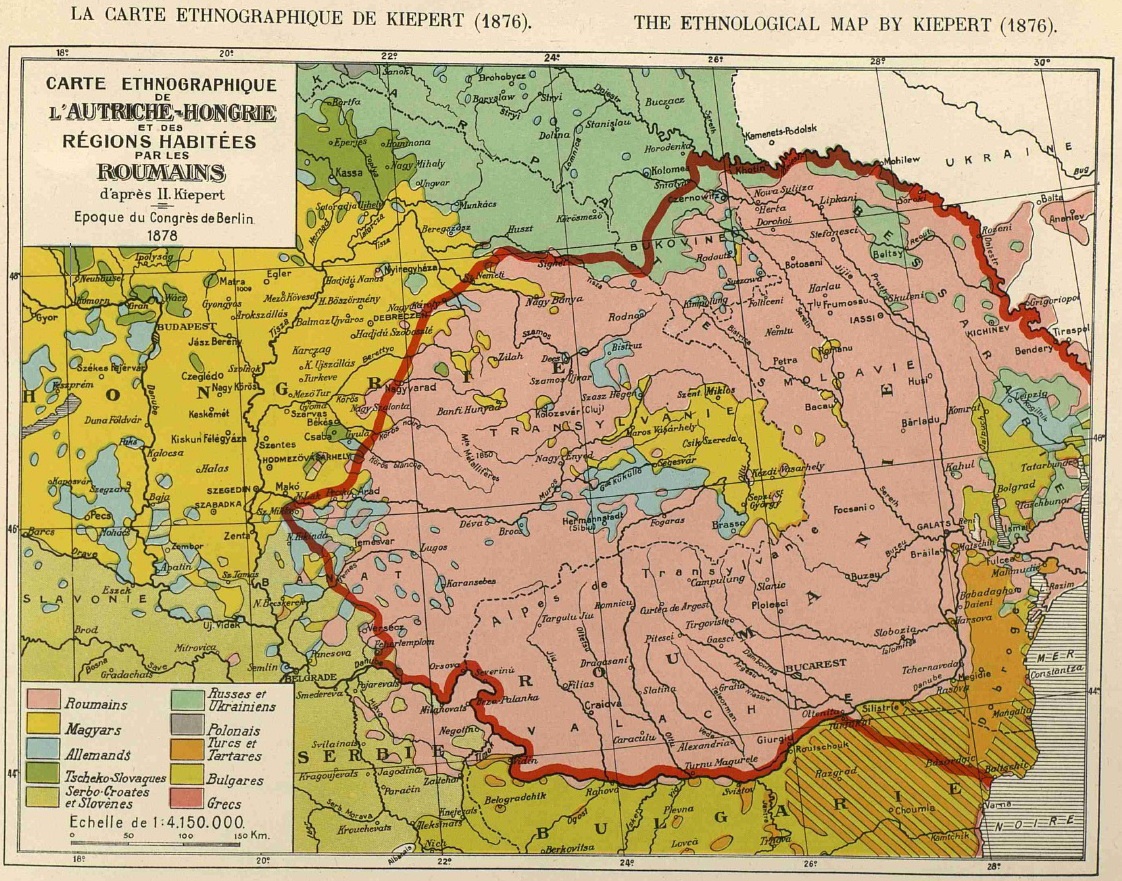
Romanians are a recognized ethnic minority in Serbia. According to data from the 2022 census, the population of ethnic Romanians in Serbia is 23,044, constituting 0.3% of the total population. An additional 21,013 people self-declared as Vlachs; there are differing views whether Vlachs should be regarded as Romanians or as a distinct ethnicity.
History
Main article: Vlachs, Origin of the Romanians

As Daco-Romanian-speakers, the Vlachs have a connection to Roman heritage in Serbia. An area inhabited with Thracian Tribalians, came under Roman control in 75 BC, when Roman province Moesia was established. Following Roman withdrawal from the province of Dacia at the end of the 3rd century, the name of the Roman region was changed to Dacia Aureliana, and (later Dacia Ripensis) spread over most of what are now Serbia and Bulgaria. Roman military presence in the region persisted through the end of Justinian's reign in the 6th century.
The region where Vlachs predominantly live later on was part of the Second Bulgarian Empire, whose first rulers, the Asens, are considered Vlachs. King Stefan Uroš II Milutin of Serbia had Braničevo region conquered from local rulers Darman and Kudelin in 1291, while Timok Valley remained independent state until Ottoman arrival at the end of 14th century. The chroniclers of the crusaders describe presence of Vlachs in the 12th and 13th century in various parts of modern Serbia. Serbian documents from the 13th and 14th century mention Vlachs, including Emperor Stefan Dušan, in his prohibition of intermarriage between Serbs and Vlachs. In 14th and 15th century Romanian (Wallachian) rulers built churches in eastern Serbia: Lapuṣna, Coroglaṣ, Krepičevac, Vratna, Bucovo, Manastirica, and Lozuca. Ottoman tax records (defters) from 15th century list Vlachs in the region of Braničevo, near the ancient Roman municipium and colonia of Viminacium.
Starting in the early 18th century the eastern Serbia was settled by Romanians (then known by their international exonym as Vlachs) from Banat, parts of Transylvania, and Oltenia (Lesser Walachia). These are the Ungureni (Ungurjani), Munteni (Munćani), and Bufeni (Bufani). Today about three quarters of the Vlach population speak the Ungurean subdialect. In the 19th century other groups of Romanians, originating in Oltenia (Lesser Wallachia), also settled south of the Danube. These are the Țărani (Carani), who form some 25% of the modern population. The very name Țărani indicates their origin in Țara Românească, i.e., "The Romanian Land", that is, Wallachia (Oltenia and Muntenia). From the 15th through the 18th centuries large numbers of Serbs also migrated across the Danube, but in the opposite direction, to both Banat and Țara Româneasca. Significant migration ended with the establishment of the kingdoms of Serbia and Romania, respectively, in the second half of the 19th century.
In a Romanian-Yugoslav agreement of 2002, the Yugoslav authorities agreed to recognize the Romanian identity of the Vlach population in eastern Serbia, but the agreement was not implemented. In 2005, many deputies from the Council of Europe protested against the position of this population in Serbia. In 2007, Vlachs were officially recognized as ethnic minority, while their language was recognized as Romanian.
Demographics
According to data from the 2022 census, the population of ethnic Romanians in Serbia is 23,044, constituting 0.3% of the total population, while 21,013 people declared themselves Vlachs. Ethnic Romanians are mostly concentrated in Banat, while self-declared Vlachs in the Timok Valley.
| Year | Romanians | Share | Vlachs | Share |
|---|---|---|---|---|
| 1856 | 104,343 | 16.8% | ||
| 1859 | 122,593 | 14.4% | ||
| 1866 | 127,545 | 10.5% | ||
| 1884 | 149,727 | 7.8% | ||
| 1890 | 143,684 | 6.6% | ||
| 1895 | 159,510 | 6.4% | ||
| 1900 | 122,429 | 4.9% | ||
| 1921 | 224,746 | 4.7% | ||
| 1931 | 130,635 | 2.3% | ||
| 1948 | 63,130 | 0.9% | 93,440 | 1.6% |
| 1953 | 59,705 | 0.8% | 28,407 | 0.4% |
| 1961 | 59,505 | 0.8% | 1,330 | 0.02% |
| 1971 | 57,419 | 0.7% | 14,724 | 0.1% |
| 1981 | 53,693 | 0.6% | 25,596 | 0.2% |
| 1991 | 42,331 | 0.4% | 17,807 | 0.2% |
| 2002 | 34,576 | 0.4% | 40,054 | 0.5% |
| 2011 | 29,332 | 0.4% | 35,330 | 0.5% |
| 2022 | 23,044 | 0.3% | 21,013 | 0.3% |
Banat

The largest concentration of ethnic Romanians in Serbia are to be found in Banat numbering 17,262 people or three-fourths of country's Romanian community.
Settlements in the Serbian Banat with Romanian ethnic majority are:
- Lokve (Alibunar municipality)
- Nikolinci (Alibunar municipality)
- Uzdin (Kovačica municipality)
- Torak (Žitište municipality)
- Grebenac (Bela Crkva municipality)
- Kuštilj (City of Vršac)
- Straža (City of Vršac)
- Ritiševo (City of Vršac)
- Vojvodinci (City of Vršac)
- Mesić (City of Vršac)
- Markovac (City of Vršac)
- Jablanka (City of Vršac)
- Sočica (City of Vršac)
- Barice (Plandište municipality)
Settlements in the Serbian Banat with Romanian ethnic plurality are:
- Jankov Most (City of Zrenjanin)
- Mali Žam (City of Vršac)
- Malo Središte (City of Vršac)
Timok Valley
Main article: Vlachs of Serbia
Although ethnographically and linguistically closely related to the Romanians, there are divergences on whether or not they belong to the Romanian ethnicity and whether or not their minority should be amalgamated with the Romanian ethnic minority in Serbia. The Serbian state considers Vlachs a distinct ethnic minority rejecting any conflation with the Romanians, citing census results and their right of self-identification with the ethnicity of their choice. On the other hand, Romania's stance is that the Vlachs are Romanians, claiming the split between "Romanian" and "Vlach" identities as artificial and accusing Serbia of failing to protect the ethnic minority rights of the Romanians in Timok Valley.
Vlachs settled in Timok Valley from regions north of the Danube by the Habsburgs at the beginning of the 18th century. The origins of these Vlachs are indicated by their own self-designations: "Ungurean/Ungureni" (Ungurjani), i.e. those who came from Hungary (that is, Banat and Transylvania) and "Țărani" (Carani), who came from Wallachia ( – "Romanian Country"). The second wave of Vlachs from present-day Romania came in the middle of the 19th century. In 1835, feudalism was fully abolished in the Principality of Serbia and smaller groups from Wallachia migrated to enjoy the status of free peasants.
Politics
Main article: National Council of the Romanian National Minority
The National Council of the Romanian National Minority is a representation body of the Romanian ethnic minority in Serbia, established for the protection of the rights and the minority self-government of Romanians in Serbia.
Culture
Main article: Romanian language in Serbia
Romanian is one of six official languages of the provincial administration in Vojvodina and ethnic Romanians have access to education in their native language.
Most of the Romanians in Serbia are Eastern Orthodox, belonging to the Romanian Orthodox Church (through its diocese of Dacia Felix).
Libertatea is Romanian language-weekly newspaper, published in Pančevo.
Notable people
- Bojan Aleksandrović – priest
- Predrag Balašević – politician
- Paun Es Durlić – ethnologist
- Raimond Gaita – philosopher
- Maria – Queen consort of Yugoslavia
- Miletić Mihajlović – politician
- Natalie – Queen consort of Serbia
- Safet Pavlović – politician
- Dușan Pârvulovici – minority rights activist
- Emil Petrovici – linguist
- Vasko Popa – poet
- Lazăr Sfera – football player
- Marinika Tepić – politician
- Ilija Lupulesku – table tennis player
- Ion Cizmaș (ro) – politician
References
Sources
- Popi, Gligor. (2003) "Românii din Banatul sârbesc", Magazin Istoric, no. 8/2003.
References
- (2023-07-14). "Final results - Ethnicity".
- "Регистар националних савета националних мањина".
- "Population by ethnicity, by areas".
- Alaric Watson, ''Aurelian and the Third Century,'' Routledge, 1999.
- Watson, Alaric. (2004). "Aurelian and the Third Century". Psychology Press.
- William Rosen, ''Justinian's Flea: Plague, Empire, and the Birth of Europe,'' Viking Adult, 2007.
- [http://members.tripod.com/~Groznijat/bulgar/wolff.html Wolff], Robert Lee Wolff, The Second Bulgarian Empire: Its Origin and History to 1204, SpeculumVolume 24, Issue 2, 1949.
- {{in lang. hrZef Mirdita, Vlasi u historiografiji, Hrvatski institut za povijest, Zagreb 2004.
- Noel Malcolm, Kosovo, ''A short History,'' University Press, NY, 1999.
- {{in lang. de Felix Kanitz, ''Serbien,'' Leipzig, 1868.
- Noel Malcolm, ''Bosnia: A short History'', University Press, NY, 1994.
- {{in lang. sr Kosta Jovanovic, ''Negotinska Krajina i Kljuc'', Belgrade, 1940
- [https://web.archive.org/web/20080318091019/https://adevarul.ro/index.php?section=articole&screen=index&id=25504&search=Timoc Adevărul, 6 Noiembrie 2002]: ''Prin acordul privind minoritatile, semnat, luni, la Belgrad, de catre presedintii Ion Iliescu si Voislav Kostunita, statul iugoslav recunoaste dreptul apartenentei la minoritatea romaneasca din Iugoslavia al celor aproape 120.000 de vlahi (cifra neoficiala), care traiesc in Valea Timocului, in Serbia de Rasarit.''
- [https://web.archive.org/web/20120405135858/http://www.curierulnational.ro/Specializat/2003-01-25/Sa+nu-i+uitam%2C+pe+cei...+uitati Curierul Național, 25 ianuarie 2003]: ''Chiar si acordul dintre presedintii Ion Iliescu si Voislav Kostunita, semnat la sfarsitul anului trecut, nu este respectat, in ceea ce priveste minoritatile, deoarece locuitorii din Valea Timocului, numiti vlahi, nu sunt recunoscuti ca minoritari, ci doar „grup etnic“.''
- link. (30 December 2013 : ''Deeply concerned over the cultural situation of the so-called “Vlach” Romanians dwelling in 154 ethnic Romanian localities 48 localities of mixed ethnic make-up between the Danube, Timok and Morava Rivers who since 1833 have been unable to enjoy ethnic rights in schools and churches'')
- [https://web.archive.org/web/20080117220553/https://romanialibera.ro/a103742/romanii-din-valea-timocului-recunoscuti-drept-minoritate-nationala.html România Liberă, 16 August 2007] {{webarchive. link. (26 September 2007 : ''Romanii din Valea Timocului, cunoscuti drept vlahi, au obtinut recunoasterea statutului de minoritate nationala. Decizia guvernului de la Belgrad inseamna, printre altele, ca limba romana ar putea fi predata in premiera in scolile din Serbia unde romanii timoceni sunt majoritari, transmite BBC, preluat de Rompres.'')
- "Ethnicity - Data by municipalities and cities".
- "Serbia Ethnic 2022".
- link. (2012-01-23 , at the [[Council of Europe]], 14 February 2008)
This article was imported from Wikipedia and is available under the Creative Commons Attribution-ShareAlike 4.0 License. Content has been adapted to SurfDoc format. Original contributors can be found on the article history page.
Ask Mako anything about Romanians in Serbia — get instant answers, deeper analysis, and related topics.
Research with MakoFree with your Surf account
Create a free account to save articles, ask Mako questions, and organize your research.
Sign up freeThis content may have been generated or modified by AI. CloudSurf Software LLC is not responsible for the accuracy, completeness, or reliability of AI-generated content. Always verify important information from primary sources.
Report