From Surf Wiki (app.surf) — the open knowledge base
Romania national rugby union team
National rugby union team

National rugby union team
| Field | Value |
|---|---|
| Name | Romania |
| Badge | Romania_national_rugby_union_team_logo.png |
| Badge_size | 180px |
| Nickname | Stejarii (The Oaks) |
| Emblem | Oak Leaf |
| Union | Federația Română de Rugby |
| Coach | David Gérard |
| Captain | Marius Simionescu |
| Most caps | Florin Vlaicu (129) |
| Top scorer | Florin Vlaicu (1030) |
| Top try scorer | Cătălin Fercu (33) |
| Home Stadium | Stadionul Arcul de Triumf |
| pattern_b1 | _navycollar |
| leftarm1 | FF0000 |
| body1 | FF0000 |
| rightarm1 | FF0000 |
| shorts1 | 75C2EE |
| socks1 | FF0000 |
| pattern_la2 | _black_hoop |
| pattern_b2 | _blackcollar |
| pattern_ra2 | _black_hoop |
| leftarm2 | FFFFFF |
| body2 | FFFFFF |
| rightarm2 | FFFFFF |
| shorts2 | 000000 |
| socks2 | ffffff |
| World Rugby Rank | 21 |
| World Rugby Rank date | 7 July 2025 |
| World Rugby max | 13 |
| World Rugby max year | 2003, 2004, 2005, 2006 |
| World Rugby min | 21 |
| World Rugby min year | 2025 |
| First game | 21–0 |
| (Paris, France; 26 June 1919) | |
| All military sides | |
| Largest win | 0–100 |
| (Burgas, Bulgaria; 21 September 1976) | |
| Largest loss | 134–0 |
| (London, England; 17 November 2001) | |
| World cup apps | 9 |
| World cup first | 1987 |
| World cup best | Pool stage (1987, 1991, 1995, 1999, 2003, 2007, 2011, 2015, 2023) |
| website | rugbyromania.ro |
| World Rugby Rank date = 7 July 2025 | World Rugby max year = 2003, 2004, 2005, 2006 | World Rugby min year = 2025 (Paris, France; 26 June 1919) All military sides (Burgas, Bulgaria; 21 September 1976) (London, England; 17 November 2001)
The Romania national rugby union team, nicknamed **Stejarii ** (The Oaks), has long been considered one of the stronger European teams outside the Six Nations. They have participated in all but one Rugby World Cup and currently compete in the first division of the Rugby Europe International Championships, which they won in 2017. Rugby union in Romania is administered by the Romanian Rugby Federation.
France first played rugby against Romania in 1924 when they tried to establish a rival to the Five Nations championship. Romania holds with 25 matches the record for the longest unbeaten run.
Romania played in every Rugby World Cup through to 2015, but were disqualified from the 2019 tournament after fielding an ineligible player during the qualification process. Romania returned to the 2023 Rugby World Cup and finished bottom of Pool B, losing all of their matches.
History
Early history
The game itself was introduced by students returning with rugby balls from their studies in Paris to form clubs such as Stadiul Roman from 1913 onwards. Seventeen other teams would be formed in the capital, Bucharest.
Romania's first international was played against the US in 1919. France first officially played rugby union against Romania in May 1924 when they tried to establish a rival to the Five Nations Championship (now the Six Nations). France were victorious by 59 points to 3.
Romania were one of three teams who entered the 1924 Olympics in Paris. France won 59–3, scoring 13 tries including four by the fine Stade Francais winger Adolphe Jaureguy. The United States then defeated Romania 39–0. Romania finishing third claimed the bronze medal. The Federaţia Română de Rugby was formed in 1931. In 1939 a team was formed in Braşov at an aircraft factory. This was the first team outside Bucharest.
Post-World War II

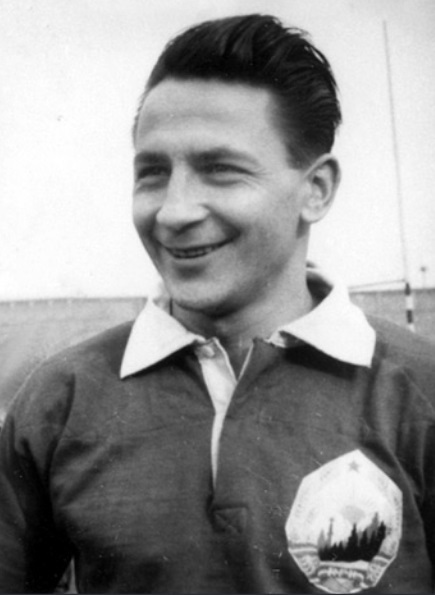


A generation of French school trained coaches from late 1940s, and 1950s built a system and led the national team to success of the 1960s, 1970s and early 1980s. In this era Romania began to compete more regularly against the major nations. Their first win over France came in 1960 in Bucharest, in a tour match won by 11–5. In 1974 Romania won against France 15–10 in Bucharest, and the FIRA – Association of European Rugby championship. In 1975 Romania went for an 8-game tour to New Zealand, concluding in Wellington with a 10–10 draw against the Junior All Blacks. Exposure to international rugby developed the country's game and they began to form their own distinctive style of play, built around strong, bruising packs. That Romania was emerging as a real force on the world stage became clear on their 1979 Romania rugby union tour of Wales at Cardiff Arms Park, in an unofficial, non-cap international. The Oaks led going into the dying minutes, when only a last-gasp drop goal from Gareth Davies gave a narrow 13–12 victory for Wales. The improvement continued in 1980, when Romania crushed the French in a record 15–0 win in Bucharest. A trip to Lansdowne Road in the 1980 Romania rugby union tour of Ireland then yielded a 13–13 draw against Ireland in another unofficial, non-cap match.
In the 1980s the country boasted more than 12,000 players in 110 clubs. Home nations sides began to award international caps for matches against Romania in 1981; Scotland were the first to do so when Romania visited them on their 1981 tour, Scotland winning the international by 12 points to 6. Wales travelled to Bucharest in November 1983 and were totally overwhelmed, falling to a 24–6 defeat. Romania's first win over Scotland came in Bucharest in 1984 and their first away win against Five Nations opposition came in 1988 against Wales; 15–9 at Cardiff Arms Park.
Their national side beat Wales (twice – 1983: 24–6 in Romania, 1988: 15–9 in Wales), Scotland (the 1984 Grand Slam side 28–22 in Romania), France (twice 1980: 15–0 in Romania, 1982: 13–9 in Romania) and drew with Ireland (13–13, in 1980, at Dublin). In 1981, they lost to the All Blacks 14–6 but had two tries disallowed. Many felt it was wrong for the rugby union powers to fail to bring them into top-flight competition. Romania beat Zimbabwe 21–20 in their first ever Rugby World Cup match in 1987 but did not win any other games and failed to progress beyond the group stage.
After the collapse of Communism
However, with the deterioration of the domestic political and economic situation in the country in the 1990s, Romanian rugby union suffered; the two leading rugby union teams – Dinamo Bucharest and Steaua Bucharest, represented the police and the army respectively, so their state funding fell.
Post-revolution, Romanian rugby union was still alive and kicking. In 1990 they recorded a prestigious win to date by beating France 12–6 on French soil for the first time. The following year they beat Scotland 18–12. At the 1991 World Cup they beat Fiji 17–15 and as recently as the 1995 World Cup, Romania held the eventual winners South Africa to a highly respectable 21–8.
The professionalism that followed immediately upon the heels of that World Cup was the undoing of the sport in Romania. Approximately 200 Romanian players are thought to be playing in France and Italy. It was not just playing numbers that suffered, but a whole generation of potential referees and administrators was lost to the game. By 1994 Romania's rugby fortunes had declined sharply, when a Welsh team travelled to Bucharest for an uncapped international the visitors came away with a 16–9 win. In 1997 the Romanians toured Wales. They lost 36–21 to Wales A at Pontypridd and 70–21 in a test held in Wrexham. At the 1999 World Cup Romania could again only manage a single win 27–25 against the United States.
The new millennium


In 2000, Romania won the first European Nations Cup by a large margin, recording victories in all four matches. By 2001, Romania had been caught by the likes of Georgia who defeated them to take the 2001 European Nations Cup, crowned with a decisive 31–20 win over Romania in Bucharest. The national side lost to England by 134–0 in 2001 and Dinamo Bucharest lost 151–0 to Saracens in the European Rugby Shield. Several French-based players refused to turn up for the England debacle simply because their clubs refused to pay them for the week. Players in that Romanian squad were getting £30 a day in expenses while England's top earners scooped £6,000 for their afternoon's work.
In January 2002, Bernard Charreyre was appointed coach of the national team both supplied by and paid by the French Rugby Federation (FFR). Under Charreyre (known by The Oaks as 'Little Napoleon'), the Oaks' decline has been stopped and the team has started to slowly climb from the basement of international rugby union. With a change of format in the European Nations Cup, Romania started in 2002 trailing Georgia due to the inclusion of 2001 results. The Oaks won all of the remaining five games, including a hard-fought 31–23 victory in Tbilisi to win the tournament. They qualified for the World Cup in 2003, where they beat Namibia and lost to Ireland (45–17), after an honourable display, and then to Australia (90–8) and Argentina (50–3). Charreyre was dismissed after the World Cup as the Romanian Federation was not satisfied by the World Cup performance and decided not to renew his contract. Three other French coaches followed: first, Phillipe Sauton, for a very short period, Robert Antonin as a temporary stand-in and then Daniel Santamans.
In the 2003–2004 European Nations Cup, Portugal were surprise 16–15 winners over Romania in Lisbon and installed themselves on the top of the 2003 table. In the second half of the competition, Romania seemed back on track (36–6 against Portugal in Constanţa), but went down 24–33 to Russia in Krasnodar following allegations of players having been doped. Then Portugal clinched their first title with a last-minute 19–18 win over Russia in Lisbon. In 2004, the Romanians scored a narrow 25–24 victory over Italy, their first victory to date over a Six Nations Championship side.
In 2005 Romania was given 'second tier' status by the IRB and replaced Russia in the Super Powers Cup. The USA beat a Romanian team stripped of their France-based players 23–16 in the third place play-off. The 2005–06 European Nations Cup also served as a qualifying group for the 2007 Rugby World Cup. Romania triumphed despite finishing level on points with Georgia.
Romania qualified for the 2007 Rugby World Cup in France, finishing at the top of their pool during the Round 5 of the European qualifying tournaments. Romania won their first qualifying match on 7 October, defeating Georgia in Bucharest 20–8. Their 43–20 win over Spain in Madrid on 14 October ensured that they qualified directly for the World Cup in 2007. In June 2007, Romania hosted the IRB Nations Cup in Bucuresti. In the 2007 Rugby World Cup finals, Romania won a bonus point in the 18–24 loss to Italy and to win a second game with Portugal by a narrow margin (14–10), but suffered heavy losses to Scotland (42–0) and New Zealand (85–8).
On 21 March 2009, Romania lost 22–21 at home to Portugal, leaving them with an uphill struggle to qualify for the 2011 World Cup – qualification for which is determined by performances in the European Nations Cup in 2009 and 2010. Romania went unbeaten, with a draw at Russia, in the 2010 phase of the European Nations Cup. The Oaks' strong finish put them in third place and the final phase of the European qualification playoffs, in which they easily defeated Ukraine over two legs (94–10 on aggregate) for the European place in the Final Place Playoff for the 2011 Rugby World Cup. Romania emerged as the last qualifier for the 2011 Rugby World Cup in New Zealand by overcoming first Tunisia in a winner-takes-it-all game (56–13) and later Uruguay (60–33 on aggregate). Thus, the Oaks are one of only 12 teams to participate at all World Cups alongside New Zealand, Australia, England, France, Wales, Ireland, Scotland, Italy, Argentina, Canada, and Japan.
In November 2016, Romania achieved home soil wins against the US, Canada and Uruguay.
In 2018, Romania finished top of the Rugby Europe Championship, meaning they qualified for the 2019 Rugby World Cup to be played in Japan in 2019. But after the conclusion of the tournament World Rugby conducted a review of player eligibility and found Romania fielded Sione Faka'osilea, who previously played for the Tonga Sevens team, which made him ineligible to play for Romania in the competition. Romania was stripped of 30 competition points, which placed them third and meant that they failed to qualify for the 2019 Rugby World Cup, with Russia taking their place.
On 29 May 2018, it was confirmed that Romania had appealed the decision. On 6 June, the appeal failed and the decision was upheld, meaning Russia was confirmed as Europe 1 and qualified for the World Cup, whilst Germany advanced to round 6.
Honours
- Rugby union at the Summer Olympics
- Bronze Medal (1): 1924
- Rugby Europe International Championships
- Antim Cup
- ** Winner (6):** 2002, 2003, 2004, 2006, 2010, 2017
- World Rugby Nations Cup
- ** Winner (4):** 2012, 2013, 2015, 2016
Record
Romania holds the record for the longest unbeaten run: 25 matches in between May 1959 and November 1964.
Wins against Tier 1 nations
| Date | Home | Score | Away | Venue | Status |
|---|---|---|---|---|---|
| 14 April 1940 | 3–0 | Kingdom of Romania Dinamo Stadium, Bucharest | Test Match | ||
| 5 June 1960 | 11–5 | Socialist Republic of Romania Dinamo Stadium, Bucharest | Test Match | ||
| 10 June 1962 | 14–6 | Socialist Republic of Romania Dinamo Stadium, Bucharest | Test Match | ||
| 11 November 1962 | 3–0 | Socialist Republic of Romania Dinamo Stadium, Bucharest | Test Match | ||
| 14 May 1967 | 15–14 | Socialist Republic of Romania Dinamo Stadium, Bucharest | 1966–67 FIRA Nations Cup | ||
| 1 December 1968 | 24–3 | Socialist Republic of Romania Dinamo Stadium, Bucharest | 1968–69 FIRA Nations Cup | ||
| 25 October 1970 | 3–14 | Italy Stadio Comunale Mario Battaglini, Rovigo | 1969–70 FIRA Nations Cup | ||
| 11 April 1971 | 32–6 | Socialist Republic of Romania Dinamo Stadium, Bucharest | 1970–71 FIRA Nations Cup | ||
| 13 October 1974 | 15–10 | Socialist Republic of Romania Dinamo Stadium, Bucharest | 1974–75 FIRA Trophy | ||
| 14 November 1976 | 15–12 | Socialist Republic of Romania Dinamo Stadium, Bucharest | 1976–77 FIRA Trophy | ||
| 1 May 1977 | 69–0 | Socialist Republic of Romania Dinamo Stadium, Bucharest | 1976–77 FIRA Trophy | ||
| 22 April 1979 | 44–0 | Socialist Republic of Romania Dinamo Stadium, Bucharest | 1978–79 FIRA Trophy | ||
| 23 November 1980 | 15–0 | Socialist Republic of Romania Dinamo Stadium, Bucharest | 1980–81 FIRA Trophy | ||
| 12 April 1981 | 35–9 | Socialist Republic of Romania Brăila | 1980–81 FIRA Trophy | ||
| 31 October 1982 | 13–9 | Socialist Republic of Romania Dinamo Stadium, Bucharest | 1982–83 FIRA Trophy | ||
| 10 April 1983 | 13–6 | Socialist Republic of Romania Buzău | 1982–83 FIRA Trophy | ||
| 12 November 1983 | 24–6 | Socialist Republic of Romania Dinamo Stadium, Bucharest | Test Match | ||
| 20 May 1984 | 28-22 | Socialist Republic of Romania Dinamo Stadium, Bucharest | Test Match | ||
| 14 April 1985 | 7–6 | Socialist Republic of Romania Brașov | 1984–85 FIRA Trophy | ||
| 12 April 1987 | 9–3 | Socialist Republic of Romania Constanța | 1985–87 FIRA Trophy | ||
| 2 April 1988 | 3–12 | Italy San Siro, Milan | 1987–89 FIRA Trophy | ||
| 10 December 1988 | 9–15 | Wales Cardiff Arms Park, Cardiff | Test Match | ||
| 15 April 1989 | 28–4 | Socialist Republic of Romania Dinamo Stadium, Bucharest | 1987–89 FIRA Trophy | ||
| 14 April 1990 | 9–16 | Italy Frascati | 1989–90 FIRA Trophy | ||
| 24 May 1990 | 6–12 | France Stade du Moulias, Auch | 1989–90 FIRA Trophy | ||
| 31 August 1991 | 18–12 | Romania Dinamo Stadium, Bucharest | Test Match | ||
| 14 May 1994 | 26–12 | Romania Dinamo Stadium, Bucharest | 1992–94 FIRA Trophy | ||
| 26 June 2004 | 25–24 | Romania Dinamo Stadium, Bucharest | Test Match |
European competitions
Romania's only annual tournament is a competition involving Europe's tier 2 and tier 3 national teams. From 1936 through 1938, they competed in the FIRA Tournament against France, Germany and Italy. In 1965 until 1973 the FIRA Nations Cup was formed allowing other teams to be promoted or relegated from the competition. Romania won the competition once in 1969, being the only team to defeat France.
| Pre–WWII Tournament (1936–1938) | Nation | Games | Points | Table | ||||||||
|---|---|---|---|---|---|---|---|---|---|---|---|---|
| points | Champs | played | won | drawn | lost | for | against | diff | ||||
| 6 | 6 | 0 | 0 | 133 | 48 | +85 | – | 3 | ||||
| 6 | 3 | 0 | 3 | 83 | 92 | −9 | – | 0 | ||||
| 5 | 3 | 0 | 2 | 75 | 76 | −1 | – | 0 | ||||
| 7 | 1 | 0 | 6 | 81 | 114 | −33 | – | 0 | ||||
| 2 | 1 | 0 | 1 | 20 | 48 | −28 | – | 0 | ||||
| 2 | 0 | 0 | 2 | 8 | 62 | −54 | – | 0 |
| FIRA Nations Cup (1965–1973) | Nation | Games | Points | Table | ||||||||
|---|---|---|---|---|---|---|---|---|---|---|---|---|
| points | Champs | played | won | drawn | lost | for | against | diff | ||||
| 26 | 25 | 0 | 1 | 824 | 198 | +626 | 65 | 7 | ||||
| 26 | 17 | 1 | 8 | 528 | 222 | +306 | 51 | 1 | ||||
| 17 | 2 | 2 | 13 | 135 | 411 | −267 | 16 | 0 | ||||
| 9 | 2 | 0 | 7 | 65 | 332 | −267 | 13 | 0 | ||||
| 13 | 4 | 1 | 8 | 86 | 227 | −141 | 12 | 0 | ||||
| 10 | 1 | 1 | 8 | 81 | 132 | −51 | 6 | 0 | ||||
| 3 | 1 | 0 | 2 | 56 | 55 | +1 | 5 | 0 | ||||
| 3 | 0 | 0 | 3 | 19 | 132 | −113 | 3 | 0 | ||||
| 3 | 0 | 0 | 3 | 23 | 108 | −85 | 0 | 0 |
European Nations Cup (2000–present)
Winners
| Year | First Division | Lower Division Champions | Winner | Second | Third | Relegated | Division 2 | Division 3 |
|---|---|---|---|---|---|---|---|---|
| 2000 | ||||||||
| 2001 | Not played | |||||||
| 2001–2002 | ||||||||
| 2003–2004 | ||||||||
| 2004–2006 | ||||||||
| 2006–2008 | ||||||||
| 2008–2010 | ||||||||
| 2010 | ||||||||
| 2011 | ||||||||
| 2012 | ||||||||
| 2013 | ||||||||
| 2014 | ||||||||
| 2015 | ||||||||
| 2016 | ||||||||
| 2017 | – | / | ||||||
| 2018 | – | |||||||
| 2019 | ||||||||
| 2020 | ||||||||
| 2021 | – | |||||||
| 2022 | / | |||||||
| 2023 | – | |||||||
| 2024 |
All-time table
| Pld | W | D | L | PF | PA | PD | AVPPG | Pts | Champs | |
|---|---|---|---|---|---|---|---|---|---|---|
| 100 | 83 | 4 | 13 | 3096 | 1151 | +1945 | 30.96 | 334 | ||
| 100 | 72 | 2 | 26 | 3024 | 1311 | +1713 | 30.24 | 288 | ||
| 85 | 47 | 3 | 34 | 2190 | 1788 | +402 | 26.07 | 186 | ||
| 85 | 35 | 3 | 47 | 1605 | 1865 | −260 | 18.88 | 152 | ||
| 80 | 25 | 4 | 51 | 1575 | 2020 | −445 | 19.69 | 145 | ||
| 29 | 6 | 0 | 23 | 362 | 1075 | −713 | 12.48 | 40 | ||
| 25 | 3 | 1 | 21 | 341 | 1064 | −723 | 13.64 | 26 | ||
| 15 | 1 | 0 | 14 | 278 | 652 | −374 | 18.53 | 17 | ||
| 20 | 1 | 0 | 19 | 201 | 998 | −797 | 10.05 | 15 | ||
| 5 | 3 | 0 | 2 | 94 | 69 | +25 | 18.80 | 11 | ||
| 20 | 2 | 1 | 17 | 204 | 412 | −208 | 13.6 | 8 |
Rivalries
Romania and Georgia have enjoyed a rivalry between the two most successful teams in the European Nations Cup. The winner of the rivalry takes home the Antim Cup.
Rugby World Cup
Main article: Romania at the Rugby World Cup
Romania had competed in every Rugby World Cup since the inaugural tournament in 1987; that streak ended in 2018, when they were expelled from the 2019 tournament via points deduction for fielding ineligible players. Their best finish was with one win in 1987, 1991, 1999, 2003, 2007 and 2015. They lost all pool matches in 1995, 2011 and 2023.
| World Cup results | Year | Stage | Opponent | Final score | Venue |
|---|---|---|---|---|---|
| 1987 | Pool D | 21–20 | Eden Park | ||
| 12–55 | Lancaster Park | ||||
| 28–55 | Carisbrook | ||||
| 1991 | Pool D | 3–30 | Stade de la Méditerranée | ||
| 11–19 | Stade Ernest-Wallon | ||||
| 17–15 | Parc Municipal des Sports | ||||
| 1995 | Pool A | 3–34 | Boet Erasmus Stadium | ||
| 8–21 | Newlands | ||||
| 3–42 | Danie Craven Stadium | ||||
| 1999 | Pool D | 9–57 | Ravenhill | ||
| 27–25 | Lansdowne Road | ||||
| 14–44 | Lansdowne Road | ||||
| 2003 | Pool A | 17–45 | Central Coast Stadium | ||
| 8–90 | Suncorp Stadium | ||||
| 3–50 | Sydney Football Stadium | ||||
| 37–7 | York Park | ||||
| 2007 | Pool C | 18–24 | Stade Vélodrome | ||
| 0–42 | Murrayfield Stadium | ||||
| 14–10 | Stadium de Toulouse | ||||
| 8–85 | Stadium de Toulouse | ||||
| 2011 | Pool B | 24–34 | Rugby Park Stadium | ||
| 8–43 | Rugby Park Stadium | ||||
| 3–67 | Otago Stadium | ||||
| 9–25 | Arena Manawatu | ||||
| 2015 | Pool D | 11–38 | Olympic Stadium | ||
| 10–44 | Wembley Stadium | ||||
| 17–15 | Leicester City Stadium | ||||
| 22–32 | Sandy Park | ||||
| 2023 | Pool B | 8-82 | Nouveau Stade de Bordeaux | ||
| 0-76 | |||||
| 0-84 | Stade Pierre-Mauroy | ||||
| 24-45 |
Overall
Below is a table of the representative rugby matches played by a Romania national XV at test level up until 22 November 2025, updated after match with .
| Opponent | Played | Won | Lost | Drawn | Win % | For | Aga | Diff | Total | 504 | 281 | 211 | 12 | % | 11,315 | 9,763 | +1,552 |
|---|---|---|---|---|---|---|---|---|---|---|---|---|---|---|---|---|---|
| 9 | 0 | 9 | 0 | 0.00% | 114 | 341 | −227 | ||||||||||
| 6 | 4 | 2 | 0 | % | 127 | 126 | +1 | ||||||||||
| 3 | 0 | 3 | 0 | 0.00% | 20 | 189 | −169 | ||||||||||
| 10 | 10 | 0 | 0 | % | 478 | 118 | +360 | ||||||||||
| 2 | 2 | 0 | 0 | % | 78 | 26 | +52 | ||||||||||
| 2 | 2 | 0 | 0 | % | 170 | 3 | +167 | ||||||||||
| 11 | 8 | 3 | 0 | % | 226 | 225 | +1 | ||||||||||
| 3 | 2 | 1 | 0 | % | 73 | 74 | -1 | ||||||||||
| 6 | 6 | 0 | 0 | % | 307 | 53 | +254 | ||||||||||
| 18 | 17 | 0 | 1 | % | 349 | 105 | +244 | ||||||||||
| 13 | 12 | 0 | 1 | % | 393 | 69 | +324 | ||||||||||
| 5 | 0 | 5 | 0 | 0.0% | 24 | 335 | −311 | ||||||||||
| 3 | 1 | 2 | 0 | % | 42 | 70 | −28 | ||||||||||
| 50 | 8 | 40 | 2 | % | 462 | 1,315 | −853 | ||||||||||
| 1 | 0 | 1 | 0 | 0.00% | 16 | 20 | −4 | ||||||||||
| 5 | 0 | 5 | 0 | 0.00% | 30 | 153 | −123 | ||||||||||
| 30 | 9 | 20 | 1 | % | 457 | 703 | −246 | ||||||||||
| 13 | 8 | 5 | 0 | % | 463 | 178 | +285 | ||||||||||
| 10 | 0 | 10 | 0 | 0.00% | 110 | 472 | −362 | ||||||||||
| 1 | 0 | 0 | 1 | 0.90% | 13 | 13 | +0 | ||||||||||
| IRE Emerging Ireland | 1 | 0 | 1 | 0 | 0.00% | 10 | 31 | −21 | |||||||||
| 44 | 16 | 25 | 3 | % | 654 | 711 | −57 | ||||||||||
| 4 | 2 | 2 | 0 | % | 65 | 87 | −22 | ||||||||||
| 2 | 2 | 0 | 0 | % | 43 | 26 | +17 | ||||||||||
| 6 | 1 | 5 | 0 | % | 119 | 152 | −33 | ||||||||||
| 1 | 1 | 0 | 0 | % | 30 | 25 | +5 | ||||||||||
| 8 | 7 | 1 | 0 | % | 342 | 56 | +286 | ||||||||||
| 6 | 5 | 1 | 0 | % | 158 | 66 | +92 | ||||||||||
| 9 | 9 | 0 | 0 | % | 390 | 73 | +317 | ||||||||||
| 2 | 0 | 2 | 0 | 0.00% | 14 | 99 | −85 | ||||||||||
| 1 | 0 | 1 | 0 | 0.00% | 30 | 60 | −30 | ||||||||||
| 1 | 0 | 0 | 1 | 0.00% | 10 | 10 | +0 | ||||||||||
| 18 | 16 | 2 | 0 | % | 601 | 178 | +423 | ||||||||||
| 31 | 25 | 6 | 0 | % | 911 | 441 | +470 | ||||||||||
| 24 | 16 | 7 | 1 | % | 580 | 347 | +233 | ||||||||||
| 3 | 2 | 1 | 0 | % | 49 | 59 | −10 | ||||||||||
| 14 | 2 | 12 | 0 | % | 192 | 559 | −367 | ||||||||||
| 1 | 0 | 1 | 0 | 0.00% | 18 | 21 | −3 | ||||||||||
| 2 | 0 | 2 | 0 | 0.00% | 8 | 97 | −89 | ||||||||||
| RSA Emerging Springboks | 2 | 0 | 2 | 0 | 0.00% | 20 | 86 | −66 | |||||||||
| 15 | 12 | 3 | 0 | % | 251 | 153 | +98 | ||||||||||
| 40 | 35 | 5 | 0 | % | 1,148 | 482 | +666 | ||||||||||
| 6 | 3 | 3 | 0 | % | 136 | 144 | −8 | ||||||||||
| 5 | 4 | 1 | 0 | % | 189 | 42 | +147 | ||||||||||
| 7 | 7 | 0 | 0 | % | 400 | 43 | +357 | ||||||||||
| 12 | 3 | 9 | 0 | % | 161 | 307 | −146 | ||||||||||
| 16 | 10 | 5 | 1 | % | 404 | 312 | +92 | ||||||||||
| 8 | 2 | 6 | 0 | % | 96 | 342 | −246 | ||||||||||
| 1 | 0 | 1 | 0 | 0.00% | 12 | 13 | −1 | ||||||||||
| 9 | 8 | 1 | 0 | % | 199 | 69 | +130 | ||||||||||
| 4 | 4 | 0 | 0 | % | 123 | 84 | +39 |
Players
Current squad
On 29 October, Romania named a 37-player squad ahead of their November international against Canada, USA, and Uruguay.
Head Coach: FRA David Gérard
- Caps Updated: 22 November 2025 (after Romania v Uruguay)
Notable players
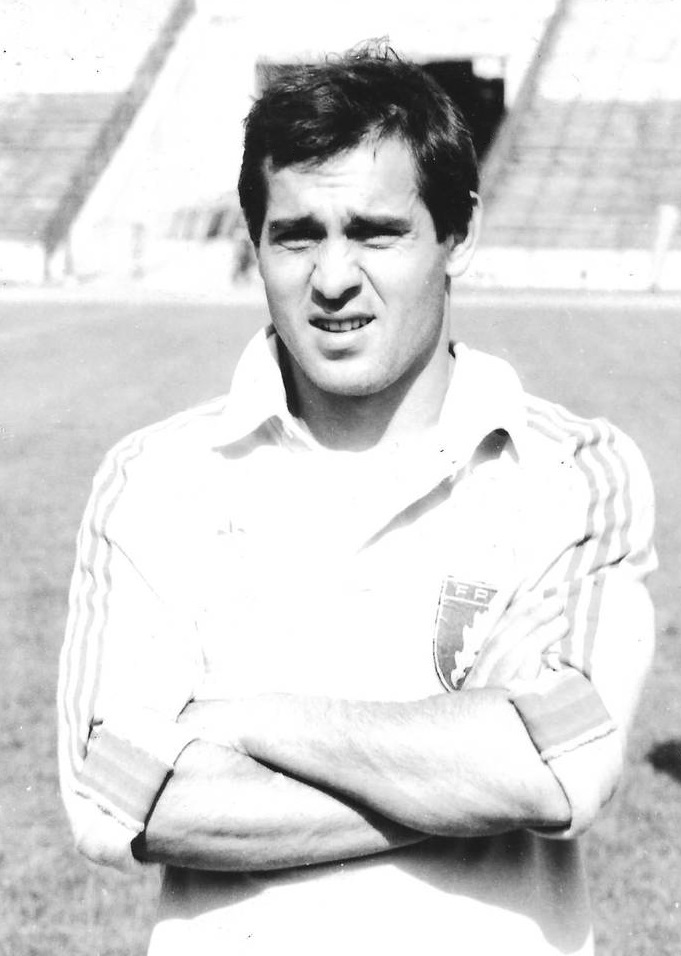


The 1924 Romania Olympic team are the only Romanian inductee to have been inducted into the IRB Hall of Fame. Nicolae Mărăscu captained the Hall of Fame side. The highest point of Mărăscu's career was at the 1924 tournament, earning Romania the bronze medal. He played as a centre and had five caps, without ever scoring, since his first match, in 1919, a 48–5 loss to France, in Paris, for the Inter-Allied Games, and his last, at 22 May 1927, in a 21–5 win over Czechoslovakia, in Bratislava.
Iulian Dumitraș was Romania's main man. Dumitraș was known to be one of the Oaks' most gifted playmakers, with an accurate kicking boot and a penchant for sparking attacks. Having made his test debut in 2002, he went on to start in every match a Rugby World Cup 2007 in France, bringing plenty of experience to the nation. The then standing 1.88m and weighing in a 110 kg, Dumitraș was a punishing runner when he chimes into the line on attack, which he looked to do often, and he provided a solid and dependable last obstacle in defence.
Sorin Socol is regarded by many good judges as the then best player in the current squad and was one of the rocks of the Romanian forward pack. He has captained the most matches to date for Romania, between 2003 and 2011. A total of 61 tests, 36 of them were as captain. He captained Romania for the first time on 30 October 2003 during the 2003 Rugby World Cup match against Namibia. He went on and featured in the 2007 World Cup squad and eventually retired from all international rugby after the 2011 tournament. Socol had one of Romania's highest winning percentage as a captain of 63.88.
Florin Vlaicu is Romania's top ever point scorer and also the most capped player appearing in 104 tests so far. Vlaicu made his international debut in 2006 as a substitute against Ukraine. He played for Romania in the IRB Nations Cup and in their 2007 Rugby World Cup qualifying before appearing for them in the 2007 Rugby World Cup. He played two Tests at the World Cup as a substitute against both Scotland and the All Blacks. He also played at the 2011 and 2015 Rugby World Cups.
Cristian Petre is Romania's most recognized player after dominating the lock position for eleven years. He is one of Romania's most capped player with a total of 92 matches and a career span that started in 2001 against England and ended in 2012 against Italy. Petre has featured in three Rugby World Cups, first in 2003, going on to feature in 2007 and his last being in 2011. Petre has scored a total of six tries and had winning percentage of 55.43.
Cătălin Fercu is generally regarded as one of Romania's true global superstar of rugby union. Fercu is Romania's top try scorers. He had quickly made appearances on the international stage at a very young age and played against France and Scotland in the Autumn internationals in 2006. He also scored a try against the French. Fercu helped guide Romania to the 2007 Rugby World Cup as he played in the qualifier matches including the vital games against Georgia and Spain and scored a try against Spain in the game that sealed their qualification to the Rugby World Cup. Fercu was a late withdrawal from their Rugby World Cup squad in 2011 because he was not prepared to fly all the way to New Zealand. The Romanian side arrived in Christchurch to prepare for their first game of the tournament against Scotland in Invercargill on 10 September without Fercu, who failed to get on the plane when it left Romania.
Another one of the Oaks greatest players are Romeo Gontineac, represented Romania in four Rugby World Cups from 1995 to 2007. The hard running centre, who became the national coach in 2010, was capped 75 times for the nation, scoring 13 tries and a drop goal. During his career he played professionally in Romania, South Africa and France.
Members of the 1924 Olympics team
Coaches
Current coaching staff
The current (November 2025) coaching staff of the Romanian national team:
| Name | Nationality | Role |
|---|---|---|
| Iustin Ilioiu | ROU | Manager |
| David Gérard | FRA | Head coach |
| Juan Pablo Orlandi | ARG | Forwards coach |
| Raphaël Francois Saint-André | FRA | Assistant coach with the three quarters and skills |
| Benjamin Lapeyre | FRA | assistant coach – assistant coach and skills |
| Michaël Dallery | FRA | Head trainer with physical training |
| Paul Cere-Labourdette | FRA | Second coach with physical training & GPS |
| Daniel Carpo | ROU | Second coach with physical training & GPS |
| Petra Melinte | ROU | Doctor |
| Marius Todosi | ROU | Physiotherapist |
| Andrei Diaconeasa | ROU | Physiotherapist |
| Gilles Soirat | FRA | Video analyst |
| Fabian Bunu | ROU | Video analyst |
Former coaches
| Years | Coach |
|---|---|
| 1961–1965 | ROU Petre Cosmănescu |
| 1965–1968 | ROU Viorel Morariu |
| 1968–1972 | ROU Petre Cosmănescu |
| 1973–1974 | ROU Valeriu Irimescu |
| 1974–1981 | ROU Petre Cosmănescu |
| 1985–1987 | ROU Theodor Rădulescu |
| 1987–1989 | ROU Mihai Naca |
| 1989–1990 | ROU Theodor Rădulescu |
| 1991 | ROU Peter Ianusevici |
| 1992–1994 | ROU Theodor Rădulescu |
| 1994–1999 | ROU Mircea Paraschiv |
| 1999–2001 | ROU Eduard Suciu |
| 2002–2003 | FRA Bernard Charreyre |
| 2004 | FRA Phillipe Sauton |
| 2004 | FRA Robert Antonin |
| 2005–2007 | FRA Daniel Santamans |
| 2007–2008 | ROU Marin Moț |
| 2008–2009 | NZL Ellis Meachen |
| 2009 | ROU Marin Moț |
| 2009–2010 | FRA Serge Lairle |
| 2010–2011 | ROU Romeo Gontineac |
| 2012 | ROU Haralambie Dumitraș |
| 2013–2018 | WAL Lynn Howells |
| 2018 | FRA Thomas Lièvremont |
| 2019 | ROU Marius Țincu (interim) |
| 2019–2022 | ENG Andy Robinson |
| 2022–2023 | ROU Eugen Apjok |
| 2024– | FRA David Gérard |
Individual all-time records
Most caps
| # | Player | Pos | Span | Mat | Start | Sub | Won | Lost | Draw | % |
|---|---|---|---|---|---|---|---|---|---|---|
| 1 | Florin Vlaicu | Centre | 2006–2022 | 129 | 103 | 26 | 79 | 47 | 3 | 62.89 |
| 2 | Cătălin Fercu | Fullback | 2005–2020 | 109 | 107 | 2 | 73 | 33 | 3 | 68.34 |
| 3 | Florin Surugiu | Scrum-half | 2008–2024 | 108 | 68 | 40 | 64 | 43 | 1 | 62.35 |
| 4 | Mihai Macovei | Flanker | 2006–2023 | 104 | 93 | 11 | 60 | 43 | 1 | 58.98 |
| 5 | Valentin Calafeteanu | Scrum-half | 2004–2019 | 100 | 54 | 46 | 61 | 37 | 2 | 62.00 |
| 6 | Cristian Petre | Lock | 2001–2012 | 92 | 83 | 9 | 50 | 40 | 2 | 55.43 |
| 7 | Csaba Gál | Centre | 2005–2015 | 88 | 65 | 23 | 49 | 37 | 2 | 56.81 |
| 8 | Valentin Popârlan | Lock | 2007–2020 | 77 | 50 | 27 | 48 | 29 | 0 | 62.33 |
| 9 | Romeo Gontineac | Centre | 1995–2008 | 76 | 75 | 1 | 35 | 41 | 0 | 46.05 |
| Adrian Lungu | Centre | 1980–1995 | 76 | 75 | 1 | 40 | 36 | 0 | 52.63 | |
| Lucian Sîrbu | Scrum-half | 1996–2011 | 76 | 62 | 14 | 40 | 34 | 2 | 53.94 |
Last updated: United States vs Romania, 6 July 2024. Statistics include officially capped matches only.
Most tries
| # | Player | Pos | Span | Mat | Start | Sub | Pts | Tries |
|---|---|---|---|---|---|---|---|---|
| 1 | Cătălin Fercu | Fullback | 2005–2020 | 109 | 107 | 2 | 171 | 33 |
| 2 | Gabriel Brezoianu | Centre | 1996–2007 | 71 | 67 | 4 | 142 | 28 |
| 3 | Mihai Macovei | Flanker | 2006–2023 | 104 | 93 | 11 | 110 | 22 |
| 4 | Ionut Dumitru | Centre | 2013–2022 | 55 | 49 | 6 | 85 | 17 |
| 5 | Ovidiu Tonița | Flanker | 2000–2016 | 73 | 67 | 6 | 75 | 15 |
| 6 | Petre Mitu | Scrum-half | 1996–2009 | 41 | 36 | 5 | 339 | 14 |
| Cristian Săuan | Wing | 1999–2007 | 37 | 32 | 5 | 70 | 14 | |
| Marius Țincu | Hooker | 2002–2012 | 53 | 49 | 4 | 70 | 14 | |
| Florin Vlaicu | Centre | 2006–2022 | 129 | 103 | 26 | 1025 | 14 | |
| 10 | 4 players on 13 tries |
Last updated: United States vs Romania, 6 July 2024. Statistics include officially capped matches only.
Most points
| # | Player | Pos | Span | Mat | Pts | Tries | Conv | Pens | Drop |
|---|---|---|---|---|---|---|---|---|---|
| 1 | Florin Vlaicu | Centre | 2006–2022 | 129 | 1321 | 14 | 173 | 203 | 4 |
| 2 | Dănuț Dumbravă | Fly-half | 2002–2015 | 73 | 389 | 3 | 73 | 74 | 2 |
| 3 | Petre Mitu | Scrum-half | 1996–2009 | 41 | 339 | 14 | 55 | 53 | 0 |
| 4 | Ionuţ Tofan | Fly-half | 1997–2007 | 60 | 316 | 12 | 53 | 46 | 4 |
| 5 | Valentin Calafeteanu | Scrum-half | 2004–2019 | 100 | 233 | 11 | 32 | 37 | 1 |
| 6 | Neculai Nichitean | Fly-half | 1990–1997 | 28 | 201 | 0 | 18 | 45 | 10 |
| 7 | Ionel Melinte | Fullback | 2018–2024 | 29 | 176 | 9 | 37 | 19 | 0 |
| 8 | Cătălin Fercu | Fullback | 2005–2020 | 109 | 171 | 33 | 1 | 1 | 0 |
| 9 | Gelu Ignat | Fly-half | 1986–1992 | 25 | 148 | 1 | 15 | 32 | 6 |
| 10 | Alin Conache | Scrum-half | 2023– | 29 | 145 | 3 | 23 | 28 | 0 |
Last updated: Romania vs Uruguay, 22 November 2025. Statistics include officially capped matches only.
Most matches as captain
| # | Player | Pos | Span | Mat | Won | Lost | Draw | % | Pts | Tries |
|---|---|---|---|---|---|---|---|---|---|---|
| 1 | Mihai Macovei | Flanker | 2012–2023 | 72 | 47 | 24 | 1 | 68.10 | 105 | 21 |
| 2 | Sorin Socol | Lock | 2001–2011 | 36 | 22 | 12 | 2 | 63.88 | 25 | 5 |
| 3 | Stelian Burcea | Flanker | 2009–2018 | 19 | 13 | 6 | 0 | 68.42 | 15 | 3 |
| 4 | Mircea Paraschiv | Scrum-half | 1980–1987 | 18 | 7 | 10 | 1 | 41.66 | 16 | 4 |
| 5 | Haralambie Dumitras | Number 8 | 1989–1993 | 14 | 5 | 9 | 0 | 35.71 | 20 | 5 |
| Romeo Gontineac | Centre | 1999–2003 | 14 | 4 | 10 | 0 | 28.57 | 5 | 1 | |
| 7 | Tiberiu Brînză | Number 8 | 1994–1997 | 13 | 1 | 12 | 0 | 7.69 | 5 | 1 |
| 8 | Marius Țincu | Hooker | 2007–2012 | 11 | 5 | 6 | 0 | 45.45 | 0 | 0 |
| 9 | Costica Mersoiu | Number 8 | 2007–2008 | 10 | 6 | 4 | 0 | 60.00 | 5 | 1 |
| 10 | Alin Petrache | Number 8 | 1999–2004 | 7 | 3 | 4 | 0 | 42.85 | 0 | 0 |
Last updated: United States vs Romania, 6 July 2024. Statistics include officially capped matches only.
Most points in a match
| # | Player | Pos | Pts | Tries | Conv | Pens | Drop | Opposition | Venue | Date |
|---|---|---|---|---|---|---|---|---|---|---|
| 1 | Ionuţ Tofan | Fly-half | 32 | 2 | 8 | 2 | 0 | ROM Iași | 05/10/2002 | |
| 2 | Virgil Popisteanu | Fly-half | 27 | 0 | 12 | 1 | 0 | ROM Bucharest | 13/04/1996 | |
| Petre Mitu | Scrum-half | 27 | 1 | 2 | 6 | 0 | POR Lisbon | 04/02/2001 | ||
| 4 | Ionel Rotaru | Wing | 25 | 5 | 0 | 0 | 0 | ROM Bucharest | 13/04/1996 | |
| 5 | Florin Vlaicu | Fullback | 24 | 1 | 8 | 0 | 1 | ROM Bucharest | 22/03/2008 | |
| Florin Vlaicu | Centre | 24 | 1 | 2 | 5 | 0 | ROM Bucharest | 09/02/2013 | ||
| 7 | Gelu Ignat | Fly-half | 22 | 0 | 5 | 4 | 0 | ITA Treviso | 30/09/1990 | |
| Petre Mitu | Scrum-half | 22 | 1 | 4 | 3 | 0 | ROM Bârlad | 18/03/2001 | ||
| Ionuţ Tofan | Fly-half | 22 | 1 | 1 | 5 | 0 | RUS Krasnodar | 24/03/2002 | ||
| 10 | 5 players on 21 points |
Last updated: United States vs Romania, 6 July 2024. Statistics include officially capped matches only.
Most tries in a match
| # | Player | Pos | Pts | Tries | Conv | Pens | Drop | Opposition | Venue | Date |
|---|---|---|---|---|---|---|---|---|---|---|
| 1 | Gheorgie Rascanu | Flanker | 20 | 5 | 0 | 0 | 0 | ROM Bucharest | 02/05/1972 | |
| Cornel Popescu | Wing | 20 | 5 | 0 | 0 | 0 | ROM Bârlad | 18/10/1986 | ||
| Ionel Rotaru | Wing | 25 | 5 | 0 | 0 | 0 | ROM Bucharest | 13/04/1996 | ||
| 4 | Petre Motrescu | Wing | 16 | 4 | 0 | 0 | 0 | ROM Bucharest | 01/05/1977 | |
| Gheorghe Solomie | Wing | 20 | 4 | 0 | 0 | 0 | BEL Brussels | 04/10/1997 | ||
| Lucian Colceriu | Wing | 20 | 4 | 0 | 0 | 0 | ROM Bucharest | 02/05/1998 | ||
| 7 | 11 players on 3 tries |
Last updated: United States vs Romania, 6 July 2024. Statistics include officially capped matches only.
Media coverage
Romania's Rugby Europe Championship matches, mid year internationals and end of year internationals are currently televised by TVR.
Kits and symbols
Romania usually wears a yellow shirt with blue shorts and red socks as home uniform, with the exceptions being at the 1924 Olympic Games in Paris, where a light blue shirt with the Royal coat of arms was worn, as well in the 2003 Rugby World Cup, where a blue uniform was worn in all of the matches. Since 2014, the jerseys are adorned with Romanian traditional embroidering motifs and Dacian patterns.
The origins of the oak leaf as symbol for the Romanian team date from 1979, after former Romanian international player Viorel Morariu and then-president of Federația Română de Rugby, decided, with the consultation of specialists, that an oak leaf would be the team emblem (as during the touris in the British Isles and Ireland, the Communist coat of arms painted on the Romanian players' shirts became unrecognisable due to the rain). The Latin word for oak, "robur", also meant "strength" in that same language. In 1980, a new badge, a shield with an oak leaf (which made the Romanian team be nicknamed "Stejarii", which means "the oaks") and the acronym "FRR" on the top. The adoption of said emblem could be also seen as an act of defiance towards the then-ruling regime in Romania, whose approval was given to the Romanian federations's requests to be affiliated to the IRFB. After the 2003 Rugby World Cup, the oak leaf was seen without the shield, usually accompanied by the inscription "Rugby Romania".
File:Romanian_Rugby_Federation_Logo_2003-2010.png|2003-2010 emblem
Kit suppliers
| Period | Kit manufacturer | Shirt sponsor | |
|---|---|---|---|
| 1919–1985 | No supplier | No shirt sponsor | |
| 1985–1988 | Adidas | ||
| 1988–1989 | Bukta | ||
| 1989–1993 | Adidas | Rank Xerox | |
| 1994–1996 | Gilbert | No shirt sponsor | |
| 1996–1997 | Puma AG | ||
| 1997–2001 | Gilbert | No shirt sponsor | |
| 2002 | Petrom | ||
| 2003–2008 | O'Neills | Orange | |
| 2009 | No shirt sponsor | ||
| 2010 | CEC Bank | ||
| 2011 | KooGa | ||
| 2012 | Tall Ball | ||
| 2012 | Samurai Sportswear (worn in the 2012 end of the year internationals) | ||
| 2013–2016 | BLK | ||
| 2016–2019 | Mizuno | ||
| 2020 | Tall Ball | ||
| 2021 | Macron | ||
| 2021 | Stanleybet (worn in the 2021 mid-year internationals) | ||
| 2021– | No shirt sponsor | ||
| 2023 | Kaufland |
References
References
- ({{langx. ro. Echipa națională de rugby a României)
- Although not regarded as a first-tier team in more recent times, their history includes an away draw against Ireland, and wins against four (France, Italy, Scotland, Wales) of the other [[Six Nations Championship]] teams.[http://www.rugbydata.com/romania/teamsbeaten/ Men's International Rugby Union Teams beaten by Romania]
- "Independent Appeal Committee decision regarding Romania and Spain".
- "Rugby Teams, Scores, Stats, News, Fixtures, Results, Tables - ESPN".
- [[1974–1975 FIRA Trophy]]
- (1982). "Rothmans Rugby Yearbook 1982–83". Rothmans Publications Ltd.
- "IRB".
- [http://www.worldrugby.org/news/211009 November gain or pain?] Retrieved December 2016
- (16 May 2018). "Russia qualify for 2019 Rugby World Cup after Romania, Belgium and Spain sanctioned for ineligible players".
- [https://www.worldrugby.org/news/337505 Disciplinary update: Romania and Spain to appeal disputes committee outcomes]
- [https://www.worldrugby.org/news/340527 Independent Appeal Committee decision regarding Romania and Spain]
- (8 May 2020). "Rugby: România - deținătoarea necunoscută a unui record mondial". Romanian Rugby Federation.
- "Games played between Romania and France".
- Was played the first round of [[2003 Rugby World Cup – European qualification]]
- Was played as the second round of [[2003 Rugby World Cup – European qualification]]
- relegation and promotion on two year based ranking
- [http://stats.espnscrum.com/statsguru/rugby/stats/index.html?class=1;orderby=team;team=12;template=results;type=team;view=opposition Romania statistics]
- [https://rugbyromania.ro/37-de-jucatori-convocati-pentru-meciul-cu-canada-primul-din-kaufland-games-trilogy-din-luna-noiembrie/ 37 players called up for November matches]
- Coyle, Danny. (17 September 2014). "20 Biggest Shock Results in Rugby History". The Bleacher Report.
- https://rugbyromania.ro/37-de-jucatori-convocati-pentru-meciul-cu-canada-primul-din-kaufland-games-trilogy-din-luna-noiembrie/
- "Rugby Teams, Scores, Stats, News, Fixtures, Results, Tables - ESPN".
- "Rugby Teams, Scores, Stats, News, Fixtures, Results, Tables - ESPN".
- "Rugby Teams, Scores, Stats, News, Fixtures, Results, Tables - ESPN".
- "Rugby Teams, Scores, Stats, News, Fixtures, Results, Tables - ESPN".
- "Rugby Teams, Scores, Stats, News, Fixtures, Results, Tables - ESPN".
- "Rugby Teams, Scores, Stats, News, Fixtures, Results, Tables - ESPN".
- "Authentic Jerseys - 1924 Romania Jersey".
- Nazare, Daniel. (2021-06-27). "Naționala de rugby, echipament cu însemnele tradiționale! Chimirul, din nou pe tricoul "stejarilor"".
- Iasi, Ziarul de. "Motive tradiţionale pe tricourile rugbiştilor".
- Gorjeanul, Echipa. (2015-09-14). "Motive schilereşti, pe echipamentul grupării de rugby a României {{!}} Ştiri locale de ultima ora, stiri video - Ştiri Gorjeanul.ro".
- (2023-08-03). "Colours and patterns from tradition on Romania's new jerseys for the Rugby World Cup 2023".
- "Un stejar pentru Stejarii României: Campanie de plantare de copaci în numele echipei naţionale de rugby".
- "ROMÂNIA - IRLANDA / ISTORIE: Cum a înlocuit Frunza de Stejar stema Republicii Socialiste România pe tricourile rugbyștilor".
- Journal, Romania. (2023-05-29). "Oak planting event on behalf of the national rugby team".
- "Povestea frunzei de stejar".
- Burlacu, Marian. (2013-09-21). "L-au fentat pe Ceauşescu! Afilierea Federaţiei Române de Rugby la forul mondial, în 1987, s-a făcut fără aprobarea partidului comunist".
- (2023-05-29). "Un stejar pentru Stejarii României: Campanie de plantare de copaci în numele echipei naționale de rugby - Jurnal de Sustenabilitate".
- Burlacu, Marian. (2013-09-21). "L-au fentat pe Ceauşescu! Afilierea Federaţiei Române de Rugby la forul mondial, în 1987, s-a făcut fără aprobarea partidului comunist".
- [http://www.ilmuseodelrugby.it/index.php/component/k2/item/824-n1-vlad-romania-andrea-castellani Museo del Rugby - N.1, Gabriel Vlad (Andrea Castellani)]
This article was imported from Wikipedia and is available under the Creative Commons Attribution-ShareAlike 4.0 License. Content has been adapted to SurfDoc format. Original contributors can be found on the article history page.
Ask Mako anything about Romania national rugby union team — get instant answers, deeper analysis, and related topics.
Research with MakoFree with your Surf account
Create a free account to save articles, ask Mako questions, and organize your research.
Sign up freeThis content may have been generated or modified by AI. CloudSurf Software LLC is not responsible for the accuracy, completeness, or reliability of AI-generated content. Always verify important information from primary sources.
Report