From Surf Wiki (app.surf) — the open knowledge base
Romani people in Bulgaria
Ethnic group

Ethnic group
| Field | Value | |
|---|---|---|
| group | Romani people in Bulgaria | |
| native_name | Ромите в България | |
| Roma andi Bulgariya | ||
| population | 325,343 (2011 Census; 4.4%)European Commission's average estimate: 750,000 (last updated 14 September 2010) | |
| unofficial estimates: 800,000 | ||
| popplace | Nationwide, rural and urban. Centered in cities with the largest concentrations in Sliven, Sofia, and Pazardzhik. | |
| rels | {{plainlist | |
| * 2021 census in Bulgaria on those identified as Romani:<ref name | "auto" p.10 | |
| Unaffiliated (29.5%) | ||
| langs | {{plainlist | |
| image | Bulgaria Ethnic composition Roma census 2011.svg |
Roma andi Bulgariya unofficial estimates: 800,000
- 2021 census in Bulgaria on those identified as Romani: Unaffiliated (29.5%)
- Eastern Orthodox Christianity (28.4%)
- Islam (17.2%)
- Protestant (12.1%)
- Balkan Romani (84%)
- Bulgarian (7%)
- Turkish (7%) (by mother tongue; 2011 census)
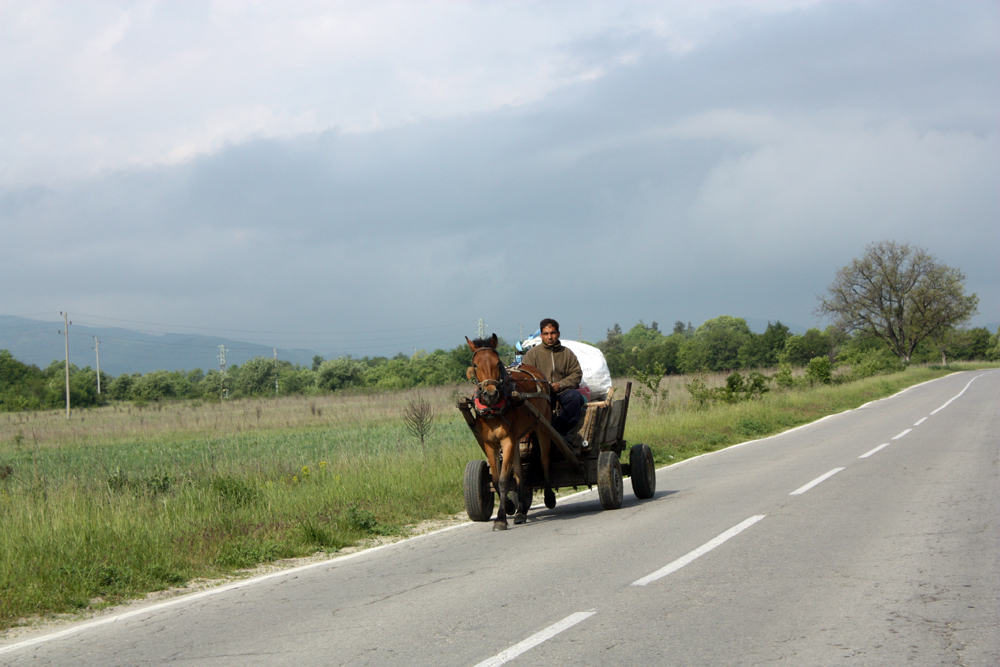

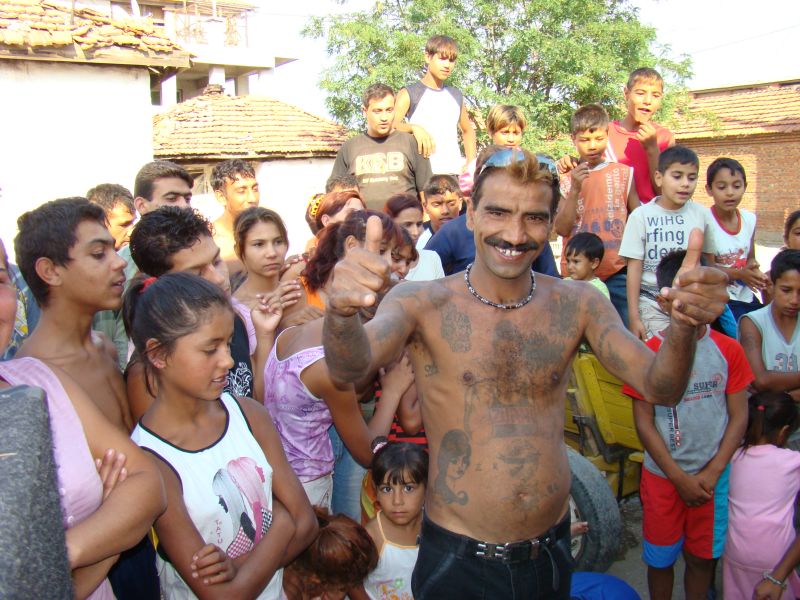
Romani people in Bulgaria (; ) constitute Europe's densest Romani minority. The Romani people in Bulgaria may speak Bulgarian, Turkish or Romani, depending on the region.
Statistics
According to the latest census in 2011, the number of the Romani is 325,343, constituting 4.4% of the total population, in which only one ethnic group could be opted as an answer and 10% of the total population did not respond to the question on ethnic group. The former head of the National Statistical Institute of Bulgaria, Reneta Indzhova claims to have been fired by the Bulgarian Prime Minister in 2014 for attempting to check the actual number of the Romani and implied that neither the census did enumerate the Romani, nor its statistics did provide the "real data".
The previous 2001 census recorded 370,908 Romani (4.7% of the population). The preceding 1992 census recorded 313,396 Romani (3.7% of the population), while a secret backstage 1992 census ordered by the Ministry of Interior recorded a figure of 550,000 Romani (6.5% of the population); the Ministry of Interior ordered at least two other secret censuses to enumerate the Romani in denial, the one in 1980 recorded 523,519 Romani, while the one in 1989 recorded that the number of the Romani was 576,927 (6.5% of the population) and that over half of the Romani identified as Turks. The majority of the estimated 200,000-400,000 Muslim Romani tend to identify themselves as ethnic Turks, some deny their origin, or identify as Bulgarians.
The demographic collapse in Bulgaria that has affected most ethnic groups in the country has not had the same effect on the Romani. According to data of the European Commission, to which Eurostat belongs, the Romani in Bulgaria number 750,000 and they constitute 10.33% of the population.
Overview
In Bulgaria, Romani are most commonly referred as Tsigani (цигани, pronounced ), an exonym that some Romani resent as derogatory and others embrace. The form of the endonym Roma in Bulgarian is romi (роми). They are generally younger, according to the 2011 census they make up 10.2% of the population aged up to 9 years, on a note 14.9% of the total age group being non-respondents.
In Bulgaria Roma are disliked: 59% to 80% of non-Roma have negative feelings towards Roma. Roma constitute the majority of prison population according to self-identification of inmates, with 7000 prisoners (70%) out of 10,000 in total. According to 2002 data, the poverty rate among Romani is 61.8%, in contrast to a rate of 5.6% among Bulgarians. In 1997, 84% of Bulgarian Romani lived under the poverty line, compared with 32% of ethnic Bulgarians. In 1994, the poverty rate of Romani was estimated at 71.4%, compared with 15% for Bulgarians. The unemployment rate of non-Romani in Bulgaria was 25%, while of the Romani it was 65% in 2008, for instance in neighbouring Romania and Hungary the Romani had much lower unemployment rates—14% and 21% respectively. In 2016 23% of the Romani in Bulgaria are employed. The unemployed receive more financial aid than other citizens, especially for children, which may have prompted the higher birth rates of the Romani.
In 2011 the share of Romani with university degree reached 0.3%, while 6.9% have secondary education; the same share was 22.8%/47.6% for Bulgarians.
The Bulgarians are more negative towards the Romani than the Turks, with 30-50% rejecting various interactions and friendship with Romani. Although only 25% of Romani parents object to their children to be married with a Bulgarian and a Turk, only 4% of the Bulgarians and 6% of the Turks would marry a Romani person. Romani are avoided by the majority traditionally, especially for marriage, however, there are ethnically mixed people with Gypsy and Bulgarian or Turk parents who are called жоревци "zhorevtsi" (from the common name George). It is more common for a Roma Man to marry a Bulgarian or Turk woman, than for a Roma woman to marry a non-Romani Man.
Bulgaria participates in the Decade of Roma Inclusion, an international initiative to improve the socio-economic status and social inclusion of Roma, with eight other governments committing themselves to "work toward eliminating discrimination and closing the unacceptable gaps between Roma and the rest of society".{{cite web | access-date = 2007-04-20}} The rights of the Romani people in the country are also represented by political parties and cultural organizations, most notably the Civil Union "Roma". Famous Roma from Bulgaria include musicians Azis, Sofi Marinova and Ivo Papazov, surgeon Aleksandar Chirkov, politicians Toma Tomov and Tsvetelin Kanchev, footballer Marian Ognyanov, and 1988 Olympic boxing champion Ismail Mustafov.
History
Origin
The ancestors of the Romani people originated in South Asia, presumably from the present-day regions of Punjab, Rajasthan and Sindh.
Linguistic evidence reveals that the roots of the Romani language lie in what is now India: the language has grammatical characteristics of Indian languages and shares with them a big part of the basic lexicon, for example, body parts or daily routines. More exactly, Romani shares the basic lexicon with Hindi and Punjabi. It shares many phonetic features with Marwari, while its grammar is closest to Bengali.
The language of the Romani people is called Romani [romaňi čhib]. It is an Indo-Aryan language, which belongs to the Indo-Iranian branch of the Indo-European family. The language retains much Indic morphology, phonology and lexicon, although it has been significantly influenced by contact with other languages, particularly Persian, Armenian, Byzantine Greek. It's grammar and phonology also reflect South Slavic influence.
Genetic findings in 2012 suggest the ancestors of the Romanies originated in present-day northwestern India and migrated as a group. According to a genetic study in 2012, the ancestors of present Scheduled Castes and Scheduled Tribes populations of northern India, traditionally referred to collectively as the Ḍoma, are the likely ancestral populations of the modern European Roma.
In February 2016, during the International Roma Conference, the Indian Minister of External Affairs stated that the people of the Roma community were children of India. The conference ended with a recommendation to the Government of India to recognize the Roma community spread across 30 countries as a part of the Indian diaspora.
Migration to Bulgaria
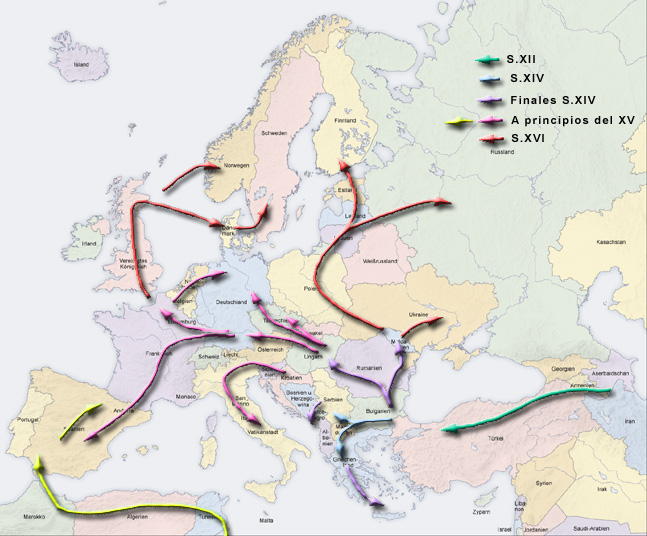
The Romani people emigrated from South Asia possibly as early as the 5th century. They settled in Persia, followed by Armenia, before arriving in the ancient Greek city of Byzantium likely in the 9th century, though possibly as early as the 7th century. The shift in the self-identification of the Romani people from "Doma" to "Roma"/"Romani" is believed to have taken place during the Romanies' arrival and settlement in the Balkans during the Byzantine era. "Roma"/"Romani" is believed to have been influenced by the Medieval Greek word Romaios, meaning Eastern Roman, referring to the inhabitants of the Byzantine Empire—which they called Romanía. It is suspected that given the proximity between Bulgaria and historical Byzantium, it is possible that the Romani people may have been present in the territory of present-day Bulgaria as early as the 7th century.
Bulgarian ethnologists Elena Marushiakova and Veselin Popov assert that no direct evidence indicates when precisely the Romani first appeared in Bulgaria. While they mention that other Bulgarian and international scholars have associated the 1387 Charter of Rila term Agoupovi Kleti with the Romani, they hold that the term refers to seasonal lodgings for mountain herdsmen. Instead, they delimit the mass settlement of Romani in Bulgarian territory between the 13th and 14th centuries, supporting this time frame with 13th- and 14th-century documents referring to Romani presence in the surrounding Balkan states. According to Bulgarian sociologist Ilona Tomova, Ottoman fiscal reports between the 15th and 17th centuries indirectly indicate Romani settlement in Bulgaria since the 13th century, as most registered Romani possessed Slavonic names and were Christians.
"Although the largest Roma migration wave to the Bulgarian lands seems to have occurred in the 13th and 14th centuries, many Roma arrived with the Ottoman troops, accompanying army craftsmen and complementary military units."
In addition, during the 14th and 15th centuries, Muslim Romani arrived in Bulgaria with the Ottoman rule, serving as auxiliaries, craftsmen, musicians and other professions. Unlike the Ottoman Empire's other subjects in the millet system, Romani were governed based on their ethnicity, not their religious affiliation. Ottoman tax records first mention Romani in the Nikopol region, where 3.5% of the registered households were Romani. Under Mehmed II's reign, all Romani – Christian and Muslim – paid a poll-tax that was otherwise imposed only on non-Muslims.
During the 16th century, Suleiman I enacted laws to prohibit the mingling of Muslim and Christian Romani and to administer taxes collected from the Romani: the 1530 Gypsies in the Rumelia Region Act and a 1541 law for the Romani sancak. Muslim Romani were taxed less than Christian Romani, yet they were taxed more than other Muslims for not adhering to Islamic laws and customs. Ottoman imperial assembly registers from 1558 to 1569 characterize the Romani as ehl-i fesad (people of malice), charging them with crimes such as prostitution, murder, theft, vagrancy and counterfeiting.
Groups


Roma in Bulgaria are not a unified community in culture and lifestyle. The most widespread group of the Romani in the country are the yerli or the 'local Roma', who are in turn divided into Bulgarian Gypsies (Dasikane Roma) and Turkish Gypsies (Horahane Roma). The former are Christian (Eastern Orthodox and some few are believe in Evangelicalism), while the latter are Cultural Muslims. Many of the Muslim Romani or the so-called Turkish Roma (Turkish Gypsies) are usually well integrated in the ethnic Turkish society in Bulgaria. Many possess Turkish ethnic identity and speak Turkish in addition to Romani. According to the latest census in 2021, of Romani 17.2% are Muslims. Muslim Romani can be divided into several linguistic groups: for example the Horahane Roma, who speak only Romani (although they know Turkish or Bulgarian) and identify themselves as Horahane Roma; Horahane Roma whose language is a mix between Balkan Romani and Turkish; Horahane Roma who use only Turkish (rarely Bulgarian and Romani); and Horahane Roma who can only speak Turkish, identifying themselves as Turks.
Tatar Roma in Bulgaria are found in South Dobruja, mostly in Balchik and Dobrich. They are from the subgroup davulcu (davuldži) "drummer" of Urmacheli. The Tatar Roma people make a group division in their community as follow: Kırım (Crimea), Çorapçı (Hosier), Nogay (Nogai) and Roman Tatarları (Romani Tatars). They don't know Romani, they speak Tatar and also Turkish.
The Futadžides Romani dialect or Futadžiite, is spoken by the Muslim Romani Futacı (Fouta towel/Peshtemal maker, from Haskovo and Haskovo Municipality but also some of them live in Stara Zagora and Plovdiv and East Thrace in Turkey too. It is a very strong Turkish influenced Romani dialect.
In Ottoman archives from the 18th and 19th centuries, a special sub-group of 4 clans of Turkish-speaking Nomads of Alevism faith, who did not speak Romany was mentioned, namely the Turkmen Kiptileri. In the past, this group had strong contact with Turkmen tribes, it is suspected that they are the same as Abdal of Turkey.
A subgroup of the Bulgarian Gypsies in southern Bulgaria, the Asparuhovi bâlgari ("Asparuh Bulgarians") — that is known also as stari bâlgari ("Old Bulgarians"), sivi gâlâbi ("Grey Doves", "Grey Pigeons"), or demirdzhii — self-identify as the descendants of blacksmiths for Khan Asparuh's army.{{cite journal | access-date = 2009-02-24 |access-date=2009-02-24
Demographics

.PNG)


According to the 2011 census of the population of Bulgaria, there are 325,343 Romani in Bulgaria,
Most of the Roma, 66%, are young children and adults up to 29 years old, the same group constitutes 37% among ethnic Bulgarians, while 5% of Roma are 60 years and over, Bulgarians are 22%.
From the 1992 census to the 2001 census, the number of Romani in the country has increased by 57,512, or 18.4%. The Romani were only 2.8% in 1910 and 2.0% in 1920.
While the Romani are present in all provinces of Bulgaria, their highest percentages are in Montana Province (12.5%) and Sliven Province (12.3%) and their smallest percentage is in Smolyan Province, where they number 686{{cite web | access-date = 2006-06-18
Varbitsa is possibly the only urban settlement where the Romani are the most numerous group. The largest Romani quarters are Stolipinovo in Plovdiv and Fakulteta in Sofia. The number of places where Romani constitute more than 50% of the population has doubled from the 1992 to the 2001 census. The largest village with a Romani majority is Gradets in Kotel Municipality.
| Province | Roma population (census 2011) | % |
|---|---|---|
| Blagoevgrad Province | 9,739 | 3.43% |
| Burgas Province | 18,424 | 4.97% |
| Dobrich Province | 15,323 | 8.81% |
| Gabrovo Province | 1,305 | 1.13% |
| Haskovo Province | 15,889 | 6.99% |
| Kardzhali Province | 1,296 | 0.99% |
| Kyustendil Province | 8,305 | 6.36% |
| Lovech Province | 5,705 | 4.38% |
| Montana Province | 18,228 | 12.71% |
| Pazardzhik Province | 20,350 | 8.27% |
| Pernik Province | 3,560 | 2.84% |
| Pleven Province | 9,961 | 4.15% |
| Plovdiv Province | 30,202 | 4.87% |
| Razgrad Province | 5,719 | 5.00% |
| Ruse Province | 8,615 | 3.98% |
| Shumen Province | 13,847 | 8.24% |
| Silistra Province | 5,697 | 5.11% |
| Sliven Province | 20,478 | 11.82% |
| Smolyan Province | 448 | 0.47% |
| Sofia City Province | 18,284 | 1.55% |
| Sofia Province | 17,079 | 7.40% |
| Stara Zagora Province | 24,018 | 7.80% |
| Targovishte Province | 7,767 | 7.27% |
| Varna Province | 13,432 | 3.16% |
| Veliko Tarnovo Province | 3,875 | 1.66% |
| Vidin Province | 7,282 | 7.66% |
| Vratsa Province | 10,082 | 6.18% |
| Yambol Province | 10,433 | 8.48% |
| Total | 325,343 | 4.87% |
| Province | Ministry of Interior 1989 | RSC 2021 | PROUD ROMA 2021 | Number | % | Number | % | Number | % | Total | 576,927 | 6.4% | 229,131 | 3.51% | 646,950 | 9.92% |
|---|---|---|---|---|---|---|---|---|---|---|---|---|---|---|---|---|
| Blagoevgrad Province | 16,100 | 4.6% | 18,900 | 6.78% | 19,950 | 7.16% | ||||||||||
| Burgas Province | 37,894 | 8.4% | 30,000 | 8.32% | ||||||||||||
| Dobrich Province | 23,665 | 9.2% | 5,000 | 6.30% | 7,000 | 8.83% | ||||||||||
| Gabrovo Province | 5,920 | 3.4% | 5,000 | 5.04% | ||||||||||||
| Haskovo Province | 13,488 | 4.5% | 20,000 | 9.96% | ||||||||||||
| Kardzhali Province | 9,843 | 3.3% | 12,000 | 9.25% | ||||||||||||
| Kyustendil Province | 8,463 | 4.4% | 14,000 | 12.75% | 15,000 | 13.66% | ||||||||||
| Lovech Province | 17,746 | 8.8% | 7,000 | 5.97% | ||||||||||||
| Montana Province | 28,813 | 12.9% | 5,700 | 5.08% | 30,000 | 26.71% | ||||||||||
| Pazardzhik Province | 45,705 | 14.0% | 22,244 | 10.34% | 49,000 | 22.77% | ||||||||||
| Pernik Province | 38 | 0.0% | 5,000 | 4.42% | ||||||||||||
| Pleven Province | 24,870 | 6.9% | 3,506 | 1.65% | 35,000 | 16.45% | ||||||||||
| Plovdiv Province | 45,333 | 6.0% | 18,900 | 3.02% | 87,000 | 13.89% | ||||||||||
| Razgrad Province | 15,213 | 7.7% | 5,400 | 5.59% | 12,000 | 12.43% | ||||||||||
| Ruse Province | 16,306 | 5.4% | 11,000 | 6.06% | ||||||||||||
| Shumen Province | 20,128 | 7.9% | 9,500 | 6.58% | 18,000 | 12.46% | ||||||||||
| Silistra Province | 12,826 | 7.4% | 10,000 | 10.92% | ||||||||||||
| Sliven Province | 46,491 | 19.4% | 42,900 | 27.31% | 44,000 | 28.01% | ||||||||||
| Smolyan Province | 548 | 0.3% | 3,000 | 3.14% | ||||||||||||
| Sofia City Province | 38,000 | 3.2% | 64,081 | 3.76% | 79,000 | 4.64% | ||||||||||
| Sofia Province | 14,136 | 4.6% | ||||||||||||||
| Stara Zagora Province | 28,289 | 6.9% | 40,000 | 13.98% | ||||||||||||
| Targovishte Province | 17,035 | 10.0% | 10,000 | 10.67% | ||||||||||||
| Varna Province | 20,682 | 4.5% | 7,000 | 1.64% | 20,000 | 4.68% | ||||||||||
| Veliko Tarnovo Province | 20,880 | 6.2% | 20,000 | 10.03% | ||||||||||||
| Vidin Province | 15,115 | 9.1% | 20,000 | 26.85% | ||||||||||||
| Vratsa Province | 22,160 | 7.7% | 12,000 | 8.01% | 23,000 | 15.36% | ||||||||||
| Yambol Province | 11,240 | 5.5% | 15,000 | 14.47% |
Age structure
Although Roma constitute only 4.4 percent of the Bulgarian population, they constitute around 12 percent of all children aged between 0 and 9 years old according to the 2011 census. In some municipalities, like Valchedram and Ruzhintsi in northwestern Bulgaria, more than the half of all children belong to the Roma ethnicity.
| Roma population by age group and share of total Bulgarian population as of 2011 |
|---|
| Ethnic group |
| Roma |
| Percentage of Bulgarian population |
Problems of exclusion and discrimination
In a UNDP/ILO survey, Bulgarian Romani identified unemployment, economic hardship and discrimination in access to employment as major problems.
The Council of Europe body ECRI stated in its June 2003 third report on Bulgaria that Romani encounter "serious difficulties in many spheres of life", elaborating that:
"The main problems stem from the fact that the Roma districts are turning into ghettos. [...] Most Roma neighbourhoods consist of slums, precariously built without planning permission on land that often belongs to the municipalities [...]. As the Bulgarian authorities have not taken steps to address the situation, the people living in these districts have no access to basic public services, whether health care, public transport, waste collection or sanitation."{{cite web | access-date = 2009-02-22 }}
To which the Bulgarian government answered officially in the same document:
ECRI has correctly observed that members of the Roma community encounter "serious difficulties" "in many spheres of life". The rest of this paragraph, however, regrettably contains sweeping, grossly inaccurate generalizations ... Due to various objective and subjective factors, many (but by no means all!) members of the Roma community found it particularly difficult to adapt to the new realities of the market economy. "...Romani mahala-dwellers are still captives of the past, holding onto and behaving according to preconceptions about the socialist welfare state that clash with the modern realities of a market economy and privatisation". (Skopje Report, p.6)
More concretely, the allegation that the people living in these districts "have no access to basic public services" is largely inaccurate. Certain difficulties (though not remotely on the scale suggested) do exist in this regard, and the authorities are taking concrete measures to address them (see above). However, as the Advisor on Roma and Sinti issues at the OSCE, N. Gheorghe remarked during the Skopje meeting: "...many of the Roma confuse public services with rights to which they are entitled and which are guaranteed by the welfare state" (Skopje Report, p.16). ...
Concerning the issue of the electricity supply it should be noted that dwellers of such neighbourhoods sometimes refuse to pay their electricity bills. This attitude could at least in part be explained by the fact that "...Romani mahala-dwellers believe they have rights as citizens to electricity and other services, and that the state has an obligation to provide and to a large extent to subsidize them" (Skopje Report, p. 7). In these circumstances electricity suppliers may find themselves with no other option but to "sometimes cut off" the electricity supply in order to incite the consumers to commence honouring their debts. Such cut-offs are part of standard practice and the ethnic origin of the consumers is irrelevant in these cases.
With respect to welfare benefits, which allegedly "in some cases, moreover, Roma do not receive" while "they are entitled" to them, it should be underscored that Bulgaria's social welfare legislation sets uniform objective criteria for access to welfare benefits for all citizens, irrespective of their ethnic origin (furthermore, any discrimination, including on ethnic grounds is expressly prohibited by law). The question of who is entitled or not entitled to welfare benefits is determined by the relevant services on the basis of a means test. Every single decision of these services must be (and is) in written form and clearly motivated. If a claimant is not satisfied with a decision, he/she is entitled to appeal it before the regional welfare office. Consequently, this allegation of ECRI is also erroneous."
A monitoring report by the Open Society Institute found that Romani children and teenagers are less likely to enroll in primary and secondary schools than the majority population and less likely to complete their education if they do. Between 60% and 77% of Romani children enroll in primary education (ages 6–15), compared to 90-94% of ethnic Bulgarians. Only 6%-12% of Romani teenagers enroll in secondary education (ages 16–19). The drop-out rate is significant, but hard to measure, as many are formally enrolled but rarely attend classes.
The report also indicates that Romani children and teenagers attend de facto segregated "Roma schools" in majority-Romani neighbourhoods and villages. These "Roma schools" offer inferior quality education; many are in bad physical condition and lack necessary facilities such as computers. As a result, Romani literacy rates, already below those for ethnic Bulgarians, are much lower still for Romani who have attended segregated schools.
The official position of the Bulgarian government to such segregation is:
"There had never been a policy of "segregation" of Roma children in the national education system. The fact that in some neighbourhoods in certain towns particular schools were attended predominantly by pupils of Roma origin was an unintended consequence of the administrative division of the school system. According to the rules valid for all children irrespective of their ethnic origin, admittance to any public school was linked administratively to the domicile of the family. In neighbourhoods where the population was predominantly of Roma origin, this system produced schools, attended predominantly by pupils of Roma origin. It is precisely this situation that the authorities are taking special measures to rectify. Therefore, the word "segregation" with respect to Roma children is inaccurate."
Romani children are often sent to special schools for children with intellectual disabilities or boarding schools for children with "deviant behavior" (so-called "delinquent schools"). According to reports of the Bulgarian Helsinki Committee (BHC), Romani made up half the number of students in schools for children with intellectual disabilities and about two-thirds of the students of the boarding schools, where the BHC found a variety of human rights abuses, including physical violence. In both sets of special schools, the quality of teaching is very poor and essential things such as desks, textbooks and teaching materials are inadequate or altogether lacking.
On two occasions, the European Committee of Social Rights has found violations of the European Social Charter in situations with Bulgaria's Romani population: in 2006, concerning right to housing, and in 2008, concerning right to health—in both cases on complaints from the European Roma Rights Centre.
Political representation
According to a report of Politeia, "For the most of the 1990s the only representation the Romani got was through the mainstream political parties. This was a very limited form of representation in which one or two Romani had a symbolic presence in Parliament during each term." The Bulgarian Constitution does not allow political parties based on ethnic, religious, or racist principles or ideology. However, "Twenty one Roma political organizations were founded between 1997 and 2003 in Bulgaria [...]".{{cite web |access-date = 2007-07-20 |archive-url = https://web.archive.org/web/20120420200504/http://www.politeia.net/Themes/citizenship_and_participation/the_political_representation_of_the_roma_minority_in_bulgaria_1990_2005 |archive-date = 20 April 2012}}
In the 2005 Bulgarian parliamentary election, three Romani parties took part: Euroroma, Movement for an Equal Public Model (as part of a coalition led by the Union of Democratic Forces) and the Civil Union "Roma" (as part of a coalition led by the Bulgarian Socialist Party). Currently, the Movement for Rights and Freedoms represents Muslim Romani. The party relies on the biggest share of Romani people, 44% of the total Romani vote, including non-Muslims.
Romani integration programmes funded by the European Union have had mixed success.
Notes
References
Sources
- {{cite book
- {{cite book
- {{cite book
- {{cite book
- {{cite web | access-date = 18 June 2006 | archive-date = 3 March 2016 | archive-url = https://web.archive.org/web/20160303205431/http://www.ncedi.government.bg/IMIR.htm
- {{Cite web
References
- "2011 POPULATION CENSUS – MAIN RESULTS".
- (2016-12-13). "Roma integration in Bulgaria".
- (April 2011). "COMMUNICATION FROM THE COMMISSION TO THE EUROPEAN PARLIAMENT, THE COUNCIL, THE EUROPEAN ECONOMIC AND SOCIAL COMMITTEE AND THE COMMITTEE OF THE REGIONS". EUROPEAN COMMISSION.
- "Roma and Travellers Team. TOOLS AND TEXTS OF REFERENCE. Estimates on Roma population in European countries". Council of Europe Roma and Travellers Division.
- (2011). "Romani Routes: Cultural Politics and Balkan Music in Diaspora". Oxford University Press.
- "Bulgarian Gypsies | Encyclopedia.com".
- "Преброяване 2021: Етнокултурна характеристика на населението".
- (29 February 2016). "Can Romas be part of Indian diaspora?". khaleejtimes.com.
- "Критичен доклад относно Преброяването на населението и жилищния фонд, проведено към 1 февруари 2011 година".
- "Бивш премиер без пенсия. Как живее Ренета Инджова?".
- (2012). "NUMBER OF ROMA ETHNIC GROUP IN BULGARIA FROM THE LIBERATION TO THE BEGINNING OF THE 21ST CENTURY (BASED ON REGULAR CENSUSES) (Part 1)". Bulgarian Academy of Sciences.
- (2011-07-14). "WikiLeaks: Islam and Islamic Extremism in Bulgaria - Novinite.com - Sofia News Agency".
- (1 February 2013). "Multicultural Variations: Social Incorporation in Europe and North America". McGill-Queen's Press - MQUP.
- (7 July 2018). "Академик д-р Петър Иванов: България се обезбългарява, топим се с 9 души на час". dir.bg.
- (16 August 2017). "Акад. Петър Иванов: Циганите у нас са 1,5 млн. души и главоломно се увеличават".
- "Население по местоживеене, възраст и етническа група".
- "Population by districts, municipalities, settlements and age as of 01.02.2011".
- Carol Silverman. (2012-05-24). "Romani Routes: Cultural Politics and Balkan Music in Diaspora". Oup USA.
- "Само 10 000 в затвора, 7000 от тях са цигани".
- (2003). "World Economic and Social Survey 2003: Trends and Policies in the World Economy - United Nations".
- The Roma in Central and Eastern Europe: Avoiding the Dependency Trap, pp. 31, 39.
- (2001). "Poverty, Ethnicity, and Gender in Eastern Europe During the Market Transition". Bloomsbury Academic.
- (2002). "Poverty and Ethnicity: A Cross-country Study of Roma Poverty in Central Europe". World Bank Publications.
- (2011). "Romani Routes: Cultural Politics and Balkan Music in Diaspora". Oxford University Press.
- (29 November 2016). "EU agency study: Situation of Bulgarian Roma is appalling".
- (9 May 2019). "Bulgaria social briefing: BULGARIAN GOVERNMENTAL PARTY ISSUED A NEW "CONCEPT FOR THE INTEGRATION OF THE UNSOCIALISED GYPSY (ROMA) ETHNICITY" – China-CEE Institute".
- (2014). "Changing Inequalities and Societal Impacts in Rich Countries". OUP Oxford.
- "Gallup".
- (20 December 2007). "Две трети от българите приемат етническото разделение за нормално - Mediapool.bg".
- "Refworld | Bulgaria: Frequency of intermarriage between Roma and non-Romani Bulgarians; whether it is more common for a Romani man to marry outside the Romani community than it is for a Romani woman (1999 - March 2005)".
- (31 August 2017). "Refining the South Asian Origin of the Romani people". BMC Genetics.
- (8 November 2022). "Population Genetics of the European Roma—A Review". Genes.
- Hernández-Arrieta, Stefany. (7 August 2023). "The definition of being Romani".
- Beňo, Matúš. (5 November 2022). "Romani disappearing from Roma communities". The Slovak Spectator.
- Hancock, Ian F.. (2005). "We are the Romani People". Univ of Hertfordshire Press.
- Mendizabal, Isabel. (6 December 2012). "Reconstructing the Population History of European Romani from Genome-wide Data". Current Biology.
- (1998). "Nástin mluvnice slovenské romštiny (pro pedagogické účely)". Pedagogická fakulta Univerzity J. E. Purkyně v Ústí nad Labem.
- Hübschmannová, Milena. (1995). "Romaňi čhib – romština: Několik základních informací o romském jazyku". Bulletin Muzea Romské Kultury.
- King, Arienne. (2023-04-03). "Romani". World History Encyclopedia.
- "Romani and Slavic Contact".
- Sindya N. Bhanoo. (11 December 2012). "Genomic Study Traces Roma to Northern India". The New York Times.
- (23 October 2013). "5 Intriguing Facts About the Roma". Live Science.
- (2012). "The Phylogeography of Y-Chromosome Haplogroup H1a1a-M82 Reveals the Likely Indian Origin of the European Romani Populations". PLOS ONE.
- Popov, Shakir M.. (2023). "History of the Gypsies in Bulgaria and Europe: Roma".
- Rudolph, Joseph. (2021). "Roma Expelled from Persia".
- Popov, Shakir M.. (2023). "History of the Gypsies in Bulgaria and Europe: Roma".
- "Migration Overview".
- Hancock, Ian. We Are the Romani People (Ame sam e Rromane džene). Hatfield: University of Hertfordshire Press, 2002. pp. 6–7. "Some writers have suggested that its form was influenced, during our ancestors' time in the Byzantine Empire (then called Romanía), by the Greek word Romaios ('Roman')"
- Cheal, Yvonne. (2012). "Beyond the Stereotypes: A review of Gypsies/Roma/Travellers and the Arts in Wales".
- Marushiakova et al., ''Gypsies in the Ottoman Empire: a contribution to the history of the Balkans'', p. 19
- Tomova, ''Ethnic Dimensions of poverty in Bulgaria'', p. 15
- Marushiakova et al., ''Gypsies in the Ottoman Empire: a contribution to the history of the Balkans'', p. 26
- Celik, ''Exploring Marginality in the Ottoman Empire: Gypsies or People of Malice (Ehl-i Fesad) as Viewed by the Ottomans Authors'', p. 5
- Marushiakova et al., ''Gypsies in the Ottoman Empire: a contribution to the history of the Balkans'', p. 27
- Marushiakova et al. [https://web.archive.org/web/20000128221927/http://geocities.com/~patrin/bulgaria-hstry.htm "A History of the Roma in Bulgaria"]. Patrin Web Journal. Retrieved on 2009-03-01.
- Barany, ''The East European gypsies: regime change, marginality, and ethnopolitics'', p. 85
- Celik, ''Exploring Marginality in the Ottoman Empire: Gypsies or People of Malice (Ehl-i Fesad) as Viewed by the Ottomans Authors'', p. 20
- (2000). "The Bulgarian Gypsies – Searching their Place in the Society". Balkanologie.
- (2010-03-04). "Discrimination Against Roma Muslims of Europe". YouTube.
- "Education and Training".
- "Bulgaria : Introduction: 1/37".
- [https://www.researchgate.net/profile/Magdalena-Slavkova/publication/338372431_Evangelical_Gypsies_in_Bulgaria_Ciganite_evangelisti_v_Blgaria/links/5e141df892851c8364b5e0ef/Evangelical-Gypsies-in-Bulgaria-Ciganite-evangelisti-v-Blgaria.pdf Evangelical-Gypsies-in-Bulgaria-Ciganite-evangelisti-v-Blgaria], p. 20
- [https://www.researchgate.net/publication/237523690_Segmentation_vs_consolidation_The_example_of_four_Gypsy_groups_in_CIS Segmentation_vs_consolidation_The_example_of_four_Gypsy_groups_in_CIS], p. 150
- "GLM".
- (January 2013). "Compartmentalized grammar: The variable (non)-integration of Turkish verbal conjugation in Romani dialects | Romani Studies". Romani Studies.
- (January 2021). "Turcoman Gypsies in the Balkans: Just a Preferred Identity or More?". Romani History and Culture Festschrift in Honour of Prof. Dr. Veselin Popov / Hristo Kyuchukov, Sofiya Zahova, Ian Duminica.
- Jenny Engström. (2009). "Democratisation and the Prevention of Violent Conflict: Lessons Learned from ...". Ashgate Publishing.
- "Assoc. Prof. Dr. Kiril Kertikov, Europeisation or "tsiganisation" of Bulgaria. Institute of Sociology, Bulgarian Academy of Sciences.". In: Balkans'21, vol. 1, 2002, ISSN 1311-9583.
- WebDesign Ltd. www.webdesign-bg.eu. "Population".
- The 2011 percentage of the ethnic groups is calculated only from those who answered the optional question on ethnicity (6,680,980 in total) and does not include around 700,000 people who did not answer the question.
- "Малцинствената политика в България. Политиката на БКП към евреи, роми, помаци и турци (1944-1989)". IMIR.
- "Did Bulgaria manage to count its Roma?".
- "The "Proud Roma Free Europe" population census campaign in Bulgaria has ended successfully".
- "Format ref".
- "Data".
- "Project on Ethnic Relations".
- (2007). "Equal access to quality education for Roma, Bulgaria". Open Society Institute - EU Monitoring and Advocacy Program (EUMAP).
- Equal access to quality education for Roma, Bulgaria, pp. 18-20.
- Bulgarian Helsinki Committee. (2002). "Помощните училища в България (Remedial Schools in Bulgaria)". Bŭlgarski khelzinkski komitet }}{{cite book.
- "La Charte sociale européenne".
- "La Charte sociale européenne".
- "Парламентарни Избори 2005".
- "Selected Muslim Historical Sites and Monuments in Bulgaria". Syracuse University Surface.
- "Проучване на Алфа Рисърч: 44% от ромите са подкрепили ДПС".
- (21 June 2011). "Bulgarian Roma snub new EU plan for gypsy integration". EUbusiness.
This article was imported from Wikipedia and is available under the Creative Commons Attribution-ShareAlike 4.0 License. Content has been adapted to SurfDoc format. Original contributors can be found on the article history page.
Ask Mako anything about Romani people in Bulgaria — get instant answers, deeper analysis, and related topics.
Research with MakoFree with your Surf account
Create a free account to save articles, ask Mako questions, and organize your research.
Sign up freeThis content may have been generated or modified by AI. CloudSurf Software LLC is not responsible for the accuracy, completeness, or reliability of AI-generated content. Always verify important information from primary sources.
Report