From Surf Wiki (app.surf) — the open knowledge base
Robert Capa
Hungarian-American photographer (1913–1954)

Hungarian-American photographer (1913–1954)
| Field | Value |
|---|---|
| name | Robert Capa |
| image | RobertCapabyGerdaTaro.jpg |
| image_upright | 1 |
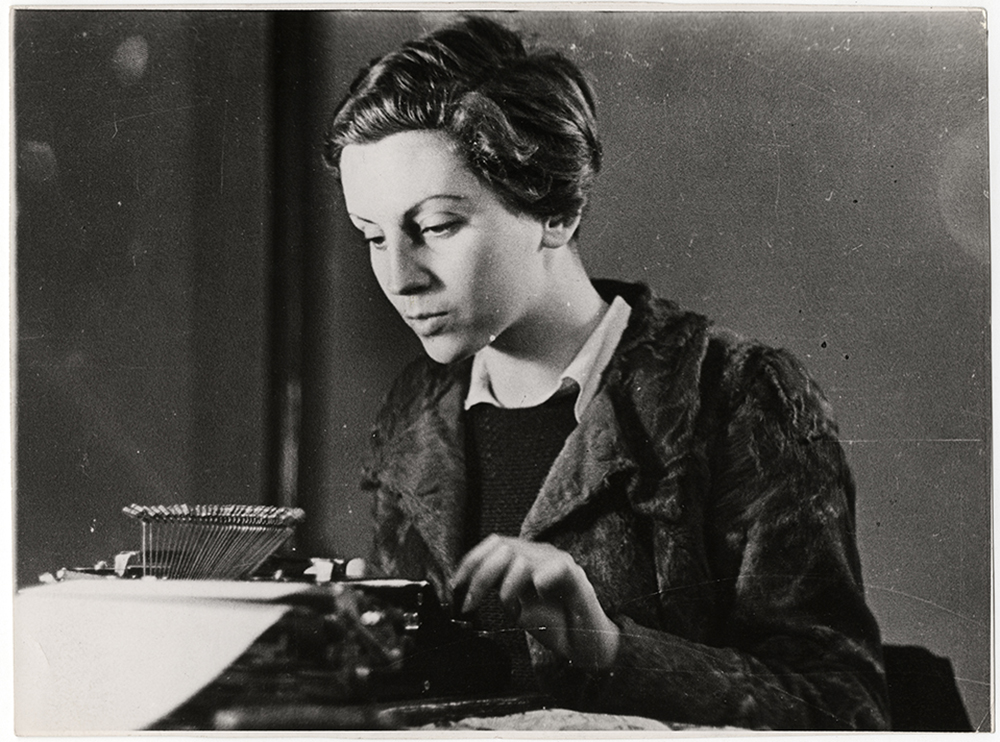
| caption | Capa on assignment in Spain, using a Eyemo 35 mm movie camera, photographed by Gerda Taro |
| birth_name | Endre Ernő Friedmann |
| birth_date | October 22, 1913 |
| birth_place | Budapest, Austria-Hungary |
| death_date | |
| death_place | Thái Bình Province, French Indochina |
| known_for | War photography |
Robert Capa (; born Endre Ernő Friedmann, ; October 22, 1913 – May 25, 1954) was a Hungarian-American war photographer and photojournalist. He is considered by some to be the greatest combat and adventure photographer in history.
Friedman fled political repression in Hungary when he was a teenager. He moved to Berlin, where he enrolled in college. He witnessed Adolf Hitler's rise to power, which led him to move to Paris. There he met and began to work with his professional partner Gerda Taro, and they began to publish their work separately. Capa's close friendship with David Seymour-Chim was captured in Martha Gellhorn's novella Two by Two. He subsequently covered five wars: the Spanish Civil War, the Second Sino-Japanese War, World War II across Europe, the 1948 Arab–Israeli War, and the First Indochina War, with his photos published in major magazines and newspapers.
During his career he risked his life numerous times, most dramatically as the only civilian photographer landing on Omaha Beach on D-Day. He documented the course of World War II in London, North Africa, Italy, and the liberation of Paris. His friends and colleagues included Ernest Hemingway, Irwin Shaw, John Steinbeck and director John Huston.
In 1947, for his work recording World War II in pictures, U.S. general Dwight D. Eisenhower awarded Capa the Medal of Freedom. That same year, Capa co-founded Magnum Photos in Paris. The organization was the first cooperative agency for worldwide freelance photographers. Hungary has issued a stamp and a gold coin in his honor.
He was killed when he stepped on a landmine in Vietnam.
Early years
Capa was born Endre Ernő Friedmann to the Jewish family of Júlia (née Berkovits) and Dezső Friedmann in Budapest, Austria-Hungary, on October 22, 1913.
He moved to Berlin, where he enrolled at Berlin University where he worked part-time as a darkroom assistant for income and then became a staff photographer for the German photographic agency, Dephot. It was during that period that the Nazi Party came into power, which made Capa, a Jew, decide to leave Germany and move to Paris.
Career
Capa's first published photograph was of Leon Trotsky making a speech in Copenhagen on "The Meaning of the Russian Revolution" in 1932.
After moving to Paris, he became professionally involved with Gerta Pohorylle, later known as Gerda Taro, a German-Jewish photographer who had moved to Paris for the same reasons he did.
Spanish Civil War, 1936
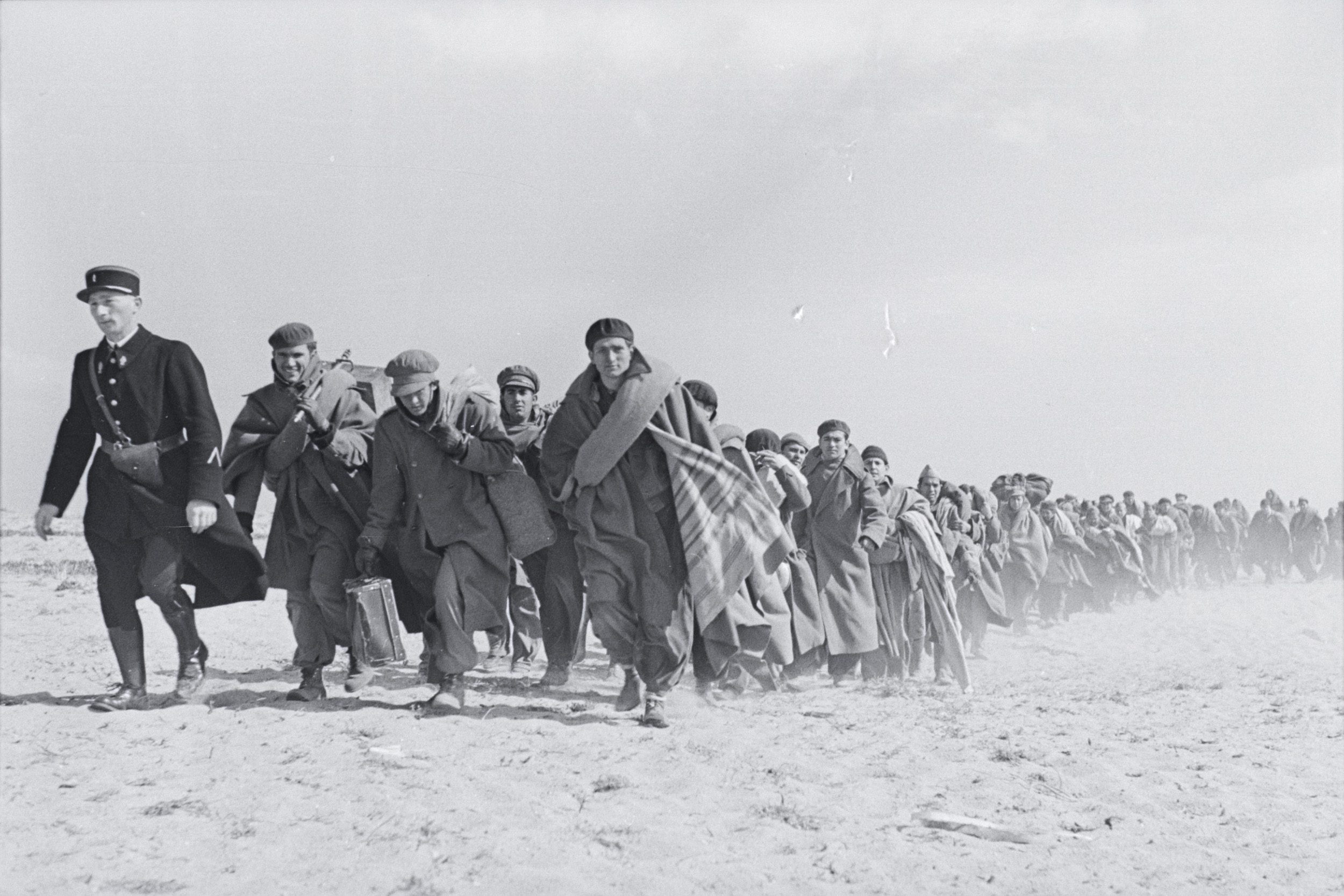
From 1936 to 1939, Capa worked in Spain, photographing the Spanish Civil War, along with Taro and David Seymour.
It was during that war that Capa took the photo now called The Falling Soldier (1936), purported to show the death of a Republican soldier. The photo was published in magazines in France and then by Life and Picture Post. The authenticity of the photo was later questioned, with evidence including other photos from the scene suggesting it was staged. Picture Post, a pioneering photojournalism magazine published in the United Kingdom, had once described then twenty-five year old Capa as "the greatest war photographer in the world."
The next year, in 1937, Taro died when the motor vehicle on which she was traveling (apparently standing on the footboard) collided with an out-of-control tank. She had been returning from a photographic assignment covering the Battle of Brunete.
Capa accompanied then-journalist and author Ernest Hemingway to photograph the war, which Hemingway later described in his novel, For Whom the Bell Tolls (1940). Life magazine published an article about Hemingway and his time in Spain, along with numerous photos by Capa.
In December 2007, three boxes filled with rolls of film, containing 4,500 35mm negatives of the Spanish Civil War by Capa, Taro, and Chim (David Seymour), which had been considered lost since 1939, were discovered in Mexico. In 2011, Trisha Ziff directed a film about those images, entitled The Mexican Suitcase.{{quote box |}}
Chinese resistance to Imperial Japan, 1938
In 1938, he traveled to the Chinese city of Hankou, now within Wuhan, to document the resistance to the Japanese invasion. He sent his images to Life magazine, which published some of them in its May 23, 1938, issue.
World War II
At the start of World War II, Capa was in New York City, having moved there from Paris to look for work, and to escape Nazi persecution. During the war, Capa was sent to various parts of the European Theatre on photography assignments. He first photographed for Collier's Weekly, before switching to Life after he was fired by Collier's. He was the only "enemy alien" photographer for the Allies. On October 7, 1943, Robert Capa was in Naples with Life reporter Will Lang Jr., and there he photographed the Naples post office bombing.

D-Day, Omaha beach, 1944
Main article: The Magnificent Eleven
A group of images known as "The Magnificent Eleven" were taken by Capa on D-Day. Taking part in the Allied invasion, Capa was attached to the 16th Infantry Regiment, 1st Infantry Division ("Big Red One") on Omaha Beach. The US personnel attacking Omaha Beach faced some of the heaviest resistance from German troops inside the bunkers of the Atlantic Wall. Photographic historian A. D. Coleman has suggested that Capa traveled to the beach in the same landing craft as Colonel George A. Taylor, commander of the 16th Infantry Regiment, who landed 1½ hours after the first wave, near Colleville-sur-Mer.
Capa subsequently stated that he took 106 pictures, but later discovered that all but 11 had been destroyed. This incident may have been caused by Capa's cameras becoming waterlogged at Normandy, However, this narrative has been challenged by Coleman and others. In 2016, John G. Morris, who was picture editor at the London bureau of Life in 1944, agreed that it was more likely that Capa captured 11 images in total on D-Day. The 11 prints were included in Life magazine's issue on June 19, 1944, with captions written by magazine staffers, as Capa did not provide Life with notes or a verbal description of what they showed.
The captions have since been shown to be erroneous, as were subsequent descriptions of the images by Capa himself. For example, men described by Life as infantrymen taking cover behind a hedgehog obstacle during the assault landing were in fact members of Gap Assault Team 10 – a combined US Navy/US Army demolition unit tasked with blowing up obstacles and clearing the way for landing craft after the beach had been secured.
''The Shaved Woman of Chartres''
Capa took photographs during the Allied invasion of France in 1944. His picture The Shaved Woman of Chartres, taken on August 16, 1944, shows a woman whose head has been shaved as a punishment for collaboration with the Nazis.
''[[The Picture of the Last Man to Die]]''

On April 18, 1945, Capa captured images of a fight to secure a bridge in Leipzig, Germany. These pictures included an image of Raymond J. Bowman's death by sniper fire. This image was published in a spread in Life magazine with the caption "The picture of the last man to die."
Post-war Soviet Union, 1947
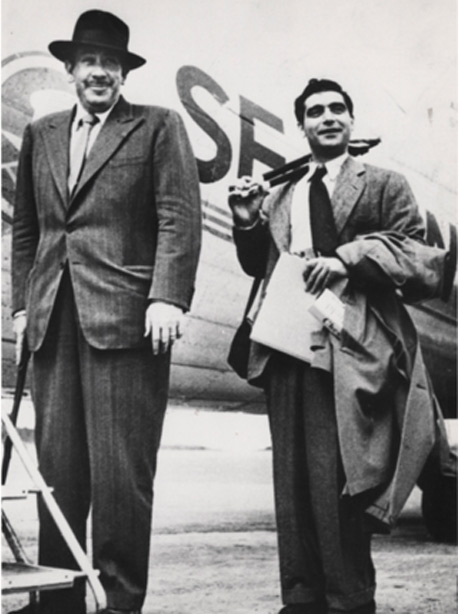
In 1947 Capa traveled to the Soviet Union with his friend, the American writer John Steinbeck. They originally met when they shared a room in an Algiers hotel with other war correspondents before the Allied invasion of Italy in 1943. They reconnected in New York, where Steinbeck told him he was thinking about visiting the Soviet Union, now that the war was over.
Capa suggested they go there together and collaborate on a book, with Capa documenting the war-torn nation with photographs. The trip resulted in Steinbeck's A Russian Journal, which was published both as a book and a syndicated newspaper serial. They remained good friends until Capa's death; Steinbeck took the news of Capa's death very hard.
Magnum Photos agency, 1947
In 1947, Capa founded the cooperative venture Magnum Photos in Paris with Henri Cartier-Bresson, William Vandivert, David Seymour, and George Rodger. It was a cooperative agency to manage work for and by freelance photographers, and developed a reputation for the excellence of its photo-journalists. In 1952, he became the president.
Founding of Israel, 1948
Capa toured Israel during its founding and while it was being attacked by neighboring states. He took the numerous photographs that accompanied Irwin Shaw's book, Report on Israel.

Documenting film productions, 1953
In 1953 he joined screenwriter Truman Capote and director John Huston in Italy where Capa was assigned to photograph the making of the film, Beat the Devil. During their off time they, and star Humphrey Bogart, enjoyed playing poker.
Capa also acted in the film Temptation (1946 film), playing a supporting role. Allegedly, Capa received the part after visiting his friend Charles Korvin on the set. Capa claimed that he could play the part better than the actor who had originally been cast, and after speaking with the director was cast in the final film.
First Indochina War and death, 1954
In the early 1950s, Capa travelled to Japan for an exhibition associated with Magnum Photos. While there, Life magazine asked him to go on assignment to Southeast Asia, where the French had been fighting for eight years in the First Indochina War. Although he had claimed a few years earlier that he was finished with war, Capa accepted the job. He accompanied a French regiment located in Thái Bình Province with two Time-Life journalists, John Mecklin and Jim Lucas. On May 25, 1954, the regiment was passing through a dangerous area under fire when Capa decided to leave his jeep and go up the road to photograph the advance. Capa was killed when he stepped on a landmine near the road.
Personal life
Capa was born into a middle-class Jewish family in Budapest, where his parents were tailors. Capa's mother was a successful fashion shop owner, and his father was a tailor in her shop. Capa had two brothers: a younger brother, photographer Cornell Capa and an older brother, László Friedmann.
At the age of 18, Capa moved to Vienna, later relocated to Prague, and finally settled in Berlin: all cities that were centers of artistic and cultural ferment in this period. He studied at the Deutsche Hochschule für Politik from 1931 until 1933, when the Nazi Party instituted restrictions on Jews and banned them from universities. He then moved to Paris and in 1934 met Gerda Pohorylle, a German Jewish refugee. "André Friedman", as he called himself then, taught Gerda photography, and together they created the name and image of "Robert Capa". At that time, both photographers published their work under the pseudonym of Robert Capa. Gerda later took the name Gerda Taro and became successful in her own right. She travelled with Capa to Spain in 1936 intending to document the Spanish Civil War. In July 1937, Capa traveled briefly to Paris while Gerda remained in Madrid. She was killed near Brunete during a battle. Capa, who was reportedly engaged to her, was deeply shocked and never married.
In February 1943, Capa met Elaine Justin. They fell in love and the relationship lasted until the end of the war. Capa spent most of his time on the front line. Capa called the redheaded Elaine "Pinky," and wrote about her in his war memoir, Slightly Out of Focus. In 1945, Elaine Justin broke up with Capa; she later married Chuck Romine. Some months later, Capa became the lover of the actress Ingrid Bergman, who was touring in Europe to entertain American soldiers.p. 176 In December 1945, Capa followed her to Hollywood. The relationship ended in the summer of 1946 when Capa traveled to Turkey.
Legacy
.jpg)
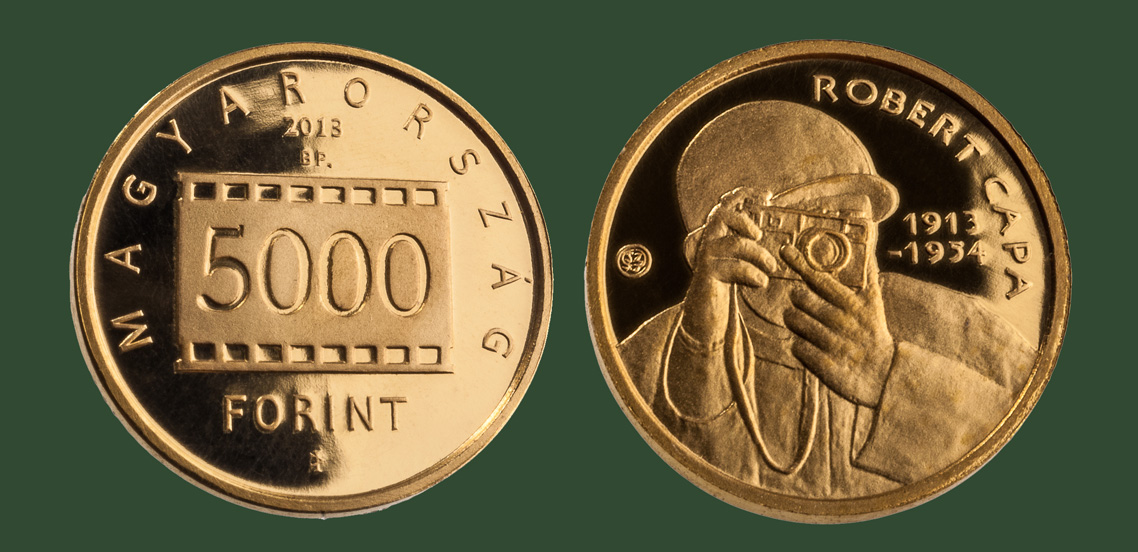
The government of Hungary issued a postage stamp in Capa's honor in 2013. That same year it issued a 5,000-forint ($20) gold coin, also in his honor, showing an engraving of Capa.
His younger brother, Cornell Capa, also a photographer, worked to preserve and promote Robert's legacy as well as develop his own identity and style. He founded the International Fund for Concerned Photography in 1966. To give this collection a permanent home, he founded the International Center of Photography in New York City in 1974. This was one of the foremost and most extensive conservation efforts on photography to be developed. Indeed, Capa and his brother believed strongly in the importance of photography and its preservation, much like film would later be perceived and duly treated in a similar way. The Overseas Press Club created the Robert Capa Gold Medal in the photographer's honor.
Capa is known for redefining wartime photojournalism. His work came from the trenches as opposed to the more arms-length perspective that was the precedent. He was famed for saying, "If your photographs aren't good enough, you're not close enough."
He is credited with coining the term Generation X. He used it as a title for a photo-essay about the young people reaching adulthood immediately after the Second World War. It was published in 1953 in Picture Post (UK) and Holiday (US). Capa said, "We named this unknown generation, The Generation X, and even in our first enthusiasm we realised that we had something far bigger than our talents and pockets could cope with."
In 1947, for his work recording World War II in pictures, U.S. general Dwight D. Eisenhower awarded Capa the Medal of Freedom Citation The International Center of Photography organized a travelling exhibition titled This Is War: Robert Capa at Work, which displayed Capa's innovations as a photojournalist in the 1930s and 1940s. It includes vintage prints, contact sheets, caption sheets, handwritten observations, personal letters and original magazine layouts from the Spanish Civil War, the Second Sino-Japanese War and World War II. The exhibition appeared at the Barbican Art Gallery, the International Center of Photography of Milan, and the Museu Nacional d'Art de Catalunya in the fall of 2009, before moving to the Nederlands Fotomuseum from October 10, 2009, until January 10, 2010.
In 1976 Capa was posthumously inducted into the International Photography Hall of Fame and Museum.


Politics
As a young boy, Capa was drawn to the Munkakör (Employment Circle), a group of socialist and avant-garde artists, photographers, and intellectuals centered around Budapest. He participated in the demonstrations against the Miklós Horthy regime. In 1931, just before his first photo was published, Capa was arrested by the Hungarian secret police, beaten, and jailed for his radical political activity. A police official's wife—who happened to know his family—won Capa's release on the condition that he would leave Hungary immediately.
The Boston Review has described Capa as "a leftist, and a democrat—he was passionately pro-Loyalist and passionately anti-fascist ..." During the Spanish Civil War, Capa travelled with and photographed the Workers' Party of Marxist Unification (POUM), which resulted in his best-known photograph.
The British magazine Picture Post ran his photos from Spain in the 1930s accompanied by a portrait of Capa, in profile, with the simple description: "He is a passionate democrat, and he lives to take photographs."
Artistic style
Robert Capa's photographic style is characterized by his commitment to capturing the raw and immediate realities of war. He famously stated, "If your pictures aren't good enough, you're not close enough," reflecting his philosophy of immersing himself in the action to convey authenticity.
In popular culture
- In 2013, the Japanese Female Musical Theater group Takarazuka Revue produced a musical piece based on the life of Capa. Ms. Ouki Kaname performed the lead role as Capa. The group performed the musical in 2012 in Takarazuka and Tokyo and in 2014 in Nagoya.
- In Patrick Modiano's novella Afterimage Capa is a mentor for the subject of the novella, Francis Jansen, a photographer who retires to Mexico.
- In Alfred Hitchcock's movie Rear Window, the protagonist L. B. "Jeff" Jefferies (James Stewart) was partly based on Capa.
- Poet Owen Sheers wrote a poem about Capa, named Happy Accidents. It can be found in the anthology Skirrid Hill.
- In English indie rock group Alt-J's 2012 album An Awesome Wave, the love between Capa and Taro, and the circumstances of his death are described in the second-to-last track, "Taro".
- The Austrian rock singer Falco wrote the song "Kamikaze Cappa" in tribute to Capa.
Collections
- Art Institute of Chicago, Chicago, Illinois
- Metropolitan Museum of Art, New York
- Museum of Modern Art, New York
- Robert Capa Contemporary Photography Center, Budapest
- Robert Capa: The Definitive Collection, Magnum Photos
- Robert Capa, International Center of Photography
- Robert Capa Photographs, Worcester Art Museum
- Robert Capa, The J. Paul Getty Museum
- Robert Capa, International Photography Hall of Fame
Publications
Publications by Capa
- The Battle of Waterloo Road. New York: Random House, 1941. . Photographs by Capa. With text by Diana Forbes-Robertson.
- Invasion!. New York, London: D. Appleton-Century, 1944. . Photographs by Capa. With text by Charles Wertenbaker.
- Slightly Out of Focus. New York: Henry Holt and Company, 1947. New York: Modern Library, 2001. . Text and photographs by Capa. With a foreword by Cornell Capa and an introduction by Richard Whelan. A memoir.
- Images of War. New York: Grossman, 1964. Text and photographs by Capa. . With a text by John Steinbeck.
- Robert Capa: Photographs. New York: Aperture, 1996. . New York: Aperture, 2004.
- Heart of Spain: Robert Capa's Photographs of the Spanish Civil War. New York: Aperture, 1999. . New York: Aperture, 2005. .
- Robert Capa: The Definitive Collection. London, New York: Phaidon, 2001. . London, New York: Phaidon, 2004. . Edited by Richard Whelan.
- Robert Capa at Work: This is War!. Göttingen: Steidl, 2009. . Photographs by Capa. With a foreword by Willis E. Hartshorn, an introduction by Christopher Phillips, and text by Richard Whelan. Published to accompany an exhibition at the International Center of Photography, New York, September 2007 – January 2008. "A detailed examination of six of Robert Capa's most important war reportages from the first half of his career: the Falling Soldier (1936), Chinese resistance to the Japanese invasion (1938), the end of the Spanish Civil War in Catalonia (1938–39), D-Day, the US paratroop invasion of Germany and the liberation of Leipzig (1945)."
- Questa è la Guerra!: Robert Capa al Lavoro. Italy: Contrasto, 2009. . Published to accompany an exhibition in Milan, March–June 2009.
Publications with others
- Death in the Making. New York: Covici Friede, 1938. Photographs by Capa and Taro.
- A Russian Journal. New York: Viking, 1948. Text by John Steinbeck, illustrated with photographs by Capa.
- Report on Israel. New York: Simon & Schuster, 1950. By Irwin Shaw and Capa.
Publications about Capa
- Robert Capa: a Biography. New York: Knopf, 1985. By Richard Whelan. .
- Blood and Champagne: The Life and Times of Robert Capa. Macmillan, 2002; Thomas Dunne, 2003; . Da Capo Press, 2004; . By Alex Kershaw.
- La foto de Capa. Córdoba: Paso de Cebra Ediciones, 2011. A fictionalised account of the discovery of the exact location of the "Falling Soldier" photograph. .
- Nizza oder die Liebe zur Kunst. Bad König: Vantage Point World, 2013. By Axel Dielmann. . Text in German.
Notes
References
References
- "Capa, Robert".
- Kershaw, Alex. ''Blood and Champagne: The Life and Times of Robert Capa'', Macmillan (2002) {{ISBN. 978-0306813566
- Hudson, Berkley. (2009). "Encyclopedia of Journalism". SAGE.
- His mother, Julianna Henrietta Berkovits was a native of Nagykapos (now [[Veľké Kapušany]], Slovakia) and Dezső Friedmann came from the Transylvanian village of Csucsa (now [[Ciucea]], Romania). At the age of 18, he was accused of alleged communist sympathies and was forced to flee Hungary.Davenport, Alma. ''The History of Photography: An Overview'', Univ. of New Mexico Press (1991)
- "Linfield, ''Boston Review''".
- "Photo of Gerda Taro".
- {{rp
- [https://www.nytimes.com/2009/04/30/arts/design/30capa.html?_r=1&scp=2&sq=robert%20capa&st=cse "New Works by Photography’s Old Masters"], ''New York Times,'' April 30, 2009
- Ingledew, John. ''Photography'', Laurence King Publishing (2005) p. 184
- "Richard Whelan, ''Proving that Robert Capa's Falling Soldier is Genuine: a Detective Story,'' ''American Masters,'' PBS Website.".
- [http://rawstory.com/news/afp/Iconic_Capa_war_photo_was_staged_ne_07172009.html "Iconic Capa war photo was stage: newspaper"] {{webarchive. link. (July 20, 2009 , AFP)
- "Photo of Capa (far left) with Hemingway (far right) in Spain".
- [https://books.google.com/books?id=M0oEAAAAMBAJ&dq=robert+capa+hemingway&pg=PA52 "Life Documents Hemingway's New Novel with War Shots"], ''Life'' magazine, January 6, 1941
- The212BERLIN. (August 4, 2011). "The Mexican Suitcase trailer".
- [https://www.nytimes.com/2008/01/27/arts/design/27kenn.html?_r=1&ref=arts&oref=slogin "The Capa Cache"], ''New York Times'', January 27, 2008
- [https://www.icp.org/exhibitions/the-mexican-suitcase-traveling-exhibition "The Mexican Suitcase, Rediscovered Spanish Civil War Negatives by Capa, Chim, and Taro"] {{Webarchive. link. (February 11, 2021 , International Center of Photography)
- "Photo of the Spanish Civil War".
- [https://www.ormsdirect.co.za/blog/2016/03/23/the-fascinating-story-of-the-mexican-suitcase/ "The Fascinating Story of The Mexican Suitcase"] {{Webarchive. link. (December 1, 2017 , ''ORMS'')
- "Meet the DocuWeeks Filmmakers: Trisha Ziff--'The Mexican Suitcase'". [[International Documentary Association]].
- Stephen R. MacKinnon includes photographs by Robert Capa, in ''Wuhan, 1938: War, Refugees, and the Making of Modern China'' (Berkeley: University of California Press, 2008).
- [https://books.google.com/books?id=1koEAAAAMBAJ&dq=Robert+Capa+china&pg=PA19 Capa photos of the Chinese resistance], ''Life'', May 23, 1938
- Brenner, Marie. "War Photographer Robert Capa and his Coverage of D-day".
- (October 22, 2013). "Robert Capa at 100: The war photographer's legacy".
- ''Slightly Out of Focus'', Henry Holt and Company, New York, 1947, p. 104
- "Photo by Capa on D-Day".
- [http://www.nationalww2museum.org/learn/education/for-students/ww2-history/d-day-june-6-1944.html D-Day], National WWII Museum
- Jay. (December 2, 2012). "The Reel Foto: Robert Capa: 20th Century War Photographer".
- Coleman, A. D.. (February 12, 2019). "Alternate History: Robert Capa on D-Day". Society for Photographic Education.
- Estrin, James. (December 6, 2016). "As He Turns 100, John Morris Recalls a Century in Photojournalism". New York Times.
- "''Life'' magazine story with Capa's images".
- [https://www.history.navy.mil/research/library/online-reading-room/title-list-alphabetically/d/d-day-the-normandy-invasion-combat-demolition-units.html Lt. (jg) H. L. Blackwell, Jr. Report on Naval Combat Demolition Units [NCDUs] In Operation "Neptune" as part of Task Force 122 (5 July, 1944)] (February 19, 2019).
- Match, Paris. (August 22, 2014). "2014 – L'été de la mémoire – La véritable histoire de la tondue de Chartres".
- "Bowman, Raymond J.".
- "Photo of John Steinbeck and Robert Capa boarding a plane for the USSR, 1947".
- Photos were taken in Moscow, [[Kyiv]], [[Tbilisi]], [[Batumi]] and among the ruins of [[Stalingrad]].Railsback, Brian E., Meyer, Michael J. ''A John Steinbeck Encyclopedia'', Greenwood Publishing Group (2006) p. 50
- "Photo of Stalingrad, taken by Capa".
- "Photo of Tiflis, Georgia, 1947".
- "Photo of Georgian farmworkers".
- [http://jewishreviewofbooks.com/articles/1969/robert-capas-road-to-jerusalem/ "Robert Capa's Road to Jerusalem"], ''Jewish Review of Books'', Winter 2016
- [https://www.independent.co.uk/arts-entertainment/robert-capa-remembered-1358188.html "Robert Capa Remembered"], ''Independent'' UK, October 12, 1996
- "Photo of Capa, John Huston and Burl Ives".
- "Robert Capa Photo Gallery".
- (2017). "Eyes of the World Robert Capa, Gerda Taro, and the Invention of Modern Photojournalism". Macmillan Publishing Group, LLC..
- link. (April 25, 2012 , Jewish History, Hungary)
- "Robert Capa". International Photography Hall of Fame.
- "Robert Capa".
- "Gerda Taro, Robert Capa y los peligros de firmar con un seudónimo masculino". eldiario.es.
- "Gerda Taro 80: Killed on Assignment {{!}} World Book".
- (2012-05-12). "Robert Capa and Gerda Taro: love in a time of war". The Observer.
- Marton, Kati. (2006). "The Great Escape: Nine Jews Who Fled Hitler and Changed the World". Simon & Schuster.
- "Magyar Posta Ltd. – 2013".
- "Photo of Hungarian gold coin dedicated to Capa".
- "''Overseas Press Club of America'', Awards Archive.".
- "Robert Capa". Magnum Photos.
- Ulrich, John. (November 1, 2003). "GenXegesis: Essays on Alternative Youth". Popular Press.
- [http://www.icp.org/site/c.dnJGKJNsFqG/b.3569587/k.3EA4/This_Is_War_Robert_Capa_at_Work.htm Travelling exhibitions: ''This Is War! Robert Capa at Work''] {{Webarchive. link. (May 4, 2009 , International Center of Photography)
- "Robert Capa Reveals an Ugly Side of Liberation in WWII France".
- "Robert Capa: The Man Who Captured War Through His Lens".
- Belton, John. (2000). "Alfred Hitchcock's Rear Window". Cambridge University Press.
- "Rock Me, Falco".
- "Robert Capa". The Art Institute of Chicago.
- (1936). "Robert Capa | The Falling Soldier".
- "Robert Capa. Death of a Loyalist Militiaman, Córdoba front, Spain. Late August-early September, 1936 | MoMA".
- "Robert Capa: The Definitive Collection".
- "Robert Capa".
- "Robert Capa Photographs".
- "Robert Capa".
- "Robert Capa".
- (April 1, 2018). "Robert Capa at work: this is war!". Steidl ; Thames & Hudson [distributor.
- (April 1, 2018). "Questa e la Guerra!: Robert Capa al lavoro". International Center of Photography : Two Contrast.





This article was imported from Wikipedia and is available under the Creative Commons Attribution-ShareAlike 4.0 License. Content has been adapted to SurfDoc format. Original contributors can be found on the article history page.
Ask Mako anything about Robert Capa — get instant answers, deeper analysis, and related topics.
Research with MakoFree with your Surf account
Create a free account to save articles, ask Mako questions, and organize your research.
Sign up freeThis content may have been generated or modified by AI. CloudSurf Software LLC is not responsible for the accuracy, completeness, or reliability of AI-generated content. Always verify important information from primary sources.
Report