From Surf Wiki (app.surf) — the open knowledge base
Robbie Robertson
Canadian singer, songwriter and guitarist (1943–2023)

Canadian singer, songwriter and guitarist (1943–2023)
| Field | Value | |
|---|---|---|
| honorific_suffix | ||
| image | Robbie Robertson (1971).png | |
| image_size | 300px | |
| caption | Robertson in 1971 | |
| birth_name | Jaime Royal Robertson | |
| birth_date | ||
| birth_place | Toronto, Ontario, Canada | |
| death_date | ||
| death_place | Los Angeles, California, U.S. | |
| occupation | ||
| years_active | 1956–2023 | |
| spouse | ||
| children | 3, including Sebastian | |
| module | {{Infobox musical artist | embed=yes |
| genre | ||
| instrument | ||
| label | ||
| past_member_of | The Band |
Jaime Royal "Robbie" Robertson (July 5, 1943 – August 9, 2023) was a Canadian musician, composer, and producer. Robertson was the onetime lead guitarist for Bob Dylan's backing band. He was also the guitarist and primary songwriter of the Band from its inception until his 1976 departure. In his later solo career, Robertson released six albums.
Robertson's work with the Band was instrumental in creating the Americana music genre. He was inducted into the Rock and Roll Hall of Fame and the Canadian Music Hall of Fame as a member of the Band; he was also inducted into Canada's Walk of Fame, both with the Band and on his own. Robertson is ranked 59th in Rolling Stone magazine's 2011 list of the 100 greatest guitarists of all time. He wrote "The Weight" and "The Night They Drove Old Dixie Down" with the Band and had a solo hit with "Somewhere Down the Crazy River". He was inducted into the Canadian Songwriters Hall of Fame and received a Lifetime Achievement Award from the National Academy of Songwriters.
Robertson collaborated on film and television soundtracks, usually with director Martin Scorsese. His soundtrack work began with The Band's farewell rockumentary film The Last Waltz (1978) and included dramatic films such as Raging Bull (1980), The King of Comedy (1983), The Color of Money (1986), The Irishman (2019), and Killers of the Flower Moon (2023), the last of which was dedicated to his memory and garnered him a posthumous nomination for the Academy Award for Best Original Score.
Early life
Jaime Royal "Robbie" Robertson was born on July 5, 1943. His mother, Rosemarie Dolly Chrysler, was born on February 6, 1922. Chrysler was Cayuga and Mohawk, and was raised on the Six Nations of the Grand River reserve southwest of Toronto near Hamilton. Chrysler later lived with an aunt in the Cabbagetown neighbourhood of Toronto and worked at the Coro jewellery plating factory. She met James Patrick Robertson there and married him in 1942.
James and Rosemarie Robertson continued working at the Coro factory, and they lived in several Toronto neighbourhoods while Robbie Robertson was a child. An only child, Robbie Robertson often travelled with his mother to the Six Nations reserve to visit family. Here he was taught guitar, particularly by his older cousin Herb Myke. He became a fan of rock and roll and rhythm and blues through the radio, listening to disc jockey George "Hound Dog" Lorenz play rock on WKBW from Buffalo, New York, and staying up to listen to John R.'s all-night blues show on WLAC, a clear-channel station in Nashville, Tennessee.
When Robertson was 12 years of age, as his mother was in the process of obtaining a divorce from James Robertson, she told him that his biological father was Alexander David Klegerman. Klegerman was a Jewish-American gambler with whom Robertson's mother had been involved before her marriage to James Robertson. Klegerman had died in a hit-and-run accident on the Queen Elizabeth Way before Robbie Robertson was born. Robertson's mother arranged for her son to meet his paternal uncles, Morris (Morrie) and Nathan (Natie) Klegerman. Robertson later stated that his uncles "quickly pulled me into their world and went out of their way to make me feel like family".
Early career
When Robertson was 14, he worked two brief summer jobs in the travelling carnival circuit, first for a few days in a suburb of Toronto, and later as an assistant at a freak show for three weeks during the Canadian National Exhibition. He later drew from this experience for his song "Life is a Carnival" (with the Band) and the movie Carny (1980), which he both produced and starred in.
The first band Robertson joined was Little Caesar and the Consuls, formed in 1956 by pianist/vocalist Bruce Morshead and guitarist Gene MacLellan. He stayed with the group for almost a year, playing popular songs of the day at local teen dances. In 1957, he formed Robbie and the Rhythm Chords with his friend Pete "Thumper" Traynor (who later founded Traynor Amplifiers). They changed their name to Robbie and the Robots after they watched the film Forbidden Planet and took a liking to the film's character Robby the Robot. Traynor customized Robertson's guitar for the Robots, fitting it with antennae and wires to give it a space age look. Traynor and Robertson joined with pianist Scott Cushnie and became The Suedes. At a Suedes show on October 5, 1959, when they played CHUM Radio's Hif Fi Club on Toronto's Merton Street, Ronnie Hawkins first became aware of them and was impressed enough to join them for a few numbers.
With Ronnie Hawkins and the Hawks
Robertson began shadowing Hawkins after the Suedes opened for the Arkansas-based rockabilly group Ronnie Hawkins and the Hawks at Dixie Arena. One afternoon he overheard Hawkins say he needed some new songs since they were going into the studio to record the next month. Hoping to ingratiate himself, Robertson stayed up all night and wrote two songs, "Someone Like You" and "Hey Boba Lu", and played them for Hawkins the next day. The showman was impressed and recorded both of them for his new album, Mr Dynamo (1959). Hawkins brought Robertson to the Brill Building in New York City to help him choose songs for the rest of the album.
Hawkins hired pianist Scott Cushnie away from the Suedes and took him on tour in Arkansas with the Hawks. When the Hawks' bass player left the group, Cushnie recommended that Hawkins hire Robertson to replace him on bass. Hawkins invited Robertson to Arkansas, and then flew to the UK to perform on television there. Left in Arkansas, Robertson spent his living allowance on records and practised intensively each day. Upon returning, Hawkins hired him to play bass. Cushnie left the band a few months later.
Roy Buchanan, a few years older than Robertson, was briefly a member of the Hawks and became an important influence on Robertson's guitar style: "Standing next to Buchanan on stage for several months, Robertson was able to absorb Buchanan's deft manipulations with his volume speed dial, his tendency to bend multiple strings for steel guitar-like effect, his rapid sweep picking, and his passion for bending past the root and fifth notes during solo flights."
Drummer/singer Levon Helm was already a member of the Hawks and soon became close friends with Robertson. This lineup, which later became the Band, toured with Hawkins throughout 1962 and into 1963.
Ronnie Hawkins and the Hawks cut sessions for Roulette Records throughout 1961–1963, all of which Robertson appeared on. The sessions included three singles: "Come Love" b/w "I Feel Good" (Roulette 4400 1961); "Who Do You Love" b/w "Bo Diddley" (Roulette 4483 1963); and "There's A Screw Loose" b/w "High Blood Pressure" (Roulette 4502 1963).
With Levon and the Hawks
The Hawks left Ronnie Hawkins at the beginning of 1964 to go on their own. The members of the Hawks were losing interest in playing in the rockabilly style and favoured blues and soul music. In early 1964, the group approached agent Harold Kudlets about representing them, which he agreed to do, booking them a year's worth of shows in the same circuits as they had been in before with Ronnie Hawkins. Originally dubbed The Levon Helm Sextet, the group included all of the future members of the Band as well as Jerry Penfound on saxophone and Bob Bruno on vocals.
After Bruno left the group in May 1964, the group changed their name to Levon and the Hawks. Penfound stayed with the group until 1965.
The members of Levon and the Hawks befriended blues artist John P. Hammond while he was performing in Toronto in 1964. Later in the year, the group agreed to work on Hammond's album So Many Roads (released in 1965) at the same time that they were playing the Peppermint Lounge in New York City. Robertson played guitar throughout the album, and was billed "Jaime R. Robertson" in the album's credits.
Levon and the Hawks cut the single "Uh Uh Uh" b/w "Leave Me Alone" under the name the Canadian Squires in March 1965. Both songs were written by Robertson. The single was recorded in New York As Levon and the Hawks, the group cut an afternoon session for Atco Records later in 1965, which yielded two singles, "The Stones I Throw" b/w "He Don't Love You" (Atco 6383) and "Go, Go, Liza Jane" b/w "He Don't Love You" (Atco 6625). Robertson also wrote all three of the tracks on Levon and the Hawks' Atco singles.
With Bob Dylan and the Hawks
1965–1966 World Tour
Toward the end of Levon and the Hawks' second engagement at Tony Mart's in New Jersey, in August 1965, Robertson received a call from Albert Grossman Management requesting a meeting with singer Bob Dylan. The group had been recommended to both Grossman and to Dylan by Mary Martin, one of Grossman's employees; she was originally from Toronto and was a friend of the band. Dylan was also aware of the group through his friend John Hammond, whose album So Many Roads members of the Hawks had performed on.
Robertson agreed to meet with Dylan. Initially, Dylan intended simply to hire Robertson as the guitarist for his backing group. Robertson refused the offer, but did agree to play two shows with Dylan, one at the Forest Hills Tennis Stadium in Forest Hills, New York, on August 28, and one at the Hollywood Bowl in Los Angeles on September 3. Robertson suggested they use Levon Helm on drums for the shows.
Robertson and Helm performed in Dylan's backing band, along with Harvey Brooks and Al Kooper for both shows. The first at Forest Hills received a predominantly hostile response, but the second in Los Angeles was received slightly more favourably. Dylan flew up to Toronto and rehearsed with Levon and the Hawks September 15–17, as Levon and the Hawks finished an engagement there, and hired the full band for his upcoming tour.
Dylan and the Hawks toured the United States throughout October–December 1965, with each show consisting of two sets: an acoustic show featuring only Dylan on guitar and harmonica, and an electric set featuring Dylan backed by the Hawks. The tours were largely met with a hostile reaction from fans who knew Dylan as a prominent figure in the American folk music revival, and thought his move into rock music a betrayal. Helm left the group after their November 28 performance in Washington, D.C.
On November 30, 1965, Dylan cut a studio session with members of the Hawks, which yielded the non-LP single "Can You Please Crawl Out Your Window?" Dylan completed the Blonde on Blonde album in Nashville in mid-February 1966, employing Robertson for one of these sessions, which took place on February 14.
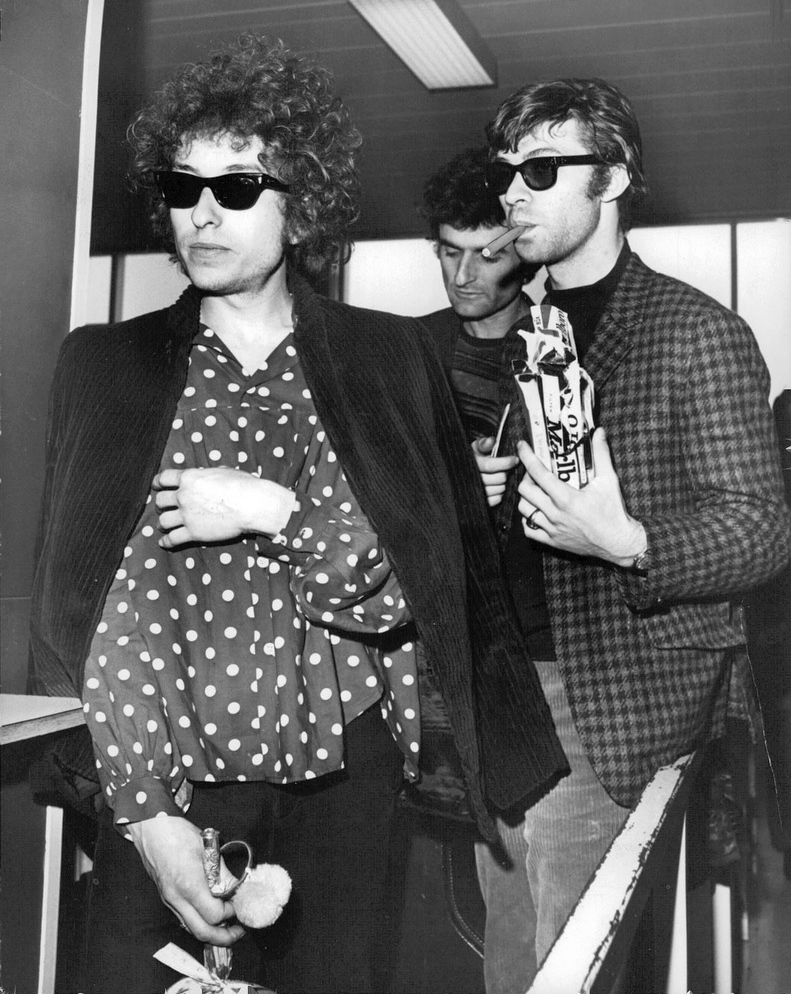
Dylan and the Hawks played more dates in the continental United States from February to March 1966 of Bob Dylan's 1966 World Tour. From April 9–May 27, they played Hawaii, Australia, Europe, and the UK and Ireland. but was eventually released officially as The Bootleg Series Vol. 4: Bob Dylan Live 1966, The "Royal Albert Hall" Concert.
"Basement Tapes" period
On July 29, 1966, Dylan sustained an injured neck from a motorcycle accident, and retreated to a quiet domestic life with his new wife and child in upstate New York. Some of the members of the Hawks were living at the Chelsea Hotel in New York City at the time, and were kept on a weekly retainer by Dylan's management.
.jpg)
In February 1967, Dylan invited the members of the Hawks to come up to Woodstock, New York to work on music. and the two moved into a house in the Woodstock area. The remaining three members of the Hawks rented a house near West Saugerties, New York; it was later dubbed "Big Pink" because of its pink exterior.
Dylan and the members of the Hawks worked together at the Big Pink house every day to rehearse and generate ideas for new songs, many of which they recorded in Big Pink's makeshift basement studio. Previous Hawks member Levon Helm returned to the group in August 1967. By this time, Robertson's guitar style had evolved to be more supportive of the songs and less devoted to displaying speed and virtuosity.
In time, word about these sessions began to circulate, and in 1968, Rolling Stone magazine co-founder Jann Wenner brought attention to these tracks in an article entitled "Dylan's Basement Tape Should Be Released".
In 1969, a bootleg album with a plain white cover compiled by two incognito music industry insiders featured a collection of seven tracks from these sessions. The album, which became known as The Great White Wonder, began to appear in independent record stores and receive radio airplay. This album became a runaway success
In 1975, Robertson produced an official compilation, The Basement Tapes, which included a selection of tracks from the sessions. An exhaustive collection of all 138 extant recordings was released in 2014 as The Bootleg Series Vol. 11: The Basement Tapes Complete.
The Band
1967–1968: ''Music from Big Pink''
In late 1967, Dylan left to record his next album, John Wesley Harding (1967). After recording the basic tracks, Dylan asked Robertson and Garth Hudson about playing on the album to fill out the sound. Robertson liked the starkness of the sound and recommended Dylan leave the tracks as they were.
Over the course of the "Basement Tapes" period, the group had developed a sound of their own. Grossman went to Los Angeles to shop the group to a major label, securing a contract with Capitol Records. The resulting album, Music from Big Pink, was released in August 1968. The group called itself The Band, and Music from Big Pink was its debut studio album.
Robertson was the principal songwriter and lead guitarist of the Band. He wrote four of the songs on Music From Big Pink, including "The Weight", "Chest Fever", "Caledonia Mission", and "To Kingdom Come". He is listed in the songwriting credits as "J.R. Robertson". He sang lead vocals on the track "To Kingdom Come"; he did not sing on another Band song released to the public until "Knockin' Lost John" on 1977's Islands. Two of Robertson's compositions for the album, "The Weight" and "Chest Fever", became important touchstones in the group's career. "The Weight" was influenced by the films of director Luis Buñuel, in particular Nazarín (1959) and Viridiana (1961), and reflects the recurring theme in Buñuel's films about the impossibility of sainthood. The song portrays an individual who attempts to take a saintly pilgrimage and becomes mired in requests from other people to do favors for them along the way. The mention of "Nazareth" at the beginning of the song refers to Nazareth, Pennsylvania, where the C. F. Martin & Company guitar manufacturer is located; it was inspired by Robertson seeing the word "Nazareth" in the hole of his Martin guitar.
Although "The Weight" reached No. 21 on the British radio charts, it did not fare as well on the American charts, initially stalling at No. 63. Nevertheless, "The Weight" has since become the Band's best known song. It has been covered by many artists, appeared in dozens of films and documentaries, and has become a staple of American rock music.
1969–1973: Expansion and acclaim
.png)
The Band began performing regularly in spring 1969, with their first live dates as the Band taking place at the Winterland Ballroom in San Francisco. Their most notable performances that year were at the 1969 Woodstock Festival and the UK Isle of Wight Festival with Bob Dylan in August.

The Band's self-titled second album was released in September 1969. It became a critical and commercial success. The album received almost universal critical praise, peaked at No. 9 on the U.S. pop charts, and stayed on the Top 40 for 24 weeks. Robertson wrote or co-wrote each song on the album. The Band works as a loose concept album of Americana themes, and was instrumental in the creation of the Americana music genre.
The song from The Band that had the strongest cultural influence was "The Night They Drove Old Dixie Down". The song was written by Robertson, who spent about eight months working on it. The lyrics tell of the last days of the American Civil War, portraying the suffering of the protagonist, Virgil Caine, a poor white Southerner. Robertson said he had the music to the song in his head and would play the chords over and over on the piano but had no idea what the song was to be about. Later, the concept came to him and he researched the subject with help from Helm, a native of Arkansas. The song is included in the Rock and Roll Hall of Fame's "500 Songs that Shaped Rock and Roll" and Time magazine's All-Time 100.
On November 2, 1969, the Band appeared on the Ed Sullivan Show, one of only two television appearances they made. The Band rented The Woodstock Playhouse in Woodstock, New York with the intent of recording a new live album there, but the city council voted against it, so they recorded on location, but without an audience. Robertson handled most of the songwriting duties as before. These sessions resulted in the Band's third album, Stage Fright. Stage Fright became the Band's highest-charting album, peaking at No. 5 on September 5 and staying on the Billboard Top 40 for 14 weeks.
The Band's next album, Cahoots, was recorded at Albert Grossman's newly built Bearsville Studios and was released in October 1971. The album received mixed reviews and peaked at No. 24 on the Billboard charts, only remaining on the Billboard Top 40 for five weeks. Cahoots is notable for its cover of Bob Dylan's "When I Paint My Masterpiece", as well as for featuring the concert favourite "Life Is a Carnival". The inclusion of "When I Paint My Masterpiece" came about when Dylan stopped by Robertson's home during the recording of Cahoots and Robertson asked if he might have any songs to contribute. That led to Dylan playing an unfinished version of "When I Paint My Masterpiece" for him. Dylan soon completed the song and the Band recorded it for the album.
The Band continued to tour throughout 1970–1971. Rock of Ages peaked at No. 6, and remained in the Top 40 for 14 weeks.
After the Academy of Music shows, the Band again retreated from performing live. They returned to the stage on July 28, 1973, With over 600,000 people in attendance, the festival set a record for "Pop Festival Attendance" in the Guinness Book of World Records. The record was first published in the 1976 edition of the book.
In October 1973, the Band released an album of cover songs entitled Moondog Matinee, which peaked at No. 28 on the Billboard charts. Around the time of the recording of Moondog Matinee, Robertson began working on an ambitious project entitled Works that was never finished or released. One lyric from the Works project, "Lay a flower in the snow", was used in Robertson's song "Fallen Angel", which appeared on his 1987 self-titled solo album.
1974: Reunion with Bob Dylan

Bill Graham took out a full-page advertisement in The New York Times to spread the word that Bob Dylan and the Band were going on tour in 1974. The response was one of the largest in entertainment history up to that point, with between five and six million requests for tickets mailed in for 650,000 seats. Graham's office ended up selling tickets off on a lottery basis, and Dylan and the Band netted $2 million from the deal.
While preparing for the tour, the Band went into the studio with Dylan to record a new album for Asylum Records, Planet Waves (1974). Sessions took place at Village Recorder in West Los Angeles, California, from November 2–14, 1973. Planet Waves was released on February 9, 1974. The album was No. 1 on the Billboard album charts for four weeks, and spent 12 weeks total in the Billboard Top 40. it was also the first and only studio album that Dylan and the Band recorded together.
The 1974 tour began at the Chicago Stadium on January 3, 1974 and ended at The Forum in Inglewood, California on February 14. The final three shows of the tour at The Forum in Inglewood, California were recorded and assembled into the double album Before the Flood. Credited to "Bob Dylan/The Band", Before the Flood was released by Asylum Records on July 20, 1974. The album debuted at No. 3 on the Billboard charts, and spent ten weeks in the Top Forty.
1974–1975: Shangri-La Studios
Following the 1974 reunion tour with Bob Dylan, rock manager Elliot Roberts booked the Band with the recently reunited Crosby, Stills, Nash, and Young.

One of the best-known tracks on the Band's next album, Northern Lights – Southern Cross (1975), is "Acadian Driftwood", the Band's first song with specifically Canadian subject matter. Robertson was inspired to write "Acadian Driftwood" after seeing the 1971 documentary Acadia, Acadia (L'Acadie, L'Acadie?!?) on Canadian television while in Montreal.
1976–1978: ''The Last Waltz''
The Band began touring again in June 1976, performing throughout the summer. While on the summer tour, member Richard Manuel severely injured his neck in a boating accident, so ten dates were cancelled.
During this time, Robertson suggested the Band cease to tour. He said they agreed to perform a "grand finale" show, part ways to work on their various projects, and then regroup. Helm later made the case in his autobiography, This Wheel's on Fire, that Robertson had forced the Band's breakup on the rest of the group. For his part, Robertson later stated that concerns about heroin use by Danko, Helm, and Manuel led him to take control of the Band and led to his departure from the Band.
Concert promoter Bill Graham booked the Band at the Winterland Ballroom on American Thanksgiving, November 25, 1976. The Last Waltz was a gala event, with ticket prices of $25 per person. It included a Thanksgiving dinner served to the audience, and featured the Band performing with various musical guests.
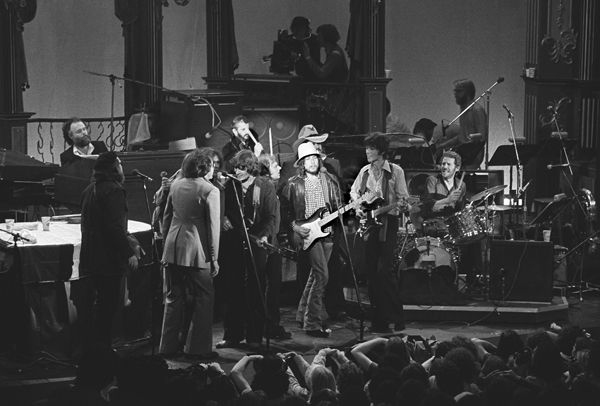
Robertson wanted to document the event on film and approached director Martin Scorsese to see if he was interested in shooting the concert. Robertson and Scorsese developed a 200-page script for the show.
Rehearsals for The Last Waltz concert began in early November. Warner Bros. Records president Mo Ostin offered to fund its filming in exchange for the right to release its music on an album. The Band were contractually obligated to supply Capitol Records with one more album before they could be released to work with Warner Bros. In between rehearsals for The Last Waltz, they worked on the studio album Islands for Capitol. Robertson wrote or co-wrote eight of the ten tracks. One of the songs, "Knockin' Lost John", features Robertson on vocals; it was the first Band song Robertson had sung on since "To Kingdom Come" from Music From Big Pink. "Christmas Must Be Tonight" was inspired by the birth of Robertson's son, Sebastian, in July 1974.
Approximately 5,000 people attended The Last Waltz. After the concert event was finished, Scorsese had 400 reels of raw footage to work with. The first five sides feature live performances from the concert, and the last side contains studio recordings from the MGM sound stage sessions, including Out of the Blue, which would be released as a single and which is the third and last Band song on which Robertson sang lead. The album peaked at No. 16 on the Billboard charts, and remained in the Top 40 for 8 weeks.
The Last Waltz was released to movie theatres on April 26, 1978. The film fared well with both rock and film critics. Robertson and Scorsese made appearances throughout America and Europe to promote the film.
In his mixed review, Roger Ebert wrote, "In The Last Waltz, we have musicians who seem to have bad memories. Who are hanging on. Scorsese's direction is mostly limited to closeups and medium shots of performances; he ignores the audience. The movie was made at the end of a difficult period in his own life, and at a particularly hard time (the filming coincided with his work on New York, New York). This is not a record of serene men, filled with nostalgia, happy to be among friends."
Robertson left the band in 1976, but performed with them one final time on March 1, 1978 at the Roxy in Los Angeles.
Copyright controversy
Robertson is credited as writer or co-writer of the majority of The Band's songs and, as a result, has received most of the songwriting royalties generated from the music. That developed into a point of contention, especially for Helm. In his 1993 autobiography, This Wheel's on Fire: Levon Helm and the Story of The Band, Helm disputed the validity of the songwriting credits as listed on the albums and explained that The Band's songs were developed in collaboration with all members. Danko concurred with Helm: "I think Levon's book hits the nail on the head about where Robbie and Albert Grossman and some of those people went wrong and when The Band stopped being The Band... I'm truly friends with everybody but, hey—it could happen to Levon, too. When people take themselves too seriously and believe too much in their own bullshit, they usually get in trouble." Robertson denied that Helm had written any of the songs attributed to Robertson.
Session work and production work
Robertson produced Jesse Winchester's debut self-titled album, which was released in 1970 on Ampex Records. The album features Robertson playing guitar throughout the album, and co-credits the track "Snow" to Robertson as well.
Robertson played guitar on ex-Beatle Ringo Starr's third solo album, Ringo (1973), performing with four-fifths of the Band on the track "Sunshine Life For Me (Sail Away Raymond)". Robertson contributed a guitar solo on the track "Snookeroo" on Starr's fourth album, Goodnight Vienna (1974).
Robertson played guitar for Joni Mitchell on the track "Raised on Robbery", which was released on her album Court and Spark. In 1974, Robertson also played guitar on Carly Simon's version of "Mockingbird", which featured Simon singing with her then-husband James Taylor.
In 1975, Robertson produced and played guitar on singer/guitarist Hirth Martinez's debut album Hirth From Earth. Bob Dylan had heard Martinez, and recommended him to Robertson. Robertson identified strongly with Martinez' music, helped him to secure a recording contract with Warner Bros. Records, and agreed to produce Martinez' debut album. He also played guitar on Martinez' follow-up album, Big Bright Street (1977).
In 1975, Eric Clapton recorded the album No Reason to Cry at the Band's Shangri-La Studios with help from members of the Band.
In the mid-1970s, Robertson connected with singer Neil Diamond, and the two began collaborating on a concept album about the life and struggles of a Tin Pan Alley songwriter. The resulting album, entitled Beautiful Noise, was recorded at Shangri-La Studios in early 1976. It reached No. 6 on the Billboard charts and remained in the Top 40 for sixteen weeks. Robertson produced the album, co-wrote the track "Dry Your Eyes" with Diamond (which he would go on to perform at The Last Waltz), and played guitar on "Dry Your Eyes", "Lady-Oh", and "Jungletime". He produced Diamond's live double album Love at the Greek (1977), which was recorded in 1976 at the Greek Theatre in Los Angeles. Love at the Greek reached No. 8 on the Billboard charts and remained in the Top 40 for nine weeks.
In 1977, Robertson contributed to two album projects from the Band alumni. Robertson played guitar on "Java Blues" on Rick Danko's self-titled debut album, and also played guitar on the Earl King-penned "Sing, Sing, Sing" on the album Levon Helm & the RCO All-Stars.
Also in 1977, Robertson contributed to the second self-titled album by singer-songwriter Libby Titus, who was the former girlfriend of Levon Helm.
Robertson co-produced the track "The Best of Everything", which was originally intended for the film The King of Comedy but instead was included on the Tom Petty and the Heartbreakers album Southern Accents. Robertson also worked on the horn arrangements for the track, and brought in Band alumni Richard Manuel and Garth Hudson as guests.
In 1986, Robertson appeared as a guest on the album Reconciled by the Call, playing guitar on the track "The Morning".
Also in 1986, Robertson was brought on as creative consultant for Hail! Hail! Rock 'n' Roll (1987), a feature film saluting Chuck Berry. Robertson appears on camera, interviewing Chuck Berry, and then playing guitar while Berry recites poetry.
In 1988, Robertson collaborated as a songwriter with Lone Justice lead singer Maria McKee. One of the songs they co-wrote, "Nobody's Child", was released on McKee's self-titled debut album in 1989.
In 1992, Robertson produced the song "Love in Time" for Roy Orbison's posthumous album King of Hearts. "Love In Time" was a basic demo Orbison had recorded that was believed to be lost, but had just recently been rediscovered. Robertson set about augmenting Orbison's basic vocal track with new arrangements and instrumentation, with the intent of making it sound like the arrangements were there from the beginning instead of later additions.
Solo career
''Robbie Robertson'' (1987)
Robertson began work on his first solo album, Robbie Robertson, in July 1986 after signing with Geffen Records. Robertson chose fellow Canadian Daniel Lanois to produce the album. The album was recorded at The Village Recorder in West Los Angeles, California; at Bearsville Studios near Woodstock, New York; in Dublin, Ireland, with U2; and in Bath, England, with Peter Gabriel. Robertson employed a number of guest artists on the album, including U2, Gabriel, Bodeans, and Maria McKee. Robbie Robertson peaked at No. 35 on the Billboard 200, remaining in the top 40 for three weeks. Robbie Robertson received overwhelming critical acclaim at the time of its release, The album was also listed as No. 77 on ''Rolling Stone'''s 1989 list of the 100 Best Albums of the Eighties.
Robertson had his single largest hit in the UK with "Somewhere Down the Crazy River", which features spoken word verses contrasted with singing in the choruses. In the U.S., Robbie Robertson produced several hits on the Billboard Mainstream Rock charts, with "Showdown At Big Sky" coming in the highest (#2) and "Sweet Fire Of Love" the second highest (#7). The album was nominated for a Grammy Award for "Best Rock / Vocal Album" and was certified gold in the United States in 1991. In Canada, Robertson won Album of the Year, Best Male Vocalist of the Year, and Producer of the Year at the Juno Award ceremony in 1989. In 1991, Rod Stewart recorded a version of "Broken Arrow" for his album Vagabond Heart. Stewart's version of the song reached No. 20 on the Billboard 100 chart in the United States and No. 2 on the Billboard Top Canadian Hit Singles chart in Canada. "Broken Arrow" was also performed live by the Grateful Dead with Phil Lesh on vocals.
''Storyville'' (1991)
Storyville was released on September 30, 1991. Robertson headed to New Orleans to collaborate with some of the city's natives like Aaron and Ivan Neville and the Rebirth Brass Band. Once again, Robertson brought in Band alumni Garth Hudson and Rick Danko as contributors. The album reached No. 69 on the Billboard 200 chart. Storyville received numerous positive reviews, with Rolling Stone giving it 4 1/2 stars out of 5, and the Los Angeles Times awarding it 3 stars out of 4. Two tracks from the album, "What About Now" and "Go Back To Your Woods", charted on the Billboard Mainstream Rock charts at No. 15 and No. 32 respectively. The album was nominated for Grammy Awards in the categories "Best Rock Vocal Performance (solo)" and "Best Engineer".
''Music for the Native Americans'' (1994)
In 1994, Robertson returned to his roots. Forming a First Nations group called the Red Road Ensemble, Robertson recorded Music for the Native Americans, a collection of songs that accompanied a television documentary series produced by TBS. The Battle of Wounded Knee and the near-extinction of the bison are outlined in the song "Ghost Dance".
''Contact from the Underworld of Redboy'' (1998)
On Contact from the Underworld of Redboy, Robertson departed from his typical production style and delved deep into a mix of rock, native, and electronic music. He employed the services of Howie B, DJ Premier, and producer Marius de Vries (Björk, Massive Attack). Through the songs on the album, he took a close look at native traditions like Peyote healing. Rolling Stone gave the album 4 out of 5 stars, and Robertson received a Juno Award for Best Music of Aboriginal Canada Recording.
''How to Become Clairvoyant'' (2011)
Released on April 5, 2011, How to Become Clairvoyant was Robertson's fifth solo release. It arose from impromptu demo sessions in Los Angeles with Eric Clapton. Robertson performed "Straight Down The Line" with Robert Randolph and the Roots on The Tonight Show Starring Jimmy Fallon. How to Become Clairvoyant was also released as a deluxe edition containing five bonus tracks (four demos and the exclusive track "Houdini", named after the magician Harry Houdini). It debuted at No. 13 on the Billboard 200, marking the highest debut and highest chart position for his solo work. He teamed with painter and photographer Richard Prince to produce a limited collector's edition. The 2,500 LP-sized boxes came with an art book, a numbered set of five lithographs (including pieces by Prince and photographer Anton Corbijn), a set of original tarot cards, the original tracks, and ten bonuses.
''Sinematic'' (2019)
Released on September 20, 2019, Sinematic was Robertson's sixth solo album. It features Van Morrison joining Robertson as dueling hitmen on the track "I Hear You Paint Houses", as well as other allusions to the world of Scorsese's films. Citizen Cope, Derek Trucks, and Frédéric Yonnet made guest appearances on the album.
Film music career
Robertson assisted Martin Scorsese on the music for the film Raging Bull (1980). Robertson and Scorsese would go on to have a long working relationship, with Robertson finding or creating music to underscore Scorsese's films. Raging Bull was the first such collaboration, and Robertson credited his work on it for sparking his interest in sourcing and underscoring film music. Robertson supplied three newly recorded instrumental jazz tracks for sourced music, which he also produced. These three tracks feature Robertson playing guitar, along with performances from the Band alumni Garth Hudson and Richard Manuel. One of the tracks, "Webster Hall", is co-written by Robertson and Garth Hudson. Robertson also worked with Scorsese on selecting the film's opening theme music, choosing the intermezzo from Cavalleria Rusticana by Italian opera composer Pietro Mascagni. The soundtrack was finally released by Capitol Records in 2005 as a 37 track, 2-CD set.
Robertson worked with Scorsese again on his next film, The King of Comedy (1983), and is credited in the film's opening credits for "Music Production". Robertson contributed one original song, "Between Trains", to the film's soundtrack. The song was written in tribute to "Cowboy" Dan Johnson, an assistant of Scorsese's who had recently died.
In June 1986, Robertson began working with Scorsese on his next film, The Color of Money. In addition to sourcing music for the film, Robertson also composed the film's score; it was the first time Robertson had ever written a dramatic underscore for a film. Robertson brought in Canadian jazz composer Gil Evans to orchestrate the arrangements. The best-known song on The Color of Money soundtrack is Eric Clapton's "It's in the Way That You Use It", which was co-written by Robertson. "It's in the Way That You Use It" reached No. 1 on the Billboard Mainstream Rock Songs chart in January 1987. Robertson produced a song for the film with blues player Willie Dixon entitled "Don't Tell Me Nothin'"; Dixon's track was co-written with Robertson.
In 1999, Robertson contributed songs to Oliver Stone's film, Any Given Sunday.
Robertson scored Scorsese's 2019 film, The Irishman, and consulted with music supervisor Randall Poster on the entire soundtrack.
He scored Scorsese's Killers of the Flower Moon shortly before his death. The film is dedicated to Robertson. He received a posthumous Academy Award nomination for his work on the film; he was the first Indigenous person nominated for the Academy Award for Best Original Score.
Other work
Film appearances
After the release of The Last Waltz, MGM/UA, who released the film, viewed Robertson as a potential film actor, and provided Robertson with an office on the MGM lot. During this time, Martin Scorsese's agent, Harry Ulfand, contacted Robertson about the idea of producing a dramatic film about traveling carnivals, which Robertson was drawn to because of his childhood experiences working in carnivals. The screenplay for the film Carny was directed by documentary filmmaker Robert Kaylor.
Although Robertson was initially only intended to be the producer of Carny, he ended up becoming the third lead actor in the film, playing the role of Patch, the patch man. Gary Busey played "Frankie", the carnival bozo and Patch's best friend. Jodie Foster was selected to play the role of Donna, a small town girl who runs away to join the carnival and threatens to come between the two friends. The film cast real life carnies alongside professional film actors, which created a difficult atmosphere on set. Carny opened to theaters on June 13, 1980. Also in 1980, Warner Bros released a soundtrack album for Carny, which is co-credited to Robertson and composer Alex North, who wrote the orchestral score for the film. The soundtrack was re-released on compact disc by Real Gone Music in 2015.
In November 2024, Robertson posthumously appeared in the documentary Return of the King: The Fall and Rise of Elvis Presley.
In October 2025, Robertson would posthumously appear in the documentary series Mr. Scorsese.
Writing
Robertson co-authored Legends, Icons and Rebels: Music That Changed the World with his son, Sebastian Robertson, and colleagues Jim Guerinot and Jared Levine. He also wrote Hiawatha and the Peacemaker, illustrated by David Shannon. His autobiography, Testimony, written over the course of five years, was published by Crown Archetype in November 2016.
In April 2025, Penguin Random House Canada publishers announced that a second volume of Robertson's memoirs, focused on his working relationship with Martin Scorsese, would be published in November 2025.
Personal life

On March 24, 1968, Robertson married Dominique Bourgeois, a Canadian journalist. They had two daughters and a son named Sebastian. The marriage ended in divorce.
Robertson married his girlfriend of four years, Canadian entrepreneur, restaurateur, and Top Chef Canada judge Janet Zuccarini, on March 12, 2023. Their marriage occurred only five months before his death.
Robertson was also involved in social causes and was a member of the Canadian charity Artists Against Racism, using his platform to support anti-racism initiatives and public awareness campaigns.
Death and tributes
Robertson died at a Los Angeles hospital on August 9, 2023, at the age of 80, after a year-long battle with prostate cancer. His longtime manager, Jared Levine, stated that Robertson was surrounded by his family at the time of his death. In lieu of flowers, Levine requested that donations be made to the Six Nations of the Grand River, honoring Robertson’s heritage and lifelong connection to the community.
In November 2023, director Martin Scorsese held a tribute concert for Robertson in Los Angeles. Notable guests in attendance were Joni Mitchell, Leonardo DiCaprio, and Lily Gladstone.
In October 2024, another tribute concert with Scorsese's involvement was held at the Kia Forum.
Aftermath
In May 2024, Robertson's three adult children filed a lawsuit against his wife, Janet Zuccarini, alleging elder abuse and undue influence. The suit claimed that during a period of significant health decline, Zuccarini took advantage of Robertson's weakened condition to have him sign legal documents that would financially benefit her in the event of his death, without the full awareness or involvement of his children.
Credits
Discography
- Robbie Robertson (1987)
- Storyville (1991)
- Music for the Native Americans (soundtrack) (1994)
- Contact from the Underworld of Redboy (1998)
- How to Become Clairvoyant (2011)
- Sinematic (2019)
Filmography
| Year | Title | Role(s) | Notes | Ref. | |||||||
|---|---|---|---|---|---|---|---|---|---|---|---|
| 1972 | Eat the Document | Performer | title=Robbie Robertson | url=https://catalog.afi.com/Person/183941-Robbie-Robertson?isMiscCredit=False | access-date=2023-08-10 | website=AFI Catalog}} | |||||
| 1978 | The Last Waltz | Performer/producer | Directed by Martin Scorsese | title=Robbie Robertson | url=https://www2.bfi.org.uk/films-tv-people/4ce2bb0c2a476 | archive-url=https://web.archive.org/web/20180529002355/http://www.bfi.org.uk/films-tv-people/4ce2bb0c2a476 | url-status=dead | archive-date=May 29, 2018 | access-date=2023-08-10 | website=BFI | language=en}} |
| 1980 | Carny | Actor/writer/producer/composer | |||||||||
| 1980 | Raging Bull | Music consultant | Directed by Martin Scorsese | ||||||||
| 1982 | The King of Comedy | Music producer/composer | Directed by Martin Scorsese | ||||||||
| 1986 | The Color of Money | Composer | Directed by Martin Scorsese | ||||||||
| 1994 | Jimmy Hollywood | Composer | |||||||||
| 1995 | Robbie Robertson: Going Home | Documentary | |||||||||
| 1995 | Casino | Music consultant | Directed by Martin Scorsese | ||||||||
| 1995 | The Crossing Guard | Actor | |||||||||
| 1996 | Phenomenon | Executive producer | |||||||||
| 1996 | Dakota Exile | Narrator | Documentary | ||||||||
| 1999 | Forces of Nature | Creative music consultant | |||||||||
| 1999 | Wolves | Narrator | |||||||||
| 1999 | Any Given Sunday | Songs | |||||||||
| 2001 | The Life and Times | Himself | Episode: "A Portrait of Robbie Robertson" | ||||||||
| 2002 | Gangs of New York | Executive music producer | Directed by Martin Scorsese | ||||||||
| 2003 | Festival Express | Performer | |||||||||
| 2004 | Ladder 49 | Original song "Shine Your Light" | |||||||||
| 2007 | Eric Clapton: Crossroads Guitar Festival 2007 | Performer | |||||||||
| 2010 | Shutter Island | Music supervisor | Directed by Martin Scorsese | ||||||||
| 2012 | Curse of the Axe | Narrator | Documentary | ||||||||
| 2013 | Eric Clapton: Crossroads Guitar Festival 2013 | Performer | |||||||||
| 2013 | The Wolf of Wall Street | Executive music producer | Directed by Martin Scorsese | ||||||||
| 2016 | Silence | Executive music producer | Directed by Martin Scorsese | ||||||||
| 2017 | Rumble: The Indians Who Rocked the World | Performer | |||||||||
| 2018–23 | Native America | Narrator | TV documentary series | ||||||||
| 2019 | The Irishman | Executive producer / composer | Directed by Martin Scorsese | title=Robbie Robertson | url=https://www.rottentomatoes.com/celebrity/robbie_robertson | access-date=2023-08-10 | website=Rotten Tomatoes | language=en}} | |||
| 2019 | Once Were Brothers: Robbie Robertson and the Band | Himself | |||||||||
| 2023 | Killers of the Flower Moon | Composer | Directed by Martin Scorsese; posthumous release | ||||||||
| 2024 | Return of the King: The Fall and Rise of Elvis Presley | Himself | Documentary; posthumous release |
Honours and awards
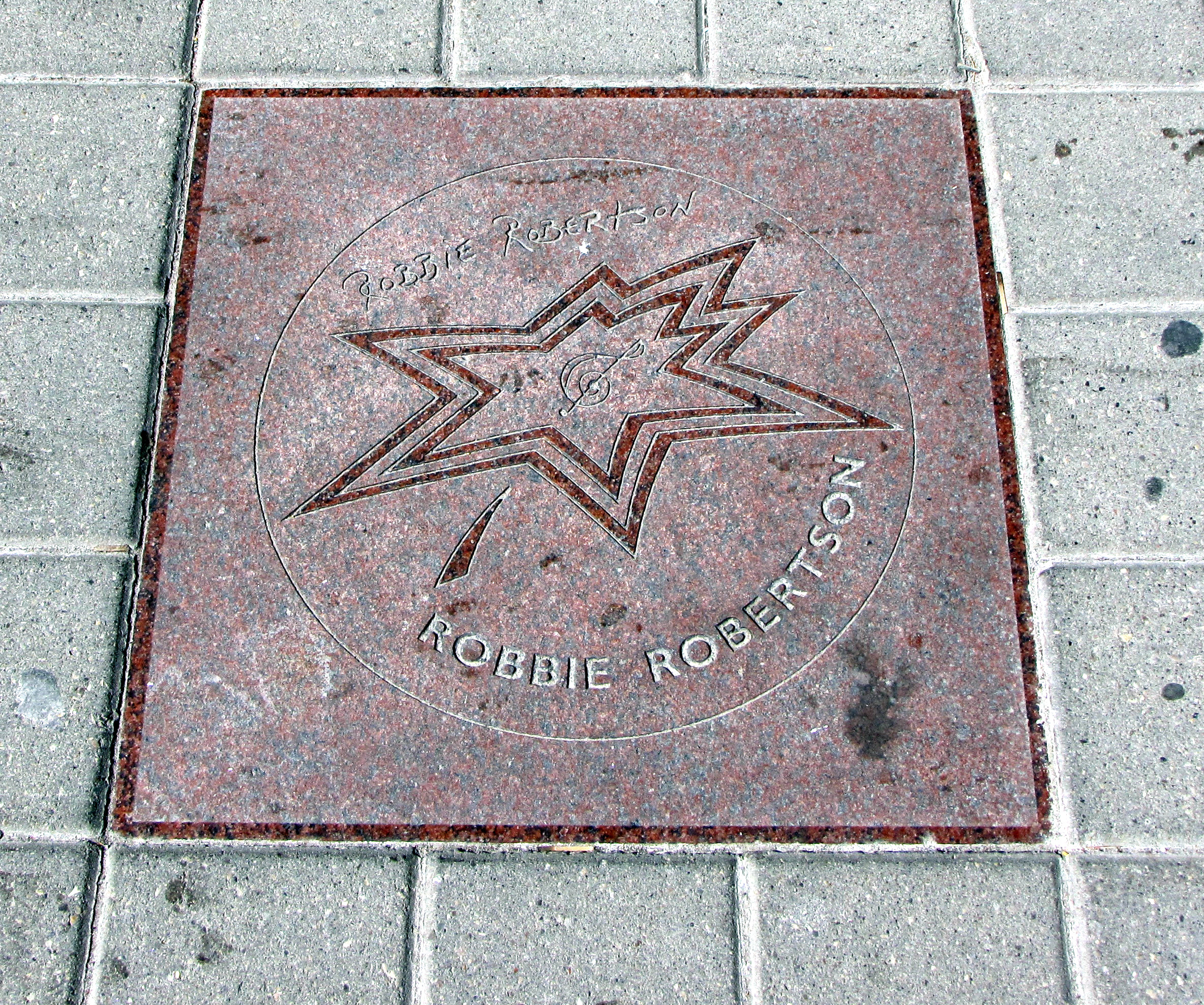
The Band (including Robertson) was inducted into the Canadian Music Hall of Fame in 1989 and the Rock and Roll Hall of Fame in 1994. In 1997, Robertson received a Lifetime Achievement Award from the National Academy of Songwriters. In 2003, Robertson received the Indspire Aboriginal Lifetime Achievement Award. In 2003, Robertson was inducted into Canada's Walk of Fame.
In 2005, Robertson received an honorary doctorate from York University. In 2006, he received the Governor General's Performing Arts Award for Lifetime Artistic Achievement, Canada's highest honour in the performing arts. In 2008, Robertson and the Band received the Grammy Lifetime Achievement Award. On May 27, 2011, Robertson was made an Officer of the Order of Canada by Governor General David Johnston. In 2014, the Band was inducted into Canada's Walk of Fame.
On October 14, 2017, Robertson received the first Lifetime Achievement Award from the community of Six Nations. In 2019, Robertson was given a key to the city of Toronto by Mayor John Tory during a TIFF press conference for Once Were Brothers: Robbie Robertson and The Band, a documentary about Robertson. In 2019, Robertson was the recipient of the Lifetime Achievement Award in the Canadian Music Industry Hall of Fame from Canadian Music Week (CMW).{{cite web|url=https://www.cbc.ca/news/canada/toronto/robbie-robertson-lifetime-achievement-award-1.5130374|title=Robbie Robertson gets CMW's Lifetime Achievement Award, and he thinks 'it's quite wonderful'
Robertson is ranked 59th in Rolling Stone magazine's 2011 list of the 100 greatest guitarists of all time.
| Year | Association | Category | Project | Result | Ref. |
|---|---|---|---|---|---|
| 1989 | Grammy Awards | Best Rock Vocal Performance, Male | Robbie Robertson | ||
| 1992 | Best Rock Vocal Performance, Solo | Storyville | |||
| 1995 | Primetime Emmy Awards | Outstanding Individual Achievement - Cultural Programming | Robbie Robertson: Going Home | ||
| Outstanding Music and Lyrics ("Pray") | |||||
| 1999 | Grammy Awards | Best World Music Album | Contact from the Underworld of Redboy | ||
| 2004 | Best Soundtrack for Visual Media | Gangs of New York | |||
| 2015 | Best Soundtrack for Visual Media | The Wolf of Wall Street | |||
| 2019 | Critics' Choice Movie Awards | Best Original Score | The Irishman | ||
| 2023 | Hollywood Music in Media Awards | Best Original Score in a Feature Film | Killers of the Flower Moon | ||
| Washington D.C. Area Film Critics Association Awards | Best Score | ||||
| Chicago Film Critics Association Awards | Best Original Score | ||||
| Dallas–Fort Worth Film Critics Association Awards | Best Musical Score | ||||
| St. Louis Film Critics Association Awards | Best Score | ||||
| Golden Globe Awards | Best Original Score | ||||
| Critics' Choice Movie Awards | Best Original Score | ||||
| Academy Awards | Best Original Score |
References
References
- (2014). "Rock and Roll Highway: The Robbie Robertson Story". Henry Holt and Co..
- (April 1, 2011). "At 67, Robbie Robertson has nothing left to prove". Globe and Mail.
- (August 10, 2023). "Who was Robbie Robertson? Guitarist and song writer of 'The Band,' dies".
- Robertson, Robbie. (2017). "Testimony". Vintage Canada.
- Grant, Sarah. (4 December 2015). "Robbie Robertson Talks Native American Heritage, New Children's Book".
- Hann, Michael. (August 10, 2023). "The Band's Robbie Robertson captured a dream of what America was, is and might be". The Guardian.
- Robertson, Robbie. (2017). "Testimony". Vintage Canada.
- (2009). "Whispering Pines: The Northern Roots of American Music from Hank Snow to The Band". ECW Press.
- (1993). "This Wheel's On Fire: Levon Helm and The Story of The Band". William Morrow & Company, Inc..
- Williams, Richard. (August 10, 2023). "Robbie Robertson obituary". The Guardian.
- Heer, Jeet. (August 14, 2023). "The Indigenous Roots of Robbie Robertson's Rock and Roll Revolution".
- "Morris Max Klegerman".
- (November 23, 2016). "The Secret Jewish History of Robbie Robertson and The Band".
- Robertson, Robbie. (2017). "Testimony". Vintage Canada.
- (2015). "''Robbie Robertson And Alex North:'' Carny ''OST CD reissue liner notes''". Real Gone Music/Warner Brothers Records.
- (1993). "Across The Great Divide: The Band and America". Hyperion.
- For Robbie's early-band chronology, see Chapter two "Who Do You Love: Ronnie Hawkins & The Hawks" in Jason Schneider's book ''Whispering Pines: The Northern Roots of American Music... From Hank Snow to The Band'', ECW Press Toronto {{ISBN. 9781550228748 2009 First Edition hardcover
- (2016). "Testimony: A Memoir". Crown.
- (2018). "The Encyclopedia of Native Music: More Than a Century of Recordings from Wax Cylinder to the Internet". University of Arizona Press.
- (2015). "Mystery Train: Images of America in Rock 'n' Roll Music: Sixth Edition". Penguin.
- (January 31, 2014). "Professor Piano moves to the Hammer". Neil Oliver.
- 68–70, 75 He developed into a guitar virtuoso.[[Howard Sounes]]. ''Down the Highway: The Life Of Bob Dylan'' Doubleday (2001), pg. 189; {{ISBN. 0-552-99929-6
- How to Play Guitar Like The Band's Robbie Robertson, Gibson.com Aug 26, 2011; accessed September 2, 2017.
- "Bruce Bruno". Jan Hoiberg.
- "The History of The Band: The Pre-Band Groups". Jan Hoiberg.
- "1965: From Conway Twitty to Bob Dylan".
- (2005). "''The Band:'' A Musical History ''box set accompanying hardcover book''". Capitol Records.
- (July 2007). "Robbie Robertson on Bob Dylan and Songwriting: Second in a Three-Part Series". Taxi Transmitter.
- (1986). "Where Are You Now, Bo Diddley? The Artists Who Made Us Rock and Where They Are Now". Doubleday and Company.
- (2000). "Something is Happening: Bob Dylan 1965". Olaf Björner.
- "Still On the Road: 1965 Concerts, Interviews, and Recording Sessions". Olof Björner.
- "Still On the Road: 1966 Blonde on Blonde Recording Sessions and World Tour". Olof Björner.
- (2000). "Skeleton Keys: Bob Dylan 1966". Olaf Björner.
- (2011). "Down the Highway: The Life of Bob Dylan". Grove Press.
- (November 19, 1987). "The Second Coming of Robbie Robertson". Wenner Media LLC.
- [[Jann Wenner]]. (June 22, 1968). "Dylan's Basement Tape Should Be Released".
- Klagg, James C.. (2005). "Bob Dylan And Philosophy". Open Court Publishing Company.
- "Liner notes for the Band 2000 remasters". Jan Hoiberg.
- "Big Pink in Retrospect. How Songs Learn: "The Weight" Hangs Tough at 35". Jan Hoiberg.
- "25 best Canadian debut albums ever".
- (August 10, 2023). "Robbie Robertson, guitarist for The Band and Bob Dylan, has died at 80".
- (August 16, 2023). "Robbie Robertson Was Everyman".
- "[The] Band". Official Charts Company.
- (December 13, 2024). ""It wasn't until we listened back to it that we realized, 'Holy s***, this song's really got something.'" Robbie Robertson told us how one simple change helped the Band save "The Weight" from oblivion".
- (March 12, 2013). "The Weight: When a Song Becomes an Anthem". Kyla Fairchild.
- (December 31, 2013). "Late Dec. 2013 Updated Concert List". Jan Hoiberg.
- (1995). "The Billboard Book of Top 40 Albums". Billboard Books (Watson-Guptill Publications).
- "The Band".
- (October 2000). "Liner notes for the Band 2000 remasters. The Band: ''The Band'' (Capitol)". Jan Hoiberg.
- "Complete National Recording Registry Listing". Library of Congress.
- Hoskyns, Barney. (1993). "Across the Great Divide: The Band and America". Hyperion.
- Ankeny, Jason. "The Band: The Night They Drove Old Dixie Down". [[AllMusic]].
- "The Night They Drove Old Dixie Down".
- link. (May 24, 2009 , [[Pitchfork Media]], August 17, 2006)
- "500 Songs That Shaped Rock". Infoplease.com.
- Cruz, Gilbert. (October 24, 2011). "100 Greatest Popular Songs: TIME List of Best Music".
- "The History of The Band: The "In Between" Years". Jan Hoiberg.
- (August 20, 2009). "Concerts with Record Attendance".
- (1975). "Guinness Book of World Records". Sterling Publishing Company.
- "Still On the Road: 1973 Recording Sessions". Olof Björner.
- (January 2, 2014). "The Greatest Rock Tour: Bob Dylan & The Band in 1974 – 40 Years Later". Indiewire.
- "Still On the Road: 1974 Tour of America With The Band". Olof Björner.
- (June 10, 2011). "Dylan's legendary Shangri-La studio is for sale by owner Beej Chaney". Star Tribune Media Company LLC.
- (December 26, 2015). "Shangri-La Recording Studio".
- Robertson, Robbie. (March 31, 2011). "Robbie Robertson On the Break-Up of The Band". CBC.
- Levon Helm and Stephen Davis. ''This Wheel's on Fire: Levon Helm and the Story of the Band'', Chapter Nine: ''The Last Waltz''
- Italie, Hillel. (August 10, 2023). "Robbie Robertson, guitarist for The Band, Dylan, dies at 80; never met his Jewish dad".
- Daniel, Anne Margaret. (October 22, 2019). "Robbie Robertson and The Band: Brothers Where Art Thou?".
- (June 1, 1978). "The Last Waltz: A Concert Becomes a Legend". Wenner Media LLC.
- Robertson, Robbie. (April 14, 1978). "Robbie Robertson, Martin Scorsese and The Last Waltz". CBC.
- (2003). "Scorsese on Scorsese". Faber and Faber Ltd..
- Staff. (December 6, 1976). "The Last Set". Time Inc..
- "The Band: The Last Waltz".
- "The History of The Band: 1975's Miracle and the Last Waltz". Jan Hoiberg.
- Maslin, Janet. (April 26, 1978). "Film: Scorsese and the Band". The New York Times.
- "The Last Waltz movie review".
- Graff, Gary GraffGary. (August 10, 2023). "Why Robbie Robertson Never Reunited With the Band".
- [[Bill Flanagan. Flanagan, Bill]]. "[http://theband.hiof.no/articles/musician_rd_dec_1993.html Rick Danko on The Band – New Albums, Old Wounds]" ''Musician'' magazine #182, December 1993.
- (April 7, 2002). "Greg Kot: 'Waltz' bittersweet for many, but not Robbie Robertson".
- (April 1, 2014). "Jesse Winchester Dead at 69, Singer-Songwriter Became Anti-War Icon". Wenner Media LLC.
- "Jesse Winchester: ''Jesse Winchester''". Jan Hoiberg.
- (2002). "''Ringo''". Graham Calkin's Beatles Pages.
- "Ringo Starr: ''Ringo''". Jan Hoiberg.
- "Ringo Starr: ''Goodnight Vienna''". Jan Hoiberg.
- (May 12, 2013). "The Inside Story of Mockingbird with Carly Simon and James Taylor". Scott Cahill.
- "Hirth Martinez: ''Hirth From Earth''". Jan Hoiberg.
- "Hirth Martinez: Hirth From Earth and Beyond". Mark Guerrero.
- (March 30, 1985). "Spotlight". Nielsen Business Media, Inc..
- (April 27, 2012). "Southern Accents by Tom Petty & the Heartbreakers – An Uncut All-Time Classic". Time Inc. UK.
- (March 1, 2016). "The History of Tom Petty and the Heartbreakers' Ambitious ''Southern Accents''". Diffuser Network.
- "Reconciled". Connolly and Company LLC.
- Robertson, Robbie. (November 25, 2013). "Robbie Robertson on George Stroumboulopoulos Tonight: Interview". CBC.
- "Chuck's 60th Birthday Celebrations (1986)".
- (24 March 1988). "Robertson Waltzes Again". Wenner Media LLC.
- "Maria McKee: ''Maria McKee''". Jan Hoiberg.
- (1992). "ABC In Concert Profile: Roy Orbison".
- (October 26, 2015). "Albums Released This Week (October 26 – November 1)". Strategic Planning Advisors LLC.
- (December 26, 1987). "The Critics' Choice". Nielsen Business Media.
- (November 16, 1989). "77 – Robbie Robertson, 'Robbie Robertson'". Wenner Media LLC.
- (2002). "Scorsese: Virgin Film". Virgin Books.
- "Artists: Robbie Robertson. Chart History (Mainstream Rock Songs)". Nielsen Business Media.
- (2005). "The Encyclopedia of Native Music". University of Arizona Press.
- (October 1991). "Rocker of Ages". Condé Nast.
- "Awards". junoawards.ca.
- "Rod Stewart: Vagabond Heart".
- "Artists: Rod Stewart. Chart History (Billboard 100)". Nielsen Business Media.
- (May 29, 2014). "Rod Stewart – Hit Songs and Billboard Charts". Jason Saulnier.
- "Broken Arrow".
- (September 30, 2015). "Robbie Robertson was again sparked by America, old friends on Storyville".
- David Wild. (September 5, 1991). "Robbie Robertson: Dress Rehearsal".
- "Artists: Robbie Robertson. Chart History (Billboard 200)". Nielsen Business Media.
- DeCurtis, Anthony. (31 October 1991). "Robbie Robertson: The Saga of Storyville". Wenner Media LLC.
- (September 29, 1991). "Album Review. Robbie Robertson: "Storyville", Geffen". Timothy Ryan.
- (April 24, 2014). "Robbie Robertson, "Ghost Dance" from The Native Americans (1994): Across the Great Divide".
- Simon, Alex. (1 December 2012). "Robbie Robertson is making some noise".
- (January 2, 2008). "Robbie Robertson: Contact From The Underworld Of Redboy". rollingstone.com.
- [http://blog.masslive.com/playback/2011/04/robbie_robertson_interview_new.html "The Robbie Robertson interview: New solo album, the Band, Levon Helm, Eric Clapton and more"]. ''Mass Live – blog'' Kevin O'Hare, on April 01, 2011
- "Robbie Robertson and the Roots on Fallon". rollingstone.com.
- (September 20, 2011). "Robbie Robertson Calls for Return to 'Intersection of Art and Music'". rollingstone.com.
- Hermes, Will. (2019-09-20). "Robbie Robertson Returns With 'Sinematic'".
- (2006). "Robbie Robertson, Live, Onstage at TAXI's 2006 Road Rally: Part Three".
- Robertson, Robbie. (May 6, 2011). "Robbie Robertson on working with Martin Scorsese". KCRW.
- "Soundtrack: ''Raging Bull''". Jan Hoiberg.
- (1983). "The King of Comedy". Regency/20th Century Fox.
- Flanagan, Bob. (September 1987). "The Return of Robbie Robertson". Billboard Publications Inc..
- (1986). "The Color of Money". Touchstone Home Video.
- (1987). "Robbie Robertson: A Special Conversation For College Radio". Geffen Records.
- (2003). "Gil Evans. Out of the Cool: His Life and Music". A Cappella Books.
- "Artists: Eric Clapton. Chart History". Nielsen Business Media.
- (2011). "Willie Dixon: Preacher of the Blues". Scarecrow Press.
- Turan, Kenneth. (December 22, 1999). "Oliver Stone Hits 'Em Again, Harder! Harder!".
- Flood, Alex. (2019-11-01). "The Band's Robbie Robertson details soundtrack for Martin Scorsese's 'The Irishman'".
- "Killers of the Flower Moon Soundtrack {{!}} Soundtrack Tracklist".
- Bloom, Madison. (2023-08-09). "Martin Scorsese Remembers the Band's Robbie Robertson: "I Could Always Go to Him as a Confidante"".
- (20 October 2023). "'Killers of the Flower Moon' Ends with a Touching Dedication to Longtime Scorsese Collaborator Robbie Robertson".
- (February 28, 2024). "Robbie Robertson’s Best Score nomination is a historic first for Indigenous representation - Berkeley B-Side".
- Moreau, Jordan. (2024-01-23). "Oscar Nominations 2024 (Updating Live)".
- (June 1, 1978). "A Portrait of the Band as Young Hawks: Rolling Stone's 1978 Feature on 'The Last Waltz'". Wenner Media LLC.
- (November 25, 1979). "Yesterday's Rock Stars Try for a Future in Film (Published 1979)". The New York Times.
- (June 26, 1980). "Interview: Robbie Robertson". Wenner Media LLC.
- Canby, Vincent. (June 13, 1980). "Screen: Jodie Foster in 'Carny'". The New York Times.
- Loftus, Johnny. (November 17, 2024). "Stream It Or Skip It: 'Return Of The King: The Fall And Rise Of Elvis Presley' on Netflix, A Doc That Remembers When The King Laid It All On The Line". The Decider.
- "Mr. Scorsese". Apple TV.
- Hipes, Patrick. (October 1, 2025). "'Mr. Scorsese' Trailer: Martin Scorsese Ponders Good, Evil And Movies In Rebecca Miller's Docuseries Set For NYFF World Premiere". Deadline Hollywood.
- Stephen, Katcy. (August 11, 2025). "'Mr. Scorsese' Documentary Series Sets October Premiere Date as Apple TV+ Unveils First Clip". Variety.
- Friend, David. (April 17, 2025). "Robbie Robertson's friendship with Martin Scorsese explored in upcoming memoir". [[The Canadian Press]].
- Robertson, Robbie. (2017). "Testimony". Vintage Canada.
- Goldberg, Michael. (1987-11-19). "The Second Coming of Robbie Robertson".
- (12 March 2023). "We got hitched 💍 It seemed appropriate to post this little 3 min movie that @daniel_roher made for me as a birthday gift to @robbierobertsonofficial a few years ago. 💕".
- Speakman, Kimberlee. (May 27, 2024). "Robbie Robertson's Children Sue Late Rocker's Wife, Accuse Her of Financial Elder Abuse". People.
- "Artists".
- (August 9, 2024). "Robbie Robertson's Family Feud: Inside the Late Rock God's Inheritance Drama". [[The Hollywood Reporter]].
- Morris, Chris. (August 9, 2023). "Robbie Robertson, Leader of The Band, Dies at 80".
- (August 10, 2023). "Robbie Robertson in 10 songs".
- (16 November 2023). "Martin Scorsese Hosts Robbie Robertson Tribute Concert, With Jackson Browne and Others Paying Musical Homage".
- (16 November 2023). "Martin Scorsese Honors Robbie Robertson's Legacy with Tribute Concert: The Musician 'Broke Barriers'".
- Willman, Chris. (October 19, 2024). "Robbie Robertson Tribute Concert Has Eric Clapton, Van Morrison and Other Stars Carrying That Weight — and Starring in a Future Martin Scorsese Movie".
- (May 23, 2024). "Children of guitarist Robbie Robertson sue his widow over $6-million home".
- "Robbie Robertson".
- "Robbie Robertson".
- "Dakota Exile (1996)".
- "The Life and Times of Robbie Robertson (2001)". Allmovie.
- "Original Soundtrack - Ladder 49". AllMusic.
- "Eric Clapton - Crossroads Guitar Festival 2007".
- "DVD: Crossroads Guitar Festival 2007".
- "Curse of the Axe".
- "DVD: Crossroads Guitar Festival 2013".
- "Robbie Robertson".
- "Robbie Robertson".
- Belfuss, John. (November 14, 2024). "Elvis on Netflix: What to expect in new Presley documentary 'Return of the King'". [[Memphis Commercial Appeal]].
- Dresdale, Andrea. (August 9, 2023). "Robbie Robertson, The Band co-founder, songwriter and guitarist, dead at 80".
- "Laureates". indspire.ca.
- "Robbie Robertson profile". Canadaswalkoffame.com.
- (June 14, 2005). "Robbie Robertson receives hon doc from York". yorku.ca.
- "Robbie Robertson". Governor General's Performing Arts Awards Foundation.
- "2011 Induction Ceremony – Canadian Songwriters Hall of Fame". cshf.ca.
- (May 27, 2011). "Michael J. Fox among 43 invested in Order of Canada". Globe and Mail.
- "Governor General notice: Robbie Robertson, O.C.". The Governor General of Canada.
- "The Band".
- (October 18, 2017). "Robbie Robertson earns Life-Time Achievement Award".
- "Life Time Achievement Award". Six Nations Band Council.
- (September 5, 2019). "Musician Robbie Robertson given key to the city by Toronto Mayor John Tory".
- Sumanac-Johnson, Deana. (September 5, 2019). "Robbie Robertson documentary opens TIFF in a 'golden age' for rock docs".
- (November 23, 2011). "The 100 Greatest Guitarists of All Time".
This article was imported from Wikipedia and is available under the Creative Commons Attribution-ShareAlike 4.0 License. Content has been adapted to SurfDoc format. Original contributors can be found on the article history page.
Ask Mako anything about Robbie Robertson — get instant answers, deeper analysis, and related topics.
Research with MakoFree with your Surf account
Create a free account to save articles, ask Mako questions, and organize your research.
Sign up freeThis content may have been generated or modified by AI. CloudSurf Software LLC is not responsible for the accuracy, completeness, or reliability of AI-generated content. Always verify important information from primary sources.
Report