From Surf Wiki (app.surf) — the open knowledge base
RL10
Liquid fuel cryogenic rocket engine, typically used on rocket upper stages
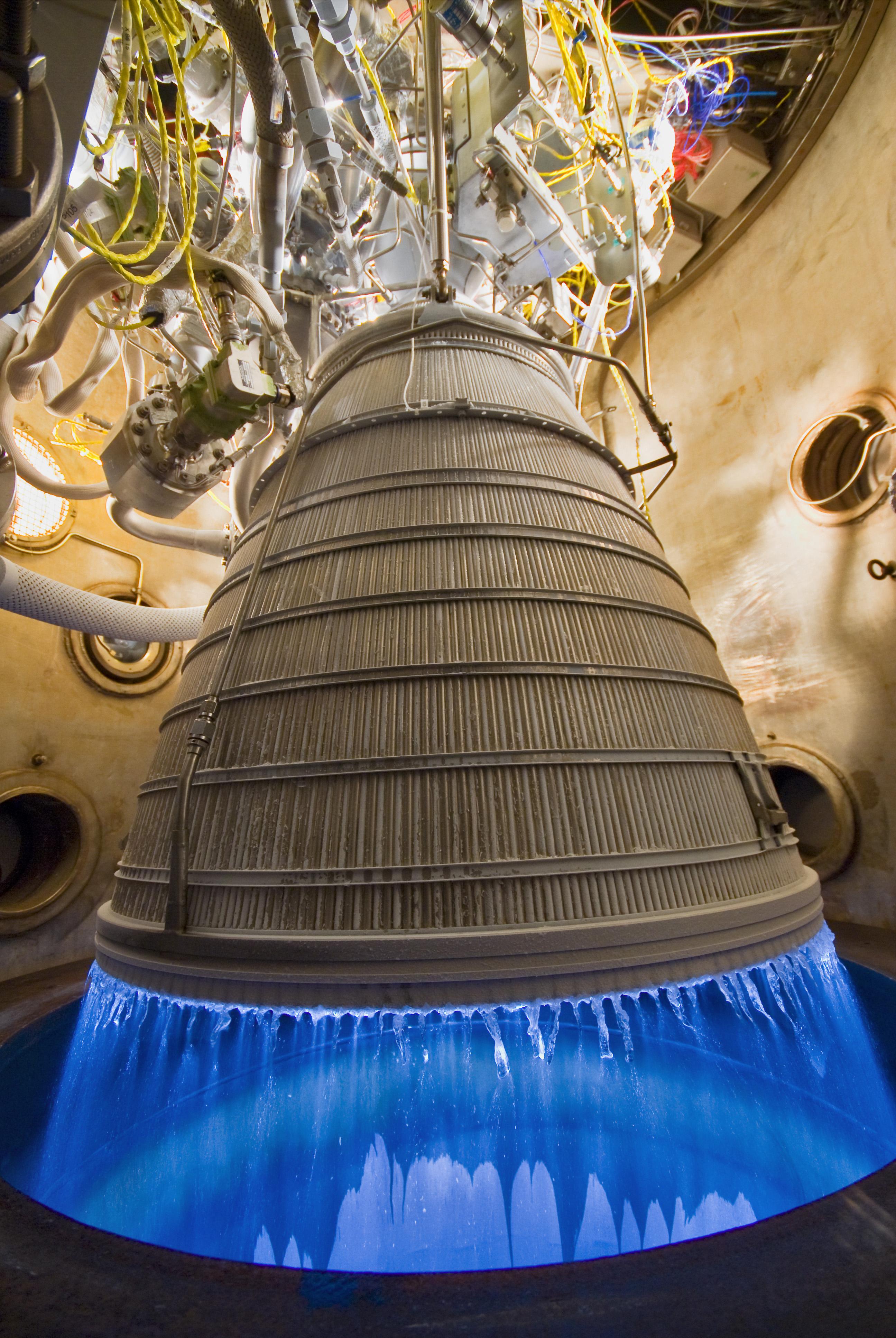
Liquid fuel cryogenic rocket engine, typically used on rocket upper stages
| Field | Value |
|---|---|
| name | RL10 |
| image | RL-10 rocket engine (30432256313).jpg |
| image_size | 250 |
| caption | An RL10A-4 engine in London's Science Museum |
| country_of_origin | United States |
| first_date | (RL10A-1) |
| manufacturer | Aerojet Rocketdyne |
| purpose | Upper stage engine |
| associated | AtlasDelta IIIDelta IVSaturn ISLSTitan IIIETitan IVVulcan Centaur |
| Canceled: DC-XOmegAShuttle-Centaur | |
| status | In production |
| type | liquid |
| oxidiser | LOX |
| fuel | |
| mixture_ratio | 5.88:1 |
| cycle | Expander cycle |
| nozzle_ratio | 84:1 or 280:1 |
| thrust(Vac) | 110.1 kN |
| specific_impulse_vacuum | 465.5 isp |
| length | 4.15 m w/ nozzle extended |
| diameter | 2.15 m |
| dry_weight | 301 kg |
| used_in | Centaur, DCSS, S-IV |
| references | |
| notes | Performance values and dimensions are for RL10B-2. |
Canceled: DC-XOmegAShuttle-Centaur | thrust(Vac) = 110.1 kN
The RL10 is a liquid-fuel cryogenic rocket engine built in the United States by Aerojet Rocketdyne that burns cryogenic liquid hydrogen and liquid oxygen propellants. Modern versions produce up to 110 kN of thrust per engine in vacuum. RL10 versions were produced for the Centaur upper stage of the Atlas V and the DCSS of the Delta IV. More versions are in development or in use for the Exploration Upper Stage of the Space Launch System and the Centaur V of the Vulcan rocket.
The expander cycle that the engine uses drives the turbopump with waste heat absorbed by the engine combustion chamber, throat, and nozzle. This, combined with the hydrogen fuel, leads to very high specific impulses (Isp) in the range of 373 to(-) in a vacuum. Mass ranges from 131 to(-) depending on the version of the engine.
History
The RL10 was the first liquid hydrogen rocket engine to be built in the United States, with development of the engine by Marshall Space Flight Center and Pratt & Whitney beginning in the 1950s. The RL10 was originally developed as a throttleable engine for the USAF Lunex lunar lander. The engine was electric spark ignited.
The RL10 was first tested on the ground in 1959, at Pratt & Whitney's Florida Research and Development Center in West Palm Beach, Florida. The first successful flight took place on November 27, 1963. For that launch, two RL10A-3 engines powered the Centaur upper stage of an Atlas launch vehicle. The launch was used to conduct a heavily instrumented performance and structural integrity test of the vehicle.[[File:RL-10 rocket engine.jpg|thumb|300px|RL10A information and overview from Saturn V]]Multiple versions of this engine have been flown. The S-IV of the Saturn I used a cluster of six RL10A-3S, a version which was modified for installation on the Saturn and the Titan program included Centaur D-1T upper stages powered by two RL10A-3-3 Engines.
Four modified RL10A-5 engines were used in the McDonnell Douglas DC-X.
A flaw in the brazing of an RL10B-2 combustion chamber was identified as the cause of failure for the 4 May 1999 Delta III launch carrying the Orion-3 communications satellite.
The DIRECT version 3.0 proposal to replace Ares I and Ares V with a family of rockets sharing a common core stage recommended the RL10 for the second stage of the J-246 and J-247 launch vehicles. Up to seven RL10 engines would have been used in the proposed Jupiter Upper Stage, serving an equivalent role to the Space Launch System Exploration Upper Stage.
Common Extensible Cryogenic Engine
In the early 2000s, NASA contracted with Pratt & Whitney Rocketdyne to develop the Common Extensible Cryogenic Engine (CECE) demonstrator. CECE was intended to lead to RL10 engines capable of deep throttling. In 2007, its operability (with some "chugging") was demonstrated at 11:1 throttle ratios. In 2009, NASA reported successfully throttling from 104 percent thrust to eight percent thrust, a record for an expander cycle engine of this type. Chugging was eliminated by injector and propellant feed system modifications that control the pressure, temperature and flow of propellants. In 2010, the throttling range was expanded further to a 17.6:1 ratio, throttling from 104% to 5.9% power.
Early 2010s possible successor
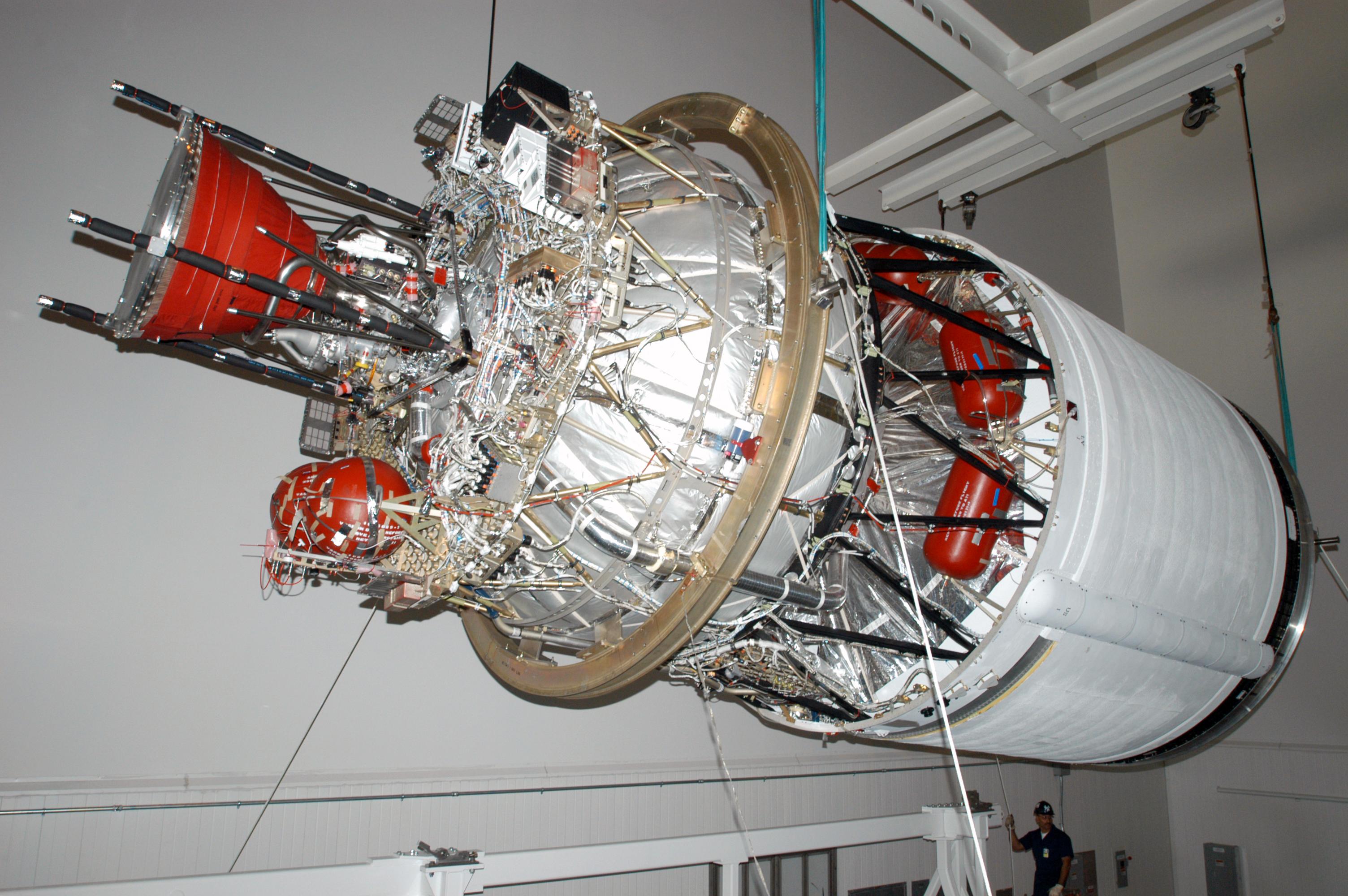
In 2012 NASA joined with the US Air Force (USAF) to study next-generation upper stage propulsion, formalizing the agencies' joint interests in a new upper stage engine to replace the Aerojet Rocketdyne RL10.
From the study, NASA hoped to find a less expensive RL10-class engine for the upper stage of the Space Launch System (SLS).
USAF hoped to replace the Rocketdyne RL10 engines used on the upper stages of the Lockheed Martin Atlas V and the Boeing Delta IV Evolved Expendable Launch Vehicles (EELV) that were the primary methods of putting US government satellites into space. A related requirements study was conducted at the same time under the Affordable Upper Stage Engine Program (AUSEP).
Improvements
The RL10 has undergone multiple upgrades over the decades. The RL10B-2, used on the DCSS, incorporated an extendable nozzle made from carbon–carbon, electro-mechanical gimbaling to reduce weight and increase reliability, and achieved a specific impulse of 465.5 isp.
Beginning in the 2000s, Aerojet Rocketdyne introduced 3D printing (additive manufacturing) into RL10 production. The RL10C-1-1 was the first engine to include a 3D-printed component, featuring a nickel superalloy main injector. Building on that experience, in 2015 the company began developing a more extensive upgrade that employed an additively manufactured copper thrust chamber. According to the company, the new process reduced chamber fabrication time from approximately 20 months to 4–6 months compared with earlier hand-fabricated stainless steel chambers, enabling production of up to one engine per week rather than one per month. This variant, designated RL10C-X during development, entered production as the RL10E-1 and is planned for use on United Launch Alliance’s Vulcan Centaur rocket, scheduled for its first flight in 2025.
Applications
Current
- Centaur III: The single engine centaur (SEC) version uses the RL10C-1, while the dual engine centaur (DEC) version retains the smaller RL10A-4-2. An Atlas V mission (SBIRS-5) marked the first use of the RL10C-1-1 version. The mission was successful but observed unexpected vibration, and further use of the RL10C-1-1 model is on hold until the problem is better understood. The engine was used again successfully on SBIRS-6.
- Centaur V stage: On May 11, 2018, United Launch Alliance (ULA) announced that the RL10 upper stage engine had been selected for its Vulcan Centaur rocket following a competitive procurement process. Early versions of the Centaur V will use the RL10C-1-1, but later versions will transition to the RL10E in 2025. Vulcan flew its successful maiden flight on January 8, 2024.
- Interim Cryogenic Propulsion Stage: The Interim Cryogenic Propulsion Stage or ICPS is used for the SLS and is similar to the DCSS, except that the engine is an RL10B-2 and it is adapted to fit on top of the 8.4 m diameter core stage with four RS-25 Space Shuttle Main Engines.
In development
- Exploration Upper Stage: The Exploration Upper Stage will use four RL10C-3 engines.
Cancelled
- OmegA Upper Stage: In April 2018, Northrop Grumman Innovation Systems announced that two RL10C-5-1 engines would be used on OmegA in the upper stage. Blue Origin's BE-3U and Airbus Safran's Vinci were also considered before Aerojet Rocketdyne's engine was selected. OmegA development was halted after it failed to win a National Security Space Launch contract.
- Advanced Cryogenic Evolved Stage: , an enhanced version of the RL10 was proposed to power the Advanced Cryogenic Evolved Stage (ACES), a long-duration, low-boiloff extension of existing ULA Centaur and Delta Cryogenic Second Stage (DCSS) technology for the Vulcan launch vehicle. Long-duration ACES technology is intended to support geosynchronous, cislunar, and interplanetary missions. Another possible application is as in-space propellant depots in LEO or at that could be used as way-stations for other rockets to stop and refuel on the way to beyond-LEO or interplanetary missions. Cleanup of space debris was also proposed.
Table of versions
| Version | Status | First flight | Dry mass | Thrust | Specific impulse (v), vac. | Length | Nozzle diameter | T:W | O:F | Expansion ratio | Burn time | Associated stage | Notes | RL10A-1 | RL10A-3C | RL10A-3S | RL10A-4 | RL10A-5 | RL10B-2 | RL10A-4-1 | RL10A-4-2 | RL10B-X | CECE | RL10C-1 | RL10C-1-1 | RL10C-2-1 | RL10C-2 | RL10C-3 | RL10C-5-1 | RL10E-1 | ||||||||||
|---|---|---|---|---|---|---|---|---|---|---|---|---|---|---|---|---|---|---|---|---|---|---|---|---|---|---|---|---|---|---|---|---|---|---|---|---|---|---|---|---|
| 1962 | 131 kg | 15000 lb-f | 425 isp | 1.73 m | 1.53 m | 52:1 | 5:1 | 40:1 | 430 s | Centaur A | title=RL-10A-1 | encyclopedia=Encyclopedia Astronautica | url=http://www.astronautix.com/engines/rl10a1.htm | access-date=February 27, 2012 | last=Wade | first=Mark | date=November 17, 2011 | archive-url=https://web.archive.org/web/20111115155200/http://www.astronautix.com/engines/rl10a1.htm | archive-date=November 15, 2011 | url-status=dead | df=mdy-all}} | |||||||||||||||||||
| 1963 | 131 kg | 65.6 kN | 444 isp | 2.49 m | 1.53 m | 51:1 | 5:1 | 57:1 | 470 s | Centaur B/C/D/E | title=RL-10A-3 | encyclopedia=Encyclopedia Astronautica | url=http://www.astronautix.com/engines/rl10a3.htm | access-date=February 27, 2012 | last=Wade | first=Mark | date=November 17, 2011 | archive-url=https://web.archive.org/web/20111206225154/http://www.astronautix.com/engines/rl10a3.htm | archive-date=December 6, 2011 | url-status=dead | df=mdy-all}} | |||||||||||||||||||
| 1964 | 296 lb | 15,000 lb-f | 427 isp | 1.73 m | 3 ft | 51:1 | 5:1 | 40:1 | 482 s | S-IV | ||||||||||||||||||||||||||||||
| 1992 | 168 kg | 92.5 kN | 449 isp | 2.29 m | 1.17 m | 56:1 | 5.5:1 | 84:1 | 392 s | Centaur IIA | title=RL-10A-4 | encyclopedia=Encyclopedia Astronautica | url=http://www.astronautix.com/engines/rl10a4.htm | access-date=February 27, 2012 | last=Wade | first=Mark | date=November 17, 2011 | archive-url=https://web.archive.org/web/20111115172045/http://www.astronautix.com/engines/rl10a4.htm | archive-date=November 15, 2011 | url-status=dead | df=mdy-all}} | |||||||||||||||||||
| 1993 | 143 kg | 64.7 kN | 373 isp | 1.07 m | 1.02 m | 46:1 | 6:1 | 4:1 | 127 s | DC-X | title=RL-10A-5 | encyclopedia=Encyclopedia Astronautica | url=http://www.astronautix.com/engines/rl10a5.htm | access-date=February 27, 2012 | last=Wade | first=Mark | date=November 17, 2011 | archive-url=https://web.archive.org/web/20111115141830/http://www.astronautix.com/engines/rl10a5.htm | archive-date=November 15, 2011 | url-status=dead | df=mdy-all}} | |||||||||||||||||||
| 1998 | 664 lb | 24750 lb-f | 465.5 isp | Stowed: 7 ftDeployed: 13 ft | 7 ft | 40:1 | 5.88:1 | 280:1 | 5m: 1,125 s4m: 700 s | DCSS | ||||||||||||||||||||||||||||||
| ICPS | title=RL-10B-2 | encyclopedia=Encyclopedia Astronautica | url=http://www.astronautix.com/engines/rl10b2.htm | access-date=February 27, 2012 | last=Wade | first=Mark | date=November 17, 2011 | archive-url=https://web.archive.org/web/20120204144940/http://www.astronautix.com/engines/rl10b2.htm | archive-date=February 4, 2012 | url-status=dead | df=mdy-all}} | |||||||||||||||||||||||||||||
| 2000 | 167 kg | 99.1 kN | 451 isp | 1.78 m | 1.53 m | 61:1 | 84:1 | 740 s | Centaur IIIA | title=RL-10A-4-1 | encyclopedia=Encyclopedia Astronautica | url=http://www.astronautix.com/engines/rl10a41.htm | access-date=February 27, 2012 | last=Wade | first=Mark | date=November 17, 2011 | archive-url=https://web.archive.org/web/20111117134046/http://www.astronautix.com/engines/rl10a41.htm | archive-date=November 17, 2011 | url-status=dead | df=mdy-all}} | ||||||||||||||||||||
| 2002 | 370 lb | 22300 lb-f | 451 isp | 7 ft | 3 ft | 61:1 | 84:1 | 740 s | Centaur IIIB | |||||||||||||||||||||||||||||||
| Centaur SEC | ||||||||||||||||||||||||||||||||||||||||
| Centaur DEC | title=RL-10A-4-2 | encyclopedia=Encyclopedia Astronautica | url=http://www.astronautix.com/engines/rl10a42.htm | access-date=February 27, 2012 | last=Wade | first=Mark | date=November 17, 2011 | archive-url=https://web.archive.org/web/20120130143126/http://www.astronautix.com/engines/rl10a42.htm | archive-date=January 30, 2012 | url-status=dead | df=mdy-all}} | |||||||||||||||||||||||||||||
| 317 kg | 93.4 kN | 470 isp | 1.53 m | 30:1 | 250:1 | 408 s | Centaur B-X | title=RL-10B-X | encyclopedia=Encyclopedia Astronautica | url=http://www.astronautix.com/engines/rl10bx.htm | access-date=February 27, 2012 | last=Wade | first=Mark | date=November 17, 2011 | archive-url=https://web.archive.org/web/20111115150728/http://www.astronautix.com/engines/rl10bx.htm | archive-date=November 15, 2011 | url-status=dead | df=mdy-all}} | ||||||||||||||||||||||
| 160 kg | 15000 lb-f, throttle to 5–10% | 445 isp | 1.53 m | 43:1 | title=Commons Extensible Cryogenic Engine | url=http://www.pw.utc.com/products/pwr/propulsion_solutions/cece.asp | url-status=dead | archive-url=https://web.archive.org/web/20120304081145/http://www.pw.utc.com/products/pwr/propulsion_solutions/cece.asp | archive-date=March 4, 2012 | access-date=February 28, 2012 | publisher=Pratt & Whitney Rocketdyne | df=mdy-all}} | ||||||||||||||||||||||||||||
| 2014 | 420 lb | 22820 lb-f | 449.7 isp | 7 ft | 4 ft | 57:1 | 5.5:1 | 130:1 | Centaur SEC | |||||||||||||||||||||||||||||||
| Centaur DEC | date=August 5, 2011 | title=Cryogenic Propulsion Stage | url=https://ntrs.nasa.gov/archive/nasa/casi.ntrs.nasa.gov/20110015783.pdf | access-date=October 11, 2014 | publisher=NASA}} | |||||||||||||||||||||||||||||||||||
| 2021 | 415 lb | 23825 lb-f | 453.8 isp | 8 ft | 5 ft | 57:1 | 5.5:1 | 155:1 | Atlas: 842 sVulcan: 1,077 s | Centaur SEC | ||||||||||||||||||||||||||||||
| Centaur V | title=Aerojet Rocketdyne RL10 Propulsion System | url=http://rocket.com/sites/default/files/documents/Capabilities/PDFs/RL10_data_sheet.pdf | url-status=dead | archive-url=https://web.archive.org/web/20220130111530/https://rocket.com/sites/default/files/documents/Capabilities/PDFs/RL10_data_sheet.pdf | archive-date=30 January 2022 | website=Aerojet Rocketdyne}} | ||||||||||||||||||||||||||||||||||
| 2022 | 664 lb | 24750 lb-f | 465.5 isp | Stowed: 7 ftDeployed: 13 ft | 7 ft | 37:1 | 5.88:1 | 280:1 | DCSS | |||||||||||||||||||||||||||||||
| 2026 (expected) | 24750 lb-f | 465.5 isp | Stowed: 7 ftDeployed: 13 ft | 2.15 m (7 ft 1 in) | 37:1 | 5.88:1 | 280:1 | ICPS | date=15 April 2020 | title=NASA'S SPACE LAUNCH SYSTEM BEGINS MOVING TO THE LAUNCH SITE | url=https://ntrs.nasa.gov/api/citations/20205000944/downloads/Askins%20JANNAF%202020%20PAPER%2004152020.docx.pdf | url-status=live | archive-url=https://web.archive.org/web/20211013024817/https://ntrs.nasa.gov/api/citations/20205000944/downloads/Askins%20JANNAF%202020%20PAPER%2004152020.docx.pdf | archive-date=13 October 2021 | access-date=24 May 2023 | publisher=NASA}} | ||||||||||||||||||||||||
| 2028 (expected) | 508 lb | 24340 lb-f | 460.1 isp | 10 ft | 6 ft | 48:1 | 5.7:1 | 215:1 | EUS | |||||||||||||||||||||||||||||||
| 188 kg | 105.98 kN | 453.8 isp | 2.46 m (8 ft 0.7 in) | 1.57 m (4 ft 9 in) | 57:1 | 5.5:1 | OmegA | |||||||||||||||||||||||||||||||||
| 2025 (expected) | 231 kg | 107.29 kN | 460.9 isp | 3.31 m | 1.87 m | 47.29:1 | 5.5:1 | Centaur V | Additive manufacturing |
Gallery
File:Rl-10engine.jpg|RL10A-1 File:RL-10 with cutaway.JPG|RL10A-3S File:500px photo (140471371).jpeg|RL10A-4 File:RL-10onstand.jpg|RL10A-4-2 File:RL-10B-2 engine during nozzle extension testing.jpg|RL10B-2
Engines on display
- An RL10A-1 is on display at the New England Air Museum, Windsor Locks, Connecticut
- An RL10 is on display at the Museum of Science and Industry, Chicago, Illinois
- An RL10A-1 is on display at the Cernan Earth and Space Center, River Grove, Illinois
- An RL10 is on display at the U.S. Space & Rocket Center, Huntsville, Alabama
- An RL10 is on display at Southern University, Baton Rouge, Louisiana
- Two RL10 engines are on display at US Space Walk of Fame, Titusville, Florida
- An RL10 is on display at the Cox Science Center and Aquarium, West Palm Beach, Florida.
- An RL10 is on display in the Aerospace Engineering Department, Davis Hall at Auburn University.
- An RL10A-4 is on display at the Science Museum in London, UK.
- An RL10 is on display at the Museum of Life and Science in Durham, NC
- An RL10 is on display at the San Diego Air & Space Museum in San Diego, CA.
- An RL10B-2 is on display outside the Discovery Cube Orange County in Santa Ana, CA.
References
Bibliography
References
- (January 1998). "50K expander cycle engine demonstration". AIP Conference Proceedings.
- "RL-10C".
- "RL-10A-1".
- Wade, Mark. "Encyclopedia Astronautica—Lunex Project page".
- "U.S. Manned Rocket Propulsion Evolution, Part 8.21: The Pratt & Whitney RL10 Engine".
- Connors, p 319
- "Centaur". Gunter's Space Pages.
- Sutton, George. (2005). "History of liquid propellant rocket engines". American Institute of Aeronautics and Astronautics.
- (November 24, 2003). "Renowned Rocket Engine Celebrates 40 Years of Flight". Pratt & Whitney.
- "Atlas Centaur 2". NASA.
- Brügge, Norbert. "Evolution of Pratt & Whitney's cryogenic rocket engine RL-10".
- (1 September 1973). "Titan 3E/Centaur D-1T Systems Summary REPORT NO. CASD·LVP73-007". Convair & Martin Marietta Aerospace.
- Wade, Mark. "DCX".
- (August 16, 2000). "Delta 269 (Delta III) Investigation Report". [[Boeing]].
- "Jupiter Launch Vehicle – Technical Performance Summaries".
- "Common Extensible Cryogenic Engine (CECE)". United Technologies Corporation.
- (July 16, 2007). "Throttling Back to the Moon". NASA.
- (January 14, 2009). "NASA Tests Engine Technology for Landing Astronauts on the Moon". NASA.
- Giuliano, Victor. (July 25, 2010). "CECE: Expanding the Envelope of Deep Throttling Technology in Liquid Oxygen/Liquid Hydrogen Rocket Engines for NASA Exploration Missions".
- Roseberg, Zach. (April 12, 2012). "NASA, US Air Force to study joint rocket engine". Flight Global.
- Newton, Kimberly. (April 12, 2012). "NASA Partners With U.S. Air Force to Study Common Rocket Propulsion Challenges". NASA.
- "RL-10B-2".
- (2009). "RL10B-2". [[Pratt & Whitney Rocketdyne]].
- (March 7, 2016). "Aerojet Rocketdyne Successfully Tests Complex 3-D Printed Injector in World's Most Reliable Upper Stage Rocket Engine". Aerojet Rocketdyne.
- (April 3, 2017). "Aerojet Rocketdyne Achieves 3-D Printing Milestone with Successful Testing of Full-Scale RL10 Copper Thrust Chamber Assembly". Aerojet Rocketdyne.
- Button, Keith. (2024-09-01). "Improving on the ‘gold standard’".
- (June 23, 2021). "ULA delays further use of enhanced upper-stage engine pending studies".
- (May 11, 2018). "United Launch Alliance Selects Aerojet Rocketdyne's RL10 Engine". ULA.
- "Vulcan Cutaway Poster".
- Belam, Martin. (2024-01-08). "Nasa Peregrine 1 launch: Vulcan Centaur rocket carrying Nasa moon lander lifts off in Florida – live updates". the Guardian.
- Sloss, Philip. (March 4, 2021). "NASA, Boeing looking to begin SLS Exploration Upper Stage manufacturing in 2021". NASASpaceflight.
- (April 16, 2018). "RL-10 Selected for OmegA Rocket". Aerojet Rocketdyne.
- (2020-09-09). "Northrop Grumman to terminate OmegA rocket program".
- (2009). "Robust Lunar Exploration Using an Efficient Lunar Lander Derived from Existing Upper Stages". AIAA.
- (September 2, 2010). "Evolving to a Depot-Based Space Transportation Architecture". AIAA.
- Wade, Mark. (November 17, 2011). "RL-10A-1".
- Bilstein, Roger E.. (1996). "Stages to Saturn; A Technological History of the Apollo/Saturn Launch Vehicles". NASA History Office.
- "Atlas Centaur". Gunter's Space Page.
- Wade, Mark. (November 17, 2011). "RL-10A-3".
- Wade, Mark. (November 17, 2011). "RL-10A-4".
- Wade, Mark. (November 17, 2011). "RL-10A-5".
- Wade, Mark. (November 17, 2011). "RL-10B-2".
- "Delta IV Launch Services User's Guide, June 2013".
- Wade, Mark. (November 17, 2011). "RL-10A-4-1".
- Wade, Mark. (November 17, 2011). "RL-10A-4-2".
- Wade, Mark. (November 17, 2011). "RL-10B-X".
- "Commons Extensible Cryogenic Engine". Pratt & Whitney Rocketdyne.
- "Common Extensible Cryogenic Engine – Aerojet Rocketdyne".
- (August 5, 2011). "Cryogenic Propulsion Stage". NASA.
- "Atlas-V with RL10C powered Centaur".
- "Evolution of Pratt & Whitney's cryogenic rocket engine RL-10".
- "RL10 Engine". Aerojet Rocketdyne.
- "Aerojet Rocketdyne RL10 Propulsion System".
- "RL10 Engine {{!}} Aerojet Rocketdyne".
- Graham, William. (2022-09-24). "Last West Coast Delta IV Heavy launches with NROL-91".
- (15 April 2020). "NASA'S SPACE LAUNCH SYSTEM BEGINS MOVING TO THE LAUNCH SITE". NASA.
- "Aerojet Rocketdyne Secures Its Largest RL10 Engine Contract From ULA".
- "RL10 Engine | Aerojet Rocketdyne". Rocket.com.
- "Pratt & Whitney RL10A-1 Rocket Engine".
- "Photos of Rocket Engines".
- (November 3, 2006). "Pratt & Whitney Rocketdyne Donates Model of Legendary Rl10 Rocket Engine to Southern University". Pratt & Whitney Rocketdyne.
- "American Space Museum & Space Walk of Fame".
- "RL-10 engine {{!}} Science Museum Group Collection".
- "San Diego Air & Space Museum - Historical Balboa Park, San Diego".
This article was imported from Wikipedia and is available under the Creative Commons Attribution-ShareAlike 4.0 License. Content has been adapted to SurfDoc format. Original contributors can be found on the article history page.
Ask Mako anything about RL10 — get instant answers, deeper analysis, and related topics.
Research with MakoFree with your Surf account
Create a free account to save articles, ask Mako questions, and organize your research.
Sign up freeThis content may have been generated or modified by AI. CloudSurf Software LLC is not responsible for the accuracy, completeness, or reliability of AI-generated content. Always verify important information from primary sources.
Report