From Surf Wiki (app.surf) — the open knowledge base
Rizal (province)
Province in Calabarzon, Philippines

Province in Calabarzon, Philippines
| Field | Value | |
|---|---|---|
| name | Rizal | |
| settlement_type | ||
| image_skyline | {{multiple image | |
| border | infobox | |
| total_width | 250 | |
| image_style | border:1; 2 | |
| perrow | 1/2/2 | |
| image1 | RizalCapitolComplexjf5368 13.JPG | |
| image2 | Sapot Masungi Georserve.jpg | |
| image3 | The Beauty of Hinulugang taktak Falls.jpg | |
| image4 | Pililla Wind Farm.1.jpg | |
| image5 | Angono Petroglyphs.jpg | |
| image6 | Sierra Madre Mountain.jpg | |
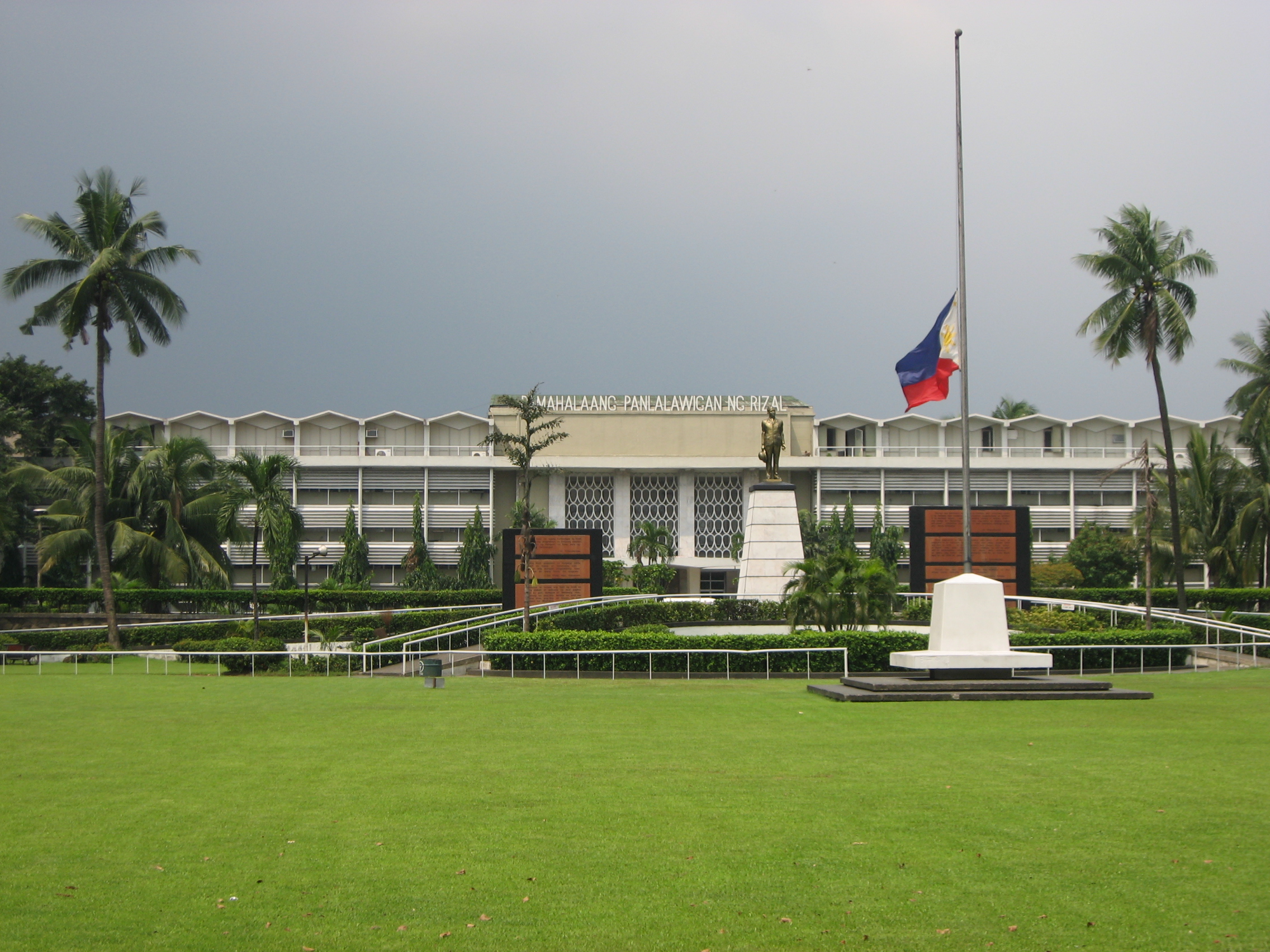
| image_caption | (from top: left to right) Rizal Provincial Capitol, Masungi Georeserve, Hinulugang Taktak, Pililla Wind Farm, Angono Petroglyphs and Sierra Madre Mountains in Tanay. | |
| image_flag | ||
| flag_size | 120x80px | |
| image_seal | Ph seal rizal.png | |
| seal_size | 120x80px | |
| anthem | Rizal Mabuhay | |
| [[File:Rizal Mabuhay.ogg]] | ||
| image_map | Rizal in Philippines.svg | |
| map_caption | Location in the Philippines | |
| mapframe | yes | |
| mapframe-zoom | 9 | |
| coordinates | ||
| subdivision_type | Country | |
| subdivision_name | ||
| subdivision_type1 | Region | |
| subdivision_name1 | ||
| established_title | Founded | |
| established_date | June 11, 1901 | |
| named_for | José Rizal | |
| seat_type | Capital | |
| and largest city | ||
| seat | Antipolo | |
| government_type | ||
| leader_title | Governor | |
| leader_name | Nina Ricci Alcantara Ynares-Chiongbian (NPC) | |
| leader_title1 | Vice Governor | |
| leader_name1 | Josefina G. Gatlabayan (NPC) | |
| leader_title2 | Legislature | |
| leader_name2 | Rizal Provincial Board | |
| area_footnotes | ||
| area_total_km2 | ||
| area_rank | 73rd out of 82 | |
| elevation_max_m | 1,509 | |
| elevation_max_point | Mount Irid | |
| population_footnotes | ||
| population_total | ||
| population_as_of | ||
| population_rank | 4th out of 82 | |
| population_density_km2 | auto | |
| population_density_rank | 1st out of 82 | |
| population_demonym | ||
| demographics_type1 | Divisions | |
| demographics1_title1 | Independent cities | |
| demographics1_info1 | 0 | |
| demographics1_title2 | Component cities | |
| demographics1_info2 | {{Collapsible list | |
| titlestyle | font-weight:normal;text-align:left;background-color:WhiteSmoke; | |
| title | 1 | |
| demographics1_title3 | Municipalities | |
| demographics1_info3 | {{Collapsible list | |
| titlestyle | font-weight:normal;text-align:left;background-color:WhiteSmoke; | |
| title | 13 | |
| demographics1_title4 | Barangays | |
| demographics1_info4 | 189 | |
| demographics1_title5 | Districts | |
| demographics1_info5 | *Legislative districts of Rizal | |
| demographics_type2 | Demographics | |
| demographics2_title1 | Ethnic groups | |
| demographics2_info1 | ||
| demographics2_title2 | Languages | |
| demographics2_info2 | {{plainlist | |
| timezone | PST | |
| utc_offset | +8 | |
| postal_code_type | ZIP code | |
| postal_code | ||
| area_code_type | ||
| area_code | ||
| iso_code | ||
| website |
| mapframe-zoom = 9 and largest city | Antipolo | Angono | Baras | Binangonan | Cainta | Cardona | Jalajala | Morong | Pililla | Rodriguez | San Mateo | Tanay | Taytay | Teresa
- Legislative districts of Antipolo
- Tagalog
- English
- Filipino
- Hatang Kayi
- Cebuano
- Waray
- Bikol
- Ilocano
- Hiligaynon
- others }}
Rizal, officially the Province of Rizal (), is a province in the Philippines located in the Calabarzon region in Luzon. Its capital is the city of Antipolo. It is about 16 km east of Manila. The province is named after José Rizal, one of the main national heroes of the Philippines. It is bordered by Metro Manila to the west, Bulacan to the north, Quezon to the east and Laguna to the southeast. The province also lies on the northern shores of Laguna de Bay, the largest lake in the country. Rizal is a mountainous province perched on the western slopes of the southern portion of the Sierra Madre mountain range.
Antipolo serves as the provincial capital since 2020, having been an administrative center since 2009 with the capitol located in the city. Previously, Pasig served as the capital, a designation it retained even after becoming part of the National Capital Region in 1975.
The province is a part of Greater Manila Area. It is the 5th largest province in the Philippines in terms of population.
History
Early history
Tagalog settlement arrived sometime in the pre-Spanish period. The provincial territory began with the organization of the Tondo and Laguna provinces during the Spanish administration. Some of the towns like Pasig, Parañaque, Taytay and Cainta were already thriving.
Spanish colonial era
From the reports of the Encomiendas in 1582–1583, the Encomiendas of Moron (Morong) was under the jurisdiction of La Laguna and, the Encomiendas of Passi (Pasig), Taitay (Taytay) and Tagui (Taguig) belonged to the Province of Tondo. It was recorded that in 1591, the Encomiendas of Moron and Taitay were under the jurisdiction of the Franciscan Order in the Province of La Laguna; and the Encomiendas of Nabotas (Navotas), Tambobo (Malabon), Tondo, Parañaque (then La Huerta, Parañaque), Longalo (Don Galo, Parañaque), Tagui and Pasig were under the jurisdiction of the Augustinians in the Province of Tondo.
In 1853, a new political subdivision named Distrito Politico-Militar de los Montes de San Mateo () was formed. This consisted of the towns of Antipolo, Bosoboso, Cainta and Taytay from the Province of Tondo, and the towns of Morong, Baras, Tanay, Pililla, Angono, Binangonan and Jala-jala from the Province of La Laguna, with Morong as the capital. This district was changed to Distrito Politico-Militar de Morong four years later.
By virtue of Circular No. 83, dated September 2, 1859, the Province of Tondo became the Province of Manila. All its towns were placed under the administration, fiscal supervision and control of the Governor of the new province.
The town of Mariquina (Marikina) became the capital of the Province of Manila during the tenure of the revolutionary government of Gen. Emilio Aguinaldo. The Politico-Military District of Morong had for its capital the town of Antipolo from 1898 to 1899 and the town of Tanay from 1899 to 1900.
American colonial era
Foundation
_map_09.jpg)
On February 6, the First Philippine Commission sought to establish civil government in the country through a provincial organization act after the Filipino-Spanish and Filipino-American conflicts.
Therefore, on June 5, 1901, a historic meeting was held at the Pasig Catholic Church for the organization of a civil government in the Province of Manila and District of Morong, with 221 delegates in attendance. The first Philippine Commission, headed by William Howard Taft and composed of Commissioners Luke E. Wright, Henry C. Ide, Bernard Moses and Dean C. Worcester, discussed with the Assembly the issue of whether or not to write the Province of Manila with the District of Morong, was not self-sufficient to operate as a separate province.
Although the delegates from Morong, Hilarion Raymundo, and José Tupas, objected to the proposal, Juan Sumulong of Antipolo strongly advocated the move. After much acrimonious debate and upon the suggestion of Trinidad H. Pardo de Tavera the body agreed on the creation of a new province independent of the Province of Manila. The new province was aptly named after José Rizal, the country's national hero.
_Old_Capitol.jpg)
On June 11, 1901, the province of Rizal was officially and legally created by virtue of Act No. 137 by the First Philippine Commission which during the time was acting as the unicameral legislative body in the island of Luzon.
The new province was composed of 32 municipalities, 19 from the old Province of Manila (i.e. Cainta, Caloocan, Las Piñas, Malibay, Mariquina (Marikina), Montalban (Rodriguez), Muntinlupa, Navotas, Novaliches, Parañaque, Pasig, Pateros, Pineda (Pasay), San Felipe Neri (Mandaluyong), San Juan del Monte (San Juan), San Mateo, San Pedro Macati (Makati), Taguig, Tambobong (Malabon)); and 13 from the Politico-Military District of Morong (i.e. Angono, Antipolo, Baras, Binangonan, Bosoboso, Cardona, Jalajala, Morong, Pililla, Quisao, Tanay, Taytay and Teresa). The City of Manila from the old Province of Manila was treated as a separate entity. The seat of the provincial government was Pasig; however, for seven months in 1904, San Felipe Neri served as the provincial seat.
The number of municipalities changed with the municipal boundaries through time, mostly occurring within the provincial boundary. On October 12, 1903, the former municipalities of Bosoboso, Malibay, Novaliches and Quisao were absorbed by Antipolo, Pasay, Caloocan and Pililla, respectively, by virtue of Act No. 942. On November 25, 1903, Muntinlupa was ceded to the Province of La Laguna and became part of the municipality of Biñan, but was later returned to Rizal on March 22, 1905, and became part of Taguig until December 17, 1917.
.svg)
On October 12, 1939, Quezon City was established, which included parts of Caloocan, and later on, Novaliches and parts of Marikina, Pasig and San Juan.
Japanese occupation
Marking's and the Hunter's ROTC Guerrillas operated in Rizal Province throughout the war.
In 1942, Quezon City and the towns of Caloocan, Makati, Mandaluyong, Parañaque, Pasay, and San Juan were merged with Manila to form the City of Greater Manila, by virtue of Executive Order No. 400 signed by President Manuel L. Quezon as an emergency measure. The city was dissolved by President Sergio Osmeña in 1945, thus restoring the pre-war status of the merged cities and towns.
Philippine independence
Through Presidential Decree No. 824, Rizal was partitioned on November 7, 1975 to form Metropolitan Manila. The municipalities of Las Piñas, Parañaque, Muntinlupa, Taguig, Pateros, Makati, Mandaluyong, San Juan, Malabon, Navotas, Pasig and Marikina, and the three cities of Caloocan, Pasay and Quezon City were excised to form the new region, while the other 14 towns remained in Rizal.
Contemporary
On June 17, 2008, Governor Casimiro Ynares III announced the transfer of the provincial capitol from Pasig to Antipolo. The new capitol building, constructed by Ortigas & Co., owner thereof, was completed by December of that year. Built on a 5 ha lot near the Ynares Center, it was inaugurated on March 4, 2009, bringing back the Capitol Building inside the provincial territory from which it was absent for 34 years (when Pasig was incorporated into Metro Manila).
On June 19, 2020, President Rodrigo Duterte signed Republic Act No. 11475 into law, which officially transferred the capital of the Rizal province from Pasig to Antipolo. The law was published on June 22, 2020, and took effect on July 7, 2020. The publication of the law coincided with the 159th birth anniversary of Dr. Jose Rizal.
Geography
Rizal covers a total area of 1,182.65 km2 occupying the northern-central section of the Calabarzon in Luzon. The province is bordered on the north by Bulacan, east by Quezon, southeast by Laguna, south by Laguna de Bay, and west by Metro Manila.
Located 20 km east of Manila, commuters take approximately an hour to reach the provincial seat which is in Antipolo. Generally hilly and mountainous in terrain, most of the province's southern towns lie in the shores of Laguna de Bay, the country's largest inland body of water.
Talim Island, the largest island situated within Laguna de Bay, is under the jurisdiction of the province and shared by the municipalities of Binangonan and Cardona.
Climate
Administrative divisions
Rizal comprises 13 municipalities and 1 city.

|
|
| City or municipality | District | Population | Area | Density | Barangay | Coordinates | (2020) | (2015) | (2010) | km2 | sq mi | /km2 | /sq mi | Angono | Antipolo | Baras | Binangonan | Cainta | Cardona | Jalajala | Morong | Pililla | Rodriguez | San Mateo | Tanay | Taytay | Teresa | Total | 3,330,143 | 2,884,227 | 2,484,840 | 1,182.65 | 1,182.65 km2 | {{sigfig | 2884227/1,182.65 | 2}} PD/km2 | 189 | (see GeoGroup box) |
|---|---|---|---|---|---|---|---|---|---|---|---|---|---|---|---|---|---|---|---|---|---|---|---|---|---|---|---|---|---|---|---|---|---|---|---|---|---|---|
| 1st | 113,283 | 102,407 | 26.22 km2 | {{sigfig | 113283/26.22 | 2}} PD/km2 | 10 | |||||||||||||||||||||||||||||||
| † | 2 LD | 776,386 | 677,741 | 306.10 km2 | {{sigfig | 776386/306.10 | 2}} PD/km2 | 16 | ||||||||||||||||||||||||||||||
| 2nd | 69,300 | 32,609 | 84.93 km2 | {{sigfig | 69300/84.93 | 2}} PD/km2 | 10 | |||||||||||||||||||||||||||||||
| 1st | 282,474 | 249,872 | 66.34 km2 | {{sigfig | 282474/66.34 | 2}} PD/km2 | 40 | |||||||||||||||||||||||||||||||
| 1st | 322,128 | 311,845 | 42.99 km2 | {{sigfig | 322128/42.99 | 2}} PD/km2 | 7 | |||||||||||||||||||||||||||||||
| 2nd | 49,034 | 47,414 | 19.27 km2 | {{sigfig | 49034/19.27 | 2}} PD/km2 | 18 | |||||||||||||||||||||||||||||||
| 2nd | 32,254 | 30,074 | 44.12 km2 | {{sigfig | 32254/44.12 | 2}} PD/km2 | 11 | |||||||||||||||||||||||||||||||
| 2nd | 58,118 | 52,194 | 37.58 km2 | {{sigfig | 58118/37.58 | 2}} PD/km2 | 8 | |||||||||||||||||||||||||||||||
| 2nd | 64,812 | 59,527 | 69.95 km2 | {{sigfig | 64812/69.95 | 2}} PD/km2 | 9 | |||||||||||||||||||||||||||||||
| 4th | 369,222 | 280,904 | 312.70 km2 | {{sigfig | 369222/172.65 | 2}} PD/km2 | 11 | |||||||||||||||||||||||||||||||
| 3rd | 252,527 | 205,255 | 55.09 km2 | {{sigfig | 252527/55.09 | 2}} PD/km2 | 15 | |||||||||||||||||||||||||||||||
| 2nd | 117,830 | 98,879 | 200.00 km2 | {{sigfig | 117830/200.00 | 2}} PD/km2 | 20 | |||||||||||||||||||||||||||||||
| 1st | 319,104 | 288,956 | 38.80 km2 | {{sigfig | 319104/38.80 | 2}} PD/km2 | 5 | |||||||||||||||||||||||||||||||
| 2nd | 57,755 | 47,163 | 18.61 km2 | {{sigfig | 64,072/18.61 | 2}} PD/km2 | 9 | |||||||||||||||||||||||||||||||
| list_style_type=upper-alpha | Coordinates mark the city/town center, and are sortable by latitude. |
Demographics
Source: Philippine Statistics Authority
Population
The population of Rizal in the 2024 census was 3,416,541 people, with a density of {{sigfig|3,416,541/1,191.94|2}} PD/km2.
Languages
Due to its location being in the heart of the Katagalugan, almost all of the residents of Rizal mainly speak Tagalog. English and Filipino are used as second languages respectively; Filipino is a version of Tagalog which is spoken by residents of Rizal in code switching & when speaking to Tagalog speakers of other dialects. Being bordered by Metro Manila (whose majority of its cities were once part of Rizal), a large number of people from farther provinces have migrated to the province, resulting in minor but significant usage of the Bicolano, Cebuano, various Cordilleran languages, Cuyunon, Ilocano, Hiligaynon, Kapampangan, Karay-a, Pangasinan and Waray, as well as various Lumad (indigenous languages in Mindanao) languages, Iranun, Maranao, Maguindanaon and Tausug languages.
Religion
Main article: Religion in the Philippines
Catholicism
Roman Catholicism is the predominant religion with about 80 percent adherence.
Iglesia Ni Cristo
Iglesia Ni Cristo is a religious minority in Rizal, it has numerous chapels scattered around its municipalities. Subdivided in 2 Ecclesiastical Districts, its members comprises the 5% of the province's population.
Others
Various Christian groups exist such as Members Church of God International (MCGI), Oneness Apostolic or Pentecostal like UPC, ALJC and ACJC, Iglesia Filipina Independiente, Born-again Christians, Jesus Is Lord Church Worldwide, Jehovah's Witnesses, Baptist, Church of Christ of Latter Day Saints, El Shaddai (movement) Methodists, Presbyterians, Seventh-day Adventist and other Evangelical Christians. Muslims, Anitists, animists, and atheists are also present in the province.
Economy

Before the 1990s, the primary source of economy in Rizal province were the huge piggery estates owned by Manila-based families. In recent years, the province became one of the most progressive provinces in the country, owing to its proximity to Metro Manila, the economic center of the Philippines. Antipolo, Taytay and Cainta serve as the economic centers of the province, while Angono, Rodriguez, Morong, San Mateo, Tanay, Binangonan and Teresa are taking successful steps to urbanize areas within their jurisdiction. Other areas of the province are having difficulty to start the urbanization process, mainly because of the lack of main roads to connect these to economic centers.
In a study recently conducted by the National Statistics Coordination Board (NSCB), Rizal province came out to be the Philippines' least poor province with a poverty incidence rate of 3.4%, even lower than that of the National Capital Region or Metro Manila. . On April 23, 2013, the National Statistics Coordination Board (NCSB) reported that Rizal, from being the least poor province in poverty incidence moved down to the 3rd Place, with Cavite taking over as the least province by 4.1% (compared to Rizal's 7.6%) and Laguna for 2nd with 6.3%.
Antipolo, the province's capital city, is the center of trade and exchange, tourism, government, and economy. It is also a center of education and sports because of the availability of various educational and physical training facilities. Acclaimed of its scenic attractions, the city also produces agricultural products such as cashew nuts and rice cakes. Taytay, the province's center of garment and textile manufacturing, is also the town where the country's largest mall operator runs a store near the town center. Meanwhile, Cainta serves as the center of business-process outsourcing (BPO) businesses in the province, aside from being known for the presence of several shopping centers and delicacies such as bibingka or rice cakes.
Points of interest
| City or municipality | Points of interest | Antipolo | |||||||||||||
|---|---|---|---|---|---|---|---|---|---|---|---|---|---|---|---|
| (25 km from Manila) | Angono | ||||||||||||||
| (30 km from Manila) | Baras | ||||||||||||||
| (48 km from Manila) | Binangonan | ||||||||||||||
| (32 km from Manila) | Cainta | ||||||||||||||
| (21 km from Manila) | Cardona | ||||||||||||||
| (42 km from Manila) | Jalajala | ||||||||||||||
| (69 km from Manila) | Morong | ||||||||||||||
| (45 km from Manila) | Pililla | ||||||||||||||
| (53 km from Manila) | Rodriguez | ||||||||||||||
| (38 km from Manila) | San Mateo | ||||||||||||||
| (24 km from Manila) | Tanay | ||||||||||||||
| (57 km from Manila) | Taytay | ||||||||||||||
| (19 km from Manila) | Teresa | ||||||||||||||
| (29 km from Manila) | |||||||||||||||
| Antipolo Cathedral — the shrine of Our Lady of Peace and Good Voyage, also known as the Virgin of Antipolo and the seat of the Roman Catholic Diocese of Antipolo | Hinulugang Taktak National Park — once a popular summer get-away and is being restored to become again one of the city's primary attractions | Suman — a local delicacy made out of glutinous rice | Bosoboso Church — built by the Jesuit priests on 1700 under the Patron of Nuestra Senora de la Anunciata | Rizal Provincial Capitol — seat of the provincial government of Rizal | Ynares Center Antipolo — an indoor sporting arena | Pinto Art Museum — a contemporary art museum | |||||||||
| Angono Street Mural | Ancestral Home of Carlos "Botong" Francisco, National Artist for Visual Arts | Blanco Family Museum | Nemiranda Museum | The Second Gallery Museum | Orville Tiamson Museum | Balaw-Balaw Restaurant | Angono Petroglyphs — the oldest known of art in the Philippines | Higantes Festival — celebrated every November 23 in honor of their patron saint St. Clement. Higantes are made of bamboo and colorful cloth and its faces of paper mache. | |||||||
| Palo Alto Falls and Leisure Park — a thousand feet falls. One has to climb up 249 steps to get to the foot of the falls | Saint Joseph Parish — has been a setting of different films and TV Programs | Sikaran — one of the Philippine's native martial arts | |||||||||||||
| Santa Ursula Parish — 400-year-old church | Talim Island — a dagger-shaped island at the heart of Laguna de Bay | Mt. Tagapo — located in Talim Island, a 270 m mountain also known as "Bundok ng Susong Birhen" | |||||||||||||
| Our Lady of Light Parish — one of the oldest churches in the province | Hunters ROTC Monument — a memorial for the Hunters ROTC guerrillas of World War II | Cenakulo — the actual portrayal of the Passion of Christ on the streets | |||||||||||||
| Kaluskos Kawayan — a showcase displayed every December | Sapao-An Festival — feast of Our Lady of the Most Holy Rosary celebrated during the 7th of October | Rock Garden — features hundreds of large stones formed by nature | |||||||||||||
| D'Dalaylay Festival — celebrated every September 29 features street dances with colorful and artistic costumes | |||||||||||||||
| U-ugong Park — formerly a well-known rice field and has a majestic waterfalls; now a resort owned by a local artist | Saint Jerome Parish Church — built in 1615 by a Chinese craftsmen. A first class relic of Saint Jerome was also in the church. | ||||||||||||||
| Bahay na Bato — believed to be as old as more than a hundred years | Pililla Rizal Wind Farms — built by AltEnergy to give electricity to the whole Barangay Halayhayin and Metro Manila as well. This also serves as a tourist attraction, and is located on the mountains near Laguna de Bay.Tiger Sanctuary also known as "pililla zoo" | ||||||||||||||
| Avilon Zoo — a 7.5 ha zoo located in Barrio San Isidro and operated by the Avilon Wildlife Conservation Foundation | Montalban Gorge — two white rock mountains of boulders with a very steep gorge in between located in the Pamitinan Protected Landscape | Pamitinan Cave — an important historical site located in the Pamitinan Protected Landscape where Andres Bonifacio declared independence from Spain in 1895 | Wawa Dam — an abandoned dam which is now a tourist destination located in the Pamitinan Protected Landscape | ||||||||||||
| Diocesan Shrine of Our Lady of Aranzazu | Kakanin Festival | 9 waves Resort | |||||||||||||
| Calinawan Cave — housed the townspeople during the Second World War | Daranak Falls and Batlag Falls — the two most popular tourist attractions in Tanay | Masungi Georeserve — interesting place to hikers and geologists | Parola — the historic lighthouse of Tanay | San Ildefonso Parish Church — built between 1773-1783; the second oldest church in the province | Regina Rica — a 71 ft statue of the Queen of the Holy Rosary | Ten Cents to Heaven — holds the record of longest zip line (230 m) in Rizal | Daraitan River — one of the country's cleanest rivers | PHILCOMSAT — the owner of a parcel of land situated in Barrio Pinugay, Barangay Tandang Kutyo, Tanay where its Philippine Space Communications Center (PSCC) is located. The PSCC, which principally consists of herein respondent’s satellite earth station, serves as the communications gateway of the Philippines to more than two-thirds of the world. Incidentally, the property had been planted with fruit trees, rice and corn by farmers occupying the surrounding areas of the PSCC. | |||||||
| Taytay Tiangge — There are around 10 garments center operating in Club Manila East Compound. Each garment center has hundreds to thousands of stalls selling different clothes by family owned garment factories. | Tres Escalon Waterfalls and Maharlika Falls — two known natural waterfalls in the mountainous portion of Taytay | Christ the King Parish — well-known to be the "Church in the Sky" because of its location | |||||||||||||
| Turumba Festival — held every August 23 for the patron saint of Teresa, Santa Rosa de Lima |
Government
Nina Ynares Pining Gatlabayan

The provincial legislature or the Sangguniang Panlalawigan is composed of ten elected members. Effective 2022, four members are elected from each of the province's first legislative district, two from the second district, and one each from the third and fourth legislative districts and Antipolo's first and second legislative districts.
Incumbent officials
- Governor: Nina A. Ynares-Chiongbian (NPC)
- Vice Governor: Josefina Galang-Gatlabayan (NPC)
- Board Members:
| District | Board member | Party | League | Board member | Party | Sector | Board member | Party | ||||
|---|---|---|---|---|---|---|---|---|---|---|---|---|
| Rizal–1st | Nationalist People's Coalition}}" | Anthony Jesus S. Alarcon | NPC | |||||||||
| Rizal–1st | Nationalist People's Coalition}}" | Philip Jeison J. Cruz | NPC | |||||||||
| Rizal–1st | Nationalist People's Coalition}}" | Maria Charis Kay S. Ilagan-Conde | NPC | |||||||||
| Rizal–1st | Nacionalista Party}}" | Patnubay B. Tiamson | NP | |||||||||
| Rizal–2nd | Nationalist People's Coalition}}" | Ricardo S. Bernados | NPC | |||||||||
| Rizal–2nd | Partido Federal ng Pilipinas}}" | Reynaldo H. San Juan Jr. | PFP | |||||||||
| Rizal–3rd | Partido Demokratiko Pilipino}}" | John Patrick M. Bautista | PDP | |||||||||
| Rizal–4th | Nationalist People's Coalition}}" | Rafhael Roumel V. Ayuson | NPC | |||||||||
| Antipolo–1st | National Unity Party (Philippines)}}" | Reynaldo Nicolas R. Puno | NUP | |||||||||
| Antipolo–2nd | Nationalist People's Coalition}}" | Danilo O. Leyble | NPC | |||||||||
| ABC | Nonpartisan}}" | title=Rizal Provincial Government Official Website | url=http://www.rizalprovince.ph/pages/board%20members.html | access-date=August 30, 2022 | website=www.rizalprovince.ph}} | Nonpartisan | ||||||
| PCL | Katipunan ng Nagkakaisang Pilipino}}" | Dindo M. Abueg | KNP | |||||||||
| SK | Nonpartisan}}" | King Arvi A. Ramilo | Nonpartisan | |||||||||
| IPMR | Nonpartisan}}" | Adolfo G. Gallanosa | Nonpartisan |
Representatives
Main article: Legislative districts of Rizal
- Elected Representatives
- 1st District: Rebecca Maria A. Ynares (NPC)
- 2nd District: Emigdio P. Tanjuatco III (NPC)
- 3rd District: Jose Arturo S. Garcia Jr. (NPC)
- 4th District: Dennis L. Hernandez (NPC)
List of former governors
Main article: Governor of Rizal
Notable personalities
National heroes and patriots
- Licerio Gerónimo (1855–1924) – Philippine Revolutionary General (Rodriguez)
- Tomás Claudio (1892–1918) – Filipino soldier who enlisted in the U.S. Army during the First World War. He was considered as the first Filipino to die overseas during an international conflict. (Morong)
- Ambrosio Flores (1843–1912) – Filipino general in the Philippine Revolution and the first governor of the province of Rizal.
Arts
- Carlos “Botong” Francisco (1912–1969) – National Artist of the Philippines for Visual Arts – Painting (Angono)
- Lucio San Pedro (1913–2002) – National Artist of the Philippines for Music (Angono)
- Vicente Manansala (1910–1981) – National Artist of the Philippines for Visual Arts – Painting (Binangonan)
- Francisco Feliciano (1941–2014) – National Artist of the Philippines for Music (Morong)
- Nemesio Miranda (born 1949) – painter and sculptor (Angono)
- Rodel Tapaya (born 1980) – painter (Rodriguez)
- JC Jacinto (born 1985) – visual artist (Cainta)
- Jesse Santos (1928–2013) – Filipino comic-book artist (Teresa)
- Ligaya Tiamson-Rubin – writer and educator (Angono)
- Jose Antonio Vargas (born 1981) – journalist, filmmaker, and immigration rights activist in the United States (Antipolo)
Entertainment
- Herlene Budol (born 1999) – actress and comedian (Angono)
- Mike Tan (born 1987) – actor (Angono)
- Betong Sumaya (born 1975) - actor (Antipolo)
- Francis Magalona (1964–2009) – actor, rapper, musician, producer, television host. (Antipolo)
- Yassi Pressman (born 1995) – actress, singer and dancer (Antipolo)
- Kristel de Catalina (born 1985) – spiral pole dancer, Pilipinas Got Talent season 6 grand champion (Antipolo)
- Marco Masa (born 2007) – former child and current teen actor (Antipolo)
- Rocco Nacino (born 1987) – actor (Antipolo)
- Ai-Ai delas Alas (born 1964) – actress/comedienne (Cainta)
- Bea Alonzo (born 1987) – Actress, and businesswoman. (Cainta)
- Camille Prats (born 1985) – actress, model (Cainta)
- Aster Amoyo (born 1956) – television host, talent manager, columnist (Cainta)
- Amy Perez (born 1969) – actress, host (Cainta)
- Yeng Constantino (born 1988) – singer-songwriter, Pinoy Dream Academy season 1 grand champion (Rodriguez)
- Makisig Morales (born 1996) – former child actor (San Mateo)
- Alice Dixson (born 1969) – Actress, Philippines' representative for Miss International in 1986 (Taytay)
- Toni Gonzaga-Soriano (born 1984) – Actress, Singer, TV Host, ("The Ultimatitan-sabay sabay Star") (Taytay)
- Alex Gonzaga (born 1988) – TV Host, Vlogger, Actress, Comedian, Book Author (Taytay)
- Xyriel Manabat (born 2004) – former child and current teen actress (Taytay)
- Meg Imperial (born 1993) – Model, Actress (Taytay)
- Andrea Brillantes (born 2003) – former child and current teen actress, dancer (Taytay)
- Jon Lucas (born 1995) – Teen Actor, Dancer, Rapper (former member of Hashtags of It's Showtime!) (Taytay)
- Rez Cortez (born 1956) – Filipino Veteran actor and assistant director (Taytay)
- Cai Cortez (born 1988) – actress and comedian (Taytay)
- Faith Anne (born 1994) – singer
Journalism
- Rhea Santos (born 1979) – Unang Hirit host (San Mateo)
Music
- Valentin Mechilina (born 1915) – conductor and composer known for his Dalampasigan overture (Binangonan)
- Gloc-9 (born 1977) – rap artist and musician (Binangonan)
Politics
- Consuelo Ynares-Santiago (born 1939) – former associate justice of the Supreme Court of the Philippines (Binagonan)
- Mon Ilagan (born 1960) – broadcaster, former mayor of Cainta who served in 2004 - 2013 (Cainta)
- Rebecca Ynares (born 1949) – Former Politician, served as the Governor of Rizal Province in 2001 – 2004, and 2013 – 2022 (Taytay)
Sports
- Christian Standhardinger (born 1989) – Basketball Player (Angono)
- Arvin Tolentino (born 1995) – Basketball Player (Angono)
- Johnmar Villaluna (born 1994) – MLBB Pro Player, 2021 SEA Games Gold Medalist, MLBB World Champion (Antipolo)
- Alvin Patrimonio (born 1966) – retired professional Filipino basketball player (Cainta)
- Tin Patrimonio (born 1991) – athlete (tennis) player, model, actress and a former reality show contestant (Cainta)
- Rachel Anne Daquis (born 1987) – Volleyball Athlete (Taytay)
- Oliver Barbosa (born 1986) – Chess Grand Master (Taytay)
References
References
- "List of Provinces". National Statistical Coordination Board.
- "Rizal: Population Expected to Hit the Two Millionth Mark in Two Years".
- Aguilar, Krissy. (June 22, 2020). "Duterte transfers capital, seat of gov't of Rizal from Pasig City to Antipolo City". [[Philippine Daily Inquirer]].
- (June 22, 2020). "Antipolo City now Rizal provincial capital after four decades". [[CNN Philippines]].
- "Journey to the Past".
- "Journey to the Past".
- "Brief History of Marikina". Marikina On The Go, Marikina Science High School.
- "Historical Spots".
- (April 14, 2012). "the Pasig formerly of Rizal: Rizal's first Capitol".
- (June 11, 1901). "An Act Extending the Provisions of the Provincial Government Act to the Province of Rizal".
- (October 12, 1903). "An Act Reducing the Thirty-Two Municipalities of the Province of Rizal to Fifteen".
- (June 28, 2002). "The President's Day: June 28, 2002".
- (November 6, 1903). "An Act Amending Acy Numbered Nine Hundred and Forty-Two, Entitled "An Act Reducing the Thirty-Two Municipalities of the Province of Rizal to Fifteen," by Reducing the Thirty-Two Municipalities of the Said Province to Sixteen".
- (January 16, 1906). "An Act Increasing the number of municipalities in the Province of Rizal from sixteen, as established by Act Numbered Nine hundred and forty-two, as amended, to seventeen, by making Malabon and Navotas separate municipalities, and transferring the former municipality of Baras from the municipality of Morong to the municipality of Tanay.".
- (March 27, 1907). "An Act Increasing the number of municipalities in the Province of Rizal from seventeen to nineteen, by separating from San Felipe Neri the former municipality of San Juan del Monte and from Parañaque the former municipality of Las Piñas, giving to each the territory which it comprised prior to the passage of Act Numbered Nine hundred and forty-two, and providing for the distribution of funds in the municipal treasuries of said municipalities.".
- (September 20, 1907). "An Act Increasing the Number of Municipalities in the Province of Rizal to Twenty, by Separating From the Present Municipality of Pililla the Former Municipality of Jalajala and Giving the Latter the Same Territory Which It Comprised Prior to the Passage of Act Numbered Nine Hundred and Forty-two".
- (November 25, 1903). "An Act Amending Act Numbered Nine hundred and thirty-nine, entitled "An Act reducing the thirty municipalities of the Province of La Laguna to nineteen," and Act Numbered Nine hundred and forty-two, entitled "An Act reducing the thirty - two municipalities of the Province of Rizal to fifteen," and providing that the boundary line between the Provinces of La Laguna and Rizal be changed so as to include in La Laguna the municipality of Muntinlupa now a part of Rizal.".
- (March 22, 1905). "An Act providing for the return of the former municipality of Muntinlupa from the Province of La Laguna to the Province of Rizal, repealing paragraph (e) of section one and sections two and three of Act Numbered One thousand and eight, and changing the name of the municipality of Pateros, of the Province of Rizal, to Taguig.".
- "About the City".
- (October 12, 1939). "An Act to Create Quezon City". [[Official Gazette (Philippines).
- (2016). "Angels of the Underground". Oxford University Press.
- (1950). "The Crucible: An Autobiography by Colonel Yay, Filipina American Guerrilla". Rutgers University Press.
- (January 1, 1942). "Creating the City of Greater Manila".
- (July 26, 1945). "Reducing the Territory of the City of Greater Manila".
- "Historical Background".
- (April 19, 2012). "the Pasig formerly of Rizal: the second Rizal capitol".
- (7 November 1975). "Creating the Metropolitan Manila and the Metropolitan Manila Commission and for Other Purposes".
- (2008-06-17). "gmanews.tv, Rizal capitol to be transferred to Antipolo". Gmanews.tv.
- (June 2024). "Weather forecast for Rizal, Philippines". [[StormGeo.
- "Ethnicity in the Philippines (2020 Census of Population and Housing)". Philippine Statistics Authority.
- (March 11, 2024). "RPPO, MCGI inaugurate new dormitory for Rizal cops, dependents". Philippine News Agency.
- (2013-04-23). "Rizal poverty incidence rate". NCSB.
- "Pinto Art Museum".
- "Rizal Provincial Government Official Website".
This article was imported from Wikipedia and is available under the Creative Commons Attribution-ShareAlike 4.0 License. Content has been adapted to SurfDoc format. Original contributors can be found on the article history page.
Ask Mako anything about Rizal (province) — get instant answers, deeper analysis, and related topics.
Research with MakoFree with your Surf account
Create a free account to save articles, ask Mako questions, and organize your research.
Sign up freeThis content may have been generated or modified by AI. CloudSurf Software LLC is not responsible for the accuracy, completeness, or reliability of AI-generated content. Always verify important information from primary sources.
Report