From Surf Wiki (app.surf) — the open knowledge base
River Ock
River in Oxfordshire, England
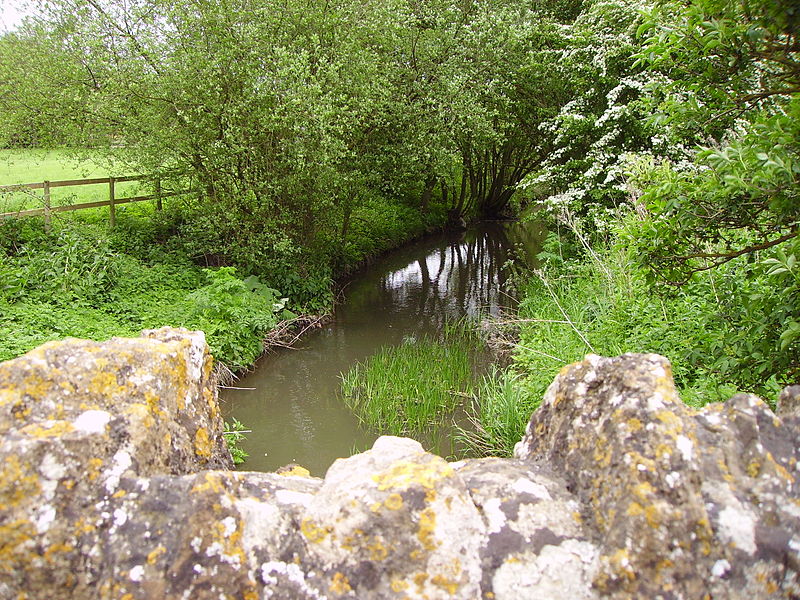
River in Oxfordshire, England
| Field | Value |
|---|---|
| name | Ock |
| name_etymology | |
| image | RiverOck01.JPG |
| image_caption | Bridge across the River Ock as it flows into the Thames at Abingdon |
| pushpin_map_caption | |
| subdivision_type1 | Country |
| subdivision_name1 | England |
| subdivision_type3 | Counties |
| subdivision_name3 | Oxfordshire |
| subdivision_type4 | Districts / Boroughs |
| subdivision_type5 | Towns |
| subdivision_name5 | Abingdon-on-Thames |
| length_km | 34 |
| discharge1_location | Abingdon-on-Thames |
| discharge1_min | 0.11 m3/s23 August 1976 |
| discharge1_avg | 1.52 m3/s |
| discharge1_max | 15.8 m3/s6 March 1972 |
| source1_location | Little Coxwell, White Horse Hills |
| mouth | River Thames |
| mouth_location | Abingdon-on-Thames, Oxfordshire |
the river in Oxfordshire
The River Ock is a small English river which is a tributary of the River Thames. It has as its catchment area the Vale of White Horse, a low-lying and wide valley in south Oxfordshire, and flows into the River Thames, at Abingdon on the reach above Culham Lock.
Course
The River Ock rises near the village of Little Coxwell. It collects tributaries from each village along the base of the White Horse Hills, where springs emanating from the chalk hills allowed settlements to flourish in former times. Among these tributaries is the Osse Stream, rising in Cumnor.
From Little Coxwell, the Ock runs around Longcot and flows past Stanford in the Vale, where it is about 10 ft wide. The name of Stanford comes from stony ford, possibly alluding to the Ock crossing at Stanford Mill. Thence it runs past Charney Bassett, Lyford, Garford and Marcham Mill, before losing its identity and its waters to the Thames at Abingdon by the old Hygienic Laundry building. An iron bridge crosses at the junction which was built by the Wilts & Berks Canal Company. This gives the erroneous impression that the Ock is that canal, but in fact the original canal entrance a few yards downstream is now blocked up. This has been replaced under a restoration project by a newer entrance closer to Culham Lock.
The soils through which the River Ock flows are the Jurassic sedimentary series (Greensands, Gault, Kimmeridge Clay and corallian limestone), while some of its tributaries arise in chalk springs. Until recent times, native crayfish and many freshwater fish species inhabited the river. Increased housing in the Vale, with the resultant surface drainage, may have threatened these species but surveys have not yet been performed in the 21st century.
Although normally placid, the Ock can flood low-lying areas of south Abingdon after persistent heavy rainfall; this recently occurred in April 2023, January 2024, September 2024 and November 2024.
Name
The hydronym Ock appears to be derived from a Celtic word for 'salmon'.
References
References
- Halford, Ed. (13 April 2023). "Extent of Abingdon floods shown by pictures after Tesco closed". Oxford Mail.
- Davies, Liam. (2024-01-06). "Abingdon Tesco closes and cancels services due to flooding".
- (26 September 2024). "Abingdon Tesco Extra stays closed as car park still flooded". [[Newsquest Media Group]].
- https://www.oxfordmail.co.uk/news/24755619.abingdon-families-count-cost-flood-damage-homes/
- Gelling, Margaret. (1972). "Place-Names of Berkshire".
This article was imported from Wikipedia and is available under the Creative Commons Attribution-ShareAlike 4.0 License. Content has been adapted to SurfDoc format. Original contributors can be found on the article history page.
Ask Mako anything about River Ock — get instant answers, deeper analysis, and related topics.
Research with MakoFree with your Surf account
Create a free account to save articles, ask Mako questions, and organize your research.
Sign up freeThis content may have been generated or modified by AI. CloudSurf Software LLC is not responsible for the accuracy, completeness, or reliability of AI-generated content. Always verify important information from primary sources.
Report